Request Free Sample ×

Kindly complete the form below to receive a free sample of this Report

* Please use a valid business email

Leading companies partner with us for data-driven Insights

clients tt-cursor
Hero Background
English
Chinese
French
Japanese
Korean
German
Spanish

Global Cancer Immunotherapy Market Trends

ID: MRFR/HC/0124-HCR
85 Pages
Kinjoll Dey
Last Updated: February 06, 2026

Cancer Immunotherapy Market Research Report By Therapy Type (Monoclonal Antibodies, Check Point Inhibitors, Cancer Vaccines, Therapeutic T-Cells, Oncolytic Virus Therapy), By Cancer Type (Breast Cancer, Lung Cancer, Colorectal Cancer, Prostate Cancer, Melanoma), By End User (Hospitals, Cancer Research Institutes, Diagnostics Labs), By Route of Administration (Intravenous, Subcutaneous, Intramuscular) and By Regional (North America, Europe, South America, Asia Pacific, Middle East and Africa) - Forecast to 2035

Share:
Download PDF ×

We do not share your information with anyone. However, we may send you emails based on your report interest from time to time. You may contact us at any time to opt-out.

Global Cancer Immunotherapy Market Infographic
Purchase Options

Market Trends

Key Emerging Trends in the Global Cancer Immunotherapy Market

The cancer immunotherapy market has evolved a lot because of new progress in immune barrier drugs. Cancer treatment has changed because of antibodies that target checkpoints like PD-1, PD-L1, and CTLA-4. These antibodies have made treatment more successful and improved outcomes for many types of cancer. Cancer immunotherapy is seeing more uses and mix treatments come out on the market. Ongoing studies are looking into how well immunotherapies work in other types of cancer, and the creation of mix treatments aims to boost therapy reactions and deal with mechanisms of resistance.

It is clear that individual immunotherapeutic methods are becoming more popular. Customizing treatments based on each patient's genetic and immune system traits improves the accuracy and efficiency of cancer immunotherapies.

There are new ways to do business with CAR-T cells. Drugs called Chimeric Antigen Receptor T-cell (CAR-T) can cure blood cancers. They change the T cells' genes so that they can attack cancer cells. This helps the treatment work better and more precisely. There are better and better bispecific antibodies on the market. These antibodies can target more than one thing at the same time. That is because they send immune cells to tumors more accurately and effectively or block multiple pathways that stop them from working. Vaccines with neoantigens have attracted considerable interest. The changes that these vaccines go after are unique to each tumor. The immune system can find and kill cancer cells with this, and it doesn't hurt good parts much.

Solid tumor treatment is using cancer immunotherapy more and more. At first, immunotherapies worked better for treating blood cancers. But, scientists and clinical trials are still looking for ways to make them work better for treating solid tumors.

Studies into immunotherapy are changing because of the use of artificial intelligence (AI). AI technologies look at very large datasets to find possible immunotherapeutic targets, guess how treatments will work, and help make individual treatment plans. This speeds up the process of finding new drugs and making them available.

As we learn more about the surroundings of tumors, market trends are changing. Doctors can create treatments that fight inhibitory factors and make the immune system better at fighting tumors by learning more about how cancer cells, immune cells, and the tissue around them work together.

Immunotherapy for cancer is currently mainly concerned with how to handle immune-related adverse events (irAEs). To make immunotherapies safe and effective, people work to make treatment plans better, come up with care plans that go along with them, and watch patients for any side effects that might happen.

Author
Author Profile
Kinjoll Dey
Senior Research Analyst

He is an extremely curious individual currently working in Healthcare and Medical Devices Domain. Kinjoll is comfortably versed in data centric research backed by healthcare educational background. He leverages extensive data mining and analytics tools such as Primary and Secondary Research, Statistical Analysis, Machine Learning, Data Modelling. His key role also involves Technical Sales Support, Client Interaction and Project management within the Healthcare team. Lastly, he showcases extensive affinity towards learning new skills and remain fascinated in implementing them.

Leave a Comment

FAQs

What is the current valuation of the cancer immunotherapy market as of 2024?

<p>The cancer immunotherapy market was valued at 239.72 USD Billion in 2024.</p>

What is the projected market size for cancer immunotherapy by 2035?

<p>The market is projected to reach 428.05 USD Billion by 2035.</p>

What is the expected CAGR for the cancer immunotherapy market from 2025 to 2035?

<p>The expected CAGR for the cancer immunotherapy market during the forecast period 2025 - 2035 is 5.37%.</p>

Which companies are considered key players in the cancer immunotherapy market?

<p>Key players in the market include Bristol-Myers Squibb, Merck & Co., Roche, Novartis, Pfizer, AstraZeneca, Gilead Sciences, Amgen, and Eli Lilly and Company.</p>

What are the main applications of cancer immunotherapy and their market valuations?

<p>The main applications include Monoclonal Antibodies valued at 150.0 USD Billion, Checkpoint Inhibitors at 130.0 USD Billion, and Cancer Vaccines at 60.0 USD Billion.</p>

How does the market for cancer immunotherapy vary by cancer type?

<p>By cancer type, Lung Cancer is projected at 130.0 USD Billion, Breast Cancer at 90.0 USD Billion, and Hematological Malignancies at 78.05 USD Billion.</p>

What are the primary end users of cancer immunotherapy and their respective market sizes?

<p>Primary end users include Hospitals at 170.0 USD Billion, Pharmaceutical Companies at 130.0 USD Billion, and Cancer Research Institutes at 80.0 USD Billion.</p>

What is the market size for oncolytic virus therapy within cancer immunotherapy?

<p>Oncolytic Virus Therapy is valued between 39.72 USD Billion and 48.05 USD Billion.</p>

How does the market for cancer immunotherapy compare across different applications?

<p>Monoclonal Antibodies and Checkpoint Inhibitors dominate the market, with valuations of 150.0 USD Billion and 130.0 USD Billion, respectively.</p>

What trends are influencing the growth of the cancer immunotherapy market?

<p>Trends such as increased investment in research and development by key players and rising prevalence of cancer are likely to drive market growth.</p>

Market Summary

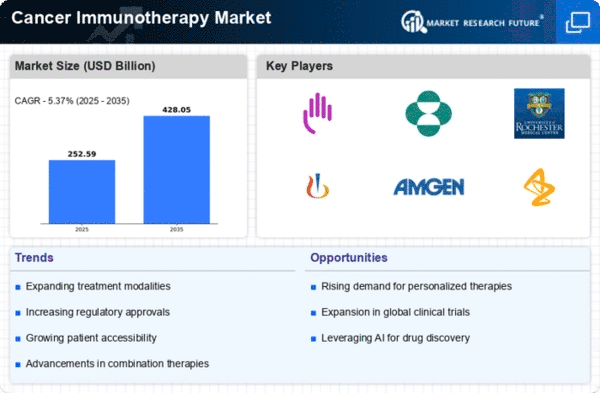
As per MRFR analysis, the Cancer Immunotherapy market size was estimated at 239.72 USD Billion in 2024. The cancer immunotherapy industry is projected to grow from 255.34 USD Billion in 2025 to 428.05 USD Billion by 2035, exhibiting a compound annual growth rate (CAGR) of 5.37% during the forecast period 2025 - 2035.

Key Market Trends & Highlights

The cancer immunotherapy market is poised for substantial growth driven by innovative treatment approaches and increasing patient demand.

  • The emergence of combination therapies is reshaping treatment paradigms in the cancer immunotherapy market.
  • Personalized medicine is gaining traction, tailoring therapies to individual patient profiles and enhancing efficacy.
  • Advancements in biomarker research are facilitating the development of targeted therapies, particularly in North America.
  • The rising incidence of cancer and growing investment in cancer research are key drivers propelling market expansion, especially in the Asia-Pacific region.

Market Size & Forecast

2024 Market Size 239.72 (USD Billion)
2035 Market Size 428.05 (USD Billion)
CAGR (2025 - 2035) 5.37%
Largest Regional Market Share in 2024 North America

Major Players

Bristol-Myers Squibb (US), Merck & Co. (US), Roche (CH), Novartis (CH), Amgen (US), AstraZeneca (GB), Gilead Sciences (US), Regeneron Pharmaceuticals (US), Eli Lilly and Company (US), Pfizer (US)

Market Trends

The cancer immunotherapy market is currently experiencing a transformative phase, characterized by rapid advancements in treatment modalities and a growing understanding of the immune system's role in combating cancer. This sector appears to be expanding due to increased investment in research and development, as well as a rising prevalence of various cancer types. Pharmaceutical companies are actively pursuing innovative therapies, including monoclonal antibodies, checkpoint inhibitors, and CAR T-cell therapies, which may offer new hope for patients. Furthermore, collaborations between academic institutions and industry players seem to be fostering an environment conducive to breakthroughs in this field. In addition to technological advancements, the cancer immunotherapy market is witnessing a shift in regulatory landscapes, with authorities becoming more receptive to novel treatment approaches. This evolving framework may facilitate faster approvals for promising therapies, thereby enhancing patient access to cutting-edge treatments. Moreover, the growing emphasis on personalized medicine indicates a trend towards tailored therapies that align with individual patient profiles. As the market continues to mature, it is likely that the integration of artificial intelligence and machine learning will further refine treatment strategies, potentially leading to improved outcomes for patients.

Emergence of Combination Therapies

The trend towards combination therapies is gaining traction within the cancer immunotherapy market. By integrating multiple treatment modalities, such as immunotherapy with chemotherapy or targeted therapies, clinicians aim to enhance therapeutic efficacy and overcome resistance mechanisms. This approach appears to offer a more comprehensive strategy for managing complex cancer cases, potentially leading to improved patient outcomes.

Focus on Personalized Medicine

Personalized medicine is becoming increasingly prominent in the cancer immunotherapy market. Tailoring treatments to the unique genetic and molecular profiles of individual patients may enhance the effectiveness of therapies. This trend suggests a shift towards more precise interventions, which could result in better management of cancer and reduced side effects.

Advancements in Biomarker Research

Advancements in biomarker research are playing a crucial role in the cancer immunotherapy market. Identifying specific biomarkers associated with patient responses to immunotherapy may enable more accurate patient selection and treatment optimization. This trend indicates a growing understanding of the biological underpinnings of cancer, which could lead to more effective and targeted therapeutic strategies.

Global Cancer Immunotherapy Market Market Drivers

Rising Incidence of Cancer

The increasing prevalence of cancer worldwide is a primary driver for the cancer immunotherapy market. According to recent statistics, cancer cases are projected to rise significantly, with estimates suggesting that by 2030, there could be over 21 million new cancer cases annually. This alarming trend necessitates the development of innovative treatment options, including immunotherapies, which harness the body's immune system to combat cancer. As healthcare systems grapple with the growing burden of cancer, the demand for effective therapies is likely to escalate, propelling the cancer immunotherapy market forward. Furthermore, the shift towards early detection and personalized treatment plans may enhance the adoption of immunotherapy, as patients seek tailored solutions that align with their specific cancer profiles.

Growing Awareness and Education

The increasing awareness and education surrounding cancer immunotherapy are pivotal in driving the cancer immunotherapy market. Patients, healthcare providers, and advocacy groups are becoming more informed about the benefits and potential of immunotherapy as a treatment option. This heightened awareness is leading to greater patient demand for immunotherapeutic treatments, as individuals seek out the latest advancements in cancer care. Educational initiatives and campaigns are also playing a vital role in disseminating information about the efficacy and safety of these therapies. As more patients become educated about their treatment options, the likelihood of opting for immunotherapy increases, thereby stimulating market growth. In 2025, it is anticipated that the demand for immunotherapy will continue to rise, as awareness campaigns reach broader audiences and empower patients to make informed decisions about their cancer treatment.

Regulatory Support and Approvals

Regulatory bodies are increasingly supportive of cancer immunotherapy, which is a crucial driver for the cancer immunotherapy market. The expedited approval processes for new therapies, particularly those demonstrating promising clinical trial results, have accelerated the introduction of innovative treatments. For instance, the FDA has granted Breakthrough Therapy Designation to several immunotherapies, allowing for faster access to patients. This regulatory environment fosters a climate of innovation, encouraging pharmaceutical companies to invest in research and development. As a result, the number of approved immunotherapeutic agents is expected to rise, expanding treatment options for patients and driving market growth. The favorable regulatory landscape not only enhances patient access to cutting-edge therapies but also instills confidence in investors, further propelling the cancer immunotherapy market.

Advancements in Research and Technology

Technological advancements in the field of cancer research are significantly influencing the cancer immunotherapy market. Innovations such as next-generation sequencing and bioinformatics are enabling researchers to better understand tumor biology and the immune response. These advancements facilitate the identification of novel biomarkers, which can predict patient responses to immunotherapy. As a result, the market is witnessing a surge in the development of targeted therapies that are more effective and have fewer side effects. In 2025, the market for cancer immunotherapy is expected to reach approximately USD 100 billion, driven by these technological breakthroughs. The integration of artificial intelligence in drug discovery processes is also likely to streamline the development of new immunotherapeutic agents, further enhancing the market's growth potential.

Investment in Healthcare Infrastructure

Investment in healthcare infrastructure is a significant driver for the cancer immunotherapy market. As countries recognize the importance of advanced cancer care, there is a concerted effort to enhance healthcare facilities and resources. This includes the establishment of specialized cancer treatment centers equipped with the latest technologies for administering immunotherapy. Increased funding for healthcare systems is likely to improve access to innovative treatments, thereby expanding the patient base for cancer immunotherapy. Furthermore, collaborations between public and private sectors are fostering research initiatives that aim to develop new immunotherapeutic agents. As healthcare infrastructure continues to evolve, the cancer immunotherapy market is expected to benefit from improved patient access and enhanced treatment capabilities, ultimately leading to better patient outcomes.

Market Segment Insights

By Application: Monoclonal Antibodies (Largest) vs. Checkpoint Inhibitors (Fastest-Growing)

The cancer immunotherapy market is predominantly led by Monoclonal Antibodies, which hold the largest market share within the application segment. This class of therapeutic agents, designed to target specific cancer cells, is widely used in the treatment of various malignancies, showcasing robust application across different cancer types. On the other hand, Checkpoint Inhibitors represent the fastest-growing segment, gaining attention for their ability to outsmart cancer's immune evasion tactics and boost the body's immune response against tumors, leading to increased adoption rates in clinical settings.

Monoclonal Antibodies: Dominant vs. Checkpoint Inhibitors: Emerging

Monoclonal Antibodies are a cornerstone of cancer immunotherapy due to their specificity and effectiveness, providing targeted treatment for a range of cancers, which enhances therapeutic outcomes and minimizes side effects. As the dominant force in this market, they enjoy established clinical pathways and wide acceptance among oncologists. In contrast, Checkpoint Inhibitors are rapidly becoming a significant force in the treatment landscape, representing an emerging technology that has shown remarkable success in clinical trials, especially in previously difficult-to-treat cancers. Their focus on enhancing the immune response offers a promising avenue for future therapies, making them an attractive option for both patients and healthcare providers.

By Cancer Type: Melanoma (Largest) vs. Lung Cancer (Fastest-Growing)

<p>In the cancer immunotherapy market, melanoma occupies the largest share, driven by its high prevalence and the growing awareness of novel therapies that offer extended survival rates. Following closely is lung cancer, which has emerged as a dynamic player in the market thanks to an increase in targeted treatments and the rapid adoption of immunotherapy as a standard care option. The distribution of market share among breast and prostate cancers also underscores their significance, with substantial ongoing research fueling future growth prospects. The growth trends for melanoma and lung cancer starkly contrast yet complement each other. Melanoma's established treatment protocols continue to evolve with the introduction of combination therapies, enhancing patient outcomes. On the other hand, lung cancer's fastest-growing status is driven by escalating incidences and breakthrough immunotherapeutic advancements. The heightened focus on personalized medicine and the advent of biomarker testing are pivotal in driving market expansion for these types of cancer.</p>

<p>Melanoma (Dominant) vs. Lung Cancer (Emerging)</p>

<p>Melanoma stands out as a dominant force in the cancer immunotherapy landscape. Its leadership is attributed to the existence of numerous approved therapies that leverage the body's immune system to combat this aggressive skin cancer. The segment's robust pipeline and commitment to research further cements its position. Conversely, lung cancer, while historically overshadowed, is emerging rapidly within the immunotherapy market. Accelerated advancements in treatment options, including checkpoint inhibitors and targeted therapies, are propelling it to the forefront. This surge reflects a response to increasing lung cancer rates and the need for effective management strategies, making it a crucial area for ongoing research and development.</p>

By End User: Hospitals (Largest) vs. Cancer Research Institutes (Fastest-Growing)

<p>In the cancer immunotherapy market, hospitals represent the largest end user segment, leveraging advanced treatment protocols and comprehensive patient care systems. Cancer research institutes follow closely, increasingly becoming prominent due to their substantial role in clinical trials and innovative research, driving breakthroughs in immunotherapy options. The market share distribution highlights the crucial roles these entities play in delivering treatments, with hospitals holding a significant proportion of the overall market, aiding patient access to therapy.</p>

<p>Healthcare Providers: Hospitals (Dominant) vs. Research Institutions (Emerging)</p>

<p>Hospitals are the dominant players in the cancer immunotherapy market as they provide essential treatment frameworks and access for patients. Their significant infrastructure and ability to integrate various immunotherapeutic approaches contribute to their leading market position. Meanwhile, cancer research institutes are emerging as key contributors, propelled by increasing investments in research and development. These institutions are vital for fostering innovation and facilitating the rapid advancement of immunotherapy therapies, thus setting the stage for new market trends and treatment regimens.</p>

By Mechanism of Action: T Cell Engagement (Largest) vs. Immune Activation (Fastest-Growing)

In the cancer immunotherapy market, the Mechanism of Action segment reveals a dynamic landscape. T Cell Engagement currently holds the largest share among the sub-segments, driven by advancements in therapies that focus on enhancing the T cell response against tumors. Immune Activation, while smaller in market share, is recognized as the fastest-growing area, capturing significant attention from researchers and practitioners alike.

T Cell Engagement (Dominant) vs. Immune Activation (Emerging)

T Cell Engagement has established itself as the dominant mechanism in the cancer immunotherapy landscape, leveraging innovative approaches like checkpoint inhibitors that reinvigorate exhausted T cells and facilitate targeted cancer cell destruction. On the other hand, Immune Activation is rapidly emerging as a critical area, concentrating on stimulating the immune system as a whole rather than just T cells. This includes therapies that enhance macrophage activation and promote broader immune response, indicating a shift toward combination treatments that harness multiple facets of the immune system to effectively combat cancer.

By Patient Type: Adult Patients (Largest) vs. Pediatric Patients (Fastest-Growing)

In the cancer immunotherapy market, adult patients represent the largest segment, driven by the higher incidence of cancer in this demographic. This segment accounts for the majority of treatment protocols and clinical trial participants, reflecting a well-established infrastructure for adult oncology. In contrast, pediatric patients, while a smaller segment, are becoming increasingly significant due to the rise in childhood cancers and advancements in targeted therapies tailored to younger populations.

Adult Patients (Dominant) vs. Pediatric Patients (Emerging)

The adult patient segment in cancer immunotherapy is currently dominant due to the extensive clinical development and adoption of checkpoint inhibitors and monoclonal antibodies. These treatments have demonstrated efficacy and safety, making them the first-line options for many adult cancers. On the other hand, the pediatric patient segment is emerging as a focus for innovation, driven by the need for age-appropriate formulations and therapies that minimize adverse effects. This segment is characterized by a growing number of research initiatives aimed at developing tailored immunotherapy solutions for children, fostering a more holistic approach to cancer treatment in younger patients.

Get more detailed insights about Cancer Immunotherapy Market Research Report- Forecast till 2035

Regional Insights

North America : Leading Market Innovators

North America is poised to maintain its leadership in the cancer immunotherapy market, holding a significant market share of 120.0 million in 2025. The region's growth is driven by advanced healthcare infrastructure, high R&D investments, and a robust regulatory framework that supports innovative therapies. Increasing cancer prevalence and rising healthcare expenditure further fuel demand for immunotherapy solutions. The United States stands out as the primary market, hosting major players like Bristol-Myers Squibb, Merck & Co., and Pfizer. The competitive landscape is characterized by continuous innovation and strategic collaborations among key companies. With a focus on personalized medicine and combination therapies, North America is set to lead the global market in the coming years.

Europe : Emerging Regulatory Frameworks

Europe is witnessing a growing cancer immunotherapy market, projected to reach 70.0 million by 2025. The region benefits from supportive regulatory frameworks and initiatives aimed at accelerating drug approvals. Increased investment in healthcare and a rising incidence of cancer are key drivers of market growth. The European Medicines Agency (EMA) plays a crucial role in facilitating access to innovative therapies, enhancing patient outcomes across member states. Leading countries such as Germany, France, and the UK are at the forefront of this market, with significant contributions from companies like Roche and Novartis. The competitive landscape is marked by a mix of established firms and emerging biotech companies, fostering innovation. Collaborative efforts between public and private sectors are essential for advancing research and development in cancer immunotherapy.

Asia-Pacific : Rapidly Growing Market Potential

The Asia-Pacific region is rapidly emerging in the cancer immunotherapy market, with a projected size of 40.0 million by 2025. Key growth drivers include increasing cancer incidence, rising healthcare investments, and a growing awareness of immunotherapy benefits. Governments are implementing supportive policies to enhance access to advanced treatments, which is expected to further stimulate market growth in the coming years. Countries like Japan, China, and Australia are leading the charge, with a mix of local and international players such as Amgen and AstraZeneca. The competitive landscape is evolving, with a focus on developing novel therapies and expanding treatment options. Collaborations between research institutions and pharmaceutical companies are crucial for fostering innovation and improving patient outcomes in the region.

Middle East and Africa : Untapped Market Opportunities

The Middle East and Africa (MEA) region is gradually emerging in the cancer immunotherapy market, with a market size of 9.72 million projected for 2025. The growth is driven by increasing cancer awareness, improving healthcare infrastructure, and rising investments in medical research. Governments are beginning to recognize the importance of innovative therapies, which is expected to catalyze market expansion in the region. Countries like South Africa and the UAE are leading the way, with a growing presence of international pharmaceutical companies. The competitive landscape is still developing, with opportunities for local firms to enter the market. As healthcare systems evolve, the demand for advanced cancer treatments, including immunotherapy, is anticipated to rise significantly in the MEA region.

Key Players and Competitive Insights

The cancer immunotherapy market is characterized by a dynamic competitive landscape, driven by rapid advancements in technology and an increasing focus on personalized medicine. Key players such as Bristol-Myers Squibb (US), Merck & Co. (US), and Roche (CH) are at the forefront, leveraging their extensive research capabilities and innovative product pipelines. Bristol-Myers Squibb (US) emphasizes a strategy centered on expanding its immuno-oncology portfolio, while Merck & Co. (US) focuses on enhancing its market presence through strategic partnerships and collaborations. Roche (CH) is actively investing in digital health solutions to complement its therapeutic offerings, thereby shaping a competitive environment that prioritizes innovation and patient-centric approaches.In terms of business tactics, companies are increasingly localizing manufacturing to enhance supply chain resilience and reduce operational costs. The market structure appears moderately fragmented, with a mix of established players and emerging biotech firms. This fragmentation allows for diverse approaches to treatment and innovation, although the collective influence of major companies remains substantial, often dictating market trends and pricing strategies.

In November Merck & Co. (US) announced a collaboration with a leading biotech firm to develop a novel combination therapy aimed at enhancing the efficacy of existing immunotherapies. This strategic move is likely to bolster Merck's competitive edge by diversifying its treatment options and addressing unmet medical needs in oncology. The partnership underscores the importance of collaborative innovation in the current market landscape.

In October Roche (CH) launched a new digital platform designed to facilitate real-time patient monitoring and data collection for immunotherapy treatments. This initiative not only enhances patient engagement but also provides Roche with valuable insights into treatment outcomes, potentially informing future product development. Such digital transformation efforts are indicative of a broader trend towards integrating technology into therapeutic strategies.

In December Bristol-Myers Squibb (US) revealed plans to expand its clinical trial network across Asia, aiming to accelerate the development of its immunotherapy candidates in diverse populations. This strategic expansion is significant as it reflects a growing recognition of the need for inclusive research practices and the potential for tailored therapies that address genetic and environmental factors influencing treatment efficacy.

As of December current competitive trends in the cancer immunotherapy market are increasingly defined by digitalization, sustainability, and the integration of artificial intelligence (AI) into research and development processes. Strategic alliances are becoming more prevalent, facilitating knowledge sharing and resource optimization among companies. Looking ahead, competitive differentiation is expected to evolve, with a shift from price-based competition towards innovation, technological advancements, and reliable supply chains. This transition may ultimately enhance patient outcomes and redefine the standards of care in oncology.

Key Companies in the Global Cancer Immunotherapy Market include

Industry Developments

Future Outlook

Global Cancer Immunotherapy Market Future Outlook

The cancer immunotherapy market is projected to grow at a 5.37% CAGR from 2024 to 2035, driven by advancements in technology, increasing prevalence of cancer, and rising investment in research.

New opportunities lie in:

  • Development of personalized immunotherapy solutions for specific cancer types.
  • Expansion of telehealth services for remote patient monitoring and consultations.
  • Strategic partnerships with biotech firms for innovative drug development.

By 2035, the cancer immunotherapy market is expected to be robust, driven by innovation and strategic collaborations.

Market Segmentation

Global Cancer Immunotherapy Market Type Outlook

  • Tumor Immunotherapy
  • Cellular Immunotherapy
  • Immune Checkpoint Inhibitors
  • Oncolytic Virus Therapy

Global Cancer Immunotherapy Market End Use Outlook

  • Hospitals
  • Cancer Research Institutes
  • Specialty Clinics
  • Pharmaceutical Companies

Global Cancer Immunotherapy Market Application Outlook

  • Monoclonal Antibodies
  • Checkpoint Inhibitors
  • Cancer Vaccines
  • Adoptive Cell Transfer
  • Cytokines

Global Cancer Immunotherapy Market Patient Type Outlook

  • Adult Patients
  • Pediatric Patients
  • Geriatric Patients

Global Cancer Immunotherapy Market Mechanism of Action Outlook

  • Immune Activation
  • Tumor Microenvironment Modulation
  • T Cell Engagement
  • Antibody-Dependent Cellular Cytotoxicity

Report Scope

MARKET SIZE 2024 239.72(USD Billion)
MARKET SIZE 2025 255.34(USD Billion)
MARKET SIZE 2035 428.05(USD Billion)
COMPOUND ANNUAL GROWTH RATE (CAGR) 5.37% (2024 - 2035)
REPORT COVERAGE Revenue Forecast, Competitive Landscape, Growth Factors, and Trends
BASE YEAR 2024
Market Forecast Period 2025 - 2035
Historical Data 2019 - 2024
Market Forecast Units USD Billion
Key Companies Profiled Bristol-Myers Squibb (US), Merck & Co. (US), Roche (CH), Novartis (CH), Amgen (US), AstraZeneca (GB), Gilead Sciences (US), Regeneron Pharmaceuticals (US), Eli Lilly and Company (US), Pfizer (US)
Segments Covered Application, End Use, Type, Mechanism of Action, Patient Type
Key Market Opportunities Advancements in personalized therapies and combination treatments drive growth in the cancer immunotherapy market.
Key Market Dynamics Rising demand for personalized therapies drives innovation and competition in the cancer immunotherapy market.
Countries Covered North America, Europe, APAC, South America, MEA

FAQs

What is the current valuation of the cancer immunotherapy market as of 2024?

<p>The cancer immunotherapy market was valued at 239.72 USD Billion in 2024.</p>

What is the projected market size for cancer immunotherapy by 2035?

<p>The market is projected to reach 428.05 USD Billion by 2035.</p>

What is the expected CAGR for the cancer immunotherapy market from 2025 to 2035?

<p>The expected CAGR for the cancer immunotherapy market during the forecast period 2025 - 2035 is 5.37%.</p>

Which companies are considered key players in the cancer immunotherapy market?

<p>Key players in the market include Bristol-Myers Squibb, Merck & Co., Roche, Novartis, Pfizer, AstraZeneca, Gilead Sciences, Amgen, and Eli Lilly and Company.</p>

What are the main applications of cancer immunotherapy and their market valuations?

<p>The main applications include Monoclonal Antibodies valued at 150.0 USD Billion, Checkpoint Inhibitors at 130.0 USD Billion, and Cancer Vaccines at 60.0 USD Billion.</p>

How does the market for cancer immunotherapy vary by cancer type?

<p>By cancer type, Lung Cancer is projected at 130.0 USD Billion, Breast Cancer at 90.0 USD Billion, and Hematological Malignancies at 78.05 USD Billion.</p>

What are the primary end users of cancer immunotherapy and their respective market sizes?

<p>Primary end users include Hospitals at 170.0 USD Billion, Pharmaceutical Companies at 130.0 USD Billion, and Cancer Research Institutes at 80.0 USD Billion.</p>

What is the market size for oncolytic virus therapy within cancer immunotherapy?

<p>Oncolytic Virus Therapy is valued between 39.72 USD Billion and 48.05 USD Billion.</p>

How does the market for cancer immunotherapy compare across different applications?

<p>Monoclonal Antibodies and Checkpoint Inhibitors dominate the market, with valuations of 150.0 USD Billion and 130.0 USD Billion, respectively.</p>

What trends are influencing the growth of the cancer immunotherapy market?

<p>Trends such as increased investment in research and development by key players and rising prevalence of cancer are likely to drive market growth.</p>

  1. SECTION I: EXECUTIVE SUMMARY AND KEY HIGHLIGHTS
    1. | 1.1 EXECUTIVE SUMMARY
    2. | | 1.1.1 Market Overview
    3. | | 1.1.2 Key Findings
    4. | | 1.1.3 Market Segmentation
    5. | | 1.1.4 Competitive Landscape
    6. | | 1.1.5 Challenges and Opportunities
    7. | | 1.1.6 Future Outlook
  2. SECTION II: SCOPING, METHODOLOGY AND MARKET STRUCTURE
    1. | 2.1 MARKET INTRODUCTION
    2. | | 2.1.1 Definition
    3. | | 2.1.2 Scope of the study
    4. | | | 2.1.2.1 Research Objective
    5. | | | 2.1.2.2 Assumption
    6. | | | 2.1.2.3 Limitations
    7. | 2.2 RESEARCH METHODOLOGY
    8. | | 2.2.1 Overview
    9. | | 2.2.2 Data Mining
    10. | | 2.2.3 Secondary Research
    11. | | 2.2.4 Primary Research
    12. | | | 2.2.4.1 Primary Interviews and Information Gathering Process
    13. | | | 2.2.4.2 Breakdown of Primary Respondents
    14. | | 2.2.5 Forecasting Model
    15. | | 2.2.6 Market Size Estimation
    16. | | | 2.2.6.1 Bottom-Up Approach
    17. | | | 2.2.6.2 Top-Down Approach
    18. | | 2.2.7 Data Triangulation
    19. | | 2.2.8 Validation
  3. SECTION III: QUALITATIVE ANALYSIS
    1. | 3.1 MARKET DYNAMICS
    2. | | 3.1.1 Overview
    3. | | 3.1.2 Drivers
    4. | | 3.1.3 Restraints
    5. | | 3.1.4 Opportunities
    6. | 3.2 MARKET FACTOR ANALYSIS
    7. | | 3.2.1 Value chain Analysis
    8. | | 3.2.2 Porter's Five Forces Analysis
    9. | | | 3.2.2.1 Bargaining Power of Suppliers
    10. | | | 3.2.2.2 Bargaining Power of Buyers
    11. | | | 3.2.2.3 Threat of New Entrants
    12. | | | 3.2.2.4 Threat of Substitutes
    13. | | | 3.2.2.5 Intensity of Rivalry
    14. | | 3.2.3 COVID-19 Impact Analysis
    15. | | | 3.2.3.1 Market Impact Analysis
    16. | | | 3.2.3.2 Regional Impact
    17. | | | 3.2.3.3 Opportunity and Threat Analysis
  4. SECTION IV: QUANTITATIVE ANALYSIS
    1. | 4.1 Healthcare, BY Application (USD Billion)
    2. | | 4.1.1 Monoclonal Antibodies
    3. | | 4.1.2 Checkpoint Inhibitors
    4. | | 4.1.3 Cancer Vaccines
    5. | | 4.1.4 Adoptive Cell Transfer
    6. | | 4.1.5 Oncolytic Virus Therapy
    7. | 4.2 Healthcare, BY Cancer Type (USD Billion)
    8. | | 4.2.1 Melanoma
    9. | | 4.2.2 Lung Cancer
    10. | | 4.2.3 Breast Cancer
    11. | | 4.2.4 Prostate Cancer
    12. | | 4.2.5 Hematological Malignancies
    13. | 4.3 Healthcare, BY End User (USD Billion)
    14. | | 4.3.1 Hospitals
    15. | | 4.3.2 Cancer Research Institutes
    16. | | 4.3.3 Pharmaceutical Companies
    17. | | 4.3.4 Diagnostic Laboratories
    18. | 4.4 Healthcare, BY Region (USD Billion)
    19. | | 4.4.1 North America
    20. | | | 4.4.1.1 US
    21. | | | 4.4.1.2 Canada
    22. | | 4.4.2 Europe
    23. | | | 4.4.2.1 Germany
    24. | | | 4.4.2.2 UK
    25. | | | 4.4.2.3 France
    26. | | | 4.4.2.4 Russia
    27. | | | 4.4.2.5 Italy
    28. | | | 4.4.2.6 Spain
    29. | | | 4.4.2.7 Rest of Europe
    30. | | 4.4.3 APAC
    31. | | | 4.4.3.1 China
    32. | | | 4.4.3.2 India
    33. | | | 4.4.3.3 Japan
    34. | | | 4.4.3.4 South Korea
    35. | | | 4.4.3.5 Malaysia
    36. | | | 4.4.3.6 Thailand
    37. | | | 4.4.3.7 Indonesia
    38. | | | 4.4.3.8 Rest of APAC
    39. | | 4.4.4 South America
    40. | | | 4.4.4.1 Brazil
    41. | | | 4.4.4.2 Mexico
    42. | | | 4.4.4.3 Argentina
    43. | | | 4.4.4.4 Rest of South America
    44. | | 4.4.5 MEA
    45. | | | 4.4.5.1 GCC Countries
    46. | | | 4.4.5.2 South Africa
    47. | | | 4.4.5.3 Rest of MEA
  5. SECTION V: COMPETITIVE ANALYSIS
    1. | 5.1 Competitive Landscape
    2. | | 5.1.1 Overview
    3. | | 5.1.2 Competitive Analysis
    4. | | 5.1.3 Market share Analysis
    5. | | 5.1.4 Major Growth Strategy in the Healthcare
    6. | | 5.1.5 Competitive Benchmarking
    7. | | 5.1.6 Leading Players in Terms of Number of Developments in the Healthcare
    8. | | 5.1.7 Key developments and growth strategies
    9. | | | 5.1.7.1 New Product Launch/Service Deployment
    10. | | | 5.1.7.2 Merger & Acquisitions
    11. | | | 5.1.7.3 Joint Ventures
    12. | | 5.1.8 Major Players Financial Matrix
    13. | | | 5.1.8.1 Sales and Operating Income
    14. | | | 5.1.8.2 Major Players R&D Expenditure. 2023
    15. | 5.2 Company Profiles
    16. | | 5.2.1 Bristol-Myers Squibb (US)
    17. | | | 5.2.1.1 Financial Overview
    18. | | | 5.2.1.2 Products Offered
    19. | | | 5.2.1.3 Key Developments
    20. | | | 5.2.1.4 SWOT Analysis
    21. | | | 5.2.1.5 Key Strategies
    22. | | 5.2.2 Merck & Co. (US)
    23. | | | 5.2.2.1 Financial Overview
    24. | | | 5.2.2.2 Products Offered
    25. | | | 5.2.2.3 Key Developments
    26. | | | 5.2.2.4 SWOT Analysis
    27. | | | 5.2.2.5 Key Strategies
    28. | | 5.2.3 Roche (CH)
    29. | | | 5.2.3.1 Financial Overview
    30. | | | 5.2.3.2 Products Offered
    31. | | | 5.2.3.3 Key Developments
    32. | | | 5.2.3.4 SWOT Analysis
    33. | | | 5.2.3.5 Key Strategies
    34. | | 5.2.4 Novartis (CH)
    35. | | | 5.2.4.1 Financial Overview
    36. | | | 5.2.4.2 Products Offered
    37. | | | 5.2.4.3 Key Developments
    38. | | | 5.2.4.4 SWOT Analysis
    39. | | | 5.2.4.5 Key Strategies
    40. | | 5.2.5 Pfizer (US)
    41. | | | 5.2.5.1 Financial Overview
    42. | | | 5.2.5.2 Products Offered
    43. | | | 5.2.5.3 Key Developments
    44. | | | 5.2.5.4 SWOT Analysis
    45. | | | 5.2.5.5 Key Strategies
    46. | | 5.2.6 AstraZeneca (GB)
    47. | | | 5.2.6.1 Financial Overview
    48. | | | 5.2.6.2 Products Offered
    49. | | | 5.2.6.3 Key Developments
    50. | | | 5.2.6.4 SWOT Analysis
    51. | | | 5.2.6.5 Key Strategies
    52. | | 5.2.7 Gilead Sciences (US)
    53. | | | 5.2.7.1 Financial Overview
    54. | | | 5.2.7.2 Products Offered
    55. | | | 5.2.7.3 Key Developments
    56. | | | 5.2.7.4 SWOT Analysis
    57. | | | 5.2.7.5 Key Strategies
    58. | | 5.2.8 Amgen (US)
    59. | | | 5.2.8.1 Financial Overview
    60. | | | 5.2.8.2 Products Offered
    61. | | | 5.2.8.3 Key Developments
    62. | | | 5.2.8.4 SWOT Analysis
    63. | | | 5.2.8.5 Key Strategies
    64. | | 5.2.9 Eli Lilly and Company (US)
    65. | | | 5.2.9.1 Financial Overview
    66. | | | 5.2.9.2 Products Offered
    67. | | | 5.2.9.3 Key Developments
    68. | | | 5.2.9.4 SWOT Analysis
    69. | | | 5.2.9.5 Key Strategies
    70. | 5.3 Appendix
    71. | | 5.3.1 References
    72. | | 5.3.2 Related Reports
  6. LIST OF FIGURES
    1. | 6.1 MARKET SYNOPSIS
    2. | 6.2 NORTH AMERICA MARKET ANALYSIS
    3. | 6.3 US MARKET ANALYSIS BY APPLICATION
    4. | 6.4 US MARKET ANALYSIS BY CANCER TYPE
    5. | 6.5 US MARKET ANALYSIS BY END USER
    6. | 6.6 CANADA MARKET ANALYSIS BY APPLICATION
    7. | 6.7 CANADA MARKET ANALYSIS BY CANCER TYPE
    8. | 6.8 CANADA MARKET ANALYSIS BY END USER
    9. | 6.9 EUROPE MARKET ANALYSIS
    10. | 6.10 GERMANY MARKET ANALYSIS BY APPLICATION
    11. | 6.11 GERMANY MARKET ANALYSIS BY CANCER TYPE
    12. | 6.12 GERMANY MARKET ANALYSIS BY END USER
    13. | 6.13 UK MARKET ANALYSIS BY APPLICATION
    14. | 6.14 UK MARKET ANALYSIS BY CANCER TYPE
    15. | 6.15 UK MARKET ANALYSIS BY END USER
    16. | 6.16 FRANCE MARKET ANALYSIS BY APPLICATION
    17. | 6.17 FRANCE MARKET ANALYSIS BY CANCER TYPE
    18. | 6.18 FRANCE MARKET ANALYSIS BY END USER
    19. | 6.19 RUSSIA MARKET ANALYSIS BY APPLICATION
    20. | 6.20 RUSSIA MARKET ANALYSIS BY CANCER TYPE
    21. | 6.21 RUSSIA MARKET ANALYSIS BY END USER
    22. | 6.22 ITALY MARKET ANALYSIS BY APPLICATION
    23. | 6.23 ITALY MARKET ANALYSIS BY CANCER TYPE
    24. | 6.24 ITALY MARKET ANALYSIS BY END USER
    25. | 6.25 SPAIN MARKET ANALYSIS BY APPLICATION
    26. | 6.26 SPAIN MARKET ANALYSIS BY CANCER TYPE
    27. | 6.27 SPAIN MARKET ANALYSIS BY END USER
    28. | 6.28 REST OF EUROPE MARKET ANALYSIS BY APPLICATION
    29. | 6.29 REST OF EUROPE MARKET ANALYSIS BY CANCER TYPE
    30. | 6.30 REST OF EUROPE MARKET ANALYSIS BY END USER
    31. | 6.31 APAC MARKET ANALYSIS
    32. | 6.32 CHINA MARKET ANALYSIS BY APPLICATION
    33. | 6.33 CHINA MARKET ANALYSIS BY CANCER TYPE
    34. | 6.34 CHINA MARKET ANALYSIS BY END USER
    35. | 6.35 INDIA MARKET ANALYSIS BY APPLICATION
    36. | 6.36 INDIA MARKET ANALYSIS BY CANCER TYPE
    37. | 6.37 INDIA MARKET ANALYSIS BY END USER
    38. | 6.38 JAPAN MARKET ANALYSIS BY APPLICATION
    39. | 6.39 JAPAN MARKET ANALYSIS BY CANCER TYPE
    40. | 6.40 JAPAN MARKET ANALYSIS BY END USER
    41. | 6.41 SOUTH KOREA MARKET ANALYSIS BY APPLICATION
    42. | 6.42 SOUTH KOREA MARKET ANALYSIS BY CANCER TYPE
    43. | 6.43 SOUTH KOREA MARKET ANALYSIS BY END USER
    44. | 6.44 MALAYSIA MARKET ANALYSIS BY APPLICATION
    45. | 6.45 MALAYSIA MARKET ANALYSIS BY CANCER TYPE
    46. | 6.46 MALAYSIA MARKET ANALYSIS BY END USER
    47. | 6.47 THAILAND MARKET ANALYSIS BY APPLICATION
    48. | 6.48 THAILAND MARKET ANALYSIS BY CANCER TYPE
    49. | 6.49 THAILAND MARKET ANALYSIS BY END USER
    50. | 6.50 INDONESIA MARKET ANALYSIS BY APPLICATION
    51. | 6.51 INDONESIA MARKET ANALYSIS BY CANCER TYPE
    52. | 6.52 INDONESIA MARKET ANALYSIS BY END USER
    53. | 6.53 REST OF APAC MARKET ANALYSIS BY APPLICATION
    54. | 6.54 REST OF APAC MARKET ANALYSIS BY CANCER TYPE
    55. | 6.55 REST OF APAC MARKET ANALYSIS BY END USER
    56. | 6.56 SOUTH AMERICA MARKET ANALYSIS
    57. | 6.57 BRAZIL MARKET ANALYSIS BY APPLICATION
    58. | 6.58 BRAZIL MARKET ANALYSIS BY CANCER TYPE
    59. | 6.59 BRAZIL MARKET ANALYSIS BY END USER
    60. | 6.60 MEXICO MARKET ANALYSIS BY APPLICATION
    61. | 6.61 MEXICO MARKET ANALYSIS BY CANCER TYPE
    62. | 6.62 MEXICO MARKET ANALYSIS BY END USER
    63. | 6.63 ARGENTINA MARKET ANALYSIS BY APPLICATION
    64. | 6.64 ARGENTINA MARKET ANALYSIS BY CANCER TYPE
    65. | 6.65 ARGENTINA MARKET ANALYSIS BY END USER
    66. | 6.66 REST OF SOUTH AMERICA MARKET ANALYSIS BY APPLICATION
    67. | 6.67 REST OF SOUTH AMERICA MARKET ANALYSIS BY CANCER TYPE
    68. | 6.68 REST OF SOUTH AMERICA MARKET ANALYSIS BY END USER
    69. | 6.69 MEA MARKET ANALYSIS
    70. | 6.70 GCC COUNTRIES MARKET ANALYSIS BY APPLICATION
    71. | 6.71 GCC COUNTRIES MARKET ANALYSIS BY CANCER TYPE
    72. | 6.72 GCC COUNTRIES MARKET ANALYSIS BY END USER
    73. | 6.73 SOUTH AFRICA MARKET ANALYSIS BY APPLICATION
    74. | 6.74 SOUTH AFRICA MARKET ANALYSIS BY CANCER TYPE
    75. | 6.75 SOUTH AFRICA MARKET ANALYSIS BY END USER
    76. | 6.76 REST OF MEA MARKET ANALYSIS BY APPLICATION
    77. | 6.77 REST OF MEA MARKET ANALYSIS BY CANCER TYPE
    78. | 6.78 REST OF MEA MARKET ANALYSIS BY END USER
    79. | 6.79 KEY BUYING CRITERIA OF HEALTHCARE
    80. | 6.80 RESEARCH PROCESS OF MRFR
    81. | 6.81 DRO ANALYSIS OF HEALTHCARE
    82. | 6.82 DRIVERS IMPACT ANALYSIS: HEALTHCARE
    83. | 6.83 RESTRAINTS IMPACT ANALYSIS: HEALTHCARE
    84. | 6.84 SUPPLY / VALUE CHAIN: HEALTHCARE
    85. | 6.85 HEALTHCARE, BY APPLICATION, 2024 (% SHARE)
    86. | 6.86 HEALTHCARE, BY APPLICATION, 2024 TO 2035 (USD Billion)
    87. | 6.87 HEALTHCARE, BY CANCER TYPE, 2024 (% SHARE)
    88. | 6.88 HEALTHCARE, BY CANCER TYPE, 2024 TO 2035 (USD Billion)
    89. | 6.89 HEALTHCARE, BY END USER, 2024 (% SHARE)
    90. | 6.90 HEALTHCARE, BY END USER, 2024 TO 2035 (USD Billion)
    91. | 6.91 BENCHMARKING OF MAJOR COMPETITORS
  7. LIST OF TABLES
    1. | 7.1 LIST OF ASSUMPTIONS
    2. | | 7.1.1
    3. | 7.2 North America MARKET SIZE ESTIMATES; FORECAST
    4. | | 7.2.1 BY APPLICATION, 2025-2035 (USD Billion)
    5. | | 7.2.2 BY CANCER TYPE, 2025-2035 (USD Billion)
    6. | | 7.2.3 BY END USER, 2025-2035 (USD Billion)
    7. | 7.3 US MARKET SIZE ESTIMATES; FORECAST
    8. | | 7.3.1 BY APPLICATION, 2025-2035 (USD Billion)
    9. | | 7.3.2 BY CANCER TYPE, 2025-2035 (USD Billion)
    10. | | 7.3.3 BY END USER, 2025-2035 (USD Billion)
    11. | 7.4 Canada MARKET SIZE ESTIMATES; FORECAST
    12. | | 7.4.1 BY APPLICATION, 2025-2035 (USD Billion)
    13. | | 7.4.2 BY CANCER TYPE, 2025-2035 (USD Billion)
    14. | | 7.4.3 BY END USER, 2025-2035 (USD Billion)
    15. | 7.5 Europe MARKET SIZE ESTIMATES; FORECAST
    16. | | 7.5.1 BY APPLICATION, 2025-2035 (USD Billion)
    17. | | 7.5.2 BY CANCER TYPE, 2025-2035 (USD Billion)
    18. | | 7.5.3 BY END USER, 2025-2035 (USD Billion)
    19. | 7.6 Germany MARKET SIZE ESTIMATES; FORECAST
    20. | | 7.6.1 BY APPLICATION, 2025-2035 (USD Billion)
    21. | | 7.6.2 BY CANCER TYPE, 2025-2035 (USD Billion)
    22. | | 7.6.3 BY END USER, 2025-2035 (USD Billion)
    23. | 7.7 UK MARKET SIZE ESTIMATES; FORECAST
    24. | | 7.7.1 BY APPLICATION, 2025-2035 (USD Billion)
    25. | | 7.7.2 BY CANCER TYPE, 2025-2035 (USD Billion)
    26. | | 7.7.3 BY END USER, 2025-2035 (USD Billion)
    27. | 7.8 France MARKET SIZE ESTIMATES; FORECAST
    28. | | 7.8.1 BY APPLICATION, 2025-2035 (USD Billion)
    29. | | 7.8.2 BY CANCER TYPE, 2025-2035 (USD Billion)
    30. | | 7.8.3 BY END USER, 2025-2035 (USD Billion)
    31. | 7.9 Russia MARKET SIZE ESTIMATES; FORECAST
    32. | | 7.9.1 BY APPLICATION, 2025-2035 (USD Billion)
    33. | | 7.9.2 BY CANCER TYPE, 2025-2035 (USD Billion)
    34. | | 7.9.3 BY END USER, 2025-2035 (USD Billion)
    35. | 7.10 Italy MARKET SIZE ESTIMATES; FORECAST
    36. | | 7.10.1 BY APPLICATION, 2025-2035 (USD Billion)
    37. | | 7.10.2 BY CANCER TYPE, 2025-2035 (USD Billion)
    38. | | 7.10.3 BY END USER, 2025-2035 (USD Billion)
    39. | 7.11 Spain MARKET SIZE ESTIMATES; FORECAST
    40. | | 7.11.1 BY APPLICATION, 2025-2035 (USD Billion)
    41. | | 7.11.2 BY CANCER TYPE, 2025-2035 (USD Billion)
    42. | | 7.11.3 BY END USER, 2025-2035 (USD Billion)
    43. | 7.12 Rest of Europe MARKET SIZE ESTIMATES; FORECAST
    44. | | 7.12.1 BY APPLICATION, 2025-2035 (USD Billion)
    45. | | 7.12.2 BY CANCER TYPE, 2025-2035 (USD Billion)
    46. | | 7.12.3 BY END USER, 2025-2035 (USD Billion)
    47. | 7.13 APAC MARKET SIZE ESTIMATES; FORECAST
    48. | | 7.13.1 BY APPLICATION, 2025-2035 (USD Billion)
    49. | | 7.13.2 BY CANCER TYPE, 2025-2035 (USD Billion)
    50. | | 7.13.3 BY END USER, 2025-2035 (USD Billion)
    51. | 7.14 China MARKET SIZE ESTIMATES; FORECAST
    52. | | 7.14.1 BY APPLICATION, 2025-2035 (USD Billion)
    53. | | 7.14.2 BY CANCER TYPE, 2025-2035 (USD Billion)
    54. | | 7.14.3 BY END USER, 2025-2035 (USD Billion)
    55. | 7.15 India MARKET SIZE ESTIMATES; FORECAST
    56. | | 7.15.1 BY APPLICATION, 2025-2035 (USD Billion)
    57. | | 7.15.2 BY CANCER TYPE, 2025-2035 (USD Billion)
    58. | | 7.15.3 BY END USER, 2025-2035 (USD Billion)
    59. | 7.16 Japan MARKET SIZE ESTIMATES; FORECAST
    60. | | 7.16.1 BY APPLICATION, 2025-2035 (USD Billion)
    61. | | 7.16.2 BY CANCER TYPE, 2025-2035 (USD Billion)
    62. | | 7.16.3 BY END USER, 2025-2035 (USD Billion)
    63. | 7.17 South Korea MARKET SIZE ESTIMATES; FORECAST
    64. | | 7.17.1 BY APPLICATION, 2025-2035 (USD Billion)
    65. | | 7.17.2 BY CANCER TYPE, 2025-2035 (USD Billion)
    66. | | 7.17.3 BY END USER, 2025-2035 (USD Billion)
    67. | 7.18 Malaysia MARKET SIZE ESTIMATES; FORECAST
    68. | | 7.18.1 BY APPLICATION, 2025-2035 (USD Billion)
    69. | | 7.18.2 BY CANCER TYPE, 2025-2035 (USD Billion)
    70. | | 7.18.3 BY END USER, 2025-2035 (USD Billion)
    71. | 7.19 Thailand MARKET SIZE ESTIMATES; FORECAST
    72. | | 7.19.1 BY APPLICATION, 2025-2035 (USD Billion)
    73. | | 7.19.2 BY CANCER TYPE, 2025-2035 (USD Billion)
    74. | | 7.19.3 BY END USER, 2025-2035 (USD Billion)
    75. | 7.20 Indonesia MARKET SIZE ESTIMATES; FORECAST
    76. | | 7.20.1 BY APPLICATION, 2025-2035 (USD Billion)
    77. | | 7.20.2 BY CANCER TYPE, 2025-2035 (USD Billion)
    78. | | 7.20.3 BY END USER, 2025-2035 (USD Billion)
    79. | 7.21 Rest of APAC MARKET SIZE ESTIMATES; FORECAST
    80. | | 7.21.1 BY APPLICATION, 2025-2035 (USD Billion)
    81. | | 7.21.2 BY CANCER TYPE, 2025-2035 (USD Billion)
    82. | | 7.21.3 BY END USER, 2025-2035 (USD Billion)
    83. | 7.22 South America MARKET SIZE ESTIMATES; FORECAST
    84. | | 7.22.1 BY APPLICATION, 2025-2035 (USD Billion)
    85. | | 7.22.2 BY CANCER TYPE, 2025-2035 (USD Billion)
    86. | | 7.22.3 BY END USER, 2025-2035 (USD Billion)
    87. | 7.23 Brazil MARKET SIZE ESTIMATES; FORECAST
    88. | | 7.23.1 BY APPLICATION, 2025-2035 (USD Billion)
    89. | | 7.23.2 BY CANCER TYPE, 2025-2035 (USD Billion)
    90. | | 7.23.3 BY END USER, 2025-2035 (USD Billion)
    91. | 7.24 Mexico MARKET SIZE ESTIMATES; FORECAST
    92. | | 7.24.1 BY APPLICATION, 2025-2035 (USD Billion)
    93. | | 7.24.2 BY CANCER TYPE, 2025-2035 (USD Billion)
    94. | | 7.24.3 BY END USER, 2025-2035 (USD Billion)
    95. | 7.25 Argentina MARKET SIZE ESTIMATES; FORECAST
    96. | | 7.25.1 BY APPLICATION, 2025-2035 (USD Billion)
    97. | | 7.25.2 BY CANCER TYPE, 2025-2035 (USD Billion)
    98. | | 7.25.3 BY END USER, 2025-2035 (USD Billion)
    99. | 7.26 Rest of South America MARKET SIZE ESTIMATES; FORECAST
    100. | | 7.26.1 BY APPLICATION, 2025-2035 (USD Billion)
    101. | | 7.26.2 BY CANCER TYPE, 2025-2035 (USD Billion)
    102. | | 7.26.3 BY END USER, 2025-2035 (USD Billion)
    103. | 7.27 MEA MARKET SIZE ESTIMATES; FORECAST
    104. | | 7.27.1 BY APPLICATION, 2025-2035 (USD Billion)
    105. | | 7.27.2 BY CANCER TYPE, 2025-2035 (USD Billion)
    106. | | 7.27.3 BY END USER, 2025-2035 (USD Billion)
    107. | 7.28 GCC Countries MARKET SIZE ESTIMATES; FORECAST
    108. | | 7.28.1 BY APPLICATION, 2025-2035 (USD Billion)
    109. | | 7.28.2 BY CANCER TYPE, 2025-2035 (USD Billion)
    110. | | 7.28.3 BY END USER, 2025-2035 (USD Billion)
    111. | 7.29 South Africa MARKET SIZE ESTIMATES; FORECAST
    112. | | 7.29.1 BY APPLICATION, 2025-2035 (USD Billion)
    113. | | 7.29.2 BY CANCER TYPE, 2025-2035 (USD Billion)
    114. | | 7.29.3 BY END USER, 2025-2035 (USD Billion)
    115. | 7.30 Rest of MEA MARKET SIZE ESTIMATES; FORECAST
    116. | | 7.30.1 BY APPLICATION, 2025-2035 (USD Billion)
    117. | | 7.30.2 BY CANCER TYPE, 2025-2035 (USD Billion)
    118. | | 7.30.3 BY END USER, 2025-2035 (USD Billion)
    119. | 7.31 PRODUCT LAUNCH/PRODUCT DEVELOPMENT/APPROVAL
    120. | | 7.31.1
    121. | 7.32 ACQUISITION/PARTNERSHIP
    122. | | 7.32.1

Healthcare Market Segmentation

Healthcare By Application (USD Billion, 2025-2035)

  • Monoclonal Antibodies
  • Checkpoint Inhibitors
  • Cancer Vaccines
  • Adoptive Cell Transfer
  • Oncolytic Virus Therapy

Healthcare By Cancer Type (USD Billion, 2025-2035)

  • Melanoma
  • Lung Cancer
  • Breast Cancer
  • Prostate Cancer
  • Hematological Malignancies

Healthcare By End User (USD Billion, 2025-2035)

  • Hospitals
  • Cancer Research Institutes
  • Pharmaceutical Companies
  • Diagnostic Laboratories
Infographic

Free Sample Request

Kindly complete the form below to receive a free sample of this Report

Get Free Sample

Customer Strories

Compare Licence

×
Features License Type
Single User Multiuser License Enterprise User
Price $4,950 $5,950 $7,250
Maximum User Access Limit 1 User Upto 10 Users Unrestricted Access Throughout the Organization
Free Customization
Direct Access to Analyst
Deliverable Format
Platform Access
Discount on Next Purchase 10% 15% 15%
Printable Versions