Rising Incidence of Cancer
The increasing prevalence of cancer worldwide is a primary driver for the cancer immunotherapy market. According to recent statistics, cancer cases are projected to rise significantly, with estimates suggesting that by 2030, there could be over 21 million new cancer cases annually. This alarming trend necessitates the development of innovative treatment options, including immunotherapies, which harness the body's immune system to combat cancer. As healthcare systems grapple with the growing burden of cancer, the demand for effective therapies is likely to escalate, propelling the cancer immunotherapy market forward. Furthermore, the shift towards early detection and personalized treatment plans may enhance the adoption of immunotherapy, as patients seek tailored solutions that align with their specific cancer profiles.
Growing Awareness and Education
The increasing awareness and education surrounding cancer immunotherapy are pivotal in driving the cancer immunotherapy market. Patients, healthcare providers, and advocacy groups are becoming more informed about the benefits and potential of immunotherapy as a treatment option. This heightened awareness is leading to greater patient demand for immunotherapeutic treatments, as individuals seek out the latest advancements in cancer care. Educational initiatives and campaigns are also playing a vital role in disseminating information about the efficacy and safety of these therapies. As more patients become educated about their treatment options, the likelihood of opting for immunotherapy increases, thereby stimulating market growth. In 2025, it is anticipated that the demand for immunotherapy will continue to rise, as awareness campaigns reach broader audiences and empower patients to make informed decisions about their cancer treatment.
Regulatory Support and Approvals
Regulatory bodies are increasingly supportive of cancer immunotherapy, which is a crucial driver for the cancer immunotherapy market. The expedited approval processes for new therapies, particularly those demonstrating promising clinical trial results, have accelerated the introduction of innovative treatments. For instance, the FDA has granted Breakthrough Therapy Designation to several immunotherapies, allowing for faster access to patients. This regulatory environment fosters a climate of innovation, encouraging pharmaceutical companies to invest in research and development. As a result, the number of approved immunotherapeutic agents is expected to rise, expanding treatment options for patients and driving market growth. The favorable regulatory landscape not only enhances patient access to cutting-edge therapies but also instills confidence in investors, further propelling the cancer immunotherapy market.
Advancements in Research and Technology
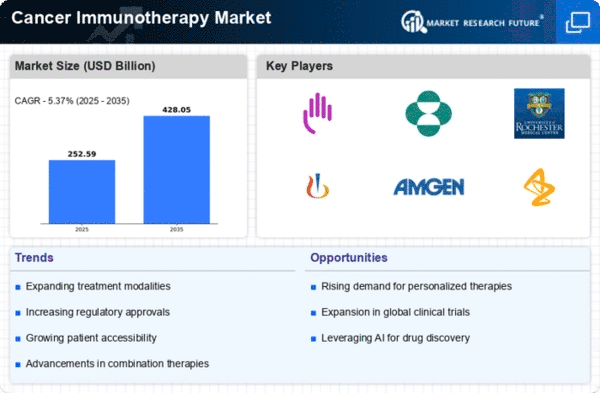
Technological advancements in the field of cancer research are significantly influencing the cancer immunotherapy market. Innovations such as next-generation sequencing and bioinformatics are enabling researchers to better understand tumor biology and the immune response. These advancements facilitate the identification of novel biomarkers, which can predict patient responses to immunotherapy. As a result, the market is witnessing a surge in the development of targeted therapies that are more effective and have fewer side effects. In 2025, the market for cancer immunotherapy is expected to reach approximately USD 100 billion, driven by these technological breakthroughs. The integration of artificial intelligence in drug discovery processes is also likely to streamline the development of new immunotherapeutic agents, further enhancing the market's growth potential.
Investment in Healthcare Infrastructure
Investment in healthcare infrastructure is a significant driver for the cancer immunotherapy market. As countries recognize the importance of advanced cancer care, there is a concerted effort to enhance healthcare facilities and resources. This includes the establishment of specialized cancer treatment centers equipped with the latest technologies for administering immunotherapy. Increased funding for healthcare systems is likely to improve access to innovative treatments, thereby expanding the patient base for cancer immunotherapy. Furthermore, collaborations between public and private sectors are fostering research initiatives that aim to develop new immunotherapeutic agents. As healthcare infrastructure continues to evolve, the cancer immunotherapy market is expected to benefit from improved patient access and enhanced treatment capabilities, ultimately leading to better patient outcomes.























Leave a Comment