×
Request Free Sample ×

Kindly complete the form below to receive a free sample of this Report

* Please use a valid business email

Leading companies partner with us for data-driven Insights

clients tt-cursor
Hero Background

UK Personal Emergency Response Systems Market

ID: MRFR/SEM/55610-HCR
200 Pages
Aarti Dhapte
February 2026

UK Personal Emergency Response Systems Market Size, Share and Research Report By Type (Standalone PERS, Transmitter, R-cube monitoring systems, Standalone voice dialer, Wandering system, Medical alarm system, Landline PERS, Mobile PERS, Wireless, GPS, Cellular), By Component (Smoke detectors, Bed sensors, Pull-cord residential, Fall detection sensors, Flood detectors), and By End-user (Nursing home, Home-based user, Assisted living facilities, Hospices, Senior living facilities)- Industry Forecast Till 2035

Share:
Download PDF ×

We do not share your information with anyone. However, we may send you emails based on your report interest from time to time. You may contact us at any time to opt-out.

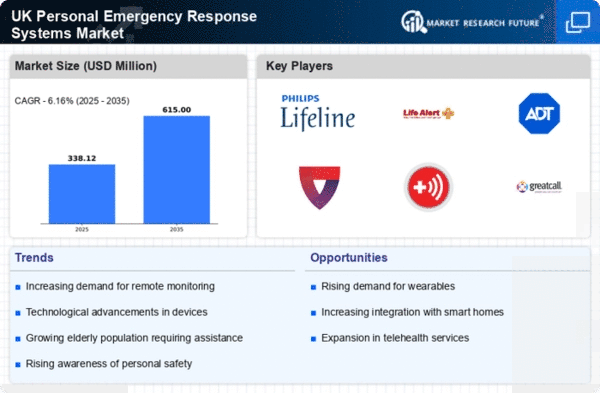
UK Personal Emergency Response Systems Market Infographic
Purchase Options

UK Personal Emergency Response Systems Market Summary

As per Market Research Future analysis, the UK personal emergency-response-systems market size was estimated at 318.5 USD Million in 2024. The UK personal emergency-response-systems market is projected to grow from 338.12 USD Million in 2025 to 615.0 USD Million by 2035, exhibiting a compound annual growth rate (CAGR) of 6.1% during the forecast period 2025 - 2035

Key Market Trends & Highlights

The UK personal emergency-response-systems market is experiencing robust growth driven by technological advancements and demographic shifts.

  • Technological advancements are enhancing the functionality and reliability of personal emergency-response systems.
  • The integration of services is becoming increasingly prevalent, allowing for seamless communication between users and emergency responders.
  • Consumer awareness regarding personal safety and health is rising, leading to greater adoption of emergency-response systems.
  • The aging population and government initiatives are key drivers propelling the market forward.

Market Size & Forecast

2024 Market Size 318.5 (USD Million)
2035 Market Size 615.0 (USD Million)
CAGR (2025 - 2035) 6.16%

Major Players

Philips Lifeline (US), Life Alert (US), ADT Inc. (US), Medical Guardian (US), Bay Alarm Medical (US), GreatCall (US), MobileHelp (US), Vigilant (US)

Our Impact
Enabled $4.3B Revenue Impact for Fortune 500 and Leading Multinationals
Partnering with 2000+ Global Organizations Each Year
30K+ Citations by Top-Tier Firms in the Industry

UK Personal Emergency Response Systems Market Trends

The personal emergency-response-systems market is currently experiencing notable growth. This growth is driven by an increasing awareness of safety and security among individuals, particularly the elderly and those with health concerns. This market encompasses a range of devices designed to provide immediate assistance in emergencies, such as medical alerts and fall detection systems. The rise in the aging population in the UK has led to a heightened demand for these systems, as families seek reliable solutions to ensure the well-being of their loved ones. Furthermore, advancements in technology have facilitated the development of more sophisticated and user-friendly devices, which may enhance the appeal of these systems to a broader audience. In addition to technological advancements, the personal emergency-response-systems market is influenced by changing consumer preferences. There appears to be a shift towards integrated solutions that combine various functionalities, such as health monitoring and emergency response, into a single device. This trend suggests that consumers are increasingly looking for comprehensive solutions that not only address immediate emergencies but also contribute to overall health management. As the market evolves, it is likely that manufacturers will continue to innovate, focusing on enhancing user experience and expanding the capabilities of their products to meet the diverse needs of consumers.

Technological Advancements

The personal emergency-response-systems market is witnessing rapid technological advancements, leading to the introduction of innovative features such as real-time health monitoring and GPS tracking. These enhancements may improve the effectiveness of emergency responses and provide users with greater peace of mind.

Integration of Services

There is a growing trend towards the integration of various services within personal emergency-response-systems. Consumers appear to prefer devices that not only offer emergency alerts but also include health tracking and communication features, creating a more holistic approach to personal safety.

Increased Consumer Awareness

Consumer awareness regarding the importance of personal safety and health management is on the rise. This heightened awareness may drive demand for personal emergency-response-systems, as individuals seek reliable solutions to ensure their safety and well-being.

UK Personal Emergency Response Systems Market Drivers

Aging Population

The aging population in the UK is a crucial driver for the personal emergency-response-systems market. As the demographic shifts towards an older age group, the demand for personal emergency-response systems is likely to increase. In 2025, it is estimated that over 18% of the UK population will be aged 65 and above, creating a substantial market for these systems. Older adults often face health challenges and may require immediate assistance in emergencies. Consequently, families and caregivers are increasingly seeking reliable solutions to ensure the safety of their loved ones. This trend suggests a growing market potential, as personal emergency-response systems provide peace of mind and quick access to help, thereby enhancing the quality of life for seniors.

Government Initiatives

Government initiatives aimed at improving healthcare and safety for vulnerable populations are significantly influencing the personal emergency-response-systems market. In the UK, various programs are being implemented to promote the use of these systems among the elderly and disabled. For instance, funding schemes and awareness campaigns are encouraging the adoption of personal emergency-response systems, which are seen as essential tools for enhancing safety. The government’s commitment to supporting independent living for seniors is likely to bolster market growth. As a result, the personal emergency-response-systems market may experience increased demand, driven by both public policy and consumer interest in safety solutions.

Increased Urbanization

The trend of increased urbanization in the UK is contributing to the growth of the personal emergency-response-systems market. As more individuals move to urban areas, the complexities of city living can pose unique challenges, particularly for the elderly and those with health issues. Urban environments often present higher risks, necessitating reliable emergency-response solutions. The personal emergency-response-systems market is likely to benefit from this demographic shift, as urban dwellers seek systems that provide rapid emergency assistance. This urban-centric demand may drive innovation and competition within the market, leading to the development of more tailored solutions for city residents.

Rising Health Awareness

The growing awareness of health and safety issues among the UK population is a significant driver for the personal emergency-response-systems market. As individuals become more conscious of their health and the potential risks associated with aging, there is a corresponding increase in the demand for emergency-response solutions. Surveys indicate that approximately 70% of older adults express a desire for systems that can provide immediate assistance in emergencies. This heightened awareness is prompting families to invest in personal emergency-response systems, viewing them as essential components of health management. Consequently, the market is likely to expand as more consumers recognize the value of these systems in ensuring safety and well-being.

Technological Integration

The integration of advanced technologies into personal emergency-response systems is significantly enhancing their functionality and appeal in the market. Innovations such as GPS tracking, mobile applications, and wearable devices are enhancing the functionality and appeal of these systems. In the UK, the market is projected to grow at a CAGR of approximately 10% from 2025 to 2030, driven by the increasing adoption of smart technologies. These advancements not only improve response times but also allow for more personalized services, catering to individual needs. As technology continues to evolve, the personal emergency-response-systems market is likely to witness further enhancements, making these systems more accessible and user-friendly for consumers.


Market Segment Insights

By Type: Mobile PERS (Largest) vs. GPS (Fastest-Growing)

In the UK personal emergency-response-systems market, the distribution of market share among segment values reveals a notable preference for Mobile PERS, which has solidified its position as the largest segment. Following closely are Standalone PERS and Medical alarm systems, which cater to diverse consumer needs. Other segments, such as Transmitters and Wandering systems, contribute to a varied market landscape, reflecting the unique requirements of different end-users. The growth trends in this segment are driven by increasing consumer awareness regarding health and safety, alongside advancements in technology that enhance system effectiveness. Mobile PERS and GPS technologies are gaining traction, appealing to a younger demographic and tech-savvy users due to their convenience and real-time tracking capabilities. The ongoing evolution of features, such as improved connectivity and user-friendly interfaces, further propels these segments into the spotlight.

Standalone PERS (Dominant) vs. Wireless (Emerging)

Standalone PERS is positioned as the dominant segment in the UK personal emergency-response-systems market, primarily due to its reliability and ease of use for elderly individuals and those with health concerns. These systems typically operate independently from other home systems, providing users with straightforward access to emergency services. On the other hand, Wireless systems are emerging as a promising alternative, appealing to tech-savvy consumers who prioritize mobility and flexibility. The ability to operate without extensive wiring makes them particularly advantageous for installation in varied environments. As technology advances, Wireless systems are expected to integrate more seamlessly with smartphones and other smart devices, enhancing their value proposition and expanding their market appeal.

By Component: Smoke Detectors (Largest) vs. Fall Detection Sensors (Fastest-Growing)

In the UK personal emergency-response-systems market, the component segment shows a varied distribution in market share. Smoke detectors hold the largest share, primarily due to their widespread use and essential role in home safety. Other notable components include bed sensors and pull-cord residential alarms, each catering to specific user needs, but their market presence is smaller compared to smoke detectors. At the same time, fall detection sensors are gaining traction due to an aging population that increasingly values assurance and safety in daily life. Growth trends in this segment are primarily driven by technological advancements and rising health awareness. As innovations in connectivity and data processing emerge, components like smart smoke detectors and fall detection sensors are evolving, attracting investment. Additionally, public and private initiatives focused on improving safety standards are fostering the adoption of these systems, making them a significant focus for future market growth.

Smoke Detectors (Dominant) vs. Fall Detection Sensors (Emerging)

Smoke detectors are a dominant force within the UK personal emergency-response-systems market, recognized for their critical role in preventing fire-related accidents. They are installed in a vast number of residences, ensuring compliance with safety regulations and serving as a primary line of defense for families. In contrast, fall detection sensors are emerging as a vital technology, particularly for senior citizens. These devices not only alert caregivers in case of falls but also incorporate advanced features such as mobile connectivity and real-time monitoring, catering to a demographic that seeks independence while prioritizing safety.

By End-user: Home-based users (Largest) vs. Nursing homes (Fastest-Growing)

In the UK personal emergency-response-systems market, the distribution of market share among end-user segments indicates a strong preference towards home-based users, who account for the largest share. Assisted living facilities and senior living facilities also contribute significantly, but their shares are comparatively smaller. However, nursing homes are emerging rapidly, demonstrating notable growth potential and reflecting shifts in how care services are provided for the elderly and vulnerable populations. Growth in this segment is primarily driven by the increasing aging population and the rising preference for aging in place. Home-based users are benefiting from technological advancements that offer better accessibility and user-friendliness. Meanwhile, nursing homes are becoming the fastest-growing segment as they adapt to newer technologies, enhancing safety and communication for residents, thus attracting more users seeking reliable emergency response systems.

Home-based users (Dominant) vs. Nursing homes (Emerging)

Home-based users represent the dominant segment in the UK personal emergency-response-systems market, characterized by a high demand for user-friendly devices that enable seniors to live independently while ensuring their safety. This segment enjoys a favorable market position due to the trend of aging in place, wherein seniors prefer residing in their homes longer. Alternatively, nursing homes are transitioning into an emerging segment, reflecting a shift towards integrated care solutions that combine medical services with advanced emergency-response systems. As these facilities invest in cutting-edge technology, they are positioned to attract more residents, emphasizing safety and personalized care, making them increasingly relevant in the evolving market landscape.

Get more detailed insights about UK Personal Emergency Response Systems Market

Key Players and Competitive Insights

The personal emergency-response-systems market is currently characterized by a dynamic competitive landscape, driven by technological advancements and an increasing demand for safety solutions among aging populations. Key players such as Philips Lifeline (US), Life Alert (US), and ADT Inc. (US) are strategically positioned to leverage innovation and partnerships to enhance their service offerings. Philips Lifeline (US) focuses on integrating advanced health monitoring technologies into its systems, while Life Alert (US) emphasizes rapid response capabilities and user-friendly interfaces. ADT Inc. (US) is expanding its portfolio through strategic acquisitions, thereby enhancing its market presence and operational capabilities. Collectively, these strategies contribute to a competitive environment that is increasingly focused on technological integration and customer-centric solutions.In terms of business tactics, companies are increasingly localizing manufacturing and optimizing supply chains to enhance efficiency and reduce costs. The market appears moderately fragmented, with several key players exerting influence over specific segments. This fragmentation allows for niche players to thrive, while larger companies consolidate their positions through mergers and acquisitions, thereby shaping the overall market structure.
In October Philips Lifeline (US) announced a partnership with a leading telehealth provider to integrate remote health monitoring into its emergency response systems. This strategic move is likely to enhance the value proposition of their offerings, allowing users to receive comprehensive health insights alongside emergency assistance. Such integration may not only improve user experience but also position Philips Lifeline (US) as a leader in the convergence of health technology and emergency response.
In September Life Alert (US) launched a new mobile application designed to enhance user engagement and streamline emergency response processes. This application allows users to customize their emergency contacts and access real-time health data, which could significantly improve response times. The introduction of this technology suggests a shift towards more personalized emergency services, potentially setting a new standard in the industry.
In August ADT Inc. (US) completed the acquisition of a regional emergency response service provider, thereby expanding its operational footprint and service capabilities. This acquisition is indicative of a broader trend where larger firms seek to consolidate their market positions through strategic purchases, enhancing their ability to offer comprehensive solutions. Such actions may lead to increased competition as these companies strive to differentiate themselves through expanded service offerings.
As of November the competitive trends in the personal emergency-response-systems market are increasingly defined by digitalization, AI integration, and a focus on sustainability. Strategic alliances are becoming more prevalent, as companies recognize the value of collaboration in enhancing service delivery and technological capabilities. Looking ahead, competitive differentiation is likely to evolve from traditional price-based competition towards innovation, technology integration, and supply chain reliability, suggesting a transformative shift in how companies position themselves in the market.

Key Companies in the UK Personal Emergency Response Systems Market include

Industry Developments

In recent months, the UK Personal Emergency Response Systems Market has witnessed various developments. In July 2023, SureSafe launched an AI-enhanced personal alarm device aimed at improving user experience and emergency response times.

Similarly, Tunstall Healthcare introduced an integrated telecare solution that combines health monitoring with emergency response, enhancing their service offerings. In the current landscape, companies like Lifeline and Lifestation are also focusing on expanding their product ranges to include remote monitoring technologies and smart home integrations.

Notably, GreatCall announced a partnership with several healthcare providers to expand their services in response to increasing demand from aging populations. The market valuation for firms such as Medical Alert and VitalCall is growing, driven largely by technological advancements and an increased focus on independent living solutions for seniors.

Over the past two years, the import of remote healthcare solutions has surged, spurred by the COVID-19 pandemic and a subsequent increase in the demand for telehealth services.

Amidst these developments, there has been increased interest in mergers and acquisitions, particularly concerning companies like Assistive Technology and MediMagic, with potential consolidations expected to shape the competitive landscape further.

Future Outlook

UK Personal Emergency Response Systems Market Future Outlook

The personal emergency-response-systems market is projected to grow at a 6.16% CAGR from 2025 to 2035, driven by technological advancements and increasing demand for safety solutions.

New opportunities lie in:

  • Integration of AI-driven analytics for predictive maintenance Development of mobile applications for real-time monitoring Expansion into telehealth services for remote patient support

By 2035, the market is expected to achieve substantial growth, reflecting evolving consumer needs and technological innovations.

Market Segmentation

UK Personal Emergency Response Systems Market Type Outlook

  • Standalone PERS
  • Transmitters
  • R-cube monitoring systems
  • Standalone voice dialers
  • Wandering systems
  • Medical alarm systems
  • Landline PERS
  • Mobile PERS
  • Wireless
  • GPS
  • Cellular

UK Personal Emergency Response Systems Market End-user Outlook

  • Nursing homes
  • Home-based users
  • Assisted living facilities
  • Hospices
  • Senior living facilities

UK Personal Emergency Response Systems Market Component Outlook

  • Smoke detectors
  • Bed sensors
  • Pull-cord residential
  • Fall detection sensors
  • Flood detectors

Report Scope

MARKET SIZE 2024 318.5(USD Million)
MARKET SIZE 2025 338.12(USD Million)
MARKET SIZE 2035 615.0(USD Million)
COMPOUND ANNUAL GROWTH RATE (CAGR) 6.16% (2025 - 2035)
REPORT COVERAGE Revenue Forecast, Competitive Landscape, Growth Factors, and Trends
BASE YEAR 2024
Market Forecast Period 2025 - 2035
Historical Data 2019 - 2024
Market Forecast Units USD Million
Key Companies Profiled Philips Lifeline (US), Life Alert (US), ADT Inc. (US), Medical Guardian (US), Bay Alarm Medical (US), GreatCall (US), MobileHelp (US), Vigilant (US)
Segments Covered Type, Component, End-user
Key Market Opportunities Integration of advanced wearable technology enhances user experience in the personal emergency-response-systems market.
Key Market Dynamics Technological advancements drive innovation in personal emergency-response-systems, enhancing user experience and safety features.
Countries Covered UK
Leave a Comment

FAQs

What is the expected market size of the UK Personal Emergency Response Systems market in 2024?

The UK Personal Emergency Response Systems market is expected to be valued at 286.56 million USD in 2024.

What is the projected market size for the UK Personal Emergency Response Systems by 2035?

By 2035, the market is projected to reach a value of 693.5 million USD.

What is the expected CAGR for the UK Personal Emergency Response Systems market from 2025 to 2035?

The expected compound annual growth rate for the market from 2025 to 2035 is 8.366 percent.

Which segment of the UK Personal Emergency Response Systems market is anticipated to have the highest value in 2035?

The Standalone PERS segment is anticipated to reach 220.67 million USD in 2035, making it one of the highest valued segments.

Who are the key players in the UK Personal Emergency Response Systems market?

Major players in the market include SureSafe, Lifeline, Nordic Health, and Tunstall Healthcare, among others.

What value is assigned to the Transmitter segment in the UK Personal Emergency Response Systems market in 2024?

The Transmitter segment is valued at 60.26 million USD in the year 2024.

How much is the R-cube monitoring systems segment projected to grow over the forecast period?

The R-cube monitoring systems segment is expected to increase from 38.12 million USD in 2024 to 95.53 million USD by 2035.

What are some key growth drivers for the UK Personal Emergency Response Systems market?

Key growth drivers include the increasing aging population and the rising demand for home healthcare solutions.

What is the market value for the Standalone voice dialer segment in 2035?

The Standalone voice dialer segment is expected to be valued at 115.51 million USD in 2035.

What challenges does the UK Personal Emergency Response Systems market face?

Challenges in this market may include technological advancements and the need for continuous innovation in response systems.

Download Free Sample

Kindly complete the form below to receive a free sample of this Report

Compare Licence

×
Features License Type
Single User Multiuser License Enterprise User
Price $4,950 $5,950 $7,250
Maximum User Access Limit 1 User Upto 10 Users Unrestricted Access Throughout the Organization
Free Customization
Direct Access to Analyst
Deliverable Format
Platform Access
Discount on Next Purchase 10% 15% 15%
Printable Versions