×
Request Free Sample ×

Kindly complete the form below to receive a free sample of this Report

* Please use a valid business email

Leading companies partner with us for data-driven Insights

clients tt-cursor
Hero Background
English
Chinese
French
Japanese
Korean
German
Spanish

Flavored Tea Market Size

ID: MRFR/FnB/4154-HCR
128 Pages
Pradeep Nandi
October 2025

Flavored Tea Market Size, Share, Industry Trend & Analysis Research Report Information By Type (Black Tea, Green Tea, White Tea and others), by Flavor (Fruits, Herbs, Spices and others), by Distribution Channel (Store-Based and Non-Store Based) and Region – Forecast Till 2030

Share:
Download PDF ×

We do not share your information with anyone. However, we may send you emails based on your report interest from time to time. You may contact us at any time to opt-out.

Flavored Tea Market Infographic
×
Flavored Tea Market Infographic Full View
Purchase Options

Flavored Tea Size

Flavored Tea Market Growth Projections and Opportunities

The Flavored Tea market experiences the influence of diverse factors that collectively shape its growth and market dynamics. One significant driver is the increasing consumer preference for unique and innovative beverage options. Flavored tea, with its wide array of enticing flavors, appeals to consumers seeking a refreshing and flavorful alternative to traditional teas. The market has witnessed a surge in demand as consumers explore diverse taste profiles, ranging from fruity and floral notes to herbal and exotic blends, contributing to the overall popularity of flavored tea. Economic factors play a pivotal role in shaping the Flavored Tea market. The rising disposable incomes and changing lifestyle patterns of consumers have led to an increased willingness to spend on premium and specialty beverages. Flavored tea, often perceived as a premium and indulgent option, has gained traction among consumers with higher purchasing power. The market responds to economic trends by offering a variety of flavored tea options, including those positioned as luxurious or featuring exotic ingredients. Cultural influences significantly impact the Flavored Tea market, as different regions have unique tea-drinking traditions and preferences. Manufacturers often tailor their flavored tea offerings to align with local tastes and cultural practices, leading to a rich diversity of flavors in the global market. The infusion of local herbs, spices, and traditional flavors in teas helps create products that resonate with the cultural preferences of specific regions. Health and wellness trends are instrumental in shaping the Flavored Tea market. With an increasing focus on well-being, consumers are drawn to teas that offer health benefits beyond traditional black or green teas. Flavored teas often incorporate ingredients known for their antioxidant properties, such as fruits, herbs, and botanicals, appealing to health-conscious consumers seeking both taste and nutritional value in their beverages. Environmental sustainability has become a critical factor in the Flavored Tea market. With growing awareness of environmental issues, consumers are increasingly inclined towards brands that adopt eco-friendly practices. This includes sustainable sourcing of tea leaves, environmentally conscious packaging, and ethical production methods. Manufacturers are responding to this trend by emphasizing their commitment to sustainability, creating a positive brand image that resonates with environmentally conscious consumers. Technological advancements play a role in the Flavored Tea market by contributing to the production processes and packaging innovations. Improved extraction techniques for flavoring ingredients, such as natural essences and extracts, enhance the quality and consistency of flavored teas. Advanced packaging technologies ensure product freshness, convenience, and shelf life, meeting consumer expectations for high-quality beverages. Market factors also include the influence of marketing strategies and branding. Effective promotion through various channels, including social media and experiential marketing, helps build brand awareness and engage consumers. The visual appeal of packaging design, coupled with compelling storytelling and messaging, contributes to the overall perception of flavored tea brands in a competitive market. Distribution channels play a crucial role in the accessibility and availability of flavored tea products. The convenience of purchasing flavored teas from supermarkets, specialty stores, and online platforms contributes to their market reach. Strategic partnerships with distributors and retailers enhance the visibility and availability of flavored teas, ensuring they are accessible to a diverse consumer base.

Flavored Tea Market Size Graph
Author
Pradeep Nandi
Senior Research Analyst

I have a bachelor's degree in mechanical engineering and an MBA. I have more than two years of expertise in the retail, food, and beverage, chemical, and material industries, and hence have developed a sound cross-domain expertise. A firm believer in lifelong learning and sharing of knowledge. Having a proclivity for hatching ideas and trying to absorb as much information as possible in a short amount of time. Introducing corporates to the data and insight, which enables them to move from probability to possibility, has been my key areas of interest. 

Leave a Comment

FAQs

Which region would be the fastest-growing flavored tea market?

The Asia Pacific region would be the fastest-growing flavored tea market.

Which type would be the fastest-growing flavored tea market segment?

The green tea segment in the fastest-growing segment of the flavored tea market.

What are the key players in the flavored tea market?

Leading players in the global flavored tea market include Associated British Foods plc (Twinnings) (U.K.), Goodricke Group Ltd. (India), Golden Tips Tea, Co. Pvt. Ltd. (India), Apeejay Surrendra Group (Typhoo Tea) (India), Tata Global Beverages Ltd. (India).

Which distribution channel would boost the flavored tea market?

The store-based segment would boost the flavored tea market.

Market Summary

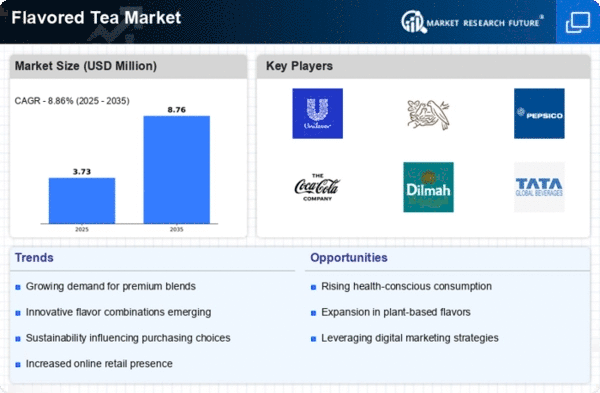
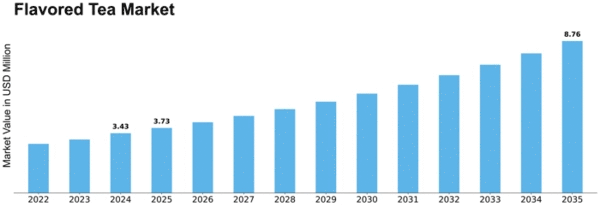
As per MRFR analysis, the Flavored Tea Market Size was estimated at 3.43 USD Million in 2024. The Flavored Tea industry is projected to grow from 3.77 in 2025 to 8.76 by 2035, exhibiting a compound annual growth rate (CAGR) of 8.86 during the forecast period 2025 - 2035.

Key Market Trends & Highlights

The Flavored Tea Market is experiencing robust growth driven by health trends and innovative flavors.

  • North America remains the largest market for flavored tea, driven by a growing health-conscious consumer base.
  • Asia-Pacific is the fastest-growing region, reflecting increasing demand for diverse flavor profiles and cultural influences.
  • Black tea continues to dominate the market, while green tea is emerging as the fastest-growing segment due to its perceived health benefits.
  • Key market drivers include health-conscious choices and a focus on sustainability, which are shaping consumer preferences.

Market Size & Forecast

2024 Market Size 3.43 (USD Million)
2035 Market Size 8.76 (USD Million)
CAGR (2025 - 2035) 8.86%
Largest Regional Market Share in 2024 North America

Major Players

Unilever (GB), Nestle (CH), PepsiCo (US), The Coca-Cola Company (US), Dilmah (LK), Tata Global Beverages (IN), Harney & Sons (US), Stash Tea (US), Twinings (GB)

Market Trends

The Flavored Tea Market is currently experiencing a dynamic evolution, characterized by a growing consumer preference for diverse and innovative flavor profiles. This shift appears to be driven by an increasing awareness of health benefits associated with various tea blends, as well as a desire for unique sensory experiences. As consumers become more discerning, they seem to gravitate towards products that not only satisfy their taste buds but also align with their wellness aspirations. The market landscape is further influenced by the rise of specialty tea shops and online platforms, which provide a broader array of options, thereby enhancing accessibility and convenience for consumers. Moreover, sustainability and ethical sourcing are emerging as pivotal factors in the Flavored Tea Market. Brands that prioritize environmentally friendly practices and transparent supply chains may find themselves gaining a competitive edge. This trend suggests that consumers are not only interested in flavor but also in the origins and production methods of their beverages. As the market continues to evolve, it is likely that these factors will play an increasingly significant role in shaping consumer choices and brand loyalty, indicating a promising future for the Flavored Tea Market.

Health-Conscious Choices

Consumers are increasingly opting for flavored teas that offer health benefits, such as antioxidants and natural ingredients. This trend reflects a broader shift towards wellness-oriented products.

Sustainability Focus

There is a growing emphasis on sustainable sourcing and eco-friendly packaging within the Flavored Tea Market. Brands that adopt these practices may appeal more to environmentally conscious consumers.

Diverse Flavor Innovations

The market is witnessing a surge in unique and exotic flavor combinations, catering to adventurous palates. This trend indicates a shift towards more personalized and experiential tea offerings.

Flavored Tea Market Market Drivers

E-commerce Expansion

The rise of e-commerce platforms has significantly transformed the Global Flavored Tea Industry by providing consumers with convenient access to a wide range of flavored tea products. Online retailing allows brands to reach a global audience, breaking geographical barriers and enhancing product visibility. This trend is particularly beneficial for niche brands that may struggle to compete in traditional retail environments. The convenience of online shopping, coupled with targeted marketing strategies, has led to increased sales and brand loyalty. As e-commerce continues to expand, it is likely to play a pivotal role in shaping the future of the flavored tea market, contributing to its overall growth.

Diverse Flavor Profiles

The Global Flavored Tea Industry benefits from an expanding array of flavor profiles that cater to diverse consumer preferences. Manufacturers are innovating with unique blends, incorporating exotic fruits, spices, and herbs to create distinctive flavors. This variety not only attracts new consumers but also encourages existing customers to explore different options. For instance, the introduction of flavors like hibiscus, chai, and matcha has gained traction, appealing to a broad demographic. This trend is likely to contribute to the market's growth, with projections indicating a potential increase to 541.32 USD Billion by 2035, as consumers continue to seek novel and exciting tea experiences.

Market Growth Projections

The Global Flavored Tea Industry is poised for substantial growth, with projections indicating a market size of 235.94 USD Billion in 2024 and an anticipated increase to 541.32 USD Billion by 2035. This growth trajectory suggests a compound annual growth rate of 7.84% from 2025 to 2035, reflecting the increasing consumer demand for flavored tea products. The market dynamics are influenced by various factors, including health consciousness, diverse flavor offerings, and sustainability initiatives. These elements collectively contribute to a robust market environment, positioning flavored tea as a key player in the global beverage industry.

Rising Health Consciousness

The increasing awareness of health benefits associated with flavored tea is a primary driver for the Global Flavored Tea Industry. Consumers are increasingly seeking beverages that offer health advantages, such as antioxidants and vitamins. This trend is reflected in the growing popularity of herbal and fruit-infused teas, which are perceived as healthier alternatives to sugary drinks. As a result, the market is projected to reach approximately 235.94 USD Billion in 2024, driven by this shift towards health-oriented products. The demand for organic and natural ingredients further supports this trend, as consumers become more discerning about their beverage choices.

Sustainable Packaging Initiatives

Sustainability has emerged as a critical factor influencing consumer choices within the Global Flavored Tea Industry. Companies are increasingly adopting eco-friendly packaging solutions to appeal to environmentally conscious consumers. This shift not only enhances brand image but also aligns with the growing demand for sustainable products. For example, brands are utilizing biodegradable materials and recyclable packaging to reduce their environmental footprint. This trend is expected to resonate well with consumers, potentially driving market growth as sustainability becomes a key purchasing criterion. As a result, the market may experience a compound annual growth rate of 7.84% from 2025 to 2035, reflecting the importance of sustainability in consumer decision-making.

Cultural Influences on Tea Consumption

Cultural factors significantly impact the consumption patterns within the Global Flavored Tea Industry. In many regions, tea is not merely a beverage but a cultural ritual, influencing flavor preferences and consumption habits. For instance, in Asian countries, traditional tea ceremonies often incorporate flavored teas, while Western markets are increasingly embracing tea as a lifestyle choice. This cultural significance drives demand for specific flavors that resonate with local traditions. As globalization continues to influence consumer behavior, the market is likely to witness a blending of cultural preferences, further diversifying flavor offerings and enhancing market growth.

Market Segment Insights

By Type: Black Tea (Largest) vs. Green Tea (Fastest-Growing)

In the Flavored Tea Market, the distribution of market share among different tea types reveals that Black Tea holds the largest share, widely consumed across various demographics due to its robust flavor profile and versatility in blends. Green Tea, while currently having a smaller share, is rapidly gaining traction owing to its association with health benefits and wellness trends, making it a significant player in the evolving market landscape.

Black Tea (Dominant) vs. Green Tea (Emerging)

Black Tea remains a dominant force in the Flavored Tea Market, cherished for its classic taste and ability to adapt to various flavor infusions. This segment benefits from established consumer loyalty and a broad availability of products ranging from traditional blends to innovative flavored options. In contrast, Green Tea is emerging as a popular choice, particularly among health-conscious consumers seeking natural and antioxidant-rich beverages. As trends shift towards wellness and organic options, Green Tea is innovating with new flavors and blends, thus positioning itself strongly in the market as a forward-looking choice for tea enthusiasts.

By Distribution Channel: Supermarkets (Largest) vs. Online Retail (Fastest-Growing)

In the Flavored Tea Market, Supermarkets hold a predominant share as the leading distribution channel, leveraged by their vast outreach and established customer trust. This channel has created an integrated shopping experience for consumers where flavored tea products are prominently displayed. Meanwhile, Online Retail has been gaining momentum rapidly, especially as more consumers prefer the convenience of shopping from home and accessing a wider variety of products not limited by geographical constraints.

Supermarkets (Dominant) vs. Online Retail (Emerging)

Supermarkets are the dominant players in the flavored tea distribution landscape, benefiting from strong brand partnerships and extensive product placements. They provide consumers with ease of access and a wide variety of flavored tea choices. On the other hand, Online Retail is emerging rapidly, driven by a tech-savvy consumer base that values convenience and the ability to compare products easily. This channel is stimulating growth through various promotions, extensive delivery options, and the rise of e-commerce platforms that offer niche flavored tea brands, encouraging consumers to explore unique offerings they may not find in physical stores.

By Packaging Type: Tea Bags (Largest) vs. Loose Leaf (Fastest-Growing)

In the Flavored Tea Market, packaging type plays a crucial role in consumer preference and purchasing behavior. Tea Bags hold the largest market share among packaging types, favored for their convenience and ease of use. The popularity of pre-packaged options and single-serve formats has substantially contributed to the dominance of Tea Bags, appealing to on-the-go consumers. Meanwhile, Loose Leaf tea is emerging as the fastest-growing segment, driven by a rising interest in artisanal and premium products. Consumers are increasingly seeking out Loose Leaf options for their perceived quality and flavor variety.

Tea Bags (Dominant) vs. Loose Leaf (Emerging)

Tea Bags have established themselves as a dominant force in the Flavored Tea Market due to their convenience, portability, and widespread availability. Much of their appeal lies in the ease of preparation and the ability to steep quality flavors without additional equipment. In contrast, the Loose Leaf segment is emerging rapidly, attracting tea enthusiasts who appreciate the nuanced flavors and freshness that loose tea provides. With a growing awareness of health and quality among consumers, Loose Leaf teas are gaining traction for their customizable brewing experience and rich taste, positioning them as a sought-after alternative to traditional packing methods.

By Flavor Profile: Citrus (Largest) vs. Mint (Fastest-Growing)

In the Flavored Tea Market, the flavor profile segment is diverse, with Citrus leading as the most popular choice among consumers. Its refreshing taste and versatility contribute to its dominant market share, appealing to a wide audience. Mint follows closely, recognized for its invigorating qualities, which has gained significant traction among health-conscious consumers looking for unique flavor experiences. Other flavors like Floral, Spicy, and Fruity hold notable shares, catering to niche markets seeking exotic and innovative tastes. Growth trends within the Flavored Tea Market indicate an increasing demand for Mint as the fastest-growing segment. This surge is attributed to the rising popularity of health and wellness trends, prompting consumers to gravitate towards flavors that offer both taste and potential health benefits. Additionally, innovative product launches and the expansion of flavor varieties are driving growth across all flavor profiles, creating an exciting landscape for consumers and brands alike.

Citrus (Dominant) vs. Fruity (Emerging)

Citrus remains the dominant flavor profile in the Flavored Tea Market, known for its zesty and refreshing characteristics that resonate with a broad consumer base. Its favorites like lemon and orange continue to lead preferences, particularly among those looking for a revitalizing tea experience. In contrast, Fruity is emerging as a compelling choice for consumers seeking a burst of sweetness and tropical essences. With flavors such as berry and mango gaining traction, this segment is appealing to younger demographics and those drawn to innovative and vibrant flavors. The distinctive attributes of Citrus and Fruity not only differentiate them in taste but also position them strategically in an evolving market where consumer preferences are shifting towards more adventurous and health-oriented tea options.

By Consumer Demographics: Age Group (Largest) vs. Health Consciousness (Fastest-Growing)

In the Flavored Tea Market, the age group segment stands out as the largest demographic, with consumers aged 25-34 showing significant interest and engagement. This age group embraces flavored teas, favoring both traditional and innovative flavors. In contrast, health consciousness emerges as the fastest-growing segment, driven by consumers across all age groups seeking healthier beverage options. This shift reflects a broader societal trend towards wellness and self-care, influencing purchasing decisions. Growth trends reveal that younger consumers are increasingly drawn to flavored teas as a healthier alternative to sugary drinks, contributing to the overall market expansion. Additionally, rising health awareness among all demographics fosters a preference for beverages made from natural ingredients. Brands that emphasize health benefits, such as antioxidants and low-calorie options, are likely to thrive as consumer priorities evolve, emphasizing wellness and lifestyle alignment.

Age Group: 25-34 (Dominant) vs. Health Consciousness (Emerging)

The age group of 25-34 stands as the dominant demographic in the flavored tea market, characterized by their adventurous palate and a willingness to explore diverse flavor profiles. This cohort is influenced by social media trends, seeking products that align with their lifestyle and preferences. In contrast, health consciousness represents an emerging segment, fueled by a growing awareness of the benefits associated with natural and organic ingredients. Consumers are increasingly looking for flavored teas that offer functional health benefits, such as stress relief and boosted immunity. This trend is compelling brands to innovate and create products tailored to health-focused individuals, leading to the establishment of new marketing strategies aimed at both the dominant age group and the emerging health-conscious demographic.

Get more detailed insights about Flavored Tea Market Research Report - Forecast to 2035

Regional Insights

North America : Market Leader in Flavored Tea

North America is poised to maintain its leadership in the flavored tea market, holding a significant share of 1.5 billion. The growth is driven by increasing health consciousness among consumers, leading to a surge in demand for herbal and fruit-infused teas. Regulatory support for natural ingredients and organic certifications further catalyzes market expansion, making it a vibrant sector for investment and innovation. The United States and Canada are the primary contributors to this market, with major players like PepsiCo and The Coca-Cola Company leading the charge. The competitive landscape is characterized by a mix of established brands and emerging local players, all vying for consumer attention. The presence of key players such as Unilever and Nestle ensures a diverse product offering, catering to various consumer preferences and trends.

Europe : Emerging Market with Growth Potential

Europe, with a market size of €1.2 billion, is witnessing a notable increase in flavored tea consumption, driven by changing consumer preferences towards healthier beverage options. The region's regulatory framework supports organic and natural products, encouraging brands to innovate and diversify their offerings. The growing trend of wellness and sustainability among consumers is a significant catalyst for market growth, positioning Europe as a key player in the global flavored tea landscape. Leading countries such as Germany, the UK, and France are at the forefront of this trend, with a competitive landscape featuring both global giants and local artisans. Key players like Twinings and Dilmah are expanding their product lines to include unique flavors and blends, appealing to a diverse consumer base. The market is characterized by a strong emphasis on quality and sustainability, aligning with European consumers' values.

Asia-Pacific : Emerging Powerhouse in Tea Consumption

The Asia-Pacific region, with a market size of $0.6 billion, is emerging as a significant player in the flavored tea market. The growth is primarily driven by rising disposable incomes and changing lifestyles, leading to increased demand for premium and flavored tea products. Regulatory initiatives promoting health and wellness are also contributing to this trend, making flavored teas more appealing to health-conscious consumers. Countries like India and China are leading the charge, with a rich heritage in tea consumption. The competitive landscape is marked by both local brands and international players, such as Tata Global Beverages and Harney & Sons, who are introducing innovative flavors to capture the growing market. The region's diverse palate and cultural appreciation for tea provide a fertile ground for flavored tea growth.

Middle East and Africa : Untapped Market with Potential

The Middle East and Africa region, with a market size of $0.13 billion, presents untapped opportunities in the flavored tea market. The growth is driven by increasing urbanization and a shift towards healthier beverage choices among consumers. Regulatory frameworks are gradually evolving to support the introduction of flavored teas, which are gaining popularity as alternatives to traditional beverages. Countries like South Africa and the UAE are leading the way in flavored tea consumption, with a growing number of local and international brands entering the market. The competitive landscape is still developing, with key players exploring unique flavor profiles to cater to regional tastes. The potential for growth in this region is significant, as consumer awareness and demand for flavored tea continue to rise.

Key Players and Competitive Insights

The Flavored Tea Market is currently characterized by a dynamic competitive landscape, driven by evolving consumer preferences towards health-conscious and flavorful beverage options. Key players such as Unilever (GB), Nestle (CH), and The Coca-Cola Company (US) are actively shaping the market through innovative product offerings and strategic partnerships. Unilever (GB) has positioned itself as a leader in sustainability, focusing on eco-friendly packaging and sourcing practices, which resonates with environmentally conscious consumers. Meanwhile, Nestle (CH) emphasizes product diversification, introducing new flavors and blends to cater to diverse palates, thereby enhancing its market presence. The Coca-Cola Company (US) leverages its extensive distribution network to penetrate emerging markets, indicating a strategic focus on regional expansion that enhances its competitive edge.In terms of business tactics, companies are increasingly localizing manufacturing to reduce costs and improve supply chain efficiency. This approach appears to be particularly effective in a moderately fragmented market, where the collective influence of key players is significant. The competitive structure allows for both established brands and niche players to coexist, fostering an environment ripe for innovation and consumer engagement.

In November Unilever (GB) announced a partnership with a leading organic tea supplier to enhance its flavored tea portfolio. This strategic move is likely to bolster Unilever's commitment to sustainability while appealing to health-conscious consumers seeking organic options. The partnership not only expands their product range but also strengthens their market positioning in the premium segment.

In October The Coca-Cola Company (US) launched a new line of flavored teas infused with adaptogens, targeting the wellness trend among consumers. This initiative reflects a growing interest in functional beverages that offer health benefits, suggesting that Coca-Cola is keen on tapping into the wellness market, which is projected to grow substantially in the coming years. The introduction of adaptogens may also differentiate their offerings from competitors, enhancing brand loyalty.

In September Nestle (CH) unveiled a digital marketing campaign aimed at promoting its flavored tea products through social media influencers. This strategy appears to be a response to the increasing importance of digital engagement in consumer purchasing decisions. By leveraging influencers, Nestle is likely to enhance brand visibility and connect with younger demographics, which could lead to increased market share.

As of December the Flavored Tea Market is witnessing trends such as digitalization, sustainability, and the integration of AI in product development and marketing strategies. Strategic alliances are becoming increasingly vital, as companies seek to enhance their competitive positioning through collaborative efforts. The shift from price-based competition to a focus on innovation, technology, and supply chain reliability is evident, suggesting that future differentiation will hinge on the ability to adapt to consumer demands and market trends.

Key Companies in the Flavored Tea Market include

Industry Developments

The prominent market players that are functional in the APAC region are opting to reach the target audience at large with the help of store-based distribution channels like supermarkets and retail outlets. This is expanding their revenue scale and thus, promises a global expansion during the forecast period.

Flavored tea is gaining international attention in modern times as it presents a great value for money and an enhanced taste. There is a surge in global demand which is pushing for a hike in the imports and exports in countries like the US and Canada, as a part of the North American market and the APAC region.

The hypermarkets that are a part of the European market are adding on to the availability of product variations and offer a good choice to the consumers. Also, the customers are exposed to products that vary in the price range, as well. Hence, hypermarkets are all set to entertain an increased footfall during the forecast period.

The market players of the rest of the world are open to mergers, joint ventures, and acquisitions to invite new market entries and thus, expand the scope of the flavored tea market.

Report Outlook

The global report helps in discussing the market dynamics and trends that are likely to lead the market operations during the ongoing forecast period. The report helps in understanding the working of the market players and the ability of the market segments to maintain a proper flow of the supply chain mechanism. The report helps in preparing the market insights to understand the growth and expansion trends for the upcoming years.

Future Outlook

Flavored Tea Market Future Outlook

The Flavored Tea Market is projected to grow at an 8.86% CAGR from 2025 to 2035, driven by health trends, innovative flavors, and increasing consumer demand.

New opportunities lie in:

  • Expansion of online retail platforms for flavored tea sales.
  • Development of premium organic flavored tea lines.
  • Collaboration with wellness brands for co-branded products.

By 2035, the Flavored Tea Market is expected to achieve robust growth and diversification.

Market Segmentation

Flavored Tea Market Type Outlook

  • Herbal Tea
  • Fruit Tea
  • Spiced Tea
  • Green Tea
  • Black Tea

Flavored Tea Market Flavor Profile Outlook

  • Citrus
  • Mint
  • Floral
  • Spicy
  • Fruity

Flavored Tea Market Packaging Type Outlook

  • Loose Leaf
  • Tea Bags
  • Pouches
  • Cans
  • Bottled

Flavored Tea Market Distribution Channel Outlook

  • Supermarkets
  • Online Retail
  • Specialty Stores
  • Convenience Stores
  • Health Food Stores

Flavored Tea Market Consumer Demographics Outlook

  • Age Group
  • Gender
  • Income Level
  • Lifestyle
  • Health Consciousness

Report Scope

MARKET SIZE 20243.43(USD Million)
MARKET SIZE 20253.77(USD Million)
MARKET SIZE 20358.76(USD Million)
COMPOUND ANNUAL GROWTH RATE (CAGR)8.86% (2025 - 2035)
REPORT COVERAGERevenue Forecast, Competitive Landscape, Growth Factors, and Trends
BASE YEAR2024
Market Forecast Period2025 - 2035
Historical Data2019 - 2024
Market Forecast UnitsUSD Million
Key Companies ProfiledUnilever (GB), Nestle (CH), PepsiCo (US), The Coca-Cola Company (US), Dilmah (LK), Tata Global Beverages (IN), Harney & Sons (US), Stash Tea (US), Twinings (GB)
Segments CoveredType, Distribution Channel, Packaging Type, Flavor Profile, Consumer Demographics
Key Market OpportunitiesGrowing consumer preference for health-oriented beverages drives innovation in the Flavored Tea Market.
Key Market DynamicsRising consumer preference for natural ingredients drives innovation and competition in the flavored tea market.
Countries CoveredNorth America, Europe, APAC, South America, MEA

FAQs

Which region would be the fastest-growing flavored tea market?

The Asia Pacific region would be the fastest-growing flavored tea market.

Which type would be the fastest-growing flavored tea market segment?

The green tea segment in the fastest-growing segment of the flavored tea market.

What are the key players in the flavored tea market?

Leading players in the global flavored tea market include Associated British Foods plc (Twinnings) (U.K.), Goodricke Group Ltd. (India), Golden Tips Tea, Co. Pvt. Ltd. (India), Apeejay Surrendra Group (Typhoo Tea) (India), Tata Global Beverages Ltd. (India).

Which distribution channel would boost the flavored tea market?

The store-based segment would boost the flavored tea market.

  1. SECTION I: EXECUTIVE SUMMARY AND KEY HIGHLIGHTS
    1. | 1.1 EXECUTIVE SUMMARY
    2. | 1.1.1 Market Overview
    3. | 1.1.2 Key Findings
    4. | 1.1.3 Market Segmentation
    5. | 1.1.4 Competitive Landscape
    6. | 1.1.5 Challenges and Opportunities
    7. | 1.1.6 Future Outlook
  2. SECTION II: SCOPING, METHODOLOGY AND MARKET STRUCTURE
    1. | 2.1 MARKET INTRODUCTION
    2. | 2.1.1 Definition
    3. | 2.1.2 Scope of the study
    4. |-- 2.1.2.1 Research Objective
    5. |-- 2.1.2.2 Assumption
    6. |-- 2.1.2.3 Limitations
    7. | 2.2 RESEARCH METHODOLOGY
    8. | 2.2.1 Overview
    9. | 2.2.2 Data Mining
    10. | 2.2.3 Secondary Research
    11. | 2.2.4 Primary Research
    12. |-- 2.2.4.1 Primary Interviews and Information Gathering Process
    13. |-- 2.2.4.2 Breakdown of Primary Respondents
    14. | 2.2.5 Forecasting Model
    15. | 2.2.6 Market Size Estimation
    16. |-- 2.2.6.1 Bottom-Up Approach
    17. |-- 2.2.6.2 Top-Down Approach
    18. | 2.2.7 Data Triangulation
    19. | 2.2.8 Validation
  3. SECTION III: QUALITATIVE ANALYSIS
    1. | 3.1 MARKET DYNAMICS
    2. | 3.1.1 Overview
    3. | 3.1.2 Drivers
    4. | 3.1.3 Restraints
    5. | 3.1.4 Opportunities
    6. | 3.2 MARKET FACTOR ANALYSIS
    7. | 3.2.1 Value chain Analysis
    8. | 3.2.2 Porter's Five Forces Analysis
    9. |-- 3.2.2.1 Bargaining Power of Suppliers
    10. |-- 3.2.2.2 Bargaining Power of Buyers
    11. |-- 3.2.2.3 Threat of New Entrants
    12. |-- 3.2.2.4 Threat of Substitutes
    13. |-- 3.2.2.5 Intensity of Rivalry
    14. | 3.2.3 COVID-19 Impact Analysis
    15. |-- 3.2.3.1 Market Impact Analysis
    16. |-- 3.2.3.2 Regional Impact
    17. |-- 3.2.3.3 Opportunity and Threat Analysis
  4. SECTION IV: QUANTITATIVE ANALYSIS
    1. | 4.1 Food, Beverages & Nutrition, BY Type (USD Million)
    2. | 4.1.1 Herbal Tea
    3. | 4.1.2 Fruit Tea
    4. | 4.1.3 Spiced Tea
    5. | 4.1.4 Green Tea
    6. | 4.1.5 Black Tea
    7. | 4.2 Food, Beverages & Nutrition, BY Distribution Channel (USD Million)
    8. | 4.2.1 Supermarkets
    9. | 4.2.2 Online Retail
    10. | 4.2.3 Specialty Stores
    11. | 4.2.4 Convenience Stores
    12. | 4.2.5 Health Food Stores
    13. | 4.3 Food, Beverages & Nutrition, BY Packaging Type (USD Million)
    14. | 4.3.1 Loose Leaf
    15. | 4.3.2 Tea Bags
    16. | 4.3.3 Pouches
    17. | 4.3.4 Cans
    18. | 4.3.5 Bottled
    19. | 4.4 Food, Beverages & Nutrition, BY Flavor Profile (USD Million)
    20. | 4.4.1 Citrus
    21. | 4.4.2 Mint
    22. | 4.4.3 Floral
    23. | 4.4.4 Spicy
    24. | 4.4.5 Fruity
    25. | 4.5 Food, Beverages & Nutrition, BY Consumer Demographics (USD Million)
    26. | 4.5.1 Age Group
    27. | 4.5.2 Gender
    28. | 4.5.3 Income Level
    29. | 4.5.4 Lifestyle
    30. | 4.5.5 Health Consciousness
    31. | 4.6 Food, Beverages & Nutrition, BY Region (USD Million)
    32. | 4.6.1 North America
    33. |-- 4.6.1.1 US
    34. |-- 4.6.1.2 Canada
    35. | 4.6.2 Europe
    36. |-- 4.6.2.1 Germany
    37. |-- 4.6.2.2 UK
    38. |-- 4.6.2.3 France
    39. |-- 4.6.2.4 Russia
    40. |-- 4.6.2.5 Italy
    41. |-- 4.6.2.6 Spain
    42. |-- 4.6.2.7 Rest of Europe
    43. | 4.6.3 APAC
    44. |-- 4.6.3.1 China
    45. |-- 4.6.3.2 India
    46. |-- 4.6.3.3 Japan
    47. |-- 4.6.3.4 South Korea
    48. |-- 4.6.3.5 Malaysia
    49. |-- 4.6.3.6 Thailand
    50. |-- 4.6.3.7 Indonesia
    51. |-- 4.6.3.8 Rest of APAC
    52. | 4.6.4 South America
    53. |-- 4.6.4.1 Brazil
    54. |-- 4.6.4.2 Mexico
    55. |-- 4.6.4.3 Argentina
    56. |-- 4.6.4.4 Rest of South America
    57. | 4.6.5 MEA
    58. |-- 4.6.5.1 GCC Countries
    59. |-- 4.6.5.2 South Africa
    60. |-- 4.6.5.3 Rest of MEA
  5. SECTION V: COMPETITIVE ANALYSIS
    1. | 5.1 Competitive Landscape
    2. | 5.1.1 Overview
    3. | 5.1.2 Competitive Analysis
    4. | 5.1.3 Market share Analysis
    5. | 5.1.4 Major Growth Strategy in the Food, Beverages & Nutrition
    6. | 5.1.5 Competitive Benchmarking
    7. | 5.1.6 Leading Players in Terms of Number of Developments in the Food, Beverages & Nutrition
    8. | 5.1.7 Key developments and growth strategies
    9. |-- 5.1.7.1 New Product Launch/Service Deployment
    10. |-- 5.1.7.2 Merger & Acquisitions
    11. |-- 5.1.7.3 Joint Ventures
    12. | 5.1.8 Major Players Financial Matrix
    13. |-- 5.1.8.1 Sales and Operating Income
    14. |-- 5.1.8.2 Major Players R&D Expenditure. 2023
    15. | 5.2 Company Profiles
    16. | 5.2.1 Unilever (GB)
    17. |-- 5.2.1.1 Financial Overview
    18. |-- 5.2.1.2 Products Offered
    19. |-- 5.2.1.3 Key Developments
    20. |-- 5.2.1.4 SWOT Analysis
    21. |-- 5.2.1.5 Key Strategies
    22. | 5.2.2 Nestle (CH)
    23. |-- 5.2.2.1 Financial Overview
    24. |-- 5.2.2.2 Products Offered
    25. |-- 5.2.2.3 Key Developments
    26. |-- 5.2.2.4 SWOT Analysis
    27. |-- 5.2.2.5 Key Strategies
    28. | 5.2.3 PepsiCo (US)
    29. |-- 5.2.3.1 Financial Overview
    30. |-- 5.2.3.2 Products Offered
    31. |-- 5.2.3.3 Key Developments
    32. |-- 5.2.3.4 SWOT Analysis
    33. |-- 5.2.3.5 Key Strategies
    34. | 5.2.4 The Coca-Cola Company (US)
    35. |-- 5.2.4.1 Financial Overview
    36. |-- 5.2.4.2 Products Offered
    37. |-- 5.2.4.3 Key Developments
    38. |-- 5.2.4.4 SWOT Analysis
    39. |-- 5.2.4.5 Key Strategies
    40. | 5.2.5 Dilmah (LK)
    41. |-- 5.2.5.1 Financial Overview
    42. |-- 5.2.5.2 Products Offered
    43. |-- 5.2.5.3 Key Developments
    44. |-- 5.2.5.4 SWOT Analysis
    45. |-- 5.2.5.5 Key Strategies
    46. | 5.2.6 Tata Global Beverages (IN)
    47. |-- 5.2.6.1 Financial Overview
    48. |-- 5.2.6.2 Products Offered
    49. |-- 5.2.6.3 Key Developments
    50. |-- 5.2.6.4 SWOT Analysis
    51. |-- 5.2.6.5 Key Strategies
    52. | 5.2.7 Harney & Sons (US)
    53. |-- 5.2.7.1 Financial Overview
    54. |-- 5.2.7.2 Products Offered
    55. |-- 5.2.7.3 Key Developments
    56. |-- 5.2.7.4 SWOT Analysis
    57. |-- 5.2.7.5 Key Strategies
    58. | 5.2.8 Stash Tea (US)
    59. |-- 5.2.8.1 Financial Overview
    60. |-- 5.2.8.2 Products Offered
    61. |-- 5.2.8.3 Key Developments
    62. |-- 5.2.8.4 SWOT Analysis
    63. |-- 5.2.8.5 Key Strategies
    64. | 5.2.9 Twinings (GB)
    65. |-- 5.2.9.1 Financial Overview
    66. |-- 5.2.9.2 Products Offered
    67. |-- 5.2.9.3 Key Developments
    68. |-- 5.2.9.4 SWOT Analysis
    69. |-- 5.2.9.5 Key Strategies
    70. | 5.3 Appendix
    71. | 5.3.1 References
    72. | 5.3.2 Related Reports

Food, Beverages & Nutrition Market Segmentation

Food, Beverages & Nutrition By Type (USD Million, 2025-2035)

  • Herbal Tea
  • Fruit Tea
  • Spiced Tea
  • Green Tea
  • Black Tea

Food, Beverages & Nutrition By Distribution Channel (USD Million, 2025-2035)

  • Supermarkets
  • Online Retail
  • Specialty Stores
  • Convenience Stores
  • Health Food Stores

Food, Beverages & Nutrition By Packaging Type (USD Million, 2025-2035)

  • Loose Leaf
  • Tea Bags
  • Pouches
  • Cans
  • Bottled

Food, Beverages & Nutrition By Flavor Profile (USD Million, 2025-2035)

  • Citrus
  • Mint
  • Floral
  • Spicy
  • Fruity

Food, Beverages & Nutrition By Consumer Demographics (USD Million, 2025-2035)

  • Age Group
  • Gender
  • Income Level
  • Lifestyle
  • Health Consciousness
Infographic

Free Sample Request

Kindly complete the form below to receive a free sample of this Report

Get Free Sample

Customer Strories

Compare Licence

×
Features License Type
Single User Multiuser License Enterprise User
Price $4,950 $5,950 $7,250
Maximum User Access Limit 1 User Upto 10 Users Unrestricted Access Throughout the Organization
Free Customization
Direct Access to Analyst
Deliverable Format
Platform Access
Discount on Next Purchase 10% 15% 15%
Printable Versions