×
Request Free Sample ×

Kindly complete the form below to receive a free sample of this Report

* Please use a valid business email

Leading companies partner with us for data-driven Insights

clients tt-cursor
Hero Background
English
Chinese
French
Japanese
Korean
German
Spanish

Fishmeal Market Size

ID: MRFR/Agri/4085-HCR
110 Pages
Snehal Singh
October 2025

Fishmeal Market Size, Share, Industry Trend & Analysis Research Report Information By Source (Salmon & Trout, Marine Fish, Crustaceans, Tilapia, and Others), By Livestock (Ruminants, Poultry, Swine, Aquatic Animals, and Others), By Application (Fertilizers, Animal Feed, and Others), and By Region (North America, Europe, Asia-Pacific, And Rest Of The World) – Market Size, Share, Industry Trend & Analysis Forecast Till 2035

Share:
Download PDF ×

We do not share your information with anyone. However, we may send you emails based on your report interest from time to time. You may contact us at any time to opt-out.

Fishmeal Market Infographic
×
Fishmeal Market Infographic Full View
Purchase Options

Fishmeal Size

Fishmeal Market Growth Projections and Opportunities

Fishmeal Market is a fluid sector that is central to the global aquaculture and animal feed sectors. Changes in fishery resources, growth in the production of fish farms, shifting consumer preferences, and sustainability concerns are among many factors contributing to the market dynamics. In addition, dependence on fishery resources as a source of fishmeal production has also been considered by many authors to be one of the key drivers of market dynamics. The expanding aquaculture industry is another factor that shapes the dynamics of the fishmeal market. It is now one of the major users of high-quality protein made up of fishmeals used in aquafeed formulation. Aquaculture production has rapidly increased due to the growing global demand for fish and seafood products. This increase in aquaculture, therefore, requires an equivalent rise in the capacity and supply of fishmeal, thus driving market forces. Fluctuating consumer choices and eating habits play their part, too, in shaping these changing dynamics within this subsector, for example, how we eat our food in terms of different tastes or health issues. Fishmeals produced using specific types/species attempt to improve consumers' health awareness while meeting their premium seafood demands, too. There are environmental considerations at stake that do inform how companies would like to see this dynamic play out in the future. For example, maybe 'In terms of sustainability, there are some implications on the environment hence informing behavior and attitude towards this business which is a typical example'.Furthermore, the dynamism within the fishing sector does have certain rules governing it, i.e., who could catch what amount where when was determined by respective countries constituting regulatory regimes for fisheries; additionally, regulations were also enforced on quantity restrictions during capture as well as freedom assessments based on impact. Quality standards and food safety regulations also affect access to markets and consumer confidence with regard to meals derived from fish. Global economic conditions also influence market dynamics across the entire fishmeal industry. Pricing and availability of fishmeal can be impacted by economic factors like exchange rates, trade policies, and market competition. Consequently, market stakeholders need to remain flexible in order to adjust to those fluctuations. This article has mainly focused on the evolving dynamics encompassing fishery resource availability, aquaculture growth, changing consumer preferences, environmental sustainability considerations, and regulatory practices. Market participants, including producers, must pursue a strategic approach by sourcing sustainably, adapting to the ever-changing consumer behaviors, and complying with regulations that dictate their operations.

Fishmeal Market Size Graph
Author
Snehal Singh
Assistant Manager - Research

High acumen in analyzing complex macro & micro markets with more than 6 years of work experience in the field of market research. By implementing her analytical skills in forecasting and estimation into market research reports, she has expertise in Packaging, Construction, and Equipment domains. She handles a team size of 20-25 resources and ensures smooth running of the projects, associated marketing activities, and client servicing.

Leave a Comment

FAQs

How much is the fishmeal market?

The fishmeal market size was valued at USD 9688.03 Million in 2023.

What is the growth rate of the fishmeal market?

The market is projected to register a CAGR of 6.28% during the forecast period 2025-2035.

Which region held the largest market share in the fishmeal market?

North America had the largest share of the market

Who are the key players in the fishmeal market?

The key players in the market are Empresas Copec S.A. (Chile), Biomega AS (Norway), Omega Protein Corporation (US), Calysta Inc. (U.S.), Oceana Group Limited (South Africa), FMC Corporation (US), Austevoll Seafood ASA (Norway), Pioneer Fishing (Pty) Ltd. (South Africa), Aker Biomarine, Croda International Plc. (UK) and Antarctic AS (Norway).

Which source type led the fishmeal market?

The Crustaceans category dominated the market in 2023.

Which livestock had the largest market share in the fishmeal market?

Swine had the largest share of the market.

Market Summary

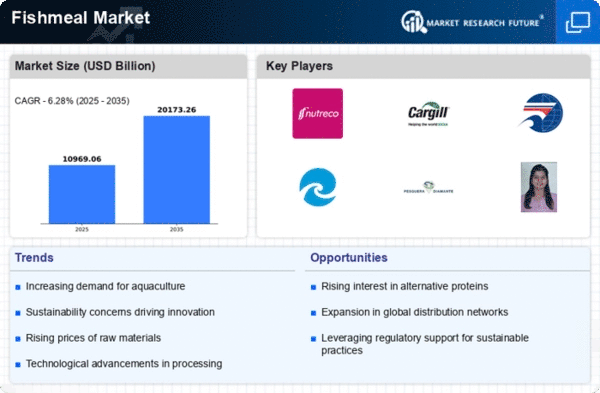
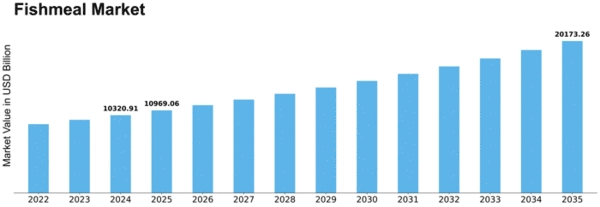
As per MRFR analysis, the Fishmeal Market Size was estimated at 10320.91 USD Billion in 2024. The Fishmeal industry is projected to grow from 10969.27 in 2025 to 20173.26 by 2035, exhibiting a compound annual growth rate (CAGR) of 6.28 during the forecast period 2025 - 2035.

Key Market Trends & Highlights

The Fishmeal Market is experiencing robust growth driven by sustainability and technological advancements.

  • North America remains the largest market for fishmeal, primarily due to its established aquaculture sector.
  • Asia-Pacific is the fastest-growing region, reflecting increasing investments in aquaculture and animal feed.
  • The aquaculture segment dominates the market, while the animal feed segment is witnessing rapid growth.
  • Rising demand for aquaculture feed and health benefits of fishmeal are key drivers propelling market expansion.

Market Size & Forecast

2024 Market Size 10320.91 (USD Billion)
2035 Market Size 20173.26 (USD Billion)
CAGR (2025 - 2035) 6.28%
Largest Regional Market Share in 2024 Asia-Pacific

Major Players

Nutreco (NL), Cargill (US), Austevoll Seafood (NO), Omega Protein (US), Pesquera Diamante (PE), Sambavanam (IN), Copesul (BR), Fishmeal Co. (CL), Marubeni Corporation (JP)

Market Trends

The Fishmeal Market is currently experiencing a dynamic phase characterized by evolving demand patterns and shifting supply dynamics. The increasing global population and rising awareness regarding the nutritional benefits of fishmeal in aquaculture and livestock feed are driving growth. Additionally, the trend towards sustainable fishing practices is influencing sourcing strategies, as stakeholders seek to balance profitability with environmental responsibility. This market appears to be adapting to regulatory changes and consumer preferences, which may lead to innovations in production methods and product offerings. Moreover, the Fishmeal Market is witnessing a diversification of applications beyond traditional uses. The incorporation of fishmeal in pet food formulations and organic fertilizers is gaining traction, suggesting a broader acceptance of fishmeal as a versatile ingredient. As the industry navigates these changes, it seems poised for further expansion, with potential opportunities arising from technological advancements and increased investment in research and development. Stakeholders are likely to focus on enhancing product quality and exploring new markets to capitalize on emerging trends.

Sustainability Initiatives

The Fishmeal Market is increasingly influenced by sustainability initiatives aimed at reducing environmental impact. Stakeholders are adopting responsible sourcing practices and exploring alternative raw materials to meet consumer demand for eco-friendly products.

Technological Advancements

Innovations in processing technologies are transforming the Fishmeal Market. Enhanced extraction methods and improved quality control measures are likely to increase efficiency and product consistency, potentially leading to higher market competitiveness.

Diversification of Applications

The use of fishmeal is expanding beyond traditional sectors. Its incorporation into pet food and organic fertilizers indicates a growing recognition of its nutritional value, suggesting new avenues for market growth and product development.

Fishmeal Market Market Drivers

Rising Demand for Aquaculture Feed

The Global Fishmeal Industry experiences a notable surge in demand for aquaculture feed, driven by the increasing global population and the corresponding need for protein-rich food sources. As aquaculture continues to expand, fishmeal serves as a critical ingredient in fish feed, providing essential nutrients for optimal growth. In 2024, the market is projected to reach 10.3 USD Billion, reflecting the industry's responsiveness to the growing aquaculture sector. This trend is expected to persist, with projections indicating a market value of 20.2 USD Billion by 2035, suggesting a robust compound annual growth rate of 6.28% from 2025 to 2035.

Market Segment Insights

By Application: Aquaculture (Largest) vs. Animal Feed (Fastest-Growing)

The Fishmeal Market's application segment is predominantly represented by aquaculture, which holds the largest share due to the increasing demand for fish as a primary source of protein worldwide. Following aquaculture, animal feed is a significant component, driven by the rising livestock production and a shift towards more sustainable feeding practices. The pet food application also plays a notable role, catering to the growing trend of pet ownership and the demand for high-quality nutrition for companion animals, while nutraceuticals remain a smaller but important area focusing on health-oriented fish-derived products.

Aquaculture (Dominant) vs. Animal Feed (Emerging)

Aquaculture represents the dominant application segment in the Fishmeal Market, characterized by its essential role in meeting the global demand for fish protein. With an increasing number of fish farms and advancements in aquaculture technology, this segment is benefiting from the heightened focus on sustainability and efficient resource use. On the other hand, animal feed is emerging rapidly, fueled by the need for high-protein feed alternatives in livestock and poultry farming. This shift towards fishmeal enhances the nutritional profile of animal diets while addressing environmental concerns about traditional feed sources. Both segments are vital to the overall growth and evolution of the Fishmeal Market, each catering to distinct consumer needs and sustainability goals.

By Source: Fish (Largest) vs. Krill (Fastest-Growing)

The Fishmeal Market is primarily driven by the source of raw materials, with fish contributing the largest share to the market. Fishmeal derived from various species ensures a consistent supply and forms the backbone of this industry. In contrast, krill has emerged as a significant player, owing to its unique nutritional profile and high omega-3 content, attracting the attention of both manufacturers and consumers alike. Other sources such as algae and by-products represent smaller portions of the market, yet they hold potential for future growth as sustainability becomes a higher priority.

Fish (Dominant) vs. Krill (Emerging)

Fishmeal, primarily produced from various fish species, remains the dominant segment in the Fishmeal Market due to its long-standing history and reliable nutritional value. This segment benefits from widespread fisheries and established supply chains, making it a preferred choice for aquaculture and livestock feed. On the other hand, krill, while emerging, is gaining traction thanks to its environmentally friendly harvesting methods and high nutritional density. As consumer preferences shift towards sustainably sourced ingredients, krill's unique properties position it as a promising alternative. Both segments reflect distinct consumer trends, with fishmeal rooted in tradition and krill paving the way towards innovative, sustainable practices.

By Form: Meal (Largest) vs. Powder (Fastest-Growing)

In the Fishmeal Market, the meal form holds the largest share, dominating the segment and catering to a broad spectrum of applications, particularly in aquaculture and animal feed. This significant market presence is attributed to its high protein content and digestibility, which are pivotal in the growth of fish and livestock. Meanwhile, the powder form is gaining traction as it is increasingly favored for its versatility and ease of incorporation into various formulations, thus appealing to a more diverse customer base.

Meal (Dominant) vs. Powder (Emerging)

The meal segment remains the dominant player in the Fishmeal Market due to its extensive application in aquaculture and the livestock industry, thanks to its robust nutritional profile. It serves as a staple ingredient for many feed formulations, enhancing growth rates and overall health in farmed species. In contrast, the powder segment is emerging rapidly, driven by innovations in processing techniques that have improved its solubility and functionality in feed applications. This form is gaining momentum among manufacturers seeking to enhance the bioavailability of nutrients in their products, thus establishing a niche market that caters to specialized diet formulations.

By Nutritional Content: High Protein (Largest) vs. Omega-3 Fatty Acids (Fastest-Growing)

The nutritional content of fishmeal significantly influences its market position, with high protein content leading the way as the largest segment. This segment holds a considerable share of the market due to increasing demand for protein-rich diets across various industries, including aquaculture and livestock feed. Meanwhile, omega-3 fatty acids are emerging as the fastest-growing segment, driven by a surge in consumer awareness regarding the health benefits associated with omega-3 consumption, particularly in human dietary supplements.

High Protein (Dominant) vs. Omega-3 Fatty Acids (Emerging)

High protein fishmeal is recognized for its superior nutritional benefits, making it a dominant choice for animal feed, particularly in aquaculture, poultry, and pet food industries. Its essential amino acid profile and digestibility are key differentiators, ensuring optimal growth rates in livestock. On the other hand, omega-3 fatty acids are becoming increasingly significant, particularly due to their health benefits and demand in functional foods and dietary supplements. This emerging segment is driven by growing health consciousness among consumers, who are more inclined to seek sources rich in these fatty acids, leading to an expanding market presence.

By End Use: Food Industry (Largest) vs. Agriculture (Fastest-Growing)

In the Fishmeal Market, the Food Industry remains the largest end-use segment, consuming a significant majority of production due to the increasing demand for fish-based protein globally. This segment includes various applications like aquaculture feed, pet food, and direct human consumption, driving its dominance. Agriculture follows next as a strong contender, utilizing fishmeal as a high-nutritional supplement for livestock and poultry, which is gaining ground as farmers seek to enhance animal feed quality.

Food Industry (Dominant) vs. Agriculture (Emerging)

The Food Industry's dominance in the Fishmeal Market is characterized by its wide application in aquaculture and pet food, both of which are experiencing robust demand driven by rising health consciousness and the protein requirement of consumers. On the other hand, Agriculture is an emerging segment wherein fishmeal is being increasingly recognized for its rich protein content and nutritional benefits in animal feed. This trend is notably bolstered by the rise in sustainable farming practices and the need for more efficient animal husbandry solutions, making Agriculture a vibrant segment with high growth potential.

Get more detailed insights about Fishmeal Market Research Report - Forecast till 2035

Regional Insights

North America : Growing Demand for Fishmeal

The North American fishmeal market is projected to reach $1,500.0 million by 2025, driven by increasing demand for sustainable aquaculture and livestock feed. Regulatory support for sustainable fishing practices and environmental conservation is enhancing market growth. The region's focus on high-quality fishmeal products is also a significant growth driver, as consumers become more health-conscious and environmentally aware. Leading countries in this region include the US and Canada, where major players like Cargill and Omega Protein dominate the market. The competitive landscape is characterized by a mix of established companies and emerging players, all striving to innovate and meet the growing demand for fishmeal. The presence of key players ensures a robust supply chain, contributing to the overall market stability and growth.

Europe : Innovation and Sustainability Focus

Europe's fishmeal market is expected to reach $2,500.0 million by 2025, driven by a strong emphasis on sustainability and innovation. The region's regulatory frameworks promote responsible fishing practices, which are crucial for maintaining fish stocks and ensuring long-term market viability. Additionally, the growing demand for fishmeal in aquaculture and pet food sectors is propelling market growth, as consumers increasingly seek sustainable protein sources. Leading countries such as Norway, Denmark, and the UK are at the forefront of the fishmeal industry, with key players like Nutreco and Austevoll Seafood leading the charge. The competitive landscape is marked by a strong focus on research and development, with companies investing in new technologies to enhance production efficiency and product quality. This innovation-driven approach positions Europe as a leader in The Fishmeal.

Asia-Pacific : Dominating Global Market Share

The Asia-Pacific region is the largest fishmeal market, projected to reach $6,000.0 million by 2025, driven by the booming aquaculture industry. Countries like China and India are leading the demand for fishmeal, as they expand their aquaculture operations to meet the growing protein needs of their populations. Regulatory support for sustainable aquaculture practices is also a significant driver, ensuring the long-term viability of fishmeal production in the region. China stands out as the dominant player in the fishmeal market, with numerous local and international companies vying for market share. Key players such as Copesul and Marubeni Corporation are actively involved in the region, contributing to a competitive landscape that fosters innovation and efficiency. The presence of these major companies ensures a steady supply of high-quality fishmeal, catering to both domestic and international markets.

Middle East and Africa : Emerging Market Potential

The Middle East and Africa fishmeal market is projected to reach $320.91 million by 2025, driven by increasing local demand for fishmeal in aquaculture and livestock feed. The region's growing population and rising income levels are contributing to a higher consumption of fish products, which in turn boosts the demand for fishmeal. Regulatory initiatives aimed at promoting sustainable fishing practices are also playing a crucial role in market development. Countries like South Africa and Egypt are leading the market in this region, with local players and international companies establishing a presence to meet the growing demand. The competitive landscape is evolving, with a mix of established firms and new entrants focusing on quality and sustainability. This dynamic environment presents opportunities for growth and innovation in the fishmeal sector.

Key Players and Competitive Insights

The Fishmeal Market is currently characterized by a competitive landscape that is both dynamic and multifaceted. Key growth drivers include increasing demand for aquaculture feed, rising awareness of the nutritional benefits of fishmeal, and a growing emphasis on sustainable fishing practices. Major players such as Nutreco (NL), Cargill (US), and Austevoll Seafood (NO) are strategically positioned to leverage these trends. Nutreco (NL) focuses on innovation in feed solutions, while Cargill (US) emphasizes its extensive supply chain capabilities. Austevoll Seafood (NO) is actively pursuing regional expansion, particularly in emerging markets, which collectively shapes a competitive environment that is increasingly focused on sustainability and technological advancement.In terms of business tactics, companies are localizing manufacturing to reduce transportation costs and enhance supply chain efficiency. The market structure appears moderately fragmented, with a mix of large multinational corporations and smaller regional players. This fragmentation allows for diverse strategies, yet the collective influence of key players like Omega Protein (US) and Pesquera Diamante (PE) is significant, as they drive innovation and set industry standards.

In November Omega Protein (US) announced a partnership with a leading aquaculture technology firm to develop sustainable fishmeal alternatives. This strategic move is likely to enhance Omega's product offerings and align with the growing demand for environmentally friendly solutions in aquaculture. The partnership underscores the importance of innovation in maintaining competitive advantage in a market increasingly focused on sustainability.

In October Pesquera Diamante (PE) expanded its production capacity by 20% through the acquisition of a new processing facility. This expansion is expected to bolster its market share and improve operational efficiency, allowing the company to meet the rising demand for fishmeal in both domestic and international markets. Such capacity enhancements are crucial for maintaining competitiveness in a rapidly evolving landscape.

In September Cargill (US) launched a digital platform aimed at optimizing supply chain management for fishmeal distribution. This initiative reflects a broader trend towards digitalization within the industry, enabling Cargill to enhance transparency and efficiency in its operations. The integration of technology into supply chain processes is becoming increasingly vital for companies seeking to differentiate themselves in a competitive market.

As of December current competitive trends indicate a strong shift towards digitalization, sustainability, and the integration of AI technologies. Strategic alliances are playing a pivotal role in shaping the landscape, as companies collaborate to enhance their capabilities and market reach. Looking ahead, competitive differentiation is likely to evolve from traditional price-based competition to a focus on innovation, technological advancements, and supply chain reliability. This shift suggests that companies that prioritize these areas will be better positioned to thrive in the Fishmeal Market.

Key Companies in the Fishmeal Market include

Industry Developments

April 2021: The international manufacturer of fish oil and fishmeal, Biomega AS, will expand its business by funding a biorefinery in Denmark. The company wants to strengthen its position in the fishmeal market by promoting the development of products derived from salmon with the help of this facility's expansion.

Sept 2021: Peru is reclaiming its position as the leading fishmeal producer among the other competitive nations worldwide. This is a significant step that will spur regional fishmeal demand, and excessive demand will help bring down the high rates of fishmeal prices ly. Due to a large decline in the region's fishmeal production over the previous projection period, these were increased.

Future Outlook

Fishmeal Market Future Outlook

The Fishmeal Market is projected to grow at a 6.28% CAGR from 2025 to 2035, driven by rising aquaculture demand, sustainable sourcing practices, and technological advancements in processing.

New opportunities lie in:

  • Expansion into plant-based protein alternatives for aquaculture feed.
  • Development of advanced processing technologies to enhance product quality.
  • Strategic partnerships with aquaculture firms for tailored fishmeal solutions.

By 2035, the Fishmeal Market is expected to solidify its position as a key player in global aquaculture.

Market Segmentation

Fishmeal Market Form Outlook

  • Meal
  • Pellets
  • Liquid
  • Powder

Fishmeal Market Source Outlook

  • Fish
  • Krill
  • Algae
  • By-Products

Fishmeal Market End Use Outlook

  • Food Industry
  • Agriculture
  • Pharmaceuticals
  • Cosmetics

Fishmeal Market Application Outlook

  • Aquaculture
  • Animal Feed
  • Pet Food
  • Nutraceuticals

Fishmeal Market Nutritional Content Outlook

  • High Protein
  • Omega-3 Fatty Acids
  • Vitamins
  • Minerals

Report Scope

MARKET SIZE 202410320.91(USD Billion)
MARKET SIZE 202510969.27(USD Billion)
MARKET SIZE 203520173.26(USD Billion)
COMPOUND ANNUAL GROWTH RATE (CAGR)6.28% (2025 - 2035)
REPORT COVERAGERevenue Forecast, Competitive Landscape, Growth Factors, and Trends
BASE YEAR2024
Market Forecast Period2025 - 2035
Historical Data2019 - 2024
Market Forecast UnitsUSD Billion
Key Companies ProfiledNutreco (NL), Cargill (US), Austevoll Seafood (NO), Omega Protein (US), Pesquera Diamante (PE), Sambavanam (IN), Copesul (BR), Fishmeal Co. (CL), Marubeni Corporation (JP)
Segments CoveredApplication, Source, Form, Nutritional Content, End Use
Key Market OpportunitiesGrowing demand for sustainable aquaculture practices drives innovation in the Fishmeal Market.
Key Market DynamicsRising demand for sustainable aquaculture drives innovation and competition in the fishmeal market.
Countries CoveredNorth America, Europe, APAC, South America, MEA

FAQs

How much is the fishmeal market?

The fishmeal market size was valued at USD 9688.03 Million in 2023.

What is the growth rate of the fishmeal market?

The market is projected to register a CAGR of 6.28% during the forecast period 2025-2035.

Which region held the largest market share in the fishmeal market?

North America had the largest share of the market

Who are the key players in the fishmeal market?

The key players in the market are Empresas Copec S.A. (Chile), Biomega AS (Norway), Omega Protein Corporation (US), Calysta Inc. (U.S.), Oceana Group Limited (South Africa), FMC Corporation (US), Austevoll Seafood ASA (Norway), Pioneer Fishing (Pty) Ltd. (South Africa), Aker Biomarine, Croda International Plc. (UK) and Antarctic AS (Norway).

Which source type led the fishmeal market?

The Crustaceans category dominated the market in 2023.

Which livestock had the largest market share in the fishmeal market?

Swine had the largest share of the market.

  1. SECTION I: EXECUTIVE SUMMARY AND KEY HIGHLIGHTS
    1. | 1.1 EXECUTIVE SUMMARY
    2. | 1.1.1 Market Overview
    3. | 1.1.2 Key Findings
    4. | 1.1.3 Market Segmentation
    5. | 1.1.4 Competitive Landscape
    6. | 1.1.5 Challenges and Opportunities
    7. | 1.1.6 Future Outlook
  2. SECTION II: SCOPING, METHODOLOGY AND MARKET STRUCTURE
    1. | 2.1 MARKET INTRODUCTION
    2. | 2.1.1 Definition
    3. | 2.1.2 Scope of the study
    4. |-- 2.1.2.1 Research Objective
    5. |-- 2.1.2.2 Assumption
    6. |-- 2.1.2.3 Limitations
    7. | 2.2 RESEARCH METHODOLOGY
    8. | 2.2.1 Overview
    9. | 2.2.2 Data Mining
    10. | 2.2.3 Secondary Research
    11. | 2.2.4 Primary Research
    12. |-- 2.2.4.1 Primary Interviews and Information Gathering Process
    13. |-- 2.2.4.2 Breakdown of Primary Respondents
    14. | 2.2.5 Forecasting Model
    15. | 2.2.6 Market Size Estimation
    16. |-- 2.2.6.1 Bottom-Up Approach
    17. |-- 2.2.6.2 Top-Down Approach
    18. | 2.2.7 Data Triangulation
    19. | 2.2.8 Validation
  3. SECTION III: QUALITATIVE ANALYSIS
    1. | 3.1 MARKET DYNAMICS
    2. | 3.1.1 Overview
    3. | 3.1.2 Drivers
    4. | 3.1.3 Restraints
    5. | 3.1.4 Opportunities
    6. | 3.2 MARKET FACTOR ANALYSIS
    7. | 3.2.1 Value chain Analysis
    8. | 3.2.2 Porter's Five Forces Analysis
    9. |-- 3.2.2.1 Bargaining Power of Suppliers
    10. |-- 3.2.2.2 Bargaining Power of Buyers
    11. |-- 3.2.2.3 Threat of New Entrants
    12. |-- 3.2.2.4 Threat of Substitutes
    13. |-- 3.2.2.5 Intensity of Rivalry
    14. | 3.2.3 COVID-19 Impact Analysis
    15. |-- 3.2.3.1 Market Impact Analysis
    16. |-- 3.2.3.2 Regional Impact
    17. |-- 3.2.3.3 Opportunity and Threat Analysis
  4. SECTION IV: QUANTITATIVE ANALYSIS
    1. | 4.1 Security, Access Control and Robotics, BY Application (USD Billion)
    2. | 4.1.1 Aquaculture
    3. | 4.1.2 Animal Feed
    4. | 4.1.3 Pet Food
    5. | 4.1.4 Nutraceuticals
    6. | 4.2 Security, Access Control and Robotics, BY Source (USD Billion)
    7. | 4.2.1 Fish
    8. | 4.2.2 Krill
    9. | 4.2.3 Algae
    10. | 4.2.4 By-Products
    11. | 4.3 Security, Access Control and Robotics, BY Form (USD Billion)
    12. | 4.3.1 Meal
    13. | 4.3.2 Pellets
    14. | 4.3.3 Liquid
    15. | 4.3.4 Powder
    16. | 4.4 Security, Access Control and Robotics, BY Nutritional Content (USD Billion)
    17. | 4.4.1 High Protein
    18. | 4.4.2 Omega-3 Fatty Acids
    19. | 4.4.3 Vitamins
    20. | 4.4.4 Minerals
    21. | 4.5 Security, Access Control and Robotics, BY End Use (USD Billion)
    22. | 4.5.1 Food Industry
    23. | 4.5.2 Agriculture
    24. | 4.5.3 Pharmaceuticals
    25. | 4.5.4 Cosmetics
    26. | 4.6 Security, Access Control and Robotics, BY Region (USD Billion)
    27. | 4.6.1 North America
    28. |-- 4.6.1.1 US
    29. |-- 4.6.1.2 Canada
    30. | 4.6.2 Europe
    31. |-- 4.6.2.1 Germany
    32. |-- 4.6.2.2 UK
    33. |-- 4.6.2.3 France
    34. |-- 4.6.2.4 Russia
    35. |-- 4.6.2.5 Italy
    36. |-- 4.6.2.6 Spain
    37. |-- 4.6.2.7 Rest of Europe
    38. | 4.6.3 APAC
    39. |-- 4.6.3.1 China
    40. |-- 4.6.3.2 India
    41. |-- 4.6.3.3 Japan
    42. |-- 4.6.3.4 South Korea
    43. |-- 4.6.3.5 Malaysia
    44. |-- 4.6.3.6 Thailand
    45. |-- 4.6.3.7 Indonesia
    46. |-- 4.6.3.8 Rest of APAC
    47. | 4.6.4 South America
    48. |-- 4.6.4.1 Brazil
    49. |-- 4.6.4.2 Mexico
    50. |-- 4.6.4.3 Argentina
    51. |-- 4.6.4.4 Rest of South America
    52. | 4.6.5 MEA
    53. |-- 4.6.5.1 GCC Countries
    54. |-- 4.6.5.2 South Africa
    55. |-- 4.6.5.3 Rest of MEA
  5. SECTION V: COMPETITIVE ANALYSIS
    1. | 5.1 Competitive Landscape
    2. | 5.1.1 Overview
    3. | 5.1.2 Competitive Analysis
    4. | 5.1.3 Market share Analysis
    5. | 5.1.4 Major Growth Strategy in the Security, Access Control and Robotics
    6. | 5.1.5 Competitive Benchmarking
    7. | 5.1.6 Leading Players in Terms of Number of Developments in the Security, Access Control and Robotics
    8. | 5.1.7 Key developments and growth strategies
    9. |-- 5.1.7.1 New Product Launch/Service Deployment
    10. |-- 5.1.7.2 Merger & Acquisitions
    11. |-- 5.1.7.3 Joint Ventures
    12. | 5.1.8 Major Players Financial Matrix
    13. |-- 5.1.8.1 Sales and Operating Income
    14. |-- 5.1.8.2 Major Players R&D Expenditure. 2023
    15. | 5.2 Company Profiles
    16. | 5.2.1 Nutreco (NL)
    17. |-- 5.2.1.1 Financial Overview
    18. |-- 5.2.1.2 Products Offered
    19. |-- 5.2.1.3 Key Developments
    20. |-- 5.2.1.4 SWOT Analysis
    21. |-- 5.2.1.5 Key Strategies
    22. | 5.2.2 Cargill (US)
    23. |-- 5.2.2.1 Financial Overview
    24. |-- 5.2.2.2 Products Offered
    25. |-- 5.2.2.3 Key Developments
    26. |-- 5.2.2.4 SWOT Analysis
    27. |-- 5.2.2.5 Key Strategies
    28. | 5.2.3 Austevoll Seafood (NO)
    29. |-- 5.2.3.1 Financial Overview
    30. |-- 5.2.3.2 Products Offered
    31. |-- 5.2.3.3 Key Developments
    32. |-- 5.2.3.4 SWOT Analysis
    33. |-- 5.2.3.5 Key Strategies
    34. | 5.2.4 Omega Protein (US)
    35. |-- 5.2.4.1 Financial Overview
    36. |-- 5.2.4.2 Products Offered
    37. |-- 5.2.4.3 Key Developments
    38. |-- 5.2.4.4 SWOT Analysis
    39. |-- 5.2.4.5 Key Strategies
    40. | 5.2.5 Pesquera Diamante (PE)
    41. |-- 5.2.5.1 Financial Overview
    42. |-- 5.2.5.2 Products Offered
    43. |-- 5.2.5.3 Key Developments
    44. |-- 5.2.5.4 SWOT Analysis
    45. |-- 5.2.5.5 Key Strategies
    46. | 5.2.6 Sambavanam (IN)
    47. |-- 5.2.6.1 Financial Overview
    48. |-- 5.2.6.2 Products Offered
    49. |-- 5.2.6.3 Key Developments
    50. |-- 5.2.6.4 SWOT Analysis
    51. |-- 5.2.6.5 Key Strategies
    52. | 5.2.7 Copesul (BR)
    53. |-- 5.2.7.1 Financial Overview
    54. |-- 5.2.7.2 Products Offered
    55. |-- 5.2.7.3 Key Developments
    56. |-- 5.2.7.4 SWOT Analysis
    57. |-- 5.2.7.5 Key Strategies
    58. | 5.2.8 Fishmeal Co. (CL)
    59. |-- 5.2.8.1 Financial Overview
    60. |-- 5.2.8.2 Products Offered
    61. |-- 5.2.8.3 Key Developments
    62. |-- 5.2.8.4 SWOT Analysis
    63. |-- 5.2.8.5 Key Strategies
    64. | 5.2.9 Marubeni Corporation (JP)
    65. |-- 5.2.9.1 Financial Overview
    66. |-- 5.2.9.2 Products Offered
    67. |-- 5.2.9.3 Key Developments
    68. |-- 5.2.9.4 SWOT Analysis
    69. |-- 5.2.9.5 Key Strategies
    70. | 5.3 Appendix
    71. | 5.3.1 References
    72. | 5.3.2 Related Reports

Security, Access Control and Robotics Market Segmentation

Security, Access Control and Robotics By Application (USD Billion, 2025-2035)

  • Aquaculture
  • Animal Feed
  • Pet Food
  • Nutraceuticals

Security, Access Control and Robotics By Source (USD Billion, 2025-2035)

  • Fish
  • Krill
  • Algae
  • By-Products

Security, Access Control and Robotics By Form (USD Billion, 2025-2035)

  • Meal
  • Pellets
  • Liquid
  • Powder

Security, Access Control and Robotics By Nutritional Content (USD Billion, 2025-2035)

  • High Protein
  • Omega-3 Fatty Acids
  • Vitamins
  • Minerals

Security, Access Control and Robotics By End Use (USD Billion, 2025-2035)

  • Food Industry
  • Agriculture
  • Pharmaceuticals
  • Cosmetics
Infographic

Free Sample Request

Kindly complete the form below to receive a free sample of this Report

Get Free Sample

Customer Strories

Compare Licence

×
Features License Type
Single User Multiuser License Enterprise User
Price $4,950 $5,950 $7,250
Maximum User Access Limit 1 User Upto 10 Users Unrestricted Access Throughout the Organization
Free Customization
Direct Access to Analyst
Deliverable Format
Platform Access
Discount on Next Purchase 10% 15% 15%
Printable Versions