
×
Hero Background
English
Chinese
French
Japanese
Korean
German
Spanish

Fiber Management Systems Market Size

ID: MRFR/CnM/10408-HCR
128 Pages
Ankit Gupta
October 2025

Fiber Management Systems Market Research Report Information By Component (Hardware, Software, and Services), By Cable Type (Single Mode and Multi-mode), By End User (Telecommunications, Healthcare, Education, Government, Smart City, and Others), and By Region (North America, Europe, Asia-Pacific, and Rest Of The World) – Industry Size, Share and Forecast Till 2035

Share:
Download PDF ×

We do not share your information with anyone. However, we may send you emails based on your report interest from time to time. You may contact us at any time to opt-out.

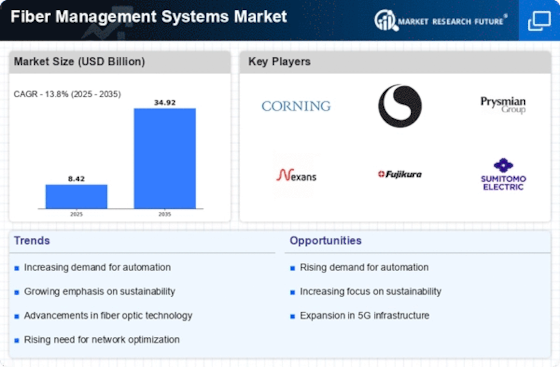
Fiber Management Systems Market Infographic
Purchase Options

Fiber Management Systems Size

Fiber Management Systems Market Growth Projections and Opportunities

The Fiber Management Systems market is influenced by a myriad of factors that collectively shape its dynamics. One significant factor is the ever-growing demand for high-speed internet and data transmission capabilities. As the world becomes increasingly digitalized, there is a surge in the need for efficient fiber optic networks to support seamless communication, data transfer, and internet connectivity. This escalating demand propels the Fiber Management Systems market to develop and innovate in order to meet the evolving requirements of telecommunications and data center infrastructure.

Technological advancements play a pivotal role in shaping the market landscape. With continuous innovations in fiber optic technology, the Fiber Management Systems market witnesses the introduction of more sophisticated and efficient solutions. These technological advancements not only enhance the performance of fiber optic networks but also contribute to the overall growth and competitiveness of the market. As the industry evolves, companies that stay at the forefront of technological innovation are better positioned to capture a larger market share.

Government regulations and initiatives also significantly impact the Fiber Management Systems market. Policies promoting the deployment of fiber optic infrastructure to enhance communication and connectivity contribute to market growth. Government support in the form of subsidies or incentives for the development of robust fiber networks encourages investments in Fiber Management Systems. Additionally, regulatory frameworks that prioritize the expansion of broadband networks contribute to the overall expansion of the market.

Market dynamics are further influenced by the increasing awareness of the environmental impact of traditional cabling systems. Fiber optic networks are considered more environmentally friendly compared to traditional copper-based systems due to their energy efficiency and lower carbon footprint. This growing awareness of environmental sustainability drives organizations and industries to adopt Fiber Management Systems, thereby boosting market growth. As companies focus on green and sustainable practices, the demand for eco-friendly solutions becomes a significant factor in shaping the market.

The competitive landscape and the presence of key market players also play a crucial role in determining the direction of the Fiber Management Systems market. The market is characterized by the presence of both established and emerging players, each striving to gain a competitive edge. Factors such as product innovation, strategic partnerships, and mergers and acquisitions contribute to the competitive dynamics of the market. Companies that successfully differentiate themselves through unique offerings or strategic collaborations are better positioned to thrive in this competitive environment.

Global economic conditions also impact the Fiber Management Systems market. Economic fluctuations, currency exchange rates, and overall market stability can influence the investment decisions of businesses, affecting the demand for Fiber Management Systems. In times of economic growth, there is often an increased investment in infrastructure, including communication networks, driving the demand for Fiber Management Systems. Conversely, economic downturns may lead to a temporary slowdown in market growth.
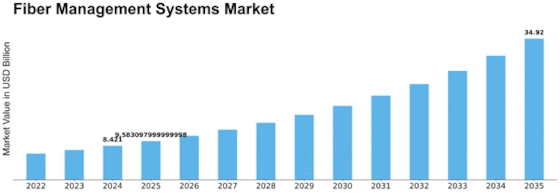
Fiber Management Systems Market Size Graph
Author
Ankit Gupta
Senior Research Analyst

Ankit Gupta is an analyst in market research industry in ICT and SEMI industry. With post-graduation in "Telecom and Marketing Management" and graduation in "Electronics and Telecommunication" vertical he is well versed with recent development in ICT industry as a whole. Having worked on more than 150+ reports including consultation for fortune 500 companies such as Microsoft and Rio Tinto in identifying solutions with respect to business problems his opinions are inclined towards mixture of technical and managerial aspects.

Leave a Comment

FAQs

What is the current valuation of the Fiber Management Systems Market?

The Fiber Management Systems Market was valued at 8.421 USD Billion in 2024.

What is the projected market size for the Fiber Management Systems Market by 2035?

The market is projected to reach 34.92 USD Billion by 2035.

What is the expected CAGR for the Fiber Management Systems Market during the forecast period?

The expected CAGR for the market from 2025 to 2035 is 13.8%.

Which companies are considered key players in the Fiber Management Systems Market?

Key players include Corning, CommScope, Prysmian Group, Nexans, Fujikura, Sumitomo Electric, TE Connectivity, Optical Cable Corporation, and Southwire Company.

What are the main components of the Fiber Management Systems Market?

The main components include hardware, software, and services, with hardware valued at 2.526 USD Billion in 2024.

How does the market segment by cable type?

The market segments by cable type into single mode and multi-mode, with single mode valued at 4.0 USD Billion in 2024.

Market Summary

As per MRFR analysis, the Fiber Management Systems Market was estimated at 8.421 USD Billion in 2024. The Fiber Management Systems industry is projected to grow from 9.584 USD Billion in 2025 to 34.92 USD Billion by 2035, exhibiting a compound annual growth rate (CAGR) of 13.8 during the forecast period 2025 - 2035.

Key Market Trends & Highlights

The Fiber Management Systems Market is poised for substantial growth driven by technological advancements and increasing demand for connectivity.

  • The integration of AI and automation is transforming operational efficiencies in fiber management systems. Sustainability initiatives are becoming a focal point, influencing product development and consumer preferences. User experience enhancements are driving innovations in both hardware and service offerings. Rising demand for high-speed connectivity and expansion of telecommunications infrastructure are key drivers propelling market growth.

Market Size & Forecast

2024 Market Size 8.421 (USD Billion)
2035 Market Size 34.92 (USD Billion)
CAGR (2025 - 2035) 13.8%
Largest Regional Market Share in 2024 North America

Major Players

<p>Corning (US), CommScope (US), Prysmian Group (IT), Nexans (FR), Fujikura (JP), Sumitomo Electric (JP), TE Connectivity (CH), Optical Cable Corporation (US), Southwire Company (US)</p>

Market Trends

The Fiber Management Systems Market is currently experiencing a transformative phase, driven by the increasing demand for efficient data management and network optimization. As organizations continue to expand their digital infrastructure, the need for robust fiber management solutions becomes more pronounced. These systems facilitate the organization, monitoring, and maintenance of fiber optic networks, ensuring seamless connectivity and minimizing downtime. Furthermore, advancements in technology are propelling the development of innovative solutions that enhance the capabilities of fiber management systems, making them more user-friendly and efficient. In addition to technological advancements, the Fiber Management Systems Market is also influenced by the growing emphasis on sustainability and environmental responsibility. Companies are increasingly seeking solutions that not only improve operational efficiency but also align with their sustainability goals. This trend is likely to drive the adoption of eco-friendly materials and practices within the fiber management sector. As the market evolves, stakeholders must remain vigilant to emerging trends and adapt their strategies accordingly to maintain a competitive edge in this dynamic landscape.

Integration of AI and Automation

The integration of artificial intelligence and automation technologies into fiber management systems is becoming increasingly prevalent. This trend suggests that organizations are looking to streamline operations, reduce human error, and enhance decision-making processes. By leveraging AI, companies can analyze vast amounts of data in real-time, leading to improved network performance and proactive maintenance.

Focus on Sustainability

There is a growing focus on sustainability within the Fiber Management Systems Market. Organizations are increasingly prioritizing eco-friendly practices and materials in their operations. This trend indicates a shift towards solutions that not only optimize performance but also minimize environmental impact, aligning with broader corporate social responsibility goals.

Enhanced User Experience

The demand for enhanced user experience is shaping the development of fiber management systems. Companies are investing in intuitive interfaces and user-friendly designs to facilitate easier management of fiber networks. This trend highlights the importance of accessibility and efficiency, as organizations seek to empower their teams with tools that simplify complex tasks.

Fiber Management Systems Market Market Drivers

Rising Demand for High-Speed Connectivity

The Fiber Management Systems Market is experiencing a surge in demand for high-speed connectivity solutions. As the world becomes increasingly digital, the need for faster internet speeds is paramount. This demand is driven by the proliferation of smart devices and the growing reliance on cloud-based services. According to recent data, the number of internet users has reached over 4.9 billion, indicating a substantial market for fiber management systems that can support this connectivity. The need for robust infrastructure to handle increased data traffic is likely to propel the growth of the fiber management systems market, as businesses and consumers alike seek reliable and efficient solutions.

Growing Adoption of Smart City Initiatives

The Fiber Management Systems Market is being propelled by the growing adoption of smart city initiatives. Cities around the world are increasingly implementing smart technologies to improve urban living and enhance infrastructure efficiency. Fiber management systems are integral to these initiatives, providing the necessary backbone for data transmission and communication. As municipalities invest in smart city projects, the demand for reliable fiber management solutions is likely to rise. This trend suggests a promising future for the fiber management systems market, as cities seek to leverage technology to create more connected and efficient environments.

Expansion of Telecommunications Infrastructure

The Fiber Management Systems Market is significantly influenced by the ongoing expansion of telecommunications infrastructure. Governments and private entities are investing heavily in fiber optic networks to enhance communication capabilities. This expansion is not only limited to urban areas but is also reaching rural regions, thereby increasing accessibility. Recent statistics suggest that fiber optic connections are expected to grow by over 20% annually, indicating a robust market for fiber management systems. This growth is likely to create opportunities for innovative solutions that can efficiently manage and optimize fiber networks, ensuring seamless connectivity for users.

Increased Focus on Network Reliability and Security

In the Fiber Management Systems Market, there is a heightened emphasis on network reliability and security. As cyber threats become more sophisticated, organizations are prioritizing the protection of their data and communication networks. Fiber management systems play a crucial role in ensuring that networks are not only efficient but also secure. The market is witnessing a trend where companies are investing in advanced fiber management solutions that offer enhanced monitoring and security features. This focus on reliability and security is expected to drive the adoption of fiber management systems, as businesses seek to safeguard their operations against potential disruptions.

Technological Advancements in Fiber Optic Solutions

The Fiber Management Systems Market is benefiting from rapid technological advancements in fiber optic solutions. Innovations such as improved fiber materials and enhanced installation techniques are making fiber management systems more efficient and cost-effective. These advancements are likely to reduce installation times and improve overall network performance. Furthermore, the integration of smart technologies into fiber management systems is enabling better monitoring and management of fiber networks. As these technologies continue to evolve, they are expected to attract more investments into the fiber management systems market, fostering growth and development in the sector.

Market Segment Insights

By Component: Hardware (Largest) vs. Services (Fastest-Growing)

<p>In the Fiber Management Systems Market, the component segment is primarily divided into three key areas: Hardware, Software, and Services. Hardware holds the largest market share due to its foundational role in fiber management systems, encompassing equipment such as<a href="https://www.marketresearchfuture.com/reports/fiber-optic-cable-assemblies-market-4583"> fiber optic cables</a> and connectors. In contrast, Software and Services follow, with Software providing essential analytics and management capabilities, while Services include installation and support, although at a smaller scale compared to Hardware.</p>

<p>Hardware: Dominant vs. Services: Emerging</p>

<p>Hardware serves as the backbone of the Fiber Management Systems Market, offering essential components such as cables, connectors, and network devices that facilitate high-performance fiber connectivity. Its dominant position stems from the increasing demand for reliable fiber solutions amidst a growth in data consumption and internet traffic. On the other hand, Services are emerging as a vital segment, driven by the increasing need for installation, maintenance, and consulting services in fiber management. As organizations increasingly opt for comprehensive solutions that include support, Services are set to grow rapidly, indicating a shift towards value-added propositions in the market.</p>

By Cable Type: Single Mode (Largest) vs. Multi-mode (Fastest-Growing)

<p>In the Fiber Management Systems Market, the cable type segment is primarily divided into two categories: Single Mode and Multi-mode fibers. Single Mode fibers comprise the largest share due to their high performance and efficiency in long-distance data transmission. They are predominantly utilized in telecommunications and data center applications, resulting in a robust market presence. Multi-mode fibers, while they currently hold a smaller market share, are catching up quickly as they are more cost-effective for short-distance communication solutions.</p>

<p>Cable Type: Single Mode (Dominant) vs. Multi-mode (Emerging)</p>

<p>Single Mode fibers are recognized for their ability to carry signals over longer distances with less attenuation, making them the dominant choice for telecommunication networks and enterprise applications. They support higher bandwidths, which are essential for today's data-intensive applications. On the other hand, Multi-mode fibers are gaining traction as an emerging choice for local area networks and data centers where distance is less of a concern. Their lower installation and material costs make them attractive for installations where budget constraints are paramount. As both segments evolve, Single Mode remains a staple for extensive infrastructures while Multi-mode adapts to meet the needs of communication within confined spaces.</p>

By End User: Telecommunications (Largest) vs. Healthcare (Fastest-Growing)

<p>In the Fiber Management Systems Market, the telecommunications sector holds the largest market share, primarily driven by the ongoing demand for high-speed connectivity and the rollout of 5G networks. As organizations increasingly adopt fiber optics to enhance their digital communication infrastructure, telecommunications remain at the forefront, making it the dominant player in this segment. Following closely, the healthcare sector emerges as a significant user, leveraging fiber management systems for data integrity and speed in record-keeping and telemedicine services.</p>

<p>Telecommunications: Dominant vs. Healthcare: Emerging</p>

<p>The telecommunications segment is characterized by its robust infrastructure and the fast-paced adoption of innovative fiber management solutions, designed to support expansive networks and heavy data traffic. As consumers and businesses alike demand faster internet services, telecommunications companies invest heavily in fiber technology. On the other hand, the healthcare sector is rapidly adopting fiber management systems, driven by the digital transformation of patient records and telehealth services. This shift reflects an increasing focus on improving operational efficiency and patient outcomes. Healthcare's reliance on real-time data analysis and communication speaks to its pivotal role as an emerging segment, showing promising growth potential as technologies evolve.</p>

Get more detailed insights about Fiber Management Systems Market Research Report—Global Forecast till 2035

Regional Insights

North America : Innovation and Demand Surge

North America is the largest market for Fiber Management Systems Market, holding approximately 40% of the global share. The region's growth is driven by increasing demand for high-speed internet, advancements in telecommunications infrastructure, and supportive government regulations promoting fiber optic deployment. The push for 5G technology and smart city initiatives further catalyze market expansion, making it a pivotal area for investment and innovation. The United States dominates the North American market, with key players like Corning and CommScope leading the charge. The competitive landscape is characterized by continuous innovation and strategic partnerships among major companies. Canada also plays a significant role, contributing to the region's overall growth. The presence of established firms and a robust supply chain enhances the market's resilience and adaptability to emerging trends.

Europe : Regulatory Support and Growth

Europe is witnessing significant growth in the Fiber Management Systems Market, accounting for approximately 30% of the global share. The region benefits from stringent regulations aimed at enhancing digital infrastructure and connectivity. Initiatives like the European Digital Strategy are driving investments in fiber optics, ensuring that countries meet the increasing demand for high-speed internet and reliable communication networks. Leading countries in this market include Germany, France, and the UK, with major players such as Prysmian Group and Nexans at the forefront. The competitive landscape is marked by innovation and collaboration among companies to meet regulatory standards and consumer demands. The presence of a skilled workforce and advanced technology further strengthens Europe's position as a key player in the fiber management sector.

Asia-Pacific : Rapid Expansion and Investment

Asia-Pacific is rapidly emerging as a significant player in the Fiber Management Systems Market, holding around 25% of the global share. The region's growth is fueled by increasing urbanization, rising internet penetration, and substantial investments in telecommunications infrastructure. Government initiatives aimed at enhancing digital connectivity are also pivotal in driving demand for fiber management solutions, particularly in countries like China and India. China leads the market, supported by major companies like Fujikura and Sumitomo Electric, which are investing heavily in R&D and expanding their product offerings. India is also witnessing a surge in demand, driven by government programs promoting digital infrastructure. The competitive landscape is dynamic, with both local and international players vying for market share, fostering innovation and technological advancements.

Middle East and Africa : Emerging Markets and Opportunities

The Middle East and Africa region is gradually emerging in the Fiber Management Systems Market, accounting for approximately 5% of the global share. The growth is primarily driven by increasing investments in telecommunications and the need for improved connectivity in underserved areas. Government initiatives aimed at enhancing digital infrastructure are creating new opportunities for fiber management solutions, particularly in countries like South Africa and the UAE. South Africa is a key player in this market, with local companies and international firms collaborating to expand fiber networks. The competitive landscape is evolving, with a focus on innovation and meeting the unique challenges of the region. As demand for high-speed internet grows, the market is expected to attract more investments and partnerships, paving the way for future growth.

Key Players and Competitive Insights

Leading market players are investing heavily in research and development in order to expand their product lines, which will help the Fiber Management Systems Market, grow even more. Market participants are also undertaking a variety of strategic activities to expand their global footprint, with important market developments including new product launches, contractual agreements, mergers and acquisitions, higher investments, and collaboration with other organizations. To expand and survive in a more competitive and rising market climate, Fiber Management Systems Industry must offer cost-effective items.

Manufacturing locally to minimize operational costs is one of the key business tactics used by manufacturers in the global Fiber Management Systems Industry to benefit clients and increase the market sector. In recent years, the Fiber Management Systems Industry has offered some of the most significant advantages to medicine. Major players in the Fiber Management Systems Market, including Corning Incorporated, HUBER+SUHNER, Panduit, Fujikura Ltd., Commscope, Hubbell, Belden Inc., Patchmanager B.V., Santron Electronics, RackOm System, and Leviton Manufacturing Co., Inc., are attempting to increase market demand by investing in research and development operations.

Manufacturing and distributing electrical and optical connectivity systems and components for the communication, transportation, aerospace, defence, testing and measurement, and industrial end markets is the business of Huber& Suhner AG, situated in Switzerland. Its product line consists of passive components such cables, connectors, assemblies, and antennas, as well as radio frequency and microwave products, fiber-optic products with ultra-high data transfer speeds, databus, signal, and power cables, and low-frequency products.

SYLFA HD, a fiber management system for clients who need a space-saving, structured cabling solution, will be released in May 2021 by HUBER+SUHNER, a business that provides a range of high-performance, creative fiber management solutions that thrive in varied conditions. With decades of experience, it knows that regardless of the size of the setting, speed, accessibility, and protection are crucial components for customers and shouldn't be compromised.

Manufacturer and distributor of ceramics, speciality glasses, and related products, Corning Inc. The company sells ceramic substrates and filters for automotive and diesel applications, glass and plastic labware, serum, and equipment for drug discovery, as well as glass and plastic substrates that are used in LCD televisions, notebook computers, flat panel desktop monitors, and laptops. For the semiconductor, consumer electronics, aerospace and defence, optical, and telecommunications businesses, it also produces advanced optics and speciality glasses. The corporation conducts business in the Middle East, Africa, Europe, the Americas, and Asia-Pacific. Corning, New York, in the US, serves as the company's headquarters.

Corning launched the EvolvTM Hardened Connectivity Solutions in February 2021. This collection of fiber management tools is designed to speed up the installation of fiber under challenging circumstances.

Key Companies in the Fiber Management Systems Market market include

Industry Developments

March 2021 The release of the NOVUXTM fiber management system was announced by CommScope. This system features modular designs for easier installation and maintenance as well as automated infrastructure management capabilities.

August 2020 The Wrapping Tube Cable (WTC) with SpiderWeb Ribbon (SWR) technology was unveiled by AFL. This technology enables high-density fiber optic connectivity and provides easy installation and enhanced performance.

January 2021 A new fiber optic cable called FlexTube Ultra from Prysmian Group was unveiled. For more effective fiber management and installation, it combines high fiber density with greater flexibility.

Future Outlook

Fiber Management Systems Market Future Outlook

<p>The Fiber Management Systems Market is poised for growth at a 13.8% CAGR from 2024 to 2035, driven by increasing demand for efficient fiber management and technological advancements.</p>

New opportunities lie in:

  • <p>Integration of AI-driven analytics for predictive maintenance</p><p>Development of modular fiber management solutions for scalability</p><p>Expansion into emerging markets with tailored fiber solutions</p>

<p>By 2035, the market is expected to achieve substantial growth, solidifying its position as a leader in fiber management.</p>

Market Segmentation

Fiber Management Systems Market End User Outlook

  • Telecommunications
  • Healthcare
  • Education
  • Government
  • Smart City
  • Others

Fiber Management Systems Market Component Outlook

  • Hardware
  • Software
  • Services

Fiber Management Systems Market Cable Type Outlook

  • Single Mode
  • Multi-mode

Report Scope

MARKET SIZE 20248.421(USD Billion)
MARKET SIZE 20259.584(USD Billion)
MARKET SIZE 203534.92(USD Billion)
COMPOUND ANNUAL GROWTH RATE (CAGR)13.8% (2024 - 2035)
REPORT COVERAGERevenue Forecast, Competitive Landscape, Growth Factors, and Trends
BASE YEAR2024
Market Forecast Period2025 - 2035
Historical Data2019 - 2024
Market Forecast UnitsUSD Billion
Key Companies ProfiledMarket analysis in progress
Segments CoveredMarket segmentation analysis in progress
Key Market OpportunitiesIntegration of advanced analytics and automation in Fiber Management Systems Market enhances operational efficiency and decision-making.
Key Market DynamicsRising demand for efficient fiber management solutions drives technological advancements and competitive dynamics in the market.
Countries CoveredNorth America, Europe, APAC, South America, MEA

FAQs

What is the current valuation of the Fiber Management Systems Market?

The Fiber Management Systems Market was valued at 8.421 USD Billion in 2024.

What is the projected market size for the Fiber Management Systems Market by 2035?

The market is projected to reach 34.92 USD Billion by 2035.

What is the expected CAGR for the Fiber Management Systems Market during the forecast period?

The expected CAGR for the market from 2025 to 2035 is 13.8%.

Which companies are considered key players in the Fiber Management Systems Market?

Key players include Corning, CommScope, Prysmian Group, Nexans, Fujikura, Sumitomo Electric, TE Connectivity, Optical Cable Corporation, and Southwire Company.

What are the main components of the Fiber Management Systems Market?

The main components include hardware, software, and services, with hardware valued at 2.526 USD Billion in 2024.

How does the market segment by cable type?

The market segments by cable type into single mode and multi-mode, with single mode valued at 4.0 USD Billion in 2024.

  1. SECTION I: EXECUTIVE SUMMARY AND KEY HIGHLIGHTS
    1. EXECUTIVE SUMMARY
      1. Market Overview
      2. Key Findings
      3. Market Segmentation
      4. Competitive Landscape
      5. Challenges and Opportunities
      6. Future Outlook 2
  2. SECTION II: SCOPING, METHODOLOGY AND MARKET STRUCTURE
    1. MARKET INTRODUCTION
      1. Definition
      2. Scope of the study
    2. RESEARCH METHODOLOGY
      1. Overview
      2. Data Mining
      3. Secondary Research
      4. Primary Research
      5. Forecasting Model
      6. Market Size Estimation
      7. Data Triangulation
      8. Validation 3
  3. SECTION III: QUALITATIVE ANALYSIS
    1. MARKET DYNAMICS
      1. Overview
      2. Drivers
      3. Restraints
      4. Opportunities
    2. MARKET FACTOR ANALYSIS
      1. Value chain Analysis
      2. Porter's Five Forces Analysis
      3. COVID-19 Impact Analysis
  4. SECTION IV: QUANTITATIVE ANALYSIS
    1. Semiconductor & Electronics, BY Component (USD Billion)
      1. Hardware
      2. Software
      3. Services
    2. Semiconductor & Electronics, BY Cable Type (USD Billion)
      1. Single Mode
      2. Multi-mode
    3. Semiconductor & Electronics, BY End User (USD Billion)
      1. Telecommunications
      2. Healthcare
      3. Education
      4. Government
      5. Smart City
      6. Others
    4. Semiconductor & Electronics, BY Region (USD Billion)
      1. North America
      2. Europe
      3. APAC
      4. South America
      5. MEA
  5. SECTION V: COMPETITIVE ANALYSIS
    1. Competitive Landscape
      1. Overview
      2. Competitive Analysis
      3. Market share Analysis
      4. Major Growth Strategy in the Semiconductor & Electronics
      5. Competitive Benchmarking
      6. Leading Players in Terms of Number of Developments in the Semiconductor & Electronics
      7. Key developments and growth strategies
      8. Major Players Financial Matrix
    2. Company Profiles
      1. Corning (US)
      2. CommScope (US)
      3. Prysmian Group (IT)
      4. Nexans (FR)
      5. Fujikura (JP)
      6. Sumitomo Electric (JP)
      7. TE Connectivity (CH)
      8. Optical Cable Corporation (US)
      9. Southwire Company (US)
    3. Appendix
      1. References
      2. Related Reports 6 LIST OF FIGURES
    4. MARKET SYNOPSIS
    5. NORTH AMERICA MARKET ANALYSIS
    6. US MARKET ANALYSIS BY COMPONENT
    7. US MARKET ANALYSIS BY CABLE TYPE
    8. US MARKET ANALYSIS BY END USER
    9. CANADA MARKET ANALYSIS BY COMPONENT
    10. CANADA MARKET ANALYSIS BY CABLE TYPE
    11. CANADA MARKET ANALYSIS BY END USER
    12. EUROPE MARKET ANALYSIS
    13. GERMANY MARKET ANALYSIS BY COMPONENT
    14. GERMANY MARKET ANALYSIS BY CABLE TYPE
    15. GERMANY MARKET ANALYSIS BY END USER
    16. UK MARKET ANALYSIS BY COMPONENT
    17. UK MARKET ANALYSIS BY CABLE TYPE
    18. UK MARKET ANALYSIS BY END USER
    19. FRANCE MARKET ANALYSIS BY COMPONENT
    20. FRANCE MARKET ANALYSIS BY CABLE TYPE
    21. FRANCE MARKET ANALYSIS BY END USER
    22. RUSSIA MARKET ANALYSIS BY COMPONENT
    23. RUSSIA MARKET ANALYSIS BY CABLE TYPE
    24. RUSSIA MARKET ANALYSIS BY END USER
    25. ITALY MARKET ANALYSIS BY COMPONENT
    26. ITALY MARKET ANALYSIS BY CABLE TYPE
    27. ITALY MARKET ANALYSIS BY END USER
    28. SPAIN MARKET ANALYSIS BY COMPONENT
    29. SPAIN MARKET ANALYSIS BY CABLE TYPE
    30. SPAIN MARKET ANALYSIS BY END USER
    31. REST OF EUROPE MARKET ANALYSIS BY COMPONENT
    32. REST OF EUROPE MARKET ANALYSIS BY CABLE TYPE
    33. REST OF EUROPE MARKET ANALYSIS BY END USER
    34. APAC MARKET ANALYSIS
    35. CHINA MARKET ANALYSIS BY COMPONENT
    36. CHINA MARKET ANALYSIS BY CABLE TYPE
    37. CHINA MARKET ANALYSIS BY END USER
    38. INDIA MARKET ANALYSIS BY COMPONENT
    39. INDIA MARKET ANALYSIS BY CABLE TYPE
    40. INDIA MARKET ANALYSIS BY END USER
    41. JAPAN MARKET ANALYSIS BY COMPONENT
    42. JAPAN MARKET ANALYSIS BY CABLE TYPE
    43. JAPAN MARKET ANALYSIS BY END USER
    44. SOUTH KOREA MARKET ANALYSIS BY COMPONENT
    45. SOUTH KOREA MARKET ANALYSIS BY CABLE TYPE
    46. SOUTH KOREA MARKET ANALYSIS BY END USER
    47. MALAYSIA MARKET ANALYSIS BY COMPONENT
    48. MALAYSIA MARKET ANALYSIS BY CABLE TYPE
    49. MALAYSIA MARKET ANALYSIS BY END USER
    50. THAILAND MARKET ANALYSIS BY COMPONENT
    51. THAILAND MARKET ANALYSIS BY CABLE TYPE
    52. THAILAND MARKET ANALYSIS BY END USER
    53. INDONESIA MARKET ANALYSIS BY COMPONENT
    54. INDONESIA MARKET ANALYSIS BY CABLE TYPE
    55. INDONESIA MARKET ANALYSIS BY END USER
    56. REST OF APAC MARKET ANALYSIS BY COMPONENT
    57. REST OF APAC MARKET ANALYSIS BY CABLE TYPE
    58. REST OF APAC MARKET ANALYSIS BY END USER
    59. SOUTH AMERICA MARKET ANALYSIS
    60. BRAZIL MARKET ANALYSIS BY COMPONENT
    61. BRAZIL MARKET ANALYSIS BY CABLE TYPE
    62. BRAZIL MARKET ANALYSIS BY END USER
    63. MEXICO MARKET ANALYSIS BY COMPONENT
    64. MEXICO MARKET ANALYSIS BY CABLE TYPE
    65. MEXICO MARKET ANALYSIS BY END USER
    66. ARGENTINA MARKET ANALYSIS BY COMPONENT
    67. ARGENTINA MARKET ANALYSIS BY CABLE TYPE
    68. ARGENTINA MARKET ANALYSIS BY END USER
    69. REST OF SOUTH AMERICA MARKET ANALYSIS BY COMPONENT
    70. REST OF SOUTH AMERICA MARKET ANALYSIS BY CABLE TYPE
    71. REST OF SOUTH AMERICA MARKET ANALYSIS BY END USER
    72. MEA MARKET ANALYSIS
    73. GCC COUNTRIES MARKET ANALYSIS BY COMPONENT
    74. GCC COUNTRIES MARKET ANALYSIS BY CABLE TYPE
    75. GCC COUNTRIES MARKET ANALYSIS BY END USER
    76. SOUTH AFRICA MARKET ANALYSIS BY COMPONENT
    77. SOUTH AFRICA MARKET ANALYSIS BY CABLE TYPE
    78. SOUTH AFRICA MARKET ANALYSIS BY END USER
    79. REST OF MEA MARKET ANALYSIS BY COMPONENT
    80. REST OF MEA MARKET ANALYSIS BY CABLE TYPE
    81. REST OF MEA MARKET ANALYSIS BY END USER
    82. KEY BUYING CRITERIA OF SEMICONDUCTOR & ELECTRONICS
    83. RESEARCH PROCESS OF MRFR
    84. DRO ANALYSIS OF SEMICONDUCTOR & ELECTRONICS
    85. DRIVERS IMPACT ANALYSIS: SEMICONDUCTOR & ELECTRONICS
    86. RESTRAINTS IMPACT ANALYSIS: SEMICONDUCTOR & ELECTRONICS
    87. SUPPLY / VALUE CHAIN: SEMICONDUCTOR & ELECTRONICS
    88. SEMICONDUCTOR & ELECTRONICS, BY COMPONENT, 2024 (% SHARE)
    89. SEMICONDUCTOR & ELECTRONICS, BY COMPONENT, 2024 TO 2035 (USD Billion)
    90. SEMICONDUCTOR & ELECTRONICS, BY CABLE TYPE, 2024 (% SHARE)
    91. SEMICONDUCTOR & ELECTRONICS, BY CABLE TYPE, 2024 TO 2035 (USD Billion)
    92. SEMICONDUCTOR & ELECTRONICS, BY END USER, 2024 (% SHARE)
    93. SEMICONDUCTOR & ELECTRONICS, BY END USER, 2024 TO 2035 (USD Billion)
    94. BENCHMARKING OF MAJOR COMPETITORS 7 LIST OF TABLES
    95. LIST OF ASSUMPTIONS
    96. North America MARKET SIZE ESTIMATES; FORECAST
      1. BY COMPONENT, 2025-2035 (USD Billion)
      2. BY CABLE TYPE, 2025-2035 (USD Billion)
      3. BY END USER, 2025-2035 (USD Billion)
    97. US MARKET SIZE ESTIMATES; FORECAST
      1. BY COMPONENT, 2025-2035 (USD Billion)
      2. BY CABLE TYPE, 2025-2035 (USD Billion)
      3. BY END USER, 2025-2035 (USD Billion)
    98. Canada MARKET SIZE ESTIMATES; FORECAST
      1. BY COMPONENT, 2025-2035 (USD Billion)
      2. BY CABLE TYPE, 2025-2035 (USD Billion)
      3. BY END USER, 2025-2035 (USD Billion)
    99. Europe MARKET SIZE ESTIMATES; FORECAST
      1. BY COMPONENT, 2025-2035 (USD Billion)
      2. BY CABLE TYPE, 2025-2035 (USD Billion)
      3. BY END USER, 2025-2035 (USD Billion)
    100. Germany MARKET SIZE ESTIMATES; FORECAST
      1. BY COMPONENT, 2025-2035 (USD Billion)
      2. BY CABLE TYPE, 2025-2035 (USD Billion)
      3. BY END USER, 2025-2035 (USD Billion)
    101. UK MARKET SIZE ESTIMATES; FORECAST
      1. BY COMPONENT, 2025-2035 (USD Billion)
      2. BY CABLE TYPE, 2025-2035 (USD Billion)
      3. BY END USER, 2025-2035 (USD Billion)
    102. France MARKET SIZE ESTIMATES; FORECAST
      1. BY COMPONENT, 2025-2035 (USD Billion)
      2. BY CABLE TYPE, 2025-2035 (USD Billion)
      3. BY END USER, 2025-2035 (USD Billion)
    103. Russia MARKET SIZE ESTIMATES; FORECAST
      1. BY COMPONENT, 2025-2035 (USD Billion)
      2. BY CABLE TYPE, 2025-2035 (USD Billion)
      3. BY END USER, 2025-2035 (USD Billion)
    104. Italy MARKET SIZE ESTIMATES; FORECAST
      1. BY COMPONENT, 2025-2035 (USD Billion)
      2. BY CABLE TYPE, 2025-2035 (USD Billion)
      3. BY END USER, 2025-2035 (USD Billion)
    105. Spain MARKET SIZE ESTIMATES; FORECAST
      1. BY COMPONENT, 2025-2035 (USD Billion)
      2. BY CABLE TYPE, 2025-2035 (USD Billion)
      3. BY END USER, 2025-2035 (USD Billion)
    106. Rest of Europe MARKET SIZE ESTIMATES; FORECAST
      1. BY COMPONENT, 2025-2035 (USD Billion)
      2. BY CABLE TYPE, 2025-2035 (USD Billion)
      3. BY END USER, 2025-2035 (USD Billion)
    107. APAC MARKET SIZE ESTIMATES; FORECAST
      1. BY COMPONENT, 2025-2035 (USD Billion)
      2. BY CABLE TYPE, 2025-2035 (USD Billion)
      3. BY END USER, 2025-2035 (USD Billion)
    108. China MARKET SIZE ESTIMATES; FORECAST
      1. BY COMPONENT, 2025-2035 (USD Billion)
      2. BY CABLE TYPE, 2025-2035 (USD Billion)
      3. BY END USER, 2025-2035 (USD Billion)
    109. India MARKET SIZE ESTIMATES; FORECAST
      1. BY COMPONENT, 2025-2035 (USD Billion)
      2. BY CABLE TYPE, 2025-2035 (USD Billion)
      3. BY END USER, 2025-2035 (USD Billion)
    110. Japan MARKET SIZE ESTIMATES; FORECAST
      1. BY COMPONENT, 2025-2035 (USD Billion)
      2. BY CABLE TYPE, 2025-2035 (USD Billion)
      3. BY END USER, 2025-2035 (USD Billion)
    111. South Korea MARKET SIZE ESTIMATES; FORECAST
      1. BY COMPONENT, 2025-2035 (USD Billion)
      2. BY CABLE TYPE, 2025-2035 (USD Billion)
      3. BY END USER, 2025-2035 (USD Billion)
    112. Malaysia MARKET SIZE ESTIMATES; FORECAST
      1. BY COMPONENT, 2025-2035 (USD Billion)
      2. BY CABLE TYPE, 2025-2035 (USD Billion)
      3. BY END USER, 2025-2035 (USD Billion)
    113. Thailand MARKET SIZE ESTIMATES; FORECAST
      1. BY COMPONENT, 2025-2035 (USD Billion)
      2. BY CABLE TYPE, 2025-2035 (USD Billion)
      3. BY END USER, 2025-2035 (USD Billion)
    114. Indonesia MARKET SIZE ESTIMATES; FORECAST
      1. BY COMPONENT, 2025-2035 (USD Billion)
      2. BY CABLE TYPE, 2025-2035 (USD Billion)
      3. BY END USER, 2025-2035 (USD Billion)
    115. Rest of APAC MARKET SIZE ESTIMATES; FORECAST
      1. BY COMPONENT, 2025-2035 (USD Billion)
      2. BY CABLE TYPE, 2025-2035 (USD Billion)
      3. BY END USER, 2025-2035 (USD Billion)
    116. South America MARKET SIZE ESTIMATES; FORECAST
      1. BY COMPONENT, 2025-2035 (USD Billion)
      2. BY CABLE TYPE, 2025-2035 (USD Billion)
      3. BY END USER, 2025-2035 (USD Billion)
    117. Brazil MARKET SIZE ESTIMATES; FORECAST
      1. BY COMPONENT, 2025-2035 (USD Billion)
      2. BY CABLE TYPE, 2025-2035 (USD Billion)
      3. BY END USER, 2025-2035 (USD Billion)
    118. Mexico MARKET SIZE ESTIMATES; FORECAST
      1. BY COMPONENT, 2025-2035 (USD Billion)
      2. BY CABLE TYPE, 2025-2035 (USD Billion)
      3. BY END USER, 2025-2035 (USD Billion)
    119. Argentina MARKET SIZE ESTIMATES; FORECAST
      1. BY COMPONENT, 2025-2035 (USD Billion)
      2. BY CABLE TYPE, 2025-2035 (USD Billion)
      3. BY END USER, 2025-2035 (USD Billion)
    120. Rest of South America MARKET SIZE ESTIMATES; FORECAST
      1. BY COMPONENT, 2025-2035 (USD Billion)
      2. BY CABLE TYPE, 2025-2035 (USD Billion)
      3. BY END USER, 2025-2035 (USD Billion)
    121. MEA MARKET SIZE ESTIMATES; FORECAST
      1. BY COMPONENT, 2025-2035 (USD Billion)
      2. BY CABLE TYPE, 2025-2035 (USD Billion)
      3. BY END USER, 2025-2035 (USD Billion)
    122. GCC Countries MARKET SIZE ESTIMATES; FORECAST
      1. BY COMPONENT, 2025-2035 (USD Billion)
      2. BY CABLE TYPE, 2025-2035 (USD Billion)
      3. BY END USER, 2025-2035 (USD Billion)
    123. South Africa MARKET SIZE ESTIMATES; FORECAST
      1. BY COMPONENT, 2025-2035 (USD Billion)
      2. BY CABLE TYPE, 2025-2035 (USD Billion)
      3. BY END USER, 2025-2035 (USD Billion)
    124. Rest of MEA MARKET SIZE ESTIMATES; FORECAST
      1. BY COMPONENT, 2025-2035 (USD Billion)
      2. BY CABLE TYPE, 2025-2035 (USD Billion)
      3. BY END USER, 2025-2035 (USD Billion)
    125. PRODUCT LAUNCH/PRODUCT DEVELOPMENT/APPROVAL
    126. ACQUISITION/PARTNERSHIP

Fiber Management Systems Market Segmentation

Fiber Management Systems Market Component Outlook (USD Billion, 2020-2034)

  • Hardware
  • Software
  • Services

Fiber Management Systems Market Cable Type Outlook (USD Billion, 2020-2034)

  • Single mode
  • Multi-mode

Fiber Management Systems Market End-user Outlook (USD Billion, 2020-2034)

  • Telecommunications
  • Healthcare
  • Education
  • Government
  • Smart City
  • Others

Fiber Management Systems Market Regional Outlook (USD Billion, 2020-2034)

  • North America Outlook (USD Billion, 2020-2034)
    • Fiber Management Systems Market by Component
      • Hardware
      • Software
      • Services
    • Fiber Management Systems Market by Cable Type
      • Single mode
      • Multi-mode
    • Fiber Management Systems Market by End-user
      • Telecommunications
      • Healthcare
      • Education
      • Government
      • Smart City
      • Others
    • US Outlook (USD Billion, 2020-2034)
    • Fiber Management Systems Market by Component
      • Hardware
      • Software
      • Services
    • Fiber Management Systems Market by Cable Type
      • Single mode
      • Multi-mode
    • Fiber Management Systems Market by End-user
      • Telecommunications
      • Healthcare
      • Education
      • Government
      • Smart City
      • Others
    • Canada Outlook (USD Billion, 2020-2034)
    • Fiber Management Systems Market by Component
      • Hardware
      • Software
      • Services
    • Fiber Management Systems Market by Cable Type
      • Single mode
      • Multi-mode
    • Fiber Management Systems Market by End-user
      • Telecommunications
      • Healthcare
      • Education
      • Government
      • Smart City
      • Others
  • Europe Outlook (USD Billion, 2020-2034)
    • Fiber Management Systems Market by Component
      • Hardware
      • Software
      • Services
    • Fiber Management Systems Market by Cable Type
      • Single mode
      • Multi-mode
    • Fiber Management Systems Market by End-user
      • Telecommunications
      • Healthcare
      • Education
      • Government
      • Smart City
      • Others
    • Germany Outlook (USD Billion, 2020-2034)
    • Fiber Management Systems Market by Component
      • Hardware
      • Software
      • Services
    • Fiber Management Systems Market by Cable Type
      • Single mode
      • Multi-mode
    • Fiber Management Systems Market by End-user
      • Telecommunications
      • Healthcare
      • Education
      • Government
      • Smart City
      • Others
    • France Outlook (USD Billion, 2020-2034)
    • Fiber Management Systems Market by Component
      • Hardware
      • Software
      • Services
    • Fiber Management Systems Market by Cable Type
      • Single mode
      • Multi-mode
    • Fiber Management Systems Market by End-user
      • Telecommunications
      • Healthcare
      • Education
      • Government
      • Smart City
      • Others
    • UK Outlook (USD Billion, 2020-2034)
    • Fiber Management Systems Market by Component
      • Hardware
      • Software
      • Services
    • Fiber Management Systems Market by Cable Type
      • Single mode
      • Multi-mode
    • Fiber Management Systems Market by End-user
      • Telecommunications
      • Healthcare
      • Education
      • Government
      • Smart City
      • Others
    • Italy Outlook (USD Billion, 2020-2034)
    • Fiber Management Systems Market by Component
      • Hardware
      • Software
      • Services
    • Fiber Management Systems Market by Cable Type
      • Single mode
      • Multi-mode
    • Fiber Management Systems Market by End-user
      • Telecommunications
      • Healthcare
      • Education
      • Government
      • Smart City
      • Others
    • Spain Outlook (USD Billion, 2020-2034)
    • Fiber Management Systems Market by Component
      • Hardware
      • Software
      • Services
    • Fiber Management Systems Market by Cable Type
      • Single mode
      • Multi-mode
    • Fiber Management Systems Market by End-user
      • Telecommunications
      • Healthcare
      • Education
      • Government
      • Smart City
      • Others
    • Rest Of Europe Outlook (USD Billion, 2020-2034)
    • Fiber Management Systems Market by Component
      • Hardware
      • Software
      • Services
    • Fiber Management Systems Market by Cable Type
      • Single mode
      • Multi-mode
    • Fiber Management Systems Market by End-user
      • Telecommunications
      • Healthcare
      • Education
      • Government
      • Smart City
      • Others
  • Asia-Pacific Outlook (USD Billion, 2020-2034)
    • Fiber Management Systems Market by Component
      • Hardware
      • Software
      • Services
    • Fiber Management Systems Market by Cable Type
      • Single mode
      • Multi-mode
    • Fiber Management Systems Market by End-user
      • Telecommunications
      • Healthcare
      • Education
      • Government
      • Smart City
      • Others
    • China Outlook (USD Billion, 2020-2034)
    • Fiber Management Systems Market by Component
      • Hardware
      • Software
      • Services
    • Fiber Management Systems Market by Cable Type
      • Single mode
      • Multi-mode
    • Fiber Management Systems Market by End-user
      • Telecommunications
      • Healthcare
      • Education
      • Government
      • Smart City
      • Others
    • Japan Outlook (USD Billion, 2020-2034)
    • Fiber Management Systems Market by Component
      • Hardware
      • Software
      • Services
    • Fiber Management Systems Market by Cable Type
      • Single mode
      • Multi-mode
    • Fiber Management Systems Market by End-user
      • Telecommunications
      • Healthcare
      • Education
      • Government
      • Smart City
      • Others
    • India Outlook (USD Billion, 2020-2034)
    • Fiber Management Systems Market by Component
      • Hardware
      • Software
      • Services
    • Fiber Management Systems Market by Cable Type
      • Single mode
      • Multi-mode
    • Fiber Management Systems Market by End-user
      • Telecommunications
      • Healthcare
      • Education
      • Government
      • Smart City
      • Others
    • Australia Outlook (USD Billion, 2020-2034)
    • Fiber Management Systems Market by Component
      • Hardware
      • Software
      • Services
    • Fiber Management Systems Market by Cable Type
      • Single mode
      • Multi-mode
    • Fiber Management Systems Market by End-user
      • Telecommunications
      • Healthcare
      • Education
      • Government
      • Smart City
      • Others
    • Rest of Asia-Pacific Outlook (USD Billion, 2020-2034)
    • Fiber Management Systems Market by Component
      • Hardware
      • Software
      • Services
    • Fiber Management Systems Market by Cable Type
      • Single mode
      • Multi-mode
    • Fiber Management Systems Market by End-user
      • Telecommunications
      • Healthcare
      • Education
      • Government
      • Smart City
      • Others
  • Rest of the World Outlook (USD Billion, 2020-2034)
    • Fiber Management Systems Market by Component
      • Hardware
      • Software
      • Services
    • Fiber Management Systems Market by Cable Type
      • Single mode
      • Multi-mode
    • Fiber Management Systems Market by End-user
      • Telecommunications
      • Healthcare
      • Education
      • Government
      • Smart City
      • Others
    • Middle East Outlook (USD Billion, 2020-2034)
    • Fiber Management Systems Market by Component
      • Hardware
      • Software
      • Services
    • Fiber Management Systems Market by Cable Type
      • Single mode
      • Multi-mode
    • Fiber Management Systems Market by End-user
      • Telecommunications
      • Healthcare
      • Education
      • Government
      • Smart City
      • Others
    • Africa Outlook (USD Billion, 2020-2034)
    • Fiber Management Systems Market by Component
      • Hardware
      • Software
      • Services
    • Fiber Management Systems Market by Cable Type
      • Single mode
      • Multi-mode
    • Fiber Management Systems Market by End-user
      • Telecommunications
      • Healthcare
      • Education
      • Government
      • Smart City
      • Others
    • Latin America Outlook (USD Billion, 2020-2034)
    • Fiber Management Systems Market by Component
      • Hardware
      • Software
      • Services
    • Fiber Management Systems Market by Cable Type
      • Single mode
      • Multi-mode
    • Fiber Management Systems Market by End-user
      • Telecommunications
      • Healthcare
      • Education
      • Government
      • Smart City
      • Others
Infographic

Free Sample Request

Kindly complete the form below to receive a free sample of this Report

Get Free Sample

Customer Strories

Compare Licence

×
Features License Type
Single User Multiuser License Enterprise User
Price $4,950 $5,950 $7,250
Maximum User Access Limit 1 User Upto 10 Users Unrestricted Access Throughout the Organization
Free Customization
Direct Access to Analyst
Deliverable Format
Platform Access
Discount on Next Purchase 10% 15% 15%
Printable Versions