×
Request Free Sample ×

Kindly complete the form below to receive a free sample of this Report

* Please use a valid business email

Leading companies partner with us for data-driven Insights

clients tt-cursor
Hero Background
English
Chinese
French
Japanese
Korean
German
Spanish

Fertility Drug Surgery Market Size

ID: MRFR/Pharma/6119-HCR
90 Pages
Rahul Gotadki
October 2025

Fertility Drug and Surgery Market Research Report, by Underlying Cause (Male and Female), Drugs (Clomiphene Citrate, Letrozole), Procedures (Hysteroscopy, Laparoscopy, Robotic Laparoscopy), and End User (Fertility Clinics) — Global Forecast till 2035

Share:
Download PDF ×

We do not share your information with anyone. However, we may send you emails based on your report interest from time to time. You may contact us at any time to opt-out.

Fertility Drug Surgery Market Infographic
Purchase Options

Fertility Drug Surgery Size

Fertility Drug Surgery Market Growth Projections and Opportunities

The fertility drug and surgery market is profoundly impacted by the rising prevalence of infertility. As infertility rates continue to increase globally due to various factors such as lifestyle changes, delayed pregnancies, and medical conditions, the demand for fertility interventions, including drugs and surgeries, experiences a parallel surge. Advances in ART, including in vitro fertilization (IVF) and intrauterine insemination (IUI), drive the fertility drug and surgery market. Improved success rates and the development of innovative techniques contribute to the overall growth of the market as couples seek effective fertility solutions. Societal norms and life-style choices, which result in delayed child bearing are also contributory factors of age related infertility. The use of the fertility drug and surgery market focuses on treating people with age related challenges thus highlighting the intervention in later reproductive periods. The dynamics of the market are greatly determined by regulatory approvals for fertility drugs and surgical procedures. Regulatory standards and the approval process influence market access for pharmaceutical firms as well as surgical equipment manufacturers determining competitive environment. The growth of fertility treatments in the entire world enhances market development. Greater accessibility to fertility clinics, more advanced treatments and a wider range of fertility drugs and surgical options in various regions improve the market reach resulting into attracting patients from diverse sections. Financial factors are very important in the choices relating to fertility treatment. The provision of insurance coverage and financial support programs for fertility treatments impact patient decisions, thus contributing to the market demand for fertility drugs and surgeries. Accepting and utilizing fertility drugs as well as surgeries is influenced by cultural or societal attitudes. The changing societal attitudes and heightened awareness could drive greater acceptance of fertility interventions, which will favourably impact the growth in market. Male infertility has been gaining the attention of market towards developing drugs and surgical interventions to diagnose male reproductive problems. In response to increased public awareness on the issue of male infertility, this market provides specialized solutions not only for men but also women with possible reproductive disorders. Associations between pharmaceutical firms, fertility centers and healthcare services are behind the market’s structure. Partnerships support research initiatives, expansion of new treatment options as well as overall progress in the field fertility care.

Medical tourism in the field of fertility treatment affects market dynamics. Patients may travel to countries with advanced fertility clinics and favorable regulatory environments, influencing the demand for specific fertility drugs and surgical procedures in those regions.
Fertility Drug Surgery Market Size Graph
Author
Rahul Gotadki
Assistant Manager

He holds an experience of about 7+ years in Market Research and Business Consulting, working under the spectrum of Life Sciences and Healthcare domains. Rahul conceptualizes and implements a scalable business strategy and provides strategic leadership to the clients. His expertise lies in market estimation, competitive intelligence, pipeline analysis, customer assessment, etc. In addition to the above, his other responsibility includes strategic tracking of high growth markets & advising clients on the potential areas of focus they could direct their business initiatives

Leave a Comment

Market Summary

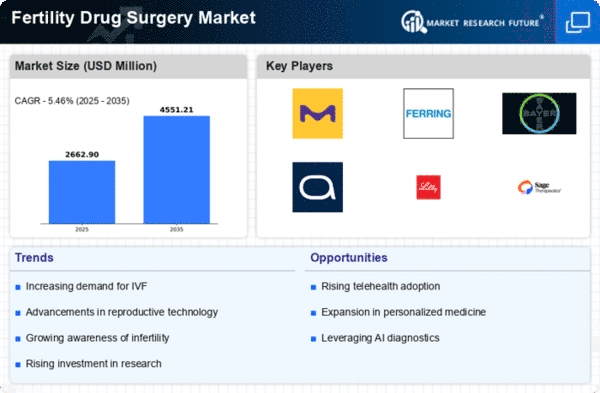
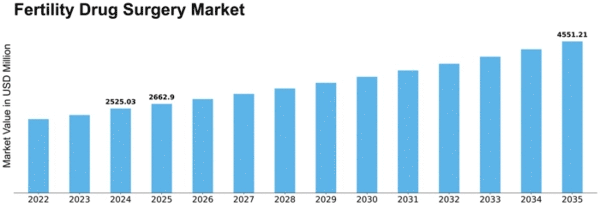
As per MRFR analysis, the Fertility Drug Surgery Market Size was estimated at 2525.03 USD Million in 2024. The Fertility Drug Surgery industry is projected to grow from 2691.83 USD Million in 2025 to 4551.21 USD Million by 2035, exhibiting a compound annual growth rate (CAGR) of 5.46 during the forecast period 2025 - 2035.

Key Market Trends & Highlights

The Fertility Drug Surgery Market is experiencing robust growth driven by technological advancements and increasing awareness.

  • North America remains the largest market for fertility drug surgery, driven by high healthcare expenditure and advanced medical facilities.
  • The Asia-Pacific region is emerging as the fastest-growing market, fueled by rising infertility rates and cultural shifts towards family planning.
  • In Vitro Fertilization continues to dominate the market, while Intracytoplasmic Sperm Injection is witnessing the fastest growth due to its effectiveness in treating male infertility.
  • Key market drivers include rising infertility rates and increased insurance coverage, which are enhancing access to fertility treatments.

Market Size & Forecast

2024 Market Size 2525.03 (USD Million)
2035 Market Size 4551.21 (USD Million)
CAGR (2025 - 2035) 5.46%
Largest Regional Market Share in 2024 North America

Major Players

Merck KGaA (DE), Ferring Pharmaceuticals (CH), Bayer AG (DE), AbbVie Inc. (US), Eli Lilly and Company (US), SAGE Therapeutics (US), HRA Pharma (FR), Irvine Scientific (US), CooperSurgical (US)

Market Trends

The Fertility Drug Surgery Market is currently experiencing a notable evolution, driven by advancements in medical technology and an increasing awareness of reproductive health. As more individuals seek solutions for infertility, the demand for innovative treatments is on the rise. This market encompasses a range of surgical procedures and pharmaceutical interventions aimed at enhancing fertility outcomes. The integration of minimally invasive techniques and personalized medicine appears to be reshaping the landscape, offering patients more effective and less invasive options. Furthermore, the growing acceptance of assisted reproductive technologies is likely to contribute to the expansion of this market, as societal attitudes towards fertility treatments continue to shift. In addition, the Fertility Drug Surgery Market is influenced by various factors, including regulatory changes and the emergence of new players in the healthcare sector. The collaboration between pharmaceutical companies and healthcare providers seems to foster a more comprehensive approach to fertility care. As research progresses, the potential for novel therapies and improved surgical techniques may enhance patient experiences and outcomes. Overall, the Fertility Drug Surgery Market is poised for growth, reflecting a broader trend towards prioritizing reproductive health and wellness in contemporary society.

Technological Advancements

The Fertility Drug Surgery Market is witnessing a surge in technological innovations that enhance treatment efficacy. Developments in imaging techniques and surgical instruments are enabling more precise interventions, which may lead to improved patient outcomes. Furthermore, the rise of telemedicine is facilitating access to fertility specialists, allowing for timely consultations and follow-ups.

Increased Awareness and Acceptance

There is a growing societal awareness regarding fertility issues, which appears to be reducing stigma associated with seeking treatment. This shift in perception is encouraging more individuals to explore their options, thereby driving demand within the Fertility Drug Surgery Market. Educational campaigns and support networks are playing a crucial role in this transformation.

Personalized Medicine

The trend towards personalized medicine is becoming increasingly prominent within the Fertility Drug Surgery Market. Tailoring treatments to individual patient profiles may enhance the effectiveness of interventions. Genetic testing and biomarker analysis are likely to inform treatment decisions, leading to more successful outcomes and higher patient satisfaction.

Fertility Drug Surgery Market Market Drivers

Rising Infertility Rates

The Global Fertility Drug and Surgery Market Industry experiences a notable increase in demand due to rising infertility rates worldwide. Factors such as delayed childbearing, lifestyle changes, and environmental influences contribute to this trend. In 2024, the market is valued at 2.19 USD Billion, reflecting the growing need for fertility treatments. As more individuals and couples seek assistance, the industry is likely to expand further. The increasing awareness and acceptance of fertility treatments also play a crucial role in driving market growth, as more people recognize the options available to them.

Market Growth Projections

The Global Fertility Drug and Surgery Market Industry is projected to experience substantial growth in the coming years. With a market value of 2.19 USD Billion in 2024, it is expected to reach 4.58 USD Billion by 2035, reflecting a compound annual growth rate (CAGR) of 6.94% from 2025 to 2035. This growth is indicative of the increasing prevalence of infertility, advancements in medical technology, and rising awareness of fertility treatments. As the market evolves, stakeholders are likely to explore new opportunities and innovations to meet the growing demand for fertility solutions.

Increased Awareness and Education

The Global Fertility Drug and Surgery Market Industry benefits from heightened awareness and education regarding fertility issues. Campaigns aimed at educating the public about reproductive health and available treatments have led to a greater understanding of infertility. This increased awareness encourages individuals to seek help sooner, thereby driving demand for fertility drugs and surgical interventions. Furthermore, healthcare providers are increasingly incorporating fertility education into routine care, which may lead to earlier diagnoses and treatment. As awareness continues to grow, the market is likely to see sustained growth in the coming years.

Advancements in Medical Technology

Technological innovations significantly impact the Global Fertility Drug and Surgery Market Industry. The development of advanced reproductive technologies, such as in vitro fertilization (IVF) and intracytoplasmic sperm injection (ICSI), enhances treatment efficacy and success rates. These advancements not only improve patient outcomes but also attract more individuals seeking fertility solutions. The integration of artificial intelligence and machine learning in fertility treatments is also emerging, potentially streamlining processes and personalizing care. As these technologies continue to evolve, they are expected to drive market growth and expand access to fertility services.

Government Initiatives and Support

Government initiatives and support play a pivotal role in shaping the Global Fertility Drug and Surgery Market Industry. Many countries are implementing policies to promote reproductive health and provide financial assistance for fertility treatments. These initiatives may include subsidies, tax incentives, and funding for research in reproductive medicine. Such support not only alleviates the financial burden on individuals seeking fertility treatments but also encourages healthcare providers to expand their services. As governments recognize the importance of addressing infertility, the market is expected to benefit from increased funding and resources.

Growing Demand for Personalized Medicine

The Global Fertility Drug and Surgery Market Industry is witnessing a shift towards personalized medicine, which tailors treatments to individual patient needs. This trend is driven by advancements in genetic testing and biomarker identification, allowing for more targeted and effective fertility treatments. By understanding the unique genetic and hormonal profiles of patients, healthcare providers can develop customized treatment plans that enhance success rates. The growing demand for personalized approaches in healthcare is likely to propel the fertility market forward, as patients increasingly seek tailored solutions to their reproductive challenges.

Market Segment Insights

By Application: In Vitro Fertilization (Largest) vs. Intracytoplasmic Sperm Injection (Fastest-Growing)

The Fertility Drug Surgery Market showcases a diverse application landscape, with In Vitro Fertilization (IVF) leading the charge as the largest segment. IVF has established itself as a cornerstone of fertility treatments due to its high success rates and widespread acceptance among patients. Other notable applications in this sector include Intracytoplasmic Sperm Injection (ICSI), Ovarian Stimulation, and Hormonal Therapy, each commanding a significant share. While not as prominent as IVF, ICSI is rapidly gaining traction in the market, illustrating the dynamic nature of fertility treatments.

Ovarian Stimulation (Dominant) vs. Hormonal Therapy (Emerging)

Ovarian Stimulation emerges as a dominant player in the Fertility Drug Surgery Market, facilitating the enhancement of oocyte production through controlled ovarian hyperstimulation. This process is instrumental in conjunction with IVF and ICSI, providing a crucial foundation for successful fertilization. Meanwhile, Hormonal Therapy is an emerging segment that addresses hormonal imbalances affecting fertility. While it currently plays a supportive role in treatment protocols, its significance is gradually being acknowledged, particularly for patients requiring hormonal regulation as a precursor to other interventions. The interplay between these two segments highlights the multifaceted approaches being employed to address infertility.

By End Use: Fertility Clinics (Largest) vs. Hospitals (Fastest-Growing)

The Fertility Drug Surgery Market is predominantly driven by the increasing number of fertility clinics, which hold the largest market share. These clinics provide specialized services that cater directly to patients seeking fertility treatments, making them a primary choice for many individuals and couples. Hospitals, while significant in their contributions, are currently positioned as the fastest-growing segment as they expand their reproductive health services to encompass comprehensive fertility treatment options.

Fertility Clinics (Dominant) vs. Hospitals (Emerging)

Fertility clinics represent the dominant segment in the Fertility Drug Surgery Market due to their specialized focus and patient-centric approach. These facilities are equipped with advanced reproductive technologies and provide tailored services to address various infertility issues. The growing societal acceptance of assisted reproductive technologies and increased patient awareness further reinforce their positioning. In contrast, hospitals are emerging as a significant player, driven by the incorporation of fertility services within their broader healthcare offerings. The trend towards integrated healthcare solutions and the rising demand for fertility treatments are making hospitals increasingly relevant in this landscape, positioning them as a vital alternative for patients.

By Drug Type: Gonadotropins (Largest) vs. Clomiphene Citrate (Fastest-Growing)

In the Fertility Drug Surgery Market, the distribution of market share among drug types reveals that Gonadotropins hold the largest share. This class of drugs is widely recognized for its effectiveness in stimulating ovarian function and is often favored by healthcare providers. Clomiphene Citrate, while not as dominant, has been gaining traction as an increasingly popular choice due to its efficacy and lower cost, contributing to its rapid growth in recent years. Other segments, such as Aromatase Inhibitors and Progesterone, are present but represent smaller portions of the market.

Gonadotropins: Dominant vs. Clomiphene Citrate: Emerging

Gonadotropins are considered the dominant players in the fertility drug segment, primarily due to their wide acceptance among specialists for treating various types of infertility. These drugs, which include FSH and LH, are known for their powerful ability to induce ovarian stimulation, making them a staple in assisted reproductive technologies. On the other hand, Clomiphene Citrate is emerging as a strong contender, particularly attractive to patients seeking less invasive treatment options. Its affordability and straightforward oral administration are key selling points, allowing it to reach a broader demographic of patients. As more research highlights its potential effectiveness, Clomiphene Citrate is likely to see continued growth in market presence.

By Patient Demographics: Age Group (Largest) vs. Gender (Fastest-Growing)

In the Fertility Drug Surgery Market, the patient demographics reveal significant variations across age groups and gender. The largest share of patients undergoing fertility drug surgeries typically fall within the 30-39 age bracket, reflecting the age-related challenges associated with fertility. Women in this age group constitute the predominant segment, as they are more likely to actively seek fertility treatments. Conversely, the male-female demographic balance is gradually shifting, with an increasing number of men participating in treatment discussions and decisions.

Age Group (Dominant) vs. Gender (Emerging)

The age group of 30-39 years stands out as the dominant segment in the Fertility Drug Surgery Market, representing the primary demographic seeking fertility interventions due to age-related fertility issues. This group is driven by biological factors, societal trends, and lifestyle changes that delay childbearing, compelling many to seek medical assistance. On the other hand, the gender demographic is emerging as a growing focus area, with men becoming more involved in fertility treatments, reflecting a cultural shift towards shared parental responsibilities. This change is fostering increased engagement from male patients in seeking support and information, which could reshape marketing and service delivery strategies in the industry.

Get more detailed insights about Fertility Drug and Surgery Market Research Report – Global Forecast till 2035

Regional Insights

North America : Leading Market for Fertility Solutions

North America is poised to maintain its leadership in the Fertility Drug Surgery Market, holding a significant market share of $1260.0M in 2024. The region's growth is driven by increasing infertility rates, advancements in reproductive technologies, and supportive government policies. Regulatory frameworks are evolving to enhance access to fertility treatments, further propelling market demand. The rising awareness of fertility issues among the population is also a key factor contributing to this growth. The competitive landscape in North America is robust, featuring key players such as AbbVie Inc., Merck KGaA, and CooperSurgical. The U.S. stands out as the leading country, accounting for a substantial portion of the market. The presence of advanced healthcare infrastructure and significant investments in research and development by major pharmaceutical companies are crucial in maintaining this competitive edge. As the market continues to expand, collaboration among stakeholders will be essential for innovation and improved patient outcomes.

Europe : Emerging Market with Growth Potential

Europe is witnessing a growing demand for fertility drug surgeries, with a market size of $675.0M in 2024. Factors such as increasing awareness of reproductive health, rising infertility rates, and advancements in medical technology are driving this growth. Regulatory bodies are actively working to streamline processes and improve access to fertility treatments, which is expected to further boost market dynamics. The region's diverse healthcare systems also contribute to varying levels of market penetration and growth opportunities. Leading countries in Europe include Germany, France, and the UK, where significant investments in healthcare infrastructure and research are evident. Key players like Bayer AG and Ferring Pharmaceuticals are at the forefront, driving innovation and expanding their product offerings. The competitive landscape is characterized by collaborations and partnerships aimed at enhancing service delivery and patient care. As the market evolves, regulatory support will play a crucial role in shaping its future trajectory.

Asia-Pacific : Rapidly Growing Fertility Market

The Asia-Pacific region is emerging as a significant player in the Fertility Drug Surgery Market, with a market size of $450.0M in 2024. The growth is fueled by increasing awareness of reproductive health, rising disposable incomes, and a growing population facing infertility challenges. Governments are beginning to recognize the importance of fertility treatments, leading to supportive policies and regulations that encourage market expansion. The region's diverse demographics present unique opportunities for tailored fertility solutions. Countries like China and India are leading the charge, with substantial investments in healthcare infrastructure and fertility clinics. The competitive landscape features both local and international players, including SAGE Therapeutics and HRA Pharma, who are actively expanding their presence. As the market matures, the focus will shift towards enhancing patient access and improving treatment outcomes, driven by technological advancements and innovative therapies.

Middle East and Africa : Emerging Market with Unique Challenges

The Middle East and Africa (MEA) region is gradually developing its Fertility Drug Surgery Market, currently valued at $140.03M in 2024. The growth is influenced by increasing awareness of infertility issues, cultural shifts towards family planning, and advancements in medical technology. However, the market faces challenges such as limited access to healthcare services and varying regulatory environments across countries. Efforts are being made to improve healthcare infrastructure and access to fertility treatments, which are expected to drive future growth. Leading countries in the MEA region include South Africa and the UAE, where investments in healthcare are on the rise. The competitive landscape is characterized by a mix of local and international players, with companies like Irvine Scientific making strides in the market. As the region continues to evolve, addressing regulatory challenges and enhancing patient access will be crucial for market expansion.

Key Players and Competitive Insights

The Fertility Drug Surgery Market is characterized by a dynamic competitive landscape, driven by increasing demand for assisted reproductive technologies and advancements in pharmaceutical innovations. Key players such as Merck KGaA (DE), Ferring Pharmaceuticals (CH), and AbbVie Inc. (US) are strategically positioned to leverage their extensive research capabilities and product portfolios. Merck KGaA (DE) focuses on enhancing its offerings through continuous innovation, while Ferring Pharmaceuticals (CH) emphasizes partnerships to expand its global reach. AbbVie Inc. (US) is actively pursuing mergers and acquisitions to bolster its market presence, collectively shaping a competitive environment that is increasingly focused on technological advancements and patient-centric solutions.In terms of business tactics, companies are localizing manufacturing and optimizing supply chains to enhance efficiency and responsiveness to market demands. The market structure appears moderately fragmented, with several key players exerting significant influence. This fragmentation allows for a diverse range of products and services, fostering competition that drives innovation and improves patient outcomes.

In November Merck KGaA (DE) announced a strategic partnership with a leading biotechnology firm to co-develop a novel fertility drug aimed at improving success rates in IVF procedures. This collaboration is expected to enhance Merck's product pipeline and solidify its position as a leader in fertility solutions. The strategic importance of this partnership lies in its potential to accelerate the development of innovative therapies that address unmet medical needs in reproductive health.

In October Ferring Pharmaceuticals (CH) launched a new digital platform designed to provide personalized treatment plans for patients undergoing fertility treatments. This initiative reflects Ferring's commitment to integrating technology into patient care, enhancing the overall treatment experience. The strategic significance of this move is underscored by the growing trend towards digital health solutions, which are increasingly becoming essential in the fertility sector.

In September AbbVie Inc. (US) completed the acquisition of a smaller biotech company specializing in reproductive health technologies. This acquisition is anticipated to expand AbbVie's capabilities in developing cutting-edge fertility treatments. The strategic importance of this acquisition lies in AbbVie's ability to integrate innovative technologies into its existing product offerings, thereby enhancing its competitive edge in the market.

As of December current competitive trends indicate a strong emphasis on digitalization, sustainability, and the integration of artificial intelligence in fertility treatments. Strategic alliances are increasingly shaping the landscape, enabling companies to pool resources and expertise to drive innovation. Looking ahead, competitive differentiation is likely to evolve from traditional price-based competition to a focus on innovation, technological advancements, and supply chain reliability, positioning companies to better meet the needs of patients and healthcare providers.

Key Companies in the Fertility Drug Surgery Market include

Industry Developments

Future Outlook

Fertility Drug Surgery Market Future Outlook

The Fertility Drug Surgery Market is projected to grow at a 5.46% CAGR from 2025 to 2035, driven by technological advancements, increasing infertility rates, and rising awareness.

New opportunities lie in:

  • Development of personalized fertility drug regimens
  • Expansion of telehealth services for fertility consultations
  • Investment in AI-driven fertility treatment platforms

By 2035, the market is expected to be robust, driven by innovation and increased accessibility.

Market Segmentation

Fertility Drug Surgery Market End Use Outlook

  • Hospitals
  • Fertility Clinics
  • Research Laboratories

Fertility Drug Surgery Market Drug Type Outlook

  • Gonadotropins
  • Clomiphene Citrate
  • Aromatase Inhibitors
  • Progesterone

Fertility Drug Surgery Market Application Outlook

  • In Vitro Fertilization
  • Intracytoplasmic Sperm Injection
  • Ovarian Stimulation
  • Hormonal Therapy

Fertility Drug Surgery Market Patient Demographics Outlook

  • Age Group
  • Gender
  • Socioeconomic Status

Report Scope

MARKET SIZE 20242525.03(USD Million)
MARKET SIZE 20252691.83(USD Million)
MARKET SIZE 20354551.21(USD Million)
COMPOUND ANNUAL GROWTH RATE (CAGR)5.46% (2025 - 2035)
REPORT COVERAGERevenue Forecast, Competitive Landscape, Growth Factors, and Trends
BASE YEAR2024
Market Forecast Period2025 - 2035
Historical Data2019 - 2024
Market Forecast UnitsUSD Million
Key Companies ProfiledMerck KGaA (DE), Ferring Pharmaceuticals (CH), Bayer AG (DE), AbbVie Inc. (US), Eli Lilly and Company (US), SAGE Therapeutics (US), HRA Pharma (FR), Irvine Scientific (US), CooperSurgical (US)
Segments CoveredApplication, End Use, Drug Type, Patient Demographics
Key Market OpportunitiesIntegration of advanced reproductive technologies enhances treatment efficacy in the Fertility Drug Surgery Market.
Key Market DynamicsRising demand for innovative fertility treatments drives competition and regulatory scrutiny in the fertility drug surgery market.
Countries CoveredNorth America, Europe, APAC, South America, MEA

FAQs

  1. SECTION I: EXECUTIVE SUMMARY AND KEY HIGHLIGHTS
    1. | 1.1 EXECUTIVE SUMMARY
    2. | 1.1.1 Market Overview
    3. | 1.1.2 Key Findings
    4. | 1.1.3 Market Segmentation
    5. | 1.1.4 Competitive Landscape
    6. | 1.1.5 Challenges and Opportunities
    7. | 1.1.6 Future Outlook
  2. SECTION II: SCOPING, METHODOLOGY AND MARKET STRUCTURE
    1. | 2.1 MARKET INTRODUCTION
    2. | 2.1.1 Definition
    3. | 2.1.2 Scope of the study
    4. |-- 2.1.2.1 Research Objective
    5. |-- 2.1.2.2 Assumption
    6. |-- 2.1.2.3 Limitations
    7. | 2.2 RESEARCH METHODOLOGY
    8. | 2.2.1 Overview
    9. | 2.2.2 Data Mining
    10. | 2.2.3 Secondary Research
    11. | 2.2.4 Primary Research
    12. |-- 2.2.4.1 Primary Interviews and Information Gathering Process
    13. |-- 2.2.4.2 Breakdown of Primary Respondents
    14. | 2.2.5 Forecasting Model
    15. | 2.2.6 Market Size Estimation
    16. |-- 2.2.6.1 Bottom-Up Approach
    17. |-- 2.2.6.2 Top-Down Approach
    18. | 2.2.7 Data Triangulation
    19. | 2.2.8 Validation
  3. SECTION III: QUALITATIVE ANALYSIS
    1. | 3.1 MARKET DYNAMICS
    2. | 3.1.1 Overview
    3. | 3.1.2 Drivers
    4. | 3.1.3 Restraints
    5. | 3.1.4 Opportunities
    6. | 3.2 MARKET FACTOR ANALYSIS
    7. | 3.2.1 Value chain Analysis
    8. | 3.2.2 Porter's Five Forces Analysis
    9. |-- 3.2.2.1 Bargaining Power of Suppliers
    10. |-- 3.2.2.2 Bargaining Power of Buyers
    11. |-- 3.2.2.3 Threat of New Entrants
    12. |-- 3.2.2.4 Threat of Substitutes
    13. |-- 3.2.2.5 Intensity of Rivalry
    14. | 3.2.3 COVID-19 Impact Analysis
    15. |-- 3.2.3.1 Market Impact Analysis
    16. |-- 3.2.3.2 Regional Impact
    17. |-- 3.2.3.3 Opportunity and Threat Analysis
  4. SECTION IV: QUANTITATIVE ANALYSIS
    1. | 4.1 Healthcare, BY Application (USD Million)
    2. | 4.1.1 In Vitro Fertilization
    3. | 4.1.2 Intracytoplasmic Sperm Injection
    4. | 4.1.3 Ovarian Stimulation
    5. | 4.1.4 Hormonal Therapy
    6. | 4.2 Healthcare, BY End Use (USD Million)
    7. | 4.2.1 Hospitals
    8. | 4.2.2 Fertility Clinics
    9. | 4.2.3 Research Laboratories
    10. | 4.3 Healthcare, BY Drug Type (USD Million)
    11. | 4.3.1 Gonadotropins
    12. | 4.3.2 Clomiphene Citrate
    13. | 4.3.3 Aromatase Inhibitors
    14. | 4.3.4 Progesterone
    15. | 4.4 Healthcare, BY Patient Demographics (USD Million)
    16. | 4.4.1 Age Group
    17. | 4.4.2 Gender
    18. | 4.4.3 Socioeconomic Status
    19. | 4.5 Healthcare, BY Region (USD Million)
    20. | 4.5.1 North America
    21. |-- 4.5.1.1 US
    22. |-- 4.5.1.2 Canada
    23. | 4.5.2 Europe
    24. |-- 4.5.2.1 Germany
    25. |-- 4.5.2.2 UK
    26. |-- 4.5.2.3 France
    27. |-- 4.5.2.4 Russia
    28. |-- 4.5.2.5 Italy
    29. |-- 4.5.2.6 Spain
    30. |-- 4.5.2.7 Rest of Europe
    31. | 4.5.3 APAC
    32. |-- 4.5.3.1 China
    33. |-- 4.5.3.2 India
    34. |-- 4.5.3.3 Japan
    35. |-- 4.5.3.4 South Korea
    36. |-- 4.5.3.5 Malaysia
    37. |-- 4.5.3.6 Thailand
    38. |-- 4.5.3.7 Indonesia
    39. |-- 4.5.3.8 Rest of APAC
    40. | 4.5.4 South America
    41. |-- 4.5.4.1 Brazil
    42. |-- 4.5.4.2 Mexico
    43. |-- 4.5.4.3 Argentina
    44. |-- 4.5.4.4 Rest of South America
    45. | 4.5.5 MEA
    46. |-- 4.5.5.1 GCC Countries
    47. |-- 4.5.5.2 South Africa
    48. |-- 4.5.5.3 Rest of MEA
  5. SECTION V: COMPETITIVE ANALYSIS
    1. | 5.1 Competitive Landscape
    2. | 5.1.1 Overview
    3. | 5.1.2 Competitive Analysis
    4. | 5.1.3 Market share Analysis
    5. | 5.1.4 Major Growth Strategy in the Healthcare
    6. | 5.1.5 Competitive Benchmarking
    7. | 5.1.6 Leading Players in Terms of Number of Developments in the Healthcare
    8. | 5.1.7 Key developments and growth strategies
    9. |-- 5.1.7.1 New Product Launch/Service Deployment
    10. |-- 5.1.7.2 Merger & Acquisitions
    11. |-- 5.1.7.3 Joint Ventures
    12. | 5.1.8 Major Players Financial Matrix
    13. |-- 5.1.8.1 Sales and Operating Income
    14. |-- 5.1.8.2 Major Players R&D Expenditure. 2023
    15. | 5.2 Company Profiles
    16. | 5.2.1 Merck KGaA (DE)
    17. |-- 5.2.1.1 Financial Overview
    18. |-- 5.2.1.2 Products Offered
    19. |-- 5.2.1.3 Key Developments
    20. |-- 5.2.1.4 SWOT Analysis
    21. |-- 5.2.1.5 Key Strategies
    22. | 5.2.2 Ferring Pharmaceuticals (CH)
    23. |-- 5.2.2.1 Financial Overview
    24. |-- 5.2.2.2 Products Offered
    25. |-- 5.2.2.3 Key Developments
    26. |-- 5.2.2.4 SWOT Analysis
    27. |-- 5.2.2.5 Key Strategies
    28. | 5.2.3 Bayer AG (DE)
    29. |-- 5.2.3.1 Financial Overview
    30. |-- 5.2.3.2 Products Offered
    31. |-- 5.2.3.3 Key Developments
    32. |-- 5.2.3.4 SWOT Analysis
    33. |-- 5.2.3.5 Key Strategies
    34. | 5.2.4 AbbVie Inc. (US)
    35. |-- 5.2.4.1 Financial Overview
    36. |-- 5.2.4.2 Products Offered
    37. |-- 5.2.4.3 Key Developments
    38. |-- 5.2.4.4 SWOT Analysis
    39. |-- 5.2.4.5 Key Strategies
    40. | 5.2.5 Eli Lilly and Company (US)
    41. |-- 5.2.5.1 Financial Overview
    42. |-- 5.2.5.2 Products Offered
    43. |-- 5.2.5.3 Key Developments
    44. |-- 5.2.5.4 SWOT Analysis
    45. |-- 5.2.5.5 Key Strategies
    46. | 5.2.6 SAGE Therapeutics (US)
    47. |-- 5.2.6.1 Financial Overview
    48. |-- 5.2.6.2 Products Offered
    49. |-- 5.2.6.3 Key Developments
    50. |-- 5.2.6.4 SWOT Analysis
    51. |-- 5.2.6.5 Key Strategies
    52. | 5.2.7 HRA Pharma (FR)
    53. |-- 5.2.7.1 Financial Overview
    54. |-- 5.2.7.2 Products Offered
    55. |-- 5.2.7.3 Key Developments
    56. |-- 5.2.7.4 SWOT Analysis
    57. |-- 5.2.7.5 Key Strategies
    58. | 5.2.8 Irvine Scientific (US)
    59. |-- 5.2.8.1 Financial Overview
    60. |-- 5.2.8.2 Products Offered
    61. |-- 5.2.8.3 Key Developments
    62. |-- 5.2.8.4 SWOT Analysis
    63. |-- 5.2.8.5 Key Strategies
    64. | 5.2.9 CooperSurgical (US)
    65. |-- 5.2.9.1 Financial Overview
    66. |-- 5.2.9.2 Products Offered
    67. |-- 5.2.9.3 Key Developments
    68. |-- 5.2.9.4 SWOT Analysis
    69. |-- 5.2.9.5 Key Strategies
    70. | 5.3 Appendix
    71. | 5.3.1 References
    72. | 5.3.2 Related Reports

Healthcare Market Segmentation

Healthcare By Application (USD Million, 2025-2035)

  • In Vitro Fertilization
  • Intracytoplasmic Sperm Injection
  • Ovarian Stimulation
  • Hormonal Therapy

Healthcare By End Use (USD Million, 2025-2035)

  • Hospitals
  • Fertility Clinics
  • Research Laboratories

Healthcare By Drug Type (USD Million, 2025-2035)

  • Gonadotropins
  • Clomiphene Citrate
  • Aromatase Inhibitors
  • Progesterone

Healthcare By Patient Demographics (USD Million, 2025-2035)

  • Age Group
  • Gender
  • Socioeconomic Status
Infographic

Free Sample Request

Kindly complete the form below to receive a free sample of this Report

Get Free Sample

Customer Strories

Compare Licence

×
Features License Type
Single User Multiuser License Enterprise User
Price $4,950 $5,950 $7,250
Maximum User Access Limit 1 User Upto 10 Users Unrestricted Access Throughout the Organization
Free Customization
Direct Access to Analyst
Deliverable Format
Platform Access
Discount on Next Purchase 10% 15% 15%
Printable Versions