×
Request Free Sample ×

Kindly complete the form below to receive a free sample of this Report

* Please use a valid business email

Leading companies partner with us for data-driven Insights

clients tt-cursor
Hero Background
English
Chinese
French
Japanese
Korean
German
Spanish

Europe Vegan Wines Market Size

ID: MRFR/FnB/11079-HCR
128 Pages
Snehal Singh
October 2025

Europe Vegan Wines Market Size, Share, Industry Trend & Analysis Research Report Information By Type (Red Wine and White Wine), By Packaging (Bottles, Cans and Others), By Distribution Channel (On-trade and Off-trade) – and Europe Forecast Till 2035.

Share:
Download PDF ×

We do not share your information with anyone. However, we may send you emails based on your report interest from time to time. You may contact us at any time to opt-out.

Europe Vegan Wines Market Infographic
Purchase Options

Europe Vegan Wines Size

Europe Vegan Wines Market Growth Projections and Opportunities

The European vegan wines market is influenced by several key market factors that shape its growth, trends, and consumer demand. One significant factor is the increasing adoption of plant-based lifestyles and ethical consumerism across Europe. As more people embrace veganism and seek out products that align with their values, there's a growing demand for wines that are free from animal-derived ingredients and production processes. Vegan wines, which are made without the use of animal-derived fining agents such as gelatin, egg whites, or fish bladder, cater to this expanding market segment of conscious consumers.

Changing dietary preferences and health consciousness also play a crucial role in driving the European vegan wines market. Consumers are becoming more mindful of what they consume, opting for healthier and more natural products. Vegan wines, which are often perceived as being more natural and less processed than their conventional counterparts, appeal to health-conscious individuals seeking cleaner and purer beverage options. Moreover, the perception that vegan wines may cause fewer allergic reactions or adverse health effects further contributes to their popularity among consumers with dietary restrictions or sensitivities.

The influence of marketing and branding strategies is another significant market factor in the European vegan wines industry. Companies leverage creative marketing campaigns to differentiate their vegan wine offerings and communicate their ethical and sustainable values to consumers. Labels and certifications indicating that wines are vegan-friendly help consumers identify and choose products that align with their preferences and values. Additionally, storytelling and brand narratives highlighting the winery's commitment to environmental sustainability and animal welfare resonate with conscious consumers, driving brand loyalty and consumer trust.

Distribution channels play a critical role in shaping the European vegan wines market, impacting accessibility and consumer reach. While vegan wines were once primarily available through niche retailers and specialty stores, they are now becoming more mainstream, with supermarkets, online retailers, and wine clubs expanding their selection of vegan-friendly wines. This wider distribution network ensures that vegan wines are accessible to a broader audience of consumers across Europe, driving market growth and increasing consumer awareness of vegan wine options.

Government regulations and labeling requirements also influence the European vegan wines market. In recent years, there has been a push for greater transparency and disclosure in the wine industry, prompting regulatory bodies to introduce stricter labeling standards regarding the use of animal-derived fining agents. Wine producers are required to accurately label their products to inform consumers about the presence or absence of animal-derived ingredients, helping vegans and vegetarians make informed purchasing decisions. Compliance with these regulations is essential for wineries to maintain consumer trust and credibility in the growing vegan wines market.

Competitive dynamics and market trends shape the European vegan wines market, driving innovation and product differentiation among wine producers. With an increasing number of wineries recognizing the demand for vegan-friendly options, competition in the market has intensified. Wineries differentiate themselves by offering a diverse range of vegan wines, including reds, whites, rosés, and sparkling wines, catering to varying consumer preferences and occasions. Innovation in production techniques and packaging formats further contribute to product differentiation and market competitiveness.

Consumer behavior and preferences also play a pivotal role in driving the European vegan wines market. While some consumers prioritize taste, quality, and price when choosing wines, others place greater importance on ethical considerations, sustainability, and environmental impact. Understanding consumer preferences and market trends is essential for wineries to develop and market vegan wines that resonate with their target audience. Consumer education and awareness campaigns highlighting the benefits of vegan wines, such as sustainability, cruelty-free production, and health benefits, help expand the market and attract new consumers to the segment

Europe Vegan Wines Market Size Graph
Author
Snehal Singh
Assistant Manager - Research

High acumen in analyzing complex macro & micro markets with more than 6 years of work experience in the field of market research. By implementing her analytical skills in forecasting and estimation into market research reports, she has expertise in Packaging, Construction, and Equipment domains. She handles a team size of 20-25 resources and ensures smooth running of the projects, associated marketing activities, and client servicing.

Leave a Comment

FAQs

What is the current valuation of the Europe Vegan Wines Market?

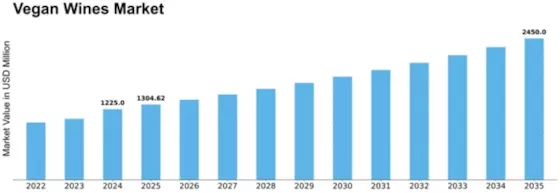
The Europe Vegan Wines Market was valued at 1225.0 USD Million in 2024.

What is the projected market valuation for the Europe Vegan Wines Market by 2035?

The market is projected to reach 2450.0 USD Million by 2035.

What is the expected CAGR for the Europe Vegan Wines Market during the forecast period?

The expected CAGR for the market from 2025 to 2035 is 6.5%.

Which distribution channel generates the highest revenue in the Europe Vegan Wines Market?

Supermarkets generated the highest revenue, with a range of 490.0 to 980.0 USD Million.

What are the primary product types in the Europe Vegan Wines Market?

The primary product types include Red Wine, White Wine, Sparkling Wine, and Rose Wine.

Which consumer demographic shows the highest spending in the Europe Vegan Wines Market?

Health-Conscious Consumers exhibit the highest spending, ranging from 490.0 to 980.0 USD Million.

Who are the key players in the Europe Vegan Wines Market?

Key players include Frey Vineyards, Bonterra Organic Vineyards, and The Vegan Wine Company, among others.

What price range segments exist within the Europe Vegan Wines Market?

The market segments by price range include Premium, Mid-Range, and Economical wines.

How does the revenue from online retail compare to other distribution channels?

Online Retail generated revenue between 245.0 and 490.0 USD Million, which is lower than Supermarkets.

What trends are anticipated for the Europe Vegan Wines Market in the coming years?

The market is likely to experience growth driven by increasing demand from health-conscious consumers and millennials.

Market Summary

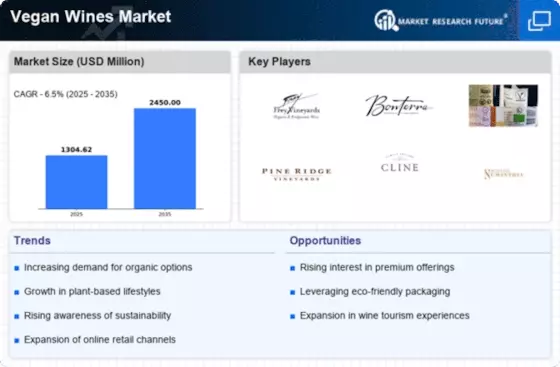
As per analysis, the Europe Vegan Wines Market is projected to grow from USD 1,312.5 Million in 2025 to USD 2,450.0 Million by 2035, exhibiting a compound annual growth rate (CAGR) of 6.5% during the forecast period (2025 - 2035).

Key Market Trends & Highlights

The Europe Vegan Wines Market is experiencing robust growth driven by evolving consumer preferences and increasing health consciousness.

  • Germany remains the largest market for vegan wines, reflecting a strong cultural shift towards plant-based consumption.
  • The UK is identified as the fastest-growing region, showcasing a rising demand for vegan products among consumers.
  • Online retail dominates the market, while supermarkets are emerging as the fastest-growing segment for vegan wine distribution.
  • Key market drivers include increasing health consciousness and sustainability concerns, which are shaping consumer choices in the vegan wines sector.

Market Size & Forecast

2024 Market Size 1225.0 (USD Million)
2035 Market Size 2450.0 (USD Million)
CAGR (2025 - 2035) 6.5%

Major Players

<p>Frey Vineyards (US), Bonterra Organic Vineyards (US), The Vegan Wine Company (GB), Pine Ridge Vineyards (US), Cline Cellars (US), Bodega Numanthia (ES), Chateau de Pizay (FR), Domaine de la Janasse (FR)</p>

Market Trends

The Europe Vegan Wines Market is experiencing a notable transformation, driven by a growing consumer awareness regarding health and environmental sustainability. As individuals increasingly seek alternatives to traditional wines, the demand for vegan options has surged. This shift is not merely a trend but appears to reflect a broader societal movement towards plant-based lifestyles. The market is characterized by a diverse range of offerings, with producers focusing on organic and biodynamic practices to appeal to conscientious consumers. Furthermore, the rise of e-commerce platforms has facilitated access to vegan wines, allowing consumers to explore various brands and styles from the comfort of their homes. In addition to changing consumer preferences, regulatory frameworks in Europe are evolving to support the production and labeling of vegan wines. This regulatory clarity is likely to enhance consumer trust and encourage more producers to enter the market. The emphasis on transparency in sourcing and production methods is becoming increasingly important, as consumers demand to know the origins of their beverages. Overall, the Europe Vegan Wines Market is poised for continued growth, driven by a combination of consumer demand, regulatory support, and innovative production techniques that align with modern values.

Rising Demand for Plant-Based Products

The Europe Vegan Wines Market is witnessing an increase in demand for plant-based products, as consumers become more health-conscious and environmentally aware. This trend suggests a shift in consumer preferences towards wines that align with a vegan lifestyle, prompting producers to innovate and diversify their offerings.

Focus on Organic and Biodynamic Practices

Producers in the Europe Vegan Wines Market are increasingly adopting organic and biodynamic practices to cater to the discerning tastes of consumers. This focus on sustainable farming methods not only enhances the quality of the wines but also appeals to a growing segment of environmentally conscious buyers.

E-commerce Growth and Accessibility

The rise of e-commerce platforms is significantly impacting the Europe Vegan Wines Market, providing consumers with greater accessibility to a variety of vegan wine options. This trend indicates a shift in purchasing behavior, as online shopping becomes a preferred method for exploring and acquiring niche products.

Europe Vegan Wines Market Market Drivers

Cultural Shift Towards Veganism

A significant cultural shift towards veganism is influencing the Europe Vegan Wines Market. As more individuals adopt vegan lifestyles, the demand for vegan wines is expected to rise correspondingly. This cultural transformation is not merely a trend but appears to be a long-term change in consumer behavior. Market data suggests that the number of vegans in Europe has increased by over 30% in recent years, indicating a substantial shift in dietary preferences. This growing demographic is likely to seek out vegan wines, further driving market growth. The Europe Vegan Wines Market stands to benefit from this cultural evolution, as it aligns with the values and preferences of an increasingly health-conscious and ethically-minded consumer base.

Increasing Health Consciousness

The Europe Vegan Wines Market is experiencing a notable surge in demand driven by a growing awareness of health and wellness among consumers. As individuals increasingly seek healthier lifestyle choices, the appeal of vegan wines, which are perceived as free from animal-derived fining agents, becomes more pronounced. This trend is reflected in market data indicating that the sales of vegan wines in Europe have risen by approximately 20% over the past year. Consumers are gravitating towards products that align with their health goals, and vegan wines are often viewed as a cleaner, more natural option. This shift in consumer behavior is likely to continue, suggesting a robust future for the Europe Vegan Wines Market.

Innovative Marketing Strategies

Innovative marketing strategies are playing a crucial role in the expansion of the Europe Vegan Wines Market. Producers are increasingly leveraging social media, influencer partnerships, and targeted advertising to reach a broader audience. By highlighting the unique attributes of vegan wines, such as their ethical production methods and health benefits, marketers are effectively engaging consumers. Recent data indicates that brands employing these strategies have seen a 25% increase in consumer engagement. This proactive approach not only raises awareness about vegan wines but also cultivates a loyal customer base. As marketing techniques continue to evolve, the Europe Vegan Wines Market is likely to experience sustained growth, driven by effective communication of the benefits of vegan wines.

Regulatory Support for Vegan Products

The Europe Vegan Wines Market benefits from a favorable regulatory environment that supports the growth of vegan products. Various European countries have implemented policies aimed at promoting plant-based diets and reducing the consumption of animal products. For instance, the European Union has introduced initiatives to encourage sustainable agriculture and reduce carbon footprints, which indirectly supports the vegan wine sector. This regulatory backing not only enhances the visibility of vegan wines but also fosters consumer trust in these products. As regulations continue to evolve, the Europe Vegan Wines Market is likely to see increased growth opportunities, as consumers become more aware of the benefits associated with vegan wines.

Sustainability and Environmental Concerns

Sustainability is a pivotal driver in the Europe Vegan Wines Market, as consumers become increasingly concerned about the environmental impact of their choices. The wine industry, traditionally associated with various environmental challenges, is witnessing a shift towards more sustainable practices. Vegan wines, which avoid animal products in their production, are often perceived as a more eco-friendly option. Data indicates that a significant portion of European consumers, approximately 60%, prioritize sustainability when selecting wines. This growing emphasis on environmental responsibility is likely to propel the demand for vegan wines, as consumers seek products that align with their values and contribute to a more sustainable future.

Market Segment Insights

By Distribution Channel: Online Retail (Largest) vs. Supermarkets (Fastest-Growing)

<p>In the Europe Vegan Wines Market, the distribution channels exhibit varying levels of market share, with online retail commanding the largest segment. This channel benefits from the increase in e-commerce and the convenience it offers to customers seeking vegan wine options. Following online retail, supermarkets are gaining significant traction among consumers, particularly due to their widespread presence and ability to offer a curated selection of vegan wines. Specialty stores and wine shops, while more niche, cater to specific consumer preferences, though they hold smaller market shares compared to the leading channels.</p>

<p>Supermarkets (Dominant) vs. Specialty Stores (Emerging)</p>

<p>Supermarkets have established themselves as the dominant distribution channel for vegan wines in Europe, thanks to their extensive reach and ability to stock a variety of brands and organic offerings. They provide consumers with the convenience of purchasing vegan wines alongside other grocery items, appealing to a broader audience. On the other hand, specialty stores represent an emerging segment, focusing on unique, high-quality, or locally sourced vegan wines. They attract a more discerning customer base interested in the authenticity and ethical considerations of their purchases. As consumer awareness grows, specialty stores are carving out a significant niche by appealing to the values of sustainability and taste.</p>

By Product Type: Red Wine (Largest) vs. Sparkling Wine (Fastest-Growing)

<p>In the Europe Vegan Wines Market, Red Wine holds the largest market share, driven by its traditional popularity and established consumer preferences. Following closely are White Wine and Rose Wine, which also contribute significantly to the overall market. Sparkling Wine, while smaller in share, has shown remarkable growth, appealing to a younger demographic seeking more celebratory and social drinking experiences. As consumer awareness about vegan products rises, the inclination towards vegan forms of these wines has propelled their acceptance.</p>

<p>Red Wine (Dominant) vs. Sparkling Wine (Emerging)</p>

<p>Red Wine dominates the Europe Vegan Wines Market due to its deep-rooted association with culture and culinary practices throughout the region. Its appeal is enhanced by the complexity of flavors it offers, attracting both connoisseurs and casual drinkers. In contrast, Sparkling Wine, noted as an emerging segment, has been rapidly gaining traction, particularly among younger consumers who favor its effervescence and celebratory nature. This segment is characterized by innovative marketing strategies that highlight its vegan certifications and unique flavor profiles, making it increasingly popular at social gatherings and festive occasions.</p>

By Consumer Demographics: Millennials (Largest) vs. Health-Conscious Consumers (Fastest-Growing)

<p>In the Europe Vegan Wines Market, the distribution of consumer demographics reveals that Millennials represent the largest segment, driven by their propensity for ethical consumption and sustainability. This cohort exhibits a strong affinity for vegan wines, fostering significant market share within the demographic landscape. Meanwhile, Health-Conscious Consumers are rapidly emerging, seeking beverages that align with their health-oriented lifestyles, contributing to a dynamic shift in consumer preferences in the vegan wine sector.</p>

<p>Millennials (Dominant) vs. Health-Conscious Consumers (Emerging)</p>

<p>Millennials, as the dominant consumer group in the Europe Vegan Wines Market, prioritize sustainability and ethical sourcing, reflecting their values in their purchasing choices. Their preference for organic and vegan-certified wines has solidified their position as vital contributors to market growth. Conversely, Health-Conscious Consumers represent an emerging segment, increasingly opting for products that promote wellness and health benefits. This demographic is growing due to heightened awareness of dietary choices and a preference for low-sugar, natural options. Their influence is reshaping product offerings from wine producers, emphasizing clean labels and transparency in sourcing.</p>

By Price Range: Premium (Largest) vs. Economical (Fastest-Growing)

<p>In the Europe Vegan Wines Market, the price range segmentation reveals a dominant presence of the premium segment, which captivates a significant share of consumers seeking high-quality vegan wine options. Premium wines often emphasize superior wine-making techniques and organic vineyards, attracting discerning buyers. In contrast, the economical segment is gaining traction, appealing to a wider demographic that prioritizes affordability while still desiring plant-based alternatives, thus ensuring its rapid growth in the sector.</p>

<p>Premium (Dominant) vs. Economical (Emerging)</p>

<p>The premium segment of the European vegan wines market is characterized by high-quality ingredients, artisanal production methods, and eco-friendly branding. This segment attracts affluent consumers who are willing to spend on premium vegan options, fostering an image of luxury and exclusivity. Meanwhile, the economical segment emerges as an attractive alternative for budget-conscious buyers, offering affordable options without compromising on quality. This segment is essential for broadening the market appeal of vegan wines, leading to increased market penetration and consumer awareness, ultimately supporting the overall growth of the vegan wines category.</p>

Get more detailed insights about Europe Vegan Wines Market Research Report— Forecast till 2035

Regional Insights

Rest of Europe : Emerging Trends Across Europe

The Rest of Europe holds a smaller market share of $50.0 million, approximately 5% of the total market. This sub-region is characterized by diverse consumer preferences and varying levels of market maturity. Growth is driven by increasing awareness of veganism and sustainability. However, regulatory frameworks are inconsistent, impacting market development. Countries like Belgium and the Netherlands are showing promising trends in vegan wine consumption.

Key Players and Competitive Insights

The Vegan Wines Market in Europe is currently characterized by a dynamic competitive landscape, driven by increasing consumer demand for plant-based products and a growing awareness of sustainability. Key players such as The Vegan Wine Company (GB), Frey Vineyards (US), and Chateau de Pizay (FR) are strategically positioning themselves to capitalize on these trends. The Vegan Wine Company (GB) focuses on innovation in product offerings, emphasizing organic and biodynamic practices, while Frey Vineyards (US) leverages its established reputation in the organic sector to expand its vegan wine portfolio. Chateau de Pizay (FR) is enhancing its market presence through regional partnerships, which collectively shape a competitive environment that is increasingly focused on sustainability and quality.

In terms of business tactics, companies are localizing manufacturing and optimizing supply chains to meet the rising demand for vegan wines. The market structure appears moderately fragmented, with several key players influencing trends and consumer preferences. This fragmentation allows for niche brands to emerge, yet the collective influence of established companies remains significant in shaping market dynamics.

In December 2025, The Vegan Wine Company (GB) launched a new line of vegan wines sourced from organic vineyards in Spain, aiming to attract environmentally conscious consumers. This strategic move not only diversifies their product range but also aligns with the growing trend of sustainable sourcing, potentially enhancing their market share in the competitive landscape.

In November 2025, Frey Vineyards (US) announced a partnership with a leading European distributor to expand its reach across the continent. This collaboration is likely to enhance their distribution capabilities, allowing them to tap into new markets and cater to the increasing demand for vegan wines in Europe. Such strategic alliances may prove crucial in navigating the complexities of international markets.

In October 2025, Chateau de Pizay (FR) unveiled a new marketing campaign focused on the health benefits of vegan wines, targeting health-conscious consumers. This initiative not only reinforces their brand positioning but also highlights the potential for growth in consumer segments that prioritize health and wellness, thereby enhancing their competitive edge.

As of January 2026, current trends in the Vegan Wines Market indicate a shift towards digitalization, sustainability, and the integration of AI in production processes. Strategic alliances are increasingly shaping the competitive landscape, allowing companies to leverage shared resources and expertise. Looking ahead, competitive differentiation is likely to evolve from traditional price-based competition to a focus on innovation, technology, and supply chain reliability, as companies strive to meet the sophisticated demands of modern consumers.

Key Companies in the Europe Vegan Wines Market include

Industry Developments

Future Outlook

Europe Vegan Wines Market Future Outlook

The Vegan Wines Market in Europe is projected to grow at a 6.5% CAGR from 2025 to 2035, driven by increasing consumer demand for sustainable products and health consciousness.

New opportunities lie in:

  • Expansion of online sales platforms targeting eco-conscious consumers.
  • Development of exclusive vegan wine subscription services.
  • Collaboration with vegan restaurants for curated wine pairings.

By 2035, the Vegan Wines Market is expected to be robust, reflecting evolving consumer preferences and sustainable practices.

Market Segmentation

Europe Vegan Wines Market Price Range Outlook

  • Premium
  • Mid-Range
  • Economical

Europe Vegan Wines Market Product Type Outlook

  • Red Wine
  • White Wine
  • Sparkling Wine
  • Rose Wine

Europe Vegan Wines Market Distribution Channel Outlook

  • Online Retail
  • Supermarkets
  • Specialty Stores
  • Wine Shops

Europe Vegan Wines Market Consumer Demographics Outlook

  • Millennials
  • Generation X
  • Baby Boomers
  • Health-Conscious Consumers

Report Scope

MARKET SIZE 20241225.0(USD Million)
MARKET SIZE 20251312.5(USD Million)
MARKET SIZE 20352450.0(USD Million)
COMPOUND ANNUAL GROWTH RATE (CAGR)6.5% (2024 - 2035)
REPORT COVERAGERevenue Forecast, Competitive Landscape, Growth Factors, and Trends
BASE YEAR2024
Market Forecast Period2025 - 2035
Historical Data2019 - 2024
Market Forecast UnitsUSD Million
Key Companies ProfiledFrey Vineyards (US), Bonterra Organic Vineyards (US), The Vegan Wine Company (GB), Pine Ridge Vineyards (US), Cline Cellars (US), Bodega Numanthia (ES), Chateau de Pizay (FR), Domaine de la Janasse (FR)
Segments CoveredDistribution Channel, Product Type, Consumer Demographics, Price Range
Key Market OpportunitiesGrowing consumer demand for sustainable and ethical products drives innovation in the Europe Vegan Wines Market.
Key Market DynamicsRising consumer demand for plant-based products drives growth in the Europe Vegan Wines Market.
Countries CoveredGermany, UK, France, Russia, Italy, Spain, Rest of Europe

FAQs

What is the current valuation of the Europe Vegan Wines Market?

The Europe Vegan Wines Market was valued at 1225.0 USD Million in 2024.

What is the projected market valuation for the Europe Vegan Wines Market by 2035?

The market is projected to reach 2450.0 USD Million by 2035.

What is the expected CAGR for the Europe Vegan Wines Market during the forecast period?

The expected CAGR for the market from 2025 to 2035 is 6.5%.

Which distribution channel generates the highest revenue in the Europe Vegan Wines Market?

Supermarkets generated the highest revenue, with a range of 490.0 to 980.0 USD Million.

What are the primary product types in the Europe Vegan Wines Market?

The primary product types include Red Wine, White Wine, Sparkling Wine, and Rose Wine.

Which consumer demographic shows the highest spending in the Europe Vegan Wines Market?

Health-Conscious Consumers exhibit the highest spending, ranging from 490.0 to 980.0 USD Million.

Who are the key players in the Europe Vegan Wines Market?

Key players include Frey Vineyards, Bonterra Organic Vineyards, and The Vegan Wine Company, among others.

What price range segments exist within the Europe Vegan Wines Market?

The market segments by price range include Premium, Mid-Range, and Economical wines.

How does the revenue from online retail compare to other distribution channels?

Online Retail generated revenue between 245.0 and 490.0 USD Million, which is lower than Supermarkets.

What trends are anticipated for the Europe Vegan Wines Market in the coming years?

The market is likely to experience growth driven by increasing demand from health-conscious consumers and millennials.

  1. SECTION I: EXECUTIVE SUMMARY AND KEY HIGHLIGHTS
    1. | 1.1 EXECUTIVE SUMMARY
  2. SECTION II: SCOPING, METHODOLOGY AND MARKET STRUCTURE
    1. | 2.1 MARKET INTRODUCTION
    2. | 2.2 RESEARCH METHODOLOGY
  3. SECTION III: QUALITATIVE ANALYSIS
    1. | 3.1 MARKET DYNAMICS
    2. | 3.2 MARKET FACTOR ANALYSIS
  4. SECTION IV: QUANTITATIVE ANALYSIS
    1. | 4.1 Food, Beverages & Nutrition, BY Distribution Channel (USD Million)
    2. | 4.2 Food, Beverages & Nutrition, BY Product Type (USD Million)
    3. | 4.3 Food, Beverages & Nutrition, BY Consumer Demographics (USD Million)
    4. | 4.4 Food, Beverages & Nutrition, BY Price Range (USD Million)
  5. SECTION V: COMPETITIVE ANALYSIS
    1. | 5.1 Competitive Landscape
    2. | 5.2 Company Profiles
    3. | 5.3 Appendix

Europe Vegan Wines Market Segmentation

Market Segmentation Overview

  • Detailed segmentation data will be available in the full report
  • Comprehensive analysis by multiple parameters
  • Regional and country-level breakdowns
  • Market size forecasts by segment
Infographic

Free Sample Request

Kindly complete the form below to receive a free sample of this Report

Get Free Sample

Customer Strories

Compare Licence

×
Features License Type
Single User Multiuser License Enterprise User
Price $4,950 $5,950 $7,250
Maximum User Access Limit 1 User Upto 10 Users Unrestricted Access Throughout the Organization
Free Customization
Direct Access to Analyst
Deliverable Format
Platform Access
Discount on Next Purchase 10% 15% 15%
Printable Versions