Request Free Sample ×

Kindly complete the form below to receive a free sample of this Report

* Please use a valid business email

Leading companies partner with us for data-driven Insights

clients tt-cursor
Hero Background

Europe Facial Injectable Market

ID: MRFR/MED/1896-CR
100 Pages
Satyendra Maurya
October 2016

Europe Facial Injectable Market Research Report Information By Type (Hyaluronic Acid, Collagen, Botulinum Toxin, and Polymers & Particles (PPFS)), By Application (Facial Surgery, Facial Uplift and Others), By End User (Hospitals, Clinics, and Research & Development Facilities), and By Region (Europe) –Market Forecast Till 2035

Share:
Download PDF ×

We do not share your information with anyone. However, we may send you emails based on your report interest from time to time. You may contact us at any time to opt-out.

Europe Facial Injectable Market Infographic
Purchase Options

Europe Facial Injectable Market Summary

As per Market Research Future analysis, the Facial Injectable market Size was estimated at 3807.3 USD Million in 2024. The Europe facial injectable market is projected to grow from 4191.08 USD Million in 2025 to 10950.0 USD Million by 2035, exhibiting a compound annual growth rate (CAGR) of 10.0% during the forecast period 2025 - 2035

Key Market Trends & Highlights

The Europe facial injectable market is experiencing robust growth driven by evolving consumer preferences and technological innovations.

  • The demand for non-surgical treatments continues to rise, particularly in Germany, the largest market in Europe.
  • Technological advancements in product formulations are enhancing the efficacy and safety of facial injectables across the region.
  • Social media is significantly influencing beauty standards, particularly among younger demographics in the UK, the fastest-growing region.
  • Key market drivers include increasing aesthetic awareness and rising disposable incomes, which are propelling market expansion.

Market Size & Forecast

2024 Market Size 3807.3 (USD Million)
2035 Market Size 10950.0 (USD Million)
CAGR (2025 - 2035) 10.08%

Major Players

Allergan (US), Revance Therapeutics (US), Medytox (KR), Ipsen (FR), Galderma (CH), Hugel (KR), Medytox (KR), Sientra (US), Hyaluronic Acid (US)

Our Impact
Enabled $4.3B Revenue Impact for Fortune 500 and Leading Multinationals
Partnering with 2000+ Global Organizations Each Year
30K+ Citations by Top-Tier Firms in the Industry

Europe Facial Injectable Market Trends

The facial injectable market is currently experiencing notable growth, driven by increasing consumer demand for non-surgical aesthetic procedures. This trend appears to be influenced by a growing awareness of the benefits of facial injectables, which offer immediate results with minimal downtime. As individuals seek to enhance their appearance without the need for invasive surgeries, the popularity of these products continues to rise. Furthermore, advancements in technology and product formulations are likely contributing to the expansion of this market, as new and improved options become available to consumers. In addition, the demographic landscape is shifting, with younger individuals increasingly opting for facial injectables. This shift suggests a changing perception of beauty standards and a desire for preventative measures against aging. The rise of social media platforms may also play a role in this trend, as individuals share their experiences and results, thereby influencing others to consider similar treatments. Overall, the facial injectable market is poised for continued growth, reflecting evolving consumer preferences and advancements in aesthetic medicine.

Rising Demand for Non-Surgical Treatments

There is a growing preference for non-invasive aesthetic procedures among consumers. This trend indicates a shift away from traditional surgical options, as individuals seek quicker recovery times and less risk associated with treatments. Facial injectables are increasingly viewed as a viable solution for enhancing appearance without the need for extensive procedures.

Technological Advancements in Product Formulations

Innovations in the formulation of facial injectables are enhancing their effectiveness and safety. New technologies are being developed to improve the longevity and natural appearance of results. This trend suggests that consumers are likely to benefit from more refined products that cater to their specific aesthetic needs.

Influence of Social Media on Beauty Standards

The impact of social media on beauty perceptions is profound, with platforms showcasing various aesthetic treatments. This influence appears to drive interest in facial injectables, as individuals are exposed to diverse beauty ideals and real-life results. Consequently, the market may see an increase in younger consumers seeking these treatments.

Europe Facial Injectable Market Drivers

Aging Population

Europe's aging population is a critical factor influencing the facial injectable market. With a substantial portion of the population over the age of 50, there is a heightened demand for products that address age-related concerns such as wrinkles and volume loss. Statistics suggest that the demographic of individuals aged 50 and above accounts for nearly 40% of the total cosmetic procedures performed in Europe. This trend indicates a robust market potential for facial injectables, as older adults seek to maintain a youthful appearance. The facial injectable market is thus poised for growth, driven by the desire of this demographic to enhance their aesthetic appeal.

Rising Disposable Incomes

The increase in disposable incomes across Europe is contributing to the growth of the facial injectable market. As individuals have more financial resources at their disposal, they are more inclined to invest in personal aesthetics. Market analysis indicates that regions with higher disposable incomes, such as Western Europe, are witnessing a surge in demand for cosmetic procedures, including facial injectables. This trend is particularly evident among middle to upper-income groups, who prioritize self-care and appearance enhancement. Consequently, the facial injectable market is likely to thrive as economic conditions improve and more consumers are willing to allocate funds towards aesthetic treatments.

Increasing Aesthetic Awareness

The growing awareness of aesthetic procedures among the European population is a notable driver for the facial injectable market. As individuals become more conscious of their appearance, the demand for non-invasive treatments has surged. Reports indicate that approximately 30% of adults in Europe are considering cosmetic enhancements, with facial injectables being a preferred choice due to their minimal downtime and immediate results. This trend is particularly pronounced among younger demographics, who are increasingly influenced by beauty standards portrayed in media. The facial injectable market is thus experiencing a significant uptick in interest, as more individuals seek to enhance their features without resorting to surgical options.

Influence of Celebrity Endorsements

Celebrity endorsements play a pivotal role in shaping consumer perceptions and driving demand within the facial injectable market. As public figures openly discuss their use of injectables, they contribute to normalizing these procedures and reducing stigma. This phenomenon is particularly evident in Europe, where high-profile celebrities frequently share their beauty routines on social media platforms. The visibility of these endorsements can lead to increased inquiries and consultations for facial injectables, as consumers aspire to emulate their favorite stars. Thus, the facial injectable market is likely to benefit from this trend, as celebrity influence continues to drive consumer interest and acceptance of aesthetic enhancements.

Regulatory Support for Aesthetic Procedures

The regulatory environment in Europe is becoming increasingly supportive of aesthetic procedures, which is beneficial for the facial injectable market. Regulatory bodies are streamlining approval processes for new products, thereby encouraging innovation and competition within the industry. This supportive framework is likely to lead to a wider variety of facial injectables available to consumers, enhancing their choices. Furthermore, the European Medicines Agency (EMA) has established guidelines that ensure safety and efficacy, which boosts consumer confidence in these products. As a result, the facial injectable market is expected to expand, as both manufacturers and consumers benefit from a more favorable regulatory landscape.

Market Segment Insights

By Application: Facial Rejuvenation (Largest) vs. Volume Restoration (Fastest-Growing)

In the Europe facial injectable market, 'Facial Rejuvenation' holds the largest market share, reflecting the high demand for aesthetic treatments aimed at improving skin appearance and youthfulness. This segment is dominated by various injectable therapies that target skin elasticity and overall facial vitality, making it a preferred choice among consumers seeking non-invasive cosmetic procedures. Conversely, 'Volume Restoration' is emerging as the fastest-growing segment, driven primarily by the rising popularity of hyaluronic acid fillers and similar technologies that restore lost volume due to aging. Factors contributing to this growth include an increase in awareness regarding facial aesthetics, the aging population, and advancements in injectable formulations that enhance safety and efficacy.

Facial Rejuvenation (Dominant) vs. Volume Restoration (Emerging)

'Facial Rejuvenation' is characterized by its focus on improving skin texture, tone, and overall facial appearance through injectables like botulinum toxin and dermal fillers. This dominant position is primarily due to the increasing consumer preference for aesthetic enhancements that yield natural-looking results without surgery. On the other hand, 'Volume Restoration' represents an emerging trend where injectables are specifically designed to restore facial fullness lost over time. These products are gaining traction among younger demographics as well, who seek to achieve a youthful appearance. The innovation in formulations and application techniques in both segments continues to enhance their market position, catering to a diverse range of consumer needs.

By Product Type: Hyaluronic Acid Fillers (Largest) vs. Botulinum Toxin (Fastest-Growing)

In the Europe facial injectable market, Hyaluronic Acid Fillers dominate the product type segment due to their versatility and widespread acceptance. These fillers are favored for their ability to provide instant volume and hydration, which caters to various aesthetic preferences. Following closely are Botulinum Toxin injectables, which are rapidly growing in popularity, particularly among younger demographics seeking preventive solutions to aging. In contrast, Calcium Hydroxylapatite and Poly-L-lactic Acid Fillers occupy smaller market shares, primarily focusing on specific applications such as deeper wrinkles and facial volume restoration.

Hyaluronic Acid Fillers (Dominant) vs. Calcium Hydroxylapatite Fillers (Emerging)

Hyaluronic Acid Fillers remain the dominant force in the European facial injectable market, known for their immediate aesthetic results and safety profile. They are widely used for lip enhancement, cheek augmentation, and wrinkle reduction, making them the go-to choice for both consumers and practitioners. Conversely, Calcium Hydroxylapatite Fillers are emerging as a specialized alternative, particularly effective for restoring facial volume and providing a more natural texture. While they currently capture a smaller niche, their ability to stimulate collagen production and deliver longer-lasting results positions them as a promising option for users looking for sustainable aesthetic enhancements.

By End User: Dermatology Clinics (Largest) vs. Cosmetic Surgery Centers (Fastest-Growing)

In the European facial injectable market, dermatology clinics represent the largest share among the end-user segments, driven by their established reputation and expertise in skin-related treatments. Following closely are cosmetic surgery centers, which are rapidly gaining ground due to the increasing acceptance and demand for aesthetic procedures among various demographics. Medical spas and beauty salons also contribute modestly but significantly to the overall market landscape, catering to clients seeking less invasive and more holistic approaches to facial aesthetics.

Dermatology Clinics (Dominant) vs. Cosmetic Surgery Centers (Emerging)

Dermatology clinics dominate the European facial injectable market by offering a wide range of specialized treatments, ensuring a steady influx of patients seeking professional skin care solutions. Their existing infrastructure, coupled with a high level of expertise among practitioners, positions them as trusted providers of facial injectables. In contrast, cosmetic surgery centers are emerging rapidly as they cater to a growing clientele interested in advanced aesthetic enhancements. With innovative techniques and an expanding array of services, these centers are capitalizing on lifestyle trends that favor cosmetic procedures, thus solidifying their place in the market.

By Age Group: 31-45 Years (Largest) vs. 18-30 Years (Fastest-Growing)

In the Europe facial injectable market, the age group 31-45 years holds the largest market share, as individuals in this demographic increasingly seek aesthetic enhancement to maintain a youthful appearance. This segment, often characterized by established careers and disposable income, prioritizes facial injectables as a non-invasive solution for anti-aging and cosmetic improvements. Meanwhile, the 18-30 years segment is emerging swiftly due to a growing awareness of cosmetic procedures and social media influence, leading to a notable increase in demand for injectables among younger individuals. The growth trends in these age groups indicate a significant shift towards acceptance and utilization of facial injectables, particularly among younger consumers. This is driven by factors such as rising disposable income, changing beauty standards, and a proactive approach to skincare. Furthermore, marketing strategies targeting younger audiences and the influence of celebrity endorsements on social media platforms are shaping the landscape, making this demographic more inclined to explore aesthetic options like injectables.

31-45 Years: Dominant vs. 18-30 Years: Emerging

The 31-45 years age group represents a dominant force in the Europe facial injectable market, characterized by a robust understanding of aesthetic enhancements and a willingness to invest in personal appearance. Consumers in this category typically have stable careers and financial freedom, allowing them to prioritize cosmetic procedures. In contrast, the 18-30 years age group is considered an emerging segment, driven by social media trends and a growing cultural acceptance of beauty interventions. This younger demographic is experimenting with injectables earlier, influenced by peers and social media platforms, leading to a faster growth trajectory. The juxtaposition of these segments illustrates a market dynamic where established preferences mesh with evolving trends and new consumer behaviors.

Get more detailed insights about Europe Facial Injectable Market

Regional Insights

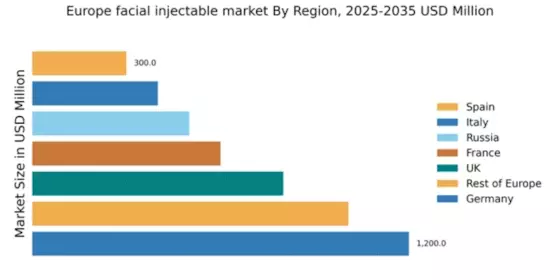
Germany : Strong Demand and Innovation Drive Growth

Germany holds a dominant position in the European facial injectable market, accounting for approximately 30% of the total market share with a value of $1200.0 million. Key growth drivers include a rising demand for aesthetic procedures, increased consumer awareness, and a robust healthcare infrastructure. Regulatory policies favoring minimally invasive treatments and government initiatives promoting aesthetic medicine further bolster market growth. The country’s advanced industrial development supports innovation in product offerings.

UK : Increasing Popularity of Non-Surgical Options

The UK market for facial injectables is valued at $800.0 million, representing about 20% of the European market. Growth is fueled by a cultural shift towards non-surgical aesthetic treatments, with increasing acceptance among younger demographics. Regulatory frameworks are evolving to ensure safety and efficacy, while the presence of numerous aesthetic clinics enhances accessibility. The market is characterized by a high demand for hyaluronic acid-based products, reflecting consumer preferences for natural-looking results.

France : Diverse Applications and Strong Demand

France's facial injectable market is valued at $600.0 million, capturing around 15% of the European market. The growth is driven by a strong emphasis on aesthetic innovation and a diverse range of applications, from anti-aging to volume restoration. Regulatory bodies are actively involved in ensuring product safety, which boosts consumer confidence. The market is supported by a network of skilled practitioners and a growing number of aesthetic clinics, particularly in urban areas like Paris and Lyon.

Russia : Rapid Growth in Aesthetic Procedures

Russia's facial injectable market is valued at $500.0 million, accounting for about 12.5% of the European market. The sector is experiencing rapid growth due to increasing disposable incomes and a rising interest in aesthetic procedures among the population. Regulatory policies are becoming more structured, promoting safety and efficacy. Major cities like Moscow and St. Petersburg are key markets, with a competitive landscape featuring both local and international players, enhancing market dynamics.

Italy : Strong Demand for Facial Enhancements

Italy's facial injectable market is valued at $400.0 million, representing about 10% of the European market. The growth is driven by cultural acceptance of aesthetic treatments and a strong demand for facial enhancements among both men and women. Regulatory frameworks are supportive, ensuring product safety and efficacy. Key markets include Milan and Rome, where a high concentration of aesthetic clinics exists, fostering a competitive environment with major players like Galderma and Allergan.

Spain : Expanding Market with Diverse Offerings

Spain's facial injectable market is valued at $300.0 million, making up about 7.5% of the European market. The growth is attributed to an expanding interest in aesthetic medicine, particularly among younger consumers. Regulatory policies are adapting to the evolving market, ensuring safety and quality. Major cities like Barcelona and Madrid are key markets, with a competitive landscape featuring both local and international brands, enhancing consumer choice and market dynamics.

Rest of Europe : Varied Growth Across Multiple Regions

The Rest of Europe market for facial injectables is valued at $1007.3 million, accounting for approximately 25% of the total European market. This segment includes a variety of countries with unique market dynamics and growth drivers. Regulatory environments vary, influencing market accessibility and consumer confidence. Key markets include Scandinavia and Eastern Europe, where increasing disposable incomes and a growing interest in aesthetic treatments are driving demand. The competitive landscape features both established and emerging players.

Europe Facial Injectable Market Regional Image

Key Players and Competitive Insights

The facial injectable market in Europe is characterized by a dynamic competitive landscape, driven by increasing consumer demand for aesthetic procedures and advancements in product formulations. Key players such as Allergan (US), Galderma (CH), and Revance Therapeutics (US) are at the forefront, each adopting distinct strategies to enhance their market presence. Allergan (US) continues to leverage its strong brand recognition and extensive distribution network, focusing on innovation in product offerings. Galderma (CH) emphasizes its commitment to research and development, aiming to introduce novel formulations that cater to diverse consumer needs. Meanwhile, Revance Therapeutics (US) is positioning itself through strategic partnerships and collaborations, enhancing its product pipeline and market reach. The market structure appears moderately fragmented, with several players competing for market share. Key business tactics include localizing manufacturing to reduce costs and optimize supply chains, which is particularly relevant in the context of fluctuating global trade dynamics. The collective influence of these major companies shapes a competitive environment where innovation and operational efficiency are paramount. In October 2025, Allergan (US) announced the launch of a new hyaluronic acid-based filler designed to provide longer-lasting results, which could potentially reshape consumer expectations in the market. This strategic move underscores Allergan's commitment to maintaining its leadership position by continuously enhancing product efficacy and consumer satisfaction. The introduction of this filler may also intensify competition as other players strive to match or exceed these advancements. In September 2025, Galderma (CH) expanded its product line with the introduction of a new botulinum toxin product aimed at younger demographics. This strategic decision reflects a growing trend towards targeting a broader age range, thereby expanding the potential customer base. By appealing to younger consumers, Galderma (CH) may effectively capture market share from competitors who primarily focus on older demographics. In August 2025, Revance Therapeutics (US) entered into a strategic partnership with a leading European aesthetic clinic chain to enhance its distribution capabilities. This collaboration is likely to facilitate greater access to its innovative products, thereby strengthening its market position. Such partnerships may also provide valuable insights into consumer preferences, allowing Revance to tailor its offerings more effectively. As of November 2025, current trends in the facial injectable market include a pronounced shift towards digitalization and sustainability, with companies increasingly integrating AI technologies into their operations. Strategic alliances are becoming more prevalent, enabling firms to pool resources and expertise to drive innovation. The competitive differentiation is likely to evolve, moving away from price-based competition towards a focus on technological advancements and supply chain reliability. This shift suggests that companies that prioritize innovation and operational excellence will be better positioned to thrive in the evolving landscape.

Key Companies in the Europe Facial Injectable Market include

Industry Developments

For the treatment of moderate to severe glabellar lines, Revance Therapeutics, Inc.'s resubmitted Biologics Licence Application (BLA) for DaxibotulinumtoxinA was accepted by the FDA.

March 2022:

A firm owned by AbbVie, Allergan Aesthetics, introduced HArmonyCa with lidocaine in Europe. Hyaluronic acid and calcium hydroxyapatite are the two active components in this hybrid dual-effect injection.

February 2022:

The purchase of Viora was announced by Sinclair Pharma. The company is able to grow its footprint in the market for medical aesthetics products thanks to this acquisition.

December 2021:

In order to expand Allergan Aesthetics' line of non-invasive body contouring treatments to include a treatment for the appearance of cellulite, the company successfully completed its acquisition of Soliton, Inc.

September 2021:

An exclusive deal has been announced by Galderma and Sofregen to create the following generation of biostimulator fillers.

Future Outlook

Europe Facial Injectable Market Future Outlook

The facial injectable market is projected to grow at a 10.08% CAGR from 2025 to 2035, driven by increasing demand for aesthetic procedures and technological advancements.

New opportunities lie in:

  • Expansion of telemedicine platforms for remote consultations
  • Development of personalized injectable formulations
  • Strategic partnerships with beauty and wellness brands for co-marketing initiatives

By 2035, the facial injectable market is expected to achieve substantial growth and innovation.

Market Segmentation

Europe Facial Injectable Market Type Outlook

  • Botulinum Toxin
  • Hyaluronic Acid
  • Polymers
  • Particles
  • Collagen

Europe Facial Injectable Market End User Outlook

  • Hospitals
  • Specialty Clinics
  • Spa & Beauty Clinics

Europe Facial Injectable Market Application Outlook

  • Facial Line Correction Treatment
  • Face Lifts
  • Lip Treatments

Report Scope

MARKET SIZE 2024 3807.3(USD Million)
MARKET SIZE 2025 4191.08(USD Million)
MARKET SIZE 2035 10950.0(USD Million)
COMPOUND ANNUAL GROWTH RATE (CAGR) 10.08% (2025 - 2035)
REPORT COVERAGE Revenue Forecast, Competitive Landscape, Growth Factors, and Trends
BASE YEAR 2024
Market Forecast Period 2025 - 2035
Historical Data 2019 - 2024
Market Forecast Units USD Million
Key Companies Profiled Allergan (US), Revance Therapeutics (US), Medytox (KR), Ipsen (FR), Galderma (CH), Hugel (KR), Medytox (KR), Sientra (US), Hyaluronic Acid (US)
Segments Covered Application, End User, Type
Key Market Opportunities Growing demand for minimally invasive procedures drives innovation in the facial injectable market.
Key Market Dynamics Rising consumer demand for minimally invasive procedures drives innovation and competition in the facial injectable market.
Countries Covered Germany, UK, France, Russia, Italy, Spain, Rest of Europe

Market Highlights

Author
Author
Author Profile
Satyendra Maurya LinkedIn
Research Analyst
An accomplished research analyst with high proficiency in market forecasting, data visualization, competitive benchmarking, and others. He holds a pronounced track record in research and consulting projects for sectors such as life sciences, medical devices, and healthcare IT. His capabilities in qualitative and quantitative analysis have resulted in positive client outcomes. Working on niche market trends, opportunities, sales, and forecasted value is part of his skill set.
Co-Author
Co-Author Profile
Kinjoll Dey LinkedIn
Senior Research Analyst
He is an extremely curious individual currently working in Healthcare and Medical Devices Domain. Kinjoll is comfortably versed in data centric research backed by healthcare educational background. He leverages extensive data mining and analytics tools such as Primary and Secondary Research, Statistical Analysis, Machine Learning, Data Modelling. His key role also involves Technical Sales Support, Client Interaction and Project management within the Healthcare team. Lastly, he showcases extensive affinity towards learning new skills and remain fascinated in implementing them.
Leave a Comment

FAQs

What is the current valuation of the Europe facial injectable market?

<p>As of 2024, the Europe facial injectable market was valued at 4.44 USD Billion.</p>

What is the projected market size for the Europe facial injectable market by 2035?

<p>The market is projected to reach 12.8 USD Billion by 2035.</p>

What is the expected CAGR for the Europe facial injectable market during the forecast period?

<p>The expected CAGR for the Europe facial injectable market from 2025 to 2035 is 10.1%.</p>

Which application segments are driving growth in the Europe facial injectable market?

<p>Key application segments include Facial Rejuvenation, Volume Restoration, Wrinkle Reduction, and Facial Contouring, with valuations ranging from 1.0 to 3.84 USD Billion.</p>

What types of products are most commonly used in the Europe facial injectable market?

<p>The market features various product types, including Hyaluronic Acid Fillers, Calcium Hydroxylapatite Fillers, Poly-L-lactic Acid Fillers, and Botulinum Toxin, with valuations from 0.44 to 5.04 USD Billion.</p>

Who are the key players in the Europe facial injectable market?

<p>Prominent players in the market include Allergan, Revance Therapeutics, Medytox, Ipsen, Galderma, Hugel, and Sientra.</p>

What are the primary end-user segments for facial injectables in Europe?

<p>End-user segments encompass Dermatology Clinics, Cosmetic Surgery Centers, Medical Spas, and Beauty Salons, with market values between 1.0 and 3.84 USD Billion.</p>

How does age influence the demand for facial injectables in Europe?

<p>Demand varies by age group, with the 31-45 years segment projected to grow from 1.33 to 3.84 USD Billion by 2035.</p>

What trends are emerging in the Europe facial injectable market?

<p>Trends indicate a growing preference for minimally invasive procedures, particularly among younger demographics, which may drive future market growth.</p>

How does the competitive landscape look in the Europe facial injectable market?

<p>The competitive landscape is characterized by innovation and strategic partnerships among key players, which may enhance market positioning and growth.</p>

Download Free Sample

Kindly complete the form below to receive a free sample of this Report

Compare Licence

×
Features License Type
Single User Multiuser License Enterprise User
Price $4,950 $5,950 $7,250
Maximum User Access Limit 1 User Upto 10 Users Unrestricted Access Throughout the Organization
Free Customization
Direct Access to Analyst
Deliverable Format
Platform Access
Discount on Next Purchase 10% 15% 15%
Printable Versions
%>