×
Hero Background
English
Chinese
French
Japanese
Korean
German
Spanish

Dyschromia Therapeutics Market Size

ID: MRFR/Pharma/10747-HCR
137 Pages
Rahul Gotadki
October 2025

Dyschromia Therapeutics Market Research Report: Information Therapy (Topical Creams, Laser Therapy, Phototherapy, Vitamin C Iontophoresis, Micro Needling and Others), End-User (Hospitals, Esthetic Clinics & Dermatology Centers and Others), Route of Administration (Topical, Patch and Others) And By Region (North America, Europe, Asia-Pacific, And Rest Of The World) –Market Forecast Till 2035.

Share:
Download PDF ×

We do not share your information with anyone. However, we may send you emails based on your report interest from time to time. You may contact us at any time to opt-out.

Dyschromia Therapeutics Market Infographic
Purchase Options

Dyschromia Therapeutics Size

Dyschromia Therapeutics Market Growth Projections and Opportunities

The Dyschromia Therapeutics market is driven by a surge in demand for effective treatments targeting skin pigmentation disorders. Dyschromia, characterized by abnormal skin coloration, presents a significant market opportunity, with a focus on developing therapeutics to address these conditions. The market is driven by growing incidence of dyschromia related disorders like hyperpigmentation and hypopigmentation. Consumer concerns related to the effect of such disorders on the skin health drive the market growth. Development of dermatological research and technology is an essential factor of Dyschromia Therapeutics market. Emerging treatment modalities such as laser therapies, topical agents, and genetic interventions are gaining ground and spurring market growth. Globally, the market is influenced by the emergence of more dermatological issues. The increasing environmental pollution, enhanced exposure to the sun and altered lifestyles complicate skin related problems, hence the need for efficient dyschromia therapeutics. Cosmetics industry integration is a major market factor. Dyschromia Therapeutics frequently spills out into cosmetic dermatology that results in partnership between drug companies and cosmetic behemoths to develop multifunctional products that target both medical and aesthetic side of the disorder. Regulatory frameworks and government programs change the layout of the market. Rigorous regulations guarantee the safety and efficacy of dyschromia therapeutics influencing the research and development focus of the pharmaceutical industry. The market dynamics are becoming more patient-centric. Patient education, support programs, and personalized treatment plans are being invested in by companies to improve patient outcomes and satisfaction. Globally, the market for Dyschromia Therapeutics is growing as companies are targeting previously unexplored territories. The rising middle class and growing disposable income in emerging economies drive the markets global growth. Competitive pressure within pharmaceutical and biotech companies is another driver in the market. Persistence in the development of new therapeutics and the striving for competitive advantage add vitality to the market. Large sums of money invested into the research environment and development stimulate the growth of innovations in dyschromia therapeutics. New molecules, formulations and delivery techniques are being extensively researched on to promote treatment efficiency and reduce side effects to the minimum. Market dynamics are influenced by insurance coverage and the cost of dyschromia therapeutics. The access to these therapies is an important aspect, and attempts to make them cheaper contribute to the expanding market. Pharmaceutical company, research institutions, and University partnerships facilitate the progress of dyschromia therapy. Cooperation in resource and skill contributes to the rapid emergence of new treatments and technologies. The market is characterized by challenges like possible side effects, slow regulatory approval process and a requirement for long-term clinical trials. To overcome these challenges is of paramount importance for the consistent growth of the market.

Shifting consumer preferences and emerging trends in skincare influence product development in the Dyschromia Therapeutics market. Companies strive to align their offerings with evolving consumer demands for natural, sustainable, and personalized solutions. Post-treatment care and maintenance strategies are integral to the market. Companies are developing comprehensive solutions that not only address dyschromia but also focus on maintaining skin health post-treatment.
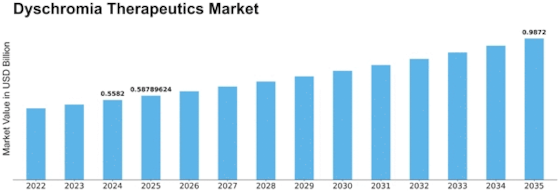
Dyschromia Therapeutics Market Size Graph
Author
Rahul Gotadki
Assistant Manager

He holds an experience of about 7+ years in Market Research and Business Consulting, working under the spectrum of Life Sciences and Healthcare domains. Rahul conceptualizes and implements a scalable business strategy and provides strategic leadership to the clients. His expertise lies in market estimation, competitive intelligence, pipeline analysis, customer assessment, etc. In addition to the above, his other responsibility includes strategic tracking of high growth markets & advising clients on the potential areas of focus they could direct their business initiatives

Leave a Comment

FAQs

What is the current valuation of the Dyschromia Therapeutics Market as of 2024?

The Dyschromia Therapeutics Market was valued at 0.5582 USD Billion in 2024.

What is the projected market size for the Dyschromia Therapeutics Market in 2035?

The market is projected to reach 0.9872 USD Billion by 2035.

What is the expected CAGR for the Dyschromia Therapeutics Market during the forecast period 2025 - 2035?

The expected CAGR for the Dyschromia Therapeutics Market during 2025 - 2035 is 5.32%.

Which companies are considered key players in the Dyschromia Therapeutics Market?

Key players include Galderma, Merz Pharmaceuticals, Revance Therapeutics, Hugel, Evolus, Sientra, Medytox, Incyte Corporation, and Amgen.

What are the primary segments of the Dyschromia Therapeutics Market?

The primary segments include Therapy, End-User, and Route of Administration.

How much revenue did topical creams generate in the Dyschromia Therapeutics Market in 2024?

Topical creams generated approximately 0.15 USD Billion in 2024, with projections indicating growth to 0.25 USD Billion.

Market Summary

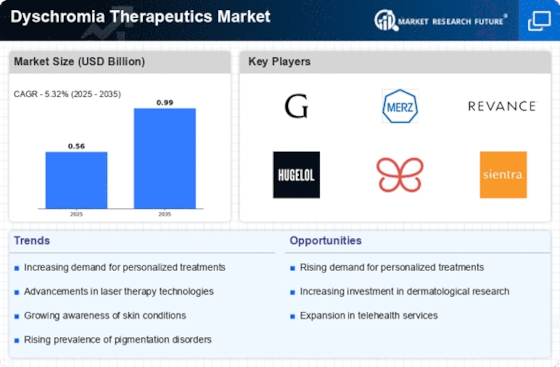
As per MRFR analysis, the Dyschromia Therapeutics Market Size was estimated at 0.5582 USD Billion in 2024. The Dyschromia Therapeutics industry is projected to grow from 0.5879 in 2025 to 0.9872 by 2035, exhibiting a compound annual growth rate (CAGR) of 5.32 during the forecast period 2025 - 2035.

Key Market Trends & Highlights

The Dyschromia Therapeutics Market is experiencing a dynamic shift towards personalized and technologically advanced treatment options.

  • The market is witnessing a rising demand for personalized treatments, particularly in North America, which remains the largest market.
  • Technological advancements in treatment modalities are driving innovation, especially in the Asia-Pacific region, recognized as the fastest-growing market.
  • Topical creams dominate the market as the largest segment, while laser therapy is emerging as the fastest-growing treatment option.
  • Key market drivers include rising awareness of skin disorders and growing demand for aesthetic treatments, which are significantly influencing market dynamics.

Market Size & Forecast

2024 Market Size 0.5582 (USD Billion)
2035 Market Size 0.9872 (USD Billion)
CAGR (2025 - 2035) 5.32%
Largest Regional Market Share in 2024 North America

Major Players

<p>Galderma (CH), Merz Pharmaceuticals (DE), Revance Therapeutics (US), Hugel (KR), Evolus (US), Sientra (US), Medytox (KR), Incyte Corporation (US), Amgen (US)</p>

Market Trends

The Dyschromia Therapeutics Market is currently experiencing a notable evolution, driven by an increasing awareness of skin conditions and a growing demand for effective treatment options. This market encompasses a range of products aimed at addressing various forms of dyschromia, including hyperpigmentation and hypopigmentation. The rise in aesthetic consciousness among consumers, coupled with advancements in dermatological research, appears to be propelling the development of innovative therapies. Furthermore, the integration of technology in treatment modalities, such as laser therapies and topical agents, suggests a shift towards more personalized and effective solutions for patients. In addition, the market landscape is influenced by a diverse array of stakeholders, including pharmaceutical companies, dermatologists, and cosmetic brands. The collaboration among these entities seems to foster a more comprehensive approach to dyschromia management. Regulatory bodies are also playing a crucial role in ensuring the safety and efficacy of new treatments, which may enhance consumer confidence. As the Dyschromia Therapeutics Market continues to expand, it is likely to witness further innovations and a broader acceptance of various therapeutic options, ultimately improving patient outcomes and satisfaction.

Rising Demand for Personalized Treatments

There is an observable trend towards personalized therapies in the Dyschromia Therapeutics Market. Patients increasingly seek treatments tailored to their specific skin types and conditions, prompting manufacturers to develop customized solutions. This shift may enhance treatment efficacy and patient satisfaction.

Technological Advancements in Treatment Modalities

The integration of advanced technologies, such as laser treatments and innovative topical formulations, is transforming the Dyschromia Therapeutics Market. These advancements appear to offer more effective and less invasive options for managing dyschromia, appealing to a broader patient demographic.

Increased Focus on Aesthetic Dermatology

The growing interest in aesthetic dermatology is influencing the Dyschromia Therapeutics Market. As consumers become more conscious of their appearance, there is a rising demand for treatments that not only address medical concerns but also enhance overall skin aesthetics.

Dyschromia Therapeutics Market Market Drivers

Increase in Disposable Income

An increase in disposable income across various regions is contributing to the growth of the Dyschromia Therapeutics Market. As individuals experience higher disposable incomes, they are more likely to invest in personal care and dermatological treatments. This trend is particularly evident in emerging economies, where a burgeoning middle class is prioritizing skincare and aesthetic procedures. The willingness to spend on health and beauty products is expected to drive the demand for dyschromia therapeutics, as consumers seek effective solutions for skin discoloration issues. Market analysts project that this increase in disposable income could lead to a market expansion of approximately 10% over the next few years, as more individuals seek out advanced treatment options to enhance their skin health and overall appearance.

Rising Awareness of Skin Disorders

The increasing awareness of skin disorders, particularly dyschromia, is a notable driver in the Dyschromia Therapeutics Market. As individuals become more informed about skin health, there is a growing demand for effective treatment options. This awareness is often fueled by social media, where discussions about skin conditions and their treatments are prevalent. Consequently, the market for dyschromia therapeutics is projected to expand, with estimates suggesting a compound annual growth rate of approximately 7% over the next few years. This trend indicates that consumers are actively seeking solutions, thereby driving innovation and investment in the development of new therapies. Furthermore, educational campaigns by dermatological associations are likely to enhance understanding and encourage individuals to seek treatment, further propelling the market forward.

Advancements in Dermatological Research

Advancements in dermatological research are significantly influencing the Dyschromia Therapeutics Market. Recent studies have led to the discovery of novel compounds and treatment modalities that target various forms of dyschromia, including hyperpigmentation and hypopigmentation. For instance, the development of targeted therapies that utilize advanced delivery systems has shown promise in improving treatment efficacy. The market is witnessing a surge in clinical trials aimed at evaluating the safety and effectiveness of these new therapies, with several products expected to enter the market in the coming years. This influx of innovative treatments is likely to cater to diverse patient needs, thereby expanding the therapeutic options available. As a result, the market is anticipated to grow, with projections indicating a potential increase in market size by over 15% within the next five years.

Growing Demand for Aesthetic Treatments

The growing demand for aesthetic treatments is a pivotal driver in the Dyschromia Therapeutics Market. As societal standards of beauty evolve, individuals are increasingly seeking treatments that enhance their appearance, including those addressing dyschromia. This trend is particularly pronounced among younger demographics, who are more inclined to invest in skincare and aesthetic procedures. The rise of non-invasive treatments, such as laser therapy and chemical peels, has made it easier for consumers to access dyschromia therapies. Market data suggests that the aesthetic dermatology segment is expected to witness a growth rate of approximately 8% annually, reflecting the increasing consumer willingness to spend on aesthetic improvements. This demand not only stimulates the market but also encourages manufacturers to innovate and diversify their product offerings to meet consumer expectations.

Regulatory Support for Innovative Therapies

Regulatory support for innovative therapies is playing a crucial role in shaping the Dyschromia Therapeutics Market. Governments and regulatory bodies are increasingly recognizing the need for effective treatments for skin disorders, leading to streamlined approval processes for new therapies. This supportive regulatory environment encourages pharmaceutical companies to invest in research and development, fostering innovation in dyschromia treatments. Recent initiatives aimed at expediting the approval of novel dermatological products are likely to enhance market dynamics, as more therapies become available to consumers. The anticipated increase in the number of approved treatments could potentially lead to a market growth rate of around 12% in the coming years, as patients gain access to a wider array of effective options for managing dyschromia.

Market Segment Insights

By Therapy: Topical Creams (Largest) vs. Laser Therapy (Fastest-Growing)

<p>In the Dyschromia Therapeutics Market, Topical Creams dominate the landscape with the largest market share, offering consumers effective and user-friendly solutions for discoloration treatments. Their accessibility and effectiveness have led to wide adoption, positioning them as a cornerstone for therapy options. Meanwhile, Laser Therapy emerges as the fastest-growing segment, appealing to consumers seeking advanced treatment technologies that promise quicker results and more permanent solutions.</p>

<p>Laser Therapy (Dominant) vs. Phototherapy (Emerging)</p>

<p>Laser Therapy stands as a dominant force in the Dyschromia Therapeutics Market, recognized for its precision and efficacy in treating pigmentation disorders. Its ability to deliver targeted treatment with minimal invasiveness has made it a preferred choice among consumers and healthcare practitioners alike. Conversely, Phototherapy is an emerging option gaining traction due to its non-invasive nature and suitability for various skin types. As awareness grows regarding the benefits of light-based therapies, Phototherapy is increasingly being favored for its effectiveness in managing dyschromia, offering a complementary approach to conventional treatments.</p>

By End-User: Hospitals (Largest) vs. Esthetic Clinics & Dermatology Centers (Fastest-Growing)

<p>In the Dyschromia Therapeutics Market, Hospitals account for the largest share, driven by their comprehensive facilities and advanced treatment capabilities. Esthetic Clinics & Dermatology Centers follow closely, capturing a significant portion due to the rising consumer interest in cosmetic dermatology and outpatient procedures. Both sectors cater to varying patient needs, reflecting unique therapeutic approaches within the market.</p>

<p>End-User: Hospitals (Dominant) vs. Esthetic Clinics & Dermatology Centers (Emerging)</p>

<p>Hospitals are prominent players in the Dyschromia Therapeutics Market, offering a wide range of advanced diagnostic and treatment options facilitated by specialist teams and sophisticated technologies. Their capacity to handle complex cases and provide multidisciplinary care positions them as the dominant end-user. Conversely, Esthetic Clinics and Dermatology Centers are emerging as vital contributors, fueled by increasing demand for non-invasive treatments and personalized patient care. These settings focus on aesthetic improvements, attracting a growing patient base. The shift towards preventive and aesthetic dermatology indicates that while hospitals remain a stronghold, esthetic clinics are rapidly gaining relevance in shaping therapeutic strategies.</p>

By Route of Administration: Topical (Largest) vs. Patch (Fastest-Growing)

<p>In the Dyschromia Therapeutics Market, the Route of Administration segment showcases diverse methodologies tailored to treat skin discoloration issues. Currently, the Topical administration accounts for a significant portion of the market share, primarily due to its widespread acceptance and ease of application. Consumers favor this method as it allows for localized treatment, minimizing systemic side effects and enhancing patient compliance. On the other hand, Patch administration is gaining traction, driven by advancements in transdermal delivery systems that improve user experience and treatment adherence. The growth trends in the Route of Administration segment are notably influenced by increasing consumer demand for effective and convenient treatment options. Topical medications continue to dominate, but the Patch segment is witnessing rapid advancements, making it the fastest-growing route of administration. Innovations in formulation and delivery technology are contributing to the success of patches, appealing to modern consumers who seek efficacy alongside convenience. This trend indicates a promising future for both methodologies as they cater to varying user preferences and treatment needs.</p>

<p>Topical (Dominant) vs. Patch (Emerging)</p>

<p>The Topical route of administration in the Dyschromia Therapeutics Market remains the dominant choice among consumers due to its targeted effectiveness and user-friendliness. It encompasses a variety of formulations such as creams, gels, and ointments, which allow for precise application on affected skin areas. This approach has secured a strong foothold in the market, particularly for patients with mild to moderate dyschromia. Conversely, the Patch segment is emerging rapidly, leveraging innovative technologies to enhance the delivery of therapeutic agents. These patches offer sustained release mechanisms, ensuring prolonged action and improved compliance. As consumers increasingly prioritize convenience and effectiveness, the Patch route is positioned to capture a larger share of the market in the coming years, complementing the established topical solutions.</p>

Get more detailed insights about Dyschromia Therapeutics Market Research Report 2035

Regional Insights

North America : Market Leader in Innovation

North America is the largest market for dyschromia therapeutics, accounting for approximately 45% of the global market share. The region benefits from advanced healthcare infrastructure, high disposable incomes, and increasing awareness of skin conditions. Regulatory support from agencies like the FDA has accelerated the approval of innovative treatments, driving demand for effective solutions in this sector. The United States is the primary contributor, with significant investments in research and development from key players such as Revance Therapeutics and Incyte Corporation. Canada also plays a vital role, with a growing focus on dermatological health. The competitive landscape is characterized by a mix of established companies and emerging startups, fostering innovation and expanding treatment options.

Europe : Emerging Market with Growth Potential

Europe is the second-largest market for dyschromia therapeutics, holding around 30% of the global market share. The region is witnessing a surge in demand due to increasing skin disorders and a growing aging population. Regulatory bodies like the European Medicines Agency (EMA) are actively promoting the development of new therapies, which is expected to enhance market growth. Germany and France are leading countries in this market, with a strong presence of key players such as Merz Pharmaceuticals and Galderma. The competitive landscape is evolving, with a focus on innovative treatments and personalized medicine. The region's healthcare systems are increasingly integrating advanced dermatological solutions, further driving market expansion.

Asia-Pacific : Rapidly Growing Therapeutics Sector

Asia-Pacific is rapidly emerging as a significant player in the dyschromia therapeutics market, accounting for approximately 20% of the global share. The region's growth is driven by rising disposable incomes, increasing awareness of skin health, and a growing population. Countries like South Korea and Japan are at the forefront, with supportive regulatory frameworks that encourage the introduction of new therapies. South Korea is particularly notable for its advanced dermatological research and development, with companies like Hugel and Medytox leading the charge. The competitive landscape is marked by a mix of local and international players, fostering innovation and expanding treatment options. The increasing prevalence of skin disorders is further propelling market growth in this region.

Middle East and Africa : Untapped Market with Potential

The Middle East and Africa represent an untapped market for dyschromia therapeutics, holding about 5% of the global market share. The region is experiencing a gradual increase in demand for dermatological treatments due to rising awareness of skin health and improving healthcare infrastructure. Regulatory bodies are beginning to recognize the importance of addressing skin conditions, which is expected to catalyze market growth. Countries like South Africa and the UAE are leading the way, with a growing number of clinics and healthcare facilities focusing on dermatology. The competitive landscape is still developing, with opportunities for both local and international companies to introduce innovative solutions. As awareness and access to treatments improve, the market is poised for significant growth in the coming years.

Key Players and Competitive Insights

Leading market players are investing heavily in research and development in order to expand their product lines, which will help the Dyschromia therapeutics market, grow even more. Market participants are also undertaking a variety of strategic activities to expand their global footprint, with important market developments including new product launches, contractual agreements, mergers and acquisitions, higher investments, and collaboration with other organizations. To expand and survive in a more competitive and rising market climate, Dyschromia therapeutics industry must offer cost-effective items.

Manufacturing locally to minimize operational costs is one of the key business tactics used by manufacturers in the global Dyschromia therapeutics industry to benefit clients and increase the market sector. In recent years, the Dyschromia therapeutics industry has offered some of the most significant advantages to medicine. Major players in the Dyschromia therapeutics market, including Bayer AG, ALLERGAN (AbbVie Inc.), Galderma S.A. (Nestle Skin Health S.A), SkinCeuticals, Pierre Fabre, EpiPharm AG, RXi Pharmaceuticals Corporation, Obagi Cosmeceuticals LLC (Obagi medical), Vivier Pharma, Sirona Biochem's, Menarini Group and others, are attempting to increase market demand by investing in research and development operations.

Allergan Ltd. (Allergan), a division of AbbVie Inc., is a specialty pharmaceutical business that develops and distributes branded, biosimilar, and over-the-counter (OTC) prescription drugs. It offers products in the areas of urology, gastrointestinal, central nervous system, ophthalmology, dermatology, and anti-infective treatments. The company offers its products to retailers, drug wholesalers, distributors, mail-order companies, medical facilities like hospitals and clinics, as well as to the government, managed healthcare providers like HMOs. It operates throughout the Americas, Europe, Asia-Pacific, Middle East, and Africa. Dublin, Ireland is home to Allergan's corporate headquarters.

Research, development, manufacture, and marketing of products for agricultural and human health are all activities carried out by Bayer AG (Bayer). It provides treatments for a variety of ailments, including those related to women's health, cardiovascular disease, hematology, and ophthalmology. Additionally, it seeks to develop cutting-edge technology and chemicals for application in contemporary agriculture and medical. Seeds, crop protection products, diagnostic imaging tools, specialist drugs, over-the-counter (OTC) goods, prescription goods, and non-agricultural pest management products make up the company's product portfolio. Bayer's healthcare and crop protection products are primarily distributed through wholesalers, pharmacies, hospitals, and retailers.

It operates through a network of subsidiaries across Asia-Pacific, Europe, North America, Latin America, Africa, and the Middle East. Bayer's headquarters are in Leverkusen, North Rhine-Westphalia, and Germany.

Key Companies in the Dyschromia Therapeutics Market market include

Industry Developments

August 2023: BlueRock Therapeutics and bit.bio entered into a collaboration and option agreement to discover and manufacture iPSC-derived regulatory T cells (Tregs) for use in creating therapeutics.

March 2023: Galderma S.A. launched an aesthetic visualization tool, FACE by Galderma. 

Future Outlook

Dyschromia Therapeutics Market Future Outlook

<p>The Dyschromia Therapeutics Market is projected to grow at a 5.32% CAGR from 2024 to 2035, driven by increasing awareness, technological advancements, and rising demand for effective treatments.</p>

New opportunities lie in:

  • <p>Development of personalized treatment regimens leveraging genetic profiling.</p>
  • <p>Expansion into emerging markets with tailored product offerings.</p>
  • <p>Investment in telemedicine platforms for remote consultations and follow-ups.</p>

<p>By 2035, the Dyschromia Therapeutics Market is expected to achieve substantial growth and innovation.</p>

Market Segmentation

Dyschromia Therapeutics Market Therapy Outlook

  • Topical Creams
  • Laser Therapy
  • Phototherapy
  • Vitamin C Iontophoresis
  • Micro Needling
  • Others

Dyschromia Therapeutics Market End-User Outlook

  • Hospitals
  • Esthetic Clinics & Dermatology Centers
  • Others

Dyschromia Therapeutics Market Route of Administration Outlook

  • Topical
  • Patch
  • Others

Report Scope

MARKET SIZE 20240.5582(USD Billion)
MARKET SIZE 20250.5879(USD Billion)
MARKET SIZE 20350.9872(USD Billion)
COMPOUND ANNUAL GROWTH RATE (CAGR)5.32% (2024 - 2035)
REPORT COVERAGERevenue Forecast, Competitive Landscape, Growth Factors, and Trends
BASE YEAR2024
Market Forecast Period2025 - 2035
Historical Data2019 - 2024
Market Forecast UnitsUSD Billion
Key Companies ProfiledMarket analysis in progress
Segments CoveredMarket segmentation analysis in progress
Key Market OpportunitiesEmergence of novel therapies addressing diverse dyschromia conditions enhances treatment options in the Dyschromia Therapeutics Market.
Key Market DynamicsRising demand for innovative treatments drives competition and regulatory scrutiny in the Dyschromia Therapeutics Market.
Countries CoveredNorth America, Europe, APAC, South America, MEA

FAQs

What is the current valuation of the Dyschromia Therapeutics Market as of 2024?

The Dyschromia Therapeutics Market was valued at 0.5582 USD Billion in 2024.

What is the projected market size for the Dyschromia Therapeutics Market in 2035?

The market is projected to reach 0.9872 USD Billion by 2035.

What is the expected CAGR for the Dyschromia Therapeutics Market during the forecast period 2025 - 2035?

The expected CAGR for the Dyschromia Therapeutics Market during 2025 - 2035 is 5.32%.

Which companies are considered key players in the Dyschromia Therapeutics Market?

Key players include Galderma, Merz Pharmaceuticals, Revance Therapeutics, Hugel, Evolus, Sientra, Medytox, Incyte Corporation, and Amgen.

What are the primary segments of the Dyschromia Therapeutics Market?

The primary segments include Therapy, End-User, and Route of Administration.

How much revenue did topical creams generate in the Dyschromia Therapeutics Market in 2024?

Topical creams generated approximately 0.15 USD Billion in 2024, with projections indicating growth to 0.25 USD Billion.

  1. SECTION I: EXECUTIVE SUMMARY AND KEY HIGHLIGHTS
    1. EXECUTIVE SUMMARY
      1. Market Overview
      2. Key Findings
      3. Market Segmentation
      4. Competitive Landscape
      5. Challenges and Opportunities
      6. Future Outlook
  2. SECTION II: SCOPING, METHODOLOGY AND MARKET STRUCTURE
    1. MARKET INTRODUCTION
      1. Definition
      2. Scope of the study
    2. RESEARCH METHODOLOGY
      1. Overview
      2. Data Mining
      3. Secondary Research
      4. Primary Research
      5. Forecasting Model
      6. Market Size Estimation
      7. Data Triangulation
      8. Validation
  3. SECTION III: QUALITATIVE ANALYSIS
    1. MARKET DYNAMICS
      1. Overview
      2. Drivers
      3. Restraints
      4. Opportunities
    2. MARKET FACTOR ANALYSIS
      1. Value chain Analysis
      2. Porter's Five Forces Analysis
      3. COVID-19 Impact Analysis
  4. SECTION IV: QUANTITATIVE ANALYSIS
    1. Healthcare, BY Therapy (USD Billion)
      1. Topical Creams
      2. Laser Therapy
      3. Phototherapy
      4. Vitamin C Iontophoresis
      5. Micro Needling
      6. Others
    2. Healthcare, BY End-User (USD Billion)
      1. Hospitals
      2. Esthetic Clinics & Dermatology Centers
      3. Others
    3. Healthcare, BY Route of Administration (USD Billion)
      1. Topical
      2. Patch
      3. Others
    4. Healthcare, BY Region (USD Billion)
      1. North America
      2. Europe
      3. APAC
      4. South America
      5. MEA
  5. SECTION V: COMPETITIVE ANALYSIS
    1. Competitive Landscape
      1. Overview
      2. Competitive Analysis
      3. Market share Analysis
      4. Major Growth Strategy in the Healthcare
      5. Competitive Benchmarking
      6. Leading Players in Terms of Number of Developments in the Healthcare
      7. Key developments and growth strategies
      8. Major Players Financial Matrix
    2. Company Profiles
      1. Galderma (CH)
      2. Merz Pharmaceuticals (DE)
      3. Revance Therapeutics (US)
      4. Hugel (KR)
      5. Evolus (US)
      6. Sientra (US)
      7. Medytox (KR)
      8. Incyte Corporation (US)
      9. Amgen (US)
    3. Appendix
      1. References
      2. Related Reports
  6. LIST OF FIGURES
    1. MARKET SYNOPSIS
    2. NORTH AMERICA MARKET ANALYSIS
    3. US MARKET ANALYSIS BY THERAPY
    4. US MARKET ANALYSIS BY END-USER
    5. US MARKET ANALYSIS BY ROUTE OF ADMINISTRATION
    6. CANADA MARKET ANALYSIS BY THERAPY
    7. CANADA MARKET ANALYSIS BY END-USER
    8. CANADA MARKET ANALYSIS BY ROUTE OF ADMINISTRATION
    9. EUROPE MARKET ANALYSIS
    10. GERMANY MARKET ANALYSIS BY THERAPY
    11. GERMANY MARKET ANALYSIS BY END-USER
    12. GERMANY MARKET ANALYSIS BY ROUTE OF ADMINISTRATION
    13. UK MARKET ANALYSIS BY THERAPY
    14. UK MARKET ANALYSIS BY END-USER
    15. UK MARKET ANALYSIS BY ROUTE OF ADMINISTRATION
    16. FRANCE MARKET ANALYSIS BY THERAPY
    17. FRANCE MARKET ANALYSIS BY END-USER
    18. FRANCE MARKET ANALYSIS BY ROUTE OF ADMINISTRATION
    19. RUSSIA MARKET ANALYSIS BY THERAPY
    20. RUSSIA MARKET ANALYSIS BY END-USER
    21. RUSSIA MARKET ANALYSIS BY ROUTE OF ADMINISTRATION
    22. ITALY MARKET ANALYSIS BY THERAPY
    23. ITALY MARKET ANALYSIS BY END-USER
    24. ITALY MARKET ANALYSIS BY ROUTE OF ADMINISTRATION
    25. SPAIN MARKET ANALYSIS BY THERAPY
    26. SPAIN MARKET ANALYSIS BY END-USER
    27. SPAIN MARKET ANALYSIS BY ROUTE OF ADMINISTRATION
    28. REST OF EUROPE MARKET ANALYSIS BY THERAPY
    29. REST OF EUROPE MARKET ANALYSIS BY END-USER
    30. REST OF EUROPE MARKET ANALYSIS BY ROUTE OF ADMINISTRATION
    31. APAC MARKET ANALYSIS
    32. CHINA MARKET ANALYSIS BY THERAPY
    33. CHINA MARKET ANALYSIS BY END-USER
    34. CHINA MARKET ANALYSIS BY ROUTE OF ADMINISTRATION
    35. INDIA MARKET ANALYSIS BY THERAPY
    36. INDIA MARKET ANALYSIS BY END-USER
    37. INDIA MARKET ANALYSIS BY ROUTE OF ADMINISTRATION
    38. JAPAN MARKET ANALYSIS BY THERAPY
    39. JAPAN MARKET ANALYSIS BY END-USER
    40. JAPAN MARKET ANALYSIS BY ROUTE OF ADMINISTRATION
    41. SOUTH KOREA MARKET ANALYSIS BY THERAPY
    42. SOUTH KOREA MARKET ANALYSIS BY END-USER
    43. SOUTH KOREA MARKET ANALYSIS BY ROUTE OF ADMINISTRATION
    44. MALAYSIA MARKET ANALYSIS BY THERAPY
    45. MALAYSIA MARKET ANALYSIS BY END-USER
    46. MALAYSIA MARKET ANALYSIS BY ROUTE OF ADMINISTRATION
    47. THAILAND MARKET ANALYSIS BY THERAPY
    48. THAILAND MARKET ANALYSIS BY END-USER
    49. THAILAND MARKET ANALYSIS BY ROUTE OF ADMINISTRATION
    50. INDONESIA MARKET ANALYSIS BY THERAPY
    51. INDONESIA MARKET ANALYSIS BY END-USER
    52. INDONESIA MARKET ANALYSIS BY ROUTE OF ADMINISTRATION
    53. REST OF APAC MARKET ANALYSIS BY THERAPY
    54. REST OF APAC MARKET ANALYSIS BY END-USER
    55. REST OF APAC MARKET ANALYSIS BY ROUTE OF ADMINISTRATION
    56. SOUTH AMERICA MARKET ANALYSIS
    57. BRAZIL MARKET ANALYSIS BY THERAPY
    58. BRAZIL MARKET ANALYSIS BY END-USER
    59. BRAZIL MARKET ANALYSIS BY ROUTE OF ADMINISTRATION
    60. MEXICO MARKET ANALYSIS BY THERAPY
    61. MEXICO MARKET ANALYSIS BY END-USER
    62. MEXICO MARKET ANALYSIS BY ROUTE OF ADMINISTRATION
    63. ARGENTINA MARKET ANALYSIS BY THERAPY
    64. ARGENTINA MARKET ANALYSIS BY END-USER
    65. ARGENTINA MARKET ANALYSIS BY ROUTE OF ADMINISTRATION
    66. REST OF SOUTH AMERICA MARKET ANALYSIS BY THERAPY
    67. REST OF SOUTH AMERICA MARKET ANALYSIS BY END-USER
    68. REST OF SOUTH AMERICA MARKET ANALYSIS BY ROUTE OF ADMINISTRATION
    69. MEA MARKET ANALYSIS
    70. GCC COUNTRIES MARKET ANALYSIS BY THERAPY
    71. GCC COUNTRIES MARKET ANALYSIS BY END-USER
    72. GCC COUNTRIES MARKET ANALYSIS BY ROUTE OF ADMINISTRATION
    73. SOUTH AFRICA MARKET ANALYSIS BY THERAPY
    74. SOUTH AFRICA MARKET ANALYSIS BY END-USER
    75. SOUTH AFRICA MARKET ANALYSIS BY ROUTE OF ADMINISTRATION
    76. REST OF MEA MARKET ANALYSIS BY THERAPY
    77. REST OF MEA MARKET ANALYSIS BY END-USER
    78. REST OF MEA MARKET ANALYSIS BY ROUTE OF ADMINISTRATION
    79. KEY BUYING CRITERIA OF HEALTHCARE
    80. RESEARCH PROCESS OF MRFR
    81. DRO ANALYSIS OF HEALTHCARE
    82. DRIVERS IMPACT ANALYSIS: HEALTHCARE
    83. RESTRAINTS IMPACT ANALYSIS: HEALTHCARE
    84. SUPPLY / VALUE CHAIN: HEALTHCARE
    85. HEALTHCARE, BY THERAPY, 2024 (% SHARE)
    86. HEALTHCARE, BY THERAPY, 2024 TO 2035 (USD Billion)
    87. HEALTHCARE, BY END-USER, 2024 (% SHARE)
    88. HEALTHCARE, BY END-USER, 2024 TO 2035 (USD Billion)
    89. HEALTHCARE, BY ROUTE OF ADMINISTRATION, 2024 (% SHARE)
    90. HEALTHCARE, BY ROUTE OF ADMINISTRATION, 2024 TO 2035 (USD Billion)
    91. BENCHMARKING OF MAJOR COMPETITORS
  7. LIST OF TABLES
    1. LIST OF ASSUMPTIONS
    2. North America MARKET SIZE ESTIMATES; FORECAST
      1. BY THERAPY, 2025-2035 (USD Billion)
      2. BY END-USER, 2025-2035 (USD Billion)
      3. BY ROUTE OF ADMINISTRATION, 2025-2035 (USD Billion)
    3. US MARKET SIZE ESTIMATES; FORECAST
      1. BY THERAPY, 2025-2035 (USD Billion)
      2. BY END-USER, 2025-2035 (USD Billion)
      3. BY ROUTE OF ADMINISTRATION, 2025-2035 (USD Billion)
    4. Canada MARKET SIZE ESTIMATES; FORECAST
      1. BY THERAPY, 2025-2035 (USD Billion)
      2. BY END-USER, 2025-2035 (USD Billion)
      3. BY ROUTE OF ADMINISTRATION, 2025-2035 (USD Billion)
    5. Europe MARKET SIZE ESTIMATES; FORECAST
      1. BY THERAPY, 2025-2035 (USD Billion)
      2. BY END-USER, 2025-2035 (USD Billion)
      3. BY ROUTE OF ADMINISTRATION, 2025-2035 (USD Billion)
    6. Germany MARKET SIZE ESTIMATES; FORECAST
      1. BY THERAPY, 2025-2035 (USD Billion)
      2. BY END-USER, 2025-2035 (USD Billion)
      3. BY ROUTE OF ADMINISTRATION, 2025-2035 (USD Billion)
    7. UK MARKET SIZE ESTIMATES; FORECAST
      1. BY THERAPY, 2025-2035 (USD Billion)
      2. BY END-USER, 2025-2035 (USD Billion)
      3. BY ROUTE OF ADMINISTRATION, 2025-2035 (USD Billion)
    8. France MARKET SIZE ESTIMATES; FORECAST
      1. BY THERAPY, 2025-2035 (USD Billion)
      2. BY END-USER, 2025-2035 (USD Billion)
      3. BY ROUTE OF ADMINISTRATION, 2025-2035 (USD Billion)
    9. Russia MARKET SIZE ESTIMATES; FORECAST
      1. BY THERAPY, 2025-2035 (USD Billion)
      2. BY END-USER, 2025-2035 (USD Billion)
      3. BY ROUTE OF ADMINISTRATION, 2025-2035 (USD Billion)
    10. Italy MARKET SIZE ESTIMATES; FORECAST
      1. BY THERAPY, 2025-2035 (USD Billion)
      2. BY END-USER, 2025-2035 (USD Billion)
      3. BY ROUTE OF ADMINISTRATION, 2025-2035 (USD Billion)
    11. Spain MARKET SIZE ESTIMATES; FORECAST
      1. BY THERAPY, 2025-2035 (USD Billion)
      2. BY END-USER, 2025-2035 (USD Billion)
      3. BY ROUTE OF ADMINISTRATION, 2025-2035 (USD Billion)
    12. Rest of Europe MARKET SIZE ESTIMATES; FORECAST
      1. BY THERAPY, 2025-2035 (USD Billion)
      2. BY END-USER, 2025-2035 (USD Billion)
      3. BY ROUTE OF ADMINISTRATION, 2025-2035 (USD Billion)
    13. APAC MARKET SIZE ESTIMATES; FORECAST
      1. BY THERAPY, 2025-2035 (USD Billion)
      2. BY END-USER, 2025-2035 (USD Billion)
      3. BY ROUTE OF ADMINISTRATION, 2025-2035 (USD Billion)
    14. China MARKET SIZE ESTIMATES; FORECAST
      1. BY THERAPY, 2025-2035 (USD Billion)
      2. BY END-USER, 2025-2035 (USD Billion)
      3. BY ROUTE OF ADMINISTRATION, 2025-2035 (USD Billion)
    15. India MARKET SIZE ESTIMATES; FORECAST
      1. BY THERAPY, 2025-2035 (USD Billion)
      2. BY END-USER, 2025-2035 (USD Billion)
      3. BY ROUTE OF ADMINISTRATION, 2025-2035 (USD Billion)
    16. Japan MARKET SIZE ESTIMATES; FORECAST
      1. BY THERAPY, 2025-2035 (USD Billion)
      2. BY END-USER, 2025-2035 (USD Billion)
      3. BY ROUTE OF ADMINISTRATION, 2025-2035 (USD Billion)
    17. South Korea MARKET SIZE ESTIMATES; FORECAST
      1. BY THERAPY, 2025-2035 (USD Billion)
      2. BY END-USER, 2025-2035 (USD Billion)
      3. BY ROUTE OF ADMINISTRATION, 2025-2035 (USD Billion)
    18. Malaysia MARKET SIZE ESTIMATES; FORECAST
      1. BY THERAPY, 2025-2035 (USD Billion)
      2. BY END-USER, 2025-2035 (USD Billion)
      3. BY ROUTE OF ADMINISTRATION, 2025-2035 (USD Billion)
    19. Thailand MARKET SIZE ESTIMATES; FORECAST
      1. BY THERAPY, 2025-2035 (USD Billion)
      2. BY END-USER, 2025-2035 (USD Billion)
      3. BY ROUTE OF ADMINISTRATION, 2025-2035 (USD Billion)
    20. Indonesia MARKET SIZE ESTIMATES; FORECAST
      1. BY THERAPY, 2025-2035 (USD Billion)
      2. BY END-USER, 2025-2035 (USD Billion)
      3. BY ROUTE OF ADMINISTRATION, 2025-2035 (USD Billion)
    21. Rest of APAC MARKET SIZE ESTIMATES; FORECAST
      1. BY THERAPY, 2025-2035 (USD Billion)
      2. BY END-USER, 2025-2035 (USD Billion)
      3. BY ROUTE OF ADMINISTRATION, 2025-2035 (USD Billion)
    22. South America MARKET SIZE ESTIMATES; FORECAST
      1. BY THERAPY, 2025-2035 (USD Billion)
      2. BY END-USER, 2025-2035 (USD Billion)
      3. BY ROUTE OF ADMINISTRATION, 2025-2035 (USD Billion)
    23. Brazil MARKET SIZE ESTIMATES; FORECAST
      1. BY THERAPY, 2025-2035 (USD Billion)
      2. BY END-USER, 2025-2035 (USD Billion)
      3. BY ROUTE OF ADMINISTRATION, 2025-2035 (USD Billion)
    24. Mexico MARKET SIZE ESTIMATES; FORECAST
      1. BY THERAPY, 2025-2035 (USD Billion)
      2. BY END-USER, 2025-2035 (USD Billion)
      3. BY ROUTE OF ADMINISTRATION, 2025-2035 (USD Billion)
    25. Argentina MARKET SIZE ESTIMATES; FORECAST
      1. BY THERAPY, 2025-2035 (USD Billion)
      2. BY END-USER, 2025-2035 (USD Billion)
      3. BY ROUTE OF ADMINISTRATION, 2025-2035 (USD Billion)
    26. Rest of South America MARKET SIZE ESTIMATES; FORECAST
      1. BY THERAPY, 2025-2035 (USD Billion)
      2. BY END-USER, 2025-2035 (USD Billion)
      3. BY ROUTE OF ADMINISTRATION, 2025-2035 (USD Billion)
    27. MEA MARKET SIZE ESTIMATES; FORECAST
      1. BY THERAPY, 2025-2035 (USD Billion)
      2. BY END-USER, 2025-2035 (USD Billion)
      3. BY ROUTE OF ADMINISTRATION, 2025-2035 (USD Billion)
    28. GCC Countries MARKET SIZE ESTIMATES; FORECAST
      1. BY THERAPY, 2025-2035 (USD Billion)
      2. BY END-USER, 2025-2035 (USD Billion)
      3. BY ROUTE OF ADMINISTRATION, 2025-2035 (USD Billion)
    29. South Africa MARKET SIZE ESTIMATES; FORECAST
      1. BY THERAPY, 2025-2035 (USD Billion)
      2. BY END-USER, 2025-2035 (USD Billion)
      3. BY ROUTE OF ADMINISTRATION, 2025-2035 (USD Billion)
    30. Rest of MEA MARKET SIZE ESTIMATES; FORECAST
      1. BY THERAPY, 2025-2035 (USD Billion)
      2. BY END-USER, 2025-2035 (USD Billion)
      3. BY ROUTE OF ADMINISTRATION, 2025-2035 (USD Billion)
    31. PRODUCT LAUNCH/PRODUCT DEVELOPMENT/APPROVAL
    32. ACQUISITION/PARTNERSHIP

Market Segmentation Tab

Dyschromia Therapeutics Market Therapy Outlook (USD Billion, 2018-2032)

  • Topical Creams
  • Laser Therapy
  • Phototherapy
  • Vitamin C lontophoresis
  • Microneedling
  • Others

Dyschromia Therapeutics Market End-User Outlook (USD Billion, 2018-2032)

  • Hospitals
  • Esthetic Clinics & Dermatology Centers
  • Others

Dyschromia Therapeutics Market Route of Administration Outlook (USD Billion, 2018-2032)

  • Topical
  • Patch
  • Others

Dyschromia Therapeutics Market Regional Outlook (USD Billion, 2018-2032)

  • North America Outlook (USD Billion, 2018-2032)
    • Dyschromia Therapeutics Market  by Therapy
      • Topical Creams
      • Laser Therapy
      • Phototherapy
      • Vitamin C lontophoresis
      • Microneedling
      • Others
    • Dyschromia Therapeutics Market  by End-User
      • Hospitals
      • Esthetic Clinics & Dermatology Centers
      • Others
    • Dyschromia Therapeutics Market  by Route of Administration
      • Topical
      • Patch
      • Others
    • US Outlook (USD Billion, 2018-2032)
    • Dyschromia Therapeutics Market  by Therapy
      • Topical Creams
      • Laser Therapy
      • Phototherapy
      • Vitamin C lontophoresis
      • Microneedling
      • Others
    • Dyschromia Therapeutics Market  by End-User
      • Hospitals
      • Esthetic Clinics & Dermatology Centers
      • Others
    • Dyschromia Therapeutics Market  by Route of Administration
      • Topical
      • Patch
      • Others
    • Canada Outlook (USD Billion, 2018-2032)
    • Dyschromia Therapeutics Market  by Therapy
      • Topical Creams
      • Laser Therapy
      • Phototherapy
      • Vitamin C lontophoresis
      • Microneedling
      • Others
    • Dyschromia Therapeutics Market  by End-User
      • Hospitals
      • Esthetic Clinics & Dermatology Centers
      • Others
    • Dyschromia Therapeutics Market  by Route of Administration
      • Topical
      • Patch
      • Others
    • Europe Outlook (USD Billion, 2018-2032)
      • Dyschromia Therapeutics Market  by Therapy
        • Topical Creams
        • Laser Therapy
        • Phototherapy
        • Vitamin C lontophoresis
        • Microneedling
        • Others
      • Dyschromia Therapeutics Market  by End-User
        • Hospitals
        • Esthetic Clinics & Dermatology Centers
        • Others
      • Dyschromia Therapeutics Market  by Route of Administration
        • Topical
        • Patch
        • Others
      • Germany Outlook (USD Billion, 2018-2032)
      • Dyschromia Therapeutics Market  by Therapy
        • Topical Creams
        • Laser Therapy
        • Phototherapy
        • Vitamin C lontophoresis
        • Microneedling
        • Others
      • Dyschromia Therapeutics Market  by End-User
        • Hospitals
        • Esthetic Clinics & Dermatology Centers
        • Others
      • Dyschromia Therapeutics Market  by Route of Administration
        • Topical
        • Patch
        • Others
      • France Outlook (USD Billion, 2018-2032)
      • Dyschromia Therapeutics Market  by Therapy
        • Topical Creams
        • Laser Therapy
        • Phototherapy
        • Vitamin C lontophoresis
        • Microneedling
        • Others
      • Dyschromia Therapeutics Market  by End-User
        • Hospitals
        • Esthetic Clinics & Dermatology Centers
        • Others
      • Dyschromia Therapeutics Market  by Route of Administration
        • Topical
        • Patch
        • Others
      • UK Outlook (USD Billion, 2018-2032)
      • Dyschromia Therapeutics Market  by Therapy
        • Topical Creams
        • Laser Therapy
        • Phototherapy
        • Vitamin C lontophoresis
        • Microneedling
        • Others
      • Dyschromia Therapeutics Market  by End-User
        • Hospitals
        • Esthetic Clinics & Dermatology Centers
        • Others
      • Dyschromia Therapeutics Market  by Route of Administration
        • Topical
        • Patch
        • Others
      • Italy Outlook (USD Billion, 2018-2032)
      • Dyschromia Therapeutics Market  by Therapy
        • Topical Creams
        • Laser Therapy
        • Phototherapy
        • Vitamin C lontophoresis
        • Microneedling
        • Others
      • Dyschromia Therapeutics Market  by End-User
        • Hospitals
        • Esthetic Clinics & Dermatology Centers
        • Others
      • Dyschromia Therapeutics Market  by Route of Administration
        • Topical
        • Patch
        • Others
      • Spain Outlook (USD Billion, 2018-2032)
      • Dyschromia Therapeutics Market  by Therapy
        • Topical Creams
        • Laser Therapy
        • Phototherapy
        • Vitamin C lontophoresis
        • Microneedling
        • Others
      • Dyschromia Therapeutics Market  by End-User
        • Hospitals
        • Esthetic Clinics & Dermatology Centers
        • Others
      • Dyschromia Therapeutics Market  by Route of Administration
        • Topical
        • Patch
        • Others
      • Rest Of Europe Outlook (USD Billion, 2018-2032)
      • Dyschromia Therapeutics Market  by Therapy
        • Topical Creams
        • Laser Therapy
        • Phototherapy
        • Vitamin C lontophoresis
        • Microneedling
        • Others
      • Dyschromia Therapeutics Market  by End-User
        • Hospitals
        • Esthetic Clinics & Dermatology Centers
        • Others
      • Dyschromia Therapeutics Market  by Route of Administration
        • Topical
        • Patch
        • Others
      • Asia-Pacific Outlook (USD Billion, 2018-2032)
        • Dyschromia Therapeutics Market  by Therapy
          • Topical Creams
          • Laser Therapy
          • Phototherapy
          • Vitamin C lontophoresis
          • Microneedling
          • Others
        • Dyschromia Therapeutics Market  by End-User
          • Hospitals
          • Esthetic Clinics & Dermatology Centers
          • Others
        • Dyschromia Therapeutics Market  by Route of Administration
          • Topical
          • Patch
          • Others
        • China Outlook (USD Billion, 2018-2032)
        • Dyschromia Therapeutics Market  by Therapy
          • Topical Creams
          • Laser Therapy
          • Phototherapy
          • Vitamin C lontophoresis
          • Microneedling
          • Others
        • Dyschromia Therapeutics Market  by End-User
          • Hospitals
          • Esthetic Clinics & Dermatology Centers
          • Others
        • Dyschromia Therapeutics Market  by Route of Administration
          • Topical
          • Patch
          • Others
        • Japan Outlook (USD Billion, 2018-2032)
        • Dyschromia Therapeutics Market  by Therapy
          • Topical Creams
          • Laser Therapy
          • Phototherapy
          • Vitamin C lontophoresis
          • Microneedling
          • Others
        • Dyschromia Therapeutics Market  by End-User
          • Hospitals
          • Esthetic Clinics & Dermatology Centers
          • Others
        • Dyschromia Therapeutics Market  by Route of Administration
          • Topical
          • Patch
          • Others
        • India Outlook (USD Billion, 2018-2032)
        • Dyschromia Therapeutics Market  by Therapy
          • Topical Creams
          • Laser Therapy
          • Phototherapy
          • Vitamin C lontophoresis
          • Microneedling
          • Others
        • Dyschromia Therapeutics Market  by End-User
          • Hospitals
          • Esthetic Clinics & Dermatology Centers
          • Others
        • Dyschromia Therapeutics Market  by Route of Administration
          • Topical
          • Patch
          • Others
        • Australia Outlook (USD Billion, 2018-2032)
        • Dyschromia Therapeutics Market  by Therapy
          • Topical Creams
          • Laser Therapy
          • Phototherapy
          • Vitamin C lontophoresis
          • Microneedling
          • Others
        • Dyschromia Therapeutics Market  by End-User
          • Hospitals
          • Esthetic Clinics & Dermatology Centers
          • Others
        • Dyschromia Therapeutics Market  by Route of Administration
          • Topical
          • Patch
          • Others
        • Rest of Asia-Pacific Outlook (USD Billion, 2018-2032)
        • Dyschromia Therapeutics Market  by Therapy
          • Topical Creams
          • Laser Therapy
          • Phototherapy
          • Vitamin C lontophoresis
          • Microneedling
          • Others
        • Dyschromia Therapeutics Market  by End-User
          • Hospitals
          • Esthetic Clinics & Dermatology Centers
          • Others
        • Dyschromia Therapeutics Market  by Route of Administration
          • Topical
          • Patch
          • Others
        • Rest of the World Outlook (USD Billion, 2018-2032)
          • Dyschromia Therapeutics Market  by Therapy
            • Topical Creams
            • Laser Therapy
            • Phototherapy
            • Vitamin C lontophoresis
            • Microneedling
            • Others
          • Dyschromia Therapeutics Market  by End-User
            • Hospitals
            • Esthetic Clinics & Dermatology Centers
            • Others
          • Dyschromia Therapeutics Market  by Route of Administration
            • Topical
            • Patch
            • Others
          • Middle East Outlook (USD Billion, 2018-2032)
          • Dyschromia Therapeutics Market  by Therapy
            • Topical Creams
            • Laser Therapy
            • Phototherapy
            • Vitamin C lontophoresis
            • Microneedling
            • Others
          • Dyschromia Therapeutics Market  by End-User
            • Hospitals
            • Esthetic Clinics & Dermatology Centers
            • Others
          • Dyschromia Therapeutics Market  by Route of Administration
            • Topical
            • Patch
            • Others
          • Africa Outlook (USD Billion, 2018-2032)
          • Dyschromia Therapeutics Market  by Therapy
            • Topical Creams
            • Laser Therapy
            • Phototherapy
            • Vitamin C lontophoresis
            • Microneedling
            • Others
          • Dyschromia Therapeutics Market  by End-User
            • Hospitals
            • Esthetic Clinics & Dermatology Centers
            • Others
          • Dyschromia Therapeutics Market  by Route of Administration
            • Topical
            • Patch
            • Others
          • Latin America Outlook (USD Billion, 2018-2032)
          • Dyschromia Therapeutics Market  by Therapy
            • Topical Creams
            • Laser Therapy
            • Phototherapy
            • Vitamin C lontophoresis
            • Microneedling
            • Others
          • Dyschromia Therapeutics Market  by End-User
            • Hospitals
            • Esthetic Clinics & Dermatology Centers
            • Others
          • Dyschromia Therapeutics Market  by Route of Administration
            • Topical
            • Patch
            • Others


Infographic

Free Sample Request

Kindly complete the form below to receive a free sample of this Report

Get Free Sample

Customer Strories

Compare Licence

×
Features License Type
Single User Multiuser License Enterprise User
Price $4,950 $5,950 $7,250
Maximum User Access Limit 1 User Upto 10 Users Unrestricted Access Throughout the Organization
Free Customization
Direct Access to Analyst
Deliverable Format
Platform Access
Discount on Next Purchase 10% 15% 15%
Printable Versions