
×
Request Free Sample ×

Kindly complete the form below to receive a free sample of this Report

* Please use a valid business email

Leading companies partner with us for data-driven Insights

clients tt-cursor
Hero Background
English
Chinese
French
Japanese
Korean
German
Spanish

Data Classification Market Analysis

ID: MRFR/ICT/5909-CR
100 Pages
Aarti Dhapte
January 2026

Data Classification Market Research Report by Data Classification (Content-Based Classification, Context-Based Classification, User-Driven Classification, Automated or Machine Learning-Based Classification), by Sensitivity Level (Public, Internal, Confidential, Restricted, Highly Confidential or Regulated Data), by Deployment Type (On-Premises, Cloud-Based, Hybrid Deployment), by End User (BFSI, Healthcare and Life Sciences, Government and Defense, IT and Telecom, Retail and E-Commerce, Manufacturing, Legal and Professional Services, Others), By Region – Forecast to 2035

Share:
Download PDF ×

We do not share your information with anyone. However, we may send you emails based on your report interest from time to time. You may contact us at any time to opt-out.

Data Classification Market Infographic
Purchase Options

Market Analysis

In-depth Analysis of Data Classification Market Industry Landscape

The Data Classification market is undergoing dynamic changes, propelled by the escalating need for effective data management and security solutions across industries. Data classification involves categorizing and labeling data based on its sensitivity and importance, enabling organizations to implement targeted security measures and comply with regulatory requirements. The market dynamics are influenced by a range of factors, with one primary driver being the ever-increasing volume and complexity of data generated by businesses.

One significant influence on market dynamics is the growing concern for data privacy and security. As data breaches and cyber threats become more sophisticated, organizations are recognizing the critical importance of understanding and safeguarding their sensitive information. Data classification solutions provide a systematic approach to identifying and protecting sensitive data, helping companies mitigate risks and adhere to data protection regulations. With privacy laws such as GDPR and CCPA putting a spotlight on the responsible handling of data, the demand for robust data classification tools continues to rise.

The proliferation of cloud computing and the adoption of hybrid IT environments also contribute to the dynamics of the Data Classification market. With data residing in on-premises servers, cloud platforms, and various endpoints, organizations face the challenge of maintaining consistent data protection policies across diverse environments. Data classification solutions address this challenge by offering centralized control and visibility, allowing organizations to classify and protect data regardless of its location. As more businesses transition to cloud-based infrastructures, the market dynamics of Data Classification are shaped by the need for seamless and scalable solutions that span multiple environments.

Furthermore, the evolving regulatory landscape plays a crucial role in driving market dynamics. Governments and regulatory bodies worldwide are enacting stringent data protection laws that mandate organizations to implement measures to safeguard sensitive information. Data classification solutions assist in achieving compliance by automating the identification and classification of sensitive data, simplifying the enforcement of data protection policies. This alignment with regulatory requirements positions data classification as an essential component of an organization's overall compliance strategy, driving the market forward.

The rise of remote work and the increased use of mobile devices in the business landscape further impact the dynamics of the Data Classification market. With employees accessing and sharing data from various locations and devices, the risk of data exposure and loss intensifies. Data classification solutions provide a proactive approach to securing sensitive information by enabling organizations to classify data at the point of creation and enforce access controls consistently. This adaptability to the changing work environment contributes to the market dynamics as businesses prioritize securing their data in the era of remote work.

However, challenges such as the complexity of implementing data classification across diverse data sources and the need for user awareness and training persist. Vendors in the market are addressing these challenges by developing intuitive and automated solutions that integrate seamlessly into existing workflows. User education programs are also being emphasized to ensure that employees understand the importance of data classification and their role in maintaining data security.

Author
Aarti Dhapte
Team Lead - Research

She holds an experience of about 6+ years in Market Research and Business Consulting, working under the spectrum of Information Communication Technology, Telecommunications and Semiconductor domains. Aarti conceptualizes and implements a scalable business strategy and provides strategic leadership to the clients. Her expertise lies in market estimation, competitive intelligence, pipeline analysis, customer assessment, etc.

Leave a Comment

FAQs

What is the projected market valuation of the Data Classification Market by 2035?

The Data Classification Market is projected to reach a valuation of 19,365.50 USD Million by 2035.

What was the market valuation of the Data Classification Market in 2024?

In 2024, the overall market valuation was 1,936.62 USD Million.

What is the expected CAGR for the Data Classification Market during the forecast period 2025 - 2035?

The expected CAGR for the Data Classification Market during the forecast period 2025 - 2035 is 23.4%.

Which companies are considered key players in the Data Classification Market?

Key players in the Data Classification Market include IBM, Microsoft, Google, Amazon, Oracle, SAS, Micro Focus, Forcepoint, Symantec, and Varonis.

What are the main application segments within the Data Classification Market?

The main application segments include Sensitive Data Management, Regulatory Compliance, Data Governance, Data Security, and Data Analytics.

How does the market valuation for Sensitive Data Management compare to Data Security in 2024?

In 2024, the market valuation for Sensitive Data Management and Data Security was both 0.783 USD Billion.

What is the projected market size for Cloud-Based deployment in 2035?

The projected market size for Cloud-Based deployment is expected to reach 3.013 USD Billion by 2035.

Which end-user segment is anticipated to have the highest market valuation by 2035?

By 2035, Large Enterprises are anticipated to have the highest market valuation in the Data Classification Market.

What is the expected growth in the market for Unstructured Data from 2024 to 2035?

The market for Unstructured Data is expected to grow from 1.304 USD Billion in 2024 to 3.748 USD Billion by 2035.

What is the significance of the Hybrid deployment model in the Data Classification Market?

The Hybrid deployment model is projected to grow from 0.782 USD Billion in 2024 to 2.19 USD Billion by 2035, indicating its increasing relevance.

Market Summary

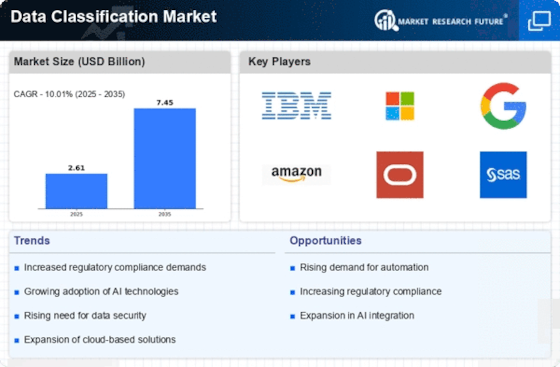
As per Market Research Future analysis, the Data Classification Market Size was estimated at USD 1,936.62 Million in 2024. The Data Classification industry is projected to grow from USD 2,360.06 Million in 2025 to 19,365.50 USD Million by 2035, exhibiting a compound annual growth rate (CAGR) of 23.4% during the forecast period 2025 - 2035.

Key Market Trends & Highlights

The Data Classification Market exhibits dynamic trends shaped by regulatory pressures, technological innovations, and Accelerating Cloud Adoption and Data Sprawl.

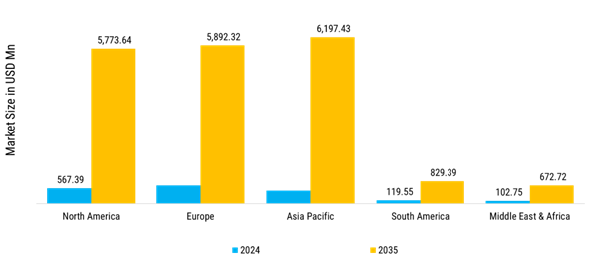
  • In Data Classification segment User-Driven Classification segment has the largest share In Deployment Type segment On-Premises has the largest share with USD 971.15 million in 2024. In region Asia Pacific hold the largest share of 34.7%. Accelerating cloud adoption and the growing challenge of data sprawl are major forces driving the Data Classification Market. As organizations migrate to cloud environments at scale, they generate and store vast volumes of unstructured and structured data across multiple platforms public, private, and hybrid.

Market Size & Forecast

2024 Market Size 1,936.62 (USD Million)
2035 Market Size 19,365.50 (USD Million)
CAGR (2025 - 2035) 23.4%

Major Players

Microsoft Corporation, Amazon Web Services, IBM Corporation, Google LLC (Alphabet Inc), Salesforce, Inc, Symantec (Broadcom), Oracle Inc, SAP SE, Cisco System Inc, Adobe Inc..

Market Trends

The Data Classification Market is currently experiencing a transformative phase, driven by the increasing need for organizations to manage vast amounts of data effectively. As data volumes continue to expand, businesses are recognizing the necessity of implementing robust classification systems to ensure compliance with regulations and enhance data security. This market appears to be influenced by various factors, including the growing emphasis on data privacy, the rise of cloud computing, and the integration of artificial intelligence technologies. Organizations are likely to invest in advanced classification solutions that not only streamline data management but also facilitate better decision-making processes. The integration of artificial intelligence is enhancing the performance of data classification tools, allowing enterprises to identify sensitive information more efficiently across structured and unstructured data environments.

Moreover, the Data Classification Market seems to be evolving in response to the dynamic landscape of cybersecurity threats. As organizations face heightened risks, the demand for sophisticated classification tools that can identify sensitive information and mitigate potential breaches is increasing. This trend indicates a shift towards more proactive data governance strategies, where businesses prioritize the protection of critical assets. Consequently, the market is poised for growth as companies seek innovative solutions to navigate the complexities of data management and security in an ever-changing environment. Recent advances in data analysis and classification are enabling organizations to automate data governance processes, improve classification accuracy, and respond more effectively to evolving regulatory and security requirements.

Increased Regulatory Compliance

Organizations are increasingly focusing on adhering to stringent data protection regulations. This trend highlights the necessity for effective classification systems that can categorize data according to compliance requirements, thereby reducing the risk of legal penalties.

Integration of Artificial Intelligence

The incorporation of artificial intelligence into data classification processes is becoming more prevalent. AI technologies can enhance the accuracy and efficiency of classification, enabling organizations to automate data management tasks and improve overall operational effectiveness.

Cloud-Based Solutions

The shift towards cloud computing is influencing the Data Classification Market significantly. Businesses are adopting cloud-based classification tools that offer scalability and flexibility, allowing for better data management across distributed environments.

Data Classification Market Market Drivers

Accelerating Cloud Adoption and Data Sprawl

Accelerating cloud adoption and the growing challenge of data sprawl are major forces driving the Data Classification Market. As organizations migrate to cloud environments at scale, they generate and store vast volumes of unstructured and structured data across multiple platforms public, private, and hybrid. This uncontrolled data proliferation, known as data sprawl, increases the risk of data breaches, compliance failures, and operational inefficiencies. According to a 2024 TechRadar Pro report, over 74% of enterprises experienced data breaches, with 68% admitting they lack adequate controls around AI and cloud-generated data. For examples a financial institution using Netwrix Data Classification managed to eliminate redundant and obsolete data, saving over USD 500,000 annually in storage costs while improving compliance posture. Similarly, Microsoft Purview, integrated into cloud services like Microsoft 365, enables real-time auto-labeling of sensitive data across environments, helping organizations reduce data loss incidents by up to 60%. As more organizations adopt multicloud and hybrid architectures, the need for scalable, intelligent data classification solutions intensifies making this segment one of the fastest-growing in cybersecurity, with the global market.

Expansion of Global Data Privacy Regulations

The rise of comprehensive data protection laws worldwide such as the General Data Protection Regulation (GDPR) in Europe, the California Consumer Privacy Act (CCPA), and newer regulations in countries like Brazil, India, and South Africa has placed data management under sharp legal scrutiny. Organizations are now obligated to classify data based on sensitivity, usage purpose, and jurisdiction to meet legal requirements on consent, access, and retention. By the end of 2024, more than 70% of enterprise data was housed outside centralized data centers, often within cloud or hybrid systems. This rapid decentralization necessitated robust classification systems to maintain control, visibility, and security. Without automated classification, companies struggled to identify where sensitive data was stored or whether it met regional compliance standards.

Rising Demand for Data-Driven Decision Making

The rising demand for data-driven decision-making is a major catalyst for the growth of the Data Classification Market. As organizations increasingly rely on real-time analytics and AI models to drive strategy, operations, and customer engagement, the need for accurate, well-organized, and secure data becomes critical. Data classification ensures that valuable information especially sensitive or regulated data is properly identified, labeled, and managed to be both accessible and compliant. For example, a global healthcare provider using Forcepoint’s classification solution integrated with AI-based tagging saw a 96% improvement in data quality, enabling faster, insight-driven clinical decisions while maintaining HIPAA compliance. Similarly, companies using Microsoft Purview report enhanced data discoverability across business units, accelerating their ability to extract insights from previously siloed or unstructured data.

Market Segment Insights

By Sensitivity Level: Confidential Data (Largest) vs. Restricted Data (Fastest-Growing)

By sensitivity level, the market is segmented into public, internal, confidential, restricted, and highly confidential or regulated data. The confidential data segment held the largest market share in 2024, reaching 646.25 million, due to increasing enterprise focus on protecting business-critical information and customer data. Meanwhile, the restricted data segment is expected to grow at the fastest rate, registering a CAGR of 27.2% during 2025–2035, driven by stricter data protection regulations, rising penalties for non-compliance, and growing adoption of classification solutions for high-risk datasets. The highly confidential or regulated data segment also demonstrates strong growth as organizations prioritize protection of regulated information across healthcare, BFSI, and government sectors.

By Deployment Type: On-Premises (Largest) vs. Cloud-Based (Fastest-Growing)

Based on deployment type, the Data Classification Market is segmented into on-premises, cloud-based, and hybrid deployments. On-premises solutions dominated the market in 2024, accounting for 826.03 million, primarily due to continued reliance by large enterprises and government organizations on in-house infrastructure for managing sensitive and regulated data. However, cloud-based deployment is the fastest-growing segment, expected to expand at a CAGR of 27.4% from 2025 to 2035, driven by increasing adoption of cloud services, demand for scalable and cost-effective security solutions, and integration of data classification tools with cloud-native security platforms. Hybrid deployment models are also gaining traction as organizations balance legacy systems with cloud transformation initiatives.

By End-Use Industry: BFSI (Largest) vs. IT & Telecom (Fastest-Growing)

By end-use industry, the market is segmented into BFSI, healthcare and life sciences, government and defense, IT and telecom, retail and e-commerce, manufacturing, legal and professional services, and others. The BFSI sector held the largest share in 2024, valued at 410.48 million, driven by stringent regulatory requirements, high volumes of sensitive financial data, and increasing cybersecurity threats. In contrast, the IT and telecom segment is projected to be the fastest-growing, registering a CAGR of 28.7% from 2025 to 2035, owing to rapid digitalization, cloud adoption, and the exponential growth of data generated by connected devices, networks, and digital services. Healthcare and life sciences also show strong growth due to rising adoption of data classification for compliance with healthcare data protection regulations.

By Data Classification Type: Content-Based (Largest) vs. Automated or Machine Learning-Based Classification (Fastest-Growing)

Based on data classification type, the Data Classification Market is segmented into content-based classification, context-based classification, user-driven classification, and automated or machine learning–based classification. Content-based classification accounted for the largest market share in 2024, valued at 510.89 million, driven by its widespread use in identifying sensitive data such as personally identifiable information (PII), financial records, and intellectual property through pattern matching, keyword analysis, and natural language processing (NLP). This segment continues to benefit from increasing regulatory compliance requirements and the need to secure unstructured enterprise data. However, automated or machine learning, based classification is the fastest-growing segment, projected to grow at a CAGR of 28.5% from 2025 to 2035, fueled by rising adoption of AI-driven continuous classification and dynamic reclassification based on risk. These solutions enable real-time data discovery, improved accuracy, and scalability across complex cloud and hybrid environments.

Get more detailed insights about Data Classification Market Research Report – Forecast till 2035

Regional Insights

North America: leading region in the data classification market

North America is a leading region in the data classification market, driven by the increasing adoption of advanced data governance and security solutions across multiple industries. Organizations in sectors such as BFSI, healthcare, government, IT, telecom, retail, and manufacturing are implementing structured classification systems to manage sensitive information effectively. These solutions help protect customer data, intellectual property, and operational information while ensuring compliance with privacy and industry regulations. Technological trends are shaping the market with strong momentum. AI and machine learning are increasingly integrated into data classification tools to automate processes and enhance accuracy. Cloud-based and hybrid solutions provide organizations with flexibility, scalability, and improved collaboration, while automation reduces manual workloads and streamlines data handling. Companies are also exploring context-aware and real-time classification systems to manage the growing volume and complexity of data efficiently.

Data Classification Market Regional Insights

Europe: Driven by increasing data volumes and stringent regulatory requirements

The European Data Classification Market is experiencing significant growth, driven by increasing data volumes and stringent regulatory requirements. Organizations across various sectors are adopting data classification solutions to manage sensitive information effectively and ensure compliance with evolving data protection laws. The integration of advanced technologies such as artificial intelligence and machine learning into data classification tools is enhancing their efficiency and accuracy, enabling organizations to automate data handling processes and reduce manual errors. This technological advancement is contributing to the market's expansion, offering scalable and flexible solutions to meet the diverse needs of businesses. Companies in Europe are making substantial investments in data classification technologies to bolster their data governance frameworks. For instance, major players like Siemens and Allianz are implementing robust data classification systems to safeguard against potential data breaches and ensure regulatory compliance.

Asia-Pacific: The increasing volume of data generated across various industries

The Asia-Pacific data classification market is experiencing rapid growth, driven by the increasing volume of data generated across various industries and the need to comply with stringent data protection regulations. Organizations are adopting data classification solutions to manage sensitive information effectively, enhance data security, and ensure compliance with evolving privacy laws. The integration of advanced technologies such as artificial intelligence and machine learning into data classification tools is further accelerating market expansion, enabling organizations to automate data handling processes and improve accuracy. Significant investments are being made in the region to bolster data classification capabilities. For instance, major technology companies are establishing data centers and expanding their cloud infrastructure to meet the growing demand for data storage and processing. These investments are not only enhancing the region's data management capabilities but also contributing to economic growth by creating job opportunities and fostering technological innovation. The commitment to building robust digital infrastructure underscores the importance of data classification in supporting the region's digital transformation.

Middle East and Africa: Increasing volume of data generated

The South American data classification market is experiencing significant growth, driven by the increasing volume of data generated across various industries and the need to comply with stringent data protection regulations. Organizations are adopting data classification solutions to manage sensitive information effectively, enhance data security, and ensure compliance with evolving privacy laws. The integration of advanced technologies such as artificial intelligence and machine learning into data classification tools is further accelerating market expansion, enabling organizations to automate data handling processes and improve accuracy. Significant investments are being made in the region to bolster data classification capabilities. For instance, major technology companies are establishing data centers and expanding their cloud infrastructure to meet the growing demand for data storage and processing. These investments are not only enhancing the region's data management capabilities but also contributing to economic growth by creating job opportunities and fostering technological innovation.

South America: Increasing digitalization and a strong focus on cybersecurity 

The Middle East and Africa (MEA) data classification market is growing rapidly due to increasing digitalization and a strong focus on cybersecurity. Organizations across various sectors are adopting data classification solutions to manage and protect sensitive information effectively. Advanced technologies such as artificial intelligence and machine learning are being integrated into classification tools, enabling automation of data handling and improving accuracy, which supports efficient data governance across the region. Investments in digital infrastructure and cybersecurity initiatives are fuelling the market’s expansion. Governments and private companies are actively deploying data classification systems to strengthen data protection measures. For instance, initiatives like Saudi Arabia’s Vision 2030 and the UAE’s National Cybersecurity Strategy are encouraging the adoption of advanced data security solutions. These investments are driving technological innovation, enhancing data management capabilities, and supporting broader digital transformation efforts in the region.

Key Players and Competitive Insights

The major competitors that operate in the international data classification industry include Microsoft, Amazon, IBM, Google LLC, Salesforce, Oracle, SAP SE, Cisco, and Adobe. The market is extremely fragmented, as it includes a great number of global technology giants and niche providers. The key players distinguish by their innovative product capabilities, cloud connectivity, AI and machine learning functions and powerful data governance solutions. As an example, Microsoft, Google, and Amazon concentrate on cloud-native classification tools and AI-enabled data exploration, whereas Oracle, SAP, and Cisco rely on enterprise-level database and network security capabilities to store sensitive data. Adobe focuses on the classification of document and customer data inside creative and enterprise platforms.
 
In order to stay competitive, these players will employ a variety of strategies such as strategic partnerships, acquisitions, investments in R&D, subscription-based pricing strategy, and multi-cloud integration. Also, most firms are providing vertical-specific solutions and compliance-centered capabilities to meet regulations that include GDPR, HIPAA, and CCPA to enable them to improve their customer adoption and market positioning. Constant innovation in automation, Artificial Intelligence-driven classification and analytics is also an important differentiator in these leading players.

Key Companies in the Data Classification Market include

Industry Developments

In 2021, Microsoft introduced new capabilities in Microsoft Purview to enhance data discovery, classification, and protection across the enterprise. These updates aim to streamline data governance processes and improve compliance in the era of AI. 

In 2024, IBM introduced Granite 3.0, a set of high-performing AI models designed for enterprise applications. These models are optimized for tasks such as classification, summarization, and entity extraction, facilitating efficient data classification processes

In 2024, The GSA announced an innovative OneGov agreement with AWS to provide up to $1 billion in savings for cloud adoption, modernization, and training for federal agencies through December 31, 2028. This partnership aims to accelerate large-scale IT transformation and enhance data classification capabilities across government agencies.

Future Outlook

Data Classification Market Future Outlook

The Data Classification Market is projected to grow at a 23.4% CAGR from 2025 to 2035, driven by growing geriatric population and technological advancements.

New opportunities lie in:

  • <p>Accelerating Cloud Adoption and Data Sprawl</p>
  • <p>Expansion of Global Data Privacy Regulations</p>

By 2035, the Data Classification Market is expected to be robust, reflecting substantial growth and innovation.

Market Segmentation

Data Classification Market by End User Outlook

  • BFSI
  • Healthcare and Life Sciences
  • Government and Defense
  • IT and Telecom
  • Retail and E-Commerce
  • Manufacturing
  • Legal and Professional Services
  • Others

Data Classification Market by Deployment Type Outlook

  • On-Premises
  • Cloud-Based
  • Hybrid Deployment

Data Classification Market by Sensitivity Level Outlook

  • Public
  • Internal
  • Confidential
  • Restricted
  • Highly Confidential or Regulated Data

Data Classification Market by Data Classification Outlook

  • Content-Based Classification
  • Context-Based Classification
  • User-Driven Classification
  • Automated or Machine Learning-Based Classification

Report Scope

Market Size 2024 1,936.62 (USD Million)
Market Size 2025 2,360.06 (USD Million)
Market Size 2035 19,365.50 (USD Million)
Compound Annual Growth Rate (CAGR) 23.4% (2025 - 2035)
Report Coverage Revenue Forecast, Competitive Landscape, Growth Factors, and Trends
Base Year 2024
Market Forecast Period 2025 - 2035
Historical Data 2019 - 2023
Market Forecast Units USD Million
Key Companies Profiled Microsoft, Amazon, IBM, Google LLC, Salesforce, Oracle, SAP SE, Cisco, and Adobe.
Segments Covered By Data Classification, By Sensitivity Level, By Deployment Type, By End-Use Industry, By Region
Key Market Opportunities

·         Accelerating Cloud Adoption and Data Sprawl

·         Expansion of Global Data Privacy Regulations

Key Market Dynamics

· Increased Demand for Customization

· Increased Focus On Data Discovery And Real-Time Classification

Region Covered North America, Europe, Asia-Pacific, South America, Middle East & Africa.

FAQs

What is the projected market valuation of the Data Classification Market by 2035?

The Data Classification Market is projected to reach a valuation of 19,365.50 USD Million by 2035.

What was the market valuation of the Data Classification Market in 2024?

In 2024, the overall market valuation was 1,936.62 USD Million.

What is the expected CAGR for the Data Classification Market during the forecast period 2025 - 2035?

The expected CAGR for the Data Classification Market during the forecast period 2025 - 2035 is 23.4%.

Which companies are considered key players in the Data Classification Market?

Key players in the Data Classification Market include IBM, Microsoft, Google, Amazon, Oracle, SAS, Micro Focus, Forcepoint, Symantec, and Varonis.

What are the main application segments within the Data Classification Market?

The main application segments include Sensitive Data Management, Regulatory Compliance, Data Governance, Data Security, and Data Analytics.

How does the market valuation for Sensitive Data Management compare to Data Security in 2024?

In 2024, the market valuation for Sensitive Data Management and Data Security was both 0.783 USD Billion.

What is the projected market size for Cloud-Based deployment in 2035?

The projected market size for Cloud-Based deployment is expected to reach 3.013 USD Billion by 2035.

Which end-user segment is anticipated to have the highest market valuation by 2035?

By 2035, Large Enterprises are anticipated to have the highest market valuation in the Data Classification Market.

What is the expected growth in the market for Unstructured Data from 2024 to 2035?

The market for Unstructured Data is expected to grow from 1.304 USD Billion in 2024 to 3.748 USD Billion by 2035.

What is the significance of the Hybrid deployment model in the Data Classification Market?

The Hybrid deployment model is projected to grow from 0.782 USD Billion in 2024 to 2.19 USD Billion by 2035, indicating its increasing relevance.

  1. SECTION I: KEY HIGHLIGHTS, SCOPING AND METHODOLOGY
  2. EXECUTIVE SUMMARY AND KEY HIGHLIGHTS
    1. I. Top performing segments
    2. II. Key Trends summarized
    3. III. Strategic Insights
  3. SECTION II: QUALITATIVE ANALYSIS
  4. MARKET INTRODUCTION AND DYNAMICS
    1. I. Definitions
    2. II. Market Drivers
    3. i. Accelerating Cloud Adoption and Data Sprawl
    4. ii. Expansion of Global Data Privacy Regulations
    5. iii. Rising Demand for Data-Driven Decision Making
    6. III. Market Opportunities
    7. i. Integration of Artificial Intelligence and Machine Learning in Classification Engines
    8. ii. Emergence of Industry-Specific Classification Frameworks
    9. iii. Increased Focus on Data Discovery and Real-Time Classification
    10. IV. Market Restraints
    11. i. Workforce Skill Gaps & Complexity
    12. ii. High Integration Costs with Legacy Systems
    13. iii.
    14. V. Market Challenges
    15. i. Complexity in Classifying Unstructured and Legacy Data
    16. ii. High Implementation Costs and Organizational Resistance
    17. VI. Integration with Security Frameworks Analysis
    18. i. Zero Trust Architecture (ZTA)
  5. Integrated with Identity and Access Management (IAM)
  6. Role-Based Policy Enforcement
  7. Micro-Segmentation Support
  8. Continuous Authentication and Authorization
    1. ii. Data Loss Prevention (DLP) Systems
    2. iii. Cloud Access Security Broker (CASB)
    3. iv. Security Information and Event Management (SIEM)
    4. v. Encryption and Rights Management Tools
  9. MARKET FACTOR ANALYSIS
    1. I. Supply/Value Chain Analysis
    2. i. Participants
    3. ii. Value Percolation Across the Chain
    4. iii. Integration Levels
    5. iv. Key Issues Addressed
    6. II. Porter's Five Forces Model
    7. i. Bargaining Power of Suppliers
    8. ii. Bargaining Power of Buyers
    9. iii. Threat of New Entrants
    10. iv. Threat of Substitutes
    11. v. Intensity of Rivalry
    12. III. Technological Advancements
    13. IV. Adjacent Market Analysis
    14. V. Regulatory Framework
    15. i. Government Policies
    16. ii. Environmental Consideration
    17. VI. R & D Update
    18. i. Current Scenario
    19. ii. Future Roadmap
    20. iii. Challenges
    21. iv. Novel Applications
    22. v. Key Developments
    23. VII. PESTLE Analysis
    24. VIII. Cutting Edge Technology in Data Classification
    25. i. Machine Learning (ML)
    26. ii. Natural Language Processing (NLP)
    27. iii. Deep Learning (DL)
    28. iv. Artificial Intelligence–Powered Data Loss Prevention (AI-DLP)
    29. v. Context-Aware Classification Engines
    30. vi. Automated Metadata Tagging
    31. vii. Computer Vision (for image/data classification)
    32. viii. Zero Trust Data Security Frameworks
    33. ix. Cloud-Native Data Classification Tools (e.g., Azure Purview, Google DLP)
    34. x. Federated Learning for Privacy-Preserving Classification
    35. xi. Comparative Study Analysis w.r.t South Korea Vs Other Key Countries
    36. xii. Security Labeling and Industry Standards
    37. xiii. Governance, Risk, and Compliance (GRC)
    38. xiv. Governance Frameworks for Data Classification
    39. xv. Risk Assessment Methodologies
    40. xvi. Compliance Regulations by Region (e.g., GDPR, CCPA, PDPA)
    41. xvii. Impact of Classification on Data Privacy Programs
    42. xviii. Role of Data Stewards and Compliance Officers
    43. xix. Integration of Data Classification in GRC Platforms
    44. xx. Effectiveness and Market Impact of Data Classification
    45. xxi. Role in Preventing Data Leakage and Insider Threats
    46. xxii. Quantitative & Qualitative Benefits for Organizations
    47. xxiii. Case Studies: Classification-led Breach Prevention
    48. xxiv. ROI and Cost-Benefit Analysis
    49. xxv. Influence on Compliance Readiness and Audit Performance
    50. xxvi. Adoption Trends Across Industries
  10. SECTION III: MARKET SEGMENTATION
  11. GLOBAL DATA CLASSIFICATION MARKET, BY DATA CLASSIFICATION (USD BILLION), 2019-2035
    1. I. Content-Based Classification
    2. I. Pattern Matching (e.g., credit card numbers, PII)
    3. II. Keyword and Metadata Analysis
    4. III. Natural Language Processing (NLP)-Based Classification
    5. II. Context-Based Classification
    6. I. User Role, Location, Device Context
    7. II. Data Flow and Access Behavior
    8. III. Application Usage Context
    9. III. User-Driven Classification
    10. I. Manual Labels Applied by Users
    11. II. Role-Based Labeling Permissions
    12. IV. Automated or Machine Learning-Based Classification
    13. I. AI or ML Algorithms for Continuous Classification
    14. II. Dynamic Reclassification Based on Risk
  12. GLOBAL DATA CLASSIFICATION MARKET, BY SENSITIVITY LEVEL (USD BILLION), 2019-2035
    1. I. Public
    2. II. Internal
    3. III. Confidential
    4. IV. Restricted
    5. V. Highly Confidential or Regulated Data
  13. GLOBAL DATA CLASSIFICATION MARKET, BY DEPLOYMENT TYPE (USD BILLION), 2019-2035
    1. I. On-Premises
    2. II. Cloud-Based
    3. III. Hybrid Deployment
  14. GLOBAL DATA CLASSIFICATION MARKET, BY END-USE INDUSTRY (USD BILLION), 2019-2035
    1. I. BFSI
    2. II. Healthcare and Life Sciences
    3. III. Government and Defense
    4. IV. IT and Telecom
    5. V. Retail and E-Commerce
    6. VI. Manufacturing
    7. VII. Legal and Professional Services
    8. VIII. Others
  15. GLOBAL DATA CLASSIFICATION MARKET, BY REGION (USD BILLION), 2019-2035
    1. I. North America
    2. I. US
    3. II. Canada
    4. III. Mexico
    5. II. Europe
    6. I. Germany
    7. II. UK
    8. III. France
    9. IV. Russia
    10. V. Italy
    11. VI. Spain
    12. VII. Rest of Europe
    13. III. APAC
    14. I. China
    15. II. India
    16. III. Japan
    17. IV. South Korea
    18. V. Malaysia
    19. VI. Thailand
    20. VII. Indonesia
    21. VIII. Rest of APAC
    22. IV. South America
    23. I. Brazil
    24. II. Argentina
    25. III. Rest of South America
    26. V. MEA
    27. I. GCC Countries
    28. II. South Africa
    29. III. Rest of MEA
  16. COMPETITIVE LANDSCAPE
    1. I. Introduction
    2. II. Company Market Share Analysis, 2024 (%)
    3. III. Competitive Benchmarking
    4. IV. Comparative Analysis: Key Players Financial
    5. V. Competitor's Product Information/ Product Benchmarking Analysis
    6. VI. Key Developments, Growth Plans and Strategies
    7. i. New Product Launch/Service Deployment
    8. ii. Merger & Acquisition
    9. iii. Joint Ventures
  17. COMPANY PROFILES
    1. I. Bosch
    2. i. Overview
    3. ii. Financial Performance
    4. iii. Product Portfolio
    5. iv. Strategic Initiatives
    6. v. SWOT Analysis
    7. II. Amazon Web Services
    8. III. IBM Corporation
    9. IV. Google LLC
    10. V. Salesforce.com Inc
    11. VI. Oracle Corporation
    12. VII. SAP SE
    13. VIII. Cisco Systems Inc
    14. IX. Adobe Inc
    15. X. Symantec (Broadcom)

Data Classification Market Segmentation 
Data Classification market by Data Classification (USD Million, 2019-2035)
•    Content-Based Classification
o    Pattern Matching (e.g., credit card numbers, PII)
o    Keyword and Metadata Analysis
o    Natural Language Processing (NLP)-Based Classification
•    Context-Based Classification
o    User Role, Location, Device Context
o    Data Flow and Access Behavior
o    Application Usage Context
•    User-Driven Classification
o    Manual Labels Applied by Users
o    Role-Based Labeling Permissions
•    Automated or Machine Learning-Based Classification
o    AI or ML Algorithms for Continuous Classification
o    Dynamic Reclassification Based on Risk
Global Data Classification market by Sensitivity Level (USD Million, 2019-2035)
•    Public
•    Internal
•    Confidential
•    Restricted
•    Highly Confidential or Regulated Data
Global Data Classification market by Deployment Type (USD Million, 2019-2035)
•    On-Premises
•    Cloud-Based
•    Hybrid Deployment
Global Data Classification market by End User (USD Million, 2019-2035)
•    BFSI
•    Healthcare and Life Sciences
•    Government and Defense
•    IT and Telecom
•    Retail and E-Commerce
•    Manufacturing
•    Legal and Professional Services
•    Others
Data Classification market Regional Outlook (USD Million, 2019-2035)
•    North America Outlook (USD Million, 2019-2035)
o    North America Data Classification market by Data Classification
    Content-Based Classification
    Pattern Matching (e.g., credit card numbers, PII)
    Keyword and Metadata Analysis
    Natural Language Processing (NLP)-Based Classification
    Context-Based Classification
    User Role, Location, Device Context
    Data Flow and Access Behavior
    Application Usage Context
    User-Driven Classification
    Manual Labels Applied by Users
    Role-Based Labeling Permissions
    Automated or Machine Learning-Based Classification
    AI or ML Algorithms for Continuous Classification
    Dynamic Reclassification Based on Risk
o    North America Data Classification market by Sensitivity Level
    Public
    Internal
    Confidential
    Restricted
    Highly Confidential or Regulated Data
o    North America Data Classification market by Deployment Type
    On-Premises
    Cloud-Based
    Hybrid Deployment
o    North America Data Classification market by End User
    BFSI
    Healthcare and Life Sciences
    Government and Defense
    IT and Telecom
    Retail and E-Commerce
    Manufacturing
    Legal and Professional Services
    Others
o    US Outlook (USD Million, 2019-2035)
    US Data Classification market by Data Classification
    Content-Based Classification
    Pattern Matching (e.g., credit card numbers, PII)
    Keyword and Metadata Analysis
    Natural Language Processing (NLP)-Based Classification
    Context-Based Classification
    User Role, Location, Device Context
    Data Flow and Access Behavior
    Application Usage Context
    User-Driven Classification
    Manual Labels Applied by Users
    Role-Based Labeling Permissions
    Automated or Machine Learning-Based Classification
    AI or ML Algorithms for Continuous Classification
    Dynamic Reclassification Based on Risk
    US Data Classification market by Sensitivity Level
    Public
    Internal
    Confidential
    Restricted
    Highly Confidential or Regulated Data
    US Data Classification market by Deployment Type
    On-Premises
    Cloud-Based
    Hybrid Deployment
    US Data Classification market by End User
    BFSI
    Healthcare and Life Sciences
    Government and Defense
    IT and Telecom
    Retail and E-Commerce
    Manufacturing
    Legal and Professional Services
    Others
o    Canada Outlook (USD Million, 2019-2035)
    Canada Data Classification market by Data Classification
    Content-Based Classification
    Pattern Matching (e.g., credit card numbers, PII)
    Keyword and Metadata Analysis
    Natural Language Processing (NLP)-Based Classification
    Context-Based Classification
    User Role, Location, Device Context
    Data Flow and Access Behavior
    Application Usage Context
    User-Driven Classification
    Manual Labels Applied by Users
    Role-Based Labeling Permissions
    Automated or Machine Learning-Based Classification
    AI or ML Algorithms for Continuous Classification
    Dynamic Reclassification Based on Risk
    Canada Data Classification market by Sensitivity Level
    Public
    Internal
    Confidential
    Restricted
    Highly Confidential or Regulated Data
    Canada Data Classification market by Deployment Type
    On-Premises
    Cloud-Based
    Hybrid Deployment
    Canada Data Classification market by End User
    BFSI
    Healthcare and Life Sciences
    Government and Defense
    IT and Telecom
    Retail and E-Commerce
    Manufacturing
    Legal and Professional Services
    Others
o    Mexico Outlook (USD Million, 2019-2035)
    Mexico Data Classification market by Data Classification
    Content-Based Classification
    Pattern Matching (e.g., credit card numbers, PII)
    Keyword and Metadata Analysis
    Natural Language Processing (NLP)-Based Classification
    Context-Based Classification
    User Role, Location, Device Context
    Data Flow and Access Behavior
    Application Usage Context
    User-Driven Classification
    Manual Labels Applied by Users
    Role-Based Labeling Permissions
    Automated or Machine Learning-Based Classification
    AI or ML Algorithms for Continuous Classification
    Dynamic Reclassification Based on Risk
    Mexico Data Classification market by Sensitivity Level
    Public
    Internal
    Confidential
    Restricted
    Highly Confidential or Regulated Data
    Mexico Data Classification market by Deployment Type
    On-Premises
    Cloud-Based
    Hybrid Deployment
    Mexico Data Classification market by End User
    BFSI
    Healthcare and Life Sciences
    Government and Defense
    IT and Telecom
    Retail and E-Commerce
    Manufacturing
    Legal and Professional Services
    Others
•    Europe Outlook (USD Million, 2019-2035)
o    Europe Data Classification market by Data Classification
    Content-Based Classification
    Pattern Matching (e.g., credit card numbers, PII)
    Keyword and Metadata Analysis
    Natural Language Processing (NLP)-Based Classification
    Context-Based Classification
    User Role, Location, Device Context
    Data Flow and Access Behavior
    Application Usage Context
    User-Driven Classification
    Manual Labels Applied by Users
    Role-Based Labeling Permissions
    Automated or Machine Learning-Based Classification
    AI or ML Algorithms for Continuous Classification
    Dynamic Reclassification Based on Risk
o    Europe Data Classification market by Sensitivity Level
    Public
    Internal
    Confidential
    Restricted
    Highly Confidential or Regulated Data
o    Europe Data Classification market by Deployment Type
    On-Premises
    Cloud-Based
    Hybrid Deployment
o    Europe Data Classification market by End User
    BFSI
    Healthcare and Life Sciences
    Government and Defense
    IT and Telecom
    Retail and E-Commerce
    Manufacturing
    Legal and Professional Services
    Others
o    UK Outlook (USD Million, 2019-2035)
    UK Data Classification market by Data Classification
    Content-Based Classification
    Pattern Matching (e.g., credit card numbers, PII)
    Keyword and Metadata Analysis
    Natural Language Processing (NLP)-Based Classification
    Context-Based Classification
    User Role, Location, Device Context
    Data Flow and Access Behavior
    Application Usage Context
    User-Driven Classification
    Manual Labels Applied by Users
    Role-Based Labeling Permissions
    Automated or Machine Learning-Based Classification
    AI or ML Algorithms for Continuous Classification
    Dynamic Reclassification Based on Risk
    UK Data Classification market by Sensitivity Level
    Public
    Internal
    Confidential
    Restricted
    Highly Confidential or Regulated Data
    UK Data Classification market by Deployment Type
    On-Premises
    Cloud-Based
    Hybrid Deployment
    UK Data Classification market by End User
    BFSI
    Healthcare and Life Sciences
    Government and Defense
    IT and Telecom
    Retail and E-Commerce
    Manufacturing
    Legal and Professional Services
    Others
o    Germany Outlook (USD Million, 2019-2035)
    Germany Data Classification market by Data Classification
    Content-Based Classification
    Pattern Matching (e.g., credit card numbers, PII)
    Keyword and Metadata Analysis
    Natural Language Processing (NLP)-Based Classification
    Context-Based Classification
    User Role, Location, Device Context
    Data Flow and Access Behavior
    Application Usage Context
    User-Driven Classification
    Manual Labels Applied by Users
    Role-Based Labeling Permissions
    Automated or Machine Learning-Based Classification
    AI or ML Algorithms for Continuous Classification
    Dynamic Reclassification Based on Risk
    Germany Data Classification market by Sensitivity Level
    Public
    Internal
    Confidential
    Restricted
    Highly Confidential or Regulated Data
    Germany Data Classification market by Deployment Type
    On-Premises
    Cloud-Based
    Hybrid Deployment
    Germany Data Classification market by End User
    BFSI
    Healthcare and Life Sciences
    Government and Defense
    IT and Telecom
    Retail and E-Commerce
    Manufacturing
    Legal and Professional Services
    Others
o    France Outlook (USD Million, 2019-2035)
    France Data Classification market by Data Classification
    Content-Based Classification
    Pattern Matching (e.g., credit card numbers, PII)
    Keyword and Metadata Analysis
    Natural Language Processing (NLP)-Based Classification
    Context-Based Classification
    User Role, Location, Device Context
    Data Flow and Access Behavior
    Application Usage Context
    User-Driven Classification
    Manual Labels Applied by Users
    Role-Based Labeling Permissions
    Automated or Machine Learning-Based Classification
    AI or ML Algorithms for Continuous Classification
    Dynamic Reclassification Based on Risk
    France Data Classification market by Sensitivity Level
    Public
    Internal
    Confidential
    Restricted
    Highly Confidential or Regulated Data
    France Data Classification market by Deployment Type
    On-Premises
    Cloud-Based
    Hybrid Deployment
    France Data Classification market by End User
    BFSI
    Healthcare and Life Sciences
    Government and Defense
    IT and Telecom
    Retail and E-Commerce
    Manufacturing
    Legal and Professional Services
    Others
o    Italy Outlook (USD Million, 2019-2035)
    Italy Data Classification market by Data Classification
    Content-Based Classification
    Pattern Matching (e.g., credit card numbers, PII)
    Keyword and Metadata Analysis
    Natural Language Processing (NLP)-Based Classification
    Context-Based Classification
    User Role, Location, Device Context
    Data Flow and Access Behavior
    Application Usage Context
    User-Driven Classification
    Manual Labels Applied by Users
    Role-Based Labeling Permissions
    Automated or Machine Learning-Based Classification
    AI or ML Algorithms for Continuous Classification
    Dynamic Reclassification Based on Risk
    Italy Data Classification market by Sensitivity Level
    Public
    Internal
    Confidential
    Restricted
    Highly Confidential or Regulated Data
    Italy Data Classification market by Deployment Type
    On-Premises
    Cloud-Based
    Hybrid Deployment
    Italy Data Classification market by End User
    BFSI
    Healthcare and Life Sciences
    Government and Defense
    IT and Telecom
    Retail and E-Commerce
    Manufacturing
    Legal and Professional Services
    Others
o    Spain Outlook (USD Million, 2019-2035)
    Spain Data Classification market by Data Classification
    Content-Based Classification
    Pattern Matching (e.g., credit card numbers, PII)
    Keyword and Metadata Analysis
    Natural Language Processing (NLP)-Based Classification
    Context-Based Classification
    User Role, Location, Device Context
    Data Flow and Access Behavior
    Application Usage Context
    User-Driven Classification
    Manual Labels Applied by Users
    Role-Based Labeling Permissions
    Automated or Machine Learning-Based Classification
    AI or ML Algorithms for Continuous Classification
    Dynamic Reclassification Based on Risk
    Spain Data Classification market by Sensitivity Level
    Public
    Internal
    Confidential
    Restricted
    Highly Confidential or Regulated Data
    Spain Data Classification market by Deployment Type
    On-Premises
    Cloud-Based
    Hybrid Deployment
    Spain Data Classification market by End User
    BFSI
    Healthcare and Life Sciences
    Government and Defense
    IT and Telecom
    Retail and E-Commerce
    Manufacturing
    Legal and Professional Services
    Others
o    Russia Outlook (USD Million, 2019-2035)
    Russia Data Classification market by Data Classification
    Content-Based Classification
    Pattern Matching (e.g., credit card numbers, PII)
    Keyword and Metadata Analysis
    Natural Language Processing (NLP)-Based Classification
    Context-Based Classification
    User Role, Location, Device Context
    Data Flow and Access Behavior
    Application Usage Context
    User-Driven Classification
    Manual Labels Applied by Users
    Role-Based Labeling Permissions
    Automated or Machine Learning-Based Classification
    AI or ML Algorithms for Continuous Classification
    Dynamic Reclassification Based on Risk
    Russia Data Classification market by Sensitivity Level
    Public
    Internal
    Confidential
    Restricted
    Highly Confidential or Regulated Data
    Russia Data Classification market by Deployment Type
    On-Premises
    Cloud-Based
    Hybrid Deployment
    Russia Data Classification market by End User
    BFSI
    Healthcare and Life Sciences
    Government and Defense
    IT and Telecom
    Retail and E-Commerce
    Manufacturing
    Legal and Professional Services
    Others
o    Rest of Europe Outlook (USD Million, 2019-2035)
    Rest of Europe Data Classification market by Data Classification
    Content-Based Classification
    Pattern Matching (e.g., credit card numbers, PII)
    Keyword and Metadata Analysis
    Natural Language Processing (NLP)-Based Classification
    Context-Based Classification
    User Role, Location, Device Context
    Data Flow and Access Behavior
    Application Usage Context
    User-Driven Classification
    Manual Labels Applied by Users
    Role-Based Labeling Permissions
    Automated or Machine Learning-Based Classification
    AI or ML Algorithms for Continuous Classification
    Dynamic Reclassification Based on Risk
    Rest of Europe Data Classification market by Sensitivity Level
    Public
    Internal
    Confidential
    Restricted
    Highly Confidential or Regulated Data
    Rest of Europe Data Classification market by Deployment Type
    On-Premises
    Cloud-Based
    Hybrid Deployment
    Rest of Europe Data Classification market by End User
    BFSI
    Healthcare and Life Sciences
    Government and Defense
    IT and Telecom
    Retail and E-Commerce
    Manufacturing
    Legal and Professional Services
    Others
•    Asia-Pacific Outlook (USD Million, 2019-2035)
o    Asia Pacific Data Classification market by Data Classification
    Content-Based Classification
    Pattern Matching (e.g., credit card numbers, PII)
    Keyword and Metadata Analysis
    Natural Language Processing (NLP)-Based Classification
    Context-Based Classification
    User Role, Location, Device Context
    Data Flow and Access Behavior
    Application Usage Context
    User-Driven Classification
    Manual Labels Applied by Users
    Role-Based Labeling Permissions
    Automated or Machine Learning-Based Classification
    AI or ML Algorithms for Continuous Classification
    Dynamic Reclassification Based on Risk
o    Asia Pacific Data Classification market by Sensitivity Level
    Public
    Internal
    Confidential
    Restricted
    Highly Confidential or Regulated Data
o    Asia Pacific Data Classification market by Deployment Type
    On-Premises
    Cloud-Based
    Hybrid Deployment
o    Asia Pacific Data Classification market by End User
    BFSI
    Healthcare and Life Sciences
    Government and Defense
    IT and Telecom
    Retail and E-Commerce
    Manufacturing
    Legal and Professional Services
    Others
o    China Outlook (USD Million, 2019-2035)
    China Data Classification market by Data Classification
    Content-Based Classification
    Pattern Matching (e.g., credit card numbers, PII)
    Keyword and Metadata Analysis
    Natural Language Processing (NLP)-Based Classification
    Context-Based Classification
    User Role, Location, Device Context
    Data Flow and Access Behavior
    Application Usage Context
    User-Driven Classification
    Manual Labels Applied by Users
    Role-Based Labeling Permissions
    Automated or Machine Learning-Based Classification
    AI or ML Algorithms for Continuous Classification
    Dynamic Reclassification Based on Risk
    China Data Classification market by Sensitivity Level
    Public
    Internal
    Confidential
    Restricted
    Highly Confidential or Regulated Data
    China Data Classification market by Deployment Type
    On-Premises
    Cloud-Based
    Hybrid Deployment
    China Data Classification market by End User
    BFSI
    Healthcare and Life Sciences
    Government and Defense
    IT and Telecom
    Retail and E-Commerce
    Manufacturing
    Legal and Professional Services
    Others
o    India Outlook (USD Million, 2019-2035)
    India Data Classification market by Data Classification
    Content-Based Classification
    Pattern Matching (e.g., credit card numbers, PII)
    Keyword and Metadata Analysis
    Natural Language Processing (NLP)-Based Classification
    Context-Based Classification
    User Role, Location, Device Context
    Data Flow and Access Behavior
    Application Usage Context
    User-Driven Classification
    Manual Labels Applied by Users
    Role-Based Labeling Permissions
    Automated or Machine Learning-Based Classification
    AI or ML Algorithms for Continuous Classification
    Dynamic Reclassification Based on Risk
    India Data Classification market by Sensitivity Level
    Public
    Internal
    Confidential
    Restricted
    Highly Confidential or Regulated Data
    India Data Classification market by Deployment Type
    On-Premises
    Cloud-Based
    Hybrid Deployment
    India Data Classification market by End User
    BFSI
    Healthcare and Life Sciences
    Government and Defense
    IT and Telecom
    Retail and E-Commerce
    Manufacturing
    Legal and Professional Services
    Others
o    Japan Outlook (USD Million, 2019-2035)
    Japan Data Classification market by Data Classification
    Content-Based Classification
    Pattern Matching (e.g., credit card numbers, PII)
    Keyword and Metadata Analysis
    Natural Language Processing (NLP)-Based Classification
    Context-Based Classification
    User Role, Location, Device Context
    Data Flow and Access Behavior
    Application Usage Context
    User-Driven Classification
    Manual Labels Applied by Users
    Role-Based Labeling Permissions
    Automated or Machine Learning-Based Classification
    AI or ML Algorithms for Continuous Classification
    Dynamic Reclassification Based on Risk
    Japan Data Classification market by Sensitivity Level
    Public
    Internal
    Confidential
    Restricted
    Highly Confidential or Regulated Data
    Japan Data Classification market by Deployment Type
    On-Premises
    Cloud-Based
    Hybrid Deployment
    Japan Data Classification market by End User
    BFSI
    Healthcare and Life Sciences
    Government and Defense
    IT and Telecom
    Retail and E-Commerce
    Manufacturing
    Legal and Professional Services
    Others
o    South Korea Outlook (USD Million, 2019-2035)
    South Korea Data Classification market by Data Classification
    Content-Based Classification
    Pattern Matching (e.g., credit card numbers, PII)
    Keyword and Metadata Analysis
    Natural Language Processing (NLP)-Based Classification
    Context-Based Classification
    User Role, Location, Device Context
    Data Flow and Access Behavior
    Application Usage Context
    User-Driven Classification
    Manual Labels Applied by Users
    Role-Based Labeling Permissions
    Automated or Machine Learning-Based Classification
    AI or ML Algorithms for Continuous Classification
    Dynamic Reclassification Based on Risk
    South Korea Data Classification market by Sensitivity Level
    Public
    Internal
    Confidential
    Restricted
    Highly Confidential or Regulated Data
    South Korea Data Classification market by Deployment Type
    On-Premises
    Cloud-Based
    Hybrid Deployment
    South Korea Data Classification market by End User
    BFSI
    Healthcare and Life Sciences
    Government and Defense
    IT and Telecom
    Retail and E-Commerce
    Manufacturing
    Legal and Professional Services
    Others
o    Rest of Asia-Pacific Outlook (USD Million, 2019-2035)
    Rest of Asia Pacific Data Classification market by Data Classification
    Content-Based Classification
    Pattern Matching (e.g., credit card numbers, PII)
    Keyword and Metadata Analysis
    Natural Language Processing (NLP)-Based Classification
    Context-Based Classification
    User Role, Location, Device Context
    Data Flow and Access Behavior
    Application Usage Context
    User-Driven Classification
    Manual Labels Applied by Users
    Role-Based Labeling Permissions
    Automated or Machine Learning-Based Classification
    AI or ML Algorithms for Continuous Classification
    Dynamic Reclassification Based on Risk
    Rest of Asia Pacific Data Classification market by Sensitivity Level
    Public
    Internal
    Confidential
    Restricted
    Highly Confidential or Regulated Data
    Rest of Asia Pacific Data Classification market by Deployment Type
    On-Premises
    Cloud-Based
    Hybrid Deployment
    Rest of Asia Pacific Data Classification market by End User
    BFSI
    Healthcare and Life Sciences
    Government and Defense
    IT and Telecom
    Retail and E-Commerce
    Manufacturing
    Legal and Professional Services
    Others
•    Middle East & Africa Outlook (USD Million, 2019-2035)
o    Middle East & Africa Data Classification market by Data Classification
    Content-Based Classification
    Pattern Matching (e.g., credit card numbers, PII)
    Keyword and Metadata Analysis
    Natural Language Processing (NLP)-Based Classification
    Context-Based Classification
    User Role, Location, Device Context
    Data Flow and Access Behavior
    Application Usage Context
    User-Driven Classification
    Manual Labels Applied by Users
    Role-Based Labeling Permissions
    Automated or Machine Learning-Based Classification
    AI or ML Algorithms for Continuous Classification
    Dynamic Reclassification Based on Risk
o    Middle East & Africa Data Classification market by Sensitivity Level
    Public
    Internal
    Confidential
    Restricted
    Highly Confidential or Regulated Data
o    Middle East & Africa Data Classification market by Deployment Type
    On-Premises
    Cloud-Based
    Hybrid Deployment
o    Middle East & Africa Data Classification market by End User
    BFSI
    Healthcare and Life Sciences
    Government and Defense
    IT and Telecom
    Retail and E-Commerce
    Manufacturing
    Legal and Professional Services
    Others
o    South Africa Outlook (USD Million, 2019-2035)
    South Africa Data Classification market by Data Classification
    Content-Based Classification
    Pattern Matching (e.g., credit card numbers, PII)
    Keyword and Metadata Analysis
    Natural Language Processing (NLP)-Based Classification
    Context-Based Classification
    User Role, Location, Device Context
    Data Flow and Access Behavior
    Application Usage Context
    User-Driven Classification
    Manual Labels Applied by Users
    Role-Based Labeling Permissions
    Automated or Machine Learning-Based Classification
    AI or ML Algorithms for Continuous Classification
    Dynamic Reclassification Based on Risk
    South Africa Data Classification market by Sensitivity Level
    Public
    Internal
    Confidential
    Restricted
    Highly Confidential or Regulated Data
    South Africa Data Classification market by Deployment Type
    On-Premises
    Cloud-Based
    Hybrid Deployment
    South Africa Data Classification market by End User
    BFSI
    Healthcare and Life Sciences
    Government and Defense
    IT and Telecom
    Retail and E-Commerce
    Manufacturing
    Legal and Professional Services
    Others
o    GCC Countries Outlook (USD Million, 2019-2035)
    GCC Countries Data Classification market by Data Classification
    Content-Based Classification
    Pattern Matching (e.g., credit card numbers, PII)
    Keyword and Metadata Analysis
    Natural Language Processing (NLP)-Based Classification
    Context-Based Classification
    User Role, Location, Device Context
    Data Flow and Access Behavior
    Application Usage Context
    User-Driven Classification
    Manual Labels Applied by Users
    Role-Based Labeling Permissions
    Automated or Machine Learning-Based Classification
    AI or ML Algorithms for Continuous Classification
    Dynamic Reclassification Based on Risk
    GCC Countries Data Classification market by Sensitivity Level
    Public
    Internal
    Confidential
    Restricted
    Highly Confidential or Regulated Data
    GCC Countries Data Classification market by Deployment Type
    On-Premises
    Cloud-Based
    Hybrid Deployment
    GCC Countries Data Classification market by End User
    BFSI
    Healthcare and Life Sciences
    Government and Defense
    IT and Telecom
    Retail and E-Commerce
    Manufacturing
    Legal and Professional Services
    Others
o    Rest of Middle East & Africa Outlook (USD Million, 2019-2035)
    Rest of Middle East & Africa Data Classification market by Data Classification
    Content-Based Classification
    Pattern Matching (e.g., credit card numbers, PII)
    Keyword and Metadata Analysis
    Natural Language Processing (NLP)-Based Classification
    Context-Based Classification
    User Role, Location, Device Context
    Data Flow and Access Behavior
    Application Usage Context
    User-Driven Classification
    Manual Labels Applied by Users
    Role-Based Labeling Permissions
    Automated or Machine Learning-Based Classification
    AI or ML Algorithms for Continuous Classification
    Dynamic Reclassification Based on Risk
    Rest of Middle East & Africa Data Classification market by Sensitivity Level
    Public
    Internal
    Confidential
    Restricted
    Highly Confidential or Regulated Data
    Rest of Middle East & Africa Data Classification market by Deployment Type
    On-Premises
    Cloud-Based
    Hybrid Deployment
    Rest of Middle East & Africa Data Classification market by End User
    BFSI
    Healthcare and Life Sciences
    Government and Defense
    IT and Telecom
    Retail and E-Commerce
    Manufacturing
    Legal and Professional Services
    Others
South America Outlook (USD Million, 2019-2035)
o    South America Data Classification market by Data Classification
    Content-Based Classification
    Pattern Matching (e.g., credit card numbers, PII)
    Keyword and Metadata Analysis
    Natural Language Processing (NLP)-Based Classification
    Context-Based Classification
    User Role, Location, Device Context
    Data Flow and Access Behavior
    Application Usage Context
    User-Driven Classification
    Manual Labels Applied by Users
    Role-Based Labeling Permissions
    Automated or Machine Learning-Based Classification
    AI or ML Algorithms for Continuous Classification
    Dynamic Reclassification Based on Risk
o    South America Data Classification market by Sensitivity Level
    Public
    Internal
    Confidential
    Restricted
    Highly Confidential or Regulated Data
o    South America Data Classification market by Deployment Type
    On-Premises
    Cloud-Based
    Hybrid Deployment
o    South America Data Classification market by End User
    BFSI
    Healthcare and Life Sciences
    Government and Defense
    IT and Telecom
    Retail and E-Commerce
    Manufacturing
    Legal and Professional Services
    Others
o    Brazil Outlook (USD Million, 2019-2035)
    Brazil Data Classification market by Data Classification
    Content-Based Classification
    Pattern Matching (e.g., credit card numbers, PII)
    Keyword and Metadata Analysis
    Natural Language Processing (NLP)-Based Classification
    Context-Based Classification
    User Role, Location, Device Context
    Data Flow and Access Behavior
    Application Usage Context
    User-Driven Classification
    Manual Labels Applied by Users
    Role-Based Labeling Permissions
    Automated or Machine Learning-Based Classification
    AI or ML Algorithms for Continuous Classification
    Dynamic Reclassification Based on Risk
    Brazil Data Classification market by Sensitivity Level
    Public
    Internal
    Confidential
    Restricted
    Highly Confidential or Regulated Data
    Brazil Data Classification market by Deployment Type
    On-Premises
    Cloud-Based
    Hybrid Deployment
    Brazil Data Classification market by End User
    BFSI
    Healthcare and Life Sciences
    Government and Defense
    IT and Telecom
    Retail and E-Commerce
    Manufacturing
    Legal and Professional Services
    Others
o    Argentina Outlook (USD Million, 2019-2035)
    Argentina Data Classification market by Data Classification
    Content-Based Classification
    Pattern Matching (e.g., credit card numbers, PII)
    Keyword and Metadata Analysis
    Natural Language Processing (NLP)-Based Classification
    Context-Based Classification
    User Role, Location, Device Context
    Data Flow and Access Behavior
    Application Usage Context
    User-Driven Classification
    Manual Labels Applied by Users
    Role-Based Labeling Permissions
    Automated or Machine Learning-Based Classification
    AI or ML Algorithms for Continuous Classification
    Dynamic Reclassification Based on Risk
    Argentina Data Classification market by Sensitivity Level
    Public
    Internal
    Confidential
    Restricted
    Highly Confidential or Regulated Data
    Argentina Data Classification market by Deployment Type
    On-Premises
    Cloud-Based
    Hybrid Deployment
    Argentina Data Classification market by End User
    BFSI
    Healthcare and Life Sciences
    Government and Defense
    IT and Telecom
    Retail and E-Commerce
    Manufacturing
    Legal and Professional Services
    Others
o    Rest of South America Outlook (USD Million, 2019-2035)
    Rest of South America Data Classification market by Data Classification
    Content-Based Classification
    Pattern Matching (e.g., credit card numbers, PII)
    Keyword and Metadata Analysis
    Natural Language Processing (NLP)-Based Classification
    Context-Based Classification
    User Role, Location, Device Context
    Data Flow and Access Behavior
    Application Usage Context
    User-Driven Classification
    Manual Labels Applied by Users
    Role-Based Labeling Permissions
    Automated or Machine Learning-Based Classification
    AI or ML Algorithms for Continuous Classification
    Dynamic Reclassification Based on Risk
    Rest of South America Data Classification market by Sensitivity Level
    Public
    Internal
    Confidential
    Restricted
    Highly Confidential or Regulated Data
    Rest of South America Data Classification market by Deployment Type
    On-Premises
    Cloud-Based
    Hybrid Deployment
    Rest of South America Data Classification market by End User
    BFSI
    Healthcare and Life Sciences
    Government and Defense
    IT and Telecom
    Retail and E-Commerce
    Manufacturing
    Legal and Professional Services
    Others

Infographic

Free Sample Request

Kindly complete the form below to receive a free sample of this Report

Get Free Sample

Customer Strories

Compare Licence

×
Features License Type
Single User Multiuser License Enterprise User
Price $4,950 $5,950 $7,250
Maximum User Access Limit 1 User Upto 10 Users Unrestricted Access Throughout the Organization
Free Customization
Direct Access to Analyst
Deliverable Format
Platform Access
Discount on Next Purchase 10% 15% 15%
Printable Versions