×
Request Free Sample ×

Kindly complete the form below to receive a free sample of this Report

* Please use a valid business email

Leading companies partner with us for data-driven Insights

clients tt-cursor
Hero Background

Smart Washing Machine Market

ID: MRFR/SEM/8634-HCR
100 Pages
Garvit Vyas
October 2025

Smart Washing Machine Market Size, Share and Research Report By Technology Integration (IoT Enabled Smart Washers, AI-Powered Washing Machines, Voice-Controlled Washing Machines, App-Controlled Washing Machines), By Load Capacity (Compact (up to 5 kg), Medium (5-8 kg), Large (above 8 kg)), By Energy Efficiency Rating (A+++, A++, A+, A), By Operational Features (Self-Cleaning Cycles, Quick Wash Options, Steam Cleaning Technology, Delay Start Functionality), By Price Range (Budget, Mid-Range, Premium, Luxury) and By Regional (North America, Eu... read more

Share:
Download PDF ×

We do not share your information with anyone. However, we may send you emails based on your report interest from time to time. You may contact us at any time to opt-out.

Smart Washing Machine Market Infographic
×
Smart Washing Machine Market Infographic Full View
Purchase Options

Smart Washing Machine Market Summary

As per MRFR analysis, the Smart Washing Machine Market Size was estimated at 11.45 USD Billion in 2024. The Smart Washing Machine industry is projected to grow from 12.51 USD Billion in 2025 to 30.22 USD Billion by 2035, exhibiting a compound annual growth rate (CAGR) of 9.22 during the forecast period 2025 - 2035.

Key Market Trends & Highlights

The Smart Washing Machine Market is poised for substantial growth driven by technological advancements and evolving consumer preferences.

  • The integration of smart washing machines with smart home ecosystems is becoming increasingly prevalent in North America.
  • Energy efficiency remains a focal point, as consumers seek appliances that reduce utility costs and environmental impact.
  • AI-driven enhancements are significantly improving user experience, particularly in the residential segment.
  • Rising demand for automation and growing environmental awareness are key drivers propelling market expansion, especially in the commercial and voice control segments.

Market Size & Forecast

2024 Market Size 11.45 (USD Billion)
2035 Market Size 30.22 (USD Billion)
CAGR (2025 - 2035) 9.22%

Major Players

LG Electronics (KR), Samsung Electronics (KR), Whirlpool Corporation (US), Bosch (DE), Electrolux (SE), Miele (DE), Panasonic (JP), Haier (CN), Toshiba (JP)

Smart Washing Machine Market Trends

The Smart Washing Machine Market is currently experiencing a transformative phase, driven by advancements in technology and changing consumer preferences. As households increasingly seek convenience and efficiency, smart washing machines are becoming integral to modern living. These appliances, equipped with internet connectivity and smart features, allow users to control washing cycles remotely, receive notifications, and even integrate with other smart home devices. This trend reflects a broader shift towards automation and connectivity in home appliances, suggesting that consumers are prioritizing ease of use and time-saving solutions. Moreover, sustainability concerns are influencing the Smart Washing Machine Market, as manufacturers strive to create energy-efficient models that reduce water and electricity consumption. This focus on eco-friendly practices aligns with the growing awareness of environmental issues among consumers. As a result, brands are innovating to meet these demands, potentially leading to a more sustainable future for household appliances. The interplay between technology, consumer behavior, and environmental considerations is likely to shape the market landscape in the coming years, indicating a dynamic and evolving sector that adapts to the needs of modern households.

Integration with Smart Home Ecosystems

The Smart Washing Machine Market is witnessing a trend towards seamless integration with broader smart home ecosystems. Consumers increasingly prefer appliances that can communicate with other devices, such as smart thermostats and security systems. This interconnectedness enhances user experience, allowing for synchronized operations and improved energy management.

Focus on Energy Efficiency

A notable trend in the Smart Washing Machine Market is the heightened emphasis on energy efficiency. Manufacturers are developing models that consume less water and electricity, appealing to environmentally conscious consumers. This shift not only addresses sustainability concerns but also aligns with regulatory pressures for energy-efficient appliances.

Enhanced User Experience through AI

Artificial intelligence is playing a pivotal role in the Smart Washing Machine Market, enhancing user experience through personalized settings and predictive maintenance. These intelligent features allow machines to learn user preferences, optimize washing cycles, and alert users to potential issues, thereby improving overall satisfaction and convenience.

Smart Washing Machine Market Drivers

Urbanization Trends

Urbanization plays a crucial role in shaping the Global Smart Washing Machine Market Industry. As more people migrate to urban areas, the demand for compact, efficient appliances rises. Smart washing machines, which often feature space-saving designs and advanced functionalities, cater to the needs of urban dwellers who prioritize convenience and efficiency. This trend is expected to drive market growth significantly, as urban populations are projected to increase substantially over the next decade. The convenience offered by these machines aligns well with the fast-paced lifestyle of city residents.

Market Growth Projections

The Global Smart Washing Machine Market Industry is projected to experience substantial growth over the next decade. With a market value expected to reach 30.2 USD Billion by 2035, the industry is poised for significant expansion. The anticipated compound annual growth rate of 9.22% from 2025 to 2035 indicates a robust demand for smart washing machines. This growth is driven by various factors, including technological advancements, rising consumer awareness, and evolving lifestyle preferences. As the market continues to evolve, it is likely to attract new players and innovations.

Rising Consumer Awareness

Consumer awareness regarding energy efficiency and sustainability is a driving force in the Global Smart Washing Machine Market Industry. As individuals become more environmentally conscious, they tend to prefer appliances that minimize resource consumption. Smart washing machines often feature eco-friendly cycles and energy-saving technologies, appealing to this demographic. This shift in consumer behavior is expected to contribute to the market's growth, with projections indicating a rise to 30.2 USD Billion by 2035. The increasing focus on sustainable living is likely to further propel the adoption of smart washing machines.

Technological Advancements

The Global Smart Washing Machine Market Industry is witnessing rapid technological advancements that enhance user experience and operational efficiency. Innovations such as artificial intelligence and IoT integration allow for remote monitoring and control, enabling users to operate machines from their smartphones. These advancements not only improve convenience but also optimize energy and water usage, aligning with global sustainability goals. As consumers increasingly seek smart home solutions, the market is projected to reach 11.4 USD Billion in 2024, reflecting a growing demand for technologically advanced appliances.

Evolving Lifestyle Preferences

The evolving lifestyle preferences of consumers are significantly influencing the Global Smart Washing Machine Market Industry. With an increasing number of households prioritizing convenience and time-saving solutions, smart washing machines are becoming more appealing. Features such as programmable settings, remote access, and automated cycles resonate with busy individuals and families. This shift in consumer expectations is likely to sustain the market's growth trajectory, with a compound annual growth rate of 9.22% anticipated from 2025 to 2035. The demand for appliances that simplify daily chores is expected to remain strong.

Government Initiatives and Regulations

Government initiatives aimed at promoting energy-efficient appliances are positively impacting the Global Smart Washing Machine Market Industry. Various countries are implementing regulations that encourage the adoption of smart technologies in household appliances. These initiatives often include incentives for consumers to purchase energy-efficient models, thereby boosting market demand. As governments worldwide emphasize sustainability and energy conservation, the smart washing machine segment is likely to benefit from favorable policies. This regulatory support could further enhance the market's growth prospects in the coming years.


Market Segment Insights

By Application: Residential (Largest) vs. Commercial (Fastest-Growing)

The Smart Washing Machine Market shows a significant distribution across various applications, with the residential segment capturing the largest share. Residential users prioritize energy efficiency and smart features, leading to a higher adoption rate in households. Meanwhile, the commercial segment is rapidly growing as more laundromats and hotels incorporate smart washing technology to enhance operational efficiency and customer satisfaction. This trend underscores a shift towards automation and advanced functionality in commercial applications. In terms of growth trends, the residential sector remains stable due to continuous innovations and consumer preference for convenience. The commercial and industrial segments, however, are witnessing a surge driven by rising demand for efficiency and advanced technology integration. As businesses and institutions aim to reduce operational costs and improve service quality, the adoption of smart washing machines in these segments is expected to accelerate significantly in the coming years.

Residential (Dominant) vs. Industrial (Emerging)

The residential application of smart washing machines is characterized by a focus on user-friendly features and energy efficiency, making these appliances immensely popular among households. Users value convenience, with connectivity features allowing remote operation via smartphones and integration with smart home ecosystems. On the other hand, the industrial application is emerging, driven by the need for high-capacity, robust machines that can handle larger loads efficiently while reducing water and energy consumption. Industrial buyers are increasingly seeking smart technology in their operations to optimize task management and reduce manual intervention. This juxtaposition highlights the varied consumer needs across applications, with residential solutions catering to comfort and industrial solutions focusing on operational efficiency.

By Technology: Wi-Fi Enabled (Largest) vs. Voice Control (Fastest-Growing)

In the Smart Washing Machine Market, Wi-Fi-enabled technology currently holds the largest market share, as it offers consumers enhanced connectivity and control over their washing machines through mobile devices. This segment has become a staple feature in many modern appliances, enabling users to monitor and adjust wash cycles remotely. In contrast, the Bluetooth-enabled and mobile app integration features combine to create a smaller share but are progressively gaining traction with tech-savvy consumers seeking interoperability and ease of use.

Technology: Wi-Fi Enabled (Dominant) vs. Voice Control (Emerging)

Wi-Fi-enabled smart washing machines dominate the market, offering seamless integration with home networks and smart home ecosystems. This technology allows users to schedule cycles, receive alerts, and even troubleshoot issues remotely, significantly enhancing user convenience. Meanwhile, voice control technology is the emerging frontier in this market, with rapid growth driven by the increasing adoption of virtual assistants like Amazon Alexa and Google Assistant. This feature appeals to consumers looking for hands-free operation and increased automation in household chores, positioning it as a compelling choice for new buyers.

By Load Capacity: 6 to 8 kg (Largest) vs. Above 8 kg (Fastest-Growing)

In the Smart Washing Machine Market, the load capacity segment showcases varying market shares for different capacities. The capacity range of 6 to 8 kg holds the largest market share due to its optimal balance of performance and efficiency, catering to the needs of medium-sized households. Meanwhile, the segment for machines with a load capacity above 8 kg is gaining significant traction, driven by the increasing demand from larger families and consumers seeking more advanced features.

Load Capacity: 6 to 8 kg (Dominant) vs. Above 8 kg (Emerging)

The 6 to 8 kg load capacity segment dominates the market as it perfectly aligns with the washing needs of the average household, offering efficiency without sacrificing quality. Consumers are drawn to its practical features, including energy-saving options and user-friendly interfaces. Conversely, the segment featuring machines above 8 kg is emerging rapidly, appealing to larger families and individuals who frequently wash bulkier items. This segment is characterized by advanced smart technologies that enhance performance while optimizing water and energy consumption, making it an attractive choice for environmentally conscious consumers.

By Energy Efficiency: Energy Star Certified (Largest) vs. Smart Energy Management (Fastest-Growing)

In the Smart Washing Machine Market, the Energy Efficiency segment is primarily driven by the prevalence of Energy Star Certified models, which capture the largest share due to rising consumer awareness about sustainability. These certified machines are highly favored for their ability to conserve energy and water, making them appealing to environmentally conscious buyers. Meanwhile, Non-Energy Star Certified machines, while still present, are seeing a decline in preference as consumers lean towards efficient options.

Energy Star Certified (Dominant) vs. Smart Energy Management (Emerging)

Energy Star Certified washing machines are recognized for their superior energy-saving capabilities, making them the dominant segment in the market. These machines employ advanced technologies to minimize energy use while maintaining cleaning effectiveness, appealing to cost-conscious and eco-friendly consumers alike. Conversely, Smart Energy Management systems are emerging rapidly, integrating features like smart scheduling and usage monitoring to optimize energy consumption further. As more households adopt smart home technologies, this segment is poised for rapid growth, aligning with trends toward automation and enhanced energy management. The competition between these two segments highlights a significant shift towards sustainability in consumer preferences.

By Price Range: Premium (Largest) vs. Budget (Fastest-Growing)

In the Smart Washing Machine Market, the segmentation by price range reveals that the premium segment commands the largest market share, driven by increasing consumer interest in advanced features and energy efficiency. Consumers are willing to invest more in smart technologies that offer connectivity and automation, enhancing the user experience. Conversely, the budget segment is emerging rapidly as consumers seek affordable solutions that provide essential smart features, catering to cost-conscious buyers. Growth trends indicate a significant shift in consumer preference towards innovative technologies available at lower price points, encouraging manufacturers to develop entry-level smart washing machines. The rapid adoption of smart home devices also supports the rise of budget models, which are increasingly recognized for their value and practicality. The competitive landscape is becoming more dynamic as manufacturers strive to balance performance with affordability, driving growth in both budget and premium segments.

Premium (Dominant) vs. Budget (Emerging)

The premium segment of the Smart Washing Machine Market is characterized by its advanced technological features, which include Wi-Fi connectivity, smart home integration, and energy-efficient operation. Consumers in this segment prioritize quality and innovative functionalities over cost, leading to a discerning market that demands high performance and reliability. The ability to control washing cycles remotely and monitor energy consumption appeals to environmentally conscious consumers. Conversely, the budget segment is characterized by affordability and practicality, targeting consumers who desire essential smart functionalities without the financial burden. These models may lack some advanced features but still offer significant enhancements over traditional washing machines, making them increasingly attractive in a price-sensitive market. As a result, the budget segment is experiencing robust growth and attracting a broader consumer base.

Get more detailed insights about Smart Washing Machine Market

Regional Insights

North America : Technological Adoption Leader

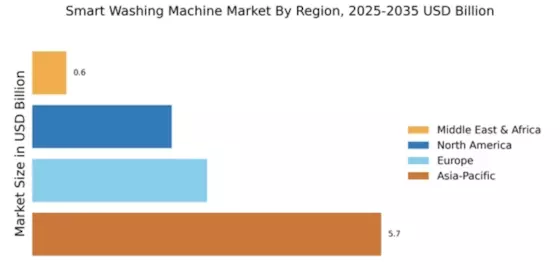
The North American smart washing machine market is projected to reach $2.29 billion by 2025, driven by increasing consumer demand for energy-efficient and technologically advanced appliances. Regulatory initiatives promoting energy efficiency and sustainability are further catalyzing market growth. The trend towards smart home integration is also influencing purchasing decisions, as consumers seek convenience and connectivity in their household appliances. Leading the market are the United States and Canada, where major players like Whirlpool Corporation and LG Electronics are focusing on innovation and smart technology. The competitive landscape is characterized by a mix of established brands and emerging startups, all vying for market share. The presence of key players ensures a diverse range of products, catering to varying consumer preferences and driving overall market expansion.

Europe : Sustainability and Innovation Hub

Europe's smart washing machine market is expected to reach $2.87 billion by 2025, fueled by stringent regulations on energy consumption and a growing consumer preference for sustainable products. The European Union's Green Deal and eco-design regulations are pivotal in shaping market dynamics, encouraging manufacturers to innovate and enhance energy efficiency. This regulatory environment is fostering a shift towards smart appliances that align with sustainability goals. Germany, France, and the UK are leading the charge in this market, with companies like Bosch and Electrolux at the forefront of innovation. The competitive landscape is robust, with established brands investing heavily in R&D to develop smart features that appeal to eco-conscious consumers. The presence of key players ensures a dynamic market, with a focus on integrating advanced technologies into everyday appliances.

Asia-Pacific : Emerging Powerhouse in Technology

The Asia-Pacific region is projected to dominate the smart washing machine market, reaching $5.73 billion by 2025. This growth is driven by rapid urbanization, increasing disposable incomes, and a rising demand for smart home technologies. Countries like China and Japan are at the forefront, with government initiatives supporting technological advancements and energy efficiency. The region's market share reflects a strong consumer shift towards smart appliances that offer convenience and connectivity. China, Japan, and South Korea are leading markets, with major players like Samsung and Haier investing in innovative features and smart technology. The competitive landscape is characterized by aggressive marketing strategies and collaborations among manufacturers to enhance product offerings. The presence of key players ensures a diverse range of smart washing machines, catering to the evolving needs of consumers in this dynamic region.

Middle East and Africa : Emerging Market with Potential

The Middle East and Africa region is anticipated to reach $0.56 billion in the smart washing machine market by 2025, driven by increasing urbanization and a growing middle class. The demand for smart appliances is rising as consumers seek convenience and efficiency in their daily lives. Government initiatives aimed at promoting energy-efficient technologies are also contributing to market growth, albeit at a slower pace compared to other regions. Countries like South Africa and the UAE are leading the market, with local and international brands vying for consumer attention. The competitive landscape is evolving, with key players like Miele and Panasonic focusing on product innovation and market penetration. As the region continues to develop, the smart washing machine market is expected to expand, driven by changing consumer preferences and technological advancements.

Smart Washing Machine Market Regional Image

Key Players and Competitive Insights

The Smart Washing Machine Market is currently characterized by a dynamic competitive landscape, driven by technological advancements and evolving consumer preferences. Major players such as LG Electronics (KR), Samsung Electronics (KR), and Whirlpool Corporation (US) are at the forefront, each adopting distinct strategies to enhance their market positioning. LG Electronics (KR) emphasizes innovation through the integration of AI and IoT technologies, aiming to provide consumers with smart, energy-efficient solutions. Meanwhile, Samsung Electronics (KR) focuses on expanding its product portfolio and enhancing user experience through smart connectivity features. Whirlpool Corporation (US) is strategically investing in sustainability initiatives, aligning its product offerings with the growing consumer demand for eco-friendly appliances. Collectively, these strategies contribute to a competitive environment that is increasingly centered around technological innovation and sustainability.In terms of business tactics, companies are localizing manufacturing and optimizing supply chains to enhance operational efficiency and reduce costs. The market structure appears moderately fragmented, with several key players exerting influence while also facing competition from emerging brands. This fragmentation allows for diverse consumer choices but also necessitates that established companies continuously innovate to maintain their market share.

In November LG Electronics (KR) announced the launch of its latest AI-powered washing machine, which features advanced fabric care technology and energy-saving capabilities. This strategic move not only reinforces LG's commitment to innovation but also positions the company to capture a larger share of the eco-conscious consumer segment. The introduction of such technology is likely to enhance user convenience and satisfaction, thereby strengthening brand loyalty.

In October Samsung Electronics (KR) unveiled a new partnership with a leading smart home technology provider to integrate its washing machines with home automation systems. This collaboration is significant as it reflects Samsung's strategy to enhance the interconnectedness of its appliances, catering to the growing trend of smart home integration. By doing so, Samsung aims to differentiate its products in a competitive market, appealing to tech-savvy consumers who prioritize seamless connectivity.

In September Whirlpool Corporation (US) launched a new line of washing machines designed specifically for energy efficiency, receiving accolades for its commitment to sustainability. This initiative aligns with the increasing consumer preference for environmentally friendly products and positions Whirlpool as a leader in sustainable appliance manufacturing. The strategic focus on energy-efficient solutions is likely to resonate well with consumers, potentially driving sales and enhancing brand reputation.

As of December the Smart Washing Machine Market is witnessing trends that emphasize digitalization, sustainability, and AI integration. Strategic alliances among key players are shaping the competitive landscape, fostering innovation and enhancing product offerings. Looking ahead, it is anticipated that competitive differentiation will increasingly pivot from price-based competition to a focus on innovation, technology, and supply chain reliability. Companies that successfully navigate these trends are likely to secure a competitive edge in this evolving market.

Key Companies in the Smart Washing Machine Market include

Industry Developments

Recent developments in the Smart Washing Machine Market highlight a strong focus on sustainability and technological advancements. Major manufacturers are increasingly integrating Internet of Things (IoT) capabilities into their products, providing users with enhanced control and monitoring features through smartphone applications. Additionally, there is a growing trend toward energy-efficient models that align with global environmental goals, responding to consumer demand for greener appliances. Smart washing machines are now equipped with advanced sensors that optimize water and energy consumption, resulting in cost savings for users.

Furthermore, innovations such as automatic detergent dispensers and predictive maintenance alerts are becoming standard features, enhancing user convenience and prolonging appliance lifespan. The rising adoption of smart home technologies and increasing disposable incomes in developing regions are also contributing to market growth. As manufacturers continue to focus on improving user experiences while addressing ecological concerns, the market is poised for substantial expansion through the coming years, emphasizing the importance of connectivity and eco-friendliness in product offerings.

Future Outlook

Smart Washing Machine Market Future Outlook

The Smart Washing Machine Market is projected to grow at a 9.22% CAGR from 2024 to 2035, driven by technological advancements, increasing consumer demand for convenience, and sustainability initiatives.

New opportunities lie in:

  • Integration of AI-driven laundry optimization software
  • Expansion into smart home ecosystems with IoT connectivity
  • Development of subscription-based maintenance and upgrade services

By 2035, the market is expected to be robust, reflecting substantial growth and innovation.

Market Segmentation

Smart Washing Machine Market Technology Outlook

  • Wi-Fi Enabled
  • Bluetooth Enabled
  • Mobile App Integration
  • Voice Control

Smart Washing Machine Market Application Outlook

  • Residential
  • Commercial
  • Industrial
  • Institutional

Smart Washing Machine Market Price Range Outlook

  • Budget
  • Mid-Range
  • Premium

Smart Washing Machine Market Load Capacity Outlook

  • Below 6 kg
  • 6 to 8 kg
  • Above 8 kg

Smart Washing Machine Market Energy Efficiency Outlook

  • Energy Star Certified
  • Non-Energy Star Certified
  • Smart Energy Management

Report Scope

MARKET SIZE 202411.45(USD Billion)
MARKET SIZE 202512.51(USD Billion)
MARKET SIZE 203530.22(USD Billion)
COMPOUND ANNUAL GROWTH RATE (CAGR)9.22% (2025 - 2035)
REPORT COVERAGERevenue Forecast, Competitive Landscape, Growth Factors, and Trends
BASE YEAR2024
Market Forecast Period2025 - 2035
Historical Data2019 - 2024
Market Forecast UnitsUSD Billion
Key Companies ProfiledLG Electronics (KR), Samsung Electronics (KR), Whirlpool Corporation (US), Bosch (DE), Electrolux (SE), Miele (DE), Panasonic (JP), Haier (CN), Toshiba (JP)
Segments CoveredApplication, Technology, Load Capacity, Energy Efficiency, Price Range
Key Market OpportunitiesIntegration of artificial intelligence and IoT enhances efficiency in the Smart Washing Machine Market.
Key Market DynamicsRising consumer demand for energy-efficient appliances drives innovation and competition in the smart washing machine market.
Countries CoveredNorth America, Europe, APAC, South America, MEA
Leave a Comment

FAQs

What is the expected market size of the Smart Washing Machine Market by 2035?

The Smart Washing Machine Market is expected to reach a value of 27.66 USD Billion by 2035.

What is the anticipated CAGR for the Smart Washing Machine Market from 2025 to 2035?

The expected CAGR for the Smart Washing Machine Market from 2025 to 2035 is 9.2%.

Which region is expected to hold the largest market share in the Smart Washing Machine Market by 2032?

North America is expected to hold the largest market share, reaching a value of 7.5 USD Billion by 2032.

What is the market size for IoT Enabled Smart Washers in 2032?

The market size for IoT Enabled Smart Washers is projected to be 8.1 USD Billion by 2032.

What is the market size for AI-Powered Washing Machines by 2032?

AI-powered washing Machines are anticipated to have a market size of 5.4 USD Billion by 2032.

What is the expected growth of the Smart Washing Machine Market in Europe by 2032?

The expected market size in Europe is projected to grow to 6.0 USD Billion by 2032.

What are some key players in the Smart Washing Machine Market?

Key players in the market include Gree, Bosch, Miele, Sharp, and Samsung Electronics.

What is the projected market size for App-Controlled Washing Machines in 2032?

App-controlled washing Machines are expected to reach a market size of 4.09 USD Billion by 2032.

What is the expected market value for Voice-Controlled Washing Machines by 2032?

Voice-controlled washing Machines are anticipated to have a market value of 3.6 USD Billion by 2032.

What is the market size for South America in the Smart Washing Machine Market by 2032?

The market size for South America is expected to be 1.5 USD Billion by 2032.

Download Free Sample

Kindly complete the form below to receive a free sample of this Report

Compare Licence

×
Features License Type
Single User Multiuser License Enterprise User
Price $4,950 $5,950 $7,250
Maximum User Access Limit 1 User Upto 10 Users Unrestricted Access Throughout the Organization
Free Customization
Direct Access to Analyst
Deliverable Format
Platform Access
Discount on Next Purchase 10% 15% 15%
Printable Versions