×
Request Free Sample ×

Kindly complete the form below to receive a free sample of this Report

* Please use a valid business email

Leading companies partner with us for data-driven Insights

clients tt-cursor
Hero Background

Cutaneous B-cell Lymphoma Treatment Market

ID: MRFR/LS/10630-HCR
128 Pages
Rahul Gotadki
February 2026

Cutaneous B-cell Lymphoma Treatment Market Research Report Information By Type (Radiation Therapy, Chemotherapy, Monoclonal Antibodies and Others (Corticosteroids, Interferons, etc.), By End-user (Hospitals, Speciality Clinics and Others) And By Region (North America, Europe, Asia-Pacific, And Rest Of The World) –Market Forecast Till 2035

Share:
Download PDF ×

We do not share your information with anyone. However, we may send you emails based on your report interest from time to time. You may contact us at any time to opt-out.

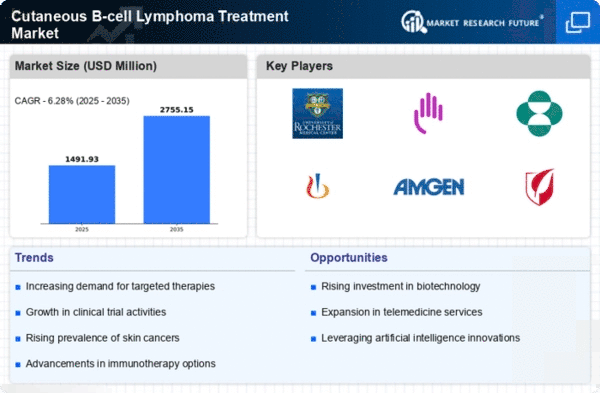
Cutaneous B-cell Lymphoma Treatment Market Infographic
Purchase Options

Cutaneous B-cell Lymphoma Treatment Market Summary

As per MRFR analysis, the Cutaneous B-cell Lymphoma Treatment Market Size was estimated at 1403.77 USD Million in 2024. The Cutaneous B-cell Lymphoma Treatment industry is projected to grow from 1508.02 in 2025 to 2755.15 by 2035, exhibiting a compound annual growth rate (CAGR) of 6.28 during the forecast period 2025 - 2035.

Key Market Trends & Highlights

The Cutaneous B-cell Lymphoma Treatment Market is experiencing a shift towards personalized therapies and innovative treatment options.

  • Personalized treatment approaches are gaining traction, reflecting a broader trend in oncology.
  • The emergence of novel therapies is reshaping the treatment landscape, particularly in North America.
  • Chemotherapy remains the largest segment, while immunotherapy is rapidly becoming the fastest-growing option.
  • Rising incidence of Cutaneous B-cell Lymphoma and advancements in treatment modalities are key drivers of market growth.

Market Size & Forecast

2024 Market Size 1403.77 (USD Million)
2035 Market Size 2755.15 (USD Million)
CAGR (2025 - 2035) 6.28%

Major Players

Roche (CH), Bristol-Myers Squibb (US), Merck & Co. (US), Novartis (CH), Amgen (US), Gilead Sciences (US), Eli Lilly (US), Sanofi (FR), AstraZeneca (GB)

Our Impact
Enabled $4.3B Revenue Impact for Fortune 500 and Leading Multinationals
Partnering with 2000+ Global Organizations Each Year
30K+ Citations by Top-Tier Firms in the Industry

Cutaneous B-cell Lymphoma Treatment Market Trends

The Cutaneous B-cell Lymphoma Treatment Market is currently experiencing a notable evolution, driven by advancements in therapeutic options and a growing understanding of the disease. As healthcare professionals gain deeper insights into the pathology of cutaneous B-cell lymphoma, treatment modalities are becoming increasingly tailored to individual patient needs. This shift towards personalized medicine appears to enhance treatment efficacy and improve patient outcomes. Furthermore, the integration of novel therapies, including targeted agents and immunotherapies, is reshaping the landscape of treatment, offering hope to patients who previously faced limited options. In addition to therapeutic advancements, the Cutaneous B-cell Lymphoma Treatment Market is influenced by ongoing research initiatives and clinical trials aimed at exploring new treatment avenues. These efforts not only contribute to the development of innovative therapies but also foster collaboration among researchers, clinicians, and pharmaceutical companies. As awareness of cutaneous B-cell lymphoma increases, it is likely that more resources will be allocated towards research and development, potentially leading to breakthroughs that could redefine treatment paradigms. Overall, the market appears poised for growth, with a focus on improving patient care and expanding treatment options in the near future.

Personalized Treatment Approaches

The trend towards personalized treatment strategies is gaining traction within the Cutaneous B-cell Lymphoma Treatment Market. Tailoring therapies to individual patient profiles may enhance treatment effectiveness and minimize adverse effects, reflecting a broader shift in oncology towards precision medicine.

Emergence of Novel Therapies

The introduction of innovative therapies, such as targeted treatments and immunotherapies, is reshaping the Cutaneous B-cell Lymphoma Treatment Market. These advancements offer new hope for patients, potentially improving response rates and overall survival.

Increased Research and Collaboration

There is a growing emphasis on research and collaboration among stakeholders in the Cutaneous B-cell Lymphoma Treatment Market. Enhanced partnerships between academic institutions, pharmaceutical companies, and healthcare providers may accelerate the development of new treatment options and improve patient outcomes.

Cutaneous B-cell Lymphoma Treatment Market Drivers

Market Growth Projections

The Global Cutaneous B-cell Lymphoma Treatment Market Industry is projected to experience substantial growth in the coming years. With an estimated market value of 1250 USD Million in 2024, the industry is on track to reach approximately 2750 USD Million by 2035. This growth trajectory suggests a compound annual growth rate of 7.43% from 2025 to 2035. Such projections indicate a robust demand for innovative treatment options and highlight the increasing focus on addressing the needs of patients suffering from cutaneous B-cell lymphoma. The anticipated growth underscores the importance of ongoing research and development efforts in this field.

Rising Awareness and Education

The Global Cutaneous B-cell Lymphoma Treatment Market Industry is benefiting from increased awareness and education regarding skin cancers. Campaigns aimed at educating both healthcare professionals and the general public about the signs and symptoms of cutaneous B-cell lymphoma are gaining traction. This heightened awareness leads to earlier diagnosis and treatment, which is crucial for improving patient outcomes. As more individuals seek medical advice upon noticing symptoms, the demand for effective treatments is likely to rise. This trend may contribute to a compound annual growth rate of 7.43% from 2025 to 2035, reflecting the industry's potential for sustained growth.

Supportive Regulatory Environment

A supportive regulatory environment plays a pivotal role in the Global Cutaneous B-cell Lymphoma Treatment Market Industry. Regulatory bodies are increasingly facilitating the approval of new therapies, which encourages pharmaceutical companies to invest in research and development. Streamlined processes for clinical trials and expedited review pathways for promising treatments are becoming more common. This regulatory support not only accelerates the availability of innovative therapies but also instills confidence in investors and stakeholders. As a result, the market is likely to see a surge in new product launches, further driving growth and enhancing treatment options for patients.

Advancements in Treatment Modalities

Innovations in treatment modalities are a crucial driver for the Global Cutaneous B-cell Lymphoma Treatment Market Industry. Recent developments in targeted therapies and immunotherapies have shown promising results in managing cutaneous B-cell lymphoma. For instance, the introduction of monoclonal antibodies has improved patient outcomes significantly. As these therapies become more widely adopted, they are likely to enhance the overall efficacy of treatment regimens. This shift towards more effective therapies is expected to propel the market, with estimates indicating a growth trajectory that could see the industry valued at 2750 USD Million by 2035. The ongoing research and development efforts further underscore the potential for market expansion.

Emerging Markets and Global Expansion

Emerging markets are becoming increasingly relevant in the Global Cutaneous B-cell Lymphoma Treatment Market Industry. Regions such as Asia-Pacific and Latin America are witnessing a rise in healthcare expenditure and improved access to medical services. This expansion is creating new opportunities for pharmaceutical companies to introduce their products in these markets. As healthcare infrastructure improves, the demand for effective treatments is expected to grow. This trend may lead to a broader global footprint for companies operating in the cutaneous B-cell lymphoma space, potentially increasing market share and revenue streams.

Increasing Incidence of Cutaneous B-cell Lymphoma

The Global Cutaneous B-cell Lymphoma Treatment Market Industry is experiencing growth due to the rising incidence of cutaneous B-cell lymphoma. Epidemiological studies indicate that the prevalence of this condition is increasing, particularly in older populations. As awareness of skin cancers grows, more cases are being diagnosed, leading to a higher demand for effective treatment options. This trend is expected to contribute significantly to the market, with projections suggesting that the industry could reach approximately 1250 USD Million by 2024. The increasing number of patients necessitates advancements in treatment modalities, thereby driving innovation and investment in the sector.


Market Segment Insights

By Treatment Type: Chemotherapy (Largest) vs. Immunotherapy (Fastest-Growing)

In the Cutaneous B-cell Lymphoma Treatment Market, the segment distribution is led by chemotherapy, which holds a significant share due to its established use and effectiveness in treating this condition. Radiation therapy also occupies a noteworthy position, primarily used in localized cases of cutaneous lymphomas, while immunotherapy and targeted therapy are gaining attention for their innovative approaches to treatment. As a collection, these treatment types cater to varied patient needs, with each presenting unique benefits and challenges in management and outcomes. The treatment landscape for cutaneous B-cell lymphoma is evolving, driven significantly by advancements in immunotherapy and targeted therapy. These modern approaches promise enhanced efficacy and reduced side effects, appealing to healthcare professionals and patients alike. The desire for personalized medicine is propelling the adoption of these therapies, marking a shift from traditional methods. Moreover, ongoing clinical trials are continuously refining these options, thereby fostering growth in this segment and aligning it with the latest trends in oncology treatment strategies.

Chemotherapy: Dominant vs. Targeted Therapy: Emerging

Chemotherapy remains the dominant treatment approach in the Cutaneous B-cell Lymphoma Treatment Market due to its extensive history and proven efficacy in managing various lymphoma cases. It is often administered in multiple cycles, enabling comprehensive management of the disease while also addressing potential spread. Conversely, targeted therapy, though emerging, is quickly gaining traction for its ability to selectively target cancerous cells while sparing healthy ones, resulting in fewer side effects and improved patient outcomes. These therapies often utilize monoclonal antibodies and small-molecule inhibitors, showcasing a tailored approach to treatment. As they gain FDA approvals and clinical validation, targeted therapies are expected to complement traditional chemotherapy, thereby reshaping treatment paradigms in cutaneous B-cell lymphoma.

By Disease Stage: Localized Stage (Largest) vs. Advanced Stage (Fastest-Growing)

In the Cutaneous B-cell Lymphoma Treatment Market, the Localized Stage represents the largest segment, capturing a significant share due to the favorable treatment responses and lower associated costs. Patients diagnosed at this stage often have a higher chance of successful treatment outcomes, thereby enhancing the market's appeal for therapies targeting localized conditions. Conversely, the Advanced Stage is gaining traction as the fastest-growing segment, attributed to the increasing incidence of late-diagnosed cases and the evolving treatment modalities that improve outcomes even in advanced conditions.

Localized Stage (Dominant) vs. Advanced Stage (Emerging)

The Localized Stage is characterized by the initial manifestation of cutaneous B-cell lymphoma, where lesions are often confined to a limited area. This segment benefits from a range of effective treatment options, including topical therapies and localized radiation, which contribute to higher recovery rates and patient satisfaction. On the other hand, the Advanced Stage segment has emerged due to rising awareness and advancements in immunotherapy and systemic treatments, catering to patients with extensive disease. This segment is witnessing rapid growth as healthcare providers develop more innovative solutions to manage complex cases and improve survival rates.

By Patient Demographics: Age Group (Largest) vs. Socioeconomic Status (Fastest-Growing)

In the Cutaneous B-cell Lymphoma Treatment Market, the age group is the largest segment, significantly influencing treatment protocols and market dynamics. Older demographics, particularly those aged 60 and above, account for a substantial portion of the case incidence, predominantly due to the correlation between age and increased susceptibility to lymphoproliferative disorders. Conversely, socioeconomic status is emerging as a key defining factor, with ongoing shifts showcasing a growing interest in treatment options that cater to diverse income levels and healthcare access.

Age Group: 60+ (Dominant) vs. Socioeconomic Status (Emerging)

The age group of patients aged 60 and above represents the dominant segment in the Cutaneous B-cell Lymphoma Treatment Market, owing to the higher prevalence of the disease in older individuals. This demographic often faces unique healthcare challenges, including comorbid conditions that complicate treatment regimens. On the other hand, socioeconomic status is identified as an emerging segment as the healthcare landscape evolves. Increasing awareness and access to treatment options among varied income levels reflect a significant trend, as patients from lower socioeconomic backgrounds gain better access to healthcare services. This shift presents opportunities for targeted treatment solutions and outreach initiatives.

By Administration Route: Topical (Largest) vs. Systemic (Fastest-Growing)

In the Cutaneous B-cell Lymphoma Treatment Market, the administration of therapies is segmented primarily into Topical, Intralesional, and Systemic routes. Among these, the Topical administration holds the largest market share due to its localized effects and ease of application, making it preferred by both physicians and patients alike. The Intralesional route also holds a significant position, providing direct delivery of medication into the lesion, though it is not as widely used as Topical treatments. Systemic therapies are gaining traction as they are effective across multiple lesions and are essential for patients with more advanced disease stages.

Topical (Dominant) vs. Systemic (Emerging)

Topical treatments are currently the dominant approach in the administration of therapies for Cutaneous B-cell Lymphoma, primarily due to their minimal systemic side effects and patient-friendly application methods. Popular formulations include creams and gels that are easy to apply directly onto affected areas, providing targeted treatment. In contrast, Systemic therapies, which include oral and intravenous options, are emerging as significant alternatives. They are particularly vital for patients with extensive skin involvement or those who do not respond adequately to localized treatments. The shift towards Systemic therapies is driven by advancements in drug formulations and an increased understanding of disease pathology, encouraging wider adoption in clinical settings.

By Healthcare Setting: Hospital (Largest) vs. Outpatient Clinic (Fastest-Growing)

In the Cutaneous B-cell Lymphoma Treatment Market, the distribution of treatment settings shows a clear preference for hospitals, which dominate the market share due to their access to comprehensive care and advanced treatment technologies. In contrast, outpatient clinics are witnessing a rapid increase in patient intake, reflecting a shift towards more flexible and accessible care options for patients seeking treatment for cutaneous B-cell lymphoma. Home care also plays a role in patient management but lags behind these two primary settings in market impact. The growth trends within this segment are largely driven by demographic changes, with an increasing prevalence of skin cancers prompting a need for more specialized treatment environments. Outpatient clinics are leveraging advancements in telemedicine and minimally invasive procedures to enhance patient experience and accessibility. Meanwhile, hospitals continue to invest in advanced treatment modalities, ensuring they remain the preferred choice for complex cases, while home care solutions are sought after for their convenience and comfort in ongoing treatment and management of patients' health conditions.

Hospital (Dominant) vs. Outpatient Clinic (Emerging)

The hospital setting is characterized by its comprehensive care capabilities, offering advanced diagnostics, treatment options, and integrated patient support services essential for managing complex cases of cutaneous B-cell lymphoma. Hospitals are equipped with a multidisciplinary team of specialists and state-of-the-art technology, which facilitates better patient outcomes and addresses the complexities associated with skin lymphoma treatment. In contrast, outpatient clinics are emerging strongly, appealing to patients who prefer convenience and less invasive treatment approaches. These settings provide personalized care with quick access to consultation and follow-up, supported by technological advancements that enhance treatment delivery. The growth in outpatient settings signifies a shift towards patient-centric care and reflects the evolving landscape of healthcare preferences, where patients seek more control over their treatment processes.

Get more detailed insights about Cutaneous B-cell Lymphoma Treatment Market

Regional Insights

North America : Market Leader in Treatment

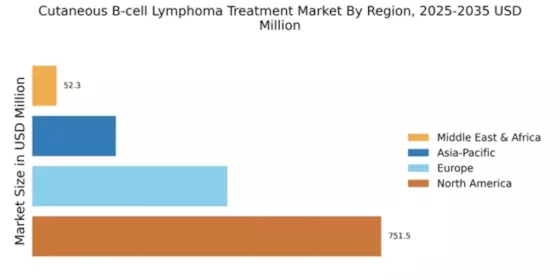
North America is poised to maintain its leadership in the Cutaneous B-cell Lymphoma treatment market, holding a significant share of $751.51M in 2024. The region benefits from advanced healthcare infrastructure, high R&D investments, and a growing prevalence of skin cancers. Regulatory support from agencies like the FDA accelerates the approval of innovative therapies, driving market growth. The increasing awareness of skin cancer and the availability of targeted therapies further enhance demand. The competitive landscape in North America is robust, featuring key players such as Roche, Bristol-Myers Squibb, and Merck & Co. These companies are at the forefront of developing novel treatments, leveraging cutting-edge technologies. The U.S. remains the largest market, supported by a strong pipeline of therapies and a focus on personalized medicine. The presence of leading pharmaceutical firms ensures a continuous influx of innovative solutions, solidifying North America's market dominance.

Europe : Emerging Market Dynamics

Europe is witnessing a growing market for Cutaneous B-cell Lymphoma treatments, with a market size of €420.0M in 2024. Factors such as increasing healthcare expenditure, a rise in skin cancer cases, and supportive regulatory frameworks are driving this growth. The European Medicines Agency (EMA) plays a crucial role in facilitating the approval of new therapies, which enhances treatment accessibility across member states. The focus on early diagnosis and innovative treatment options is expected to further boost market demand. Leading countries in this region include Germany, France, and the UK, which are home to several key players like Novartis and AstraZeneca. The competitive landscape is characterized by collaborations and partnerships aimed at enhancing treatment efficacy. The presence of advanced healthcare systems and a strong emphasis on research and development contribute to the region's growth, making Europe a significant player in the global market.

Asia-Pacific : Emerging Powerhouse in Healthcare

The Asia-Pacific region is emerging as a significant player in the Cutaneous B-cell Lymphoma treatment market, with a market size of $180.0M in 2024. Factors such as increasing awareness of skin cancer, rising healthcare investments, and a growing patient population are driving market growth. Regulatory bodies in countries like Japan and Australia are enhancing their frameworks to support the introduction of new therapies, which is expected to further stimulate demand in the coming years. Countries like Japan, China, and Australia are leading the charge in this region, with a growing presence of pharmaceutical companies. The competitive landscape is evolving, with local and international players vying for market share. The focus on improving healthcare access and affordability is crucial, as it will determine the pace of market growth. As the region continues to develop, the potential for innovative treatment options remains high, making it a key area for investment.

Middle East and Africa : Resource-Rich Frontier

The Middle East and Africa region is gradually developing its market for Cutaneous B-cell Lymphoma treatments, with a market size of $52.26M in 2024. The growth is driven by increasing healthcare investments, rising awareness of skin cancer, and the establishment of regulatory frameworks to support new therapies. Governments are focusing on improving healthcare infrastructure, which is essential for enhancing treatment accessibility and patient outcomes in this region. Leading countries such as South Africa and the UAE are making strides in cancer treatment, with a growing number of healthcare facilities and initiatives aimed at improving patient care. The competitive landscape is characterized by a mix of local and international players, with a focus on partnerships to enhance treatment options. As the region continues to evolve, the potential for market growth remains promising, driven by increasing demand for effective therapies.

Cutaneous B-cell Lymphoma Treatment Market Regional Image

Key Players and Competitive Insights

The Cutaneous B-cell Lymphoma Treatment Market is characterized by a dynamic competitive landscape, driven by innovation, strategic partnerships, and a focus on patient-centric solutions. Key players such as Roche (CH), Bristol-Myers Squibb (US), and Novartis (CH) are at the forefront, each employing distinct strategies to enhance their market presence. Roche (CH) emphasizes research and development, particularly in targeted therapies, while Bristol-Myers Squibb (US) focuses on expanding its immunotherapy portfolio. Novartis (CH) is actively pursuing collaborations to enhance its treatment offerings, indicating a trend towards cooperative innovation that shapes the competitive environment.The market structure appears moderately fragmented, with several players vying for market share. Companies are increasingly localizing manufacturing and optimizing supply chains to enhance efficiency and reduce costs. This approach not only strengthens their operational capabilities but also allows for quicker responses to market demands. The collective influence of these key players fosters a competitive atmosphere where innovation and strategic positioning are paramount.

In November Roche (CH) announced a significant partnership with a leading biotechnology firm to co-develop a novel therapy for Cutaneous B-cell Lymphoma. This collaboration is poised to leverage Roche's extensive research capabilities and the partner's innovative technology, potentially accelerating the development of new treatment options. Such strategic alliances are crucial in a market where rapid advancements in treatment modalities are essential for maintaining competitive advantage.

In October Bristol-Myers Squibb (US) launched a new clinical trial aimed at evaluating the efficacy of its latest immunotherapy in patients with advanced Cutaneous B-cell Lymphoma. This initiative underscores the company's commitment to expanding its therapeutic arsenal and addressing unmet medical needs. The outcomes of this trial could significantly influence treatment protocols and establish Bristol-Myers Squibb as a leader in this niche market.

In September Novartis (CH) unveiled a digital health platform designed to enhance patient engagement and treatment adherence for those undergoing therapy for Cutaneous B-cell Lymphoma. This initiative reflects a broader trend towards digitalization in healthcare, aiming to improve patient outcomes through technology. By integrating digital solutions, Novartis positions itself as a forward-thinking player, likely to attract a tech-savvy patient demographic.

As of December the competitive trends in the Cutaneous B-cell Lymphoma Treatment Market are increasingly defined by digitalization, sustainability, and the integration of artificial intelligence. Strategic alliances are becoming more prevalent, facilitating the sharing of resources and expertise among companies. Looking ahead, competitive differentiation is expected to evolve, with a shift from price-based competition to a focus on innovation, technological advancements, and supply chain reliability. This transition may redefine market dynamics, emphasizing the importance of developing cutting-edge therapies and enhancing patient experiences.

Key Companies in the Cutaneous B-cell Lymphoma Treatment Market include

Future Outlook

Cutaneous B-cell Lymphoma Treatment Market Future Outlook

The Cutaneous B-cell Lymphoma Treatment Market is projected to grow at a 6.28% CAGR from 2025 to 2035, driven by advancements in targeted therapies and increasing awareness.

New opportunities lie in:

  • Development of personalized treatment plans leveraging genomic profiling.
  • Expansion of telemedicine platforms for remote patient monitoring.
  • Investment in clinical trials for novel therapeutic agents.

By 2035, the market is expected to achieve substantial growth, driven by innovative treatment solutions.

Market Segmentation

Cutaneous B-cell Lymphoma Treatment Market Disease Stage Outlook

  • Localized Stage
  • Advanced Stage
  • Recurrent Stage

Cutaneous B-cell Lymphoma Treatment Market Treatment Type Outlook

  • Chemotherapy
  • Radiation Therapy
  • Immunotherapy
  • Targeted Therapy

Cutaneous B-cell Lymphoma Treatment Market Healthcare Setting Outlook

  • Hospital
  • Outpatient Clinic
  • Home Care

Cutaneous B-cell Lymphoma Treatment Market Administration Route Outlook

  • Topical
  • Intralesional
  • Systemic

Cutaneous B-cell Lymphoma Treatment Market Patient Demographics Outlook

  • Age Group
  • Gender
  • Ethnicity
  • Socioeconomic Status

Report Scope

MARKET SIZE 20241403.77(USD Million)
MARKET SIZE 20251508.02(USD Million)
MARKET SIZE 20352755.15(USD Million)
COMPOUND ANNUAL GROWTH RATE (CAGR)6.28% (2025 - 2035)
REPORT COVERAGERevenue Forecast, Competitive Landscape, Growth Factors, and Trends
BASE YEAR2024
Market Forecast Period2025 - 2035
Historical Data2019 - 2024
Market Forecast UnitsUSD Million
Key Companies ProfiledRoche (CH), Bristol-Myers Squibb (US), Merck & Co. (US), Novartis (CH), Amgen (US), Gilead Sciences (US), Eli Lilly (US), Sanofi (FR), AstraZeneca (GB)
Segments CoveredTreatment Type, Disease Stage, Patient Demographics, Administration Route, Healthcare Setting
Key Market OpportunitiesAdvancements in targeted therapies and immunotherapies enhance treatment options in the Cutaneous B-cell Lymphoma Treatment Market.
Key Market DynamicsRising demand for targeted therapies drives innovation and competition in the Cutaneous B-cell Lymphoma Treatment Market.
Countries CoveredNorth America, Europe, APAC, South America, MEA
Leave a Comment

FAQs

How much is the Cutaneous B-cell lymphoma treatment market?

The Cutaneous B-cell Lymphoma Treatment Market size was valued at USD XX Billion in 2022.

What is the growth rate of the Cutaneous B-cell lymphoma treatment market?

The global market is projected to grow at a CAGR of XX% during the forecast period, 2023-2032.

Which region held the largest market share in the Cutaneous B-cell lymphoma treatment market?

North America had the largest share in the global market

Who are the key players in the Cutaneous B-cell lymphoma treatment market?

The key players in the market are Kite Pharma, Genentech, Inc., Novartis AG, Epizyme, Inc., NanoString Technologies, Inc., Amgen Inc., Johnson & Johnson Services, Inc. and other plaers.

Which type led the cutaneous B-cell lymphoma treatment market?

The chemotherapy category dominated the market in 2022.

Which end-user had the largest market share in the cutaneous B-cell lymphoma treatment market?

The hospitals had the largest share in the global market.

Download Free Sample

Kindly complete the form below to receive a free sample of this Report

Compare Licence

×
Features License Type
Single User Multiuser License Enterprise User
Price $4,950 $5,950 $7,250
Maximum User Access Limit 1 User Upto 10 Users Unrestricted Access Throughout the Organization
Free Customization
Direct Access to Analyst
Deliverable Format
Platform Access
Discount on Next Purchase 10% 15% 15%
Printable Versions