×
Request Free Sample ×

Kindly complete the form below to receive a free sample of this Report

* Please use a valid business email

Leading companies partner with us for data-driven Insights

clients tt-cursor
Hero Background
English
Chinese
French
Japanese
Korean
German
Spanish

Colorants Market Size

ID: MRFR/CnM/2324-CR
116 Pages
Chitranshi Jaiswal
July 2024

Colorants Market Research Report Information By Market Composition (Standard, High Purity, Ultrafine, Food, And Industrial Market Compositions), By Technology (Paints And Coatings, Water-borne, Solvent-borne, Powder, Catalysts, Others), By Type (Masterbatches, Pigments & Color Concentrates, and Pyrogenic Type), By Applications (Inks, Paints & Coatings, Plastic & Rubbers, Food Additives, Byproduct Applications, and Others), By End-Use Industry (Automotive, Packaging, Building & Construction, Pharmaceutical, Personal Care, Food And Beverage, Healthcare And Pharmaceuticals, Others) and By Region - Global Forecast to 2035

Share:
Download PDF ×

We do not share your information with anyone. However, we may send you emails based on your report interest from time to time. You may contact us at any time to opt-out.

Colorants Market Infographic
Purchase Options

Colorants Size

Colorants Market Growth Projections and Opportunities

The colorants market is influenced by several key market factors that shape its dynamics and growth trajectory. One significant factor is the increasing demand from various end-user industries such as automotive, packaging, textiles, and construction. These industries utilize colorants extensively in their products to enhance aesthetics and differentiate their offerings in the market. The growth of these sectors directly correlates with the demand for colorants, driving market expansion.

Moreover, technological advancements play a crucial role in the colorants market. Innovations in colorant formulations and manufacturing processes contribute to the development of high-performance and environmentally friendly products. Manufacturers are continuously investing in research and development to introduce innovative colorant solutions that meet the evolving needs of end-users while complying with stringent regulations regarding environmental sustainability and safety.

Global economic conditions also significantly impact the colorants market. Economic growth in emerging markets fuels industrial activities, leading to increased consumption of colorants. Conversely, economic downturns may dampen market growth as industries scale back production and expenditure. Currency fluctuations and trade policies further influence market dynamics, affecting the pricing and availability of colorants on a global scale.

Environmental regulations and consumer preferences towards eco-friendly products are driving the demand for sustainable colorant solutions. With growing awareness about environmental issues, industries are increasingly adopting organic and natural colorants derived from renewable sources. Additionally, stringent regulations regarding the use of hazardous chemicals in colorant formulations are prompting manufacturers to invest in safer alternatives, thereby shaping the market landscape.

The competitive landscape of the colorants market is another significant factor affecting its dynamics. The market is characterized by intense competition among key players striving to gain a competitive edge through product differentiation, strategic partnerships, and mergers and acquisitions. Companies are also focusing on expanding their product portfolios to cater to diverse end-user requirements and gain a larger market share.

Technological disruptions such as digitalization and the adoption of digital printing technologies are transforming the colorants market. Digital printing offers advantages such as reduced setup costs, shorter lead times, and customization capabilities, driving its adoption across various industries. This shift towards digital printing is influencing the demand for specialized colorants optimized for digital applications, thereby shaping market trends.

Furthermore, shifting consumer preferences and trends in color preferences impact the colorants market. Consumer preferences for vibrant colors, unique effects, and customization options drive the demand for specialized colorant solutions. Manufacturers are continually innovating to introduce new colorant formulations that align with prevailing consumer trends, thereby staying competitive in the market.

Supply chain disruptions and raw material price volatility are additional factors that impact the colorants market. Fluctuations in raw material prices, particularly petrochemical-based colorants, can affect production costs and profit margins for manufacturers. Supply chain disruptions, such as natural disasters or geopolitical conflicts, can lead to shortages or disruptions in the supply of raw materials, impacting the overall market stability.
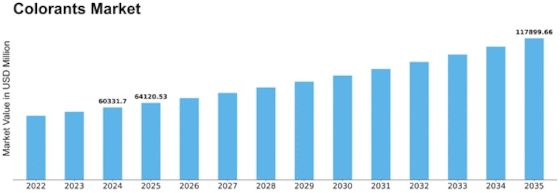
Colorants Market Size Graph
Author
Chitranshi Jaiswal
Team Lead - Research

Chitranshi is a Team Leader in the Chemicals & Materials (CnM) and Energy & Power (EnP) domains, with 6+ years of experience in market research. She leads and mentors teams to deliver cross-domain projects that equip clients with actionable insights and growth strategies. She is skilled in market estimation, forecasting, competitive benchmarking, and both primary & secondary research, enabling her to turn complex data into decision-ready insights. An engineer and MBA professional, she combines technical expertise with strategic acumen to solve dynamic market challenges. Chitranshi has successfully managed projects that support market entry, investment planning, and competitive positioning, while building strong client relationships. Certified in Advanced Excel & Power BI she leverages data-driven approaches to ensure accuracy, clarity, and impactful outcomes.

Leave a Comment

FAQs

What is the current valuation of the Colorants Market in 2025?

<p>The Colorants Market valuation is approximately 60331.7 USD Million in 2024.</p>

What is the projected market size for the Colorants Market by 2035?

<p>The Colorants Market is projected to reach approximately 117899.66 USD Million by 2035.</p>

What is the expected CAGR for the Colorants Market during the forecast period?

<p>The expected CAGR for the Colorants Market from 2025 to 2035 is 6.28%.</p>

Which companies are considered key players in the Colorants Market?

<p>Key players in the Colorants Market include BASF, DuPont, Clariant, Huntsman, and Lanxess.</p>

What are the main segments of the Colorants Market?

<p>The main segments of the Colorants Market include pigments & color concentrates, masterbatches, and dyes.</p>

How does the market composition of the Colorants Market break down?

<p>The market composition includes captive sales valued at 70379.79 USD Million and merchant sales at 47519.87 USD Million.</p>

What applications are driving demand in the Colorants Market?

Key applications driving demand include paints &amp; coatings, plastics &amp; rubber, and inks.

What is the valuation of the pigments & color concentrates segment?

The pigments &amp; color concentrates segment is valued at approximately 69300.0 USD Million.

What technological advancements are influencing the Colorants Market?

Technological advancements in waterborne and solvent-borne colorants are influencing market dynamics.

Which end-use industries are the largest consumers of colorants?

The largest consumers of colorants include the paints &amp; coatings, packaging, and textiles industries.

Market Summary

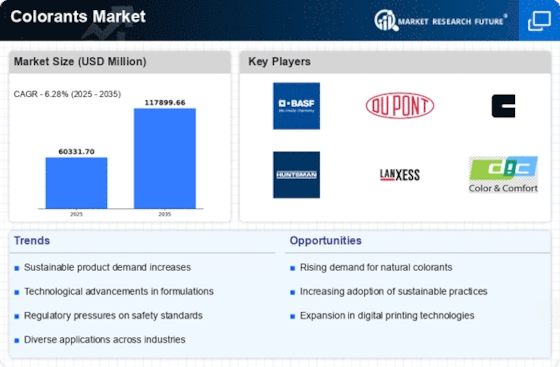
As per Market Research Future analysis, the Colorants Market Size was estimated at 60331.7 USD Million in 2024. The Colorants industry is projected to grow from USD 64120.53 Million in 2025 to USD 117899.66 Million by 2035, exhibiting a compound annual growth rate (CAGR) of 6.28% during the forecast period 2025 - 2035

Key Market Trends & Highlights

The Colorants Market is experiencing a dynamic shift towards sustainability and customization, driven by technological advancements and regulatory compliance.

  • North America remains the largest market for colorants, reflecting a strong demand for sustainable solutions.
  • Asia-Pacific is identified as the fastest-growing region, propelled by increasing industrialization and consumer preferences for personalized products.
  • The Captive segment dominates the market, while the Merchant segment is rapidly gaining traction due to rising customization needs.
  • Sustainability initiatives and technological innovations are key drivers influencing the growth of the colorants market.

Market Size & Forecast

2024 Market Size 60331.7 (USD Million)
2035 Market Size 117899.66 (USD Million)
CAGR (2025 - 2035) 6.28%
Largest Regional Market Share in 2024 Asia Pacific

Major Players

BASF (DE), DuPont (US), Clariant (CH), Huntsman (US), Lanxess (DE), DIC Corporation (JP), Ferro Corporation (US), Eastman Chemical Company (US), Kraton Corporation (US)

Market Trends

The Colorants Market is currently experiencing a dynamic evolution, driven by various factors that influence consumer preferences and industrial applications. The increasing demand for vibrant and sustainable color solutions across multiple sectors, including textiles, plastics, and food, appears to be a primary catalyst for growth. Additionally, the rising awareness regarding environmental sustainability is prompting manufacturers to innovate and develop eco-friendly colorants. This shift towards sustainable practices not only aligns with consumer expectations but also addresses regulatory pressures aimed at reducing environmental impact. As a result, companies are investing in research and development to create natural and biodegradable alternatives, which may reshape the competitive landscape of the Colorants Market. Moreover, the Colorants Market is witnessing a notable trend towards customization and personalization. Industries are increasingly seeking tailored color solutions that meet specific requirements, which suggests a shift from mass production to more bespoke offerings. This trend is particularly evident in sectors such as cosmetics and packaging, where unique color formulations can enhance product appeal and differentiation. Furthermore, advancements in technology, such as digital printing and color matching software, are facilitating this customization process, enabling manufacturers to respond swiftly to market demands. Overall, the Colorants Market is poised for continued transformation, driven by sustainability, customization, and technological innovation.

Sustainability in Colorants Market

The Colorants Market is increasingly influenced by sustainability concerns, as consumers and industries alike prioritize eco-friendly products. Manufacturers are responding by developing natural and biodegradable colorants, which align with environmental regulations and consumer preferences for greener alternatives.

Customization and Personalization

A growing trend in the Colorants Market is the demand for customized color solutions. Industries are moving towards tailored offerings that cater to specific needs, particularly in cosmetics and packaging, where unique color formulations enhance product differentiation.

Technological Advancements

Technological innovations are reshaping the Colorants Market, particularly through digital printing and color matching software. These advancements enable manufacturers to produce high-quality, precise color solutions efficiently, thus meeting the evolving demands of various industries.

Colorants Market Market Drivers

Emerging Markets

Emerging markets present a substantial opportunity for growth within the Colorants Market. As economies develop, there is a rising demand for colorants across various sectors, including construction, automotive, and consumer goods. The expansion of the middle class in these regions is driving consumption patterns that favor vibrant and diverse color options. Market projections indicate that the demand for colorants in emerging markets could increase by approximately 7% annually over the next five years. Companies that strategically invest in these regions may benefit from first-mover advantages, establishing strong market presence and brand recognition in the Colorants Market.

Regulatory Compliance

Regulatory compliance is a critical driver in the Colorants Market, as governments worldwide impose stringent regulations on the use of colorants in various applications. This is particularly relevant in sectors such as food and cosmetics, where safety and health standards are paramount. Manufacturers must navigate complex regulatory landscapes to ensure their products meet safety requirements, which can influence formulation choices and sourcing strategies. The increasing focus on consumer safety is prompting companies to invest in compliance measures, which may lead to higher operational costs. However, adherence to regulations can also enhance brand trust and consumer loyalty, positioning compliant companies favorably in the Colorants Market.

Technological Innovations

Technological innovations are reshaping the Colorants Market, driving efficiency and enhancing product offerings. Advances in colorant formulation and application techniques have led to the development of more vibrant and durable colors. Innovations such as digital printing technology are enabling manufacturers to produce intricate designs with precision, thereby expanding creative possibilities. Furthermore, the integration of artificial intelligence in color matching processes is streamlining production and reducing waste. Market analysis suggests that the adoption of these technologies could lead to a reduction in production costs by up to 15%. As companies leverage these advancements, they are likely to enhance their competitive positioning within the Colorants Market.

Sustainability Initiatives

The Colorants Market is increasingly influenced by sustainability initiatives. As consumers become more environmentally conscious, manufacturers are compelled to adopt eco-friendly practices. This shift is evident in the rising demand for natural and organic colorants, which are perceived as safer alternatives to synthetic options. According to recent data, the market for natural colorants is projected to grow at a compound annual growth rate of approximately 5.5% over the next few years. Companies that prioritize sustainable sourcing and production methods are likely to gain a competitive edge, as they align with consumer preferences for products that minimize environmental impact. This trend not only enhances brand reputation but also opens new avenues for innovation within the Colorants Market.

Customization and Personalization

Customization and personalization are becoming pivotal drivers in the Colorants Market. As industries such as cosmetics, food, and textiles evolve, the demand for tailored color solutions is on the rise. Consumers increasingly seek products that reflect their individual preferences, prompting manufacturers to develop bespoke color formulations. This trend is particularly pronounced in the cosmetics sector, where personalized shades and finishes are gaining traction. Market data indicates that the customization segment is expected to witness a growth rate of around 6% annually. Companies that can effectively respond to this demand for unique color solutions are likely to thrive, as they cater to the evolving tastes of consumers in the Colorants Market.

Market Segment Insights

By Market Composition: Captive (Largest) vs. Merchant (Fastest-Growing)

<p>The market composition of the colorants industry is divided into two primary segments: Captive and Merchant. Captive colorants are produced internally by manufacturers for their own use, thus commanding the largest share within this market space. This segment has established dominance due to its reliability and integration within manufacturing processes, whereby companies prefer to maintain control over their colorants to ensure quality and consistency. In contrast, Merchant solutions are gaining traction as they offer flexibility and convenience to businesses looking for specialized colorants without the need for investment in production capabilities. This shift reflects an evolving market preference towards outsourcing to expert suppliers. Examining growth trends, the Merchant segment is recognized as the fastest-growing portion of the colorants market. This rise can be attributed to several factors including increased customization demands from end-users, and a growing number of companies entering the market to provide niche colorant solutions. Additionally, technological advancements in production processes allow Merchant suppliers to offer innovative and higher-quality products, driving market expansion. The rise in e-commerce platforms further facilitates reach, making it easier for consumers to source Merchant products. Overall, while Captive remains a cornerstone of stability, Merchant colorants are on an upward trajectory, appealing to a broader array of customers.</p>

<p>Market Composition: Captive (Dominant) vs. Merchant (Emerging)</p>

<p>The Captive colorants segment, characterized by in-house production, plays a dominant role in the colorants market due to its ability to ensure quality control and consistency in its offerings. Industries that heavily rely on colorants, such as plastics, paints, and coatings, often prefer Captive solutions for their tailored formulations that meet specific operational needs. On the other hand, the Merchant segment is emerging with its dynamic offerings and adaptability to market demands. Merchant colorants foster innovation, catering to smaller businesses and startups that require flexibility in order volume and rapid response to changing trends. This segment thrives on its ability to provide diverse colorant solutions without the need for extensive investments in production facilities, thus appealing to a broader clientele seeking specialized products.</p>

By Type: Pigments & Color Concentrates (Largest) vs. Masterbatches (Fastest-Growing)

<p>The colorants market is characterized by a diverse array of types, with pigments and color concentrates retaining the largest share. This segment dominates due to its widespread applications across industries, including paints, plastics, and textiles. Masterbatches, though smaller in share, are rapidly gaining traction in the market due to increased demand for tailored color solutions and additive functions. Dyes also play a significant role, particularly in the textile industry, but are seeing slower adoption rates compared to the innovation-driven <a href="https://www.marketresearchfuture.com/reports/masterbatch-market-5578" target="_blank" title="masterbatch">masterbatch</a> sector. Growth trends within the colorants market are greatly influenced by a rise in environmentally friendly formulations and sustainable practices. The push for high-performance color solutions has led to the development of advanced masterbatch technologies, making them the fastest-growing segment. Moreover, the increasing demand for aesthetic appeal in consumer products is fueling the need for diverse and specialized colorants, ultimately benefiting the entire sector and encouraging further innovation and investment.</p>

<p>Pigments & Color Concentrates (Dominant) vs. Dyes (Emerging)</p>

<p>Pigments and color concentrates stand out as the dominant player in the colorants market, characterized by their robust performance in industrial applications and their ability to meet the growing demand for durable, high-quality colors that withstand environmental challenges. This segment is known for offering a broad range of colors with high opacity and excellent lightfastness, making it essential for sectors such as automotive and construction. In contrast, dyes, while considered an emerging segment, are gaining momentum, particularly in applications where vibrant color and specificity are crucial. Although they currently occupy a smaller market share, advances in dye technology and increased applications in niche markets are expanding their appeal and usage opportunities.</p>

By Technology: Waterborne (Largest) vs. Powder (Fastest-Growing)

<p>The technology segment in the colorants market is predominantly composed of waterborne colorants, which hold the largest share due to their eco-friendliness and wide applicability in various industries such as paints, coatings, and textiles. Solvent-borne colorants follow, offering vibrant colors and excellent adhesion properties but facing regulatory challenges related to VOC emissions. Powder colorants are gaining popularity, especially in sectors like coatings and plastics, where sustainability is becoming increasingly important. The 'Others' category includes innovations like liquid color concentrates that are also showing potential in niche applications.</p>

<p>Technology: Waterborne (Dominant) vs. Powder (Emerging)</p>

<p>Waterborne colorants are established as the dominant technology in the colorants market, favored for their reduced environmental impact and versatility across multiple applications. They excel in the paint and coatings market, where regulations favor lower VOC content. In contrast, powder colorants are emerging rapidly, driven by their sustainability attributes and ease of application in processes like electrostatic coating. Powder colorants are particularly appealing to manufacturers focused on minimizing waste and maximizing efficiency. The shift towards eco-friendly solutions is boosting powder market growth, leading to innovation in formulation and application techniques that cater to diverse industrial needs.</p>

By Application: Inks (Largest) vs. Paints & Coatings (Fastest-Growing)

<p>The Colorants Market shows a diverse application landscape with inks holding the largest share, driven by consistent demand in publishing and packaging. This segment benefits from innovations in digital printing and eco-friendly inks, establishing its dominant position. Conversely, the Paints & Coatings application is emerging rapidly, fueled by increased construction activities and consumer preference for high-quality finishes, reflecting a shift towards sustainable and advanced formulations.</p>

<p>Inks (Dominant) vs. Paints & Coatings (Emerging)</p>

<p>Inks dominate the Colorants Market due to their extensive usage in printing processes, such as commercial, industrial, and digital printing. The ongoing shift toward high-performance inks, including water-based and UV-curable options, enhances their appeal. On the other hand, the Paints & Coatings segment is characterized by its rapid growth, driven by innovations in formulation that focus on durability and environmental compliance. This segment caters to a diverse range of industries, including automotive, architecture, and consumer goods, which are increasingly adopting specialized coatings to enhance product longevity and aesthetic appeal.</p>

By End-Use Industry: Textiles (Largest) vs. Personal Care (Fastest-Growing)

<p>The Colorants Market exhibits a diverse distribution across various end-use industries, with textiles leading the charge as the largest segment. The textile industry utilizes colorants extensively for dyeing and printing fabrics, maintaining a substantial share due to its vast demand across fashion and home furnishing sectors. In contrast, the personal care segment is gaining momentum, recognized for its rapid growth as a result of increasing consumer awareness regarding aesthetics and branding in cosmetics and personal hygiene products. Furthermore, segments such as packaging and food & beverages are experiencing moderate growth, driven by innovations in colorant formulations that meet regulatory standards and consumer preferences for natural products.</p>

<p>Textiles: Dominant vs. Personal Care: Emerging</p>

<p>Textiles remain the dominant segment within the Colorants Market, leveraging a rich tradition of dyeing techniques and a constant push towards newer applications, such as eco-friendly and sustainable dyes. The segment encompasses a vast range of applications from clothing to upholstery, thus resulting in a steady demand for diverse colorant families. On the other hand, the personal care segment is emerging rapidly, driven by innovative product lines that demand vibrant and photostable colorants, especially in cosmetics and skincare. The growth of this sector is further aided by a rise in disposable income and a shift towards premium personal care products, making colorant formulations crucial for brand differentiation in this competitive market.</p>

Get more detailed insights about Colorants Market Research Report - Forecast till 2035

Regional Insights

North America : Market Leader in Colorants Market

North America is the largest market for colorants, holding approximately 40% of the global share. The region's growth is driven by increasing demand in the automotive, construction, and consumer goods sectors. Regulatory support for sustainable practices and innovations in colorant formulations further catalyze market expansion. The U.S. and Canada are the primary contributors, with a strong focus on eco-friendly products and compliance with environmental regulations. The competitive landscape in North America is robust, featuring key players such as BASF, DuPont, and Huntsman. These companies are investing in R&D to develop advanced colorant solutions that meet stringent regulatory standards. The presence of established manufacturing facilities and a well-developed supply chain enhances market dynamics. Additionally, the region's focus on sustainability is pushing companies to innovate, ensuring a competitive edge in the global market.

Europe : Innovation and Sustainability Focus

Europe is the second-largest market for colorants, accounting for around 30% of the global market share. The region's growth is propelled by stringent regulations promoting sustainable practices and the increasing demand for high-quality colorants in various industries, including textiles, plastics, and coatings. Countries like Germany and France lead the market, driven by their strong manufacturing bases and commitment to environmental standards. The competitive landscape in Europe is characterized by a mix of established players and innovative startups. Key companies such as Clariant and Lanxess are at the forefront, focusing on sustainable product development and compliance with EU regulations. The region's emphasis on eco-friendly solutions is fostering collaboration between manufacturers and regulatory bodies, ensuring that the market remains dynamic and responsive to consumer needs. "The European market is committed to sustainability, driving innovation in colorant technologies," European Chemicals Agency.

Asia-Pacific : Emerging Market with High Potential

Asia-Pacific is rapidly emerging as a significant player in the colorants market, holding approximately 25% of the global share. The region's growth is fueled by rising industrialization, urbanization, and increasing consumer demand for colorants in packaging, textiles, and automotive sectors. Countries like China and India are leading this growth, supported by favorable government policies and investments in manufacturing capabilities. The competitive landscape in Asia-Pacific is diverse, with both local and international players vying for market share. Companies such as DIC Corporation and Ferro Corporation are expanding their presence through strategic partnerships and acquisitions. The region's focus on innovation and cost-effective production methods is enhancing its competitiveness on a global scale, making it a key area for future growth in the colorants market.

Middle East and Africa : Resource-Rich and Growing Market

The Middle East and Africa region is witnessing significant growth in the colorants market, holding about 5% of the global share. The growth is driven by increasing demand in the construction and automotive sectors, alongside a growing population and urbanization. Countries like South Africa and the UAE are at the forefront, benefiting from investments in infrastructure and industrial development, which are expected to boost market demand. The competitive landscape in this region is evolving, with both local and international companies establishing a presence. Key players are focusing on expanding their product offerings and enhancing distribution networks to meet the growing demand. The region's rich natural resources provide opportunities for the development of innovative colorant solutions, positioning it as a promising market for future investments.

Key Players and Competitive Insights

The global colorants market is characterized by a high level of competition. The players in the market are constantly innovating and expanding their product offerings. Despite the challenges, there are several factors that are driving growth in the colorants motor market, such as the increasing use of colorants in the plastic industry, the growing demand for coatings, plastics, and interior materials in the Textiles industry, and the increasing innovations in the pigment manufacturing Types which helps to enhance the product properties.

Key Companies in the Colorants Market include

Industry Developments

April 2024: 

Sun Chemicals, a subsidiary of DIC Corporation will showcase its newly launched INTENZA Hena, SunPuro Natural Carotenes, and SACRANEX natural colorants for the cosmetics & personal care industry during in-cosmetics Global 2024.

January 2021

: Sun Chemicals became the 1st pigment manufacturer worldwide to achieve ECO PASSPORT by OEKO-TEX, achieving Zero Discharge of Hazardous Chemicals (ZDHC) Level 3 accreditation certificate for its selected range of pigments, indicating their step towards sustainability within pigments for the plastics industry

December 2023: 

Sun Chemical, a subsidiary of DIC Corporation, has recently introduced two new SunPURO Natural colors for cosmetics and personal care formulations. The new additions to the SunPURO Naturals product line are SunPURO Natural Carotene O N70-2317 and SunPURO Natural Carotene BTO N70-2527. These colorant offers antioxidant properties and can be used in both color cosmetics and skincare products. The introduction of these colorants has helped the company to expand its portfolio of plant-derived natural colorants and functional ingredients.

Future Outlook

Colorants Market Future Outlook

The Colorants Market is projected to grow at a 6.28% CAGR from 2025 to 2035, driven by increasing demand in packaging, textiles, and sustainable products.

New opportunities lie in:

  • Expansion into bio-based colorants for eco-conscious consumers.
  • Development of advanced color matching technologies for industrial applications.
  • Investment in digital marketing strategies targeting niche markets.

By 2035, the Colorants Market is expected to achieve robust growth, driven by innovation and sustainability.

Market Segmentation

Colorants Market Type Outlook

  • Pigments & Color Concentrates
  • Masterbatches
  • Dyes

Colorants Market Technology Outlook

  • Waterborne
  • Solvent-borne
  • Powder
  • Others

Colorants Market Application Outlook

  • Inks
  • Paints & Coatings
  • Plastic & Rubber
  • Food
  • Others

Colorants Market End-Use Industry Outlook

  • Textiles
  • Packaging
  • Building & Construction
  • Pharmaceutical
  • Personal Care
  • Food & Beverages
  • Automotive
  • Others

Colorants Market Market Composition Outlook

  • Captive
  • Merchant

Report Scope

MARKET SIZE 2024 60331.7(USD Million)
MARKET SIZE 2025 64120.53(USD Million)
MARKET SIZE 2035 117899.66(USD Million)
COMPOUND ANNUAL GROWTH RATE (CAGR) 6.28% (2025 - 2035)
REPORT COVERAGE Revenue Forecast, Competitive Landscape, Growth Factors, and Trends
BASE YEAR 2024
Market Forecast Period 2025 - 2035
Historical Data 2019 - 2024
Market Forecast Units USD Million
Key Companies Profiled BASF (DE), DuPont (US), Clariant (CH), Huntsman (US), Lanxess (DE), DIC Corporation (JP), Ferro Corporation (US), Eastman Chemical Company (US), Kraton Corporation (US)
Segments Covered Market Composition, Technology, Type, Applications, End-Use Industry, Region - Global Forecast to 2035
Key Market Opportunities Growing demand for sustainable and bio-based colorants in various industries presents a significant opportunity.
Key Market Dynamics Rising demand for sustainable colorants drives innovation and regulatory adaptations across various industries.
Countries Covered North America, Europe, APAC, South America, MEA

FAQs

What is the current valuation of the Colorants Market in 2025?

<p>The Colorants Market valuation is approximately 60331.7 USD Million in 2024.</p>

What is the projected market size for the Colorants Market by 2035?

<p>The Colorants Market is projected to reach approximately 117899.66 USD Million by 2035.</p>

What is the expected CAGR for the Colorants Market during the forecast period?

<p>The expected CAGR for the Colorants Market from 2025 to 2035 is 6.28%.</p>

Which companies are considered key players in the Colorants Market?

<p>Key players in the Colorants Market include BASF, DuPont, Clariant, Huntsman, and Lanxess.</p>

What are the main segments of the Colorants Market?

<p>The main segments of the Colorants Market include pigments & color concentrates, masterbatches, and dyes.</p>

How does the market composition of the Colorants Market break down?

<p>The market composition includes captive sales valued at 70379.79 USD Million and merchant sales at 47519.87 USD Million.</p>

What applications are driving demand in the Colorants Market?

Key applications driving demand include paints &amp; coatings, plastics &amp; rubber, and inks.

What is the valuation of the pigments & color concentrates segment?

The pigments &amp; color concentrates segment is valued at approximately 69300.0 USD Million.

What technological advancements are influencing the Colorants Market?

Technological advancements in waterborne and solvent-borne colorants are influencing market dynamics.

Which end-use industries are the largest consumers of colorants?

The largest consumers of colorants include the paints &amp; coatings, packaging, and textiles industries.

  1. SECTION I: EXECUTIVE SUMMARY AND KEY HIGHLIGHTS
    1. | 1.1 EXECUTIVE SUMMARY
    2. | | 1.1.1 Market Overview
    3. | | 1.1.2 Key Findings
    4. | | 1.1.3 Market Segmentation
    5. | | 1.1.4 Competitive Landscape
    6. | | 1.1.5 Challenges and Opportunities
    7. | | 1.1.6 Future Outlook
  2. SECTION II: SCOPING, METHODOLOGY AND MARKET STRUCTURE
    1. | 2.1 MARKET INTRODUCTION
    2. | | 2.1.1 Definition
    3. | | 2.1.2 Scope of the study
    4. | | | 2.1.2.1 Research Objective
    5. | | | 2.1.2.2 Assumption
    6. | | | 2.1.2.3 Limitations
    7. | 2.2 RESEARCH METHODOLOGY
    8. | | 2.2.1 Overview
    9. | | 2.2.2 Data Mining
    10. | | 2.2.3 Secondary Research
    11. | | 2.2.4 Primary Research
    12. | | | 2.2.4.1 Primary Interviews and Information Gathering Process
    13. | | | 2.2.4.2 Breakdown of Primary Respondents
    14. | | 2.2.5 Forecasting Model
    15. | | 2.2.6 Market Size Estimation
    16. | | | 2.2.6.1 Bottom-Up Approach
    17. | | | 2.2.6.2 Top-Down Approach
    18. | | 2.2.7 Data Triangulation
    19. | | 2.2.8 Validation
  3. SECTION III: QUALITATIVE ANALYSIS
    1. | 3.1 MARKET DYNAMICS
    2. | | 3.1.1 Overview
    3. | | 3.1.2 Drivers
    4. | | 3.1.3 Restraints
    5. | | 3.1.4 Opportunities
    6. | 3.2 MARKET FACTOR ANALYSIS
    7. | | 3.2.1 Value chain Analysis
    8. | | 3.2.2 Porter's Five Forces Analysis
    9. | | | 3.2.2.1 Bargaining Power of Suppliers
    10. | | | 3.2.2.2 Bargaining Power of Buyers
    11. | | | 3.2.2.3 Threat of New Entrants
    12. | | | 3.2.2.4 Threat of Substitutes
    13. | | | 3.2.2.5 Intensity of Rivalry
    14. | | 3.2.3 COVID-19 Impact Analysis
    15. | | | 3.2.3.1 Market Impact Analysis
    16. | | | 3.2.3.2 Regional Impact
    17. | | | 3.2.3.3 Opportunity and Threat Analysis
  4. SECTION IV: QUANTITATIVE ANALYSIS
    1. | 4.1 Chemicals and Materials, BY Market Composition (USD Million)
    2. | | 4.1.1 Captive
    3. | | 4.1.2 Merchant
    4. | 4.2 Chemicals and Materials, BY Type (USD Million)
    5. | | 4.2.1 Pigments & Color Concentrates
    6. | | 4.2.2 Masterbatches
    7. | | 4.2.3 Dyes
    8. | 4.3 Chemicals and Materials, BY Technology (USD Million)
    9. | | 4.3.1 Waterborne
    10. | | 4.3.2 Solvent-borne
    11. | | 4.3.3 Powder
    12. | | 4.3.4 Others
    13. | 4.4 Chemicals and Materials, BY Application (USD Million)
    14. | | 4.4.1 Inks
    15. | | 4.4.2 Paints & Coatings
    16. | | 4.4.3 Plastic & Rubber
    17. | | 4.4.4 Food
    18. | | 4.4.5 Others
    19. | 4.5 Chemicals and Materials, BY End-Use Industry (USD Million)
    20. | | 4.5.1 Textiles
    21. | | 4.5.2 Packaging
    22. | | 4.5.3 Building & Construction
    23. | | 4.5.4 Pharmaceutical
    24. | | 4.5.5 Personal Care
    25. | | 4.5.6 Food & Beverages
    26. | | 4.5.7 Automotive
    27. | | 4.5.8 Others
    28. | 4.6 Chemicals and Materials, BY Region (USD Million)
    29. | | 4.6.1 North America
    30. | | | 4.6.1.1 US
    31. | | | 4.6.1.2 Canada
    32. | | 4.6.2 Europe
    33. | | | 4.6.2.1 Germany
    34. | | | 4.6.2.2 UK
    35. | | | 4.6.2.3 France
    36. | | | 4.6.2.4 Russia
    37. | | | 4.6.2.5 Italy
    38. | | | 4.6.2.6 Spain
    39. | | | 4.6.2.7 Rest of Europe
    40. | | 4.6.3 APAC
    41. | | | 4.6.3.1 China
    42. | | | 4.6.3.2 India
    43. | | | 4.6.3.3 Japan
    44. | | | 4.6.3.4 South Korea
    45. | | | 4.6.3.5 Malaysia
    46. | | | 4.6.3.6 Thailand
    47. | | | 4.6.3.7 Indonesia
    48. | | | 4.6.3.8 Rest of APAC
    49. | | 4.6.4 South America
    50. | | | 4.6.4.1 Brazil
    51. | | | 4.6.4.2 Mexico
    52. | | | 4.6.4.3 Argentina
    53. | | | 4.6.4.4 Rest of South America
    54. | | 4.6.5 MEA
    55. | | | 4.6.5.1 GCC Countries
    56. | | | 4.6.5.2 South Africa
    57. | | | 4.6.5.3 Rest of MEA
  5. SECTION V: COMPETITIVE ANALYSIS
    1. | 5.1 Competitive Landscape
    2. | | 5.1.1 Overview
    3. | | 5.1.2 Competitive Analysis
    4. | | 5.1.3 Market share Analysis
    5. | | 5.1.4 Major Growth Strategy in the Chemicals and Materials
    6. | | 5.1.5 Competitive Benchmarking
    7. | | 5.1.6 Leading Players in Terms of Number of Developments in the Chemicals and Materials
    8. | | 5.1.7 Key developments and growth strategies
    9. | | | 5.1.7.1 New Product Launch/Service Deployment
    10. | | | 5.1.7.2 Merger & Acquisitions
    11. | | | 5.1.7.3 Joint Ventures
    12. | | 5.1.8 Major Players Financial Matrix
    13. | | | 5.1.8.1 Sales and Operating Income
    14. | | | 5.1.8.2 Major Players R&D Expenditure. 2023
    15. | 5.2 Company Profiles
    16. | | 5.2.1 BASF (DE)
    17. | | | 5.2.1.1 Financial Overview
    18. | | | 5.2.1.2 Products Offered
    19. | | | 5.2.1.3 Key Developments
    20. | | | 5.2.1.4 SWOT Analysis
    21. | | | 5.2.1.5 Key Strategies
    22. | | 5.2.2 DuPont (US)
    23. | | | 5.2.2.1 Financial Overview
    24. | | | 5.2.2.2 Products Offered
    25. | | | 5.2.2.3 Key Developments
    26. | | | 5.2.2.4 SWOT Analysis
    27. | | | 5.2.2.5 Key Strategies
    28. | | 5.2.3 Clariant (CH)
    29. | | | 5.2.3.1 Financial Overview
    30. | | | 5.2.3.2 Products Offered
    31. | | | 5.2.3.3 Key Developments
    32. | | | 5.2.3.4 SWOT Analysis
    33. | | | 5.2.3.5 Key Strategies
    34. | | 5.2.4 Huntsman (US)
    35. | | | 5.2.4.1 Financial Overview
    36. | | | 5.2.4.2 Products Offered
    37. | | | 5.2.4.3 Key Developments
    38. | | | 5.2.4.4 SWOT Analysis
    39. | | | 5.2.4.5 Key Strategies
    40. | | 5.2.5 Lanxess (DE)
    41. | | | 5.2.5.1 Financial Overview
    42. | | | 5.2.5.2 Products Offered
    43. | | | 5.2.5.3 Key Developments
    44. | | | 5.2.5.4 SWOT Analysis
    45. | | | 5.2.5.5 Key Strategies
    46. | | 5.2.6 DIC Corporation (JP)
    47. | | | 5.2.6.1 Financial Overview
    48. | | | 5.2.6.2 Products Offered
    49. | | | 5.2.6.3 Key Developments
    50. | | | 5.2.6.4 SWOT Analysis
    51. | | | 5.2.6.5 Key Strategies
    52. | | 5.2.7 Ferro Corporation (US)
    53. | | | 5.2.7.1 Financial Overview
    54. | | | 5.2.7.2 Products Offered
    55. | | | 5.2.7.3 Key Developments
    56. | | | 5.2.7.4 SWOT Analysis
    57. | | | 5.2.7.5 Key Strategies
    58. | | 5.2.8 Eastman Chemical Company (US)
    59. | | | 5.2.8.1 Financial Overview
    60. | | | 5.2.8.2 Products Offered
    61. | | | 5.2.8.3 Key Developments
    62. | | | 5.2.8.4 SWOT Analysis
    63. | | | 5.2.8.5 Key Strategies
    64. | | 5.2.9 Kraton Corporation (US)
    65. | | | 5.2.9.1 Financial Overview
    66. | | | 5.2.9.2 Products Offered
    67. | | | 5.2.9.3 Key Developments
    68. | | | 5.2.9.4 SWOT Analysis
    69. | | | 5.2.9.5 Key Strategies
    70. | 5.3 Appendix
    71. | | 5.3.1 References
    72. | | 5.3.2 Related Reports
  6. LIST OF FIGURES
    1. | 6.1 MARKET SYNOPSIS
    2. | 6.2 NORTH AMERICA MARKET ANALYSIS
    3. | 6.3 US MARKET ANALYSIS BY MARKET COMPOSITION
    4. | 6.4 US MARKET ANALYSIS BY TYPE
    5. | 6.5 US MARKET ANALYSIS BY TECHNOLOGY
    6. | 6.6 US MARKET ANALYSIS BY APPLICATION
    7. | 6.7 US MARKET ANALYSIS BY END-USE INDUSTRY
    8. | 6.8 CANADA MARKET ANALYSIS BY MARKET COMPOSITION
    9. | 6.9 CANADA MARKET ANALYSIS BY TYPE
    10. | 6.10 CANADA MARKET ANALYSIS BY TECHNOLOGY
    11. | 6.11 CANADA MARKET ANALYSIS BY APPLICATION
    12. | 6.12 CANADA MARKET ANALYSIS BY END-USE INDUSTRY
    13. | 6.13 EUROPE MARKET ANALYSIS
    14. | 6.14 GERMANY MARKET ANALYSIS BY MARKET COMPOSITION
    15. | 6.15 GERMANY MARKET ANALYSIS BY TYPE
    16. | 6.16 GERMANY MARKET ANALYSIS BY TECHNOLOGY
    17. | 6.17 GERMANY MARKET ANALYSIS BY APPLICATION
    18. | 6.18 GERMANY MARKET ANALYSIS BY END-USE INDUSTRY
    19. | 6.19 UK MARKET ANALYSIS BY MARKET COMPOSITION
    20. | 6.20 UK MARKET ANALYSIS BY TYPE
    21. | 6.21 UK MARKET ANALYSIS BY TECHNOLOGY
    22. | 6.22 UK MARKET ANALYSIS BY APPLICATION
    23. | 6.23 UK MARKET ANALYSIS BY END-USE INDUSTRY
    24. | 6.24 FRANCE MARKET ANALYSIS BY MARKET COMPOSITION
    25. | 6.25 FRANCE MARKET ANALYSIS BY TYPE
    26. | 6.26 FRANCE MARKET ANALYSIS BY TECHNOLOGY
    27. | 6.27 FRANCE MARKET ANALYSIS BY APPLICATION
    28. | 6.28 FRANCE MARKET ANALYSIS BY END-USE INDUSTRY
    29. | 6.29 RUSSIA MARKET ANALYSIS BY MARKET COMPOSITION
    30. | 6.30 RUSSIA MARKET ANALYSIS BY TYPE
    31. | 6.31 RUSSIA MARKET ANALYSIS BY TECHNOLOGY
    32. | 6.32 RUSSIA MARKET ANALYSIS BY APPLICATION
    33. | 6.33 RUSSIA MARKET ANALYSIS BY END-USE INDUSTRY
    34. | 6.34 ITALY MARKET ANALYSIS BY MARKET COMPOSITION
    35. | 6.35 ITALY MARKET ANALYSIS BY TYPE
    36. | 6.36 ITALY MARKET ANALYSIS BY TECHNOLOGY
    37. | 6.37 ITALY MARKET ANALYSIS BY APPLICATION
    38. | 6.38 ITALY MARKET ANALYSIS BY END-USE INDUSTRY
    39. | 6.39 SPAIN MARKET ANALYSIS BY MARKET COMPOSITION
    40. | 6.40 SPAIN MARKET ANALYSIS BY TYPE
    41. | 6.41 SPAIN MARKET ANALYSIS BY TECHNOLOGY
    42. | 6.42 SPAIN MARKET ANALYSIS BY APPLICATION
    43. | 6.43 SPAIN MARKET ANALYSIS BY END-USE INDUSTRY
    44. | 6.44 REST OF EUROPE MARKET ANALYSIS BY MARKET COMPOSITION
    45. | 6.45 REST OF EUROPE MARKET ANALYSIS BY TYPE
    46. | 6.46 REST OF EUROPE MARKET ANALYSIS BY TECHNOLOGY
    47. | 6.47 REST OF EUROPE MARKET ANALYSIS BY APPLICATION
    48. | 6.48 REST OF EUROPE MARKET ANALYSIS BY END-USE INDUSTRY
    49. | 6.49 APAC MARKET ANALYSIS
    50. | 6.50 CHINA MARKET ANALYSIS BY MARKET COMPOSITION
    51. | 6.51 CHINA MARKET ANALYSIS BY TYPE
    52. | 6.52 CHINA MARKET ANALYSIS BY TECHNOLOGY
    53. | 6.53 CHINA MARKET ANALYSIS BY APPLICATION
    54. | 6.54 CHINA MARKET ANALYSIS BY END-USE INDUSTRY
    55. | 6.55 INDIA MARKET ANALYSIS BY MARKET COMPOSITION
    56. | 6.56 INDIA MARKET ANALYSIS BY TYPE
    57. | 6.57 INDIA MARKET ANALYSIS BY TECHNOLOGY
    58. | 6.58 INDIA MARKET ANALYSIS BY APPLICATION
    59. | 6.59 INDIA MARKET ANALYSIS BY END-USE INDUSTRY
    60. | 6.60 JAPAN MARKET ANALYSIS BY MARKET COMPOSITION
    61. | 6.61 JAPAN MARKET ANALYSIS BY TYPE
    62. | 6.62 JAPAN MARKET ANALYSIS BY TECHNOLOGY
    63. | 6.63 JAPAN MARKET ANALYSIS BY APPLICATION
    64. | 6.64 JAPAN MARKET ANALYSIS BY END-USE INDUSTRY
    65. | 6.65 SOUTH KOREA MARKET ANALYSIS BY MARKET COMPOSITION
    66. | 6.66 SOUTH KOREA MARKET ANALYSIS BY TYPE
    67. | 6.67 SOUTH KOREA MARKET ANALYSIS BY TECHNOLOGY
    68. | 6.68 SOUTH KOREA MARKET ANALYSIS BY APPLICATION
    69. | 6.69 SOUTH KOREA MARKET ANALYSIS BY END-USE INDUSTRY
    70. | 6.70 MALAYSIA MARKET ANALYSIS BY MARKET COMPOSITION
    71. | 6.71 MALAYSIA MARKET ANALYSIS BY TYPE
    72. | 6.72 MALAYSIA MARKET ANALYSIS BY TECHNOLOGY
    73. | 6.73 MALAYSIA MARKET ANALYSIS BY APPLICATION
    74. | 6.74 MALAYSIA MARKET ANALYSIS BY END-USE INDUSTRY
    75. | 6.75 THAILAND MARKET ANALYSIS BY MARKET COMPOSITION
    76. | 6.76 THAILAND MARKET ANALYSIS BY TYPE
    77. | 6.77 THAILAND MARKET ANALYSIS BY TECHNOLOGY
    78. | 6.78 THAILAND MARKET ANALYSIS BY APPLICATION
    79. | 6.79 THAILAND MARKET ANALYSIS BY END-USE INDUSTRY
    80. | 6.80 INDONESIA MARKET ANALYSIS BY MARKET COMPOSITION
    81. | 6.81 INDONESIA MARKET ANALYSIS BY TYPE
    82. | 6.82 INDONESIA MARKET ANALYSIS BY TECHNOLOGY
    83. | 6.83 INDONESIA MARKET ANALYSIS BY APPLICATION
    84. | 6.84 INDONESIA MARKET ANALYSIS BY END-USE INDUSTRY
    85. | 6.85 REST OF APAC MARKET ANALYSIS BY MARKET COMPOSITION
    86. | 6.86 REST OF APAC MARKET ANALYSIS BY TYPE
    87. | 6.87 REST OF APAC MARKET ANALYSIS BY TECHNOLOGY
    88. | 6.88 REST OF APAC MARKET ANALYSIS BY APPLICATION
    89. | 6.89 REST OF APAC MARKET ANALYSIS BY END-USE INDUSTRY
    90. | 6.90 SOUTH AMERICA MARKET ANALYSIS
    91. | 6.91 BRAZIL MARKET ANALYSIS BY MARKET COMPOSITION
    92. | 6.92 BRAZIL MARKET ANALYSIS BY TYPE
    93. | 6.93 BRAZIL MARKET ANALYSIS BY TECHNOLOGY
    94. | 6.94 BRAZIL MARKET ANALYSIS BY APPLICATION
    95. | 6.95 BRAZIL MARKET ANALYSIS BY END-USE INDUSTRY
    96. | 6.96 MEXICO MARKET ANALYSIS BY MARKET COMPOSITION
    97. | 6.97 MEXICO MARKET ANALYSIS BY TYPE
    98. | 6.98 MEXICO MARKET ANALYSIS BY TECHNOLOGY
    99. | 6.99 MEXICO MARKET ANALYSIS BY APPLICATION
    100. | 6.100 MEXICO MARKET ANALYSIS BY END-USE INDUSTRY
    101. | 6.101 ARGENTINA MARKET ANALYSIS BY MARKET COMPOSITION
    102. | 6.102 ARGENTINA MARKET ANALYSIS BY TYPE
    103. | 6.103 ARGENTINA MARKET ANALYSIS BY TECHNOLOGY
    104. | 6.104 ARGENTINA MARKET ANALYSIS BY APPLICATION
    105. | 6.105 ARGENTINA MARKET ANALYSIS BY END-USE INDUSTRY
    106. | 6.106 REST OF SOUTH AMERICA MARKET ANALYSIS BY MARKET COMPOSITION
    107. | 6.107 REST OF SOUTH AMERICA MARKET ANALYSIS BY TYPE
    108. | 6.108 REST OF SOUTH AMERICA MARKET ANALYSIS BY TECHNOLOGY
    109. | 6.109 REST OF SOUTH AMERICA MARKET ANALYSIS BY APPLICATION
    110. | 6.110 REST OF SOUTH AMERICA MARKET ANALYSIS BY END-USE INDUSTRY
    111. | 6.111 MEA MARKET ANALYSIS
    112. | 6.112 GCC COUNTRIES MARKET ANALYSIS BY MARKET COMPOSITION
    113. | 6.113 GCC COUNTRIES MARKET ANALYSIS BY TYPE
    114. | 6.114 GCC COUNTRIES MARKET ANALYSIS BY TECHNOLOGY
    115. | 6.115 GCC COUNTRIES MARKET ANALYSIS BY APPLICATION
    116. | 6.116 GCC COUNTRIES MARKET ANALYSIS BY END-USE INDUSTRY
    117. | 6.117 SOUTH AFRICA MARKET ANALYSIS BY MARKET COMPOSITION
    118. | 6.118 SOUTH AFRICA MARKET ANALYSIS BY TYPE
    119. | 6.119 SOUTH AFRICA MARKET ANALYSIS BY TECHNOLOGY
    120. | 6.120 SOUTH AFRICA MARKET ANALYSIS BY APPLICATION
    121. | 6.121 SOUTH AFRICA MARKET ANALYSIS BY END-USE INDUSTRY
    122. | 6.122 REST OF MEA MARKET ANALYSIS BY MARKET COMPOSITION
    123. | 6.123 REST OF MEA MARKET ANALYSIS BY TYPE
    124. | 6.124 REST OF MEA MARKET ANALYSIS BY TECHNOLOGY
    125. | 6.125 REST OF MEA MARKET ANALYSIS BY APPLICATION
    126. | 6.126 REST OF MEA MARKET ANALYSIS BY END-USE INDUSTRY
    127. | 6.127 KEY BUYING CRITERIA OF CHEMICALS AND MATERIALS
    128. | 6.128 RESEARCH PROCESS OF MRFR
    129. | 6.129 DRO ANALYSIS OF CHEMICALS AND MATERIALS
    130. | 6.130 DRIVERS IMPACT ANALYSIS: CHEMICALS AND MATERIALS
    131. | 6.131 RESTRAINTS IMPACT ANALYSIS: CHEMICALS AND MATERIALS
    132. | 6.132 SUPPLY / VALUE CHAIN: CHEMICALS AND MATERIALS
    133. | 6.133 CHEMICALS AND MATERIALS, BY MARKET COMPOSITION, 2024 (% SHARE)
    134. | 6.134 CHEMICALS AND MATERIALS, BY MARKET COMPOSITION, 2024 TO 2035 (USD Million)
    135. | 6.135 CHEMICALS AND MATERIALS, BY TYPE, 2024 (% SHARE)
    136. | 6.136 CHEMICALS AND MATERIALS, BY TYPE, 2024 TO 2035 (USD Million)
    137. | 6.137 CHEMICALS AND MATERIALS, BY TECHNOLOGY, 2024 (% SHARE)
    138. | 6.138 CHEMICALS AND MATERIALS, BY TECHNOLOGY, 2024 TO 2035 (USD Million)
    139. | 6.139 CHEMICALS AND MATERIALS, BY APPLICATION, 2024 (% SHARE)
    140. | 6.140 CHEMICALS AND MATERIALS, BY APPLICATION, 2024 TO 2035 (USD Million)
    141. | 6.141 CHEMICALS AND MATERIALS, BY END-USE INDUSTRY, 2024 (% SHARE)
    142. | 6.142 CHEMICALS AND MATERIALS, BY END-USE INDUSTRY, 2024 TO 2035 (USD Million)
    143. | 6.143 BENCHMARKING OF MAJOR COMPETITORS
  7. LIST OF TABLES
    1. | 7.1 LIST OF ASSUMPTIONS
    2. | | 7.1.1
    3. | 7.2 North America MARKET SIZE ESTIMATES; FORECAST
    4. | | 7.2.1 BY MARKET COMPOSITION, 2025-2035 (USD Million)
    5. | | 7.2.2 BY TYPE, 2025-2035 (USD Million)
    6. | | 7.2.3 BY TECHNOLOGY, 2025-2035 (USD Million)
    7. | | 7.2.4 BY APPLICATION, 2025-2035 (USD Million)
    8. | | 7.2.5 BY END-USE INDUSTRY, 2025-2035 (USD Million)
    9. | 7.3 US MARKET SIZE ESTIMATES; FORECAST
    10. | | 7.3.1 BY MARKET COMPOSITION, 2025-2035 (USD Million)
    11. | | 7.3.2 BY TYPE, 2025-2035 (USD Million)
    12. | | 7.3.3 BY TECHNOLOGY, 2025-2035 (USD Million)
    13. | | 7.3.4 BY APPLICATION, 2025-2035 (USD Million)
    14. | | 7.3.5 BY END-USE INDUSTRY, 2025-2035 (USD Million)
    15. | 7.4 Canada MARKET SIZE ESTIMATES; FORECAST
    16. | | 7.4.1 BY MARKET COMPOSITION, 2025-2035 (USD Million)
    17. | | 7.4.2 BY TYPE, 2025-2035 (USD Million)
    18. | | 7.4.3 BY TECHNOLOGY, 2025-2035 (USD Million)
    19. | | 7.4.4 BY APPLICATION, 2025-2035 (USD Million)
    20. | | 7.4.5 BY END-USE INDUSTRY, 2025-2035 (USD Million)
    21. | 7.5 Europe MARKET SIZE ESTIMATES; FORECAST
    22. | | 7.5.1 BY MARKET COMPOSITION, 2025-2035 (USD Million)
    23. | | 7.5.2 BY TYPE, 2025-2035 (USD Million)
    24. | | 7.5.3 BY TECHNOLOGY, 2025-2035 (USD Million)
    25. | | 7.5.4 BY APPLICATION, 2025-2035 (USD Million)
    26. | | 7.5.5 BY END-USE INDUSTRY, 2025-2035 (USD Million)
    27. | 7.6 Germany MARKET SIZE ESTIMATES; FORECAST
    28. | | 7.6.1 BY MARKET COMPOSITION, 2025-2035 (USD Million)
    29. | | 7.6.2 BY TYPE, 2025-2035 (USD Million)
    30. | | 7.6.3 BY TECHNOLOGY, 2025-2035 (USD Million)
    31. | | 7.6.4 BY APPLICATION, 2025-2035 (USD Million)
    32. | | 7.6.5 BY END-USE INDUSTRY, 2025-2035 (USD Million)
    33. | 7.7 UK MARKET SIZE ESTIMATES; FORECAST
    34. | | 7.7.1 BY MARKET COMPOSITION, 2025-2035 (USD Million)
    35. | | 7.7.2 BY TYPE, 2025-2035 (USD Million)
    36. | | 7.7.3 BY TECHNOLOGY, 2025-2035 (USD Million)
    37. | | 7.7.4 BY APPLICATION, 2025-2035 (USD Million)
    38. | | 7.7.5 BY END-USE INDUSTRY, 2025-2035 (USD Million)
    39. | 7.8 France MARKET SIZE ESTIMATES; FORECAST
    40. | | 7.8.1 BY MARKET COMPOSITION, 2025-2035 (USD Million)
    41. | | 7.8.2 BY TYPE, 2025-2035 (USD Million)
    42. | | 7.8.3 BY TECHNOLOGY, 2025-2035 (USD Million)
    43. | | 7.8.4 BY APPLICATION, 2025-2035 (USD Million)
    44. | | 7.8.5 BY END-USE INDUSTRY, 2025-2035 (USD Million)
    45. | 7.9 Russia MARKET SIZE ESTIMATES; FORECAST
    46. | | 7.9.1 BY MARKET COMPOSITION, 2025-2035 (USD Million)
    47. | | 7.9.2 BY TYPE, 2025-2035 (USD Million)
    48. | | 7.9.3 BY TECHNOLOGY, 2025-2035 (USD Million)
    49. | | 7.9.4 BY APPLICATION, 2025-2035 (USD Million)
    50. | | 7.9.5 BY END-USE INDUSTRY, 2025-2035 (USD Million)
    51. | 7.10 Italy MARKET SIZE ESTIMATES; FORECAST
    52. | | 7.10.1 BY MARKET COMPOSITION, 2025-2035 (USD Million)
    53. | | 7.10.2 BY TYPE, 2025-2035 (USD Million)
    54. | | 7.10.3 BY TECHNOLOGY, 2025-2035 (USD Million)
    55. | | 7.10.4 BY APPLICATION, 2025-2035 (USD Million)
    56. | | 7.10.5 BY END-USE INDUSTRY, 2025-2035 (USD Million)
    57. | 7.11 Spain MARKET SIZE ESTIMATES; FORECAST
    58. | | 7.11.1 BY MARKET COMPOSITION, 2025-2035 (USD Million)
    59. | | 7.11.2 BY TYPE, 2025-2035 (USD Million)
    60. | | 7.11.3 BY TECHNOLOGY, 2025-2035 (USD Million)
    61. | | 7.11.4 BY APPLICATION, 2025-2035 (USD Million)
    62. | | 7.11.5 BY END-USE INDUSTRY, 2025-2035 (USD Million)
    63. | 7.12 Rest of Europe MARKET SIZE ESTIMATES; FORECAST
    64. | | 7.12.1 BY MARKET COMPOSITION, 2025-2035 (USD Million)
    65. | | 7.12.2 BY TYPE, 2025-2035 (USD Million)
    66. | | 7.12.3 BY TECHNOLOGY, 2025-2035 (USD Million)
    67. | | 7.12.4 BY APPLICATION, 2025-2035 (USD Million)
    68. | | 7.12.5 BY END-USE INDUSTRY, 2025-2035 (USD Million)
    69. | 7.13 APAC MARKET SIZE ESTIMATES; FORECAST
    70. | | 7.13.1 BY MARKET COMPOSITION, 2025-2035 (USD Million)
    71. | | 7.13.2 BY TYPE, 2025-2035 (USD Million)
    72. | | 7.13.3 BY TECHNOLOGY, 2025-2035 (USD Million)
    73. | | 7.13.4 BY APPLICATION, 2025-2035 (USD Million)
    74. | | 7.13.5 BY END-USE INDUSTRY, 2025-2035 (USD Million)
    75. | 7.14 China MARKET SIZE ESTIMATES; FORECAST
    76. | | 7.14.1 BY MARKET COMPOSITION, 2025-2035 (USD Million)
    77. | | 7.14.2 BY TYPE, 2025-2035 (USD Million)
    78. | | 7.14.3 BY TECHNOLOGY, 2025-2035 (USD Million)
    79. | | 7.14.4 BY APPLICATION, 2025-2035 (USD Million)
    80. | | 7.14.5 BY END-USE INDUSTRY, 2025-2035 (USD Million)
    81. | 7.15 India MARKET SIZE ESTIMATES; FORECAST
    82. | | 7.15.1 BY MARKET COMPOSITION, 2025-2035 (USD Million)
    83. | | 7.15.2 BY TYPE, 2025-2035 (USD Million)
    84. | | 7.15.3 BY TECHNOLOGY, 2025-2035 (USD Million)
    85. | | 7.15.4 BY APPLICATION, 2025-2035 (USD Million)
    86. | | 7.15.5 BY END-USE INDUSTRY, 2025-2035 (USD Million)
    87. | 7.16 Japan MARKET SIZE ESTIMATES; FORECAST
    88. | | 7.16.1 BY MARKET COMPOSITION, 2025-2035 (USD Million)
    89. | | 7.16.2 BY TYPE, 2025-2035 (USD Million)
    90. | | 7.16.3 BY TECHNOLOGY, 2025-2035 (USD Million)
    91. | | 7.16.4 BY APPLICATION, 2025-2035 (USD Million)
    92. | | 7.16.5 BY END-USE INDUSTRY, 2025-2035 (USD Million)
    93. | 7.17 South Korea MARKET SIZE ESTIMATES; FORECAST
    94. | | 7.17.1 BY MARKET COMPOSITION, 2025-2035 (USD Million)
    95. | | 7.17.2 BY TYPE, 2025-2035 (USD Million)
    96. | | 7.17.3 BY TECHNOLOGY, 2025-2035 (USD Million)
    97. | | 7.17.4 BY APPLICATION, 2025-2035 (USD Million)
    98. | | 7.17.5 BY END-USE INDUSTRY, 2025-2035 (USD Million)
    99. | 7.18 Malaysia MARKET SIZE ESTIMATES; FORECAST
    100. | | 7.18.1 BY MARKET COMPOSITION, 2025-2035 (USD Million)
    101. | | 7.18.2 BY TYPE, 2025-2035 (USD Million)
    102. | | 7.18.3 BY TECHNOLOGY, 2025-2035 (USD Million)
    103. | | 7.18.4 BY APPLICATION, 2025-2035 (USD Million)
    104. | | 7.18.5 BY END-USE INDUSTRY, 2025-2035 (USD Million)
    105. | 7.19 Thailand MARKET SIZE ESTIMATES; FORECAST
    106. | | 7.19.1 BY MARKET COMPOSITION, 2025-2035 (USD Million)
    107. | | 7.19.2 BY TYPE, 2025-2035 (USD Million)
    108. | | 7.19.3 BY TECHNOLOGY, 2025-2035 (USD Million)
    109. | | 7.19.4 BY APPLICATION, 2025-2035 (USD Million)
    110. | | 7.19.5 BY END-USE INDUSTRY, 2025-2035 (USD Million)
    111. | 7.20 Indonesia MARKET SIZE ESTIMATES; FORECAST
    112. | | 7.20.1 BY MARKET COMPOSITION, 2025-2035 (USD Million)
    113. | | 7.20.2 BY TYPE, 2025-2035 (USD Million)
    114. | | 7.20.3 BY TECHNOLOGY, 2025-2035 (USD Million)
    115. | | 7.20.4 BY APPLICATION, 2025-2035 (USD Million)
    116. | | 7.20.5 BY END-USE INDUSTRY, 2025-2035 (USD Million)
    117. | 7.21 Rest of APAC MARKET SIZE ESTIMATES; FORECAST
    118. | | 7.21.1 BY MARKET COMPOSITION, 2025-2035 (USD Million)
    119. | | 7.21.2 BY TYPE, 2025-2035 (USD Million)
    120. | | 7.21.3 BY TECHNOLOGY, 2025-2035 (USD Million)
    121. | | 7.21.4 BY APPLICATION, 2025-2035 (USD Million)
    122. | | 7.21.5 BY END-USE INDUSTRY, 2025-2035 (USD Million)
    123. | 7.22 South America MARKET SIZE ESTIMATES; FORECAST
    124. | | 7.22.1 BY MARKET COMPOSITION, 2025-2035 (USD Million)
    125. | | 7.22.2 BY TYPE, 2025-2035 (USD Million)
    126. | | 7.22.3 BY TECHNOLOGY, 2025-2035 (USD Million)
    127. | | 7.22.4 BY APPLICATION, 2025-2035 (USD Million)
    128. | | 7.22.5 BY END-USE INDUSTRY, 2025-2035 (USD Million)
    129. | 7.23 Brazil MARKET SIZE ESTIMATES; FORECAST
    130. | | 7.23.1 BY MARKET COMPOSITION, 2025-2035 (USD Million)
    131. | | 7.23.2 BY TYPE, 2025-2035 (USD Million)
    132. | | 7.23.3 BY TECHNOLOGY, 2025-2035 (USD Million)
    133. | | 7.23.4 BY APPLICATION, 2025-2035 (USD Million)
    134. | | 7.23.5 BY END-USE INDUSTRY, 2025-2035 (USD Million)
    135. | 7.24 Mexico MARKET SIZE ESTIMATES; FORECAST
    136. | | 7.24.1 BY MARKET COMPOSITION, 2025-2035 (USD Million)
    137. | | 7.24.2 BY TYPE, 2025-2035 (USD Million)
    138. | | 7.24.3 BY TECHNOLOGY, 2025-2035 (USD Million)
    139. | | 7.24.4 BY APPLICATION, 2025-2035 (USD Million)
    140. | | 7.24.5 BY END-USE INDUSTRY, 2025-2035 (USD Million)
    141. | 7.25 Argentina MARKET SIZE ESTIMATES; FORECAST
    142. | | 7.25.1 BY MARKET COMPOSITION, 2025-2035 (USD Million)
    143. | | 7.25.2 BY TYPE, 2025-2035 (USD Million)
    144. | | 7.25.3 BY TECHNOLOGY, 2025-2035 (USD Million)
    145. | | 7.25.4 BY APPLICATION, 2025-2035 (USD Million)
    146. | | 7.25.5 BY END-USE INDUSTRY, 2025-2035 (USD Million)
    147. | 7.26 Rest of South America MARKET SIZE ESTIMATES; FORECAST
    148. | | 7.26.1 BY MARKET COMPOSITION, 2025-2035 (USD Million)
    149. | | 7.26.2 BY TYPE, 2025-2035 (USD Million)
    150. | | 7.26.3 BY TECHNOLOGY, 2025-2035 (USD Million)
    151. | | 7.26.4 BY APPLICATION, 2025-2035 (USD Million)
    152. | | 7.26.5 BY END-USE INDUSTRY, 2025-2035 (USD Million)
    153. | 7.27 MEA MARKET SIZE ESTIMATES; FORECAST
    154. | | 7.27.1 BY MARKET COMPOSITION, 2025-2035 (USD Million)
    155. | | 7.27.2 BY TYPE, 2025-2035 (USD Million)
    156. | | 7.27.3 BY TECHNOLOGY, 2025-2035 (USD Million)
    157. | | 7.27.4 BY APPLICATION, 2025-2035 (USD Million)
    158. | | 7.27.5 BY END-USE INDUSTRY, 2025-2035 (USD Million)
    159. | 7.28 GCC Countries MARKET SIZE ESTIMATES; FORECAST
    160. | | 7.28.1 BY MARKET COMPOSITION, 2025-2035 (USD Million)
    161. | | 7.28.2 BY TYPE, 2025-2035 (USD Million)
    162. | | 7.28.3 BY TECHNOLOGY, 2025-2035 (USD Million)
    163. | | 7.28.4 BY APPLICATION, 2025-2035 (USD Million)
    164. | | 7.28.5 BY END-USE INDUSTRY, 2025-2035 (USD Million)
    165. | 7.29 South Africa MARKET SIZE ESTIMATES; FORECAST
    166. | | 7.29.1 BY MARKET COMPOSITION, 2025-2035 (USD Million)
    167. | | 7.29.2 BY TYPE, 2025-2035 (USD Million)
    168. | | 7.29.3 BY TECHNOLOGY, 2025-2035 (USD Million)
    169. | | 7.29.4 BY APPLICATION, 2025-2035 (USD Million)
    170. | | 7.29.5 BY END-USE INDUSTRY, 2025-2035 (USD Million)
    171. | 7.30 Rest of MEA MARKET SIZE ESTIMATES; FORECAST
    172. | | 7.30.1 BY MARKET COMPOSITION, 2025-2035 (USD Million)
    173. | | 7.30.2 BY TYPE, 2025-2035 (USD Million)
    174. | | 7.30.3 BY TECHNOLOGY, 2025-2035 (USD Million)
    175. | | 7.30.4 BY APPLICATION, 2025-2035 (USD Million)
    176. | | 7.30.5 BY END-USE INDUSTRY, 2025-2035 (USD Million)
    177. | 7.31 PRODUCT LAUNCH/PRODUCT DEVELOPMENT/APPROVAL
    178. | | 7.31.1
    179. | 7.32 ACQUISITION/PARTNERSHIP
    180. | | 7.32.1

Chemicals and Materials Market Segmentation

Chemicals and Materials By Market Composition (USD Million, 2025-2035)

  • Captive
  • Merchant

Chemicals and Materials By Type (USD Million, 2025-2035)

  • Pigments & Color Concentrates
  • Masterbatches
  • Dyes

Chemicals and Materials By Technology (USD Million, 2025-2035)

  • Waterborne
  • Solvent-borne
  • Powder
  • Others

Chemicals and Materials By Application (USD Million, 2025-2035)

  • Inks
  • Paints & Coatings
  • Plastic & Rubber
  • Food
  • Others

Chemicals and Materials By End-Use Industry (USD Million, 2025-2035)

  • Textiles
  • Packaging
  • Building & Construction
  • Pharmaceutical
  • Personal Care
  • Food & Beverages
  • Automotive
  • Others
Infographic

Free Sample Request

Kindly complete the form below to receive a free sample of this Report

Get Free Sample

Customer Strories

Compare Licence

×
Features License Type
Single User Multiuser License Enterprise User
Price $4,950 $5,950 $7,250
Maximum User Access Limit 1 User Upto 10 Users Unrestricted Access Throughout the Organization
Free Customization
Direct Access to Analyst
Deliverable Format
Platform Access
Discount on Next Purchase 10% 15% 15%
Printable Versions