Request Free Sample ×

Kindly complete the form below to receive a free sample of this Report

* Please use a valid business email

Leading companies partner with us for data-driven Insights

clients tt-cursor
Hero Background
English
Chinese
French
Japanese
Korean
German
Spanish

Champagne Market Share

ID: MRFR/FnB/10089-CR
128 Pages
Pradeep Nandi
February 2026

Champagne Market Research Report Information By Type (Non-Vintage (NV) Champagne, Vintage Champagne, Blanc de Blancs, Blanc de Noirs, Rose Champagne, Others), By Product Method (Traditional Method, Charmat Method, Others), By Price Range (Budget Champagne, Premium Champagne, Luxury Champagne), By Packaging Type (Glass Bottles, Cans, Bag-in-Box), By Distribution Channel (Supermarkets, Specialty Stores, Liquor Stores, HoReCa, Online) and By Region (North America, Europe, Asia-Pacific, South America, And Middle East & Africa) –Market Forecast Till 2035

Share:
Download PDF ×

We do not share your information with anyone. However, we may send you emails based on your report interest from time to time. You may contact us at any time to opt-out.

Champagne Market Infographic
Purchase Options

Market Share

Champagne Market Share Analysis

In the vibrant world of the Champagne market, companies deploy various strategies to position themselves favorably and capture market share. One of the primary tactics involves product differentiation, where Champagne producers aim to distinguish their offerings from competitors. This could entail emphasizing unique flavor profiles, utilizing distinctive production techniques, or highlighting prestigious vineyard locations. By standing out in the crowded marketplace, brands can attract discerning consumers seeking something special for celebrations and special occasions.

Target market segmentation is another crucial aspect of market positioning in the Champagne industry. Producers often tailor their products and marketing efforts to appeal to different consumer segments. For instance, some brands may target luxury consumers with exclusive, high-priced Champagnes, while others focus on accessibility and affordability to attract a broader audience. By understanding the diverse preferences and purchasing behaviors of various market segments, Champagne companies can effectively position their products to meet specific customer needs.

Pricing strategies play a significant role in determining market positioning within the Champagne industry. Brands may position themselves as premium offerings with higher price points, leveraging factors such as brand heritage, quality, and exclusivity to justify premium pricing. Alternatively, some companies adopt a more competitive pricing approach to target price-sensitive consumers or capture market share in emerging markets. Strategic pricing decisions are crucial for balancing profitability with market penetration objectives.

Distribution channels are essential considerations for Champagne producers seeking to expand their market share. Companies must carefully select distribution partners and channels that align with their brand image and target audience. This could involve partnering with upscale retailers, restaurants, or luxury hotels to reach affluent consumers seeking prestigious Champagne brands. Additionally, e-commerce platforms provide opportunities for Champagne companies to reach a broader audience and capitalize on the growing trend of online shopping for alcoholic beverages.

Brand image and reputation play a pivotal role in market positioning within the Champagne industry. Established Champagne houses with centuries-old legacies often enjoy a favorable reputation among consumers, allowing them to command higher prices and maintain market dominance. However, newer entrants or boutique Champagne producers can also differentiate themselves by crafting compelling brand stories, engaging with consumers on social media, and emphasizing their commitment to quality and craftsmanship.

Innovation and product development are essential drivers of market positioning in the Champagne industry. While traditional Champagne production methods are highly revered, companies must innovate to stay relevant and appeal to modern consumers. This could involve experimenting with new grape varieties, introducing innovative packaging formats, or launching limited-edition Champagne releases to create excitement and demand among enthusiasts. By continuously innovating, Champagne producers can differentiate themselves from competitors and capture the attention of consumers seeking novel experiences.

Promotional campaigns play a crucial role in raising awareness and driving sales within the Champagne market. Brands invest in marketing initiatives such as advertising, sponsorships, events, and influencer partnerships to connect with consumers and reinforce their market positioning. Promotions highlighting the Champagne's unique attributes, heritage, and craftsmanship can resonate with consumers and influence purchasing decisions. Additionally, educational campaigns that educate consumers about Champagne culture, serving etiquette, and food pairings can help demystify the category and expand its appeal to a broader audience.

Customer service and experience are critical components of market positioning in the Champagne industry. Brands that prioritize exceptional customer service, whether through knowledgeable staff, personalized recommendations, or seamless online purchasing experiences, can differentiate themselves and foster customer loyalty. Positive interactions with consumers can lead to repeat purchases and word-of-mouth recommendations, ultimately contributing to market share growth and long-term success in the Champagne market.

Author
Author Profile
Pradeep Nandi
Senior Research Analyst

I have a bachelor's degree in mechanical engineering and an MBA. I have more than two years of expertise in the retail, food, and beverage, chemical, and material industries, and hence have developed a sound cross-domain expertise. A firm believer in lifelong learning and sharing of knowledge. Having a proclivity for hatching ideas and trying to absorb as much information as possible in a short amount of time. Introducing corporates to the data and insight, which enables them to move from probability to possibility, has been my key areas of interest. 

Leave a Comment

FAQs

What is the current valuation of the Champagne Market as of 2024?

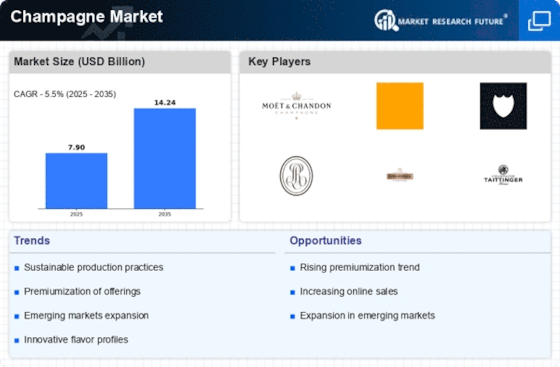
<p>The Champagne Market was valued at 7.902 USD Billion in 2024.</p>

What is the projected market valuation for the Champagne Market in 2035?

<p>The Champagne Market is projected to reach a valuation of 14.24 USD Billion by 2035.</p>

What is the expected CAGR for the Champagne Market during the forecast period 2025 - 2035?

<p>The expected CAGR for the Champagne Market during the forecast period 2025 - 2035 is 5.5%.</p>

Which segments are included in the Champagne Market analysis?

<p>The Champagne Market analysis includes segments such as Type, Sales Channel, Occasion, and Flavor Profile.</p>

How did Non-Vintage Champagne perform in terms of market valuation from 2024 to 2035?

<p>Non-Vintage Champagne is expected to grow from 4.5 USD Billion in 2024 to 8.1 USD Billion by 2035.</p>

What are the sales channels for Champagne and their projected growth?

Sales channels for Champagne include Online Retail, Supermarkets, Specialty Stores, and Duty-Free Shops, with Supermarkets projected to grow from 3.0 USD Billion to 6.0 USD Billion by 2035.

What occasions drive the demand for Champagne?

Key occasions driving Champagne demand include Celebrations, Weddings, Corporate Events, and Gifts, with Celebrations expected to increase from 3.5 USD Billion to 6.5 USD Billion by 2035.

Which flavor profiles are popular in the Champagne Market?

Popular flavor profiles in the Champagne Market include Brut, Demi-Sec, Extra Brut, and Rose, with Brut projected to grow from 3.5 USD Billion to 6.5 USD Billion by 2035.

Who are the key players in the Champagne Market?

Key players in the Champagne Market include Moet &amp; Chandon, Veuve Clicquot, Dom Perignon, and Louis Roederer.

What is the growth outlook for Prestige Cuvée Champagne from 2024 to 2035?

Prestige Cuvée Champagne is expected to grow from 0.902 USD Billion in 2024 to 1.84 USD Billion by 2035.

Market Summary

As per Market Research Future analysis, the Champagne Market Size Was Valued at USD 6,017.65 Million In 2024. The Champagne Market Industry Is Projected to grow from USD 6,144.02 Million in 2025 to USD 9,439.79 Million by 2035, Exhibiting A Compound Annual Growth Rate (CAGR) of 4.39% during the Forecast Period (2025 – 2035).

Key Market Trends & Highlights

The Champagne Market is undergoing rapid transformation driven by electrification, sustainability demands, and smart tech integration.

  • The frequency in consumption of champagne differs tremendously among all the consumers around the globe due to varying drinking patterns and the different drinking events. The biggest category that constitutes have champagne intake every two months or less. Consumers who drink champagne once a month which implies a relatively small but substantial group that drinks champagne more regularly associated with frequent parties or gatherings. People who drink champagne. The most frequent use of champagne is at home either alone or with family members, which makes last use of champagne by the consumer. This brings out that home consumption is the most prominent context implying that most consumers are more likely to consume champagne in cozy. In-meal consumption in restaurants contributes which shows that consumption in restaurants is also a significant occasion of champagne use, and it is usually related to celebration or fine dining.

Market Size & Forecast

2024 Market Size 6,017.65 (USD Million)
2035 Market Size 9,439.79 (USD Million)
CAGR (2025 - 2035) 4.39%

Major Players

Pernod Ricard, Vranken-Pommery monopole, Remy Cointreau group, Lanson-bcc group, Arvitis, Louis Roederer, Champagne Taittinger, Laurent-Perrier, Pol Roger, Lvmh moet hennessy louis Vuitton.

Market Trends

The Champagne Market is currently experiencing a dynamic evolution, characterized by shifting consumer preferences and an increasing inclination towards premium products. As consumers become more discerning, there is a noticeable trend towards high-quality, artisanal offerings that emphasize authenticity and craftsmanship. This shift is likely influenced by a growing appreciation for the heritage and tradition associated with Champagne Market production, which may lead to a greater demand for unique and limited-edition releases. Additionally, the market appears to be benefiting from a rise in social occasions and celebrations, where Champagne Market is often the beverage of choice, further driving its popularity and shaping evolving champagne marketing strategy approaches among leading brands.

Moreover, sustainability is emerging as a pivotal factor within the Champagne Market. Producers are increasingly adopting eco-friendly practices, which resonate with environmentally conscious consumers. This trend suggests a potential shift towards organic and biodynamic Champagne Market, as consumers seek products that align with their values. The interplay between tradition and innovation seems to be shaping the future of the Champagne Market, as brands strive to balance heritage with modern consumer expectations and adapt to the evolving champagne target market globally. Overall, the market is poised for continued growth, driven by evolving tastes and a commitment to sustainability.

Premiumization

The Champagne Market is witnessing a trend towards premiumization, where consumers are gravitating towards higher-quality products. This inclination reflects a desire for unique experiences and a willingness to invest in exceptional offerings that highlight craftsmanship and authenticity, influencing brand positioning and champagne marketing strategy across global markets.

Sustainability Initiatives

Sustainability is becoming increasingly important in the Champagne Market, with producers adopting eco-friendly practices. This trend indicates a growing consumer preference for organic and biodynamic options, aligning with a broader movement towards environmental responsibility within the champagne target market.

Social Celebrations

The Champagne Market is benefiting from a rise in social celebrations, as consumers seek to mark special occasions with Champagne Market. This trend suggests that the beverage is becoming synonymous with moments of joy and festivity, further enhancing its appeal.

Champagne Market Market Drivers

Growing demand for premium and luxury beverages

The increasing popularity of premium and luxury beverages is one of the key market forces that has contributed to the growth of the champagne market in the world to a great extent. With a rise in the disposable income of the consumers particularly in emerging economies and the developed areas, there is a gradual orientation towards consuming high quality and exclusive alcoholic drinks. This changing consumer preference happens to fall stereotypically with champagne because it is generally considered a luxury accompaniment to celebration and sophistication. The emerging desire towards high end and luxury products motivates people to consider products that would promise not just better taste, but also higher social status. This has brought about an immense number of developments in the demand of high-quality champagnes, not only in old style champagnes but also special editions and those with major identifiable brand legacy.

Increase in social gatherings and celebrations boosting champagne consumption

 The overall growth in social events and festivities is one of the major factors that have stimulated the expansion of the champagne market globally. The champagne is a wine that has been used in celebrations as it connotes happiness, prosperity and milestones. With the increase in the number and intensity of social gatherings like weddings, anniversaries, corporate parties and cultural festivities which are also on the increase across the world, the consumption of champagne has also enjoyed a similar growth. Increasing urbanization and the growing spending has had the effect of increasing the incidence of social interactions around the globe, especially in the developed and emerging economies where champagne is the popular drink when it comes to toasting and celebrating important occasions.

Market Segment Insights

By Type: Non-Vintage Champagne (Largest) vs. Prestige Cuvée (Fastest-Growing)

In the Champagne Market, Non-Vintage Champagne Market leads the segment by capturing the largest champagne market share, favored for its consistent taste and affordability. This segment appeals to a broad consumer base, contributing to its significant presence in both retail and hospitality sectors. Meanwhile, Vintage Champagne Market exhibits a niche market share but is renowned for its quality and exclusivity, making it a sought-after choice for special occasions despite its relatively smaller volume.

Champagne Types: Non-Vintage (Dominant) vs. Prestige Cuvée (Emerging)

Non-Vintage Champagne dominates the market due to its widespread accessibility and consistent quality, appealing to everyday consumers and celebratory occasions alike. In contrast, Prestige Cuvée represents an emerging segment characterized by high-quality production and exclusivity, targeting affluent consumers looking for rare and distinctive flavors. This shift toward premium offerings reflects a growing consumer trend favoring luxury experiences. While Non-Vintage Champagne remains the mainstream choice, the rising interest in craftsmanship and unique sourcing among enthusiasts positions Prestige Cuvée as an emerging leader, attracting a dedicated following willing to invest in a more premium product.

By Sales Channel: Online Retail (Largest) vs. Specialty Stores (Fastest-Growing)

In the Champagne Market, the distribution of sales channels reveals significant insights into consumer preferences. Online Retail has emerged as the largest segment, driven by the convenience of e-commerce and growing digital penetration in <a href="https://www.marketresearchfuture.com/reports/wine-market-1655" target="_blank" title="wine">wine</a> sales. This segment has captured a considerable share of the market as consumers increasingly shift towards online platforms for purchasing Champagne, especially during festive seasons. Conversely, Specialty Stores have been recognized as the fastest-growing segment within the Champagne market. Their growth can be attributed to the unique shopping experience they offer, coupled with curated selections that cater to the discerning tastes of Champagne enthusiasts. These stores often provide personalized service and expert knowledge, attracting customers who are seeking premium and artisanal options.

Online Retail (Dominant) vs. Duty-Free Shops (Emerging)

Online Retail dominates the Champagne sales channel primarily due to its expansive reach and flexibility, making it a preferred choice for consumers around the globe. It offers a wide selection at competitive prices, often coupled with promotions that enhance the buying experience. The accessibility of online platforms allows consumers to compare brands and read reviews, further bolstering its dominance. In contrast, Duty-Free Shops represent an emerging segment, appealing primarily to international travelers looking for premium Champagne at tax-free prices. Though not as widespread as online retail, Duty-Free Shops provide a unique opportunity for brands to reach tourists and create lifelong customers through exclusive offerings. The allure of purchasing high-quality Champagne while traveling is propelling this segment's growth.

By Occasion: Weddings (Largest) vs. Celebrations (Fastest-Growing)

In the Champagne Market, the occasion segment is predominantly driven by weddings, which hold the largest share. This category is deeply rooted in cultural and social traditions, solidifying its position as the most significant portion of the market. Following weddings, celebrations such as anniversaries, birthdays, and holidays are also notable players, contributing to the overall demand for Champagne during festive times. <a href="https://www.marketresearchfuture.com/reports/corporate-events-market-42126" target="_blank" title="corporate events">Corporate events</a> follow closely, as businesses frequently incorporate Champagne in their events to elevate status and celebration. Gifts, while essential, occupy a smaller, yet growing segment as individuals opt for Champagne as a thoughtful gesture for various occasions.

Weddings (Dominant) vs. Corporate Events (Emerging)

Weddings are the dominant force in the Champagne Market, accounting for a significant portion of sales as couples continue to celebrate their unions with this luxurious beverage. The memorable nature of weddings makes Champagne a staple, and its association with celebration adds to its enduring popularity. Corporate events represent an emerging market segment where businesses are increasingly recognizing the value of Champagne to enhance their gatherings. Companies often opt for Champagne to create a sense of sophistication and formality. This shift reflects a broader trend toward premium experiences, with corporate clients investing in high-quality Champagne to impress guests and clients alike.

By Flavor Profile: Brut (Largest) vs. Demi-Sec (Fastest-Growing)

In the Champagne market, flavor profiles significantly influence consumer preferences and buying patterns. Brut Champagne holds the largest market share, widely favored for its dry taste and versatility, appealing to a broad audience. In contrast, Demi-Sec is emerging rapidly due to a shift towards sweeter taste profiles, making it increasingly popular among consumers seeking a sweeter sip for celebrations or casual enjoyment.

Flavor Profiles: Brut (Dominant) vs. Demi-Sec (Emerging)

Brut Champagne is distinguished by its dryness, which makes it the dominant flavor profile in the market. Its widespread appeal is attributed to its crispness and balanced acidity, making it a favorite in various occasions, from formal events to casual gatherings. On the other hand, Demi-Sec, known for its sweetness, is gaining traction as an emerging flavor profile. It caters to a niche market that favors sweeter beverages and is often enjoyed with desserts or during festive celebrations. As tastes evolve, Demi-Sec's increasing popularity indicates a broader acceptance of diverse flavor preferences in the Champagne segment.

By Type: Non-Vintage (NV) Champagne (Largest) vs. Blanc de Noirs (Fastest-Growing)

Based on Type, the Champagne Market has been segmented into Non-Vintage (NV) Champagne, Vintage Champagne, Blanc de Blancs, Blanc de Noirs, Rose Champagne, Others. Non-Vintage Champagne represents around of global Champagne production, formed from a blend of still wines from multiple vintages. Blanc de Noirs Champagne uses only black grapes Pinot Noir and/or Pinot Meunier producing richer, more full-bodied styles with pronounced berry, stone fruit, or even toasted notes. Originally rare, Blanc de Noirs now commands a growing segment, appealing to consumers attracted by structure and complexity. Rose Champagne, made by blending still red Pinot Noir/Pinot Meunier with white base wine (or by saignee), is recognized for its vibrant color, berry fruit notes, and festive appeal.

Get more detailed insights about Champagne Market Research Report — Forecast till 2035

Regional Insights

North America: Increased Growth Engine

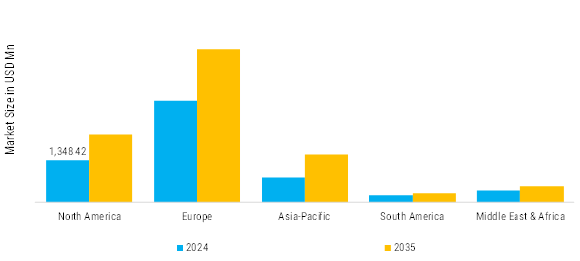
North America is a leading growth engine for the Champagne Market, driven by evolving consumer culture, premiumization, and the digital transformation of wine retail. The region’s Champagne consumption is shaped by its affluent population, rising disposable incomes, and a strong tradition of celebrating with sparkling wines. The Champagne is getting to be a popular first-choice luxury consumption by the North American consumers, it is also something they may consume daily to celebrate gatherings, gifts and other casual occasions. There is a widespread availability of Champagne because of expansion of on-trade channels such as bars, upmarket restaurants, hotels and strong off-trade retail.

Champagne Market Regional Insights

Europe: Emerging Cornerstone

Europe remains the cornerstone of the Champagne Market, benefitting from a deeply rooted cultural tradition of wine appreciation, celebrations, and luxury consumption. The region is characterized by mature markets with sophisticated consumers who value quality, heritage, and the experiential aspects of Champagne. Growth in Europe is supported by a combination of premiumization, expanding hospitality sectors, evolving consumer tastes toward lighter, drier, and vintage Champagnes, and rising tourism activities. Online retail penetration is also increasing, enhancing accessibility to niche and boutique Champagne producers.

 Asia-Pacific: Rapidly Growing Complex and Diverse

The Asia-Pacific region presents a complex and diverse market for Champagne, marked by rapid growth in some countries alongside emerging demands for luxury and premiumization. Increasing affluence, urbanization, and exposure to Western luxury lifestyles have stimulated demand for Champagne as a symbol of celebration and sophistication. The growth is also fueled by expanding hospitality sectors, e-commerce penetration, and rising interest in wine education. However, economic dynamics, cultural preferences, and competitive local sparkling wine alternatives lead to distinct consumption patterns across countries.

Middle East and Africa: Emerging Hospitality and Tourism

Middle East & Africa (MEA) Champagne market is defined by luxury-driven demand, dynamic growth in hospitality and tourism, and evolving consumer preferences for premium beverages. The market is supported by rapid urbanization, rising disposable incomes, and a cultural emphasis on milestone celebrations and social status. Hospitality and tourism sectors especially in iconic destinations like Dubai, Cape Town, and Marrakech are primary consumption drivers, where Champagne is an essential feature at luxury hotels, fine-dining restaurants, beach clubs, and exclusive events.

South America: Rapidly Develop Urbanization

South America's Champagne market is one of dynamic growth, shaped by rising urbanization, burgeoning middle classes, and greater exposure to global luxury trends. The region is increasingly seen as a promising frontier for Champagne exporters amid shifting global demand. Cultural attitudes that celebrate milestones weddings, birthdays, and business achievements with fine sparkling wine, alongside restaurant and hospitality sector growth, continually fuel interest. Challenges persist, including economic volatility and competition from local sparkling wines, but the direction is clear: premiumization and a hunger for authentic luxury experiences.

Key Players and Competitive Insights

Many global, regional, and local vendors characterize the Champagne Market. The market is highly competitive, with all the players competing to gain market share. Intense competition, rapid advances in technology, frequent changes in government policies, and environmental regulations are key factors that confront market growth. The vendors compete based on cost, product quality, reliability, and government regulations. Vendors must provide cost-efficient, high-quality products to survive and succeed in an intensely competitive market.
 
The major players in the market include Pernod Ricard, Vranken-Pommery monopole, Remy Cointreau group, Lanson-bcc group, Arvitis, Louis Roederer, Champagne Taittinger, Laurent-Perrier, Pol Roger, Lvmh moet hennessy louis Vuitton strategic market developments and decisions to improve operational effectiveness.

Key Companies in the Champagne Market include

Industry Developments

In 2024, Maison Pol Roger introduced its latest Champagne release — the Pol Roger Brut Vintage 2018. Crafted from the house’s traditional vintage blend, it features 60% Pinot Noir and 40% Chardonnay, sourced from 20 Grand and Premier Cru vineyards located in the Montagne de Reims and the Côte des Blancs. 

Future Outlook

Champagne Market Future Outlook

The Champagne Market is projected to grow at a 4.39 % CAGR from 2025 to 2035, driven by growing geriatric population and technological advancements.

New opportunities lie in:

  • <p>Growing markets in developing regions where champagne consumption is increasing</p>
  • <p>Expansion of e-commerce platforms facilitating direct-to consumer sales</p>
  • <p>Emergence of innovative flavors and product variations attracting new consumers.</p>
  • <p>Partnerships with high-end <a href="https://www.marketresearchfuture.com/reports/hospitality-market-66953" target="_blank" title="hospitality">hospitality</a> and event brands</p>

By 2035, the Champagne Market is expected to solidify its position as a leader in the global beverage industry.

Market Segmentation

Champagne Market Type Outlook

  • Non-Vintage Champagne
  • Vintage Champagne
  • Blanc De Blancs
  • Blanc De Noirs
  • Rose Champagne
  • Others

Champagne Market, By Price Range

  • Budget Champagne
  • Premium Champagne
  • Luxury Champagne

Champagne Market, By Packaging Type

  • Glass Bottles
  • Cans
  • Bag-in-Box

Champagne Market, By Production Method

  • Traditional Method
  • Charmat Method
  • Others

Champagne Market, By Distribution Channel

  • Supermarkets
  • Specialty Stores
  • Liquor Stores
  • HoReCa
  • Online

Report Scope

Market Size 2024 6,017.65 (USD Million)
Market Size 2025 6,144.02 (USD Million)
Market Size 2035 9,439.79 (USD Million)
Compound Annual Growth Rate (CAGR) 4.39% (2025 - 2035)
Report Coverage Revenue Forecast, Competitive Landscape, Growth Factors, and Trends
Base Year 2024
Market Forecast Period 2025 - 2035
Historical Data 2019 - 2023
Market Forecast Units USD Million
Key Companies Profiled Pernod Ricard, Vranken-Pommery monopole, Remy Cointreau group, Lanson-bcc group, Arvitis, Louis Roederer, Champagne Taittinger, Laurent-Perrier, Pol Roger, Lvmh moet hennessy louis Vuitton.
Segments Covered By Type, By Production, By Price Range, By Packaging, By Distribution Channel
Key Market Opportunities ·         Growing markets in developing regions where champagne consumption is increasing ·         Expansion of e-commerce platforms facilitating direct-to consumer sales ·         Emergence of innovative flavors and product variations attracting new consumers. ·         Partnerships with high-end hospitality and event brands
Key Market Dynamics ·      Growing Demand for Premium and Luxury Beverages ·      Increase In Social Gatherings and Celebrations Boosting ·      Champagne Consumption   ·      Rising Popularity of Champagne Cocktails Among Millennials        ·       Rising Tourism and Hospitality Sector Growth
Regional Covered North America, Europe, Asia Pacific, Latin America, Middle East & Africa.


FAQs

What is the current valuation of the Champagne Market as of 2024?

<p>The Champagne Market was valued at 7.902 USD Billion in 2024.</p>

What is the projected market valuation for the Champagne Market in 2035?

<p>The Champagne Market is projected to reach a valuation of 14.24 USD Billion by 2035.</p>

What is the expected CAGR for the Champagne Market during the forecast period 2025 - 2035?

<p>The expected CAGR for the Champagne Market during the forecast period 2025 - 2035 is 5.5%.</p>

Which segments are included in the Champagne Market analysis?

<p>The Champagne Market analysis includes segments such as Type, Sales Channel, Occasion, and Flavor Profile.</p>

How did Non-Vintage Champagne perform in terms of market valuation from 2024 to 2035?

<p>Non-Vintage Champagne is expected to grow from 4.5 USD Billion in 2024 to 8.1 USD Billion by 2035.</p>

What are the sales channels for Champagne and their projected growth?

Sales channels for Champagne include Online Retail, Supermarkets, Specialty Stores, and Duty-Free Shops, with Supermarkets projected to grow from 3.0 USD Billion to 6.0 USD Billion by 2035.

What occasions drive the demand for Champagne?

Key occasions driving Champagne demand include Celebrations, Weddings, Corporate Events, and Gifts, with Celebrations expected to increase from 3.5 USD Billion to 6.5 USD Billion by 2035.

Which flavor profiles are popular in the Champagne Market?

Popular flavor profiles in the Champagne Market include Brut, Demi-Sec, Extra Brut, and Rose, with Brut projected to grow from 3.5 USD Billion to 6.5 USD Billion by 2035.

Who are the key players in the Champagne Market?

Key players in the Champagne Market include Moet &amp; Chandon, Veuve Clicquot, Dom Perignon, and Louis Roederer.

What is the growth outlook for Prestige Cuvée Champagne from 2024 to 2035?

Prestige Cuvée Champagne is expected to grow from 0.902 USD Billion in 2024 to 1.84 USD Billion by 2035.

  1. SECTION I: EXECUTIVE SUMMARY AND KEY HIGHLIGHTS |
    1. EXECUTIVE SUMMARY | |
      1. Market Overview | |
      2. Key Findings | |
      3. Market Segmentation | |
      4. Competitive Landscape | |
      5. Challenges and Opportunities | |
      6. Future Outlook 2
  2. SECTION II: SCOPING, METHODOLOGY AND MARKET STRUCTURE |
    1. MARKET INTRODUCTION | |
      1. Definition | |
      2. Scope of the study | | |
    2. RESEARCH METHODOLOGY | |
      1. Overview | |
      2. Data Mining | |
      3. Secondary Research | |
      4. Primary Research | | |
      5. Forecasting Model | |
      6. Market Size Estimation | | |
      7. Data Triangulation | |
      8. Validation 3
  3. SECTION III: QUALITATIVE ANALYSIS |
    1. MARKET DYNAMICS | |
      1. Overview | |
      2. Drivers | |
      3. Restraints | |
      4. Opportunities |
    2. MARKET FACTOR ANALYSIS | |
      1. Value chain Analysis | |
      2. Porter's Five Forces Analysis | | |
      3. COVID-19 Impact Analysis | | |
  4. SECTION IV: QUANTITATIVE ANALYSIS |
    1. Food, Beverages & Nutrition, BY Type (USD Billion) | |
      1. Non-Vintage Champagne | |
      2. Vintage Champagne | |
      3. Prestige Cuvée |
    2. Food, Beverages & Nutrition, BY Sales Channel (USD Billion) | |
      1. Online Retail | |
      2. Supermarkets | |
      3. Specialty Stores | |
      4. Duty-Free Shops |
    3. Food, Beverages & Nutrition, BY Occasion (USD Billion) | |
      1. Weddings | |
      2. Corporate Events | |
      3. Celebrations | |
      4. Gifts |
    4. Food, Beverages & Nutrition, BY Flavor Profile (USD Billion) | |
      1. Brut | |
      2. Demi-Sec | |
      3. Extra Brut | |
      4. Rose |
    5. Food, Beverages & Nutrition, BY Region (USD Billion) | |
      1. North America | | |
      2. Europe | | |
      3. APAC | | |
      4. South America | | |
      5. MEA | | |
  5. SECTION V: COMPETITIVE ANALYSIS |
    1. Competitive Landscape | |
      1. Overview | |
      2. Competitive Analysis | |
      3. Market share Analysis | |
      4. Major Growth Strategy in the Food, Beverages & Nutrition | |
      5. Competitive Benchmarking | |
      6. Leading Players in Terms of Number of Developments in the Food, Beverages & Nutrition | |
      7. Key developments and growth strategies | | |
      8. Major Players Financial Matrix | | |
    2. Company Profiles | |
      1. Moet & Chandon (FR) | | |
      2. Veuve Clicquot (FR) | | |
      3. Dom Perignon (FR) | | |
      4. Louis Roederer (FR) | | |
      5. Piper-Heidsieck (FR) | | |
      6. Taittinger (FR) | | |
      7. Bollinger (FR) | | |
      8. Laurent-Perrier (FR) | | |
      9. Ruinart (FR) | | |
    3. Appendix | |
      1. References | |
      2. Related Reports 6 LIST OF FIGURES |
    4. MARKET SYNOPSIS |
    5. NORTH AMERICA MARKET ANALYSIS |
    6. US MARKET ANALYSIS BY TYPE |
    7. US MARKET ANALYSIS BY SALES CHANNEL |
    8. US MARKET ANALYSIS BY OCCASION |
    9. US MARKET ANALYSIS BY FLAVOR PROFILE |
    10. CANADA MARKET ANALYSIS BY TYPE |
    11. CANADA MARKET ANALYSIS BY SALES CHANNEL |
    12. CANADA MARKET ANALYSIS BY OCCASION |
    13. CANADA MARKET ANALYSIS BY FLAVOR PROFILE |
    14. EUROPE MARKET ANALYSIS |
    15. GERMANY MARKET ANALYSIS BY TYPE |
    16. GERMANY MARKET ANALYSIS BY SALES CHANNEL |
    17. GERMANY MARKET ANALYSIS BY OCCASION |
    18. GERMANY MARKET ANALYSIS BY FLAVOR PROFILE |
    19. UK MARKET ANALYSIS BY TYPE |
    20. UK MARKET ANALYSIS BY SALES CHANNEL |
    21. UK MARKET ANALYSIS BY OCCASION |
    22. UK MARKET ANALYSIS BY FLAVOR PROFILE |
    23. FRANCE MARKET ANALYSIS BY TYPE |
    24. FRANCE MARKET ANALYSIS BY SALES CHANNEL |
    25. FRANCE MARKET ANALYSIS BY OCCASION |
    26. FRANCE MARKET ANALYSIS BY FLAVOR PROFILE |
    27. RUSSIA MARKET ANALYSIS BY TYPE |
    28. RUSSIA MARKET ANALYSIS BY SALES CHANNEL |
    29. RUSSIA MARKET ANALYSIS BY OCCASION |
    30. RUSSIA MARKET ANALYSIS BY FLAVOR PROFILE |
    31. ITALY MARKET ANALYSIS BY TYPE |
    32. ITALY MARKET ANALYSIS BY SALES CHANNEL |
    33. ITALY MARKET ANALYSIS BY OCCASION |
    34. ITALY MARKET ANALYSIS BY FLAVOR PROFILE |
    35. SPAIN MARKET ANALYSIS BY TYPE |
    36. SPAIN MARKET ANALYSIS BY SALES CHANNEL |
    37. SPAIN MARKET ANALYSIS BY OCCASION |
    38. SPAIN MARKET ANALYSIS BY FLAVOR PROFILE |
    39. REST OF EUROPE MARKET ANALYSIS BY TYPE |
    40. REST OF EUROPE MARKET ANALYSIS BY SALES CHANNEL |
    41. REST OF EUROPE MARKET ANALYSIS BY OCCASION |
    42. REST OF EUROPE MARKET ANALYSIS BY FLAVOR PROFILE |
    43. APAC MARKET ANALYSIS |
    44. CHINA MARKET ANALYSIS BY TYPE |
    45. CHINA MARKET ANALYSIS BY SALES CHANNEL |
    46. CHINA MARKET ANALYSIS BY OCCASION |
    47. CHINA MARKET ANALYSIS BY FLAVOR PROFILE |
    48. INDIA MARKET ANALYSIS BY TYPE |
    49. INDIA MARKET ANALYSIS BY SALES CHANNEL |
    50. INDIA MARKET ANALYSIS BY OCCASION |
    51. INDIA MARKET ANALYSIS BY FLAVOR PROFILE |
    52. JAPAN MARKET ANALYSIS BY TYPE |
    53. JAPAN MARKET ANALYSIS BY SALES CHANNEL |
    54. JAPAN MARKET ANALYSIS BY OCCASION |
    55. JAPAN MARKET ANALYSIS BY FLAVOR PROFILE |
    56. SOUTH KOREA MARKET ANALYSIS BY TYPE |
    57. SOUTH KOREA MARKET ANALYSIS BY SALES CHANNEL |
    58. SOUTH KOREA MARKET ANALYSIS BY OCCASION |
    59. SOUTH KOREA MARKET ANALYSIS BY FLAVOR PROFILE |
    60. MALAYSIA MARKET ANALYSIS BY TYPE |
    61. MALAYSIA MARKET ANALYSIS BY SALES CHANNEL |
    62. MALAYSIA MARKET ANALYSIS BY OCCASION |
    63. MALAYSIA MARKET ANALYSIS BY FLAVOR PROFILE |
    64. THAILAND MARKET ANALYSIS BY TYPE |
    65. THAILAND MARKET ANALYSIS BY SALES CHANNEL |
    66. THAILAND MARKET ANALYSIS BY OCCASION |
    67. THAILAND MARKET ANALYSIS BY FLAVOR PROFILE |
    68. INDONESIA MARKET ANALYSIS BY TYPE |
    69. INDONESIA MARKET ANALYSIS BY SALES CHANNEL |
    70. INDONESIA MARKET ANALYSIS BY OCCASION |
    71. INDONESIA MARKET ANALYSIS BY FLAVOR PROFILE |
    72. REST OF APAC MARKET ANALYSIS BY TYPE |
    73. REST OF APAC MARKET ANALYSIS BY SALES CHANNEL |
    74. REST OF APAC MARKET ANALYSIS BY OCCASION |
    75. REST OF APAC MARKET ANALYSIS BY FLAVOR PROFILE |
    76. SOUTH AMERICA MARKET ANALYSIS |
    77. BRAZIL MARKET ANALYSIS BY TYPE |
    78. BRAZIL MARKET ANALYSIS BY SALES CHANNEL |
    79. BRAZIL MARKET ANALYSIS BY OCCASION |
    80. BRAZIL MARKET ANALYSIS BY FLAVOR PROFILE |
    81. MEXICO MARKET ANALYSIS BY TYPE |
    82. MEXICO MARKET ANALYSIS BY SALES CHANNEL |
    83. MEXICO MARKET ANALYSIS BY OCCASION |
    84. MEXICO MARKET ANALYSIS BY FLAVOR PROFILE |
    85. ARGENTINA MARKET ANALYSIS BY TYPE |
    86. ARGENTINA MARKET ANALYSIS BY SALES CHANNEL |
    87. ARGENTINA MARKET ANALYSIS BY OCCASION |
    88. ARGENTINA MARKET ANALYSIS BY FLAVOR PROFILE |
    89. REST OF SOUTH AMERICA MARKET ANALYSIS BY TYPE |
    90. REST OF SOUTH AMERICA MARKET ANALYSIS BY SALES CHANNEL |
    91. REST OF SOUTH AMERICA MARKET ANALYSIS BY OCCASION |
    92. REST OF SOUTH AMERICA MARKET ANALYSIS BY FLAVOR PROFILE |
    93. MEA MARKET ANALYSIS |
    94. GCC COUNTRIES MARKET ANALYSIS BY TYPE |
    95. GCC COUNTRIES MARKET ANALYSIS BY SALES CHANNEL |
    96. GCC COUNTRIES MARKET ANALYSIS BY OCCASION |
    97. GCC COUNTRIES MARKET ANALYSIS BY FLAVOR PROFILE |
    98. SOUTH AFRICA MARKET ANALYSIS BY TYPE |
    99. SOUTH AFRICA MARKET ANALYSIS BY SALES CHANNEL |
    100. SOUTH AFRICA MARKET ANALYSIS BY OCCASION |
    101. SOUTH AFRICA MARKET ANALYSIS BY FLAVOR PROFILE |
    102. REST OF MEA MARKET ANALYSIS BY TYPE |
    103. REST OF MEA MARKET ANALYSIS BY SALES CHANNEL |
    104. REST OF MEA MARKET ANALYSIS BY OCCASION |
    105. REST OF MEA MARKET ANALYSIS BY FLAVOR PROFILE |
    106. KEY BUYING CRITERIA OF FOOD, BEVERAGES & NUTRITION |
    107. RESEARCH PROCESS OF MRFR |
    108. DRO ANALYSIS OF FOOD, BEVERAGES & NUTRITION |
    109. DRIVERS IMPACT ANALYSIS: FOOD, BEVERAGES & NUTRITION |
    110. RESTRAINTS IMPACT ANALYSIS: FOOD, BEVERAGES & NUTRITION |
    111. SUPPLY / VALUE CHAIN: FOOD, BEVERAGES & NUTRITION |
    112. FOOD, BEVERAGES & NUTRITION, BY TYPE, 2024 (% SHARE) |
    113. FOOD, BEVERAGES & NUTRITION, BY TYPE, 2024 TO 2035 (USD Billion) |
    114. FOOD, BEVERAGES & NUTRITION, BY SALES CHANNEL, 2024 (% SHARE) |
    115. FOOD, BEVERAGES & NUTRITION, BY SALES CHANNEL, 2024 TO 2035 (USD Billion) |
    116. FOOD, BEVERAGES & NUTRITION, BY OCCASION, 2024 (% SHARE) |
    117. FOOD, BEVERAGES & NUTRITION, BY OCCASION, 2024 TO 2035 (USD Billion) |
    118. FOOD, BEVERAGES & NUTRITION, BY FLAVOR PROFILE, 2024 (% SHARE) |
    119. FOOD, BEVERAGES & NUTRITION, BY FLAVOR PROFILE, 2024 TO 2035 (USD Billion) |
    120. BENCHMARKING OF MAJOR COMPETITORS 7 LIST OF TABLES |
    121. LIST OF ASSUMPTIONS | |
      1. |
    122. North America MARKET SIZE ESTIMATES; FORECAST | |
      1. BY TYPE, 2025-2035 (USD Billion) | |
      2. BY SALES CHANNEL, 2025-2035 (USD Billion) | |
      3. BY OCCASION, 2025-2035 (USD Billion) | |
      4. BY FLAVOR PROFILE, 2025-2035 (USD Billion) |
    123. US MARKET SIZE ESTIMATES; FORECAST | |
      1. BY TYPE, 2025-2035 (USD Billion) | |
      2. BY SALES CHANNEL, 2025-2035 (USD Billion) | |
      3. BY OCCASION, 2025-2035 (USD Billion) | |
      4. BY FLAVOR PROFILE, 2025-2035 (USD Billion) |
    124. Canada MARKET SIZE ESTIMATES; FORECAST | |
      1. BY TYPE, 2025-2035 (USD Billion) | |
      2. BY SALES CHANNEL, 2025-2035 (USD Billion) | |
      3. BY OCCASION, 2025-2035 (USD Billion) | |
      4. BY FLAVOR PROFILE, 2025-2035 (USD Billion) |
    125. Europe MARKET SIZE ESTIMATES; FORECAST | |
      1. BY TYPE, 2025-2035 (USD Billion) | |
      2. BY SALES CHANNEL, 2025-2035 (USD Billion) | |
      3. BY OCCASION, 2025-2035 (USD Billion) | |
      4. BY FLAVOR PROFILE, 2025-2035 (USD Billion) |
    126. Germany MARKET SIZE ESTIMATES; FORECAST | |
      1. BY TYPE, 2025-2035 (USD Billion) | |
      2. BY SALES CHANNEL, 2025-2035 (USD Billion) | |
      3. BY OCCASION, 2025-2035 (USD Billion) | |
      4. BY FLAVOR PROFILE, 2025-2035 (USD Billion) |
    127. UK MARKET SIZE ESTIMATES; FORECAST | |
      1. BY TYPE, 2025-2035 (USD Billion) | |
      2. BY SALES CHANNEL, 2025-2035 (USD Billion) | |
      3. BY OCCASION, 2025-2035 (USD Billion) | |
      4. BY FLAVOR PROFILE, 2025-2035 (USD Billion) |
    128. France MARKET SIZE ESTIMATES; FORECAST | |
      1. BY TYPE, 2025-2035 (USD Billion) | |
      2. BY SALES CHANNEL, 2025-2035 (USD Billion) | |
      3. BY OCCASION, 2025-2035 (USD Billion) | |
      4. BY FLAVOR PROFILE, 2025-2035 (USD Billion) |
    129. Russia MARKET SIZE ESTIMATES; FORECAST | |
      1. BY TYPE, 2025-2035 (USD Billion) | |
      2. BY SALES CHANNEL, 2025-2035 (USD Billion) | |
      3. BY OCCASION, 2025-2035 (USD Billion) | |
      4. BY FLAVOR PROFILE, 2025-2035 (USD Billion) |
    130. Italy MARKET SIZE ESTIMATES; FORECAST | |
      1. BY TYPE, 2025-2035 (USD Billion) | |
      2. BY SALES CHANNEL, 2025-2035 (USD Billion) | |
      3. BY OCCASION, 2025-2035 (USD Billion) | |
      4. BY FLAVOR PROFILE, 2025-2035 (USD Billion) |
    131. Spain MARKET SIZE ESTIMATES; FORECAST | |
      1. BY TYPE, 2025-2035 (USD Billion) | |
      2. BY SALES CHANNEL, 2025-2035 (USD Billion) | |
      3. BY OCCASION, 2025-2035 (USD Billion) | |
      4. BY FLAVOR PROFILE, 2025-2035 (USD Billion) |
    132. Rest of Europe MARKET SIZE ESTIMATES; FORECAST | |
      1. BY TYPE, 2025-2035 (USD Billion) | |
      2. BY SALES CHANNEL, 2025-2035 (USD Billion) | |
      3. BY OCCASION, 2025-2035 (USD Billion) | |
      4. BY FLAVOR PROFILE, 2025-2035 (USD Billion) |
    133. APAC MARKET SIZE ESTIMATES; FORECAST | |
      1. BY TYPE, 2025-2035 (USD Billion) | |
      2. BY SALES CHANNEL, 2025-2035 (USD Billion) | |
      3. BY OCCASION, 2025-2035 (USD Billion) | |
      4. BY FLAVOR PROFILE, 2025-2035 (USD Billion) |
    134. China MARKET SIZE ESTIMATES; FORECAST | |
      1. BY TYPE, 2025-2035 (USD Billion) | |
      2. BY SALES CHANNEL, 2025-2035 (USD Billion) | |
      3. BY OCCASION, 2025-2035 (USD Billion) | |
      4. BY FLAVOR PROFILE, 2025-2035 (USD Billion) |
    135. India MARKET SIZE ESTIMATES; FORECAST | |
      1. BY TYPE, 2025-2035 (USD Billion) | |
      2. BY SALES CHANNEL, 2025-2035 (USD Billion) | |
      3. BY OCCASION, 2025-2035 (USD Billion) | |
      4. BY FLAVOR PROFILE, 2025-2035 (USD Billion) |
    136. Japan MARKET SIZE ESTIMATES; FORECAST | |
      1. BY TYPE, 2025-2035 (USD Billion) | |
      2. BY SALES CHANNEL, 2025-2035 (USD Billion) | |
      3. BY OCCASION, 2025-2035 (USD Billion) | |
      4. BY FLAVOR PROFILE, 2025-2035 (USD Billion) |
    137. South Korea MARKET SIZE ESTIMATES; FORECAST | |
      1. BY TYPE, 2025-2035 (USD Billion) | |
      2. BY SALES CHANNEL, 2025-2035 (USD Billion) | |
      3. BY OCCASION, 2025-2035 (USD Billion) | |
      4. BY FLAVOR PROFILE, 2025-2035 (USD Billion) |
    138. Malaysia MARKET SIZE ESTIMATES; FORECAST | |
      1. BY TYPE, 2025-2035 (USD Billion) | |
      2. BY SALES CHANNEL, 2025-2035 (USD Billion) | |
      3. BY OCCASION, 2025-2035 (USD Billion) | |
      4. BY FLAVOR PROFILE, 2025-2035 (USD Billion) |
    139. Thailand MARKET SIZE ESTIMATES; FORECAST | |
      1. BY TYPE, 2025-2035 (USD Billion) | |
      2. BY SALES CHANNEL, 2025-2035 (USD Billion) | |
      3. BY OCCASION, 2025-2035 (USD Billion) | |
      4. BY FLAVOR PROFILE, 2025-2035 (USD Billion) |
    140. Indonesia MARKET SIZE ESTIMATES; FORECAST | |
      1. BY TYPE, 2025-2035 (USD Billion) | |
      2. BY SALES CHANNEL, 2025-2035 (USD Billion) | |
      3. BY OCCASION, 2025-2035 (USD Billion) | |
      4. BY FLAVOR PROFILE, 2025-2035 (USD Billion) |
    141. Rest of APAC MARKET SIZE ESTIMATES; FORECAST | |
      1. BY TYPE, 2025-2035 (USD Billion) | |
      2. BY SALES CHANNEL, 2025-2035 (USD Billion) | |
      3. BY OCCASION, 2025-2035 (USD Billion) | |
      4. BY FLAVOR PROFILE, 2025-2035 (USD Billion) |
    142. South America MARKET SIZE ESTIMATES; FORECAST | |
      1. BY TYPE, 2025-2035 (USD Billion) | |
      2. BY SALES CHANNEL, 2025-2035 (USD Billion) | |
      3. BY OCCASION, 2025-2035 (USD Billion) | |
      4. BY FLAVOR PROFILE, 2025-2035 (USD Billion) |
    143. Brazil MARKET SIZE ESTIMATES; FORECAST | |
      1. BY TYPE, 2025-2035 (USD Billion) | |
      2. BY SALES CHANNEL, 2025-2035 (USD Billion) | |
      3. BY OCCASION, 2025-2035 (USD Billion) | |
      4. BY FLAVOR PROFILE, 2025-2035 (USD Billion) |
    144. Mexico MARKET SIZE ESTIMATES; FORECAST | |
      1. BY TYPE, 2025-2035 (USD Billion) | |
      2. BY SALES CHANNEL, 2025-2035 (USD Billion) | |
      3. BY OCCASION, 2025-2035 (USD Billion) | |
      4. BY FLAVOR PROFILE, 2025-2035 (USD Billion) |
    145. Argentina MARKET SIZE ESTIMATES; FORECAST | |
      1. BY TYPE, 2025-2035 (USD Billion) | |
      2. BY SALES CHANNEL, 2025-2035 (USD Billion) | |
      3. BY OCCASION, 2025-2035 (USD Billion) | |
      4. BY FLAVOR PROFILE, 2025-2035 (USD Billion) |
    146. Rest of South America MARKET SIZE ESTIMATES; FORECAST | |
      1. BY TYPE, 2025-2035 (USD Billion) | |
      2. BY SALES CHANNEL, 2025-2035 (USD Billion) | |
      3. BY OCCASION, 2025-2035 (USD Billion) | |
      4. BY FLAVOR PROFILE, 2025-2035 (USD Billion) |
    147. MEA MARKET SIZE ESTIMATES; FORECAST | |
      1. BY TYPE, 2025-2035 (USD Billion) | |
      2. BY SALES CHANNEL, 2025-2035 (USD Billion) | |
      3. BY OCCASION, 2025-2035 (USD Billion) | |
      4. BY FLAVOR PROFILE, 2025-2035 (USD Billion) |
    148. GCC Countries MARKET SIZE ESTIMATES; FORECAST | |
      1. BY TYPE, 2025-2035 (USD Billion) | |
      2. BY SALES CHANNEL, 2025-2035 (USD Billion) | |
      3. BY OCCASION, 2025-2035 (USD Billion) | |
      4. BY FLAVOR PROFILE, 2025-2035 (USD Billion) |
    149. South Africa MARKET SIZE ESTIMATES; FORECAST | |
      1. BY TYPE, 2025-2035 (USD Billion) | |
      2. BY SALES CHANNEL, 2025-2035 (USD Billion) | |
      3. BY OCCASION, 2025-2035 (USD Billion) | |
      4. BY FLAVOR PROFILE, 2025-2035 (USD Billion) |
    150. Rest of MEA MARKET SIZE ESTIMATES; FORECAST | |
      1. BY TYPE, 2025-2035 (USD Billion) | |
      2. BY SALES CHANNEL, 2025-2035 (USD Billion) | |
      3. BY OCCASION, 2025-2035 (USD Billion) | |
      4. BY FLAVOR PROFILE, 2025-2035 (USD Billion) |
    151. PRODUCT LAUNCH/PRODUCT DEVELOPMENT/APPROVAL | |
      1. |
    152. ACQUISITION/PARTNERSHIP | |

Food, Beverages & Nutrition Market Segmentation

Food, Beverages & Nutrition By Type (USD Billion, 2025-2035)

  • Non-Vintage Champagne
  • Vintage Champagne
  • Prestige Cuvée

Food, Beverages & Nutrition By Sales Channel (USD Billion, 2025-2035)

  • Online Retail
  • Supermarkets
  • Specialty Stores
  • Duty-Free Shops

Food, Beverages & Nutrition By Occasion (USD Billion, 2025-2035)

  • Weddings
  • Corporate Events
  • Celebrations
  • Gifts

Food, Beverages & Nutrition By Flavor Profile (USD Billion, 2025-2035)

  • Brut
  • Demi-Sec
  • Extra Brut
  • Rose
Infographic

Free Sample Request

Kindly complete the form below to receive a free sample of this Report

Get Free Sample

Customer Strories

Compare Licence

×
Features License Type
Single User Multiuser License Enterprise User
Price $4,950 $5,950 $7,250
Maximum User Access Limit 1 User Upto 10 Users Unrestricted Access Throughout the Organization
Free Customization
Direct Access to Analyst
Deliverable Format
Platform Access
Discount on Next Purchase 10% 15% 15%
Printable Versions
%>