Request Free Sample ×

Kindly complete the form below to receive a free sample of this Report

* Please use a valid business email

Leading companies partner with us for data-driven Insights

clients tt-cursor
Hero Background
English
Chinese
French
Japanese
Korean
German
Spanish

Cardiovascular Devices Market Trends

ID: MRFR/HC/10338-HCR
200 Pages
Rahul Gotadki
March 2026

Cardiovascular Devices Market Research Report: Size, Share, Trend Analysis By Device Type (Diagnostic Devices, Monitoring Devices, Therapeutic Devices, Surgical Devices), By Applications (Coronary Artery Disease, Heart Failure, Arrhythmia, Valvular Heart Disease), By End Users (Hospitals, Cardiac Centers, Ambulatory Surgical Centers, Home Healthcare), By Technology (Implantable Pacemakers, Cardiac Stents, Ablation Devices, Heart Valve Devices) and By Regional (North America, Europe, South America, Asia Pacific, Middle East and Africa) - Growth Outlook & Industry Forecast 2025 To 2035

Share:
Download PDF ×

We do not share your information with anyone. However, we may send you emails based on your report interest from time to time. You may contact us at any time to opt-out.

Cardiovascular Devices Market Infographic
Purchase Options

Market Trends

Key Emerging Trends in the Cardiovascular Devices Market

The market for cardiovascular devices is going through a revolutionary shift driven by growing emphasis on minimally invasive therapies, rising cardiovascular disease prevalence, and technology breakthroughs. The increasing popularity of wearable cardiac devices is one such development. Wearable technology, such as portable electrocardiogram (ECG) machines and heart rate-monitoring smartwatches, is enabling people to take charge of their cardiovascular health. This pattern allows for ongoing monitoring and early identification of cardiovascular problems, which is consistent with the larger movement in healthcare towards preventive care. Cardiovascular device innovation is mostly driven by less invasive treatments, with transcatheter interventions receiving particular attention. Cardiovascular disorders are increasingly being treated using catheter-based procedures such as transcatheter mitral valve repair, transcatheter aortic valve replacement (TAVR), and others. These minimally invasive methods provide better patient outcomes, shorter hospital stays, and faster recovery periods. The inclination towards transcatheter treatments signifies a dedication to improving cardiovascular care while reducing procedural invasiveness. In the market for cardiovascular devices, machine learning and artificial intelligence (AI) are crucial. The accuracy and effectiveness of cardiovascular diagnostics are improved by the incorporation of AI algorithms into imaging systems, diagnostic tools, and risk assessment methodologies. AI helps medical personnel make better decisions by helping to analyse medical pictures and forecast cardiovascular events. This pattern illustrates how advancements in technology may work in tandem with better clinical results in cardiovascular treatment. In the market for cardiovascular devices, remote patient monitoring is becoming more and more popular, helped along by the growth of telehealth services. Healthcare professionals are able to remotely monitor their patients' cardiovascular health thanks to devices like implanted cardiac monitors and remote monitoring systems for pacemakers and defibrillators. This development will help to make cardiovascular treatment more patient-centered and easily accessible by helping to manage chronic diseases and guarantee prompt interventions. The field of interventional cardiology is changing due to the increased need for bioresorbable stents and vascular scaffolds. Bioresorbable implants provide blood vessels with short-term structural support before progressively dissolving to remove the long-term presence of metallic implants. This approach helps promote better vessel repair and allays worries about permanent stents. The market's emphasis on bioresorbable technology is indicative of its dedication to improving patient outcomes and enhancing interventional cardiology. Cardiovascular device development is being impacted by personalised medicine, which emphasises customised treatment plans. Cardiovascular therapies can be customised to the individual needs of each patient through the use of genetic testing, biomarker analysis, and patient-specific risk assessments. This movement recognises the value of tailored approaches in the treatment of cardiovascular illnesses and is consistent with the larger movement towards precision medicine. With the use of digital health technology, telecardiology is becoming more and more popular in the market for cardiovascular equipment. Platforms for telecardiology provide real-time patient monitoring, virtual diagnostics, and remote consultations for cardiac patients. The COVID-19 pandemic has expedited this trend, highlighting the value of telehealth technologies in maintaining ongoing cardiovascular care while reducing in-person interactions. The use of telecardiology is a reflection of how healthcare delivery is changing and how digital technologies are being used into cardiovascular services. Implantable cardioverter-defibrillators (ICDs), pacemakers, and devices for cardiac resynchronization treatment are among the implantable cardiac devices that are undergoing developments in the market. Subcutaneous ICDs and leadless pacemakers are two examples of innovations that increase patient comfort, lower problems, and improve device function. This pattern indicates a dedication to improving implanted technology in order to meet the changing requirements of patients with cardiovascular disease.


Author
Author Profile
Rahul Gotadki
Research Manager

He holds an experience of about 9+ years in Market Research and Business Consulting, working under the spectrum of Life Sciences and Healthcare domains. Rahul conceptualizes and implements a scalable business strategy and provides strategic leadership to the clients. His expertise lies in market estimation, competitive intelligence, pipeline analysis, customer assessment, etc.

Leave a Comment

FAQs

What is the projected market valuation of the Cardiovascular Devices Market by 2035?

The market is projected to reach a valuation of 115.01 USD Billion by 2035.

What was the market valuation of the market in 2024?

In 2024, the market valuation of the market was 56.93 USD Billion.

What is the expected CAGR for the market during the forecast period 2025 - 2035?

The expected CAGR for the market during the forecast period 2025 - 2035 is 6.6%.

Which segment of the market had the highest valuation in 2024?

In 2024, the Therapeutic Devices segment had the highest valuation at 20.0 USD Billion.

What are the key applications driving growth in the Cardiovascular Devices Market?

<p>Key applications driving growth include Coronary Artery Disease, Heart Failure, Arrhythmia, and Valvular Heart Disease.</p>

Which companies are considered key players in the Cardiovascular Devices Market?

Key players in the Cardiovascular Devices Market include Medtronic, Abbott Laboratories, Boston Scientific, and Johnson &amp; Johnson.

What is the projected valuation for the Monitoring Devices segment by 2035?

<p>The Monitoring Devices segment is projected to reach a valuation of 24.0 USD Billion by 2035.</p>

How does the market for Surgical Devices compare to other segments in 2024?

<p>In 2024, the Surgical Devices segment was valued at 16.93 USD Billion, indicating robust demand compared to other segments.</p>

What is the expected growth for the Home Healthcare segment by 2035?

<p>The Home Healthcare segment is expected to grow to a valuation of 20.01 USD Billion by 2035.</p>

Which technology segment is anticipated to see the most growth in the Cardiovascular Devices Market?

<p>The Heart Valve Devices segment is anticipated to see substantial growth, projected to reach 41.01 USD Billion by 2035.</p>

Market Summary

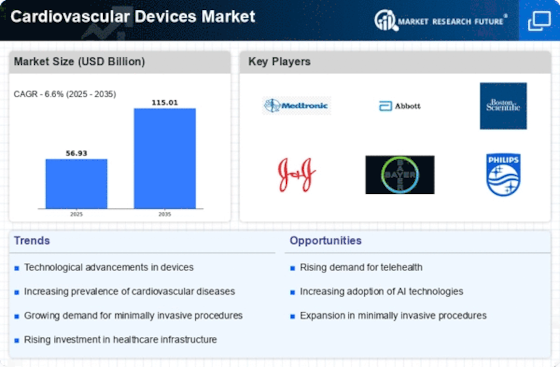
According to Market Research Future analysis, the Cardiovascular Devices Market size was valued at USD 56.93 Billion in 2024. The market is projected to grow from USD 60.68 Billion in 2025 to USD 115.01 Billion by 2035, exhibiting a CAGR of 6% during the forecast period 2025-2035. North America led the market with over 40% share, generating around USD 22.8 billion in revenue.
 
Rising global cardiovascular disease burden, combined with increasing demand for minimally invasive procedures and advanced diagnostic technologies, is driving strong adoption of cardiovascular devices. Aging populations and lifestyle-related risk factors further accelerate need for early detection, treatment, and continuous cardiac monitoring solutions.
 
According to the WHO, cardiovascular diseases cause an estimated 17.9 million deaths annually, representing 32% of all global deaths, making them the leading cause of mortality worldwide. The CDC reports that about 1 in every 5 deaths in the United States is due to heart disease, reinforcing strong demand for advanced cardiovascular devices globally.

Key Market Trends & Highlights

The Cardiovascular Devices Market is poised for substantial growth driven by technological advancements and increasing healthcare demands.

  • North America captured over 40% revenue share in 2024, supported by advanced healthcare infrastructure and high disease burden. Europe cardiovascular devices market valued USD 17.08 billion in 2024, holding approximately 30% global market share. Diagnostic devices led with 41.5% share in 2024, driven by increasing demand for early cardiovascular disease detection. Monitoring devices fastest growing due to remote care adoption, supporting continuous cardiovascular patient management globally.

Market Size & Forecast

2024 Market Size 56.93 (USD Billion)
2035 Market Size 115.01 (USD Billion)
CAGR (2025 - 2035) 6.6%
Largest Regional Market Share in 2024 North America

Major Players

Companies such as <a href="medtronic.com/en-us/healthcare-professionals/products/cardiovascular.html">Medtronic </a>(US), Abbott Laboratories (US), Boston Scientific (US), <a href="https://thenext.jnjmedtech.com/healthcare-area/cardiovascular">Johnson &amp; Johnson</a> (US), Bayer AG (DE), Philips (NL), Terumo Corporation (JP), Edwards Lifesciences (US), Stryker Corporation (US) are some of the major participants in the global market.

Market Trends

The Cardiovascular Devices Market is currently experiencing a dynamic evolution, driven by advancements in technology and an increasing prevalence of cardiovascular diseases. Innovations in cardiac medical devices and cardiovascular medical devices  enhancing patient outcomes and expanding treatment options. The integration of digital health solutions, such as remote monitoring and telemedicine, is also reshaping the landscape, allowing for more personalized care and improved patient engagement.

Furthermore, the growing emphasis on preventive healthcare is prompting a shift towards early diagnosis and intervention, which may lead to a higher demand for cardiovascular devices. In addition, regulatory bodies are adapting to the rapid pace of innovation, streamlining approval processes for new devices. This responsiveness could foster a more competitive environment, encouraging cardiac devices companies and cardiovascular medical device companies to invest in research and development.

As the market continues to expand, collaboration between technology firms and healthcare providers appears to be crucial for driving further advancements. Overall, the market is poised for substantial growth, with a focus on enhancing patient care and outcomes through innovative solutions.

Technological Advancements

The market is witnessing a surge in technological innovations, particularly in minimally invasive procedures. Advancements in cardiac medical devices and cardiovascular medical devicesare likely to enhance surgical precision and reduce recovery times, thereby improving patient experiences.

Cardiovascular device innovation is strongly supported by the global burden of noncommunicable diseases, where WHO reports 17.9 million annual deaths from cardiovascular diseases. Increasing adoption of minimally invasive technologies is driven by the need to reduce hospital mortality and improve recovery outcomes across high-risk patient populations worldwide.

Integration of Digital Health

The incorporation of digital health technologies into cardiovascular care is becoming increasingly prevalent. Remote monitoring and telehealth services may facilitate better patient management and adherence to treatment protocols.

Digital health adoption is expanding as WHO highlights that hypertension affects 1.28 billion adults aged 30–79 globally, with nearly half unaware of their condition. Remote monitoring technologies support early detection and continuous management, improving adherence and reducing complications in cardiovascular patients.

Focus on Preventive Care

There is a growing trend towards preventive healthcare within the market. This shift emphasizes early detection and intervention, potentially leading to increased demand for diagnostic devices and monitoring solutions.

Preventive cardiovascular care is gaining importance as WHO data shows over 17.9 million deaths annually from CVDs, many of which are preventable through early intervention. Lifestyle risk factors such as hypertension, smoking, and obesity significantly contribute to disease prevalence, supporting demand for diagnostic and monitoring devices.

Cardiovascular Devices Market Market Drivers

Increasing Healthcare Expenditure

The rise in healthcare expenditure across various regions is significantly influencing the Cardiovascular Devices Market. Governments and private sectors are allocating more resources to healthcare, driven by the need to improve patient outcomes and reduce the economic burden of cardiovascular diseases. In many countries, healthcare spending is projected to grow at an annual rate of 5% or more, facilitating investments in advanced medical technologies.
 
This financial commitment enables healthcare providers to acquire state-of-the-art cardiovascular devices, thereby enhancing treatment capabilities. Additionally, the growing emphasis on value-based care is prompting healthcare systems to adopt innovative solutions that improve efficiency and patient satisfaction. As a result, the market is likely to benefit from this upward trend in healthcare investment.

Technological Innovations in Device Design

Technological advancements play a crucial role in shaping the Cardiovascular Devices Market. Innovations such as minimally invasive surgical techniques, advanced imaging technologies, and the integration of artificial intelligence are revolutionizing the design and functionality of cardiovascular devices. For instance, the introduction of bioresorbable stents has transformed treatment protocols, offering patients safer and more effective options.
 
Moreover, the market is witnessing a surge in the development of wearable devices that monitor cardiovascular health in real-time, enhancing patient engagement and outcomes. As these technologies continue to evolve, they are expected to drive market growth, with projections indicating a compound annual growth rate of over 7% in the coming years. This trend underscores the importance of continuous research and development in the market.

Rising Prevalence of Cardiovascular Diseases

The increasing incidence of cardiovascular diseases is a primary driver for the Cardiovascular Devices Market. According to recent statistics, cardiovascular diseases account for a substantial portion of global mortality rates, with estimates suggesting that they are responsible for nearly 31% of all deaths. This alarming trend necessitates the development and deployment of advanced cardiovascular devices, including stents, pacemakers, and implantable defibrillators.
 
As healthcare systems strive to address this growing burden, investments in innovative technologies are likely to surge, thereby propelling the market forward. Furthermore, the aging population, which is more susceptible to heart-related ailments, further exacerbates the demand for effective cardiovascular solutions. Consequently, the market is poised for significant growth as stakeholders respond to these pressing health challenges.

Regulatory Support and Reimbursement Policies

Regulatory support and favorable reimbursement policies are essential factors driving the Cardiovascular Devices Market. Governments and regulatory bodies are increasingly recognizing the importance of cardiovascular health, leading to streamlined approval processes for innovative devices. This regulatory environment encourages manufacturers to invest in research and development, resulting in a wider array of advanced cardiovascular solutions.
 
Additionally, favorable reimbursement policies are incentivizing healthcare providers to adopt new technologies, as they can recover costs associated with the use of these devices. As reimbursement frameworks evolve to support the integration of cutting-edge cardiovascular technologies, the market is likely to witness accelerated growth. This supportive landscape is crucial for the continued advancement of the market.

Rising Awareness and Education on Heart Health

The increasing awareness and education regarding heart health are pivotal drivers for the Cardiovascular Devices Market. Public health campaigns and initiatives aimed at promoting cardiovascular health have led to a more informed population, which is actively seeking preventive measures and treatment options. This heightened awareness is translating into greater demand for cardiovascular devices, as individuals recognize the importance of early detection and intervention.
 
Furthermore, educational programs targeting healthcare professionals are enhancing the understanding of the latest advancements in cardiovascular technology, thereby fostering a more informed approach to patient care. As awareness continues to grow, the market is expected to experience a corresponding increase in device adoption and utilization.

Market Segment Insights

By Type: Diagnostic Devices (Largest) vs. Monitoring Devices (Fastest-Growing)

The segment is primarily categorized into Diagnostic Devices, Monitoring Devices, Therapeutic Devices, and Surgical Devices, with Diagnostic Devices holding the largest Cardiovascular Devices Market share of 41.5%, driven mainly by the rising prevalence of cardiovascular diseases and the growing demand for accurate diagnosis. Additionally, Monitoring Devices are witnessing substantial growth, driven by the growing emphasis on <a title="remote patient monitoring" href="https://www.marketresearchfuture.com/reports/remote-patient-monitoring-market-10905" target="_blank" rel="noopener">remote patient monitoring</a> and the rise of telehealth services. This segment's robust performance showcases the shift towards proactive healthcare management.

Diagnostic Devices (Dominant) vs. Monitoring Devices (Emerging)

Diagnostic Devices such as echocardiograms, electrocardiograms (ECGs), and imaging technologies play a crucial role in the early detection of cardiovascular conditions and are essential tools in <a href="https://www.marketresearchfuture.com/reports/ai-in-medical-diagnostics-market-22072">AI in medical diagnostics</a>. Their dominance in the market is supported by technological advancements and ongoing innovations, making them pivotal in effective decision-making in patient management. In contrast, Monitoring Devices, which include wearable technology, digital stethoscopes, and remote monitors, represent an emerging segment that is rapidly gaining traction. This growth is fueled by the rising adoption of <a title="home healthcare" href="https://www.marketresearchfuture.com/reports/home-healthcare-market-2030" target="_blank" rel="noopener">home healthcare</a> devices and consumer interest in health monitoring solutions, indicating a strong shift toward integrating technology with everyday health management.

By Application: Coronary Artery Disease (Largest) vs. Heart Failure (Fastest-Growing)

The Application segment of the Cardiovascular Devices Market is primarily segmented into four key categories: Coronary Artery Disease, Heart Failure, Arrhythmia, and Valvular Heart Disease. Coronary Artery Disease remains the largest segment, benefiting from a high prevalence of coronary conditions among the aging population and increased awareness of heart health management. Heart Failure, while currently smaller in market share, is gaining traction as more advanced devices are developed to address this growing health concern. The overall market is characterized by a shift towards innovative technology and improved patient outcomes, making all four segments critical to the market's progression. Growth trends in the market indicate a substantial rise in demand for treatment options that cater to Heart Failure and Arrhythmia. The increasing incidence of these conditions, driven by lifestyle changes and an aging demographic, fuels the necessity for advanced devices. Moreover, technological advancements, such as telemedicine and remote monitoring solutions, are transforming the traditional methodologies for patient management. This proactive approach is driving market expansion, particularly in the Heart Failure and Arrhythmia segments, where early intervention can lead to significantly improved prognoses.

Coronary Artery Disease (Dominant) vs. Arrhythmia (Emerging)

The Coronary Artery Disease segment is currently dominating the market share, driven by the high prevalence of related conditions and the essential need for effective treatments. It encompasses a range of devices, including angioplasty balloons, stents, and grafts that are fundamental in treating blockages in coronary arteries. The segment's robust growth is fueled by continuous innovations and increasing healthcare expenditure aimed at improving cardiovascular health outcomes. In contrast, the Arrhythmia segment is emerging rapidly, characterized by the introduction of advanced pacemakers, implantable cardioverter-defibrillators, and <a title="ablation devices" href="https://www.marketresearchfuture.com/reports/ablation-devices-market-11835" target="_blank" rel="noopener">ablation devices</a>. With rising awareness about the implications of irregular heartbeats and advancements in non-invasive techniques, this segment is poised for significant growth as it addresses both the immediate and long-term requirements of patients suffering from arrhythmias.

By End User: Hospitals (Largest) vs. Cardiac Centers (Fastest-Growing)

The market is significantly influenced by various end users, with hospitals accounting for the largest cardiovascular devices market share at 52.6%. Hospitals play a crucial role in providing comprehensive cardiovascular care, which in turn drives the demand for advanced devices. Cardiac centers have emerged as pivotal players, capturing a smaller yet rapidly growing portion of the market. Their specialized focus on heart health fuels their expansion and adoption of innovative cardiovascular technologies.

Hospitals (Dominant) vs. Cardiac Centers (Emerging)

Hospitals dominate the market share due to their expansive resources and capability to offer a wide range of services. They utilize advanced surgical and diagnostic devices, enhancing patient outcomes. In contrast, cardiac centers are emerging as significant players, focusing on specialized treatments and procedures. These centers appeal to patients seeking tailored cardiovascular solutions and are increasingly adopting cutting-edge technology. The growth of cardiac centers is propelled by rising cardiovascular diseases and the demand for specialized care, establishing them as key contributors to market dynamics.

By Technology: Implantable Pacemakers (Largest) vs. Cardiac Stents (Fastest-Growing)

The technology segment is led by implantable pacemakers, which hold the largest Cardiovascular Devices Market share at 33.9%. These devices play a crucial role in managing arrhythmias, thus enhancing quality of life for patients with heart rhythm disorders. Following closely are cardiac stents, which are increasingly becoming a preferred option for coronary artery disease treatment due to their minimally invasive nature and effectiveness. Together, these devices shape the technological landscape of cardiovascular care.

Technology: Implantable Pacemakers (Dominant) vs. Cardiac Stents (Emerging)

In the Cardiovascular Devices Market, implantable pacemakers are considered dominant due to their established role in treating heart rhythm disorders and their innovation in battery life and leadless designs. Conversely, cardiac stents are emerging as a significant growth area, driven by advancements in bioresorbable stents, which offer improved patient outcomes and reduced complications. The transition from bare-metal to drug-eluting stents has also revolutionized treatment efficacy, making stents a critical focus for cardiovascular technology. This scenario suggests a robust future for both segments as they continue to evolve in response to patient needs and technological advancements.

Get more detailed insights about Cardiovascular Devices Market Research Report—Global Forecast till 2035

Regional Insights

North America : Market Leader in Innovation

North America dominated the global Cardiovascular Devices Market in 2024, reaching a market size of USD 22.8 billion. The region benefits from advanced healthcare infrastructure, high prevalence of cardiovascular diseases, and significant investments in R&D. Regulatory support from agencies like the FDA further accelerates market growth, fostering innovation and ensuring safety standards. The increasing aging population and rising awareness about heart health are also key demand drivers. 

The United States is the leading country in this region, with major players like Medtronic, Abbott Laboratories, and Boston Scientific dominating the market. The competitive landscape is characterized by continuous innovation and strategic partnerships among key players. Canada also contributes significantly, focusing on improving healthcare access and technology adoption. The presence of established companies ensures a robust supply chain and enhances market dynamics.

CDC reports about 20.1 million adults aged 20+ in the U.S. have coronary artery disease, with heart disease causing 1 in every 5 deaths annually (~695,000 deaths). This high disease burden drives strong adoption of cardiovascular devices for diagnosis, intervention, and continuous monitoring.

Europe : Emerging Regulatory Frameworks

Europe is the second-largest market for cardiovascular devices, accounting for approximately 30% of the global market share. The region is witnessing growth due to increasing cardiovascular disease prevalence, technological advancements, and supportive regulatory frameworks. The European Medicines Agency (EMA) plays a crucial role in ensuring the safety and efficacy of medical devices, which boosts consumer confidence and market growth. Additionally, rising healthcare expenditures and an aging population are significant demand drivers.

Leading countries in Europe include Germany, France, and the UK, with a strong presence of key players like Bayer AG and Philips. The competitive landscape is marked by innovation and collaboration among manufacturers, healthcare providers, and research institutions. The market is also influenced by stringent regulations that ensure high-quality standards, fostering a culture of safety and efficacy in cardiovascular treatments.

WHO European Region data shows cardiovascular diseases cause approximately 3.9 million deaths annually, representing ~45% of all deaths in Europe. This significant disease burden strongly supports demand for advanced cardiovascular devices and minimally invasive treatment technologies across hospitals and cardiac centers.

Asia-Pacific : Rapidly Growing Market Potential

Asia-Pacific is an emerging powerhouse in the market, holding approximately 20% of the global share. The region is experiencing rapid growth driven by increasing healthcare investments, rising awareness of cardiovascular diseases, and a growing middle-class population. Countries like China and India are witnessing significant demand for advanced medical technologies, supported by government initiatives aimed at improving healthcare access and quality. The regulatory environment is evolving, which is expected to further enhance market growth.

China is the largest market in the region, followed by Japan and India. The competitive landscape is characterized by both local and international players, including Terumo Corporation and Edwards Lifesciences. The presence of a large patient population and increasing healthcare expenditure are key factors driving competition. Collaborations between manufacturers and healthcare providers are also on the rise, enhancing the availability of innovative cardiovascular solutions.

Middle East and Africa : Untapped Market Opportunities

The Middle East and Africa region is gradually emerging in the market, holding approximately 10% of the global share. The growth is primarily driven by increasing healthcare investments, rising prevalence of cardiovascular diseases, and improving healthcare infrastructure. Governments are focusing on enhancing healthcare access and quality, which is expected to catalyze market growth. Regulatory bodies are also becoming more active in establishing guidelines that ensure the safety and efficacy of medical devices.

Leading countries in this region include South Africa, Saudi Arabia, and the UAE, where there is a growing presence of both local and international players. The competitive landscape is evolving, with companies increasingly investing in R&D to introduce innovative solutions. The market is characterized by a mix of established firms and new entrants, creating a dynamic environment that is poised for growth as healthcare systems continue to develop.

Key Players and Competitive Insights

The Cardiovascular Devices Market is currently characterized by a dynamic competitive landscape, driven by technological advancements, increasing prevalence of cardiovascular diseases, and a growing emphasis on patient-centric solutions. Major players such as Medtronic (US), Abbott Laboratories (US), and Boston Scientific (US) are at the forefront, each adopting distinct strategies to enhance their market positioning. Medtronic (US) focuses on innovation through its robust R&D initiatives, while Abbott Laboratories (US) emphasizes strategic partnerships to expand its product offerings.
 
Boston Scientific (US) is actively pursuing mergers and acquisitions to bolster its portfolio, indicating a trend towards consolidation in the market. Collectively, these strategies contribute to a competitive environment that is both collaborative and aggressive, as companies seek to leverage their strengths to capture market share. Key business tactics within the market include localizing manufacturing and optimizing supply chains to enhance efficiency and reduce costs. The market structure appears moderately fragmented, with several key players holding substantial shares, yet leaving room for smaller companies to innovate and compete. This fragmentation is indicative of a landscape where collaboration and strategic alliances are essential for success, as companies navigate the complexities of regulatory environments and technological advancements.
 
In August 2025, Medtronic (US) announced the launch of its next-generation cardiac monitoring device, which integrates advanced AI algorithms to enhance patient monitoring capabilities. This strategic move not only reinforces Medtronic's commitment to innovation but also positions the company to capitalize on the growing demand for remote patient monitoring solutions. The integration of AI is likely to improve patient outcomes and streamline healthcare delivery, thereby enhancing Medtronic's competitive edge. In September 2025, Abbott Laboratories (US) entered into a partnership with a leading telehealth provider to expand its remote monitoring services for cardiovascular patients. This collaboration is strategically significant as it aligns with the increasing trend towards digital health solutions, allowing Abbott to enhance its service offerings and improve patient engagement. By integrating telehealth capabilities, Abbott is likely to strengthen its market position and respond effectively to evolving consumer preferences.
 
In July 2025, Boston Scientific (US) completed the acquisition of a promising startup specializing in minimally invasive cardiovascular technologies. This acquisition is indicative of Boston Scientific's strategy to diversify its product portfolio and enhance its technological capabilities. By integrating innovative solutions from the startup, Boston Scientific may accelerate its growth trajectory and solidify its standing in the competitive landscape. As of October 2025, the market is witnessing trends such as digitalization, sustainability, and the integration of artificial intelligence.
 
These trends are reshaping the competitive dynamics, as companies increasingly focus on developing innovative solutions that prioritize patient outcomes and operational efficiency. Strategic alliances are becoming more prevalent, enabling companies to pool resources and expertise to navigate the complexities of the market. Looking ahead, competitive differentiation is likely to evolve from traditional price-based competition towards a focus on innovation, technological advancements, and supply chain reliability, as companies strive to meet the demands of a rapidly changing healthcare environment.

Key Companies in the Cardiovascular Devices Market include

Industry Developments

Recent news from the Cardiovascular Devices Market shows that major companies like Medtronic, Abbott, and Boston Scientific are doing well and growing. AngioDynamics said in March 2023 that it would start using its new endovenous laser therapy to treat varicose veins. This would help the company grow in the peripheral vascular segment. Edwards Lifesciences has also kept growing its transcatheter heart valve technologies in response to the growing need for minimally invasive procedures.

Several clinical trials and approvals have taken place throughout 2023. There have been a lot of big mergers and acquisitions in the market. For example, in February 2022, Boston Scientific bought Baylis Medical to make its structural heart and electrophysiology portfolio stronger. In addition, Medtronic has been actively investing in digital and robotic surgical platforms, such as its purchase of Mazor Robotics in 2018, which was mainly for spinal applications.

This shows that the company is more interested in surgical automation in general than in directly integrating it into cardiovascular procedures. In 2023, companies like Johnson & Johnson (through Biosense Webster) said that their electrophysiology device segment was still growing.

This was because there was more demand around the world for advanced heart solutions and more people were getting heart diseases. The overall mood in the market is still good, as trends in innovation, minimally invasive technologies, and consolidation continue to shape the future of cardiovascular care around the world.

Future Outlook

Cardiovascular Devices Market Future Outlook

The Cardiovascular Devices Market size is projected to reach USD 115.01 Billion by 2035, growing at a CAGR of 6.6%, driven by technological advancements, increasing prevalence of cardiovascular diseases, and rising healthcare expenditures.

New opportunities lie in:

  • <p>Development of AI-driven diagnostic tools for early detection. Expansion of <a href="https://www.marketresearchfuture.com/reports/telehealth-market-900">telehealth</a> services for remote patient monitoring. Investment in biodegradable stents to enhance patient outcomes.</p>

By 2035, the market is expected to be robust, driven by innovation and increasing demand.

Market Segmentation

Cardiovascular Devices Market Type Outlook

  • Diagnostic Devices
  • Monitoring Devices
  • Therapeutic Devices
  • Surgical Devices

Cardiovascular Devices Market End User Outlook

  • Hospitals
  • Cardiac Centers
  • Ambulatory Surgical Centers
  • Home Healthcare

Cardiovascular Devices Market Technology Outlook

  • Implantable Pacemakers
  • Cardiac Stents
  • Ablation Devices
  • Heart Valve Devices

Cardiovascular Devices Market Application Outlook

  • Coronary Artery Disease
  • Heart Failure
  • Arrhythmia
  • Valvular Heart Disease

Report Scope

MARKET SIZE 2024 56.93(USD Billion)
MARKET SIZE 2025 60.68(USD Billion)
MARKET SIZE 2035 115.01(USD Billion)
COMPOUND ANNUAL GROWTH RATE (CAGR) 6.6% (2025 - 2035)
REPORT COVERAGE Revenue Forecast, Competitive Landscape, Growth Factors, and Trends
BASE YEAR 2024
Market Forecast Period 2025 - 2035
Historical Data 2019 - 2024
Market Forecast Units USD Billion
Key Companies Profiled Medtronic (US), Abbott Laboratories (US), Boston Scientific (US), Johnson & Johnson (US), Bayer AG (DE), Philips (NL), Terumo Corporation (JP), Edwards Lifesciences (US), Stryker Corporation (US)
Segments Covered Device Type, Applications, End Users, Technology, Regional
Key Market Opportunities Integration of artificial intelligence in cardiovascular devices enhances diagnostics and patient monitoring capabilities.
Key Market Dynamics Technological advancements and regulatory changes drive innovation and competition in the market.
Countries Covered North America, Europe, APAC, South America, MEA

FAQs

What is the projected market valuation of the Cardiovascular Devices Market by 2035?

The market is projected to reach a valuation of 115.01 USD Billion by 2035.

What was the market valuation of the market in 2024?

In 2024, the market valuation of the market was 56.93 USD Billion.

What is the expected CAGR for the market during the forecast period 2025 - 2035?

The expected CAGR for the market during the forecast period 2025 - 2035 is 6.6%.

Which segment of the market had the highest valuation in 2024?

In 2024, the Therapeutic Devices segment had the highest valuation at 20.0 USD Billion.

What are the key applications driving growth in the Cardiovascular Devices Market?

<p>Key applications driving growth include Coronary Artery Disease, Heart Failure, Arrhythmia, and Valvular Heart Disease.</p>

Which companies are considered key players in the Cardiovascular Devices Market?

Key players in the Cardiovascular Devices Market include Medtronic, Abbott Laboratories, Boston Scientific, and Johnson &amp; Johnson.

What is the projected valuation for the Monitoring Devices segment by 2035?

<p>The Monitoring Devices segment is projected to reach a valuation of 24.0 USD Billion by 2035.</p>

How does the market for Surgical Devices compare to other segments in 2024?

<p>In 2024, the Surgical Devices segment was valued at 16.93 USD Billion, indicating robust demand compared to other segments.</p>

What is the expected growth for the Home Healthcare segment by 2035?

<p>The Home Healthcare segment is expected to grow to a valuation of 20.01 USD Billion by 2035.</p>

Which technology segment is anticipated to see the most growth in the Cardiovascular Devices Market?

<p>The Heart Valve Devices segment is anticipated to see substantial growth, projected to reach 41.01 USD Billion by 2035.</p>

  1. SECTION I: EXECUTIVE SUMMARY AND KEY HIGHLIGHTS |
    1. EXECUTIVE SUMMARY | |
      1. Market Overview | |
      2. Key Findings | |
      3. Market Segmentation | |
      4. Competitive Landscape | |
      5. Challenges and Opportunities | |
      6. Future Outlook 2
  2. SECTION II: SCOPING, METHODOLOGY AND MARKET STRUCTURE |
    1. MARKET INTRODUCTION | |
      1. Definition | |
      2. Scope of the study | | |
    2. RESEARCH METHODOLOGY | |
      1. Overview | |
      2. Data Mining | |
      3. Secondary Research | |
      4. Primary Research | | |
      5. Forecasting Model | |
      6. Market Size Estimation | | |
      7. Data Triangulation | |
      8. Validation 3
  3. SECTION III: QUALITATIVE ANALYSIS |
    1. MARKET DYNAMICS | |
      1. Overview | |
      2. Drivers | |
      3. Restraints | |
      4. Opportunities |
    2. MARKET FACTOR ANALYSIS | |
      1. Value chain Analysis | |
      2. Porter's Five Forces Analysis | | |
      3. COVID-19 Impact Analysis | | |
  4. SECTION IV: QUANTITATIVE ANALYSIS |
    1. Healthcare, BY Type (USD Billion) | |
      1. Diagnostic Devices | |
      2. Monitoring Devices | |
      3. Therapeutic Devices | |
      4. Surgical Devices |
    2. Healthcare, BY Application (USD Billion) | |
      1. Coronary Artery Disease | |
      2. Heart Failure | |
      3. Arrhythmia | |
      4. Valvular Heart Disease |
    3. Healthcare, BY End User (USD Billion) | |
      1. Hospitals | |
      2. Cardiac Centers | |
      3. Ambulatory Surgical Centers | |
      4. Home Healthcare |
    4. Healthcare, BY Technology (USD Billion) | |
      1. Implantable Pacemakers | |
      2. Cardiac Stents | |
      3. Ablation Devices | |
      4. Heart Valve Devices |
    5. Healthcare, BY Region (USD Billion) | |
      1. North America | | |
      2. Europe | | |
      3. APAC | | |
      4. South America | | |
      5. MEA | | |
  5. SECTION V: COMPETITIVE ANALYSIS |
    1. Competitive Landscape | |
      1. Overview | |
      2. Competitive Analysis | |
      3. Market share Analysis | |
      4. Major Growth Strategy in the Healthcare | |
      5. Competitive Benchmarking | |
      6. Leading Players in Terms of Number of Developments in the Healthcare | |
      7. Key developments and growth strategies | | |
      8. Major Players Financial Matrix | | |
    2. Company Profiles | |
      1. Medtronic (US) | | |
      2. Abbott Laboratories (US) | | |
      3. Boston Scientific (US) | | |
      4. Johnson & Johnson (US) | | |
      5. Bayer AG (DE) | | |
      6. Philips (NL) | | |
      7. Terumo Corporation (JP) | | |
      8. Edwards Lifesciences (US) | | |
      9. Stryker Corporation (US) | | |
    3. Appendix | |
      1. References | |
      2. Related Reports 6 LIST OF FIGURES |
    4. MARKET SYNOPSIS |
    5. NORTH AMERICA MARKET ANALYSIS |
    6. US MARKET ANALYSIS BY TYPE |
    7. US MARKET ANALYSIS BY APPLICATION |
    8. US MARKET ANALYSIS BY END USER |
    9. US MARKET ANALYSIS BY TECHNOLOGY |
    10. CANADA MARKET ANALYSIS BY TYPE |
    11. CANADA MARKET ANALYSIS BY APPLICATION |
    12. CANADA MARKET ANALYSIS BY END USER |
    13. CANADA MARKET ANALYSIS BY TECHNOLOGY |
    14. EUROPE MARKET ANALYSIS |
    15. GERMANY MARKET ANALYSIS BY TYPE |
    16. GERMANY MARKET ANALYSIS BY APPLICATION |
    17. GERMANY MARKET ANALYSIS BY END USER |
    18. GERMANY MARKET ANALYSIS BY TECHNOLOGY |
    19. UK MARKET ANALYSIS BY TYPE |
    20. UK MARKET ANALYSIS BY APPLICATION |
    21. UK MARKET ANALYSIS BY END USER |
    22. UK MARKET ANALYSIS BY TECHNOLOGY |
    23. FRANCE MARKET ANALYSIS BY TYPE |
    24. FRANCE MARKET ANALYSIS BY APPLICATION |
    25. FRANCE MARKET ANALYSIS BY END USER |
    26. FRANCE MARKET ANALYSIS BY TECHNOLOGY |
    27. RUSSIA MARKET ANALYSIS BY TYPE |
    28. RUSSIA MARKET ANALYSIS BY APPLICATION |
    29. RUSSIA MARKET ANALYSIS BY END USER |
    30. RUSSIA MARKET ANALYSIS BY TECHNOLOGY |
    31. ITALY MARKET ANALYSIS BY TYPE |
    32. ITALY MARKET ANALYSIS BY APPLICATION |
    33. ITALY MARKET ANALYSIS BY END USER |
    34. ITALY MARKET ANALYSIS BY TECHNOLOGY |
    35. SPAIN MARKET ANALYSIS BY TYPE |
    36. SPAIN MARKET ANALYSIS BY APPLICATION |
    37. SPAIN MARKET ANALYSIS BY END USER |
    38. SPAIN MARKET ANALYSIS BY TECHNOLOGY |
    39. REST OF EUROPE MARKET ANALYSIS BY TYPE |
    40. REST OF EUROPE MARKET ANALYSIS BY APPLICATION |
    41. REST OF EUROPE MARKET ANALYSIS BY END USER |
    42. REST OF EUROPE MARKET ANALYSIS BY TECHNOLOGY |
    43. APAC MARKET ANALYSIS |
    44. CHINA MARKET ANALYSIS BY TYPE |
    45. CHINA MARKET ANALYSIS BY APPLICATION |
    46. CHINA MARKET ANALYSIS BY END USER |
    47. CHINA MARKET ANALYSIS BY TECHNOLOGY |
    48. INDIA MARKET ANALYSIS BY TYPE |
    49. INDIA MARKET ANALYSIS BY APPLICATION |
    50. INDIA MARKET ANALYSIS BY END USER |
    51. INDIA MARKET ANALYSIS BY TECHNOLOGY |
    52. JAPAN MARKET ANALYSIS BY TYPE |
    53. JAPAN MARKET ANALYSIS BY APPLICATION |
    54. JAPAN MARKET ANALYSIS BY END USER |
    55. JAPAN MARKET ANALYSIS BY TECHNOLOGY |
    56. SOUTH KOREA MARKET ANALYSIS BY TYPE |
    57. SOUTH KOREA MARKET ANALYSIS BY APPLICATION |
    58. SOUTH KOREA MARKET ANALYSIS BY END USER |
    59. SOUTH KOREA MARKET ANALYSIS BY TECHNOLOGY |
    60. MALAYSIA MARKET ANALYSIS BY TYPE |
    61. MALAYSIA MARKET ANALYSIS BY APPLICATION |
    62. MALAYSIA MARKET ANALYSIS BY END USER |
    63. MALAYSIA MARKET ANALYSIS BY TECHNOLOGY |
    64. THAILAND MARKET ANALYSIS BY TYPE |
    65. THAILAND MARKET ANALYSIS BY APPLICATION |
    66. THAILAND MARKET ANALYSIS BY END USER |
    67. THAILAND MARKET ANALYSIS BY TECHNOLOGY |
    68. INDONESIA MARKET ANALYSIS BY TYPE |
    69. INDONESIA MARKET ANALYSIS BY APPLICATION |
    70. INDONESIA MARKET ANALYSIS BY END USER |
    71. INDONESIA MARKET ANALYSIS BY TECHNOLOGY |
    72. REST OF APAC MARKET ANALYSIS BY TYPE |
    73. REST OF APAC MARKET ANALYSIS BY APPLICATION |
    74. REST OF APAC MARKET ANALYSIS BY END USER |
    75. REST OF APAC MARKET ANALYSIS BY TECHNOLOGY |
    76. SOUTH AMERICA MARKET ANALYSIS |
    77. BRAZIL MARKET ANALYSIS BY TYPE |
    78. BRAZIL MARKET ANALYSIS BY APPLICATION |
    79. BRAZIL MARKET ANALYSIS BY END USER |
    80. BRAZIL MARKET ANALYSIS BY TECHNOLOGY |
    81. MEXICO MARKET ANALYSIS BY TYPE |
    82. MEXICO MARKET ANALYSIS BY APPLICATION |
    83. MEXICO MARKET ANALYSIS BY END USER |
    84. MEXICO MARKET ANALYSIS BY TECHNOLOGY |
    85. ARGENTINA MARKET ANALYSIS BY TYPE |
    86. ARGENTINA MARKET ANALYSIS BY APPLICATION |
    87. ARGENTINA MARKET ANALYSIS BY END USER |
    88. ARGENTINA MARKET ANALYSIS BY TECHNOLOGY |
    89. REST OF SOUTH AMERICA MARKET ANALYSIS BY TYPE |
    90. REST OF SOUTH AMERICA MARKET ANALYSIS BY APPLICATION |
    91. REST OF SOUTH AMERICA MARKET ANALYSIS BY END USER |
    92. REST OF SOUTH AMERICA MARKET ANALYSIS BY TECHNOLOGY |
    93. MEA MARKET ANALYSIS |
    94. GCC COUNTRIES MARKET ANALYSIS BY TYPE |
    95. GCC COUNTRIES MARKET ANALYSIS BY APPLICATION |
    96. GCC COUNTRIES MARKET ANALYSIS BY END USER |
    97. GCC COUNTRIES MARKET ANALYSIS BY TECHNOLOGY |
    98. SOUTH AFRICA MARKET ANALYSIS BY TYPE |
    99. SOUTH AFRICA MARKET ANALYSIS BY APPLICATION |
    100. SOUTH AFRICA MARKET ANALYSIS BY END USER |
    101. SOUTH AFRICA MARKET ANALYSIS BY TECHNOLOGY |
    102. REST OF MEA MARKET ANALYSIS BY TYPE |
    103. REST OF MEA MARKET ANALYSIS BY APPLICATION |
    104. REST OF MEA MARKET ANALYSIS BY END USER |
    105. REST OF MEA MARKET ANALYSIS BY TECHNOLOGY |
    106. KEY BUYING CRITERIA OF HEALTHCARE |
    107. RESEARCH PROCESS OF MRFR |
    108. DRO ANALYSIS OF HEALTHCARE |
    109. DRIVERS IMPACT ANALYSIS: HEALTHCARE |
    110. RESTRAINTS IMPACT ANALYSIS: HEALTHCARE |
    111. SUPPLY / VALUE CHAIN: HEALTHCARE |
    112. HEALTHCARE, BY TYPE, 2024 (% SHARE) |
    113. HEALTHCARE, BY TYPE, 2024 TO 2035 (USD Billion) |
    114. HEALTHCARE, BY APPLICATION, 2024 (% SHARE) |
    115. HEALTHCARE, BY APPLICATION, 2024 TO 2035 (USD Billion) |
    116. HEALTHCARE, BY END USER, 2024 (% SHARE) |
    117. HEALTHCARE, BY END USER, 2024 TO 2035 (USD Billion) |
    118. HEALTHCARE, BY TECHNOLOGY, 2024 (% SHARE) |
    119. HEALTHCARE, BY TECHNOLOGY, 2024 TO 2035 (USD Billion) |
    120. BENCHMARKING OF MAJOR COMPETITORS 7 LIST OF TABLES |
    121. LIST OF ASSUMPTIONS | |
      1. |
    122. North America MARKET SIZE ESTIMATES; FORECAST | |
      1. BY TYPE, 2025-2035 (USD Billion) | |
      2. BY APPLICATION, 2025-2035 (USD Billion) | |
      3. BY END USER, 2025-2035 (USD Billion) | |
      4. BY TECHNOLOGY, 2025-2035 (USD Billion) |
    123. US MARKET SIZE ESTIMATES; FORECAST | |
      1. BY TYPE, 2025-2035 (USD Billion) | |
      2. BY APPLICATION, 2025-2035 (USD Billion) | |
      3. BY END USER, 2025-2035 (USD Billion) | |
      4. BY TECHNOLOGY, 2025-2035 (USD Billion) |
    124. Canada MARKET SIZE ESTIMATES; FORECAST | |
      1. BY TYPE, 2025-2035 (USD Billion) | |
      2. BY APPLICATION, 2025-2035 (USD Billion) | |
      3. BY END USER, 2025-2035 (USD Billion) | |
      4. BY TECHNOLOGY, 2025-2035 (USD Billion) |
    125. Europe MARKET SIZE ESTIMATES; FORECAST | |
      1. BY TYPE, 2025-2035 (USD Billion) | |
      2. BY APPLICATION, 2025-2035 (USD Billion) | |
      3. BY END USER, 2025-2035 (USD Billion) | |
      4. BY TECHNOLOGY, 2025-2035 (USD Billion) |
    126. Germany MARKET SIZE ESTIMATES; FORECAST | |
      1. BY TYPE, 2025-2035 (USD Billion) | |
      2. BY APPLICATION, 2025-2035 (USD Billion) | |
      3. BY END USER, 2025-2035 (USD Billion) | |
      4. BY TECHNOLOGY, 2025-2035 (USD Billion) |
    127. UK MARKET SIZE ESTIMATES; FORECAST | |
      1. BY TYPE, 2025-2035 (USD Billion) | |
      2. BY APPLICATION, 2025-2035 (USD Billion) | |
      3. BY END USER, 2025-2035 (USD Billion) | |
      4. BY TECHNOLOGY, 2025-2035 (USD Billion) |
    128. France MARKET SIZE ESTIMATES; FORECAST | |
      1. BY TYPE, 2025-2035 (USD Billion) | |
      2. BY APPLICATION, 2025-2035 (USD Billion) | |
      3. BY END USER, 2025-2035 (USD Billion) | |
      4. BY TECHNOLOGY, 2025-2035 (USD Billion) |
    129. Russia MARKET SIZE ESTIMATES; FORECAST | |
      1. BY TYPE, 2025-2035 (USD Billion) | |
      2. BY APPLICATION, 2025-2035 (USD Billion) | |
      3. BY END USER, 2025-2035 (USD Billion) | |
      4. BY TECHNOLOGY, 2025-2035 (USD Billion) |
    130. Italy MARKET SIZE ESTIMATES; FORECAST | |
      1. BY TYPE, 2025-2035 (USD Billion) | |
      2. BY APPLICATION, 2025-2035 (USD Billion) | |
      3. BY END USER, 2025-2035 (USD Billion) | |
      4. BY TECHNOLOGY, 2025-2035 (USD Billion) |
    131. Spain MARKET SIZE ESTIMATES; FORECAST | |
      1. BY TYPE, 2025-2035 (USD Billion) | |
      2. BY APPLICATION, 2025-2035 (USD Billion) | |
      3. BY END USER, 2025-2035 (USD Billion) | |
      4. BY TECHNOLOGY, 2025-2035 (USD Billion) |
    132. Rest of Europe MARKET SIZE ESTIMATES; FORECAST | |
      1. BY TYPE, 2025-2035 (USD Billion) | |
      2. BY APPLICATION, 2025-2035 (USD Billion) | |
      3. BY END USER, 2025-2035 (USD Billion) | |
      4. BY TECHNOLOGY, 2025-2035 (USD Billion) |
    133. APAC MARKET SIZE ESTIMATES; FORECAST | |
      1. BY TYPE, 2025-2035 (USD Billion) | |
      2. BY APPLICATION, 2025-2035 (USD Billion) | |
      3. BY END USER, 2025-2035 (USD Billion) | |
      4. BY TECHNOLOGY, 2025-2035 (USD Billion) |
    134. China MARKET SIZE ESTIMATES; FORECAST | |
      1. BY TYPE, 2025-2035 (USD Billion) | |
      2. BY APPLICATION, 2025-2035 (USD Billion) | |
      3. BY END USER, 2025-2035 (USD Billion) | |
      4. BY TECHNOLOGY, 2025-2035 (USD Billion) |
    135. India MARKET SIZE ESTIMATES; FORECAST | |
      1. BY TYPE, 2025-2035 (USD Billion) | |
      2. BY APPLICATION, 2025-2035 (USD Billion) | |
      3. BY END USER, 2025-2035 (USD Billion) | |
      4. BY TECHNOLOGY, 2025-2035 (USD Billion) |
    136. Japan MARKET SIZE ESTIMATES; FORECAST | |
      1. BY TYPE, 2025-2035 (USD Billion) | |
      2. BY APPLICATION, 2025-2035 (USD Billion) | |
      3. BY END USER, 2025-2035 (USD Billion) | |
      4. BY TECHNOLOGY, 2025-2035 (USD Billion) |
    137. South Korea MARKET SIZE ESTIMATES; FORECAST | |
      1. BY TYPE, 2025-2035 (USD Billion) | |
      2. BY APPLICATION, 2025-2035 (USD Billion) | |
      3. BY END USER, 2025-2035 (USD Billion) | |
      4. BY TECHNOLOGY, 2025-2035 (USD Billion) |
    138. Malaysia MARKET SIZE ESTIMATES; FORECAST | |
      1. BY TYPE, 2025-2035 (USD Billion) | |
      2. BY APPLICATION, 2025-2035 (USD Billion) | |
      3. BY END USER, 2025-2035 (USD Billion) | |
      4. BY TECHNOLOGY, 2025-2035 (USD Billion) |
    139. Thailand MARKET SIZE ESTIMATES; FORECAST | |
      1. BY TYPE, 2025-2035 (USD Billion) | |
      2. BY APPLICATION, 2025-2035 (USD Billion) | |
      3. BY END USER, 2025-2035 (USD Billion) | |
      4. BY TECHNOLOGY, 2025-2035 (USD Billion) |
    140. Indonesia MARKET SIZE ESTIMATES; FORECAST | |
      1. BY TYPE, 2025-2035 (USD Billion) | |
      2. BY APPLICATION, 2025-2035 (USD Billion) | |
      3. BY END USER, 2025-2035 (USD Billion) | |
      4. BY TECHNOLOGY, 2025-2035 (USD Billion) |
    141. Rest of APAC MARKET SIZE ESTIMATES; FORECAST | |
      1. BY TYPE, 2025-2035 (USD Billion) | |
      2. BY APPLICATION, 2025-2035 (USD Billion) | |
      3. BY END USER, 2025-2035 (USD Billion) | |
      4. BY TECHNOLOGY, 2025-2035 (USD Billion) |
    142. South America MARKET SIZE ESTIMATES; FORECAST | |
      1. BY TYPE, 2025-2035 (USD Billion) | |
      2. BY APPLICATION, 2025-2035 (USD Billion) | |
      3. BY END USER, 2025-2035 (USD Billion) | |
      4. BY TECHNOLOGY, 2025-2035 (USD Billion) |
    143. Brazil MARKET SIZE ESTIMATES; FORECAST | |
      1. BY TYPE, 2025-2035 (USD Billion) | |
      2. BY APPLICATION, 2025-2035 (USD Billion) | |
      3. BY END USER, 2025-2035 (USD Billion) | |
      4. BY TECHNOLOGY, 2025-2035 (USD Billion) |
    144. Mexico MARKET SIZE ESTIMATES; FORECAST | |
      1. BY TYPE, 2025-2035 (USD Billion) | |
      2. BY APPLICATION, 2025-2035 (USD Billion) | |
      3. BY END USER, 2025-2035 (USD Billion) | |
      4. BY TECHNOLOGY, 2025-2035 (USD Billion) |
    145. Argentina MARKET SIZE ESTIMATES; FORECAST | |
      1. BY TYPE, 2025-2035 (USD Billion) | |
      2. BY APPLICATION, 2025-2035 (USD Billion) | |
      3. BY END USER, 2025-2035 (USD Billion) | |
      4. BY TECHNOLOGY, 2025-2035 (USD Billion) |
    146. Rest of South America MARKET SIZE ESTIMATES; FORECAST | |
      1. BY TYPE, 2025-2035 (USD Billion) | |
      2. BY APPLICATION, 2025-2035 (USD Billion) | |
      3. BY END USER, 2025-2035 (USD Billion) | |
      4. BY TECHNOLOGY, 2025-2035 (USD Billion) |
    147. MEA MARKET SIZE ESTIMATES; FORECAST | |
      1. BY TYPE, 2025-2035 (USD Billion) | |
      2. BY APPLICATION, 2025-2035 (USD Billion) | |
      3. BY END USER, 2025-2035 (USD Billion) | |
      4. BY TECHNOLOGY, 2025-2035 (USD Billion) |
    148. GCC Countries MARKET SIZE ESTIMATES; FORECAST | |
      1. BY TYPE, 2025-2035 (USD Billion) | |
      2. BY APPLICATION, 2025-2035 (USD Billion) | |
      3. BY END USER, 2025-2035 (USD Billion) | |
      4. BY TECHNOLOGY, 2025-2035 (USD Billion) |
    149. South Africa MARKET SIZE ESTIMATES; FORECAST | |
      1. BY TYPE, 2025-2035 (USD Billion) | |
      2. BY APPLICATION, 2025-2035 (USD Billion) | |
      3. BY END USER, 2025-2035 (USD Billion) | |
      4. BY TECHNOLOGY, 2025-2035 (USD Billion) |
    150. Rest of MEA MARKET SIZE ESTIMATES; FORECAST | |
      1. BY TYPE, 2025-2035 (USD Billion) | |
      2. BY APPLICATION, 2025-2035 (USD Billion) | |
      3. BY END USER, 2025-2035 (USD Billion) | |
      4. BY TECHNOLOGY, 2025-2035 (USD Billion) |
    151. PRODUCT LAUNCH/PRODUCT DEVELOPMENT/APPROVAL | |
      1. |
    152. ACQUISITION/PARTNERSHIP | |

Healthcare Market Segmentation

Healthcare By Type (USD Billion, 2025-2035)

  • Diagnostic Devices
  • Monitoring Devices
  • Therapeutic Devices
  • Surgical Devices

Healthcare By Application (USD Billion, 2025-2035)

  • Coronary Artery Disease
  • Heart Failure
  • Arrhythmia
  • Valvular Heart Disease

Healthcare By End User (USD Billion, 2025-2035)

  • Hospitals
  • Cardiac Centers
  • Ambulatory Surgical Centers
  • Home Healthcare

Healthcare By Technology (USD Billion, 2025-2035)

  • Implantable Pacemakers
  • Cardiac Stents
  • Ablation Devices
  • Heart Valve Devices
Infographic

Free Sample Request

Kindly complete the form below to receive a free sample of this Report

Get Free Sample

Customer Strories

Compare Licence

×
Features License Type
Single User Multiuser License Enterprise User
Price $4,950 $5,950 $7,250
Maximum User Access Limit 1 User Upto 10 Users Unrestricted Access Throughout the Organization
Free Customization
Direct Access to Analyst
Deliverable Format
Platform Access
Discount on Next Purchase 10% 15% 15%
Printable Versions