×
Request Free Sample ×

Kindly complete the form below to receive a free sample of this Report

* Please use a valid business email

Leading companies partner with us for data-driven Insights

clients tt-cursor
Hero Background
English
Chinese
French
Japanese
Korean
German
Spanish

Cardiac Implants Market Size

ID: MRFR/MED/5263-CR
163 Pages
Rahul Gotadki
April 2019

Cardiac Implants Market Research Report Information by Device (Coronary Stents, Prosthetic Heart Valve Devices, & Others), Indication (Arrhythmias, Heart Failure, & Others), End User (Hospitals, Cardiac Care Centers, & Others), and Region - Forecast till 2035

Share:
Download PDF ×

We do not share your information with anyone. However, we may send you emails based on your report interest from time to time. You may contact us at any time to opt-out.

Cardiac Implants Market Infographic
×
Cardiac Implants Market Infographic Full View
Purchase Options

Cardiac Implants Size

Cardiac Implants Market Growth Projections and Opportunities

The Compression therapy marketplace is drastically inspired by the prevalence of vascular problems along with venous insufficiency and deep vein thrombosis. As those conditions affect a big population globally, the demand for Compression therapy products, which aid in improving blood circulation and reducing swelling, continues to develop. The demographic shift towards a growing older populace contributes to the enlargement of the Compression therapy marketplace. Elderly individuals are more prone to vascular problems, and the need for effective compression garments and gadgets to manipulate age-associated circulatory challenges fuels the increase in the marketplace. Ongoing improvements in the compression era play a critical role in shaping the market. Innovations in materials, garment design, and compression gadgets make contributions to advanced consolation, efficacy, and affected person compliance, riding marketplace tendencies. The sports activities and fitness industry contributes to the growth of the Compression therapy marketplace. Athletes use compression clothes to decorate performance, lessen muscle fatigue, and accelerate healing. Compression therapy plays a vital function in submit-surgery rehabilitation, in particular after orthopedic or vascular surgeries. The use of compression clothes helps decrease swelling, promotes healing, and helps the recovery system, influencing the market for postoperative care. Individuals with diabetes are at an extended danger of developing vascular headaches. Compression therapy is utilized in diabetic control to address flow issues and save conditions like diabetic neuropathy, contributing to the marketplace's growth in diabetic care. Patient comfort and compliance are vital factors influencing the adoption of Compression therapy. Manufacturers' attention on growing products that are snug to wear for extended durations, encouraging patient adherence to remedy plans and undoubtedly impacting marketplace demand. The development of healthcare infrastructure, especially in rising markets, impacts the accessibility of Compression therapy products. Improved get right of entry to healthcare centers, and cognizance campaigns contribute to multiplied adoption, particularly in areas in which vascular disorders are customary. The availability of coverage coverage and favorable reimbursement rules for Compression therapy products impact marketplace dynamics. Healthcare guidelines that support the compensation of compression clothes and devices make these remedies more reachable to a broader populace. The upward thrust of e-trade platforms enables direct-to-purchaser sales of Compression therapy products. Consumers can, without difficulty, access quite a few compression clothes online, influencing marketplace accessibility and increasing the reach of these healing answers.
Cardiac Implants Market Size Graph
Author
Rahul Gotadki
Assistant Manager

He holds an experience of about 7+ years in Market Research and Business Consulting, working under the spectrum of Life Sciences and Healthcare domains. Rahul conceptualizes and implements a scalable business strategy and provides strategic leadership to the clients. His expertise lies in market estimation, competitive intelligence, pipeline analysis, customer assessment, etc. In addition to the above, his other responsibility includes strategic tracking of high growth markets & advising clients on the potential areas of focus they could direct their business initiatives

Leave a Comment

FAQs

What is the valuation of the Cardiac Implants Market?

Cardiac implants market is expected to rise to a valuation of more than USD 97.13 Billion by 2032.

What is the CAGR of the Cardiac Implants Market?

The global market is expected to exhibit a strong 9.82% CAGR over the forecast period.

What is the prime driver for the market?

The increasing geriatric population and the increasing prevalence of chronic heart conditions are the major drivers for the global cardiac implants market.

What is the key restraint on the Cardiac Implants Market?

The high costs of cardiac implants are the key restraint against the global cardiac implants market.

What is the leading regional segment of the Cardiac Implants Market?

North America is likely to hold the largest share in the global cardiac implants market.

Market Summary

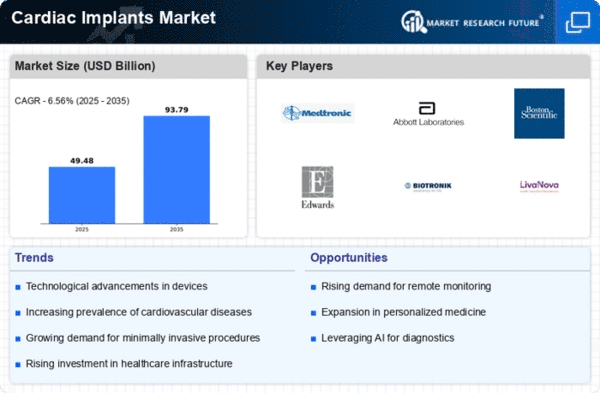
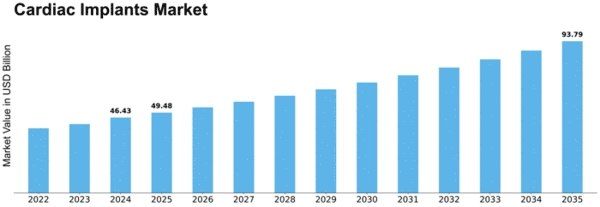
As per MRFR analysis, the Cardiac Implants Market Size was estimated at 46.43 USD Billion in 2024. The Cardiac Implants industry is projected to grow from 50.0 in 2025 to 93.79 by 2035, exhibiting a compound annual growth rate (CAGR) of 6.56 during the forecast period 2025 - 2035.

Key Market Trends & Highlights

The Cardiac Implants Market is poised for substantial growth driven by technological advancements and increasing healthcare demands.

  • North America remains the largest market for cardiac implants, driven by advanced healthcare infrastructure and high patient awareness.
  • The Asia-Pacific region is emerging as the fastest-growing market, fueled by rising healthcare investments and a burgeoning population.
  • Coronary artery disease continues to dominate the market, while the arrhythmia segment is experiencing rapid growth due to increasing diagnosis rates.
  • Technological advancements and the growing prevalence of cardiovascular diseases are key drivers propelling market expansion.

Market Size & Forecast

2024 Market Size 46.43 (USD Billion)
2035 Market Size 93.79 (USD Billion)
CAGR (2025 - 2035) 6.56%
Largest Regional Market Share in 2024 North America

Major Players

<p>Medtronic (US), Abbott (US), Boston Scientific (US), Edwards Lifesciences (US), Biotronik (DE), LivaNova (GB), St. Jude Medical (US), Cardinal Health (US), Terumo (JP)</p>

Market Trends

The Cardiac Implants Market is currently experiencing a transformative phase, driven by advancements in technology and an increasing prevalence of cardiovascular diseases. Innovations in implantable devices, such as pacemakers and defibrillators, are enhancing patient outcomes and improving quality of life. Furthermore, the integration of telemedicine and remote monitoring systems is reshaping how healthcare providers manage cardiac patients, allowing for timely interventions and personalized care. This shift towards more patient-centric approaches appears to be a key factor in the market's growth, as stakeholders seek to address the rising demand for effective cardiac solutions. In addition, the Cardiac Implants Market is witnessing a surge in research and development activities aimed at creating next-generation devices. These innovations may include bioresorbable implants and advanced materials that reduce the risk of complications. Regulatory bodies are also playing a crucial role in ensuring the safety and efficacy of these products, which could further bolster market confidence. As the landscape evolves, collaboration among manufacturers, healthcare providers, and regulatory agencies seems essential to navigate the complexities of this dynamic market.

Technological Advancements

The Cardiac Implants Market is significantly influenced by rapid technological advancements. Innovations in device design, materials, and functionalities are enhancing the performance and safety of cardiac implants. These developments not only improve patient outcomes but also expand the range of treatable conditions, thereby increasing the market's potential.

Growing Prevalence of Cardiovascular Diseases

The rising incidence of cardiovascular diseases is a major driver of the Cardiac Implants Market. As more individuals are diagnosed with heart-related conditions, the demand for effective treatment options, including various cardiac implants, is likely to increase. This trend underscores the urgent need for innovative solutions to address this public health challenge.

Regulatory Support and Collaboration

Regulatory bodies are increasingly supporting the development and approval of new cardiac implant technologies. Collaborative efforts between manufacturers and healthcare providers are fostering an environment conducive to innovation. This synergy may lead to the introduction of safer and more effective devices, ultimately benefiting patients and healthcare systems.

Cardiac Implants Market Market Drivers

Market Growth Projections

The Global Cardiac Implants Market Industry is projected to experience substantial growth in the coming years. With a compound annual growth rate (CAGR) of 9.82% anticipated from 2025 to 2035, the market is expected to expand significantly. By 2024, the market is estimated to reach 44.9 USD Billion, and by 2035, it could potentially reach 125.7 USD Billion. This growth trajectory reflects the increasing demand for cardiac implants driven by various factors, including technological advancements, an aging population, and rising healthcare expenditures. The market's expansion indicates a robust future for cardiac health solutions.

Regulatory Support and Reimbursement Policies

Supportive regulatory frameworks and favorable reimbursement policies are pivotal in shaping the Global Cardiac Implants Market Industry. Governments and health authorities are increasingly recognizing the importance of cardiac implants in managing heart diseases, leading to streamlined approval processes for new devices. Additionally, comprehensive reimbursement policies facilitate access to these technologies, encouraging healthcare providers to adopt them. This supportive environment fosters innovation and investment in the development of advanced cardiac implants. Consequently, the market is poised for growth, as these factors collectively enhance the accessibility and affordability of cardiac care.

Increasing Prevalence of Cardiovascular Diseases

The rising incidence of cardiovascular diseases globally is a primary driver of the Global Cardiac Implants Market Industry. As lifestyle-related factors such as obesity, sedentary behavior, and unhealthy diets continue to escalate, the demand for cardiac implants is likely to increase. For instance, cardiovascular diseases account for approximately 31% of all global deaths, highlighting the urgent need for effective treatment options. This growing health crisis is expected to propel the market, which is projected to reach 44.9 USD Billion in 2024, indicating a robust demand for innovative cardiac solutions.

Technological Advancements in Implantable Devices

Technological innovations in implantable cardiac devices are transforming the Global Cardiac Implants Market Industry. Advancements such as bioresorbable stents, leadless pacemakers, and remote monitoring capabilities enhance the efficacy and safety of cardiac implants. These innovations not only improve patient outcomes but also reduce the risk of complications, thereby increasing adoption rates among healthcare providers. The integration of artificial intelligence and machine learning into these devices further personalizes treatment, potentially leading to better management of cardiovascular conditions. As a result, the market is anticipated to experience significant growth, driven by these cutting-edge technologies.

Aging Population and Increased Healthcare Expenditure

The global demographic shift towards an aging population is a crucial factor influencing the Global Cardiac Implants Market Industry. Older adults are more susceptible to cardiovascular diseases, necessitating advanced medical interventions such as cardiac implants. Additionally, increased healthcare expenditure in many countries supports the adoption of these technologies. Governments and healthcare systems are investing in innovative treatments to address the growing burden of heart diseases. This trend is expected to contribute to the market's expansion, with projections indicating a growth trajectory that could see the market reach 125.7 USD Billion by 2035.

Rising Awareness and Preventive Healthcare Initiatives

Growing awareness regarding cardiovascular health and preventive healthcare initiatives are driving the Global Cardiac Implants Market Industry. Educational campaigns and community outreach programs are informing the public about the risks associated with heart diseases and the benefits of early intervention. This heightened awareness encourages individuals to seek medical advice and treatment, leading to increased demand for cardiac implants. Furthermore, healthcare providers are emphasizing preventive measures, which may result in earlier diagnoses and timely interventions. As a consequence, the market is likely to witness sustained growth as more patients opt for cardiac implants as a preventive measure.

Market Segment Insights

By Application: Coronary Artery Disease (Largest) vs. Arrhythmia (Fastest-Growing)

<p>The Cardiac Implants Market is significantly influenced by its application segments, with Coronary Artery Disease (CAD) accounting for the largest share. CAD is a major contributor to the prevalence of cardiac implants, as it requires interventions such as stents and bypass grafts. Following closely behind are other conditions like Heart Valve Disease and Heart Failure, which also command a substantial market share thanks to aging populations and an increase in chronic diseases. Arrhythmia, while smaller, is growing rapidly as awareness and technological advancements make treatment more accessible.</p>

<p>Coronary Artery Disease (Dominant) vs. Arrhythmia (Emerging)</p>

<p>Coronary Artery Disease remains the dominant application in the Cardiac Implants Market, primarily due to the high incidence rates and the need for complex interventions. Various devices, including drug-eluting stents and coronary artery bypass grafts, play a crucial role in treating this condition. Meanwhile, the Arrhythmia segment is emerging robustly, driven by innovations in cardiac monitoring and ablation technologies. This segment benefits from a rising pool of patients, improved diagnostic tools, and dedicated devices like pacemakers and implantable cardioverter-defibrillators (ICDs). The urgency in treatment for arrhythmia conditions is fostering rapid growth, indicative of a shift towards preventive and timely interventions in cardiology.</p>

By Type of Implant: Pacemakers (Largest) vs. Implantable Cardioverter Defibrillators (Fastest-Growing)

<p>The Cardiac Implants Market demonstrates a diverse range of devices, with pacemakers holding the largest market share due to their widespread adoption in managing bradycardia and heart block conditions. Following pacemakers, implantable cardioverter defibrillators (ICDs) are gaining traction, driven by their crucial role in preventing sudden cardiac arrests. Together, these two segments capture significant attention from healthcare providers and patients, influencing advanced product development and market competitiveness.</p>

<p>Pacemakers (Dominant) vs. Implantable Cardioverter Defibrillators (Emerging)</p>

<p>Pacemakers have established themselves as the dominant segment within the Cardiac Implants Market, primarily used for managing arrhythmias and facilitating heart rhythm control. Their proven efficacy and increasing recognition drive market demand, supported by advancements in technology that enhance pacemaker functionality and patient comfort. On the other hand, implantable cardioverter defibrillators (ICDs) represent an emerging segment, rapidly growing in response to increased awareness about sudden cardiac arrest prevention. Innovations in device design and automatic monitoring capabilities make ICDs increasingly attractive to both physicians and patients, creating new opportunities within the cardiac care landscape.</p>

By End User: Hospitals (Largest) vs. Cardiac Clinics (Fastest-Growing)

<p>In the Cardiac Implants Market, hospitals hold the largest market share due to their comprehensive range of services and advanced facilities for managing cardiac patients. They are equipped with state-of-the-art technology and offer a wide array of cardiac procedures, which significantly contributes to their dominance in this segment. Conversely, cardiac clinics are rapidly gaining traction, especially as they specialize in personalized care for patients with cardiac issues, making them a preferred choice for many individuals seeking targeted treatments. The growth trends in the Cardiac Implants Market are being propelled by various factors. Hospitals benefit from their established infrastructure and collaboration with leading implant manufacturers, enabling them to stay at the forefront of cardiac care. In contrast, cardiac clinics are becoming the fastest-growing segment due to rising consumer preferences for specialized clinics that focus exclusively on cardiac conditions, thereby providing efficient, customized care that is often more accessible and less intimidating than hospital settings.</p>

<p>Hospitals (Dominant) vs. Home Care Settings (Emerging)</p>

<p>Hospitals remain the dominant force in the Cardiac Implants Market, primarily due to their ability to provide intensive care, advanced surgical interventions, and comprehensive treatment plans. These facilities not only offer the latest implant technologies but also have the resources to support patients with complex needs. Meanwhile, home care settings are emerging as a viable alternative, driven by advances in telehealth technology and the increasing emphasis on patient-centered care. These settings enable patients to recover in the comfort of their homes while still receiving necessary monitoring and support, often leading to better patient satisfaction and outcomes. As healthcare evolves, the integration of home care solutions into the cardiac care continuum reflects a significant shift towards more personalized and accessible healthcare approaches.</p>

Get more detailed insights about Cardiac Implants Market Research Report - Global Forecast till 2035

Regional Insights

North America : Market Leader in Innovation

North America continues to lead the cardiac implants market, holding a significant share of 23.5% in 2024. The region's growth is driven by advanced healthcare infrastructure, increasing prevalence of cardiovascular diseases, and a strong focus on research and development. Regulatory support from agencies like the FDA further catalyzes innovation, ensuring rapid approval of new technologies and devices. The competitive landscape is robust, with key players such as Medtronic, Abbott, and Boston Scientific dominating the market. The U.S. remains the largest contributor, benefiting from high healthcare expenditure and a well-established distribution network. The presence of leading companies fosters a dynamic environment for technological advancements, ensuring that North America remains at the forefront of cardiac implant innovations.

Europe : Emerging Market with Growth Potential

Europe's cardiac implants market is valued at €12.5 billion, reflecting a growing demand for advanced cardiac care solutions. Factors such as an aging population, rising healthcare investments, and increasing awareness of cardiovascular health are driving this growth. Regulatory frameworks in the EU are becoming more supportive, facilitating quicker access to innovative treatments and devices. Leading countries like Germany, France, and the UK are pivotal in this market, with a strong presence of companies like Biotronik and LivaNova. The competitive landscape is characterized by collaborations and partnerships aimed at enhancing product offerings. As the market evolves, Europe is poised to become a significant player in the global cardiac implants sector, focusing on patient-centric solutions and technological advancements.

Asia-Pacific : Rapidly Growing Healthcare Sector

The Asia-Pacific region, with a market size of $8.0 billion, is witnessing rapid growth in the cardiac implants sector. This growth is fueled by rising disposable incomes, increasing healthcare access, and a growing prevalence of heart diseases. Governments are investing in healthcare infrastructure, which is enhancing the availability of advanced medical technologies. Regulatory bodies are also streamlining approval processes to encourage innovation. Countries like Japan, China, and India are leading the charge, with significant contributions from local and international players. Companies such as Terumo and Abbott are expanding their footprint in this region, focusing on tailored solutions to meet diverse healthcare needs. The competitive landscape is evolving, with a mix of established firms and emerging startups driving innovation and market growth.

Middle East and Africa : Untapped Market with Potential

The Middle East and Africa region, valued at $2.43 billion, presents an untapped market for cardiac implants. The growth is driven by increasing awareness of cardiovascular diseases, improving healthcare infrastructure, and rising investments in medical technology. Governments are prioritizing healthcare reforms, which are expected to enhance access to cardiac care solutions. Countries like South Africa and the UAE are at the forefront, with a growing number of healthcare facilities adopting advanced cardiac technologies. The competitive landscape is gradually evolving, with both local and international players seeking to establish a presence. As the region continues to develop, opportunities for growth in the cardiac implants market are becoming increasingly apparent, paving the way for innovative solutions.

Key Players and Competitive Insights

The Cardiac Implants Market is characterized by a dynamic competitive landscape, driven by technological advancements, an aging population, and increasing prevalence of cardiovascular diseases. Major players such as Medtronic (US), Abbott (US), and Boston Scientific (US) are at the forefront, each adopting distinct strategies to enhance their market positioning. Medtronic (US) focuses on innovation through extensive R&D investments, while Abbott (US) emphasizes strategic partnerships to expand its product offerings. Boston Scientific (US) appears to be concentrating on regional expansion, particularly in emerging markets, thereby shaping a competitive environment that is increasingly collaborative yet fiercely competitive.

In terms of business tactics, companies are localizing manufacturing to reduce costs and optimize supply chains, which is crucial in a moderately fragmented market. The collective influence of these key players is significant, as they not only drive technological advancements but also set industry standards that smaller firms must adhere to. This competitive structure fosters an environment where innovation is paramount, and companies are compelled to differentiate themselves through unique offerings and operational efficiencies.

In November 2025, Medtronic (US) announced the launch of its next-generation cardiac monitor, which integrates advanced AI algorithms for real-time data analysis. This strategic move is likely to enhance patient outcomes by providing healthcare professionals with timely insights, thereby reinforcing Medtronic's commitment to innovation and patient-centric solutions. The introduction of such technology may also position the company favorably against competitors who are yet to adopt similar advancements.

In October 2025, Abbott (US) entered into a partnership with a leading telehealth provider to enhance remote patient monitoring capabilities. This collaboration is strategically significant as it aligns with the growing trend of digital health solutions, allowing Abbott to leverage telehealth technologies to improve patient engagement and adherence to treatment plans. Such initiatives may not only expand Abbott's market reach but also enhance its reputation as a leader in integrated healthcare solutions.

In September 2025, Boston Scientific (US) completed the acquisition of a European cardiac device manufacturer, which is expected to bolster its product portfolio and market presence in Europe. This acquisition reflects a strategic focus on expanding geographical reach and diversifying product offerings, which could provide Boston Scientific with a competitive edge in a rapidly evolving market.

As of December 2025, current trends in the Cardiac Implants Market indicate a strong emphasis on digitalization, sustainability, and AI integration. Strategic alliances are increasingly shaping the landscape, enabling companies to pool resources and expertise to drive innovation. The competitive differentiation is likely to evolve from traditional price-based competition to a focus on technological advancements, supply chain reliability, and sustainable practices. This shift suggests that companies that prioritize innovation and adaptability will be better positioned to thrive in the future.

Key Companies in the Cardiac Implants Market include

Industry Developments

  • Q2 2024: Medtronic receives FDA approval for next-generation Micra AV2 and Micra VR2 leadless pacemakers Medtronic announced that the U.S. FDA has approved its latest Micra AV2 and Micra VR2 leadless pacemakers, expanding options for patients needing cardiac rhythm management devices.
  • Q2 2024: Boston Scientific launches FARAPULSE Pulsed Field Ablation System in Europe Boston Scientific announced the commercial launch of its FARAPULSE Pulsed Field Ablation System for the treatment of atrial fibrillation in select European markets following CE Mark approval.
  • Q1 2024: Edwards Lifesciences receives FDA approval for SAPIEN 3 Ultra RESILIA heart valve Edwards Lifesciences announced U.S. FDA approval of its SAPIEN 3 Ultra RESILIA valve, a next-generation transcatheter heart valve designed to improve durability and patient outcomes.
  • Q2 2024: Abbott launches AVEIR DR dual chamber leadless pacemaker system in the U.S. Abbott announced the U.S. launch of its AVEIR DR dual chamber leadless pacemaker system, the first of its kind to receive FDA approval for treating patients with abnormal heart rhythms.
  • Q1 2024: Biotronik receives CE Mark for BIOMONITOR IV implantable cardiac monitor Biotronik announced it has received CE Mark approval for its BIOMONITOR IV, an implantable cardiac monitor designed for long-term heart rhythm monitoring.
  • Q2 2024: Boston Scientific completes $3.7 billion acquisition of Axonics Boston Scientific finalized its acquisition of Axonics, a company specializing in implantable sacral neuromodulation devices, expanding its portfolio in the cardiac and urology device markets.
  • Q1 2024: Medtronic launches Harmony Transcatheter Pulmonary Valve in Japan Medtronic announced the commercial launch of its Harmony Transcatheter Pulmonary Valve in Japan, following regulatory approval for use in patients with congenital heart disease.
  • Q2 2024: Abbott receives FDA approval for TriClip transcatheter tricuspid valve repair system Abbott announced that the U.S. FDA has approved its TriClip system, the first transcatheter device for repairing the tricuspid heart valve, offering a new treatment option for patients with tricuspid regurgitation.
  • Q1 2024: LivaNova appoints new CEO, Vladimir Makatsaria LivaNova, a global medical technology company specializing in cardiac surgery and neuromodulation, announced the appointment of Vladimir Makatsaria as its new Chief Executive Officer.
  • Q2 2024: Edwards Lifesciences opens new manufacturing facility in Ireland Edwards Lifesciences inaugurated a new manufacturing facility in Limerick, Ireland, to expand production capacity for its transcatheter heart valve technologies.
  • Q1 2024: CardioFocus receives FDA approval for HeartLight X3 Endoscopic Ablation System CardioFocus announced that the U.S. FDA has approved its HeartLight X3 Endoscopic Ablation System for the treatment of atrial fibrillation, enhancing options for minimally invasive cardiac procedures.
  • Q2 2024: Boston Scientific receives FDA approval for WATCHMAN FLX Pro Left Atrial Appendage Closure Device Boston Scientific announced U.S. FDA approval of its WATCHMAN FLX Pro device, designed to reduce stroke risk in patients with non-valvular atrial fibrillation.

.

Future Outlook

Cardiac Implants Market Future Outlook

<p>The Cardiac Implants Market is projected to grow at a 6.56% CAGR from 2024 to 2035, driven by technological advancements, increasing prevalence of cardiac diseases, and rising healthcare expenditure.</p>

New opportunities lie in:

  • <p>Development of AI-driven predictive analytics for patient monitoring</p>
  • <p>Expansion of telehealth services for remote cardiac care</p>
  • <p>Investment in biodegradable cardiac devices for sustainable solutions</p>

<p>By 2035, the market is expected to achieve substantial growth, reflecting evolving healthcare needs.</p>

Market Segmentation

Cardiac Implants Market End User Outlook

  • Hospitals
  • Cardiac Clinics
  • Ambulatory Surgical Centers
  • Home Care Settings

Cardiac Implants Market Application Outlook

  • Coronary Artery Disease
  • Heart Valve Disease
  • Arrhythmia
  • Heart Failure
  • Congenital Heart Defects

Cardiac Implants Market Type of Implant Outlook

  • Pacemakers
  • Implantable Cardioverter Defibrillators
  • Cardiac Resynchronization Therapy Devices
  • Heart Valves
  • Stents

Report Scope

MARKET SIZE 202446.43(USD Billion)
MARKET SIZE 202550.0(USD Billion)
MARKET SIZE 203593.79(USD Billion)
COMPOUND ANNUAL GROWTH RATE (CAGR)6.56% (2024 - 2035)
REPORT COVERAGERevenue Forecast, Competitive Landscape, Growth Factors, and Trends
BASE YEAR2024
Market Forecast Period2025 - 2035
Historical Data2019 - 2024
Market Forecast UnitsUSD Billion
Key Companies ProfiledMedtronic (US), Abbott (US), Boston Scientific (US), Edwards Lifesciences (US), Biotronik (DE), LivaNova (GB), St. Jude Medical (US), Cardinal Health (US), Terumo (JP)
Segments CoveredApplication, Type of Implant, End User
Key Market OpportunitiesIntegration of advanced biomaterials and digital health technologies in the Cardiac Implants Market.
Key Market DynamicsTechnological advancements and regulatory changes drive innovation and competition in the cardiac implants market.
Countries CoveredNorth America, Europe, APAC, South America, MEA

FAQs

What is the valuation of the Cardiac Implants Market?

Cardiac implants market is expected to rise to a valuation of more than USD 97.13 Billion by 2032.

What is the CAGR of the Cardiac Implants Market?

The global market is expected to exhibit a strong 9.82% CAGR over the forecast period.

What is the prime driver for the market?

The increasing geriatric population and the increasing prevalence of chronic heart conditions are the major drivers for the global cardiac implants market.

What is the key restraint on the Cardiac Implants Market?

The high costs of cardiac implants are the key restraint against the global cardiac implants market.

What is the leading regional segment of the Cardiac Implants Market?

North America is likely to hold the largest share in the global cardiac implants market.

  1. SECTION I: EXECUTIVE SUMMARY AND KEY HIGHLIGHTS
    1. | 1.1 EXECUTIVE SUMMARY
  2. SECTION II: SCOPING, METHODOLOGY AND MARKET STRUCTURE
    1. | 2.1 MARKET INTRODUCTION
    2. | 2.2 RESEARCH METHODOLOGY
  3. SECTION III: QUALITATIVE ANALYSIS
    1. | 3.1 MARKET DYNAMICS
    2. | 3.2 MARKET FACTOR ANALYSIS
  4. SECTION IV: QUANTITATIVE ANALYSIS
    1. | 4.1 Healthcare, BY Application (USD Billion)
    2. | 4.2 Healthcare, BY Type of Implant (USD Billion)
    3. | 4.3 Healthcare, BY End User (USD Billion)
    4. | 4.4 Healthcare, BY Region (USD Billion)
  5. SECTION V: COMPETITIVE ANALYSIS
    1. | 5.1 Competitive Landscape
    2. | 5.2 Company Profiles
    3. | 5.3 Appendix

Cardiac Implants Market Segmentation

Market Segmentation Overview

  • Detailed segmentation data will be available in the full report
  • Comprehensive analysis by multiple parameters
  • Regional and country-level breakdowns
  • Market size forecasts by segment
Infographic

Free Sample Request

Kindly complete the form below to receive a free sample of this Report

Get Free Sample

Customer Strories

Compare Licence

×
Features License Type
Single User Multiuser License Enterprise User
Price $4,950 $5,950 $7,250
Maximum User Access Limit 1 User Upto 10 Users Unrestricted Access Throughout the Organization
Free Customization
Direct Access to Analyst
Deliverable Format
Platform Access
Discount on Next Purchase 10% 15% 15%
Printable Versions