


Market Share
Calciphylaxis Market Share Analysis
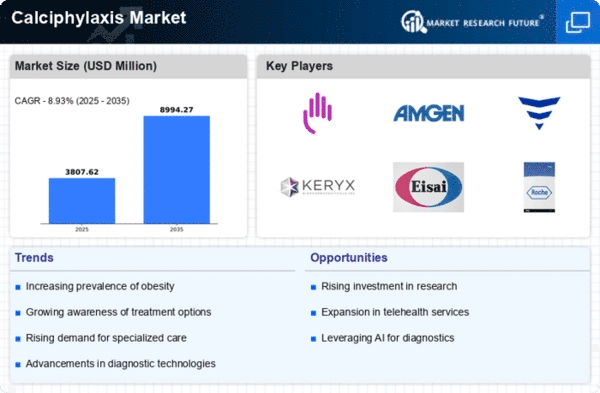
The treatment of calciphylaxis faces a significant challenge as there is currently no specific remedy available in the market. The existing treatment methods are not proving to be effective, creating a notable opportunity for manufacturers to explore the development of new drugs. This gap in treatment options presents a potential avenue for growth, particularly in developing countries where there is a focus on encouraging research and development in the management of wounds. Consequently, the creation of novel drugs has the potential to become a lucrative source of revenue, contributing to the expansion of the market.
One crucial aspect of advancing treatment options for calciphylaxis involves research and development (R&D) initiatives. Key players in the calciphylaxis market are actively engaging in continuous R&D activities to formulate targeted treatments for this challenging disease. The combination of unmet market needs and promising growth prospects has motivated industry participants to invest in R&D, aiming to produce innovative drug candidates. For instance, Sanifit, a notable player in the market, has achieved a milestone by successfully completing phase IIb clinical trials for its drug SNF472, initially designed for cardiovascular disease. Currently, this drug is progressing through phase II/III trials specifically for calciphylaxis.
The landscape of calciphylaxis treatment is marked by a lack of effective solutions, emphasizing the urgency for new and innovative drugs. The commitment of key industry players to ongoing research and development underscores the recognition of this need. As these efforts progress, there is a growing anticipation that breakthroughs in drug development will not only address the unmet needs of patients but also contribute significantly to the overall growth of the market.
The potential for growth is particularly pronounced in developing countries, where concerted efforts are being made to foster research and development in the field of wound care management. The encouragement of such initiatives opens up new avenues for manufacturers to introduce innovative drugs, catering to the specific needs of patients with calciphylaxis. This aligns with a broader trend of global collaboration in addressing healthcare challenges, with a particular focus on diseases that lack effective treatment options.
Sanifit's progress in advancing SNF472 through clinical trials exemplifies the dedication to finding solutions for calciphylaxis. The transition from phase IIb trials for cardiovascular disease to phase II/III trials for calciphylaxis reflects a strategic response to the pressing need for effective treatments in this domain. Success in these trials could mark a significant milestone not only for Sanifit but for the entire industry, offering hope for improved outcomes and quality of life for individuals affected by calciphylaxis.
In conclusion, the development of innovative drugs for calciphylaxis is a crucial frontier in healthcare, driven by the lack of specific and effective treatments. The ongoing research and development activities, exemplified by initiatives such as Sanifit's clinical trials, highlight the industry's commitment to addressing this unmet medical need. As these efforts progress, there is a potential for transformative breakthroughs that not only enhance patient care but also contribute to the growth of the market, particularly in regions actively promoting research and development in wound care management.























Leave a Comment