×
Request Free Sample ×

Kindly complete the form below to receive a free sample of this Report

* Please use a valid business email

Leading companies partner with us for data-driven Insights

clients tt-cursor
Hero Background
English
Chinese
French
Japanese
Korean
German
Spanish

Blood Coagulants Market Share

ID: MRFR/Pharma/2027-CR
53 Pages
Kinjoll Dey
July 2017

Middle East & Africa Blood Coagulants Market Research Report Information, By Types (Coagulation Factor, others), Indication (Haemophilia, Surgery, other Bleeding Disorders) -Forecast till 2035

Share:
Download PDF ×

We do not share your information with anyone. However, we may send you emails based on your report interest from time to time. You may contact us at any time to opt-out.

Blood Coagulants Market Infographic
×
Blood Coagulants Market Infographic Full View
Purchase Options

Market Share

Blood Coagulants Market Share Analysis

The Blood Coagulants market, centered on supplying treatments for clotting issues and coagulation-related situations, is dynamic and competitive. Companies in this market rent diverse strategies to position their products strategically and take advantage of a great market percentage. Companies tailor their Blood Coagulants to cope with unique clotting disorders, which include hemophilia or deep vein thrombosis. Designing products that cater to the specific desires of every circumstance complements efficacy, allowing agencies to distinguish their offerings and capture a bigger market percentage. Advancements in element substitute treatments are a key recognition within the market. Companies invest in research and development to enhance aspect concentrates, exploring new formulations or prolonged-launch alternatives to offer more convenient and powerful remedies and, in the long run, contributing to a more potent market function. Expanding market share entails entering new geographic regions. Companies become aware of untapped markets, navigate numerous regulatory landscapes, and set up a robust international presence, contributing to extended sales and market dominance inside the worldwide Blood Coagulants market. Forming strategic partnerships with hematology facilities and specialized healthcare institutions is a key market positioning strategy. Collaborations decorate product visibility, facilitate distribution, and may contain joint initiatives, leading to a broader reach and extended market share. Ensuring regulatory compliance and in search of expedited approvals are critical for market positioning. Companies that navigate regulatory processes correctly can carry their Blood Coagulants to market faster, gaining an aggressive gain and securing a favorable market proportion function. Vigilant tracking of competitors' sports allows corporations to modify their strategies in response to market dynamics. Understanding competitor pricing, product launches, and advertising procedures permits groups to stay agile and preserve an aggressive facet inside the Blood Coagulants market. Adaptable marketing techniques are vital for fulfillment. Companies need to adjust their advertising strategies primarily based on emerging medical studies, changing patient needs, and evolving market trends, making sure that their Blood Coagulants stay applicable and preferred in a dynamic healthcare landscape. Implementing patient education programs is important for market positioning. Companies put money into tasks, instructional materials, and collaborations with affected person advocacy organizations to make certain that people with clotting issues are properly informed about the blessings and right utilization of Blood Coagulants. Embracing virtual fitness technologies is a strategic method. Companies explore telemedicine options, cell apps for remedy tracking, and remote tracking to decorate affected person engagement and adherence, contributing to an advantageous emblem notion and accelerated market share.

Author
Kinjoll Dey
Research Analyst Level I

He is an extremely curious individual currently working in Healthcare and Medical Devices Domain. Kinjoll is comfortably versed in data centric research backed by healthcare educational background. He leverages extensive data mining and analytics tools such as Primary and Secondary Research, Statistical Analysis, Machine Learning, Data Modelling. His key role also involves Technical Sales Support, Client Interaction and Project management within the Healthcare team. Lastly, he showcases extensive affinity towards learning new skills and remain fascinated in implementing them.

Leave a Comment

FAQs

At what CAGR is the Middle East & Africa blood coagulants market projected to grow in the forecast period (2023-2030)?

Middle East & Africa blood coagulants market is projected to grow at approximately 6.70% CAGR during the assessment period (2023-2030).

How much is the Middle East & Africa blood coagulants market worth in the future?

Middle East & Africa blood coagulants market is estimated to reach a valuation of approx. USD 2.77 Billion by the end of 2030.

What are the major tailwinds pushing the growth of the Middle East & Africa blood coagulants market?

Rising funding from the private & public organizations, proliferation of healthcare insurance coverage, and awareness programs for bleeding disorders, are major tailwinds pushing the growth of the Middle East & Africa blood coagulants market.

What are the key growth impeders of the Middle East & Africa blood coagulants market?

Lack of R&D capabilities and awareness in most of the parts of developing and underdeveloped countries and presence of counterfeit drugs in the regions, are major growth impeder for the Middle East & Africa blood coagulants market.

Which country holds the largest share in the Middle East & Africa blood coagulants market?

Saudi Arabia holds the largest share in the Middle East & Africa blood coagulants market.

Who are the top players in the Middle East & Africa blood coagulants market?

Pfizer Inc. (U.S.), Novo Nordisk AS (Denmark), Bayer AG (Germany), SOBI (Sweden), Shire (Republic of Ireland), CSL Limited (Australia), and Octapharma (Switzerland), are some of the top players operating in the Middle East & Africa blood coagulants market.

Market Summary

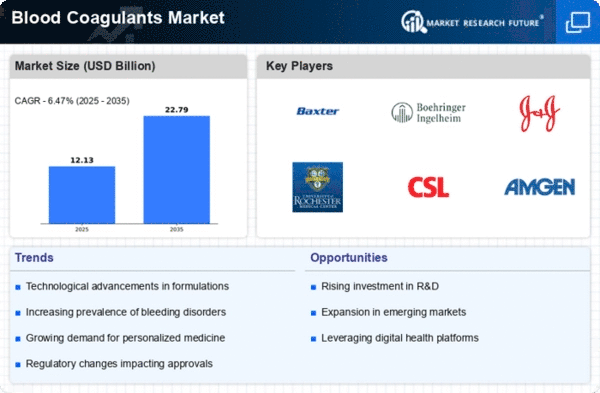
As per MRFR analysis, the Blood Coagulants Market Size was estimated at 11.39 USD Billion in 2024. The Blood Coagulants industry is projected to grow from 12.25 USD Billion in 2025 to 22.79 USD Billion by 2035, exhibiting a compound annual growth rate (CAGR) of 6.47 during the forecast period 2025 - 2035.

Key Market Trends & Highlights

The Blood Coagulants Market is experiencing robust growth driven by technological advancements and increasing healthcare demands.

  • Technological advancements in coagulant formulations are reshaping treatment options in the Blood Coagulants Market.
  • North America remains the largest market, while Asia-Pacific is emerging as the fastest-growing region for blood coagulants.
  • Surgical procedures dominate the market, whereas trauma care is witnessing the fastest growth due to rising injury rates.
  • The growing incidence of hemophilia and advancements in biotechnology are key drivers propelling market expansion.

Market Size & Forecast

2024 Market Size 11.39 (USD Billion)
2035 Market Size 22.79 (USD Billion)
CAGR (2025 - 2035) 6.47%
Largest Regional Market Share in 2024 North America

Major Players

<p>Baxter International (US), Boehringer Ingelheim (DE), Johnson & Johnson (US), Roche (CH), CSL Behring (AU), Amgen (US), Grifols (ES), Octapharma (CH), Sobi (SE)</p>

Market Trends

The Blood Coagulants Market is currently experiencing a notable transformation, driven by advancements in medical technology and an increasing awareness of blood-related disorders. The demand for effective coagulants is rising, as healthcare providers seek to enhance patient outcomes in surgical procedures and trauma care. Innovations in drug formulations and delivery methods are likely to play a crucial role in shaping the future landscape of this market. Furthermore, the growing prevalence of conditions such as hemophilia and other bleeding disorders is expected to further fuel the need for reliable coagulant therapies. In addition, the Blood Coagulants Market is witnessing a shift towards personalized medicine, where treatments are tailored to individual patient profiles. This trend suggests a move away from one-size-fits-all solutions, potentially leading to improved efficacy and safety in treatment regimens. Regulatory bodies are also adapting to these changes, which may facilitate the introduction of novel therapies. As the market evolves, stakeholders must remain vigilant to emerging trends and technological advancements that could redefine the standards of care in blood coagulation management.

Technological Advancements in Coagulant Formulations

Recent innovations in drug formulations are enhancing the efficacy and safety profiles of blood coagulants. These advancements may include the development of new synthetic agents and improved delivery systems, which could lead to better patient compliance and outcomes.

Rise of Personalized Medicine

The trend towards personalized medicine is gaining traction within the Blood Coagulants Market. Tailoring treatments to individual patient needs may improve therapeutic effectiveness and minimize adverse effects, reflecting a broader shift in healthcare towards customized care.

Increased Focus on Preventive Healthcare

There is a growing emphasis on preventive healthcare strategies, which may influence the Blood Coagulants Market. By focusing on early intervention and management of bleeding disorders, healthcare providers could potentially reduce the incidence of severe complications.

Blood Coagulants Market Market Drivers

Rising Geriatric Population

The aging population in the Middle East and Africa is contributing to the demand for blood coagulants, as older adults are more susceptible to bleeding disorders and related complications. This demographic shift is influencing healthcare priorities and resource allocation within the Global Middle East & Africa Blood Coagulants Market Industry. As the geriatric population continues to grow, healthcare providers are increasingly focusing on preventive measures and effective treatment options. This trend is likely to bolster market growth, aligning with the overall increase in healthcare expenditure and the anticipated market value of 1250 USD Million in 2024.

Advancements in Biotechnology

Technological innovations in biotechnology are reshaping the Global Middle East & Africa Blood Coagulants Market Industry. New recombinant factor therapies and bioengineered products are being developed, offering enhanced efficacy and safety profiles compared to traditional treatments. These advancements are likely to attract investment and research efforts, fostering a competitive landscape. As a result, the market is anticipated to grow at a CAGR of 7.43% from 2025 to 2035. The introduction of novel therapies not only improves patient outcomes but also addresses the unmet needs of various bleeding disorders, thereby expanding the overall market.

Market Trends and Projections

The Global Middle East & Africa Blood Coagulants Market Industry is witnessing dynamic trends that reflect the evolving landscape of healthcare. Projections indicate a market value of 1250 USD Million in 2024, with an anticipated growth trajectory leading to 2750 USD Million by 2035. The compound annual growth rate (CAGR) of 7.43% from 2025 to 2035 underscores the increasing demand for innovative blood coagulants. This growth is driven by factors such as technological advancements, demographic shifts, and enhanced healthcare policies, which collectively shape the future of the market.

Growing Awareness and Education

There is a notable increase in awareness and education regarding bleeding disorders and the importance of blood coagulants in the Global Middle East & Africa Blood Coagulants Market Industry. Educational campaigns and outreach programs are being implemented to inform patients and healthcare professionals about available treatments. This heightened awareness is likely to lead to earlier diagnosis and treatment, ultimately improving patient outcomes. As more individuals seek effective therapies, the market is expected to experience substantial growth, with projections indicating a market value of 2750 USD Million by 2035.

Government Initiatives and Funding

Government initiatives aimed at improving healthcare infrastructure and access to treatment are pivotal for the Global Middle East & Africa Blood Coagulants Market Industry. Various countries are implementing policies to enhance the availability of blood coagulants, particularly in underserved regions. Increased funding for healthcare programs and partnerships with pharmaceutical companies are facilitating the development and distribution of essential therapies. This proactive approach is expected to drive market growth, with projections indicating a market value of 1250 USD Million in 2024 and a potential rise to 2750 USD Million by 2035, reflecting the commitment to improving health outcomes.

Increasing Prevalence of Hemophilia

The rising incidence of hemophilia and other bleeding disorders in the Global Middle East & Africa Blood Coagulants Market Industry is a critical driver. Hemophilia affects approximately 1 in 5,000 male births, leading to a growing demand for effective coagulant therapies. This trend is particularly evident in regions with limited access to treatment, where patients rely heavily on blood coagulants for managing their conditions. As awareness and diagnosis improve, the market is expected to expand significantly, contributing to the projected market value of 1250 USD Million in 2024 and potentially reaching 2750 USD Million by 2035.

Market Segment Insights

By Application: Surgical Procedures (Largest) vs. Trauma Care (Fastest-Growing)

<p>In the Blood Coagulants Market, the application segment is primarily dominated by surgical procedures, which hold the largest market share. This is due to the increasing number of surgeries and the need for effective blood management solutions. Trauma care also plays a significant role, though it is comparatively smaller in market share, driven by the rising incidence of accidents and injuries that require urgent coagulant interventions.</p>

<p>Surgical Procedures (Dominant) vs. Trauma Care (Emerging)</p>

<p>Surgical procedures represent a dominant force within the Blood Coagulants Market, primarily due to their critical need for effective hemostatic agents during operations. These procedures encompass a wide variety of specialties, including general surgery, orthopedic surgery, and more, where achieving rapid hemostasis is essential to minimizing blood loss. On the other hand, trauma care is emerging rapidly as a vital application area, reflecting an increasing focus on emergency responses and the management of traumatic injuries. The growing prevalence of accidental injuries is driving innovation and demand for coagulants specifically tailored for trauma applications.</p>

By End Use: Hospitals (Largest) vs. Ambulatory Surgical Centers (Fastest-Growing)

<p>In the Blood Coagulants Market, the end-use segment is primarily dominated by hospitals, which account for the largest market share. This dominance is due to the high volume of surgical procedures, emergency care, and inpatient treatments that require coagulants for effective management of bleeding disorders. Ambulatory Surgical Centers (ASCs) also hold a significant share as they continue to grow, driven by the increasing trend towards outpatient surgeries, which are becoming more common due to advancements in medical technology and a desire for cost-effective alternatives. Growth trends in the Blood Coagulants Market are heavily influenced by the rising prevalence of bleeding disorders and the increasing number of surgical procedures performed annually. Hospitals leverage these products to support critical care, thus sustaining their dominant position. In contrast, ASCs are rapidly emerging as a preferred facility for elective surgeries, further boosting the demand for coagulants. The shift towards outpatient care is expected to enhance the market presence of ASCs significantly over the coming years.</p>

<p>Hospitals (Dominant) vs. Ambulatory Surgical Centers (Emerging)</p>

<p>Hospitals represent the dominant player in the Blood Coagulants Market, characterized by a comprehensive range of services that require coagulants for treating various conditions such as trauma and surgical interventions. These facilities are well-equipped with advanced technology and specialized staff, thereby ensuring the effective use of blood coagulant therapies. Conversely, Ambulatory Surgical Centers are emerging as a viable alternative, focusing on less complex procedures that can be performed on an outpatient basis. These centers benefit from lower operational costs and a patient-centric approach, making them increasingly popular. Their rapid adoption of innovative coagulants reflects their adaptability to changing healthcare needs, positioning them as a growing segment in the market.</p>

By Type: Vitamin K Antagonists (Largest) vs. Direct Oral Anticoagulants (Fastest-Growing)

<p>In the Blood Coagulants Market, the segment distribution reveals that Vitamin K Antagonists currently hold the largest market share, attributable to their longstanding use in managing coagulation disorders. This segment remains favored by healthcare professionals for their proven efficacy and established treatment protocols, cementing their role in patient management. On the other hand, Direct Oral Anticoagulants are rapidly gaining traction, appealing particularly to younger patients due to their ease of use and more predictable pharmacodynamics. As healthcare systems evolve, the adoption of these newer agents is reshaping overall market dynamics.</p>

<p>Vitamin K Antagonists (Dominant) vs. Direct Oral Anticoagulants (Emerging)</p>

<p>Vitamin K Antagonists have long been the standard in anticoagulation therapy, typically used in conditions like atrial fibrillation and venous thromboembolism. Their dominance stems from extensive clinical experience and a wide-ranging physician familiarity. However, Direct Oral Anticoagulants are redefining the anticoagulation landscape by offering advantages such as fixed dosing and fewer dietary restrictions. As clinical guidelines begin to adapt, these emerging agents are expected to grow significantly, supported by ongoing clinical research, more favorable safety and efficacy profiles, and increased patient education, which may eventually position them as the new standard of care.</p>

By Route of Administration: Intravenous (Largest) vs. Oral (Fastest-Growing)

<p>In the Blood Coagulants Market, the route of administration significantly determines the effectiveness and patient compliance. Intravenous administration holds the largest market share due to its rapid effect in emergency settings and critical care applications. Subcutaneous and topical routes also contribute but with lesser proportions, highlighting a diverse preference based on the severity of conditions requiring treatment. The oral route, while traditionally more common for chronic conditions, is increasingly gaining traction as innovations in formulation enhance rapid absorption and effectiveness.</p>

<p>Oral (Emerging) vs. Intravenous (Dominant)</p>

<p>Oral administration of blood coagulants is emerging as a preferred method due to its convenience and increasing patient preference for self-administration. It is particularly advantageous for patients with chronic conditions who require ongoing anticoagulation therapy. Advancements in pill technology and bioavailability are leading to more effective oral formulations. Conversely, intravenous administration remains dominant in the market for acute treatments, especially in hospital settings given its immediacy and complete bioavailability. This method is essential for patients undergoing surgeries or those with severe bleeding disorders, solidifying its critical role despite the rising popularity of oral options.</p>

By Patient Demographics: Adult (Largest) vs. Geriatric (Fastest-Growing)

<p>The Blood Coagulants Market is significantly influenced by patient demographics, with the adult cohort commanding the largest share. Adults typically have higher incidences of conditions requiring coagulation therapies, such as surgeries and chronic diseases. In contrast, pediatric patients represent a smaller market segment, but they are vital in terms of specialized formulations and age-appropriate dosing, contributing to the overall market dynamics. Growth trends indicate that the geriatric population is becoming the fastest-growing segment due to the increasing prevalence of age-related health disorders and the rising number of surgeries among older adults. As life expectancy increases, a greater emphasis on managing coagulopathies and other related conditions in geriatrics is fueling market expansion.</p>

<p>Pediatric (Emerging) vs. Geriatric (Dominant)</p>

<p>In the Blood Coagulants Market, the adult segment stands out as the dominant force, driven by a higher prevalence of coagulation disorders and a greater need for coagulation management. Adults often have diverse health issues that necessitate the use of blood-coagulating treatments. Conversely, the geriatric segment is emerging rapidly as a significant market player, prompted by an aging global population and their specific medical needs. Pediatric use of blood coagulants is also gaining attention, although it remains a niche market, focusing on tailored therapies for younger patients with congenital coagulopathies. The growth of geriatric applications is reshaping market strategies, with a distinct focus on usability and effectiveness for older patients.</p>

Get more detailed insights about Blood Coagulants Market Research Report– Middle East & Africa forecast to 2035

Regional Insights

North America : Market Leader in Coagulants

North America is poised to maintain its leadership in the blood coagulants market, holding a significant market share of 5.5 in 2024. The region's growth is driven by increasing incidences of bleeding disorders, advancements in medical technology, and supportive regulatory frameworks. The demand for innovative therapies and personalized medicine is also on the rise, further propelling market expansion. The competitive landscape is characterized by the presence of major players such as Baxter International, Johnson & Johnson, and Amgen. The U.S. is the leading country, supported by robust healthcare infrastructure and high healthcare expenditure. The market is also witnessing strategic collaborations and mergers among key players to enhance product offerings and market reach.

Europe : Emerging Market Dynamics

Europe is experiencing a notable increase in the blood coagulants market, with a market size of 3.5 in 2024. The growth is fueled by rising awareness of bleeding disorders, an aging population, and advancements in treatment options. Regulatory bodies are actively promoting research and development, which is expected to further enhance market dynamics. The region's focus on improving healthcare access and quality is also a significant driver. Leading countries in this region include Germany, France, and the UK, where major players like Boehringer Ingelheim and Roche are prominent. The competitive landscape is evolving, with an emphasis on innovative therapies and partnerships. The European Medicines Agency continues to support the market with favorable regulations, ensuring a conducive environment for growth.

Asia-Pacific : Rapidly Growing Market Potential

The Asia-Pacific region is witnessing rapid growth in the blood coagulants market, with a market size of 2.5 in 2024. This growth is driven by increasing healthcare investments, rising awareness of bleeding disorders, and a growing patient population. Governments are implementing policies to enhance healthcare infrastructure, which is expected to further boost market demand. The region's diverse healthcare needs present significant opportunities for market players. Countries like China, India, and Japan are leading the market, with key players such as CSL Behring and Grifols expanding their presence. The competitive landscape is marked by a mix of local and international companies striving to innovate and capture market share. The region's focus on improving healthcare access is likely to drive further growth in the coming years.

Middle East and Africa : Emerging Market Opportunities

The Middle East and Africa region is gradually emerging in the blood coagulants market, with a market size of 0.89 in 2024. The growth is attributed to increasing healthcare investments, rising awareness of bleeding disorders, and improving healthcare infrastructure. Governments are focusing on enhancing healthcare access, which is expected to drive demand for blood coagulants in the region. Leading countries include South Africa and the UAE, where there is a growing presence of international players like Octapharma and Sobi. The competitive landscape is evolving, with local companies also entering the market to meet the rising demand. Regulatory bodies are working towards establishing guidelines to ensure the safety and efficacy of blood coagulants, fostering a conducive environment for growth.

Key Players and Competitive Insights

The Blood Coagulants Market is characterized by a dynamic competitive landscape, driven by increasing demand for advanced therapeutic solutions and a growing prevalence of bleeding disorders. Key players such as Baxter International (US), Boehringer Ingelheim (DE), and CSL Behring (AU) are strategically positioned to leverage innovation and expand their market presence. Baxter International (US) focuses on enhancing its product portfolio through research and development, while Boehringer Ingelheim (DE) emphasizes strategic partnerships to bolster its therapeutic offerings. CSL Behring (AU) is actively pursuing regional expansion, particularly in emerging markets, which collectively shapes a competitive environment that is increasingly focused on innovation and collaboration.

The Blood Coagulants Market exhibits a moderately fragmented structure, with several players vying for market share. Key business tactics include localizing manufacturing to reduce costs and optimize supply chains, which is essential in maintaining competitive pricing. The collective influence of major players fosters a competitive atmosphere where innovation and operational efficiency are paramount, allowing companies to differentiate themselves in a crowded marketplace.

In November 2025, Baxter International (US) announced the launch of a new line of recombinant factor products aimed at treating hemophilia. This strategic move is significant as it not only enhances Baxter's product offerings but also positions the company to capture a larger share of the hemophilia treatment market, which is experiencing robust growth. The introduction of these products is expected to meet the rising demand for effective and safe treatment options, thereby reinforcing Baxter's competitive edge.

In October 2025, Boehringer Ingelheim (DE) entered into a collaboration with a leading biotechnology firm to develop next-generation blood coagulants. This partnership is indicative of Boehringer's commitment to innovation and reflects a broader trend in the industry towards collaborative research efforts. By leveraging external expertise, Boehringer aims to accelerate the development of novel therapies, which could potentially transform treatment paradigms in the coagulant space.

In September 2025, CSL Behring (AU) expanded its manufacturing capabilities in Asia, a strategic decision aimed at enhancing supply chain reliability and meeting the growing demand in the region. This expansion not only positions CSL Behring to better serve its customers but also underscores the importance of localized production in maintaining competitive advantage. The move is likely to improve operational efficiencies and reduce lead times, which are critical in the fast-paced healthcare environment.

As of December 2025, the Blood Coagulants Market is witnessing trends such as digitalization, sustainability, and the integration of AI technologies. These trends are reshaping competitive dynamics, with companies increasingly forming strategic alliances to enhance their capabilities. The shift from price-based competition to a focus on innovation, technology, and supply chain reliability is evident. Moving forward, competitive differentiation will likely hinge on the ability to innovate and adapt to changing market demands, positioning companies to thrive in an evolving landscape.

Key Companies in the Blood Coagulants Market include

Industry Developments

Future Outlook

Blood Coagulants Market Future Outlook

<p>The Blood Coagulants Market is projected to grow at a 6.47% CAGR from 2024 to 2035, driven by technological advancements, increasing surgical procedures, and rising awareness of coagulation disorders.</p>

New opportunities lie in:

  • <p>Development of personalized coagulant therapies for specific patient profiles.</p>
  • <p>Expansion of telehealth services for remote monitoring of coagulation levels.</p>
  • <p>Investment in AI-driven analytics for predictive modeling in coagulation management.</p>

<p>By 2035, the Blood Coagulants Market is expected to achieve substantial growth, reflecting evolving healthcare needs.</p>

Market Segmentation

Blood Coagulants Market Type Outlook

  • Vitamin K Antagonists
  • Direct Oral Anticoagulants
  • Thrombin Inhibitors
  • Fibrinogen Concentrates

Blood Coagulants Market End Use Outlook

  • Hospitals
  • Ambulatory Surgical Centers
  • Home Healthcare
  • Specialty Clinics

Blood Coagulants Market Application Outlook

  • Surgical Procedures
  • Trauma Care
  • Chronic Conditions
  • Cardiovascular Disorders
  • Orthopedic Procedures

Blood Coagulants Market Patient Demographics Outlook

  • Pediatric
  • Adult
  • Geriatric

Blood Coagulants Market Route of Administration Outlook

  • Oral
  • Intravenous
  • Subcutaneous
  • Topical

Report Scope

MARKET SIZE 202411.39(USD Billion)
MARKET SIZE 202512.25(USD Billion)
MARKET SIZE 203522.79(USD Billion)
COMPOUND ANNUAL GROWTH RATE (CAGR)6.47% (2024 - 2035)
REPORT COVERAGERevenue Forecast, Competitive Landscape, Growth Factors, and Trends
BASE YEAR2024
Market Forecast Period2025 - 2035
Historical Data2019 - 2024
Market Forecast UnitsUSD Billion
Key Companies ProfiledBaxter International (US), Boehringer Ingelheim (DE), Johnson & Johnson (US), Roche (CH), CSL Behring (AU), Amgen (US), Grifols (ES), Octapharma (CH), Sobi (SE)
Segments CoveredApplication, End Use, Type, Route of Administration, Patient Demographics
Key Market OpportunitiesAdvancements in personalized medicine enhance treatment options in the Blood Coagulants Market.
Key Market DynamicsRising demand for innovative blood coagulants drives competitive forces and regulatory adaptations in the healthcare sector.
Countries CoveredNorth America, Europe, APAC, South America, MEA

FAQs

At what CAGR is the Middle East & Africa blood coagulants market projected to grow in the forecast period (2023-2030)?

Middle East &amp; Africa blood coagulants market is projected to grow at approximately 6.70% CAGR during the assessment period (2023-2030).

How much is the Middle East & Africa blood coagulants market worth in the future?

Middle East &amp; Africa blood coagulants market is estimated to reach a valuation of approx. USD 2.77 Billion by the end of 2030.

What are the major tailwinds pushing the growth of the Middle East & Africa blood coagulants market?

Rising funding from the private &amp; public organizations, proliferation of healthcare insurance coverage, and awareness programs for bleeding disorders, are major tailwinds pushing the growth of the Middle East &amp; Africa blood coagulants market.

What are the key growth impeders of the Middle East & Africa blood coagulants market?

Lack of R&amp;D capabilities and awareness in most of the parts of developing and underdeveloped countries and presence of counterfeit drugs in the regions, are major growth impeder for the Middle East &amp; Africa blood coagulants market.

Which country holds the largest share in the Middle East & Africa blood coagulants market?

Saudi Arabia holds the largest share in the Middle East &amp; Africa blood coagulants market.

Who are the top players in the Middle East & Africa blood coagulants market?

Pfizer Inc. (U.S.), Novo Nordisk AS (Denmark), Bayer AG (Germany), SOBI (Sweden), Shire (Republic of Ireland), CSL Limited (Australia), and Octapharma (Switzerland), are some of the top players operating in the Middle East &amp; Africa blood coagulants market.

  1. SECTION I: EXECUTIVE SUMMARY AND KEY HIGHLIGHTS
    1. | 1.1 EXECUTIVE SUMMARY
  2. SECTION II: SCOPING, METHODOLOGY AND MARKET STRUCTURE
    1. | 2.1 MARKET INTRODUCTION
    2. | 2.2 RESEARCH METHODOLOGY
  3. SECTION III: QUALITATIVE ANALYSIS
    1. | 3.1 MARKET DYNAMICS
    2. | 3.2 MARKET FACTOR ANALYSIS
  4. SECTION IV: QUANTITATIVE ANALYSIS
    1. | 4.1 Healthcare, BY Application (USD Billion)
    2. | 4.2 Healthcare, BY End Use (USD Billion)
    3. | 4.3 Healthcare, BY Type (USD Billion)
    4. | 4.4 Healthcare, BY Route of Administration (USD Billion)
    5. | 4.5 Healthcare, BY Patient Demographics (USD Billion)
    6. | 4.6 Healthcare, BY Region (USD Billion)
  5. SECTION V: COMPETITIVE ANALYSIS
    1. | 5.1 Competitive Landscape
    2. | 5.2 Company Profiles
    3. | 5.3 Appendix

Blood Coagulants Market Segmentation

Market Segmentation Overview

  • Detailed segmentation data will be available in the full report
  • Comprehensive analysis by multiple parameters
  • Regional and country-level breakdowns
  • Market size forecasts by segment
Infographic

Free Sample Request

Kindly complete the form below to receive a free sample of this Report

Get Free Sample

Customer Strories

Compare Licence

×
Features License Type
Single User Multiuser License Enterprise User
Price $4,950 $5,950 $7,250
Maximum User Access Limit 1 User Upto 10 Users Unrestricted Access Throughout the Organization
Free Customization
Direct Access to Analyst
Deliverable Format
Platform Access
Discount on Next Purchase 10% 15% 15%
Printable Versions