Request Free Sample ×

Kindly complete the form below to receive a free sample of this Report

* Please use a valid business email

Leading companies partner with us for data-driven Insights

clients tt-cursor
Hero Background
English
Chinese
French
Japanese
Korean
German
Spanish

Biomarker Market Share

ID: MRFR/HC/1409-CR
200 Pages
Satyendra Maurya
July 2025

Biomarkers Market Research Report: Size, Share, Trend Analysis By Types (Predictive Biomarkers, Diagnostic Biomarkers, Prognostic Biomarkers, Pharmacodynamic Biomarkers, Research Biomarkers), By Applications (Oncology, Cardiovascular, Neurology, Infectious Diseases, Autoimmune Diseases), By Technology (Omics Technologies, Imaging Technologies, Bioinformatics, Mass Spectrometry, PCR Technologies), By End-use (Pharmaceutical Companies, Clinical Laboratories, Research Institutions, Diagnostic Laboratories), and By Regional (North America, Europe, South America, Asia Pacific, Middle East and Africa) - Growth Outlook & Industry Forecast 2025 To 2035

Share:
Download PDF ×

We do not share your information with anyone. However, we may send you emails based on your report interest from time to time. You may contact us at any time to opt-out.

Biomarker Market Infographic
Purchase Options

Market Share

Biomarker Market Share Analysis

Market share positioning strategies are very important in the demanding biomarkers market where companies strive to gain noteworthy presence. As essential elements of contemporary medicine, biomarkers have to implement tactical methods not only in order to satisfy new challenge requirements but also overcome rivals. Major players in the market realize that diversifying biomarker applications is essential. Instead of focusing on certain diseases, companies find a way to expand their biomarker portfolios by covering different specialties such as medical patients. This method leads to a wider market and addresses the variety of requirements for healthcare providers, researchers, as well as pharmaceutical organizations. A major strategy for market position is to remain on the cutting edge of biomarker innovation. Companies spend a lot of their resources and time to find new biomarkers that can satisfy unmet medical needs. This constant investment not only creates image of scientific supremacy, but also allows firms to launch advanced generation biomarkers in the market. Strategic collaborations and partnerships with research organizations, pharmaceutical companies, and diagnostic laboratories are essential to enhance market share positioning. Such alliances support the validation of biomarkers, foster knowledge transfer and usually lead to co-development of a new diagnostics or therapeutics. Such cooperative activities help increase a company’s overall market competitiveness. Recognizing the international character of health care, effective biomarker firms proactively grow their market dominance beyond national borders. The international market expansion is not only aimed at finding new customer bases but also at coping with different regulatory environments and modifying biomarkers to fit into local needs. With the growing popularity of precision medicine, market leaders are adjusting their biomarker solutions to meet personalized healthcare demands. This means creating biomarkers that match the genetic, molecular or clinical condition of an individual patient. The prospect of customization complements the value proposition inherent in biomarker products and helps to attract healthcare providers or pharmaceutical partners who are focused on providing targeted treatments. And due to the essential function of biomarkers in clinical decision-making, compliance with regulatory standards is primary. Regulatory compliant companies earn trust from health care professionals and institutions. Such commitment to quality and regulatory standards is a strategic move towards the stability of market leadership owing to reliability and accuracy in biomarker productsOne remarkable market share positioning strategy is to establish thought leadership in the biomarkers space. Established companies undertake investment programs on educational initiatives, scientific publications and attendance in the industry’s activities to illustrate their competency. With divulging more information on biomarkers, these companies strengthen their status and subjectively shape the market perception. Although innovation is important, good biomarker companies pay attention to the cost-effective development processes as well. Simplifying the research and production processes without negatively affecting quality means that suppliers of biomarker products can match their price with those charged by other companies. Higher cost-efficiency enables better market accessibility and attractiveness to a broader audience. Market share positioning requires to build a forceful brand presence by following appropriate marketing strategies. Companies spend on clear and captivating communications, indicating their biomarker’s unique selling proposition. Creating brand awareness and link the corporation with dependability, inventiveness, and desired patient results develop into market leadership.


Author
Author Profile
Satyendra Maurya
Research Analyst

An accomplished research analyst with high proficiency in market forecasting, data visualization, competitive benchmarking, and others. He holds a pronounced track record in research and consulting projects for sectors such as life sciences, medical devices, and healthcare IT. His capabilities in qualitative and quantitative analysis have resulted in positive client outcomes. Working on niche market trends, opportunities, sales, and forecasted value is part of his skill set.

Leave a Comment

FAQs

What is the current valuation of the Biomarkers Market in 2025?

<p>The Biomarkers Market is valued at approximately 60.66 USD Billion in 2024, and it is expected to grow significantly in the coming years.</p>

What is the projected market size for the market by 2035?

The market is projected to reach approximately 171.69 USD Billion by 2035, indicating substantial growth.

What is the expected CAGR for the market during the forecast period 2025 - 2035?

The expected CAGR for the market during the forecast period 2025 - 2035 is 9.92%.

Which segment of biomarkers is projected to have the highest valuation by 2035?

<p>The Diagnostic Biomarkers segment is projected to reach approximately 51.1 USD Billion by 2035, making it a leading segment.</p>

How do predictive biomarkers compare to prognostic biomarkers in terms of market valuation?

<p>Predictive Biomarkers are expected to reach around 34.2 USD Billion by 2035, while Prognostic Biomarkers are projected at approximately 29.5 USD Billion.</p>

What applications are driving growth in the market?

Oncology is the leading application, projected to reach about 55.0 USD Billion by 2035, followed by Cardiovascular applications at 40.0 USD Billion.

Which technology segment is anticipated to show significant growth in the market?

Omics Technologies are expected to grow to approximately 45.0 USD Billion by 2035, indicating a strong trend in this area.

What role do pharmaceutical companies play in the Biomarkers Market?

<p>Pharmaceutical Companies are projected to dominate the market with an expected valuation of around 69.0 USD Billion by 2035.</p>

How do clinical laboratories contribute to the market?

Clinical Laboratories are anticipated to reach a valuation of approximately 43.0 USD Billion by 2035, reflecting their critical role in the market.

Who are the key players in the market?

Key players include Roche, Thermo Fisher Scientific, Abbott Laboratories, and Merck KGaA, among others, leading the market dynamics.

Market Summary

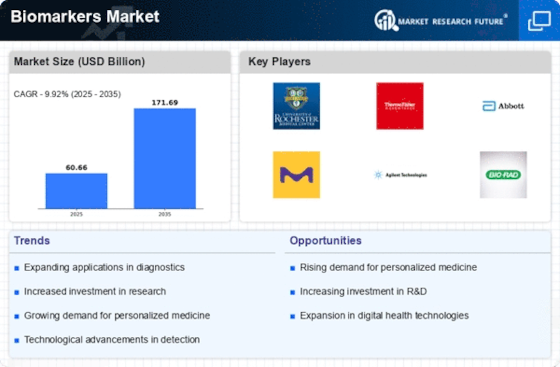
According to MRFR analysis, the Biomarkers Market Size was valued at USD 60.66 Billion in 2024. The Biomarkers industry is projected to grow from USD 66.68 Billion in 2025 to USD 171.69 Billion by 2035, registering a CAGR of 9.9% during the forecast period (2025–2035). North America led the market with over 45% share, generating around USD 27.3 billion in revenue.
 
The Biomarkers Market is expanding rapidly due to increasing demand for early disease detection and personalized medicine. Key trends include advancements in molecular diagnostics, growing adoption in oncology and chronic disease management, and rising investments in biomarker research to enhance drug development, improve treatment precision, and support targeted therapeutic strategies globally. Data from the Institute for Health Metrics and Evaluation indicates that chronic diseases remain the leading contributors to global disease burden, supporting increased use of biomarkers in diagnosis and monitoring.

Key Market Trends & Highlights

The Biomarkers Market is experiencing robust growth driven by technological advancements and increasing demand for personalized medicine.

  • The rise of companion diagnostics is reshaping treatment protocols, particularly in oncology. Integration of artificial intelligence is enhancing the accuracy and efficiency of biomarker discovery. Expansion of biomarker applications is evident in both predictive and diagnostic contexts, with predictive biomarkers leading the market. The increasing prevalence of chronic diseases and advancements in genomic technologies are key drivers propelling market growth, especially in North America and the Asia-Pacific region.

Market Size & Forecast

2024 Market Size 60.66 (USD Billion)
2035 Market Size 171.69 (USD Billion)
CAGR (2025 - 2035) 9.92%
Largest Regional Market Share in 2024 North America

Major Players

Companies such as Roche (CH), <a href="https://www.thermofisher.com/in/en/home/life-science/cancer-research/solid-tumor-research/biomarker-discovery.html">Thermo Fisher Scientific</a> (US), <a href="https://www.molecular.abbott/us/en/home" target="_blank" rel="noopener">Abbott Laboratories</a> (US), Merck KGaA (DE), Agilent Technologies (US), Bio-Rad Laboratories (US), Illumina (US), Qiagen (DE), PerkinElmer (US) are some of the major participants in the global market.

Market Trends

The Biomarkers Market is currently experiencing a transformative phase, characterized by rapid advancements in technology and an increasing emphasis on personalized medicine. This evolution is driven by the growing recognition of biomarkers as essential tools for disease diagnosis, prognosis, and treatment monitoring. As healthcare systems worldwide strive for more efficient and effective patient care, the integration of biomarkers into clinical practice appears to be gaining momentum. Furthermore, the rise of precision medicine is likely to enhance the demand for biomarker-based solutions, as they enable tailored therapeutic approaches that align with individual patient profiles.

In addition to technological advancements, regulatory frameworks are evolving to accommodate the complexities associated with biomarker development and application. This shift may facilitate faster approvals and market entry for innovative biomarker tests, thereby expanding their accessibility to healthcare providers and patients alike.

Moreover, collaborations between academic institutions, biotechnology firms, and pharmaceutical companies are becoming increasingly common, fostering an environment conducive to innovation. As the market continues to mature, it seems poised for sustained growth, driven by ongoing research and development efforts aimed at uncovering new biomarkers and their potential applications in various therapeutic areas.

Rise of Companion Diagnostics

The Biomarkers Market is witnessing a notable increase in the adoption of companion diagnostics. These tests are designed to identify patients who are most likely to benefit from specific therapies, thereby enhancing treatment efficacy. This trend reflects a broader shift towards personalized medicine, where therapies are tailored to individual patient characteristics, potentially improving outcomes and minimizing adverse effects.

The Centers for Disease Control and Prevention highlights that precision medicine and targeted therapies are improving treatment effectiveness by aligning interventions with patient-specific biological markers.

Integration of Artificial Intelligence

The integration of artificial intelligence (AI) into biomarker discovery and analysis is emerging as a significant trend. AI technologies are being utilized to process vast amounts of biological data, enabling researchers to identify novel biomarkers more efficiently. This advancement may lead to quicker insights and a deeper understanding of disease mechanisms, ultimately accelerating the development of targeted therapies.

According to the Institute for Health Metrics and Evaluation, large-scale health data analysis across 200+ countries and numerous disease indicators is accelerating the need for AI-driven tools in diagnostics.

Expansion of Biomarker Market Applications

The applications of biomarkers are expanding beyond traditional areas such as oncology. There is a growing interest in utilizing biomarkers for various conditions, including cardiovascular diseases, neurological disorders, and infectious diseases. This diversification suggests a broader recognition of the potential of biomarkers to enhance diagnostic accuracy and treatment strategies across multiple therapeutic domains.

The World Health Organization reports that noncommunicable diseases account for nearly 74% of global deaths, driving demand for advanced diagnostic solutions like biomarkers across multiple therapeutic areas.

Biomarker Market Market Drivers

Advancements in Genomic Technologies

Technological advancements in genomic sequencing and analysis are propelling the Biomarkers Market forward. Innovations such as next-generation sequencing (NGS) and CRISPR technology have revolutionized the way biomarkers are identified and utilized in clinical settings. These technologies enable researchers to analyze vast amounts of genetic data quickly and accurately, facilitating the discovery of novel biomarkers for various diseases.
 
The integration of these advanced technologies is expected to enhance the efficiency of biomarker development processes, thereby reducing time-to-market for new diagnostic tests. As a result, the market is likely to witness substantial growth, with the genomic biomarker segment anticipated to account for a significant share of the overall market by 2025. This trend underscores the importance of continuous investment in research and development within the biomarker domain.

Growing Demand for Personalized Medicine

The shift towards personalized medicine is a significant driver of the Biomarkers Market. As healthcare evolves, there is an increasing recognition of the need for tailored treatment approaches that consider individual patient characteristics. Biomarkers serve as essential tools in this paradigm, enabling healthcare providers to select the most effective therapies based on a patient's unique biological profile.
 
This trend is reflected in the rising number of biomarker-based companion diagnostics, which are designed to identify patients who are most likely to benefit from specific treatments. The market for personalized medicine is projected to grow substantially, with estimates suggesting it could reach over 2 trillion USD by 2025. This growth is likely to further stimulate the market, as the demand for innovative diagnostic solutions continues to rise.

Increasing Prevalence of Chronic Diseases

The rising incidence of chronic diseases such as cancer, diabetes, and cardiovascular disorders is a primary driver of the Biomarkers Market. As these conditions become more prevalent, the demand for effective diagnostic tools and personalized treatment options intensifies. Biomarkers play a crucial role in early detection and monitoring of these diseases, thereby enhancing patient outcomes.
 
According to recent estimates, the market for biomarkers is projected to reach approximately 60 billion USD by 2026, reflecting a compound annual growth rate of around 12%. This growth is largely attributed to the increasing focus on precision medicine, which relies heavily on biomarker identification and validation. Consequently, the market is expected to expand significantly as healthcare providers seek innovative solutions to manage chronic diseases.

Regulatory Support for Biomarker Development

Regulatory agencies are increasingly recognizing the importance of biomarkers in drug development and patient care, which is positively impacting the Biomarkers Market. Initiatives aimed at streamlining the approval process for biomarker-based diagnostics are being implemented, thereby encouraging innovation and investment in this field. For instance, the FDA has established guidelines for the development and validation of biomarkers, which facilitate their integration into clinical practice.
 
This regulatory support not only enhances the credibility of biomarker applications but also fosters collaboration between industry stakeholders and regulatory bodies. As a result, the market is likely to experience accelerated growth, with more companies entering the market to develop novel biomarker solutions that meet regulatory standards.

Rising Investment in Research and Development

Investment in research and development (R&D) within the biomarker sector is a crucial driver of the Biomarkers Market. Increased funding from both public and private sectors is enabling researchers to explore new biomarker candidates and develop innovative diagnostic tools. This influx of capital is particularly evident in the fields of oncology and rare diseases, where the need for effective biomarkers is paramount.
 
According to recent reports, R&D spending in the biomarker space is expected to exceed 10 billion USD by 2025, reflecting a growing commitment to advancing biomarker science. This trend is likely to result in the discovery of novel biomarkers that can improve disease detection and treatment, thereby further propelling the market.

Market Segment Insights

By Type: Predictive Biomarkers (Largest) vs. Diagnostic Biomarkers (Fastest-Growing)

The market exhibits a diverse distribution among the different types of biomarkers. Predictive biomarkers currently hold the largest Biomarkers Market share within this segment, serving as essential tools in anticipating patient responses to therapeutic interventions. Following close behind, diagnostic biomarkers are emerging as a critical component in clinical settings, facilitating the identification of diseases at earlier stages.

Biomarkers: Predictive (Dominant) vs. Diagnostic (Emerging)

Predictive biomarkers are critical in shaping personalized medicine as they provide insights into the likely response of a patient to treatment protocols, enhancing clinical decision-making. This segment thrives on advancements in genetic and molecular profiling techniques. In contrast, diagnostic biomarkers are rapidly gaining traction due to their pivotal role in early disease detection and monitoring. Their emergence is driven by the increasing focus on <a href="https://www.marketresearchfuture.com/reports/precision-medicine-market-925">precision medicine</a> and the growing prevalence of chronic diseases, thus positioning them for significant growth in the near future.

By Application: Oncology (Largest) vs. Neurology (Fastest-Growing)

Oncology holds the dominant share, driven by the increasing prevalence of cancer and advancements in diagnostic technologies. The segments of cardiovascular, neurology, infectious diseases, and autoimmune diseases also play significant roles; however, their market shares are comparatively smaller. The demand for targeted therapies and <a href="https://www.marketresearchfuture.com/reports/personalized-medicine-market-2937">personalized medicine</a> continues to enhance the role of biomarkers in guiding treatment decisions within oncology, placing it at the forefront of the market.

Oncology: Dominant vs. Neurology: Emerging

Oncology is a well-established sector in the market, recognized for its critical role in cancer diagnostics and treatment. The segment benefits from robust research and development, alongside increasing investments aimed at improving patient outcomes through precision medicine. Conversely, neurology is emerging rapidly, largely driven by rising awareness of neurological disorders and innovations in biomarker identification. As neurodegenerative diseases like Alzheimer's continue to affect larger populations, the focus on neurological biomarkers is intensifying, pointing towards a promising growth trajectory for this segment.

By Technology: Omics Technologies (Largest) vs. Bioinformatics (Fastest-Growing)

The market exhibits a diverse distribution of technology segments, with Omics Technologies holding the largest Biomarkers Market share. This segment encompasses genomics, proteomics, and metabolomics, playing a pivotal role in biomarker discovery and validation. In contrast, Bioinformatics is emerging as the fastest-growing segment, driven by the increasing need for data analysis in biomarker research. The integration of advanced computational tools in bioinformatics accelerates the analysis and interpretation of complex biological data generated through various omics approaches.

Omics Technologies: Dominant vs. Bioinformatics: Emerging

Omics Technologies is characterized by its comprehensive approaches to understanding biological processes at a molecular level, positioning it as the dominant segment in the market. This segment includes various technologies that facilitate the study of the genome, proteome, and metabolome, providing critical insights for biomarker identification. Conversely, Bioinformatics represents an emerging segment that leverages computational power to analyze vast datasets, driven by the need for precision medicine. Its growth is fueled by advancements in machine learning and data analytics, essential for translating omics data into actionable insights, making it instrumental in the future of biomarker research.

By End-use: Pharmaceutical Companies (Largest) vs. Clinical Laboratories (Fastest-Growing)

The end-use segment is significantly dominated by pharmaceutical companies, which hold a substantial share due to their extensive research and development activities. These companies utilize biomarkers for drug discovery, development, and personalized medicine, thereby driving a large portion of the market. Conversely, clinical laboratories are emerging rapidly as a critical component of the market. Their role in the development and application of biomarkers in diagnostics and patient management is increasingly recognized, allowing them to capture a growing share in the sector.

Pharmaceutical Companies (Dominant) vs. Clinical Laboratories (Emerging)

Pharmaceutical companies are at the forefront of the Biomarkers Market, leveraging biomarkers to enhance drug efficacy and safety profiles through targeted therapies. Their investment in biopharmaceuticals and personalized medicine continues to grow, solidifying their dominant market position. On the other hand, clinical laboratories are becoming increasingly vital as the demand for precise diagnostics rises. They focus on rapidly integrating biomarker technologies into routine testing, which allows for real-time patient monitoring and treatment adjustments. The synergy between pharmaceutical advances and clinical laboratory capabilities positions them uniquely to meet the evolving healthcare landscape.

Get more detailed insights about Biomarkers Market Research Report - Global Forecast till 2035

Regional Insights

The Biomarkers Market experienced substantial growth across various regions. North America leads in the market Size, accounting for over 45% of the global revenue in 2024, reflecting its dominance in research and innovation.

Europe Biomarkers Market size was valued at USD 12.5 billion in 2024, making it the second-largest regional market with a 20.61% share, supported by advancements in healthcare and regulatory frameworks. The Asia Pacific region accounted for 7.5 USD Billion in 2024, growing to 15.0 USD Billion, driven by increasing healthcare expenditure and a rising population.

South America, with a market value of 2.5 USD Billion, is projected to grow to 5.0 USD Billion as healthcare access improves. The Middle East and Africa segment was valued at 2.0 USD Billion, expected to reach 3.7 USD Billion, influenced by growing awareness of personalized medicine.

These regional insights emphasized the market's segmentation and highlighted the opportunities for growth in different geographical areas, reflecting trends in healthcare advancements and the demand for innovative solutions.

Key Players and Competitive Insights

The Biomarkers Market has evolved significantly over the last few years, driven by advancements in technology and increasing demand for personalized medicine. Competitive insights in this market reveal a landscape filled with collaboration, innovation, and strategic partnerships among key players. Companies are leveraging research and development to enhance their product offerings and maintain their competitive edge. The market is characterized by various segments based on types, applications, and countries, leading to diverse competition and strategic positioning.
 
The emphasis on diagnostic solutions, drug development, and targeted therapies has stimulated growth, pushing major players to adopt aggressive marketing and distribution strategies tailored to different geographic regions. Novartis has established a substantial presence in the Biomarkers Market through its robust pipeline of biomarker development initiatives. The company focuses on integrating biomarkers into its drug discovery processes to enhance patient selection, improve treatment outcomes, and minimize adverse effects.
 
The strengths of Novartis in this domain lie in its extensive research capabilities, collaborations with academic institutions and biotechnology firms, and a strong portfolio of innovative therapies. Novartis's commitment to advancing biomarker research underscores its role in developing precision medicine, amplifying its influence in the global healthcare landscape. Its strategic focus on rare diseases and oncology has positioned the company as a leader in utilizing biomarkers for therapeutic advancements, contributing significantly to its overall growth and market competitiveness.
 
Thermo Fisher Scientific plays a crucial role in the Biomarkers Market, primarily known for its comprehensive range of analytical instruments, reagents, and consumables that support biomarker discovery and validation. The company’s significant strengths include its extensive product portfolio designed for biomarker research, including technologies for gene expression analysis, mass spectrometry, and next-generation sequencing. Thermo Fisher Scientific has made strategic moves through a series of mergers and acquisitions to expand its capabilities and enhance market presence globally.
 
These integrations have allowed the company to offer integrated solutions that streamline biomarker research, thereby increasing efficiency and reliability in biopharmaceutical applications. Its commitment to innovation and customer support ensures Thermo Fisher Scientific remains a vital contributor to the evolving landscape of biomarkers, reinforcing its competitive stance within the industry on a global scale.

Key Companies in the Biomarker Market include

Industry Developments

The Elecsys PRO-C3 test, created in partnership with Nordic Bioscience, was approved by the FDA in May 2025 by F. Hoffmann-La Roche Ltd. to evaluate the degree of liver fibrosis in patients with steatotic liver disease linked to metabolic dysfunction.

Roche also introduced the VENTANA MET (SP44) RxDx Assay in May 2025, which is intended to determine which patients with non-small cell lung cancer are suitable for targeted MET inhibitor treatments. By completing the purchase of SYNLAB's clinical diagnostics business in Spain in April 2025, Eurofins Scientific greatly increased its capacity for molecular diagnostics and biomarker validation.

Ignite Biomedical and Liquid Biosciences formed a strategic alliance in April 2025 to leverage AI-driven bioinformatics systems to find and verify new biomarkers for substance use disorders. Thermo Fisher Scientific and the UK Biobank Pharma proteome Project joined forces in January 2025 to fund the biggest proteome project in the world devoted to biomarker validation and development.

To enhance early identification and risk stratification in Alzheimer's disease, QIAGEN and Eli Lilly announced in September 2024 that they would be working together to create a QIAstat-Dx in vitro diagnostic panel for APOE genotyping.

Future Outlook

Biomarker Market Future Outlook

The Biomarkers Market size is projected to reach USD 171.69 billion by 2035, growing at a CAGR of 9.9%, driven by advancements in personalized medicine, increased R&amp;D investments, and rising demand for early disease detection.

New opportunities lie in:

  • <p>Development of companion diagnostics for targeted therapies. Expansion of biomarker-based clinical trials for drug development. Integration of AI in biomarker discovery and validation processes.</p>

By 2035, the Biomarkers Market is expected to achieve substantial growth, reflecting its critical role in healthcare innovation.

Market Segmentation

Biomarker Market Type Outlook

  • Predictive Biomarkers
  • Diagnostic Biomarkers
  • Prognostic Biomarkers
  • Pharmacodynamic Biomarkers
  • Research Biomarkers

Biomarker Market End-use Outlook

  • Pharmaceutical Companies
  • Clinical Laboratories
  • Research Institutions
  • Diagnostic Laboratories

Biomarker Market Technology Outlook

  • Omics Technologies
  • Imaging Technologies
  • Bioinformatics
  • Mass Spectrometry
  • PCR Technologies

Biomarker Market Application Outlook

  • Oncology
  • Cardiovascular
  • Neurology
  • Infectious Diseases
  • Autoimmune Diseases

Report Scope

MARKET SIZE 2024 60.66(USD Billion)
MARKET SIZE 2025 66.68(USD Billion)
MARKET SIZE 2035 171.69(USD Billion)
COMPOUND ANNUAL GROWTH RATE (CAGR) 9.92% (2025 - 2035)
REPORT COVERAGE Revenue Forecast, Competitive Landscape, Growth Factors, and Trends
BASE YEAR 2024
Market Forecast Period 2025 - 2035
Historical Data 2019 - 2024
Market Forecast Units USD Billion
Key Companies Profiled Roche (CH), Thermo Fisher Scientific (US), Abbott Laboratories (US), Merck KGaA (DE), Agilent Technologies (US), Bio-Rad Laboratories (US), Illumina (US), Qiagen (DE), PerkinElmer (US)
Segments Covered Types, Applications, Technology, End-use, Regional
Key Market Opportunities Advancements in personalized medicine drive demand for innovative biomarkers in diagnostics and therapeutics.
Key Market Dynamics Rising demand for personalized medicine drives innovation and competition in the market.
Countries Covered North America, Europe, APAC, South America, MEA

FAQs

What is the current valuation of the Biomarkers Market in 2025?

<p>The Biomarkers Market is valued at approximately 60.66 USD Billion in 2024, and it is expected to grow significantly in the coming years.</p>

What is the projected market size for the market by 2035?

The market is projected to reach approximately 171.69 USD Billion by 2035, indicating substantial growth.

What is the expected CAGR for the market during the forecast period 2025 - 2035?

The expected CAGR for the market during the forecast period 2025 - 2035 is 9.92%.

Which segment of biomarkers is projected to have the highest valuation by 2035?

<p>The Diagnostic Biomarkers segment is projected to reach approximately 51.1 USD Billion by 2035, making it a leading segment.</p>

How do predictive biomarkers compare to prognostic biomarkers in terms of market valuation?

<p>Predictive Biomarkers are expected to reach around 34.2 USD Billion by 2035, while Prognostic Biomarkers are projected at approximately 29.5 USD Billion.</p>

What applications are driving growth in the market?

Oncology is the leading application, projected to reach about 55.0 USD Billion by 2035, followed by Cardiovascular applications at 40.0 USD Billion.

Which technology segment is anticipated to show significant growth in the market?

Omics Technologies are expected to grow to approximately 45.0 USD Billion by 2035, indicating a strong trend in this area.

What role do pharmaceutical companies play in the Biomarkers Market?

<p>Pharmaceutical Companies are projected to dominate the market with an expected valuation of around 69.0 USD Billion by 2035.</p>

How do clinical laboratories contribute to the market?

Clinical Laboratories are anticipated to reach a valuation of approximately 43.0 USD Billion by 2035, reflecting their critical role in the market.

Who are the key players in the market?

Key players include Roche, Thermo Fisher Scientific, Abbott Laboratories, and Merck KGaA, among others, leading the market dynamics.

  1. SECTION I: EXECUTIVE SUMMARY AND KEY HIGHLIGHTS |
    1. EXECUTIVE SUMMARY | |
      1. Market Overview | |
      2. Key Findings | |
      3. Market Segmentation | |
      4. Competitive Landscape | |
      5. Challenges and Opportunities | |
      6. Future Outlook 2
  2. SECTION II: SCOPING, METHODOLOGY AND MARKET STRUCTURE |
    1. MARKET INTRODUCTION | |
      1. Definition | |
      2. Scope of the study | | |
    2. RESEARCH METHODOLOGY | |
      1. Overview | |
      2. Data Mining | |
      3. Secondary Research | |
      4. Primary Research | | |
      5. Forecasting Model | |
      6. Market Size Estimation | | |
      7. Data Triangulation | |
      8. Validation 3
  3. SECTION III: QUALITATIVE ANALYSIS |
    1. MARKET DYNAMICS | |
      1. Overview | |
      2. Drivers | |
      3. Restraints | |
      4. Opportunities |
    2. MARKET FACTOR ANALYSIS | |
      1. Value chain Analysis | |
      2. Porter's Five Forces Analysis | | |
      3. COVID-19 Impact Analysis | | |
  4. SECTION IV: QUANTITATIVE ANALYSIS |
    1. Healthcare, BY Type (USD Billion) | |
      1. Predictive Biomarkers | |
      2. Diagnostic Biomarkers | |
      3. Prognostic Biomarkers | |
      4. Pharmacodynamic Biomarkers | |
      5. Research Biomarkers |
    2. Healthcare, BY Application (USD Billion) | |
      1. Oncology | |
      2. Cardiovascular | |
      3. Neurology | |
      4. Infectious Diseases | |
      5. Autoimmune Diseases |
    3. Healthcare, BY Technology (USD Billion) | |
      1. Omics Technologies | |
      2. Imaging Technologies | |
      3. Bioinformatics | |
      4. Mass Spectrometry | |
      5. PCR Technologies |
    4. Healthcare, BY End-use (USD Billion) | |
      1. Pharmaceutical Companies | |
      2. Clinical Laboratories | |
      3. Research Institutions | |
      4. Diagnostic Laboratories |
    5. Healthcare, BY Region (USD Billion) | |
      1. North America | | |
      2. Europe | | |
      3. APAC | | |
      4. South America | | |
      5. MEA | | |
  5. SECTION V: COMPETITIVE ANALYSIS |
    1. Competitive Landscape | |
      1. Overview | |
      2. Competitive Analysis | |
      3. Market share Analysis | |
      4. Major Growth Strategy in the Healthcare | |
      5. Competitive Benchmarking | |
      6. Leading Players in Terms of Number of Developments in the Healthcare | |
      7. Key developments and growth strategies | | |
      8. Major Players Financial Matrix | | |
    2. Company Profiles | |
      1. Roche (CH) | | |
      2. Thermo Fisher Scientific (US) | | |
      3. Abbott Laboratories (US) | | |
      4. Merck KGaA (DE) | | |
      5. Agilent Technologies (US) | | |
      6. Bio-Rad Laboratories (US) | | |
      7. Illumina (US) | | |
      8. Qiagen (DE) | | |
      9. PerkinElmer (US) | | |
    3. Appendix | |
      1. References | |
      2. Related Reports 6 LIST OF FIGURES |
    4. MARKET SYNOPSIS |
    5. NORTH AMERICA MARKET ANALYSIS |
    6. US MARKET ANALYSIS BY TYPE |
    7. US MARKET ANALYSIS BY APPLICATION |
    8. US MARKET ANALYSIS BY TECHNOLOGY |
    9. US MARKET ANALYSIS BY END-USE |
    10. CANADA MARKET ANALYSIS BY TYPE |
    11. CANADA MARKET ANALYSIS BY APPLICATION |
    12. CANADA MARKET ANALYSIS BY TECHNOLOGY |
    13. CANADA MARKET ANALYSIS BY END-USE |
    14. EUROPE MARKET ANALYSIS |
    15. GERMANY MARKET ANALYSIS BY TYPE |
    16. GERMANY MARKET ANALYSIS BY APPLICATION |
    17. GERMANY MARKET ANALYSIS BY TECHNOLOGY |
    18. GERMANY MARKET ANALYSIS BY END-USE |
    19. UK MARKET ANALYSIS BY TYPE |
    20. UK MARKET ANALYSIS BY APPLICATION |
    21. UK MARKET ANALYSIS BY TECHNOLOGY |
    22. UK MARKET ANALYSIS BY END-USE |
    23. FRANCE MARKET ANALYSIS BY TYPE |
    24. FRANCE MARKET ANALYSIS BY APPLICATION |
    25. FRANCE MARKET ANALYSIS BY TECHNOLOGY |
    26. FRANCE MARKET ANALYSIS BY END-USE |
    27. RUSSIA MARKET ANALYSIS BY TYPE |
    28. RUSSIA MARKET ANALYSIS BY APPLICATION |
    29. RUSSIA MARKET ANALYSIS BY TECHNOLOGY |
    30. RUSSIA MARKET ANALYSIS BY END-USE |
    31. ITALY MARKET ANALYSIS BY TYPE |
    32. ITALY MARKET ANALYSIS BY APPLICATION |
    33. ITALY MARKET ANALYSIS BY TECHNOLOGY |
    34. ITALY MARKET ANALYSIS BY END-USE |
    35. SPAIN MARKET ANALYSIS BY TYPE |
    36. SPAIN MARKET ANALYSIS BY APPLICATION |
    37. SPAIN MARKET ANALYSIS BY TECHNOLOGY |
    38. SPAIN MARKET ANALYSIS BY END-USE |
    39. REST OF EUROPE MARKET ANALYSIS BY TYPE |
    40. REST OF EUROPE MARKET ANALYSIS BY APPLICATION |
    41. REST OF EUROPE MARKET ANALYSIS BY TECHNOLOGY |
    42. REST OF EUROPE MARKET ANALYSIS BY END-USE |
    43. APAC MARKET ANALYSIS |
    44. CHINA MARKET ANALYSIS BY TYPE |
    45. CHINA MARKET ANALYSIS BY APPLICATION |
    46. CHINA MARKET ANALYSIS BY TECHNOLOGY |
    47. CHINA MARKET ANALYSIS BY END-USE |
    48. INDIA MARKET ANALYSIS BY TYPE |
    49. INDIA MARKET ANALYSIS BY APPLICATION |
    50. INDIA MARKET ANALYSIS BY TECHNOLOGY |
    51. INDIA MARKET ANALYSIS BY END-USE |
    52. JAPAN MARKET ANALYSIS BY TYPE |
    53. JAPAN MARKET ANALYSIS BY APPLICATION |
    54. JAPAN MARKET ANALYSIS BY TECHNOLOGY |
    55. JAPAN MARKET ANALYSIS BY END-USE |
    56. SOUTH KOREA MARKET ANALYSIS BY TYPE |
    57. SOUTH KOREA MARKET ANALYSIS BY APPLICATION |
    58. SOUTH KOREA MARKET ANALYSIS BY TECHNOLOGY |
    59. SOUTH KOREA MARKET ANALYSIS BY END-USE |
    60. MALAYSIA MARKET ANALYSIS BY TYPE |
    61. MALAYSIA MARKET ANALYSIS BY APPLICATION |
    62. MALAYSIA MARKET ANALYSIS BY TECHNOLOGY |
    63. MALAYSIA MARKET ANALYSIS BY END-USE |
    64. THAILAND MARKET ANALYSIS BY TYPE |
    65. THAILAND MARKET ANALYSIS BY APPLICATION |
    66. THAILAND MARKET ANALYSIS BY TECHNOLOGY |
    67. THAILAND MARKET ANALYSIS BY END-USE |
    68. INDONESIA MARKET ANALYSIS BY TYPE |
    69. INDONESIA MARKET ANALYSIS BY APPLICATION |
    70. INDONESIA MARKET ANALYSIS BY TECHNOLOGY |
    71. INDONESIA MARKET ANALYSIS BY END-USE |
    72. REST OF APAC MARKET ANALYSIS BY TYPE |
    73. REST OF APAC MARKET ANALYSIS BY APPLICATION |
    74. REST OF APAC MARKET ANALYSIS BY TECHNOLOGY |
    75. REST OF APAC MARKET ANALYSIS BY END-USE |
    76. SOUTH AMERICA MARKET ANALYSIS |
    77. BRAZIL MARKET ANALYSIS BY TYPE |
    78. BRAZIL MARKET ANALYSIS BY APPLICATION |
    79. BRAZIL MARKET ANALYSIS BY TECHNOLOGY |
    80. BRAZIL MARKET ANALYSIS BY END-USE |
    81. MEXICO MARKET ANALYSIS BY TYPE |
    82. MEXICO MARKET ANALYSIS BY APPLICATION |
    83. MEXICO MARKET ANALYSIS BY TECHNOLOGY |
    84. MEXICO MARKET ANALYSIS BY END-USE |
    85. ARGENTINA MARKET ANALYSIS BY TYPE |
    86. ARGENTINA MARKET ANALYSIS BY APPLICATION |
    87. ARGENTINA MARKET ANALYSIS BY TECHNOLOGY |
    88. ARGENTINA MARKET ANALYSIS BY END-USE |
    89. REST OF SOUTH AMERICA MARKET ANALYSIS BY TYPE |
    90. REST OF SOUTH AMERICA MARKET ANALYSIS BY APPLICATION |
    91. REST OF SOUTH AMERICA MARKET ANALYSIS BY TECHNOLOGY |
    92. REST OF SOUTH AMERICA MARKET ANALYSIS BY END-USE |
    93. MEA MARKET ANALYSIS |
    94. GCC COUNTRIES MARKET ANALYSIS BY TYPE |
    95. GCC COUNTRIES MARKET ANALYSIS BY APPLICATION |
    96. GCC COUNTRIES MARKET ANALYSIS BY TECHNOLOGY |
    97. GCC COUNTRIES MARKET ANALYSIS BY END-USE |
    98. SOUTH AFRICA MARKET ANALYSIS BY TYPE |
    99. SOUTH AFRICA MARKET ANALYSIS BY APPLICATION |
    100. SOUTH AFRICA MARKET ANALYSIS BY TECHNOLOGY |
    101. SOUTH AFRICA MARKET ANALYSIS BY END-USE |
    102. REST OF MEA MARKET ANALYSIS BY TYPE |
    103. REST OF MEA MARKET ANALYSIS BY APPLICATION |
    104. REST OF MEA MARKET ANALYSIS BY TECHNOLOGY |
    105. REST OF MEA MARKET ANALYSIS BY END-USE |
    106. KEY BUYING CRITERIA OF HEALTHCARE |
    107. RESEARCH PROCESS OF MRFR |
    108. DRO ANALYSIS OF HEALTHCARE |
    109. DRIVERS IMPACT ANALYSIS: HEALTHCARE |
    110. RESTRAINTS IMPACT ANALYSIS: HEALTHCARE |
    111. SUPPLY / VALUE CHAIN: HEALTHCARE |
    112. HEALTHCARE, BY TYPE, 2024 (% SHARE) |
    113. HEALTHCARE, BY TYPE, 2024 TO 2035 (USD Billion) |
    114. HEALTHCARE, BY APPLICATION, 2024 (% SHARE) |
    115. HEALTHCARE, BY APPLICATION, 2024 TO 2035 (USD Billion) |
    116. HEALTHCARE, BY TECHNOLOGY, 2024 (% SHARE) |
    117. HEALTHCARE, BY TECHNOLOGY, 2024 TO 2035 (USD Billion) |
    118. HEALTHCARE, BY END-USE, 2024 (% SHARE) |
    119. HEALTHCARE, BY END-USE, 2024 TO 2035 (USD Billion) |
    120. BENCHMARKING OF MAJOR COMPETITORS 7 LIST OF TABLES |
    121. LIST OF ASSUMPTIONS | |
      1. |
    122. North America MARKET SIZE ESTIMATES; FORECAST | |
      1. BY TYPE, 2025-2035 (USD Billion) | |
      2. BY APPLICATION, 2025-2035 (USD Billion) | |
      3. BY TECHNOLOGY, 2025-2035 (USD Billion) | |
      4. BY END-USE, 2025-2035 (USD Billion) |
    123. US MARKET SIZE ESTIMATES; FORECAST | |
      1. BY TYPE, 2025-2035 (USD Billion) | |
      2. BY APPLICATION, 2025-2035 (USD Billion) | |
      3. BY TECHNOLOGY, 2025-2035 (USD Billion) | |
      4. BY END-USE, 2025-2035 (USD Billion) |
    124. Canada MARKET SIZE ESTIMATES; FORECAST | |
      1. BY TYPE, 2025-2035 (USD Billion) | |
      2. BY APPLICATION, 2025-2035 (USD Billion) | |
      3. BY TECHNOLOGY, 2025-2035 (USD Billion) | |
      4. BY END-USE, 2025-2035 (USD Billion) |
    125. Europe MARKET SIZE ESTIMATES; FORECAST | |
      1. BY TYPE, 2025-2035 (USD Billion) | |
      2. BY APPLICATION, 2025-2035 (USD Billion) | |
      3. BY TECHNOLOGY, 2025-2035 (USD Billion) | |
      4. BY END-USE, 2025-2035 (USD Billion) |
    126. Germany MARKET SIZE ESTIMATES; FORECAST | |
      1. BY TYPE, 2025-2035 (USD Billion) | |
      2. BY APPLICATION, 2025-2035 (USD Billion) | |
      3. BY TECHNOLOGY, 2025-2035 (USD Billion) | |
      4. BY END-USE, 2025-2035 (USD Billion) |
    127. UK MARKET SIZE ESTIMATES; FORECAST | |
      1. BY TYPE, 2025-2035 (USD Billion) | |
      2. BY APPLICATION, 2025-2035 (USD Billion) | |
      3. BY TECHNOLOGY, 2025-2035 (USD Billion) | |
      4. BY END-USE, 2025-2035 (USD Billion) |
    128. France MARKET SIZE ESTIMATES; FORECAST | |
      1. BY TYPE, 2025-2035 (USD Billion) | |
      2. BY APPLICATION, 2025-2035 (USD Billion) | |
      3. BY TECHNOLOGY, 2025-2035 (USD Billion) | |
      4. BY END-USE, 2025-2035 (USD Billion) |
    129. Russia MARKET SIZE ESTIMATES; FORECAST | |
      1. BY TYPE, 2025-2035 (USD Billion) | |
      2. BY APPLICATION, 2025-2035 (USD Billion) | |
      3. BY TECHNOLOGY, 2025-2035 (USD Billion) | |
      4. BY END-USE, 2025-2035 (USD Billion) |
    130. Italy MARKET SIZE ESTIMATES; FORECAST | |
      1. BY TYPE, 2025-2035 (USD Billion) | |
      2. BY APPLICATION, 2025-2035 (USD Billion) | |
      3. BY TECHNOLOGY, 2025-2035 (USD Billion) | |
      4. BY END-USE, 2025-2035 (USD Billion) |
    131. Spain MARKET SIZE ESTIMATES; FORECAST | |
      1. BY TYPE, 2025-2035 (USD Billion) | |
      2. BY APPLICATION, 2025-2035 (USD Billion) | |
      3. BY TECHNOLOGY, 2025-2035 (USD Billion) | |
      4. BY END-USE, 2025-2035 (USD Billion) |
    132. Rest of Europe MARKET SIZE ESTIMATES; FORECAST | |
      1. BY TYPE, 2025-2035 (USD Billion) | |
      2. BY APPLICATION, 2025-2035 (USD Billion) | |
      3. BY TECHNOLOGY, 2025-2035 (USD Billion) | |
      4. BY END-USE, 2025-2035 (USD Billion) |
    133. APAC MARKET SIZE ESTIMATES; FORECAST | |
      1. BY TYPE, 2025-2035 (USD Billion) | |
      2. BY APPLICATION, 2025-2035 (USD Billion) | |
      3. BY TECHNOLOGY, 2025-2035 (USD Billion) | |
      4. BY END-USE, 2025-2035 (USD Billion) |
    134. China MARKET SIZE ESTIMATES; FORECAST | |
      1. BY TYPE, 2025-2035 (USD Billion) | |
      2. BY APPLICATION, 2025-2035 (USD Billion) | |
      3. BY TECHNOLOGY, 2025-2035 (USD Billion) | |
      4. BY END-USE, 2025-2035 (USD Billion) |
    135. India MARKET SIZE ESTIMATES; FORECAST | |
      1. BY TYPE, 2025-2035 (USD Billion) | |
      2. BY APPLICATION, 2025-2035 (USD Billion) | |
      3. BY TECHNOLOGY, 2025-2035 (USD Billion) | |
      4. BY END-USE, 2025-2035 (USD Billion) |
    136. Japan MARKET SIZE ESTIMATES; FORECAST | |
      1. BY TYPE, 2025-2035 (USD Billion) | |
      2. BY APPLICATION, 2025-2035 (USD Billion) | |
      3. BY TECHNOLOGY, 2025-2035 (USD Billion) | |
      4. BY END-USE, 2025-2035 (USD Billion) |
    137. South Korea MARKET SIZE ESTIMATES; FORECAST | |
      1. BY TYPE, 2025-2035 (USD Billion) | |
      2. BY APPLICATION, 2025-2035 (USD Billion) | |
      3. BY TECHNOLOGY, 2025-2035 (USD Billion) | |
      4. BY END-USE, 2025-2035 (USD Billion) |
    138. Malaysia MARKET SIZE ESTIMATES; FORECAST | |
      1. BY TYPE, 2025-2035 (USD Billion) | |
      2. BY APPLICATION, 2025-2035 (USD Billion) | |
      3. BY TECHNOLOGY, 2025-2035 (USD Billion) | |
      4. BY END-USE, 2025-2035 (USD Billion) |
    139. Thailand MARKET SIZE ESTIMATES; FORECAST | |
      1. BY TYPE, 2025-2035 (USD Billion) | |
      2. BY APPLICATION, 2025-2035 (USD Billion) | |
      3. BY TECHNOLOGY, 2025-2035 (USD Billion) | |
      4. BY END-USE, 2025-2035 (USD Billion) |
    140. Indonesia MARKET SIZE ESTIMATES; FORECAST | |
      1. BY TYPE, 2025-2035 (USD Billion) | |
      2. BY APPLICATION, 2025-2035 (USD Billion) | |
      3. BY TECHNOLOGY, 2025-2035 (USD Billion) | |
      4. BY END-USE, 2025-2035 (USD Billion) |
    141. Rest of APAC MARKET SIZE ESTIMATES; FORECAST | |
      1. BY TYPE, 2025-2035 (USD Billion) | |
      2. BY APPLICATION, 2025-2035 (USD Billion) | |
      3. BY TECHNOLOGY, 2025-2035 (USD Billion) | |
      4. BY END-USE, 2025-2035 (USD Billion) |
    142. South America MARKET SIZE ESTIMATES; FORECAST | |
      1. BY TYPE, 2025-2035 (USD Billion) | |
      2. BY APPLICATION, 2025-2035 (USD Billion) | |
      3. BY TECHNOLOGY, 2025-2035 (USD Billion) | |
      4. BY END-USE, 2025-2035 (USD Billion) |
    143. Brazil MARKET SIZE ESTIMATES; FORECAST | |
      1. BY TYPE, 2025-2035 (USD Billion) | |
      2. BY APPLICATION, 2025-2035 (USD Billion) | |
      3. BY TECHNOLOGY, 2025-2035 (USD Billion) | |
      4. BY END-USE, 2025-2035 (USD Billion) |
    144. Mexico MARKET SIZE ESTIMATES; FORECAST | |
      1. BY TYPE, 2025-2035 (USD Billion) | |
      2. BY APPLICATION, 2025-2035 (USD Billion) | |
      3. BY TECHNOLOGY, 2025-2035 (USD Billion) | |
      4. BY END-USE, 2025-2035 (USD Billion) |
    145. Argentina MARKET SIZE ESTIMATES; FORECAST | |
      1. BY TYPE, 2025-2035 (USD Billion) | |
      2. BY APPLICATION, 2025-2035 (USD Billion) | |
      3. BY TECHNOLOGY, 2025-2035 (USD Billion) | |
      4. BY END-USE, 2025-2035 (USD Billion) |
    146. Rest of South America MARKET SIZE ESTIMATES; FORECAST | |
      1. BY TYPE, 2025-2035 (USD Billion) | |
      2. BY APPLICATION, 2025-2035 (USD Billion) | |
      3. BY TECHNOLOGY, 2025-2035 (USD Billion) | |
      4. BY END-USE, 2025-2035 (USD Billion) |
    147. MEA MARKET SIZE ESTIMATES; FORECAST | |
      1. BY TYPE, 2025-2035 (USD Billion) | |
      2. BY APPLICATION, 2025-2035 (USD Billion) | |
      3. BY TECHNOLOGY, 2025-2035 (USD Billion) | |
      4. BY END-USE, 2025-2035 (USD Billion) |
    148. GCC Countries MARKET SIZE ESTIMATES; FORECAST | |
      1. BY TYPE, 2025-2035 (USD Billion) | |
      2. BY APPLICATION, 2025-2035 (USD Billion) | |
      3. BY TECHNOLOGY, 2025-2035 (USD Billion) | |
      4. BY END-USE, 2025-2035 (USD Billion) |
    149. South Africa MARKET SIZE ESTIMATES; FORECAST | |
      1. BY TYPE, 2025-2035 (USD Billion) | |
      2. BY APPLICATION, 2025-2035 (USD Billion) | |
      3. BY TECHNOLOGY, 2025-2035 (USD Billion) | |
      4. BY END-USE, 2025-2035 (USD Billion) |
    150. Rest of MEA MARKET SIZE ESTIMATES; FORECAST | |
      1. BY TYPE, 2025-2035 (USD Billion) | |
      2. BY APPLICATION, 2025-2035 (USD Billion) | |
      3. BY TECHNOLOGY, 2025-2035 (USD Billion) | |
      4. BY END-USE, 2025-2035 (USD Billion) |
    151. PRODUCT LAUNCH/PRODUCT DEVELOPMENT/APPROVAL | |
      1. |
    152. ACQUISITION/PARTNERSHIP | |

Healthcare Market Segmentation

Healthcare By Type (USD Billion, 2025-2035)

  • Predictive Biomarkers
  • Diagnostic Biomarkers
  • Prognostic Biomarkers
  • Pharmacodynamic Biomarkers
  • Research Biomarkers

Healthcare By Application (USD Billion, 2025-2035)

  • Oncology
  • Cardiovascular
  • Neurology
  • Infectious Diseases
  • Autoimmune Diseases

Healthcare By Technology (USD Billion, 2025-2035)

  • Omics Technologies
  • Imaging Technologies
  • Bioinformatics
  • Mass Spectrometry
  • PCR Technologies

Healthcare By End-use (USD Billion, 2025-2035)

  • Pharmaceutical Companies
  • Clinical Laboratories
  • Research Institutions
  • Diagnostic Laboratories
Infographic

Free Sample Request

Kindly complete the form below to receive a free sample of this Report

Get Free Sample

Customer Strories

Compare Licence

×
Features License Type
Single User Multiuser License Enterprise User
Price $4,950 $5,950 $7,250
Maximum User Access Limit 1 User Upto 10 Users Unrestricted Access Throughout the Organization
Free Customization
Direct Access to Analyst
Deliverable Format
Platform Access
Discount on Next Purchase 10% 15% 15%
Printable Versions