×
Hero Background
English
Chinese
French
Japanese
Korean
German
Spanish

Arrhythmia Monitoring Devices Market Size

ID: MRFR/MED/5251-CR
134 Pages
Rahul Gotadki
May 2019

Arrhythmia Monitoring Devices Market Report Information By Device Type (Resting ECG, Event Monitor, Holter Monitor, Others), Application (Tachycardia, Bradycardia, Others), End User (Hospitals and Clinics, Others) and Region - Forecast till 2035

Share:
Download PDF ×

We do not share your information with anyone. However, we may send you emails based on your report interest from time to time. You may contact us at any time to opt-out.

Arrhythmia Monitoring Devices Market Infographic
Purchase Options

Arrhythmia Monitoring Devices Size

Arrhythmia Monitoring Devices Market Growth Projections and Opportunities

Arrhythmia Monitoring Devices Market is expected to record a CAGR of 6.2% and attain USD 6.12 billion by 2030 in the forecast period. The Arrhythmia Monitoring Devices Market's dynamics and growth path are influenced by a combination of several market factors. The global prevalence of cardiovascular diseases like arrhythmias is an important factor driving the demand for monitoring devices that can identify and manage them as well. Another key market driver is the growing old population, which increases its vulnerability to cardiovascular problems, thus requiring reliable arrhythmia monitors. It has resulted in more emphasis on remote monitoring capabilities so that healthcare practitioners can observe the heart health of their patients without being forced to make frequent visits to hospitals. Additionally, the Arrhythmia Monitoring Devices Market is also significantly influenced by government initiatives and policies. This move towards preventive healthcare and early disease detection at the global level has seen governments invest in healthcare infrastructure, including modern monitoring technologies, which are being integrated into the same systems. There have been significant advancements in awareness and education regarding cardiovascular health for individuals, leading to this market expansion, too. When people understand the importance of checking their heart conditions, it consequently leads to the increased need for personal monitoring devices as well. This explains why there is an increase in demand for home-based monitoring devices that enable early detection of arrhythmias, thereby promoting a preventive care approach rather than the reactive one favored before by physicians. Most importantly, the importance of remote patient monitoring has been brought about by the COVID-19 pandemic, which altered everything we know about our lives today. This shift towards telehealth and virtual care has accelerated the adoption of arrhythmia monitoring devices, ensuring continuous patient monitoring while minimizing the risk of exposure. For instance, large parts of future pandemics will be handled through remote patient surveillance since global health systems acknowledge not only during but even beyond epidemics till efficient long-term medical service delivery. The Arrhythmia Monitoring Devices Market would not be what it currently looks like without its intense competition and healthcare industry mergers. This, in turn, influences product innovation, pricing strategies, and market penetration by the major players.
Arrhythmia Monitoring Devices Market Size Graph
Author
Rahul Gotadki
Assistant Manager

He holds an experience of about 7+ years in Market Research and Business Consulting, working under the spectrum of Life Sciences and Healthcare domains. Rahul conceptualizes and implements a scalable business strategy and provides strategic leadership to the clients. His expertise lies in market estimation, competitive intelligence, pipeline analysis, customer assessment, etc. In addition to the above, his other responsibility includes strategic tracking of high growth markets & advising clients on the potential areas of focus they could direct their business initiatives

Leave a Comment

FAQs

What would be the worth of the arrhythmia monitoring devices market by 2035?

The arrhythmia monitoring devices market would be worth USD 10.7 Billion by 2035.

At what speed the arrhythmia monitoring devices market would grow during the forecast period of 2024-2032?

The arrhythmia monitoring devices market is showing signs of 9.32% CAGR during the forecast period of 2025-2035.

What could prevent the arrhythmia monitoring devices market from having a normal growth?

The arrhythmia monitoring devices market growth can be deterred by the high cost of the remote monitoring system and notable product recalls.

Which end user segment would influence the arrhythmia monitoring devices market the most?

The hospitals & clinics segment would dominate the arrhythmia monitoring devices market.

Which regional arrhythmia monitoring devices market would dominate the global market?

The Americas have the chance to rule the arrhythmia monitoring devices market.

Market Summary

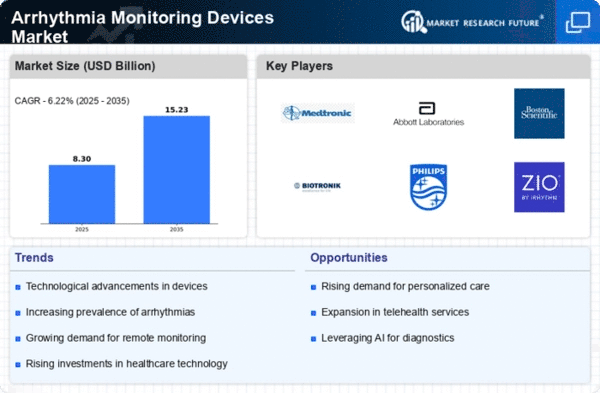
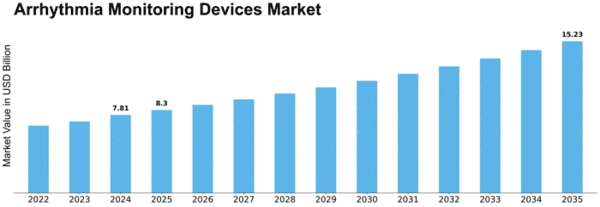
As per MRFR analysis, the Arrhythmia Monitoring Devices Market was estimated at 7.81 USD Billion in 2024. The Arrhythmia Monitoring Devices industry is projected to grow from 8.39 USD Billion in 2025 to 15.23 USD Billion by 2035, exhibiting a compound annual growth rate (CAGR) of 6.22 during the forecast period 2025 - 2035.

Key Market Trends & Highlights

The Arrhythmia Monitoring Devices Market is experiencing robust growth driven by technological advancements and increasing healthcare demands.

  • Technological advancements are enhancing the accuracy and efficiency of arrhythmia monitoring devices.
  • North America remains the largest market, while Asia-Pacific is emerging as the fastest-growing region in this sector.
  • The cardiac monitoring segment holds the largest market share, whereas wearable devices are witnessing the fastest growth.
  • Rising incidence of cardiac disorders and growing demand for home healthcare solutions are key drivers propelling market expansion.

Market Size & Forecast

2024 Market Size 7.81 (USD Billion)
2035 Market Size 15.23 (USD Billion)
CAGR (2025 - 2035) 6.22%
Largest Regional Market Share in 2024 North America

Major Players

<p>Medtronic (US), Abbott (US), Boston Scientific (US), Biotronik (DE), Philips (NL), GE Healthcare (US), iRhythm Technologies (US), Bard (US), LivaNova (GB)</p>

Market Trends

The Arrhythmia Monitoring Devices Market is currently experiencing a notable evolution, driven by advancements in technology and an increasing awareness of cardiovascular health. The integration of innovative features such as remote monitoring and data analytics is enhancing the capabilities of these devices, allowing for more accurate and timely detection of arrhythmias. This shift towards digital health solutions appears to be fostering a more proactive approach to patient care, as healthcare providers and patients alike recognize the importance of continuous monitoring. Furthermore, the growing prevalence of heart-related conditions is likely to propel demand for these devices, as they offer essential tools for managing and diagnosing arrhythmias effectively. In addition to technological advancements, regulatory support and favorable reimbursement policies are contributing to the growth of the Arrhythmia Monitoring Devices Market. As healthcare systems evolve, there seems to be a concerted effort to streamline the approval processes for new devices, thereby encouraging innovation. Moreover, the increasing focus on preventive healthcare is prompting stakeholders to invest in arrhythmia monitoring solutions, which could lead to improved patient outcomes. Overall, the market appears poised for sustained growth, driven by a combination of technological innovation, regulatory support, and a heightened emphasis on cardiovascular health.

Technological Advancements

The Arrhythmia Monitoring Devices Market is witnessing rapid technological advancements, particularly in the realm of wearable devices. Innovations such as mobile applications and cloud-based data storage are enhancing the functionality of monitoring devices, enabling real-time data access and analysis. This trend suggests a shift towards more user-friendly solutions that empower patients to take charge of their health.

Increased Focus on Preventive Healthcare

There is a growing emphasis on preventive healthcare within the Arrhythmia Monitoring Devices Market. Stakeholders are increasingly recognizing the value of early detection and continuous monitoring of arrhythmias. This trend indicates a broader shift in healthcare paradigms, where proactive measures are prioritized to mitigate the risks associated with cardiovascular diseases.

Regulatory Support and Reimbursement Policies

Regulatory bodies are providing enhanced support for the development and approval of arrhythmia monitoring devices. Favorable reimbursement policies are also emerging, which may encourage healthcare providers to adopt these technologies. This trend highlights the importance of a supportive regulatory environment in fostering innovation and accessibility within the market.

Arrhythmia Monitoring Devices Market Market Drivers

Rising Awareness and Education

Increased awareness regarding heart health and arrhythmias is driving the Global Arrhythmia Monitoring Devices Market Industry. Educational initiatives by health organizations and governments aim to inform the public about the risks associated with arrhythmias and the importance of early detection. Campaigns promoting heart health have led to more individuals seeking medical advice and monitoring solutions. This heightened awareness is likely to result in increased adoption of arrhythmia monitoring devices, as patients become more proactive in managing their health. Consequently, this trend is expected to bolster market growth significantly in the coming years.

Increasing Geriatric Population

The global demographic shift towards an aging population significantly influences the Global Arrhythmia Monitoring Devices Market Industry. Older adults are more susceptible to arrhythmias, necessitating continuous monitoring to prevent severe complications. According to the United Nations, the number of people aged 65 and older is projected to reach 1.5 billion by 2050. This demographic trend underscores the need for effective arrhythmia management solutions. As healthcare systems adapt to cater to this growing population, the demand for monitoring devices is likely to surge, contributing to a compound annual growth rate of 6.07% from 2025 to 2035.

Rising Prevalence of Cardiac Disorders

The increasing incidence of cardiac disorders globally is a primary driver of the Global Arrhythmia Monitoring Devices Market Industry. As cardiovascular diseases continue to rise, the demand for effective monitoring solutions becomes more pronounced. For instance, the World Health Organization indicates that cardiovascular diseases are the leading cause of death worldwide, accounting for approximately 32% of all deaths. This alarming trend necessitates advanced monitoring devices to manage arrhythmias effectively. The market is projected to reach 5.6 USD Billion in 2024, reflecting the urgent need for innovative solutions to address this growing health crisis.

Regulatory Support and Reimbursement Policies

Supportive regulatory frameworks and favorable reimbursement policies are vital drivers of the Global Arrhythmia Monitoring Devices Market Industry. Governments and health authorities are increasingly recognizing the importance of arrhythmia monitoring in improving patient outcomes. As a result, they are implementing policies that facilitate the approval and reimbursement of innovative monitoring devices. This regulatory support encourages manufacturers to invest in research and development, leading to the introduction of advanced technologies. Such initiatives not only enhance market accessibility but also stimulate growth, as healthcare providers are more likely to adopt devices that are financially supported by insurance plans.

Technological Advancements in Monitoring Devices

Technological innovations play a crucial role in shaping the Global Arrhythmia Monitoring Devices Market Industry. The development of advanced wearable devices, mobile health applications, and remote monitoring systems enhances patient engagement and enables real-time data collection. For example, devices equipped with artificial intelligence algorithms can analyze heart rhythms more accurately, leading to timely interventions. These advancements not only improve patient outcomes but also drive market growth. As the industry evolves, the integration of telemedicine and digital health technologies is expected to further propel the market, potentially doubling its value to 10.7 USD Billion by 2035.

Market Segment Insights

By Application: Cardiac Monitoring (Largest) vs. Wearable Devices (Fastest-Growing)

<p>In the Arrhythmia Monitoring Devices Market, the segment of cardiac monitoring stands out as the largest, capturing a significant portion of the market share. This segment primarily includes traditional electrophysiology devices, event recorders, and Holter monitors, which are widely utilized in clinical settings for accurate arrhythmia assessments. Conversely, wearable devices have gained traction among consumers, making them the fastest-growing segment thanks to their convenience and improved access to heart health monitoring.</p>

<p>Cardiac Monitoring (Dominant) vs. Wearable Devices (Emerging)</p>

<p>Cardiac monitoring represents the dominant segment within the Arrhythmia Monitoring Devices Market, characterized by established technologies and extensive adoption in hospitals and clinics. It encompasses devices that provide detailed and continuous cardiac assessments, allowing healthcare professionals to make informed decisions regarding patient management. In contrast, wearable devices, though emerging, are experiencing rapid market growth driven by advancements in technology and increasing consumer preference for self-monitoring solutions. These devices offer ease of use and real-time data tracking, catering to a larger audience and fostering a proactive approach to healthcare.</p>

By End Use: Hospitals (Largest) vs. Home Care Settings (Fastest-Growing)

<p>In the Arrhythmia Monitoring Devices Market, hospitals dominate the end-use segment, accounting for a significant share of the market due to their extensive infrastructure and resources. Home care settings, meanwhile, are witnessing rapid growth as patients increasingly prefer to monitor their health from the comfort of their homes, propelled by advancements in telemedicine and patient-centered care initiatives.</p>

<p>Hospitals (Dominant) vs. Home Care Settings (Emerging)</p>

<p>Hospitals play a dominant role in the Arrhythmia Monitoring Devices Market, with their need for advanced monitoring equipment to manage a large influx of patients dealing with cardiac issues. The integration of sophisticated technologies in hospitals enhances patient care immensely. In contrast, home care settings are emerging as a crucial segment, driven by the growing trend of remote patient monitoring and the increasing prevalence of chronic conditions. This shift is leading to a demand for user-friendly and efficient devices that allow patients to manage their health independently while staying connected with healthcare providers.</p>

By Device Type: Holter Monitors (Largest) vs. Wearable ECG Monitors (Fastest-Growing)

<p>The Arrhythmia Monitoring Devices Market is characterized by a dynamic distribution among its key segments, namely Holter Monitors, Event Monitors, Implantable Loop Recorders, and Wearable ECG Monitors. Holter Monitors currently hold the largest market share, reflecting their established use in continuous heart monitoring over a 24-48 hour period. This entrenched position is a testament to their reliability and clinician preference. Conversely, Wearable ECG Monitors are rapidly capturing attention, heralded for their convenience and advanced technological integrations, making them increasingly popular among consumers seeking proactive health monitoring.</p>

<p>Holter Monitors (Dominant) vs. Wearable ECG Monitors (Emerging)</p>

<p>Holter Monitors are the dominant force in the arrhythmia monitoring landscape, favored by healthcare professionals for their comprehensive data collection capabilities over extended periods. They provide essential insights into transient cardiac irregularities, playing a critical role in diagnosing various heart conditions. On the other hand, Wearable ECG Monitors represent an emerging segment, driven by technological innovations and consumer demand for portable health solutions. These devices empower users through real-time data analysis and connectivity features, enabling personalized health management. As healthcare trends shift towards remote monitoring, Wearable ECG Monitors are set to grow significantly, appealing to tech-savvy individuals and those desiring greater participation in their health care.</p>

By Technology: Electrocardiography (Largest) vs. Telemetry (Fastest-Growing)

<p>The Arrhythmia Monitoring Devices Market is primarily driven by the electrocardiography (ECG) segment, which holds the largest market share, dominating the landscape due to its established effectiveness in diagnosing cardiac arrhythmias. Telemetry also plays a crucial role, exhibiting rapid growth as healthcare providers increasingly favor remote patient monitoring solutions. Emerging trends indicate a shift toward integrating sophisticated monitoring technologies, leading to a competitive market structure. As consumers become more health-conscious, the demand for advanced arrhythmia monitoring technologies is surging. The increasing prevalence of cardiovascular diseases, along with technological advancements in wireless communication and cloud computing, is propelling the market. Telemetry, as a fast-growing segment, benefits from innovations in real-time data transmission and storage capabilities, while electrocardiography maintains its stronghold as the trusted conventional method in clinical settings.</p>

<p>Technology: Electrocardiography (Dominant) vs. Wireless Technology (Emerging)</p>

<p>Electrocardiography remains the cornerstone of arrhythmia monitoring, providing reliable and accurate assessments essential for patient management. Its extensive application in hospitals and clinics has established a significant trust among healthcare professionals. This segment excels due to advancements in portable and wearable ECG devices that allow for continuous monitoring. In contrast, wireless technology represents an emerging force, offering flexibility and user convenience through smartphone integration and connectivity. The ability to transmit data in real-time enhances patient engagement and enables prompt interventions. Both segments cater to the growing demand for efficient and effective arrhythmia management, with electrocardiography being the dominant technique complemented by the innovative applications of wireless technology.</p>

By Patient Type: Adult Patients (Largest) vs. Pediatric Patients (Fastest-Growing)

<p>The Arrhythmia Monitoring Devices Market is segmented by patient type into Adult, Pediatric, Geriatric, and Patients with Comorbidities. Among these segments, Adult Patients represent the largest share due to the higher prevalence of arrhythmias in adults, particularly those aged 60 and above. This demographic is more likely to seek monitoring solutions, leading to a significant market presence. Pediatric Patients, on the other hand, are experiencing rapid growth as awareness increases regarding childhood arrhythmias and advances in technology are making monitoring devices more accessible.</p>

<p>Patient Type: Adult Patients (Dominant) vs. Pediatric Patients (Emerging)</p>

<p>Adult Patients dominate the Arrhythmia Monitoring Devices Market due to the higher incidence rates of arrhythmias within this age group, leading to increased demand for monitoring devices tailored for adults. Predominantly, these are used for ongoing management of conditions like atrial fibrillation. In contrast, Pediatric Patients represent an emerging market segment that is witnessing accelerated growth. Advances in technology are facilitating the development of specialized devices designed for younger patients, which are often less invasive and more adaptable to their physiological needs. This aligns with the growing recognition of pediatric cardiovascular health, encouraging investments in pediatric-specific solutions and increasing uptake of monitoring devices.</p>

Get more detailed insights about Arrhythmia Monitoring Devices Market Research Report - Forecast till 2035

Regional Insights

North America : Market Leader in Innovation

North America is poised to maintain its leadership in the Arrhythmia Monitoring Devices Market, holding a significant market share of $4.68B in 2025. The region's growth is driven by increasing prevalence of cardiovascular diseases, technological advancements, and supportive regulatory frameworks. The demand for remote monitoring solutions is also on the rise, fueled by the aging population and a shift towards value-based healthcare. The competitive landscape is robust, with key players like Medtronic, Abbott, and Boston Scientific leading the charge. The U.S. is the primary market, benefiting from high healthcare expenditure and advanced healthcare infrastructure. The presence of major companies fosters innovation and enhances product availability, ensuring that North America remains at the forefront of arrhythmia monitoring technology.

Europe : Emerging Market with Growth Potential

Europe's Arrhythmia Monitoring Devices Market is projected to reach $2.2B by 2025, driven by increasing awareness of cardiac health and advancements in medical technology. Regulatory support from bodies like the European Medicines Agency (EMA) is facilitating market growth, as new devices gain faster approvals. The rising incidence of arrhythmias and the demand for effective monitoring solutions are key factors propelling this market forward. Leading countries in this region include Germany, France, and the UK, where healthcare investments are substantial. Major players such as Biotronik and Philips are actively expanding their product lines to meet the growing demand. The competitive landscape is characterized by innovation and strategic partnerships, enhancing the availability of advanced monitoring solutions across Europe.

Asia-Pacific : Rapidly Growing Healthcare Sector

The Asia-Pacific region is witnessing rapid growth in the Arrhythmia Monitoring Devices Market, projected to reach $0.7B by 2025. Factors such as increasing healthcare expenditure, rising awareness of cardiovascular diseases, and a growing aging population are driving demand. Additionally, government initiatives aimed at improving healthcare infrastructure are acting as catalysts for market expansion in this region. Countries like Japan, China, and India are leading the charge, with significant investments in healthcare technology. The competitive landscape is evolving, with both local and international players, including GE Healthcare and iRhythm Technologies, striving to capture market share. The focus on innovative solutions and affordability is crucial for meeting the diverse needs of the population in this rapidly growing market.

Middle East and Africa : Untapped Market Opportunities

The Middle East and Africa (MEA) region is emerging as a potential market for Arrhythmia Monitoring Devices, with a projected size of $0.23B by 2025. The growth is driven by increasing healthcare investments and a rising prevalence of cardiovascular diseases. Governments are focusing on enhancing healthcare infrastructure, which is expected to boost the adoption of advanced medical technologies in the region. Countries like South Africa and the UAE are at the forefront, with initiatives aimed at improving healthcare access. The competitive landscape is still developing, with opportunities for both local and international players to enter the market. Companies are increasingly focusing on partnerships and collaborations to enhance their presence and offer innovative solutions tailored to regional needs.

Key Players and Competitive Insights

The Arrhythmia Monitoring Devices Market is characterized by a dynamic competitive landscape, driven by technological advancements and an increasing prevalence of cardiac disorders. Key players such as Medtronic (US), Abbott (US), and Boston Scientific (US) are at the forefront, focusing on innovation and strategic partnerships to enhance their market positions. Medtronic (US) emphasizes the integration of advanced analytics and AI in its monitoring devices, while Abbott (US) is known for its robust product pipeline and commitment to expanding its global footprint. Boston Scientific (US) leverages its extensive distribution network to penetrate emerging markets, thereby shaping a competitive environment that is increasingly reliant on technological differentiation and strategic collaborations.

The market structure appears moderately fragmented, with several players vying for market share through localized manufacturing and optimized supply chains. Companies are increasingly localizing their production to reduce costs and improve responsiveness to regional demands. This tactic not only enhances operational efficiency but also allows for better compliance with local regulations, thereby strengthening their competitive stance. The collective influence of these key players fosters a competitive atmosphere where innovation and strategic positioning are paramount.

In November 2025, Medtronic (US) announced the launch of its latest arrhythmia monitoring device, which incorporates advanced AI algorithms for real-time data analysis. This strategic move is significant as it positions Medtronic (US) as a leader in the integration of AI technology within arrhythmia monitoring, potentially enhancing patient outcomes and operational efficiencies. The introduction of this device is likely to attract attention from healthcare providers seeking cutting-edge solutions to improve patient care.

In October 2025, Abbott (US) entered into a strategic partnership with a leading telehealth provider to enhance remote patient monitoring capabilities. This collaboration is crucial as it aligns with the growing trend towards telemedicine, allowing Abbott (US) to expand its service offerings and improve patient engagement. By integrating telehealth solutions with its monitoring devices, Abbott (US) is poised to capture a larger share of the market, particularly among patients requiring continuous monitoring.

In September 2025, Boston Scientific (US) completed the acquisition of a smaller tech firm specializing in wearable cardiac monitoring devices. This acquisition is indicative of Boston Scientific's (US) strategy to diversify its product portfolio and enhance its technological capabilities. By incorporating innovative wearable technology, the company is likely to strengthen its competitive edge and appeal to a broader demographic of patients seeking convenient monitoring solutions.

As of December 2025, the competitive trends in the Arrhythmia Monitoring Devices Market are increasingly defined by digitalization, sustainability, and the integration of AI technologies. Strategic alliances are becoming more prevalent, as companies recognize the value of collaboration in driving innovation and expanding market reach. The competitive differentiation is expected to evolve, shifting from traditional price-based competition to a focus on technological advancements, reliability in supply chains, and the ability to deliver superior patient outcomes. This transition underscores the importance of innovation as a key driver of success in the market.

Key Companies in the Arrhythmia Monitoring Devices Market market include

Industry Developments

  • Q2 2024: Medtronic receives FDA approval for LINQ II™ insertable cardiac monitor for pediatric patients Medtronic announced FDA approval for its LINQ II™ insertable cardiac monitor to be used in pediatric patients, expanding its arrhythmia monitoring device portfolio for younger populations.
  • Q2 2024: Abbott launches new Jot Dx™ insertable cardiac monitor in the U.S. Abbott introduced the Jot Dx™ insertable cardiac monitor in the United States, designed to provide advanced arrhythmia detection and remote monitoring capabilities for clinicians and patients.
  • Q3 2024: Boston Scientific announces acquisition of Preventice Solutions Boston Scientific completed the acquisition of Preventice Solutions, a company specializing in remote cardiac monitoring and wearable arrhythmia detection devices, strengthening its position in the arrhythmia monitoring sector.
  • Q3 2024: iRhythm Technologies appoints new CEO Quentin Blackford iRhythm Technologies, a leader in ambulatory cardiac monitoring, announced the appointment of Quentin Blackford as Chief Executive Officer to drive growth and innovation in arrhythmia monitoring solutions.
  • Q4 2024: Philips launches next-generation wearable ECG patch for arrhythmia detection Philips unveiled a new wearable ECG patch designed for continuous arrhythmia monitoring, offering improved comfort and data accuracy for patients in ambulatory settings.
  • Q4 2024: Biotronik receives CE Mark for BioMonitor IV implantable cardiac monitor Biotronik announced it has received CE Mark approval for its BioMonitor IV implantable cardiac monitor, enabling expanded use of the device for arrhythmia detection in Europe.
  • Q1 2025: Hill-Rom Holdings opens new cardiac monitoring device manufacturing facility in Texas Hill-Rom Holdings inaugurated a new manufacturing facility in Texas dedicated to the production of advanced cardiac arrhythmia monitoring devices, aiming to meet rising demand in North America.
  • Q1 2025: Vivaquant raises $25M Series B to expand arrhythmia monitoring device development Vivaquant secured $25 million in Series B funding to accelerate the development and commercialization of its next-generation arrhythmia monitoring devices.
  • Q2 2025: GE Healthcare partners with Mindray Medical to co-develop AI-powered arrhythmia monitoring solutions GE Healthcare and Mindray Medical announced a strategic partnership to jointly develop artificial intelligence-powered arrhythmia monitoring devices for global markets.
  • Q2 2025: iRhythm Technologies completes $100M public offering to fund arrhythmia monitoring device R&D iRhythm Technologies completed a $100 million public offering, with proceeds earmarked for research and development of new ambulatory arrhythmia monitoring devices.
  • Q3 2025: Boston Scientific receives FDA clearance for LUX-Dx™ insertable cardiac monitor Boston Scientific announced FDA clearance for its LUX-Dx™ insertable cardiac monitor, expanding its portfolio of devices for long-term arrhythmia detection.
  • Q3 2025: Abbott partners with Schiller AG to distribute arrhythmia monitoring devices in Asia-Pacific Abbott entered into a distribution partnership with Schiller AG to expand the reach of its arrhythmia monitoring devices across the Asia-Pacific region.

Key Players

  • Abbott Laboratories (US)
  • BioTelemetry Inc. (US)
  • Fukuda Denshi Co. Ltd (Japan)
  • Applied Cardiac Systems Inc. (US)
  • Medtronic plc (Ireland)
  • Nihon Kohden Corporation (Japan)
  • Alive Cor Inc. (US)
  • Biotronik (Germany)
  • GE Healthcare (US)
  • Spacelabs Healthcare (US)

Future Outlook

Arrhythmia Monitoring Devices Market Future Outlook

<p>The Arrhythmia Monitoring Devices Market is projected to grow at a 6.22% CAGR from 2024 to 2035, driven by technological advancements, increasing prevalence of arrhythmias, and rising healthcare expenditure.</p>

New opportunities lie in:

  • <p>Development of AI-driven predictive analytics tools for arrhythmia detection.</p>
  • <p>Expansion of remote patient monitoring services to enhance accessibility.</p>
  • <p>Partnerships with telehealth platforms to integrate arrhythmia monitoring solutions.</p>

<p>By 2035, the market is expected to be robust, driven by innovation and strategic partnerships.</p>

Market Segmentation

Arrhythmia Monitoring Devices Market End Use Outlook

  • Hospitals
  • Home Care Settings
  • Ambulatory Surgical Centers
  • Diagnostic Centers

Arrhythmia Monitoring Devices Market Technology Outlook

  • Electrocardiography
  • Telemetry
  • Wireless Technology
  • Cloud Computing

Arrhythmia Monitoring Devices Market Application Outlook

  • Cardiac Monitoring
  • Remote Patient Monitoring
  • Wearable Devices
  • Mobile Health Applications

Arrhythmia Monitoring Devices Market Device Type Outlook

  • Holter Monitors
  • Event Monitors
  • Implantable Loop Recorders
  • Wearable ECG Monitors

Arrhythmia Monitoring Devices Market Patient Type Outlook

  • Adult Patients
  • Pediatric Patients
  • Geriatric Patients
  • Patients with Comorbidities

Report Scope

MARKET SIZE 20247.81(USD Billion)
MARKET SIZE 20258.39(USD Billion)
MARKET SIZE 203515.23(USD Billion)
COMPOUND ANNUAL GROWTH RATE (CAGR)6.22% (2024 - 2035)
REPORT COVERAGERevenue Forecast, Competitive Landscape, Growth Factors, and Trends
BASE YEAR2024
Market Forecast Period2025 - 2035
Historical Data2019 - 2024
Market Forecast UnitsUSD Billion
Key Companies ProfiledMedtronic (US), Abbott (US), Boston Scientific (US), Biotronik (DE), Philips (NL), GE Healthcare (US), iRhythm Technologies (US), Bard (US), LivaNova (GB)
Segments CoveredApplication, End Use, Device Type, Technology, Patient Type
Key Market OpportunitiesIntegration of artificial intelligence in Arrhythmia Monitoring Devices enhances diagnostic accuracy and patient management.
Key Market DynamicsTechnological advancements and regulatory changes drive innovation and competition in the Arrhythmia Monitoring Devices Market.
Countries CoveredNorth America, Europe, APAC, South America, MEA

FAQs

What would be the worth of the arrhythmia monitoring devices market by 2035?

The arrhythmia monitoring devices market would be worth USD 10.7 Billion by 2035.

At what speed the arrhythmia monitoring devices market would grow during the forecast period of 2024-2032?

The arrhythmia monitoring devices market is showing signs of 9.32% CAGR during the forecast period of 2025-2035.

What could prevent the arrhythmia monitoring devices market from having a normal growth?

The arrhythmia monitoring devices market growth can be deterred by the high cost of the remote monitoring system and notable product recalls.

Which end user segment would influence the arrhythmia monitoring devices market the most?

The hospitals &amp; clinics segment would dominate the arrhythmia monitoring devices market.

Which regional arrhythmia monitoring devices market would dominate the global market?

The Americas have the chance to rule the arrhythmia monitoring devices market.

  1. Executive Summary
  2. Market Introduction
    1. Definition 18
    2. Scope of the Study 18
    3. Market Structure 18
  3. Research Methodology
    1. Research Process 19
    2. Primary Research 20
    3. Secondary Research 21
    4. Market Size Estimation 22
    5. Forecast Model 22
  4. Market Dynamics
    1. Overview 23
    2. Drivers 24
      1. Rising Prevalence Rate of Cardiac Diseases 24
      2. Increasing FDA Approvals 24
      3. Surge in the Adoption of Low-Cost Electrocardiogram (ECG) Devices 24
      4. Increasing Geriatric Population 24
    3. Restraints 26
      1. Increase in Product Recalls 26
      2. Complications Related to Devices 26
    4. Opportunities 27
      1. Increasing Technological Advancements 27
  5. Market Factor Analysis
    1. Value Chain Analysis 28
      1. R&D and Designing 28
      2. Manufacturing 28
      3. Distribution & Sales 28
      4. Post-Sales Review 29
    2. Porter’s Five Forces Model 30
      1. Bargaining Power of Suppliers 30
      2. Bargaining Power of Buyers 30
      3. Threat of New Entrants 31
      4. Intense Rivalry 31
  6. Arrhythmia Monitoring Devices Market, by Device Type
    1. Overview 32
    2. Resting ECG 34
    3. Event Monitor 35
    4. Implantable Cardiac Monitors (ICM) 36
    5. Holter Monitor 37
    6. Mobile Cardiac Telemetry (MCT) Devices 38
    7. Others 38
  7. Arrhythmia Monitoring Devices Market, by Application
    1. Overview 39
    2. Tachycardia 41
    3. Bradycardia 42
    4. Atrial Fibrillation (A-fib) 43
    5. Ventricular Fibrillation (V-fib) 44
    6. Premature Ventricular Contractions (PVC) 45
    7. Conduction Disorders 46
    8. Others 46
  8. Arrhythmia Monitoring Devices Market, by End User
    1. Overview 47
    2. Hospitals & Clinics 49
    3. Diagnostic Centers 50
    4. Homecare Settings 51
    5. Ambulatory Surgery Centers (ASC) 52
    6. Others 52
  9. Global Arrhythmia Monitoring Devices Market, by Region
    1. Overview 53
    2. Americas 55
  10. Arrhythmia Monitoring Devices Market, by Device Type
  11. Arrhythmia Monitoring Devices Market, by Application
  12. Arrhythmia Monitoring Devices Market, by End User
  13. North America 58
  14. Arrhythmia Monitoring Devices Market, by Device Type
  15. Arrhythmia Monitoring Devices Market, by Application
  16. Arrhythmia Monitoring Devices Market, by End User
  17. US 60
  18. Arrhythmia Monitoring Devices Market, by Device Type
  19. Arrhythmia Monitoring Devices Market, by Application
  20. Arrhythmia Monitoring Devices Market, by End User
  21. Canada 62
  22. Arrhythmia Monitoring Devices Market, by Device Type
  23. Arrhythmia Monitoring Devices Market, by Application
  24. Arrhythmia Monitoring Devices Market, by End User
  25. Latin America 64
  26. Arrhythmia Monitoring Devices Market, by Device Type
  27. Arrhythmia Monitoring Devices Market, by Application
  28. Arrhythmia Monitoring Devices Market, by End User
  29. Brazil 66
  30. Arrhythmia Monitoring Devices Market, by Device Type
  31. Arrhythmia Monitoring Devices Market, by Application
  32. Arrhythmia Monitoring Devices Market, by End User
  33. Rest of Latin America 68
  34. Arrhythmia Monitoring Devices Market, by Device Type
  35. Arrhythmia Monitoring Devices Market, by Application
  36. Arrhythmia Monitoring Devices Market, by End User
    1. Europe 70
  37. Arrhythmia Monitoring Devices Market, by Device Type
  38. Arrhythmia Monitoring Devices Market, by Application
  39. Arrhythmia Monitoring Devices Market, by End User
  40. Western Europe 73
  41. Arrhythmia Monitoring Devices Market, by Device Type
  42. Arrhythmia Monitoring Devices Market, by Application
  43. Arrhythmia Monitoring Devices Market, by End User
  44. Germany 75
  45. Arrhythmia Monitoring Devices Market, by Device Type
  46. Arrhythmia Monitoring Devices Market, by Application
  47. Arrhythmia Monitoring Devices Market, by End User
  48. UK 77
  49. Arrhythmia Monitoring Devices Market, by Device Type
  50. Arrhythmia Monitoring Devices Market, by Application
  51. Arrhythmia Monitoring Devices Market, by End User
  52. France 79
  53. Arrhythmia Monitoring Devices Market, by Device Type
  54. Arrhythmia Monitoring Devices Market, by Application
  55. Arrhythmia Monitoring Devices Market, by End User
  56. Italy 81
  57. Arrhythmia Monitoring Devices Market, by Device Type
  58. Arrhythmia Monitoring Devices Market, by Application
  59. Arrhythmia Monitoring Devices Market, by End User
  60. Spain 83
  61. Arrhythmia Monitoring Devices Market, by Device Type
  62. Arrhythmia Monitoring Devices Market, by Application
  63. Arrhythmia Monitoring Devices Market, by End User
  64. Rest of Western Europe 85
  65. Arrhythmia Monitoring Devices Market, by Device Type
  66. Arrhythmia Monitoring Devices Market, by Application
  67. Arrhythmia Monitoring Devices Market, by End User
  68. Eastern Europe 87
  69. Arrhythmia Monitoring Devices Market, by Device Type
  70. Arrhythmia Monitoring Devices Market, by Application
  71. Arrhythmia Monitoring Devices Market, by End User
    1. Asia-Pacific 89
  72. Arrhythmia Monitoring Devices Market, by Device Type
  73. Arrhythmia Monitoring Devices Market, by Application
  74. Arrhythmia Monitoring Devices Market, by End User
  75. Japan 92
  76. Arrhythmia Monitoring Devices Market, by Device Type
  77. Arrhythmia Monitoring Devices Market, by Application
  78. Arrhythmia Monitoring Devices Market, by End User
  79. China 94
  80. Arrhythmia Monitoring Devices Market, by Device Type
  81. Arrhythmia Monitoring Devices Market, by Application
  82. Arrhythmia Monitoring Devices Market, by End User
  83. India 96
  84. Arrhythmia Monitoring Devices Market, by Device Type
  85. Arrhythmia Monitoring Devices Market, by Application
  86. Arrhythmia Monitoring Devices Market, by End User
  87. Australia 98
  88. Arrhythmia Monitoring Devices Market, by Device Type
  89. Arrhythmia Monitoring Devices Market, by Application
  90. Arrhythmia Monitoring Devices Market, by End User
  91. South Korea 100
  92. Arrhythmia Monitoring Devices Market, by Device Type
  93. Arrhythmia Monitoring Devices Market, by Application
  94. Arrhythmia Monitoring Devices Market, by End User
  95. Rest of Asia-Pacific 102
  96. Arrhythmia Monitoring Devices Market, by Device Type
  97. Arrhythmia Monitoring Devices Market, by Application
  98. Arrhythmia Monitoring Devices Market, by End User
    1. Middle East & Africa 104
  99. Arrhythmia Monitoring Devices Market, by Device Type
  100. Arrhythmia Monitoring Devices Market, by Application
  101. Arrhythmia Monitoring Devices Market, by End User
  102. Middle East 107
  103. Arrhythmia Monitoring Devices Market, by Device Type
  104. Arrhythmia Monitoring Devices Market, by Application
  105. Arrhythmia Monitoring Devices Market, by End User
  106. Africa 109
  107. Arrhythmia Monitoring Devices Market, by Device Type
  108. Arrhythmia Monitoring Devices Market, by Application
  109. Arrhythmia Monitoring Devices Market, by End User
  110. Competitive Landscape
    1. Overview 111
    2. Company Share Analysis 111
  111. Company Profiles
    1. Biotronik 113
      1. Company Overview 113
      2. Financial Overview 113
      3. Products/Services Offered 113
      4. Key Developments 113
      5. SWOT Analysis 114
      6. Key Strategies 114
    2. Abbott Laboratories 115
      1. Company Overview 115
      2. Financial Overview 115
      3. Products/Services Offered 116
      4. Key Developments 116
      5. SWOT Analysis 116
      6. Key Strategies 116
    3. Medtronic plc 117
      1. Company Overview 117
      2. Financial Overview 117
      3. Products/Services Offered 118
      4. Key Developments 118
      5. SWOT Analysis 118
      6. Key Strategies 118
    4. GE Healthcare 119
      1. Company Overview 119
      2. Financial Overview 119
      3. Products/Services Offered 120
      4. Key Developments 120
      5. SWOT Analysis 120
      6. Key Strategies 121
    5. BioTelemetry, Inc. 122
      1. Company Overview 122
      2. Financial Overview 122
      3. Products/Services Offered 123
      4. Key Developments 123
      5. SWOT Analysis 123
      6. Key Strategies 123
    6. Applied Cardiac Systems, Inc. 124
      1. Company Overview 124
      2. Financial Overview 124
      3. Products/Services Offered 124
      4. Key Developments 124
      5. SWOT Analysis 124
      6. Key Strategies 125
    7. AliveCor, Inc. 126
      1. Company Overview 126
      2. Financial Overview 126
      3. Products/Services Offered 126
      4. Key Developments 126
      5. SWOT Analysis 126
      6. Key Strategies 127
    8. Nihon Kohden Corporation 128
      1. Company Overview 128
      2. Financial Overview 128
      3. Products/Services Offered 128
      4. Key Developments 129
      5. SWOT Analysis 129
      6. Key Strategies 129
    9. Fukuda Denshi Co. Ltd 130
      1. Company Overview 130
      2. Financial Overview 130
      3. Products/Services Offered 131
      4. Key Developments 131
      5. SWOT Analysis 131
      6. Key Strategies 131
    10. Spacelabs Healthcare 132
      1. Company Overview 132
      2. Financial Overview 132
      3. Products/Services Offered 133
      4. Key Developments 133
      5. SWOT Analysis 133
      6. Key Strategies 133
  112. Appendix
    1. References 134
    2. Related Reports 134
  113. List of Tables
  114. GLOBAL ARRHYTHMIA MONITORING DEVICES MARKET, BY DEVICE TYPE, 2020–2027 (USD MILLION) 33
  115. GLOBAL ARRHYTHMIA MONITORING DEVICES MARKET FOR RESTING ECG, BY REGION, 2020–2027 (USD MILLION) 34
  116. GLOBAL ARRHYTHMIA MONITORING DEVICES MARKET FOR EVENT MONITORS, BY REGION, 2020–2027 (USD MILLION) 35
  117. GLOBAL ARRHYTHMIA MONITORING DEVICES MARKET FOR IMPLANTABLE CARDIAC MONITORS (ICM), BY REGION,
  118. GLOBAL ARRHYTHMIA MONITORING DEVICES MARKET FOR HOLTER MONITORS, BY REGION, 2020–2027 (USD MILLION) 37
  119. GLOBAL ARRHYTHMIA MONITORING DEVICES MARKET FOR MOBILE CARDIAC TELEMETRY (MCT) DEVICES, BY REGION,
  120. GLOBAL ARRHYTHMIA MONITORING DEVICES MARKET, BY APPLICATION, 2020–2027 (USD MILLION) 40
  121. GLOBAL ARRHYTHMIA MONITORING DEVICES MARKET FOR TACHYCARDIA, BY REGION, 2020–2027 (USD MILLION) 41
  122. GLOBAL ARRHYTHMIA MONITORING DEVICES MARKET FOR BRADYCARDIA, BY REGION, 2020–2027 (USD MILLION) 42
  123. GLOBAL ARRHYTHMIA MONITORING DEVICES MARKET FOR ATRIAL FIBRILLATION (A-FIB), BY REGION,
  124. GLOBAL ARRHYTHMIA MONITORING DEVICES MARKET FOR VENTRICULAR FIBRILLATION (V-FIB), BY REGION,
  125. GLOBAL ARRHYTHMIA MONITORING DEVICES MARKET FOR PREMATURE VENTRICULAR CONTRACTIONS (PVC),
    1. BY REGION, 2020–2027 (USD MILLION) 45
  126. GLOBAL ARRHYTHMIA MONITORING DEVICES MARKET FOR CONDUCTION DISORDERS, BY REGION, 2020–2027 (USD MILLION) 46
  127. GLOBAL ARRHYTHMIA MONITORING DEVICES MARKET, BY END USER, 2020–2027 (USD MILLION) 48
  128. GLOBAL ARRHYTHMIA MONITORING DEVICES MARKET FOR HOSPITALS AND CLINICS, BY REGION, 2020–2027 (USD MILLION) 49
  129. GLOBAL ARRHYTHMIA MONITORING DEVICES MARKET FOR DIAGNOSTIC CENTERS, BY REGION, 2020–2027 (USD MILLION) 50
  130. GLOBAL ARRHYTHMIA MONITORING DEVICES MARKET FOR HOMECARE SETTINGS, BY REGION, 2020–2027 (USD MILLION) 51
  131. GLOBAL ARRHYTHMIA MONITORING DEVICES MARKET FOR AMBULATORY SURGERY CENTERS (ASC), BY REGION,
  132. GLOBAL ARRHYTHMIA MONITORING DEVICES MARKET, BY REGION, 2020–2027 (USD MILLION) 54
  133. AMERICAS: ARRHYTHMIA MONITORING DEVICES MARKET, BY REGION, 2020–2027 (USD MILLION) 56
  134. AMERICAS: ARRHYTHMIA MONITORING DEVICES MARKET, BY DEVICE TYPE, 2020–2027 (USD MILLION) 56
  135. AMERICAS: ARRHYTHMIA MONITORING DEVICES MARKET, BY APPLICATION, 2020–2027 (USD MILLION) 57
  136. AMERICAS: ARRHYTHMIA MONITORING DEVICES MARKET, BY END USER, 2020–2027 (USD MILLION) 57
  137. NORTH AMERICA: ARRHYTHMIA MONITORING DEVICES MARKET, BY COUNTRY, 2020–2027 (USD MILLION) 58
  138. NORTH AMERICA: ARRHYTHMIA MONITORING DEVICES MARKET, BY DEVICE TYPE, 2020–2027 (USD MILLION) 59
  139. NORTH AMERICA: ARRHYTHMIA MONITORING DEVICES MARKET, BY APPLICATION, 2020–2027 (USD MILLION) 59
  140. NORTH AMERICA: ARRHYTHMIA MONITORING DEVICES MARKET, BY END USER, 2020–2027 (USD MILLION) 60
  141. US: ARRHYTHMIA MONITORING DEVICES MARKET, BY DEVICE TYPE, 2020–2027 (USD MILLION) 60
  142. US: ARRHYTHMIA MONITORING DEVICES MARKET, BY APPLICATION, 2020–2027 (USD MILLION) 61
  143. US: ARRHYTHMIA MONITORING DEVICES MARKET, BY END USER, 2020–2027 (USD MILLION) 61
  144. CANADA: ARRHYTHMIA MONITORING DEVICES MARKET, BY DEVICE TYPE, 2020–2027 (USD MILLION) 62
  145. CANADA: ARRHYTHMIA MONITORING DEVICES MARKET, BY APPLICATION, 2020–2027 (USD MILLION) 63
  146. CANADA: ARRHYTHMIA MONITORING DEVICES MARKET, BY END USER, 2020–2027 (USD MILLION) 63
  147. LATIN AMERICA: ARRHYTHMIA MONITORING DEVICES MARKET, BY COUNTRY, 2020–2027 (USD MILLION) 64
  148. LATIN AMERICA: ARRHYTHMIA MONITORING DEVICES MARKET, BY DEVICE TYPE, 2020–2027 (USD MILLION) 65
  149. LATIN AMERICA: ARRHYTHMIA MONITORING DEVICES MARKET, BY APPLICATION, 2020–2027 (USD MILLION) 65
  150. LATIN AMERICA: ARRHYTHMIA MONITORING DEVICES MARKET, BY END USER, 2020–2027 (USD MILLION) 66
  151. BRAZIL: ARRHYTHMIA MONITORING DEVICES MARKET, BY DEVICE TYPE, 2020–2027 (USD MILLION) 66
  152. BRAZIL: ARRHYTHMIA MONITORING DEVICES MARKET, BY APPLICATION, 2020–2027 (USD MILLION) 67
  153. BRAZIL: ARRHYTHMIA MONITORING DEVICES MARKET, BY END USER, 2020–2027 (USD MILLION) 67
  154. REST OF LATIN AMERICA: ARRHYTHMIA MONITORING DEVICES MARKET, BY DEVICE TYPE, 2020–2027 (USD MILLION) 68
  155. REST OF LATIN AMERICA: ARRHYTHMIA MONITORING DEVICES MARKET, BY APPLICATION, 2020–2027 (USD MILLION) 69
  156. REST OF LATIN AMERICA: ARRHYTHMIA MONITORING DEVICES MARKET, BY END USER, 2020–2027 (USD MILLION) 69
  157. EUROPE: ARRHYTHMIA MONITORING DEVICES MARKET, BY REGION, 2020–2027 (USD MILLION) 71
  158. EUROPE: ARRHYTHMIA MONITORING DEVICES MARKET, BY DEVICE TYPE, 2020–2027 (USD MILLION) 71
  159. EUROPE: ARRHYTHMIA MONITORING DEVICES MARKET, BY APPLICATION, 2020–2027 (USD MILLION) 72
  160. EUROPE: ARRHYTHMIA MONITORING DEVICES MARKET, BY END USER, 2020–2027 (USD MILLION) 72
  161. WESTERN EUROPE: ARRHYTHMIA MONITORING DEVICES MARKET, BY COUNTRY, 2020–2027 (USD MILLION) 73
  162. WESTERN EUROPE: ARRHYTHMIA MONITORING DEVICES MARKET, BY DEVICE TYPE, 2020–2027 (USD MILLION) 74
  163. WESTERN EUROPE: ARRHYTHMIA MONITORING DEVICES MARKET, BY APPLICATION, 2020–2027 (USD MILLION) 74
  164. WESTERN EUROPE: ARRHYTHMIA MONITORING DEVICES MARKET, BY END USER, 2020–2027 (USD MILLION) 75
  165. GERMANY: ARRHYTHMIA MONITORING DEVICES MARKET, BY DEVICE TYPE, 2020–2027 (USD MILLION) 75
  166. GERMANY: ARRHYTHMIA MONITORING DEVICES MARKET, BY APPLICATION, 2020–2027 (USD MILLION) 76
  167. GERMANY: ARRHYTHMIA MONITORING DEVICES MARKET, BY END USER, 2020–2027 (USD MILLION) 76
  168. UK: ARRHYTHMIA MONITORING DEVICES MARKET, BY DEVICE TYPE, 2020–2027 (USD MILLION) 77
  169. UK: ARRHYTHMIA MONITORING DEVICES MARKET, BY APPLICATION, 2020–2027 (USD MILLION) 78
  170. UK: ARRHYTHMIA MONITORING DEVICES MARKET, BY END USER, 2020–2027 (USD MILLION) 78
  171. FRANCE: ARRHYTHMIA MONITORING DEVICES MARKET, BY DEVICE TYPE, 2020–2027 (USD MILLION) 79
  172. FRANCE: ARRHYTHMIA MONITORING DEVICES MARKET, BY APPLICATION, 2020–2027 (USD MILLION) 80
  173. FRANCE: ARRHYTHMIA MONITORING DEVICES MARKET, BY END USER, 2020–2027 (USD MILLION) 80
  174. ITALY: ARRHYTHMIA MONITORING DEVICES MARKET, BY DEVICE TYPE, 2020–2027 (USD MILLION) 81
  175. ITALY: ARRHYTHMIA MONITORING DEVICES MARKET, BY APPLICATION, 2020–2027 (USD MILLION) 82
  176. ITALY: ARRHYTHMIA MONITORING DEVICES MARKET, BY END USER, 2020–2027 (USD MILLION) 82
  177. SPAIN: ARRHYTHMIA MONITORING DEVICES MARKET, BY DEVICE TYPE, 2020–2027 (USD MILLION) 83
  178. SPAIN: ARRHYTHMIA MONITORING DEVICES MARKET, BY APPLICATION, 2020–2027 (USD MILLION) 84
  179. SPAIN: ARRHYTHMIA MONITORING DEVICES MARKET, BY END USER, 2020–2027 (USD MILLION) 84
  180. REST OF WESTERN EUROPE: ARRHYTHMIA MONITORING DEVICES MARKET, BY DEVICE TYPE, 2020–2027 (USD MILLION) 85
  181. REST OF WESTERN EUROPE: ARRHYTHMIA MONITORING DEVICES MARKET, BY APPLICATION, 2020–2027 (USD MILLION) 86
  182. REST OF WESTERN EUROPE: ARRHYTHMIA MONITORING DEVICES MARKET, BY END USER, 2020–2027 (USD MILLION) 86
  183. EASTERN EUROPE: ARRHYTHMIA MONITORING DEVICES MARKET, BY DEVICE TYPE, 2020–2027 (USD MILLION) 87
  184. EASTERN EUROPE: ARRHYTHMIA MONITORING DEVICES MARKET, BY APPLICATION, 2020–2027 (USD MILLION) 88
  185. EASTERN EUROPE: ARRHYTHMIA MONITORING DEVICES MARKET, BY END USER, 2020–2027 (USD MILLION) 88
  186. ASIA-PACIFIC: ARRHYTHMIA MONITORING DEVICES MARKET, BY COUNTRY, 2020–2027 (USD MILLION) 90
  187. ASIA-PACIFIC: ARRHYTHMIA MONITORING DEVICES MARKET, BY DEVICE TYPE, 2020–2027 (USD MILLION) 90
  188. ASIA-PACIFIC: ARRHYTHMIA MONITORING DEVICES MARKET, BY APPLICATION, 2020–2027 (USD MILLION) 91
  189. ASIA-PACIFIC: ARRHYTHMIA MONITORING DEVICES MARKET, BY END USER, 2020–2027 (USD MILLION) 91
  190. JAPAN: ARRHYTHMIA MONITORING DEVICES MARKET, BY DEVICE TYPE, 2020–2027 (USD MILLION) 92
  191. JAPAN: ARRHYTHMIA MONITORING DEVICES MARKET, BY APPLICATION, 2020–2027 (USD MILLION) 93
  192. JAPAN: ARRHYTHMIA MONITORING DEVICES MARKET, BY END USER, 2020–2027 (USD MILLION) 93
  193. CHINA: ARRHYTHMIA MONITORING DEVICES MARKET, BY DEVICE TYPE, 2020–2027 (USD MILLION) 94
  194. CHINA: ARRHYTHMIA MONITORING DEVICES MARKET, BY APPLICATION, 2020–2027 (USD MILLION) 95
  195. CHINA: ARRHYTHMIA MONITORING DEVICES MARKET, BY END USER, 2020–2027 (USD MILLION) 95
  196. INDIA: ARRHYTHMIA MONITORING DEVICES MARKET, BY DEVICE TYPE, 2020–2027 (USD MILLION) 96
  197. INDIA: ARRHYTHMIA MONITORING DEVICES MARKET, BY APPLICATION, 2020–2027 (USD MILLION) 97
  198. INDIA: ARRHYTHMIA MONITORING DEVICES MARKET, BY END USER, 2020–2027 (USD MILLION) 97
  199. AUSTRALIA: ARRHYTHMIA MONITORING DEVICES MARKET, BY DEVICE TYPE, 2020–2027 (USD MILLION) 98
  200. AUSTRALIA: ARRHYTHMIA MONITORING DEVICES MARKET, BY APPLICATION, 2020–2027 (USD MILLION) 99
  201. AUSTRALIA: ARRHYTHMIA MONITORING DEVICES MARKET, BY END USER, 2020–2027 (USD MILLION) 99
  202. SOUTH KOREA: ARRHYTHMIA MONITORING DEVICES MARKET, BY DEVICE TYPE, 2020–2027 (USD MILLION) 100
  203. SOUTH KOREA: ARRHYTHMIA MONITORING DEVICES MARKET, BY APPLICATION, 2020–2027 (USD MILLION) 101
  204. SOUTH KOREA: ARRHYTHMIA MONITORING DEVICES MARKET, BY END USER, 2020–2027 (USD MILLION) 101
  205. REST OF ASIA-PACIFIC: ARRHYTHMIA MONITORING DEVICES MARKET, BY DEVICE TYPE, 2020–2027 (USD MILLION) 102
  206. REST OF ASIA-PACIFIC: ARRHYTHMIA MONITORING DEVICES MARKET, BY APPLICATION, 2020–2027 (USD MILLION) 103
  207. REST OF ASIA-PACIFIC: ARRHYTHMIA MONITORING DEVICES MARKET, BY END USER, 2020–2027 (USD MILLION) 103
  208. MIDDLE EAST & AFRICA: ARRHYTHMIA MONITORING DEVICES MARKET, BY REGION, 2020–2027 (USD MILLION) 105
  209. MIDDLE EAST & AFRICA: ARRHYTHMIA MONITORING DEVICES MARKET, BY DEVICE TYPE, 2020–2027 (USD MILLION) 105
  210. MIDDLE EAST & AFRICA: ARRHYTHMIA MONITORING DEVICES MARKET, BY APPLICATION, 2020–2027 (USD MILLION) 106
  211. MIDDLE EAST & AFRICA: ARRHYTHMIA MONITORING DEVICES MARKET, BY END USER, 2020–2027 (USD MILLION) 106
  212. MIDDLE EAST: ARRHYTHMIA MONITORING DEVICES MARKET, BY DEVICE TYPE, 2020–2027 (USD MILLION) 107
  213. MIDDLE EAST: ARRHYTHMIA MONITORING DEVICES MARKET, BY APPLICATION, 2020–2027 (USD MILLION) 108
  214. MIDDLE EAST: ARRHYTHMIA MONITORING DEVICES MARKET, BY END USER, 2020–2027 (USD MILLION) 108
  215. AFRICA: ARRHYTHMIA MONITORING DEVICES MARKET, BY DEVICE TYPE, 2020–2027 (USD MILLION) 109
  216. AFRICA: ARRHYTHMIA MONITORING DEVICES MARKET, BY APPLICATION, 2020–2027 (USD MILLION) 110
  217. AFRICA: ARRHYTHMIA MONITORING DEVICES MARKET, BY END USER, 2020–2027 (USD MILLION) 110
  218. List of Figures
  219. MARKET SYNOPSIS 14
  220. MARKET ATTRACTIVENESS ANALYSIS: GLOBAL ARRHYTHMIA MONITORING DEVICES MARKET 15
  221. GLOBAL ARRHYTHMIA MONITORING DEVICES MARKET SHARE, BY DEVICE TYPE, 2020 (%) 15
  222. GLOBAL ARRHYTHMIA MONITORING DEVICES MARKET, BY DEVICE TYPE, 2020–2027 (USD MILLION) 15
  223. GLOBAL ARRHYTHMIA MONITORING DEVICES MARKET SHARE, BY APPLICATION, 2020 (%) 16
  224. GLOBAL ARRHYTHMIA MONITORING DEVICES MARKET, BY APPLICATION, 2020–2027 (USD MILLION) 16
  225. GLOBAL ARRHYTHMIA MONITORING DEVICES MARKET SHARE, BY END USER, 2020 (%) 16
  226. GLOBAL ARRHYTHMIA MONITORING DEVICES MARKET, BY END USER, 2020–2027 (USD MILLION) 17
  227. GLOBAL ARRHYTHMIA MONITORING DEVICES MARKET: MARKET STRUCTURE 18
  228. RESEARCH PROCESS OF MRFR 19
  229. TOP-DOWN & BOTTOM-UP APPROACH 22
  230. MARKET DYNAMICS: ANALYSIS OF THE GLOBAL ARRHYTHMIA MONITORING DEVICES MARKET 23
  231. DRIVERS IMPACT ANALYSIS: GLOBAL ARRHYTHMIA MONITORING DEVICES MARKET 25
  232. RESTRAINTS IMPACT ANALYSIS: GLOBAL ARRHYTHMIA MONITORING DEVICES MARKET 26
  233. VALUE CHAIN: GLOBAL ARRHYTHMIA MONITORING DEVICES MARKET 28
  234. PORTER’S FIVE FORCES ANALYSIS: GLOBAL ARRHYTHMIA MONITORING DEVICES MARKET 30
  235. GLOBAL ARRHYTHMIA MONITORING DEVICES MARKET SHARE, BY DEVICE TYPE, 2020 (%) 32
  236. GLOBAL ARRHYTHMIA MONITORING DEVICES MARKET, BY DEVICE TYPE, 2020 AND 2027 (USD MILLION) 32
  237. GLOBAL ARRHYTHMIA MONITORING DEVICES MARKET SHARE, BY APPLICATION, 2020 (%) 39
  238. GLOBAL ARRHYTHMIA MONITORING DEVICES MARKET, BY APPLICATION, 2020 AND 2027 (USD MILLION) 40
  239. GLOBAL ARRHYTHMIA MONITORING DEVICES MARKET SHARE, BY END USER, 2020 (%) 47
  240. GLOBAL ARRHYTHMIA MONITORING DEVICES MARKET, BY END USER, 2020 AND 2027 (USD MILLION) 47
  241. GLOBAL ARRHYTHMIA MONITORING DEVICES MARKET SHARE, BY REGION, 2020 (%) 53
  242. GLOBAL ARRHYTHMIA MONITORING DEVICES MARKET, BY REGION, 2020 AND 2027 (USD MILLION) 53
  243. AMERICAS: ARRHYTHMIA MONITORING DEVICES MARKET, BY REGION, 2020 AND 2027 55
  244. NORTH AMERICA: ARRHYTHMIA MONITORING DEVICES MARKET, BY COUNTRY, 2020 AND 2027 58
  245. LATIN AMERICA: ARRHYTHMIA MONITORING DEVICES MARKET, BY COUNTRY, 2020 AND 2027 64
  246. EUROPE: ARRHYTHMIA MONITORING DEVICES MARKET, BY REGION, 2020 AND 2027 70
  247. WESTERN EUROPE: ARRHYTHMIA MONITORING DEVICES MARKET, BY COUNTRY, 2020 AND 2027 73
  248. ASIA-PACIFIC: ARRHYTHMIA MONITORING DEVICES MARKET, BY COUNTRY, 2020 AND 2027 89
  249. MIDDLE EAST & AFRICA: ARRHYTHMIA MONITORING DEVICES MARKET, BY REGION, 2020 AND 2027 104
  250. GLOBAL ARRHYTHMIA MONITORING DEVICES MARKET SHARE ANALYSIS, 2020 (%) 111

Arrhythmia Monitoring Devices Market Segmentation

Market Segmentation Overview

  • Detailed segmentation data will be available in the full report
  • Comprehensive analysis by multiple parameters
  • Regional and country-level breakdowns
  • Market size forecasts by segment
Infographic

Free Sample Request

Kindly complete the form below to receive a free sample of this Report

Get Free Sample

Customer Strories

Compare Licence

×
Features License Type
Single User Multiuser License Enterprise User
Price $4,950 $5,950 $7,250
Maximum User Access Limit 1 User Upto 10 Users Unrestricted Access Throughout the Organization
Free Customization
Direct Access to Analyst
Deliverable Format
Platform Access
Discount on Next Purchase 10% 15% 15%
Printable Versions