×
Hero Background
English
Chinese
French
Japanese
Korean
German
Spanish

Allergy Vaccine Market Size

ID: MRFR/Pharma/10677-HCR
128 Pages
Rahul Gotadki
October 2025

Allergy Vaccine Market Research Report: Information By Type (Subcutaneous Immunotherapy and Sublingual Immunotherapy), By Application (Allergic Rhinitis, Allergic Asthma and Others), By Distribution Channel (Hospital Pharmacies, Retail Pharmacies and Online Pharmacies) And By Region (North America, Europe, Asia-Pacific, And Rest Of The World) –Market Forecast Till 2035

Share:
Download PDF ×

We do not share your information with anyone. However, we may send you emails based on your report interest from time to time. You may contact us at any time to opt-out.

Allergy Vaccine Market Infographic
Purchase Options

Allergy Vaccine Size

Allergy Vaccine Market Growth Projections and Opportunities

One of the key market factors driving the growth of the allergy vaccine market is the increasing prevalence of allergies worldwide. Allergic conditions, such as hay fever, allergic rhinitis, and asthma, have become more widespread, leading to a rising demand for effective allergy vaccines. The allergy vaccine sector has experienced strong breakthroughs since immunotherapy, more precisely, in the vaccine development, has manifested. Vaccine designers are looking at some new techniques and formulations to ensure their proper implementation, resulting in a higher efficacy level, which is attracting both vaccine recipients and medical care providers. Higher level of education among healthcare professionals and the public at large regarding the advantages of vaccine therapy and their positive impact on market expansion is also realized. Educating consumers about the advantages of vaccinations focusing on their role in helping to manage allergies has been reaping fruits of consumer perception shift for safe preventive healthcare. Public health programs geared towards preventing allergies as well as finding a way of alleviating the huge economic burden that comes with these kind of diseases has fueled the growth of the allergy vaccine industry. Encouraging policies, subsidization, and permits have provided consenting conditions for market champions to invest in research and development. The introduction and development of vaccines has truly revolutionized and dictated the evolution of allergy vaccine market, hereby the introduction of recombinant DNA technology and novel adjuvants is some of the most contributing technological advancements. These innovations improved the safety and efficacy of allergy vaccines; Imraachana yileliwu za dara wa mwaana shini mya. The grow of world healthcare expenditure led to a latest trends in vaccine research and development for allergies. As people and governments continue devoting their resources primarily to healthcare, there is, oftentimes than not, an associated increase in funding for the development of innovative allergy vaccines, hence a faster rate of market expansion. Environmental factors, such as climate change, have been linked to the increased prevalence of allergies. Changes in temperature, pollen seasons, and air quality contribute to the rise in allergic conditions. This correlation has intensified the need for effective allergy vaccines to address the changing dynamics of environmental allergens. Intense competition among market players has led to product differentiation and the introduction of diverse allergy vaccine formulations. This competitive landscape benefits consumers by providing a range of options, spurring innovation, and ensuring the continuous improvement of allergy vaccine offerings.
Allergy Vaccine Market Size Graph
Author
Rahul Gotadki
Assistant Manager

He holds an experience of about 7+ years in Market Research and Business Consulting, working under the spectrum of Life Sciences and Healthcare domains. Rahul conceptualizes and implements a scalable business strategy and provides strategic leadership to the clients. His expertise lies in market estimation, competitive intelligence, pipeline analysis, customer assessment, etc. In addition to the above, his other responsibility includes strategic tracking of high growth markets & advising clients on the potential areas of focus they could direct their business initiatives

Leave a Comment

FAQs

What is the projected market valuation of the Allergy Vaccine Market by 2035?

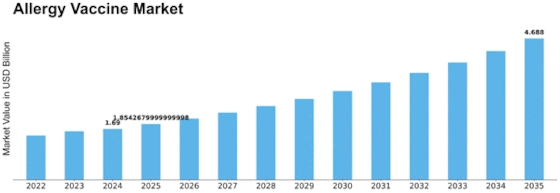
The Allergy Vaccine Market is projected to reach a valuation of 4.688 USD Billion by 2035.

What was the market valuation of the Allergy Vaccine Market in 2024?

In 2024, the Allergy Vaccine Market was valued at 1.69 USD Billion.

What is the expected CAGR for the Allergy Vaccine Market during the forecast period 2025 - 2035?

The expected CAGR for the Allergy Vaccine Market during the forecast period 2025 - 2035 is 9.72%.

Which companies are considered key players in the Allergy Vaccine Market?

Key players in the Allergy Vaccine Market include Allergan, AstraZeneca, Bayer, GlaxoSmithKline, Merck & Co., Novartis, Sanofi, and Teva Pharmaceutical Industries.

What are the main types of allergy vaccines in the market?

The main types of allergy vaccines in the market are Subcutaneous Immunotherapy and Sublingual Immunotherapy.

How did the Subcutaneous Immunotherapy segment perform in 2024?

In 2024, the Subcutaneous Immunotherapy segment was valued at 0.845 USD Billion.

Market Summary

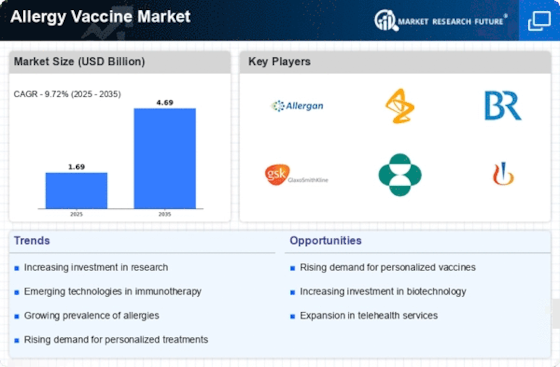
As per MRFR analysis, the Allergy Vaccine Market Size was estimated at 1.69 USD Billion in 2024. The Allergy Vaccine industry is projected to grow from 1.854 USD Billion in 2025 to 4.688 USD Billion by 2035, exhibiting a compound annual growth rate (CAGR) of 9.72 during the forecast period 2025 - 2035.

Key Market Trends & Highlights

The Allergy Vaccine Market is poised for substantial growth driven by rising allergy prevalence and technological advancements.

  • The Allergy Vaccine Market is experiencing a notable upward trajectory, particularly in North America, which remains the largest market. Subcutaneous Immunotherapy continues to dominate the market, while Sublingual Immunotherapy is emerging as the fastest-growing segment. Allergic Rhinitis represents the largest segment, whereas Allergic Asthma is witnessing rapid growth in demand. Key market drivers include the increasing incidence of allergies and technological innovations in vaccine development.

Market Size & Forecast

2024 Market Size 1.69 (USD Billion)
2035 Market Size 4.688 (USD Billion)
CAGR (2025 - 2035) 9.72%
Largest Regional Market Share in 2024 North America

Major Players

<p><a href="https://www.abbvie.com/allergan.html">Allergan</a> (IE), AstraZeneca (GB), Bayer (DE), GlaxoSmithKline (GB), <a href="https://www.merckgroup.com/in-en/expertise/allergen-immunotherapy.html">Merck &amp; Co</a>. (US), Novartis (CH), Sanofi (FR), Teva Pharmaceutical Industries (IL)</p>

Market Trends

The Allergy Vaccine Market is currently experiencing a notable transformation, driven by increasing awareness of allergic conditions and the potential for immunotherapy solutions. As more individuals seek effective treatments for allergies, the demand for vaccines that can provide long-term relief is on the rise. This shift is further supported by advancements in biotechnology, which are enabling the development of more targeted and efficient allergy vaccines. Additionally, the growing prevalence of allergic diseases across various demographics is prompting healthcare providers to explore innovative therapeutic options, thereby expanding the market's scope. Moreover, regulatory bodies are becoming more supportive of allergy vaccine research and development, which may facilitate faster approvals and market entry for new products. This evolving landscape suggests that the Allergy Vaccine Market could witness significant growth in the coming years. The integration of personalized medicine approaches, alongside traditional vaccination methods, appears to be a promising avenue for enhancing treatment efficacy. As stakeholders in the healthcare sector continue to prioritize allergy management, the market is likely to evolve, reflecting changing consumer needs and scientific advancements.

Rising Prevalence of Allergies

The increasing incidence of allergic conditions globally is driving the demand for effective treatment options. As more individuals are diagnosed with allergies, the need for innovative solutions, such as allergy vaccines, becomes more pronounced.

Advancements in Biotechnology

Recent technological innovations in biotechnology are paving the way for the development of more effective and targeted allergy vaccines. These advancements may enhance the efficacy of treatments and improve patient outcomes.

Regulatory Support for Research

Regulatory agencies are showing a growing willingness to support research and development in the Allergy Vaccine Market. This trend may lead to expedited approval processes for new vaccines, fostering market growth.

Allergy Vaccine Market Market Drivers

Increasing Allergy Incidence

The Allergy Vaccine Market is experiencing a notable surge due to the rising incidence of allergies across various demographics. Recent data indicates that approximately 30% of the population suffers from allergic conditions, which has led to a heightened demand for effective treatment options. This trend is particularly pronounced in urban areas, where environmental factors contribute to allergy prevalence. As more individuals seek relief from symptoms, the Allergy Vaccine Market is poised for growth, with an increasing number of patients turning to vaccines as a viable solution. The potential for vaccines to provide long-term relief rather than temporary symptom management is likely to attract both patients and healthcare providers, further driving market expansion.

Rising Healthcare Expenditure

The Allergy Vaccine Market is also being driven by increasing healthcare expenditure, which is enabling greater access to allergy treatments. As healthcare systems allocate more resources towards allergy management, the availability of vaccines is expanding. This trend is particularly evident in regions where healthcare budgets are being prioritized for chronic disease management, including allergies. With more funding directed towards innovative treatments, the Allergy Vaccine Market is expected to see a rise in the development and distribution of vaccines. This increase in healthcare expenditure not only supports the growth of the market but also enhances patient access to potentially life-changing allergy vaccines.

Regulatory Support and Funding

Regulatory bodies are increasingly supporting research and development in the Allergy Vaccine Market, which is facilitating innovation and market growth. Governments are providing funding and resources to encourage the development of new allergy vaccines, recognizing the public health implications of untreated allergies. This support is crucial for advancing clinical trials and bringing new products to market. Additionally, streamlined regulatory processes are enabling faster approvals for novel therapies, which can significantly reduce time-to-market for new vaccines. As a result, the Allergy Vaccine Market is likely to benefit from an influx of new products and therapies, enhancing treatment options for patients.

Growing Awareness and Education

There is a marked increase in awareness and education regarding allergies and their management, which is significantly influencing the Allergy Vaccine Market. Public health campaigns and educational initiatives are informing patients about the benefits of vaccination as a preventive measure against allergies. This heightened awareness is fostering a more proactive approach to allergy management, encouraging individuals to seek vaccination options. As healthcare providers become more knowledgeable about the advantages of allergy vaccines, they are more likely to recommend them to patients. Consequently, this trend is expected to drive demand within the Allergy Vaccine Market, as more individuals recognize the potential for vaccines to improve their quality of life.

Technological Innovations in Vaccine Development

Technological advancements are playing a pivotal role in shaping the Allergy Vaccine Market. Innovations in biotechnology, such as recombinant DNA technology and novel adjuvants, are enhancing the efficacy and safety profiles of allergy vaccines. These developments enable the creation of more targeted therapies that can address specific allergens, thereby improving patient outcomes. Furthermore, the integration of personalized medicine approaches is expected to revolutionize treatment paradigms, allowing for tailored vaccine regimens based on individual patient profiles. As these technologies continue to evolve, they are likely to attract significant investment and research interest, propelling the Allergy Vaccine Market forward.

Market Segment Insights

By Type: Subcutaneous Immunotherapy (Largest) vs. Sublingual Immunotherapy (Fastest-Growing)

<p>In the Allergy Vaccine Market, Subcutaneous Immunotherapy (SCIT) holds the largest market share, recognized for its long-standing effectiveness and established protocols. This method has been widely used to treat various allergies by delivering doses of allergens under the skin, thereby helping patients build immunity over time. Conversely, Sublingual Immunotherapy (SLIT) has been gaining traction due to its convenience and ease of administration, appealing particularly to patients who prefer not to undergo injections. This shift reflects changing patient preferences and an emerging trend toward less invasive treatment options.</p>

<p>Allergy Immunotherapy: SCIT (Dominant) vs. SLIT (Emerging)</p>

<p>Subcutaneous Immunotherapy (SCIT) is regarded as the dominant form of allergy treatment, given its effectiveness and sequential dosing methods that allow for gradual desensitization to allergens. It requires trained professionals for administration and monitoring, ensuring patient safety while achieving significant efficacy in long-term allergy management. On the other hand, Sublingual Immunotherapy (SLIT) represents the emerging segment, recognized for its patient-friendly approach, allowing administration of allergens in liquid or tablet form under the tongue. SLIT is particularly appealing to pediatric patients and individuals who dislike needles, leading to an increased adoption rate in recent years. As both treatment modalities evolve, patient education and personalized therapy are pivotal in optimizing outcomes.</p>

By Application: Allergic Rhinitis (Largest) vs. Allergic Asthma (Fastest-Growing)

<p>In the Allergy Vaccine Market, the application segment reveals a dynamic landscape, with Allergic Rhinitis commanding the largest market share. This segment's prominence is attributed to the high prevalence of allergic rhinitis globally, driving demand for effective vaccines. On the other hand, Allergic Asthma is gaining traction and emerging as a significant player in the market, with increasing awareness about asthma management and prevention leading to a rise in vaccine uptake in this area.</p>

<p>Application: Allergic Rhinitis (Dominant) vs. Allergic Asthma (Emerging)</p>

<p>Allergic Rhinitis stands as the dominant force in the application segment, fueled by widespread incidences and associated healthcare costs. This segment benefits from established treatment protocols and varying demographic factors that influence vaccine adoption. Conversely, Allergic Asthma represents an emerging opportunity in the market, driven by ongoing research and the introduction of innovative treatment options. Additionally, the rising prevalence of asthma in urban populations underscores the need for targeted allergy vaccines, making it a vital area for future growth and development in the Allergy Vaccine Market.</p>

By Distribution Channel: Retail Pharmacies (Largest) vs. Online Pharmacies (Fastest-Growing)

<p>In the Allergy Vaccine Market, the distribution channel consists of various segments including Hospital Pharmacies, <a href="https://www.marketresearchfuture.com/reports/retail-pharmacy-market-22432">Retail Pharmacies</a>, and Online Pharmacies. Among these, Retail Pharmacies capture the largest market share due to their widespread presence and accessibility, making them the preferred choice for consumers seeking allergy vaccines. Hospital Pharmacies also play a significant role, especially in providing vaccines to patients under hospital care, while Online Pharmacies are gaining traction but currently hold a smaller share of the market. Growth trends within the distribution channel reveal a shift towards Online Pharmacies, which are emerging as the fastest-growing segment. The convenience of purchasing medications from home, coupled with the increasing adoption of telemedicine and home healthcare services, is driving this trend. Furthermore, the rising awareness about allergy management and the continuous introduction of new vaccine formulations are contributing to the overall expansion of this market segment.</p>

<p>Retail Pharmacies (Dominant) vs. Online Pharmacies (Emerging)</p>

<p>Retail Pharmacies represent the dominant distribution channel in the Allergy Vaccine Market, characterized by their extensive network of locations and established relationships with consumers. They provide direct access to allergy vaccines alongside a variety of other medications, making them a convenient option for many patients. In contrast, Online Pharmacies are an emerging player in this landscape, leveraging technology to offer home delivery services and online consultations. The rise of e-commerce, especially in healthcare, has allowed Online Pharmacies to capture a growing segment of consumers who prioritize convenience and accessibility. Both segments are crucial for the distribution of allergy vaccines, but their market positions reflect differing consumer preferences and trends in healthcare delivery.</p>

Get more detailed insights about Allergy Vaccine Market Research Report 2035

Regional Insights

North America : Leading Market for Innovation

North America is the largest market for allergy vaccines, accounting for approximately 45% of the global market share. The region's growth is driven by increasing allergy prevalence, advancements in vaccine technology, and supportive regulatory frameworks. The demand for personalized medicine and immunotherapy is also on the rise, further propelling market expansion. Regulatory bodies like the FDA are actively facilitating the approval of new allergy treatments, enhancing market dynamics. The United States is the leading country in this region, with significant contributions from Canada. Major players such as Merck & Co., Allergan, and AstraZeneca are heavily invested in research and development, ensuring a competitive landscape. The presence of advanced healthcare infrastructure and a high level of awareness about allergy management among consumers further strengthens the market position in North America.

Europe : Emerging Regulatory Frameworks

Europe is the second-largest market for allergy vaccines, holding around 30% of the global market share. The region is witnessing growth due to rising allergy incidences, increased healthcare expenditure, and a focus on innovative treatment options. Regulatory bodies like the European Medicines Agency (EMA) are enhancing the approval processes for new vaccines, which is expected to stimulate market growth. The emphasis on preventive healthcare is also a significant driver in this region. Leading countries in Europe include Germany, France, and the UK, where key players like GlaxoSmithKline and Bayer are actively involved in developing new allergy vaccines. The competitive landscape is characterized by collaborations between pharmaceutical companies and research institutions, fostering innovation. The growing awareness of allergy management and the increasing availability of vaccines are expected to further boost market growth in Europe.

Asia-Pacific : Rapidly Expanding Market Potential

Asia-Pacific is emerging as a significant player in the allergy vaccine market, accounting for approximately 20% of the global share. The region's growth is fueled by increasing urbanization, changing lifestyles, and a rise in allergic conditions. Governments are also investing in healthcare infrastructure and promoting awareness about allergy management, which is expected to drive demand for vaccines. Regulatory bodies are gradually adapting to facilitate quicker approvals for new treatments. Countries like Japan, China, and Australia are leading the market in this region. The presence of key players such as Novartis and Sanofi enhances the competitive landscape. Collaborations between local firms and international companies are becoming more common, fostering innovation and expanding product offerings. The growing middle class and increased healthcare spending are likely to further accelerate market growth in Asia-Pacific.

Middle East and Africa : Untapped Market Opportunities

The Middle East and Africa represent an emerging market for allergy vaccines, holding about 5% of the global market share. The growth in this region is driven by increasing awareness of allergic conditions and a rising prevalence of allergies due to environmental factors. Governments are beginning to recognize the importance of allergy management, leading to supportive policies and initiatives aimed at improving healthcare access and vaccine availability. Countries like South Africa and the UAE are at the forefront of this market, with increasing investments in healthcare infrastructure. The competitive landscape is still developing, with opportunities for both local and international players to enter the market. Key players are beginning to explore partnerships and collaborations to enhance their market presence and address the growing demand for allergy vaccines in the region.

Key Players and Competitive Insights

The Allergy Vaccine Market is currently characterized by a dynamic competitive landscape, driven by increasing prevalence of allergic conditions and a growing demand for effective immunotherapy solutions. Major players such as Merck & Co. (US), Sanofi (FR), and Novartis (CH) are strategically positioning themselves through innovation and partnerships, which appear to be pivotal in shaping the market's trajectory. These companies are focusing on developing novel allergy vaccines that leverage advanced technologies, thereby enhancing their competitive edge and addressing unmet medical needs in various regions.

In terms of business tactics, companies are increasingly localizing manufacturing to optimize supply chains and reduce costs. The market structure is moderately fragmented, with several key players exerting influence over specific segments. This fragmentation allows for niche players to thrive, while larger companies leverage their resources to dominate broader market segments. The collective influence of these key players fosters a competitive environment that encourages continuous innovation and responsiveness to consumer demands.

In August 2025, Merck & Co. (US) announced a strategic collaboration with a biotechnology firm to develop a next-generation allergy vaccine targeting multiple allergens. This partnership is significant as it not only enhances Merck's research capabilities but also positions the company to capture a larger market share by addressing a wider range of allergic conditions. The collaboration underscores the importance of innovation in maintaining competitive advantage in the allergy vaccine sector.

Similarly, in July 2025, Sanofi (FR) launched a new clinical trial for its allergy vaccine aimed at pediatric populations, which is a strategic move to tap into the growing demand for early intervention in allergy management. This initiative reflects Sanofi's commitment to addressing the needs of younger patients and could potentially lead to a first-mover advantage in this demographic, thereby strengthening its market position.

In September 2025, Novartis (CH) expanded its research and development facilities in Europe, focusing on allergy immunotherapy. This expansion is indicative of Novartis's long-term strategy to enhance its R&D capabilities and accelerate the development of innovative allergy treatments. By investing in infrastructure, Novartis aims to streamline its product development processes, which may lead to quicker market entry for new therapies.

As of October 2025, current trends in the Allergy Vaccine Market are increasingly defined by digitalization, sustainability, and the integration of artificial intelligence in research and development processes. Strategic alliances are becoming more prevalent, as companies recognize the value of collaboration in driving innovation. Looking ahead, competitive differentiation is likely to evolve from traditional price-based competition to a focus on technological advancements, innovative solutions, and reliable supply chains, which will be crucial for sustaining market leadership.

Key Companies in the Allergy Vaccine Market market include

Industry Developments

January 2023:The allergy market was first introduced to Ultrafiltered Dog, HollisterStier Allergy's most recent product innovation. Patients who are sensitive to dogs can be diagnosed and treated with success with this medicine.

January 2023:The ALK’s ODACTRA has received US Food and Drug Administration approval for the treatment of house dust mite (HDM)-induced allergic rhinitis.

Future Outlook

Allergy Vaccine Market Future Outlook

<p>The Allergy Vaccine Market is projected to grow at a 9.72% CAGR from 2024 to 2035, driven by increasing allergy prevalence, technological advancements, and rising consumer awareness.</p>

New opportunities lie in:

  • <p>Development of personalized allergy vaccines targeting specific allergens.</p><p>Expansion of <a href="https://www.marketresearchfuture.com/reports/telehealth-market-900">telehealth</a> services for remote allergy consultations.</p><p>Investment in R&amp;D for novel adjuvants to enhance vaccine efficacy.</p>

<p>By 2035, the Allergy Vaccine Market is expected to achieve substantial growth and innovation.</p>

Market Segmentation

Allergy Vaccine Market Type Outlook

  • Subcutaneous Immunotherapy
  • Sublingual Immunotherapy

Allergy Vaccine Market Application Outlook

  • Allergic Rhinitis
  • Allergic Asthma
  • Others

Allergy Vaccine Market Distribution Channel Outlook

  • Hospital Pharmacies
  • Retail Pharmacies
  • Online Pharmacies

Report Scope

MARKET SIZE 20241.69(USD Billion)
MARKET SIZE 20251.854(USD Billion)
MARKET SIZE 20354.688(USD Billion)
COMPOUND ANNUAL GROWTH RATE (CAGR)9.72% (2024 - 2035)
REPORT COVERAGERevenue Forecast, Competitive Landscape, Growth Factors, and Trends
BASE YEAR2024
Market Forecast Period2025 - 2035
Historical Data2019 - 2024
Market Forecast UnitsUSD Billion
Key Companies ProfiledMarket analysis in progress
Segments CoveredMarket segmentation analysis in progress
Key Market OpportunitiesEmergence of personalized allergy vaccines driven by advancements in genetic research and immunotherapy.
Key Market DynamicsRising consumer awareness drives demand for innovative allergy vaccines amid evolving regulatory frameworks and competitive pressures.
Countries CoveredNorth America, Europe, APAC, South America, MEA

FAQs

What is the projected market valuation of the Allergy Vaccine Market by 2035?

The Allergy Vaccine Market is projected to reach a valuation of 4.688 USD Billion by 2035.

What was the market valuation of the Allergy Vaccine Market in 2024?

In 2024, the Allergy Vaccine Market was valued at 1.69 USD Billion.

What is the expected CAGR for the Allergy Vaccine Market during the forecast period 2025 - 2035?

The expected CAGR for the Allergy Vaccine Market during the forecast period 2025 - 2035 is 9.72%.

Which companies are considered key players in the Allergy Vaccine Market?

Key players in the Allergy Vaccine Market include Allergan, AstraZeneca, Bayer, GlaxoSmithKline, Merck & Co., Novartis, Sanofi, and Teva Pharmaceutical Industries.

What are the main types of allergy vaccines in the market?

The main types of allergy vaccines in the market are Subcutaneous Immunotherapy and Sublingual Immunotherapy.

How did the Subcutaneous Immunotherapy segment perform in 2024?

In 2024, the Subcutaneous Immunotherapy segment was valued at 0.845 USD Billion.

  1. SECTION I: EXECUTIVE SUMMARY AND KEY HIGHLIGHTS
    1. EXECUTIVE SUMMARY
      1. Market Overview
      2. Key Findings
      3. Market Segmentation
      4. Competitive Landscape
      5. Challenges and Opportunities
      6. Future Outlook 2 SECTION II: SCOPING, METHODOLOGY AND MARKET STRUCTURE
    2. MARKET INTRODUCTION
      1. Definition
      2. Scope of the study
    3. RESEARCH METHODOLOGY
      1. Overview
      2. Data Mining
      3. Secondary Research
      4. Primary Research
      5. Forecasting Model
      6. Market Size Estimation
      7. Data Triangulation
      8. Validation 3 SECTION III: QUALITATIVE ANALYSIS
    4. MARKET DYNAMICS
      1. Overview
      2. Drivers
      3. Restraints
      4. Opportunities
    5. MARKET FACTOR ANALYSIS
      1. Value chain Analysis
      2. Porter's Five Forces Analysis
      3. COVID-19 Impact Analysis
    6. Healthcare, BY Type (USD Billion)
      1. Subcutaneous Immunotherapy
      2. Sublingual Immunotherapy
    7. Healthcare, BY Application (USD Billion)
      1. Allergic Rhinitis
      2. Allergic Asthma
      3. Others
    8. Healthcare, BY Distribution Channel (USD Billion)
      1. Hospital Pharmacies
      2. Retail Pharmacies
      3. Online Pharmacies
    9. Healthcare, BY Region (USD Billion)
      1. North America
      2. Europe
      3. APAC
      4. South America
      5. MEA
    10. Competitive Landscape
      1. Overview
      2. Competitive Analysis
      3. Market share Analysis
      4. Major Growth Strategy in the Healthcare
      5. Competitive Benchmarking
      6. Leading Players in Terms of Number of Developments in the Healthcare
      7. Key developments and growth strategies
      8. Major Players Financial Matrix
    11. Company Profiles
      1. Allergan (IE)
      2. AstraZeneca (GB)
      3. Bayer (DE)
      4. GlaxoSmithKline (GB)
      5. Merck & Co. (US)
      6. Novartis (CH)
      7. Sanofi (FR)
      8. Teva Pharmaceutical Industries (IL)
    12. Appendix
      1. References
      2. Related Reports 6 LIST OF FIGURES
    13. MARKET SYNOPSIS
    14. NORTH AMERICA MARKET ANALYSIS
    15. US MARKET ANALYSIS BY TYPE
    16. US MARKET ANALYSIS BY APPLICATION
    17. US MARKET ANALYSIS BY DISTRIBUTION CHANNEL
    18. CANADA MARKET ANALYSIS BY TYPE
    19. CANADA MARKET ANALYSIS BY APPLICATION
    20. CANADA MARKET ANALYSIS BY DISTRIBUTION CHANNEL
    21. EUROPE MARKET ANALYSIS
    22. GERMANY MARKET ANALYSIS BY TYPE
    23. GERMANY MARKET ANALYSIS BY APPLICATION
    24. GERMANY MARKET ANALYSIS BY DISTRIBUTION CHANNEL
    25. UK MARKET ANALYSIS BY TYPE
    26. UK MARKET ANALYSIS BY APPLICATION
    27. UK MARKET ANALYSIS BY DISTRIBUTION CHANNEL
    28. FRANCE MARKET ANALYSIS BY TYPE
    29. FRANCE MARKET ANALYSIS BY APPLICATION
    30. FRANCE MARKET ANALYSIS BY DISTRIBUTION CHANNEL
    31. RUSSIA MARKET ANALYSIS BY TYPE
    32. RUSSIA MARKET ANALYSIS BY APPLICATION
    33. RUSSIA MARKET ANALYSIS BY DISTRIBUTION CHANNEL
    34. ITALY MARKET ANALYSIS BY TYPE
    35. ITALY MARKET ANALYSIS BY APPLICATION
    36. ITALY MARKET ANALYSIS BY DISTRIBUTION CHANNEL
    37. SPAIN MARKET ANALYSIS BY TYPE
    38. SPAIN MARKET ANALYSIS BY APPLICATION
    39. SPAIN MARKET ANALYSIS BY DISTRIBUTION CHANNEL
    40. REST OF EUROPE MARKET ANALYSIS BY TYPE
    41. REST OF EUROPE MARKET ANALYSIS BY APPLICATION
    42. REST OF EUROPE MARKET ANALYSIS BY DISTRIBUTION CHANNEL
    43. APAC MARKET ANALYSIS
    44. CHINA MARKET ANALYSIS BY TYPE
    45. CHINA MARKET ANALYSIS BY APPLICATION
    46. CHINA MARKET ANALYSIS BY DISTRIBUTION CHANNEL
    47. INDIA MARKET ANALYSIS BY TYPE
    48. INDIA MARKET ANALYSIS BY APPLICATION
    49. INDIA MARKET ANALYSIS BY DISTRIBUTION CHANNEL
    50. JAPAN MARKET ANALYSIS BY TYPE
    51. JAPAN MARKET ANALYSIS BY APPLICATION
    52. JAPAN MARKET ANALYSIS BY DISTRIBUTION CHANNEL
    53. SOUTH KOREA MARKET ANALYSIS BY TYPE
    54. SOUTH KOREA MARKET ANALYSIS BY APPLICATION
    55. SOUTH KOREA MARKET ANALYSIS BY DISTRIBUTION CHANNEL
    56. MALAYSIA MARKET ANALYSIS BY TYPE
    57. MALAYSIA MARKET ANALYSIS BY APPLICATION
    58. MALAYSIA MARKET ANALYSIS BY DISTRIBUTION CHANNEL
    59. THAILAND MARKET ANALYSIS BY TYPE
    60. THAILAND MARKET ANALYSIS BY APPLICATION
    61. THAILAND MARKET ANALYSIS BY DISTRIBUTION CHANNEL
    62. INDONESIA MARKET ANALYSIS BY TYPE
    63. INDONESIA MARKET ANALYSIS BY APPLICATION
    64. INDONESIA MARKET ANALYSIS BY DISTRIBUTION CHANNEL
    65. REST OF APAC MARKET ANALYSIS BY TYPE
    66. REST OF APAC MARKET ANALYSIS BY APPLICATION
    67. REST OF APAC MARKET ANALYSIS BY DISTRIBUTION CHANNEL
    68. SOUTH AMERICA MARKET ANALYSIS
    69. BRAZIL MARKET ANALYSIS BY TYPE
    70. BRAZIL MARKET ANALYSIS BY APPLICATION
    71. BRAZIL MARKET ANALYSIS BY DISTRIBUTION CHANNEL
    72. MEXICO MARKET ANALYSIS BY TYPE
    73. MEXICO MARKET ANALYSIS BY APPLICATION
    74. MEXICO MARKET ANALYSIS BY DISTRIBUTION CHANNEL
    75. ARGENTINA MARKET ANALYSIS BY TYPE
    76. ARGENTINA MARKET ANALYSIS BY APPLICATION
    77. ARGENTINA MARKET ANALYSIS BY DISTRIBUTION CHANNEL
    78. REST OF SOUTH AMERICA MARKET ANALYSIS BY TYPE
    79. REST OF SOUTH AMERICA MARKET ANALYSIS BY APPLICATION
    80. REST OF SOUTH AMERICA MARKET ANALYSIS BY DISTRIBUTION CHANNEL
    81. MEA MARKET ANALYSIS
    82. GCC COUNTRIES MARKET ANALYSIS BY TYPE
    83. GCC COUNTRIES MARKET ANALYSIS BY APPLICATION
    84. GCC COUNTRIES MARKET ANALYSIS BY DISTRIBUTION CHANNEL
    85. SOUTH AFRICA MARKET ANALYSIS BY TYPE
    86. SOUTH AFRICA MARKET ANALYSIS BY APPLICATION
    87. SOUTH AFRICA MARKET ANALYSIS BY DISTRIBUTION CHANNEL
    88. REST OF MEA MARKET ANALYSIS BY TYPE
    89. REST OF MEA MARKET ANALYSIS BY APPLICATION
    90. REST OF MEA MARKET ANALYSIS BY DISTRIBUTION CHANNEL
    91. KEY BUYING CRITERIA OF HEALTHCARE
    92. RESEARCH PROCESS OF MRFR
    93. DRO ANALYSIS OF HEALTHCARE
    94. DRIVERS IMPACT ANALYSIS: HEALTHCARE
    95. RESTRAINTS IMPACT ANALYSIS: HEALTHCARE
    96. SUPPLY / VALUE CHAIN: HEALTHCARE
    97. HEALTHCARE, BY TYPE, 2024 (% SHARE)
    98. HEALTHCARE, BY TYPE, 2024 TO 2035 (USD Billion)
    99. HEALTHCARE, BY APPLICATION, 2024 (% SHARE)
    100. HEALTHCARE, BY APPLICATION, 2024 TO 2035 (USD Billion)
    101. HEALTHCARE, BY DISTRIBUTION CHANNEL, 2024 (% SHARE)
    102. HEALTHCARE, BY DISTRIBUTION CHANNEL, 2024 TO 2035 (USD Billion)
    103. BENCHMARKING OF MAJOR COMPETITORS 7 LIST OF TABLES
    104. LIST OF ASSUMPTIONS
    105. North America MARKET SIZE ESTIMATES; FORECAST
      1. BY TYPE, 2025-2035 (USD Billion)
      2. BY APPLICATION, 2025-2035 (USD Billion)
      3. BY DISTRIBUTION CHANNEL, 2025-2035 (USD Billion)
    106. US MARKET SIZE ESTIMATES; FORECAST
      1. BY TYPE, 2025-2035 (USD Billion)
      2. BY APPLICATION, 2025-2035 (USD Billion)
      3. BY DISTRIBUTION CHANNEL, 2025-2035 (USD Billion)
    107. Canada MARKET SIZE ESTIMATES; FORECAST
      1. BY TYPE, 2025-2035 (USD Billion)
      2. BY APPLICATION, 2025-2035 (USD Billion)
      3. BY DISTRIBUTION CHANNEL, 2025-2035 (USD Billion)
    108. Europe MARKET SIZE ESTIMATES; FORECAST
      1. BY TYPE, 2025-2035 (USD Billion)
      2. BY APPLICATION, 2025-2035 (USD Billion)
      3. BY DISTRIBUTION CHANNEL, 2025-2035 (USD Billion)
    109. Germany MARKET SIZE ESTIMATES; FORECAST
      1. BY TYPE, 2025-2035 (USD Billion)
      2. BY APPLICATION, 2025-2035 (USD Billion)
      3. BY DISTRIBUTION CHANNEL, 2025-2035 (USD Billion)
    110. UK MARKET SIZE ESTIMATES; FORECAST
      1. BY TYPE, 2025-2035 (USD Billion)
      2. BY APPLICATION, 2025-2035 (USD Billion)
      3. BY DISTRIBUTION CHANNEL, 2025-2035 (USD Billion)
    111. France MARKET SIZE ESTIMATES; FORECAST
      1. BY TYPE, 2025-2035 (USD Billion)
      2. BY APPLICATION, 2025-2035 (USD Billion)
      3. BY DISTRIBUTION CHANNEL, 2025-2035 (USD Billion)
    112. Russia MARKET SIZE ESTIMATES; FORECAST
      1. BY TYPE, 2025-2035 (USD Billion)
      2. BY APPLICATION, 2025-2035 (USD Billion)
      3. BY DISTRIBUTION CHANNEL, 2025-2035 (USD Billion)
    113. Italy MARKET SIZE ESTIMATES; FORECAST
      1. BY TYPE, 2025-2035 (USD Billion)
      2. BY APPLICATION, 2025-2035 (USD Billion)
      3. BY DISTRIBUTION CHANNEL, 2025-2035 (USD Billion)
    114. Spain MARKET SIZE ESTIMATES; FORECAST
      1. BY TYPE, 2025-2035 (USD Billion)
      2. BY APPLICATION, 2025-2035 (USD Billion)
      3. BY DISTRIBUTION CHANNEL, 2025-2035 (USD Billion)
    115. Rest of Europe MARKET SIZE ESTIMATES; FORECAST
      1. BY TYPE, 2025-2035 (USD Billion)
      2. BY APPLICATION, 2025-2035 (USD Billion)
      3. BY DISTRIBUTION CHANNEL, 2025-2035 (USD Billion)
    116. APAC MARKET SIZE ESTIMATES; FORECAST
      1. BY TYPE, 2025-2035 (USD Billion)
      2. BY APPLICATION, 2025-2035 (USD Billion)
      3. BY DISTRIBUTION CHANNEL, 2025-2035 (USD Billion)
    117. China MARKET SIZE ESTIMATES; FORECAST
      1. BY TYPE, 2025-2035 (USD Billion)
      2. BY APPLICATION, 2025-2035 (USD Billion)
      3. BY DISTRIBUTION CHANNEL, 2025-2035 (USD Billion)
    118. India MARKET SIZE ESTIMATES; FORECAST
      1. BY TYPE, 2025-2035 (USD Billion)
      2. BY APPLICATION, 2025-2035 (USD Billion)
      3. BY DISTRIBUTION CHANNEL, 2025-2035 (USD Billion)
    119. Japan MARKET SIZE ESTIMATES; FORECAST
      1. BY TYPE, 2025-2035 (USD Billion)
      2. BY APPLICATION, 2025-2035 (USD Billion)
      3. BY DISTRIBUTION CHANNEL, 2025-2035 (USD Billion)
    120. South Korea MARKET SIZE ESTIMATES; FORECAST
      1. BY TYPE, 2025-2035 (USD Billion)
      2. BY APPLICATION, 2025-2035 (USD Billion)
      3. BY DISTRIBUTION CHANNEL, 2025-2035 (USD Billion)
    121. Malaysia MARKET SIZE ESTIMATES; FORECAST
      1. BY TYPE, 2025-2035 (USD Billion)
      2. BY APPLICATION, 2025-2035 (USD Billion)
      3. BY DISTRIBUTION CHANNEL, 2025-2035 (USD Billion)
    122. Thailand MARKET SIZE ESTIMATES; FORECAST
      1. BY TYPE, 2025-2035 (USD Billion)
      2. BY APPLICATION, 2025-2035 (USD Billion)
      3. BY DISTRIBUTION CHANNEL, 2025-2035 (USD Billion)
    123. Indonesia MARKET SIZE ESTIMATES; FORECAST
      1. BY TYPE, 2025-2035 (USD Billion)
      2. BY APPLICATION, 2025-2035 (USD Billion)
      3. BY DISTRIBUTION CHANNEL, 2025-2035 (USD Billion)
    124. Rest of APAC MARKET SIZE ESTIMATES; FORECAST
      1. BY TYPE, 2025-2035 (USD Billion)
      2. BY APPLICATION, 2025-2035 (USD Billion)
      3. BY DISTRIBUTION CHANNEL, 2025-2035 (USD Billion)
    125. South America MARKET SIZE ESTIMATES; FORECAST
      1. BY TYPE, 2025-2035 (USD Billion)
      2. BY APPLICATION, 2025-2035 (USD Billion)
      3. BY DISTRIBUTION CHANNEL, 2025-2035 (USD Billion)
    126. Brazil MARKET SIZE ESTIMATES; FORECAST
      1. BY TYPE, 2025-2035 (USD Billion)
      2. BY APPLICATION, 2025-2035 (USD Billion)
      3. BY DISTRIBUTION CHANNEL, 2025-2035 (USD Billion)
    127. Mexico MARKET SIZE ESTIMATES; FORECAST
      1. BY TYPE, 2025-2035 (USD Billion)
      2. BY APPLICATION, 2025-2035 (USD Billion)
      3. BY DISTRIBUTION CHANNEL, 2025-2035 (USD Billion)
    128. Argentina MARKET SIZE ESTIMATES; FORECAST
      1. BY TYPE, 2025-2035 (USD Billion)
      2. BY APPLICATION, 2025-2035 (USD Billion)
      3. BY DISTRIBUTION CHANNEL, 2025-2035 (USD Billion)
    129. Rest of South America MARKET SIZE ESTIMATES; FORECAST
      1. BY TYPE, 2025-2035 (USD Billion)
      2. BY APPLICATION, 2025-2035 (USD Billion)
      3. BY DISTRIBUTION CHANNEL, 2025-2035 (USD Billion)
    130. MEA MARKET SIZE ESTIMATES; FORECAST
      1. BY TYPE, 2025-2035 (USD Billion)
      2. BY APPLICATION, 2025-2035 (USD Billion)
      3. BY DISTRIBUTION CHANNEL, 2025-2035 (USD Billion)
    131. GCC Countries MARKET SIZE ESTIMATES; FORECAST
      1. BY TYPE, 2025-2035 (USD Billion)
      2. BY APPLICATION, 2025-2035 (USD Billion)
      3. BY DISTRIBUTION CHANNEL, 2025-2035 (USD Billion)
    132. South Africa MARKET SIZE ESTIMATES; FORECAST
      1. BY TYPE, 2025-2035 (USD Billion)
      2. BY APPLICATION, 2025-2035 (USD Billion)
      3. BY DISTRIBUTION CHANNEL, 2025-2035 (USD Billion)
    133. Rest of MEA MARKET SIZE ESTIMATES; FORECAST
      1. BY TYPE, 2025-2035 (USD Billion)
      2. BY APPLICATION, 2025-2035 (USD Billion)
      3. BY DISTRIBUTION CHANNEL, 2025-2035 (USD Billion)
    134. PRODUCT LAUNCH/PRODUCT DEVELOPMENT/APPROVAL
    135. ACQUISITION/PARTNERSHIP

Market Segmentation

Allergy Vaccine Market Type Outlook (USD Billion, 2018-2032)

Subcutaneous Immunotherapy

Sublingual Immunotherapy

Allergy Vaccine Market Application Outlook (USD Billion, 2018-2032)

Allergic Rhinitis

Allergic Asthma

Others

Allergy Vaccine Market Distribution Channel Outlook (USD Billion, 2018-2032)

Hospital Pharmacies

Retail Pharmacies

Online Pharmacies

Allergy Vaccine Market Regional Outlook (USD Billion, 2018-2032)

North America Outlook (USD Billion, 2018-2032)

Allergy Vaccine Market by Type

Subcutaneous Immunotherapy

Sublingual Immunotherapy

Allergy Vaccine Market by Application

Allergic Rhinitis

Allergic Asthma

Others

Allergy Vaccine Market by Distribution Channel

Hospital Pharmacies

Retail Pharmacies

Online Pharmacies

US Outlook (USD Billion, 2018-2032)

Allergy Vaccine Market by Type

Subcutaneous Immunotherapy

Sublingual Immunotherapy

Allergy Vaccine Market by Application

Allergic Rhinitis

Allergic Asthma

Others

Allergy Vaccine Market by Distribution Channel

Hospital Pharmacies

Retail Pharmacies

Online Pharmacies

Canada Outlook (USD Billion, 2018-2032)

Allergy Vaccine Market by Type

Subcutaneous Immunotherapy

Sublingual Immunotherapy

Allergy Vaccine Market by Application

Allergic Rhinitis

Allergic Asthma

Others

Allergy Vaccine Market by Distribution Channel

Hospital Pharmacies

Retail Pharmacies

Online Pharmacies

Europe Outlook (USD Billion, 2018-2032)

Allergy Vaccine Market by Type

Subcutaneous Immunotherapy

Sublingual Immunotherapy

Allergy Vaccine Market by Application

Allergic Rhinitis

Allergic Asthma

Others

Allergy Vaccine Market by Distribution Channel

Hospital Pharmacies

Retail Pharmacies

Online Pharmacies

Germany Outlook (USD Billion, 2018-2032)

Allergy Vaccine Market by Type

Subcutaneous Immunotherapy

Sublingual Immunotherapy

Allergy Vaccine Market by Application

Allergic Rhinitis

Allergic Asthma

Others

Allergy Vaccine Market by Distribution Channel

Hospital Pharmacies

Retail Pharmacies

Online Pharmacies

France Outlook (USD Billion, 2018-2032)

Allergy Vaccine Market by Type

Subcutaneous Immunotherapy

Sublingual Immunotherapy

Allergy Vaccine Market by Application

Allergic Rhinitis

Allergic Asthma

Others

Allergy Vaccine Market by Distribution Channel

Hospital Pharmacies

Retail Pharmacies

Online Pharmacies

UK Outlook (USD Billion, 2018-2032)

Allergy Vaccine Market by Type

Subcutaneous Immunotherapy

Sublingual Immunotherapy

Allergy Vaccine Market by Application

Allergic Rhinitis

Allergic Asthma

Others

Allergy Vaccine Market by Distribution Channel

Hospital Pharmacies

Retail Pharmacies

Online Pharmacies

Italy Outlook (USD Billion, 2018-2032)

Allergy Vaccine Market by Type

Subcutaneous Immunotherapy

Sublingual Immunotherapy

Allergy Vaccine Market by Application

Allergic Rhinitis

Allergic Asthma

Others

Allergy Vaccine Market by Distribution Channel

Hospital Pharmacies

Retail Pharmacies

Online Pharmacies

Spain Outlook (USD Billion, 2018-2032)

Allergy Vaccine Market by Type

Subcutaneous Immunotherapy

Sublingual Immunotherapy

Allergy Vaccine Market by Application

Allergic Rhinitis

Allergic Asthma

Others

Allergy Vaccine Market by Distribution Channel

Hospital Pharmacies

Retail Pharmacies

Online Pharmacies

Rest Of Europe Outlook (USD Billion, 2018-2032)

Allergy Vaccine Market by Type

Subcutaneous Immunotherapy

Sublingual Immunotherapy

Allergy Vaccine Market by Application

Allergic Rhinitis

Allergic Asthma

Others

Allergy Vaccine Market by Distribution Channel

Hospital Pharmacies

Retail Pharmacies

Online Pharmacies

Asia-Pacific Outlook (USD Billion, 2018-2032)

Allergy Vaccine Market by Type

Subcutaneous Immunotherapy

Sublingual Immunotherapy

Allergy Vaccine Market by Application

Allergic Rhinitis

Allergic Asthma

Others

Allergy Vaccine Market by Distribution Channel

Hospital Pharmacies

Retail Pharmacies

Online Pharmacies

China Outlook (USD Billion, 2018-2032)

Allergy Vaccine Market by Type

Subcutaneous Immunotherapy

Sublingual Immunotherapy

Allergy Vaccine Market by Application

Allergic Rhinitis

Allergic Asthma

Others

Allergy Vaccine Market by Distribution Channel

Hospital Pharmacies

Retail Pharmacies

Online Pharmacies

Japan Outlook (USD Billion, 2018-2032)

Allergy Vaccine Market by Type

Subcutaneous Immunotherapy

Sublingual Immunotherapy

Allergy Vaccine Market by Application

Allergic Rhinitis

Allergic Asthma

Others

Allergy Vaccine Market by Distribution Channel

Hospital Pharmacies

Retail Pharmacies

Online Pharmacies

India Outlook (USD Billion, 2018-2032)

Allergy Vaccine Market by Type

Subcutaneous Immunotherapy

Sublingual Immunotherapy

Allergy Vaccine Market by Application

Allergic Rhinitis

Allergic Asthma

Others

Allergy Vaccine Market by Distribution Channel

Hospital Pharmacies

Retail Pharmacies

Online Pharmacies

Australia Outlook (USD Billion, 2018-2032)

Allergy Vaccine Market by Type

Subcutaneous Immunotherapy

Sublingual Immunotherapy

Allergy Vaccine Market by Application

Allergic Rhinitis

Allergic Asthma

Others

Allergy Vaccine Market by Distribution Channel

Hospital Pharmacies

Retail Pharmacies

Online Pharmacies

Rest of Asia-Pacific Outlook (USD Billion, 2018-2032)

Allergy Vaccine Market by Type

Subcutaneous Immunotherapy

Sublingual Immunotherapy

Allergy Vaccine Market by Application

Allergic Rhinitis

Allergic Asthma

Others

Allergy Vaccine Market by Distribution Channel

Hospital Pharmacies

Retail Pharmacies

Online Pharmacies

Rest of the World Outlook (USD Billion, 2018-2032)

Allergy Vaccine Market by Type

Subcutaneous Immunotherapy

Sublingual Immunotherapy

Allergy Vaccine Market by Application

Allergic Rhinitis

Allergic Asthma

Others

Allergy Vaccine Market by Distribution Channel

Hospital Pharmacies

Retail Pharmacies

Online Pharmacies

Middle East Outlook (USD Billion, 2018-2032)

Allergy Vaccine Market by Type

Subcutaneous Immunotherapy

Sublingual Immunotherapy

Allergy Vaccine Market by Application

Allergic Rhinitis

Allergic Asthma

Others

Allergy Vaccine Market by Distribution Channel

Hospital Pharmacies

Retail Pharmacies

Online Pharmacies

Africa Outlook (USD Billion, 2018-2032)

Allergy Vaccine Market by Type

Subcutaneous Immunotherapy

Sublingual Immunotherapy

Allergy Vaccine Market by Application

Allergic Rhinitis

Allergic Asthma

Others

Allergy Vaccine Market by Distribution Channel

Hospital Pharmacies

Retail Pharmacies

Online Pharmacies

Latin America Outlook (USD Billion, 2018-2032)

Allergy Vaccine Market by Type

Subcutaneous Immunotherapy

Sublingual Immunotherapy

Allergy Vaccine Market by Application

Allergic Rhinitis

Allergic Asthma

Others

Allergy Vaccine Market by Distribution Channel

Hospital Pharmacies

Retail Pharmacies

Online Pharmacies

Infographic

Free Sample Request

Kindly complete the form below to receive a free sample of this Report

Get Free Sample

Customer Strories

Compare Licence

×
Features License Type
Single User Multiuser License Enterprise User
Price $4,950 $5,950 $7,250
Maximum User Access Limit 1 User Upto 10 Users Unrestricted Access Throughout the Organization
Free Customization
Direct Access to Analyst
Deliverable Format
Platform Access
Discount on Next Purchase 10% 15% 15%
Printable Versions