×
Request Free Sample ×

Kindly complete the form below to receive a free sample of this Report

Leading companies partner with us for data-driven Insights

clients tt-cursor
Hero Background

Indonesia Kids Tablet Market

ID: MRFR/SEM/55737-HCR
200 Pages
Aarti Dhapte
October 2025

Indonesia Kids’ Tablet Market Research Report By Connectivity (Wi-Fi Enabled, SIM Enabled), By RAM Size (Less than 1 GB, 1 GB, and Above), By Purpose (Entertainment, Educational),and By End User (Less Than 5 Years, 5 to 10 Years, 10 to 15 Years) - Forecast to 2035

Share:
Download PDF ×

We do not share your information with anyone. However, we may send you emails based on your report interest from time to time. You may contact us at any time to opt-out.

Indonesia Kids Tablet Market Infographic
Purchase Options

Indonesia Kids Tablet Market Summary

As per MRFR analysis, the kids tablet market size was estimated at 444.0 USD Million in 2024. The kids tablet market is projected to grow from 524.45 USD Million in 2025 to 2773.0 USD Million by 2035, exhibiting a compound annual growth rate (CAGR) of 18.12% during the forecast period 2025 - 2035.

Key Market Trends & Highlights

The Indonesia kids tablet market is experiencing robust growth driven by educational content and technological advancements.

  • The market is focusing more on educational content to meet the rising demand for learning tools.
  • Affordability and accessibility are becoming crucial factors, making tablets more appealing to families across various income levels.
  • Enhanced safety features are gaining traction, addressing parental concerns regarding screen time and online content.
  • Rising digital literacy and increased internet penetration are major drivers propelling the market forward.

Market Size & Forecast

2024 Market Size 444.0 (USD Million)
2035 Market Size 2773.0 (USD Million)

Major Players

Amazon (US), Samsung (KR), Apple (US), Lenovo (CN), VTech (HK), Fuhu (US), LeapFrog (US), Nabi (US)

Indonesia Kids Tablet Market Trends

The kids tablet market is experiencing notable growth due to increasing digital engagement among children and a rising demand for educational content. Parents are increasingly recognizing the value of technology in enhancing learning experiences, leading to a surge in tablet adoption for younger audiences. This trend is further supported by the proliferation of child-friendly applications and educational software tailored to various age groups. As a result, manufacturers are focusing on creating devices that are not only durable but also equipped with features that promote learning and creativity. In addition, the market is witnessing a shift towards more affordable options, making tablets accessible to a broader demographic. This accessibility is crucial in a diverse market like Indonesia, where economic disparities exist. Furthermore, the emphasis on parental controls and safety features is becoming paramount, as guardians seek to ensure a secure digital environment for their children. Overall, the kids tablet market is poised for continued expansion, reflecting changing consumer preferences and technological advancements.

Increased Focus on Educational Content

There is a growing emphasis on educational applications and content designed specifically for children. This trend indicates that parents are prioritizing learning experiences, leading to a demand for tablets that support educational software.

Affordability and Accessibility

The market is shifting towards more budget-friendly options, making tablets accessible to a wider range of families. This trend suggests that manufacturers are adapting to the economic landscape, ensuring that technology is available to diverse consumer segments.

Enhanced Safety Features

As concerns about online safety rise, there is a notable increase in the development of tablets with robust parental controls and safety features. This trend reflects a commitment to providing a secure digital environment for children.

Indonesia Kids Tablet Market Drivers

Rising Digital Literacy

The increasing emphasis on digital literacy in Indonesia is a pivotal driver for the kids tablet market. As educational institutions integrate technology into their curricula, parents are more inclined to invest in tablets that facilitate learning. Reports indicate that approximately 70% of Indonesian parents recognize the importance of digital skills for their children. This trend suggests a growing market for tablets that offer educational applications and resources. Furthermore, the government has initiated programs aimed at enhancing digital education, which could further stimulate demand. The kids tablet market is likely to benefit from this shift. Parents seek devices that not only entertain but also educate their children. This will foster a generation that is more adept at navigating the digital landscape.

Growing Parental Awareness

Parental awareness regarding the benefits of technology in education is a crucial driver for the kids tablet market. As parents become more informed about the educational applications available on tablets, they are more likely to invest in these devices. Surveys indicate that over 60% of parents in Indonesia believe that tablets can enhance their children's learning experiences. This growing awareness is prompting parents to seek tablets that offer a range of educational features, such as interactive games and learning apps. Consequently, the kids tablet market is likely to expand as manufacturers respond to this demand by developing products tailored to educational needs. Furthermore, parental concerns about screen time are leading to a preference for tablets that provide educational content, thereby influencing purchasing decisions.

Technological Advancements

Technological advancements in tablet design and functionality are driving growth in the kids tablet market. Innovations such as improved battery life, enhanced durability, and child-friendly interfaces are making tablets more appealing to parents. In Indonesia, manufacturers are increasingly focusing on creating devices that can withstand the rigors of daily use by children. Additionally, features like parental controls and educational software are becoming standard, addressing safety concerns while promoting learning. The kids tablet market is likely to benefit from these advancements, as parents seek devices that combine entertainment with educational value. As technology continues to evolve, the market may see the introduction of even more sophisticated features, further enhancing the appeal of tablets for young users.

Diverse Content Availability

The availability of diverse content tailored for children is a significant driver for the kids tablet market. In Indonesia, a variety of educational apps, games, and e-books are increasingly accessible, catering to different age groups and learning styles. This abundance of content encourages parents to purchase tablets that can support their children's educational journeys. Market analysis suggests that the demand for tablets with pre-installed educational content is on the rise, as parents seek devices that offer value beyond mere entertainment. The kids tablet market is likely to thrive as content providers continue to innovate and expand their offerings, creating a rich ecosystem of learning resources. This trend indicates a shift towards tablets that not only entertain but also educate, aligning with parental expectations for their children's screen time.

Increased Internet Penetration

The rapid expansion of internet access in Indonesia serves as a significant catalyst for the kids tablet market. With internet penetration rates reaching around 75% in urban areas, children are increasingly exposed to online educational content and interactive learning platforms. This accessibility encourages parents to purchase tablets that can connect to the internet, allowing their children to engage with a wealth of resources. The kids tablet market is likely to see a surge in demand as families recognize the value of online learning tools. Moreover, the proliferation of affordable data plans further supports this trend, making it easier for families to access educational content on tablets. As a result, the market is poised for growth, driven by the need for devices that can facilitate online learning experiences.


Market Segment Insights

By Connectivity: SIM Enabled (Largest) vs. Wi-Fi Enabled (Fastest-Growing)

In the Indonesia kids tablet market, the distribution of connectivity options reflects diverse consumer preferences. SIM enabled tablets hold the largest share, catering to a significant portion of parents seeking mobile connectivity for their children. These devices allow for on-the-go internet access, crucial for educational purposes and entertainment. On the other hand, Wi-Fi enabled tablets, while currently a smaller segment, are rapidly gaining popularity due to the increasing availability of Wi-Fi infrastructure in homes and schools, making them a preferred choice for many families. Growth trends indicate a shift in consumer behavior, with a rising demand for portable learning tools. The convenience of SIM enabled devices is driving their sustained dominance in the market. However, factors such as enhanced online learning content and affordability of Wi-Fi enabled tablets are propelling their growth as families become more reliant on internet access for educational purposes. Digital content consumption is also a key driver, as more parents recognize the value of connected learning experiences for their children.

Connectivity: SIM Enabled (Dominant) vs. Wi-Fi Enabled (Emerging)

SIM enabled tablets are characterized by their ability to provide constant internet access, allowing children to connect anytime and anywhere. This capability appeals to parents who prioritize flexibility in learning. In contrast, Wi-Fi enabled tablets are emerging as popular alternatives, particularly in areas with robust Wi-Fi networks. These tablets are typically more affordable, making them accessible for a wider audience. The ongoing expansion of digital education resources is enhancing the appeal of both segments, ensuring that each has a unique position in the Indonesia kids tablet market, with SIM enabled tablets continuing to dominate while Wi-Fi enabled options rapidly attract new users.

By RAM Size: Less Than 1 GB (Largest) vs. 1 GB and Above (Fastest-Growing)

In the Indonesia kids tablet market, the RAM size segment is primarily dominated by devices with less than 1 GB of RAM. This segment caters to budget-conscious consumers who seek basic functionalities for educational and entertainment purposes. As parents prioritize affordability and ease of use for their children, this segment captures a significant share of the market, appealing to those who do not require high-performance specs. Conversely, the 1 GB and above segment is the fastest-growing category, driven by increasing demand for more advanced features such as smoother multitasking and enhanced applications. The rise in remote learning and interactive content is pushing parents to invest in tablets that can support richer experiences, leading to a notable increase in this segment's market presence as technology becomes more integrated into children's education.

Less Than 1 GB (Dominant) vs. 1 GB and Above (Emerging)

In the Indonesia kids tablet market, devices with less than 1 GB of RAM represent the dominant segment, providing essential functionalities at an attractive price point. These tablets often come equipped with basic educational apps, making them suitable for younger children and casual users. Their affordability generates widespread adoption among families, especially in rural areas. On the other hand, the 1 GB and above segment is emerging as consumer preferences shift towards better performance. Tablets in this category offer enhanced capabilities, making them appealing for interactive learning applications and multimedia consumption. As educational institutions increasingly embrace technology, this segment is projected to see substantial growth as more parents invest in devices that offer a richer experience.

By Purpose: Entertainment (Largest) vs. Educational (Fastest-Growing)

The purpose segment in the Indonesia kids tablet market is led by entertainment, capturing the largest share attributed to the increasing demand for interactive content. This segment benefits from the burgeoning use of tablets for games, videos, and apps designed for children, establishing a strong preference among young users for entertaining content. Conversely, the educational segment is emerging rapidly as parents recognize the importance of digital learning tools. With online learning gaining traction, this segment is projected to experience significant growth driven by innovative educational apps and content tailored for children, enhancing learning experiences beyond traditional methods.

Entertainment (Dominant) vs. Educational (Emerging)

Entertainment leads the purpose segment, dominating the Indonesia kids tablet market due to its appealing content that attracts children and engages them for extended periods. This segment encompasses a wide range of activities such as gaming, streaming videos, and interactive apps, fostering creativity and enjoyment. On the other hand, the educational segment is quickly emerging, gaining traction as parents seek quality educational resources to supplement their children's learning. Enhanced by digital advancements, educational tablets are increasingly favored for their ability to provide interactive and personalized learning experiences, making them an essential tool for modern education.

By End User: 5 to 10 Years (Largest) vs. Less Than 5 Years (Fastest-Growing)

In the Indonesia kids tablet market, the segment of children aged 5 to 10 Years holds the largest market share, demonstrating significant interest and demand for tablets tailored to this age group. The market distribution indicates that this segment is favored due to parents' preferences for educational content and entertainment options that engage kids during this developmental stage. Conversely, the Less Than 5 Years segment is emerging rapidly, witnessing an increasing demand as more parents recognize the benefits of early digital literacy through tablet use. The growth trends for the End User segment are driven by a combination of technological advancements and changing consumer behaviors. The proliferation of educational apps designed specifically for young children has fueled the adoption of tablets among toddlers. Moreover, the increased accessibility to affordable yet feature-rich tablets is attracting more families to consider tablets for their younger children, contributing to the segment's rapid growth. The integration of parental controls and educational tools has also played a crucial role in boosting parents' confidence in tablet usage for their kids.

5 to 10 Years: Dominant vs. Less Than 5 Years: Emerging

The 5 to 10 Years segment is currently the dominant force in the Indonesia kids tablet market, characterized by a strong preference for devices that offer a blend of educational and entertainment applications. This age group benefits from products designed to foster learning through interactive games and e-books, making tablets a desirable tool for both education and leisure. On the other hand, the Less Than 5 Years segment is emerging as a rapidly growing niche, highlighting a shift towards early digital engagement. This segment often attracts offerings that emphasize suitable content for very young users, focusing on intuitive interfaces and parental controls. As parents seek to introduce technology to their children at an earlier age, this segment is poised to expand significantly, complementing the established 5 to 10 Years demographic.

Get more detailed insights about Indonesia Kids Tablet Market

Key Players and Competitive Insights

The kids tablet market in Indonesia is characterized by a dynamic competitive landscape, driven by increasing demand for educational technology and digital learning tools. Major players such as Amazon (US), Samsung (KR), and Lenovo (CN) are strategically positioning themselves through innovation and regional expansion. Amazon (US) focuses on integrating its ecosystem of services, while Samsung (KR) emphasizes high-quality displays and robust parental controls. Lenovo (CN) leverages its extensive manufacturing capabilities to offer cost-effective solutions, thereby shaping a competitive environment that is increasingly focused on technological advancement and user experience.

Key business tactics within this market include localizing manufacturing and optimizing supply chains to enhance efficiency and reduce costs. The competitive structure appears moderately fragmented, with several key players vying for market share. This fragmentation allows for diverse offerings, catering to various consumer preferences, while the collective influence of these companies drives innovation and sets industry standards.

In October 2025, Amazon (US) announced the launch of a new line of educational tablets specifically designed for children, featuring enhanced interactive learning applications. This strategic move is likely to strengthen Amazon's foothold in the educational segment, appealing to parents seeking comprehensive learning solutions. By integrating its existing services with these new products, Amazon (US) may enhance customer loyalty and expand its market reach.

In September 2025, Samsung (KR) unveiled a partnership with local educational institutions to develop tailored content for its kids tablets. This collaboration is significant as it not only enriches the user experience but also positions Samsung (KR) as a leader in educational technology. By aligning its products with local educational needs, Samsung (KR) could potentially increase its market penetration and brand loyalty among Indonesian consumers.

In August 2025, Lenovo (CN) expanded its distribution network in Indonesia by collaborating with local retailers to improve accessibility to its kids tablets. This strategic action is indicative of Lenovo's commitment to enhancing its market presence and ensuring that its products are readily available to consumers. Such initiatives may lead to increased sales and brand recognition in a competitive landscape.

As of November 2025, current trends in the kids tablet market include a strong emphasis on digitalization, sustainability, and the integration of artificial intelligence (AI) into educational tools. Strategic alliances among key players are shaping the competitive landscape, fostering innovation and collaboration. The shift from price-based competition to a focus on technological advancement and supply chain reliability is evident, suggesting that future differentiation will hinge on the ability to deliver innovative, high-quality products that meet the evolving needs of consumers.

Key Companies in the Indonesia Kids Tablet Market market include

Industry Developments

Recent developments in the Indonesia Kids’ Tablet Market have shown a notable increase in demand for educational technology, driven by the ongoing digital transformation in education due to the COVID-19 pandemic. Companies like Lenovo, Asus, and Xiaomi have been launching new models tailored specifically for children, offering enhanced parental controls and educational content to address parents' concerns about screen time. In terms of market valuation, growth has been observed, with major companies reporting revenue increases due to the rising necessity for remote learning solutions. 

Notably, in August 2023, Lenovo introduced an innovative kids’ tablet designed with robust educational features, catering specifically to the Indonesian market. Meanwhile, acquisitions in this sector have been relatively quiet, with no significant mergers reported among the specified companies in recent months. 

Nonetheless, competitive moves among companies like Samsung and Huawei exemplify the growing focus on tablets designed for children, incorporating both entertainment and educational applications. This diversification highlights the ongoing investments in enhancing children's digital experiences in Indonesia, underpinned by both government initiatives promoting digital literacy and increasing consumer awareness.

Indonesia Kids’ Tablet Market Segmentation Insights

Kids’ Tablet Market Connectivity Outlook

  • Wi-Fi Enabled
  • SIM Enabled

Kids’ Tablet Market RAM Size Outlook

  • Less than 1 GB
  • 1 GB and Above

Kids’ Tablet Market Purpose Outlook

  • Entertainment
  • Educational

Kids’ Tablet Market End User Outlook

  • Less Than 5 Years
  • 5 to 10 Years
  • 10 to 15 Years

Future Outlook

Indonesia Kids Tablet Market Future Outlook

The kids tablet market in Indonesia is projected to grow at an 18.12% CAGR from 2024 to 2035, driven by increasing digital education and parental demand for educational tools.

New opportunities lie in:

  • Develop subscription-based educational content platforms for kids' tablets.
  • Create partnerships with schools for bulk tablet purchases and educational programs.
  • Invest in augmented reality features to enhance interactive learning experiences.

By 2035, the market is expected to be robust, driven by innovation and strategic partnerships.

Market Segmentation

Indonesia Kids Tablet Market Purpose Outlook

  • Entertainment
  • Educational

Indonesia Kids Tablet Market End User Outlook

  • Less Than 5 Years
  • 5 to 10 Years
  • 10 to 15 Years

Indonesia Kids Tablet Market RAM Size Outlook

  • Less Than 1 GB
  • 1 GB and Above

Indonesia Kids Tablet Market Connectivity Outlook

  • Wi-Fi Enabled
  • SIM Enabled

Report Scope

MARKET SIZE 2024 444.0(USD Million)
MARKET SIZE 2025 524.45(USD Million)
MARKET SIZE 2035 2773.0(USD Million)
COMPOUND ANNUAL GROWTH RATE (CAGR) 18.12% (2024 - 2035)
REPORT COVERAGE Revenue Forecast, Competitive Landscape, Growth Factors, and Trends
BASE YEAR 2024
Market Forecast Period 2025 - 2035
Historical Data 2019 - 2024
Market Forecast Units USD Million
Key Companies Profiled Amazon (US), Samsung (KR), Apple (US), Lenovo (CN), VTech (HK), Fuhu (US), LeapFrog (US), Nabi (US)
Segments Covered Connectivity, RAM Size, Purpose, End User
Key Market Opportunities Integration of educational content and parental controls enhances engagement in the kids tablet market.
Key Market Dynamics Rising demand for educational content drives innovation in the kids tablet market, enhancing user engagement and learning outcomes.
Countries Covered Indonesia

Leave a Comment

FAQs

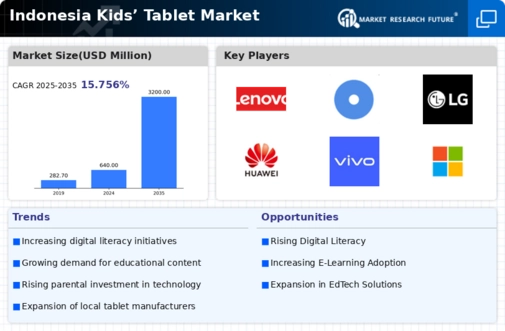
What is the expected market size of the Indonesia Kids Tablet Market in 2024?

The market is expected to be valued at 640.0 USD Million in 2024.

What is the projected market value of the Indonesia Kids Tablet Market by 2035?

By 2035, the market is anticipated to reach a valuation of 3200.0 USD Million.

What is the expected CAGR for the Indonesia Kids Tablet Market from 2025 to 2035?

The expected CAGR for the market during this period is 15.756 percent.

Which connectivity segment will dominate the Indonesia Kids Tablet Market in 2024?

In 2024, the Wi-Fi Enabled segment is projected to be valued at 384.0 USD Million.

What is the value of the SIM Enabled segment in the Indonesia Kids Tablet Market for 2024?

The SIM Enabled segment is expected to be valued at 256.0 USD Million in 2024.

Who are the key players in the Indonesia Kids Tablet Market?

Major players in the market include Lenovo, Oppo, LG, Asus, and Huawei among others.

What will be the market size of the Wi-Fi Enabled segment by 2035?

The Wi-Fi Enabled segment is projected to be valued at 1920.0 USD Million by 2035.

What challenges does the Indonesia Kids Tablet Market face?

Challenges include intense competition and rapidly changing technology trends.

What opportunities exist in the Indonesia Kids Tablet Market?

Emerging trends such as educational applications offer significant growth opportunities.

How has the current global scenario impacted the Indonesia Kids Tablet Market?

The global scenario continues to influence supply chains and consumer preferences in the market.

Download Free Sample

Kindly complete the form below to receive a free sample of this Report

Compare Licence

×
Features License Type
Single User Multiuser License Enterprise User
Price $4,950 $5,950 $7,250
Maximum User Access Limit 1 User Upto 10 Users Unrestricted Access Throughout the Organization
Free Customization
Direct Access to Analyst
Deliverable Format
Platform Access
Discount on Next Purchase 10% 15% 15%
Printable Versions