Request Free Sample ×

Kindly complete the form below to receive a free sample of this Report

* Please use a valid business email

Leading companies partner with us for data-driven Insights

clients tt-cursor
Hero Background
English
Chinese
French
Japanese
Korean
German
Spanish

Advance Anesthesia Monitoring Devices Market Analysis

ID: MRFR/MED/0565-HCR
105 Pages
Satyendra Maurya
March 2026

Advance Anesthesia Monitoring Devices Market research report by type of product (basic anesthesia monitors, advanced anesthesia monitors, integrated anesthesia workstations), End users (hospitals, private clinics, ambulatory services and others) - Forecast till 2035

Share:
Download PDF ×

We do not share your information with anyone. However, we may send you emails based on your report interest from time to time. You may contact us at any time to opt-out.

Advance Anesthesia Monitoring Devices Market Infographic
Purchase Options

Market Analysis

In-depth Analysis of Advance Anesthesia Monitoring Devices Market Industry Landscape

The market elements of Advance Anesthesia Monitoring Devices are driven by the rising interest for advanced innovations in medical care. These devices assume a pivotal part in guaranteeing patient wellbeing during surgeries by ceaselessly monitoring essential signs and anesthesia levels. The market is emphatically affected by the rising worldwide medical care use. As nations put more in further developing medical care foundation, there is an equal expansion in the reception of advanced clinical devices, including anesthesia monitoring devices. The surge in the quantity of surgeries universally is a vital driver for the market. Advance Anesthesia Monitoring Devices are fundamental in different restrained settings, going from routine medical procedures to complex methods, enhancing their interest across the medical care range. Developing awareness about patient security among medical services experts and patients has prompted an expanded accentuation on the utilization of monitoring devices. Anesthesia monitoring devices contribute essentially to lessening the dangers related with anesthesia organization, in this manner encouraging their market growth. The ubiquity of ongoing illnesses requires continuous clinical intercessions and medical procedures. This, thus, supports the interest for anesthesia monitoring devices as an imperative part in overseeing patients with constant medical issue through surgeries. The market is seeing a shift towards non-invasive monitoring techniques. Non-invasive anesthesia monitoring devices, which dispense with the requirement for invasive techniques, are getting some decent momentum because of their capacity to diminish patient inconvenience and improve medical care encounters. The globalization of medical care administrations has prompted a more interconnected existence where clinical prescribed procedures and innovations are shared across borders. This decidedly affects the reception of advanced clinical devices, including anesthesia monitoring devices, in various districts.


Author
Author Profile
Satyendra Maurya
Research Analyst

An accomplished research analyst with high proficiency in market forecasting, data visualization, competitive benchmarking, and others. He holds a pronounced track record in research and consulting projects for sectors such as life sciences, medical devices, and healthcare IT. His capabilities in qualitative and quantitative analysis have resulted in positive client outcomes. Working on niche market trends, opportunities, sales, and forecasted value is part of his skill set.

Leave a Comment

FAQs

What is the projected market valuation for the Advance Anesthesia Monitoring Devices Market in 2035?

<p>The projected market valuation for the Advance Anesthesia Monitoring Devices Market in 2035 is 5.09 USD Million.</p>

What was the market valuation for the Advance Anesthesia Monitoring Devices Market in 2024?

<p>The market valuation for the Advance Anesthesia Monitoring Devices Market in 2024 was 2.48 USD Million.</p>

What is the expected CAGR for the Advance Anesthesia Monitoring Devices Market from 2025 to 2035?

<p>The expected CAGR for the Advance Anesthesia Monitoring Devices Market during the forecast period 2025 - 2035 is 6.71%.</p>

Which companies are considered key players in the Advance Anesthesia Monitoring Devices Market?

<p>Key players in the market include Medtronic, GE Healthcare, Philips, Dräger, Masimo, Smiths Medical, B. Braun, Fujifilm, and Nihon Kohden.</p>

What segment had the highest valuation in the Advance Anesthesia Monitoring Devices Market in 2024?

<p>In 2024, the Surgical Monitoring segment had the highest valuation at 0.74 USD Million.</p>

How does the valuation of Integrated Monitors compare to Standalone Monitors in 2024?

In 2024, Integrated Monitors were valued at 0.99 USD Million, surpassing Standalone Monitors, which were valued at 0.74 USD Million.

What is the projected valuation for Postoperative Monitoring by 2035?

The projected valuation for Postoperative Monitoring by 2035 is 1.29 USD Million.

Which patient type segment is expected to show growth in the Advance Anesthesia Monitoring Devices Market?

The Adult Patients segment is expected to show growth, with a valuation projected at 2.55 USD Million by 2035.

What is the valuation for Portable Monitors in 2024?

The valuation for Portable Monitors in 2024 was 0.62 USD Million.

What is the expected growth for Capnography technology in the Advance Anesthesia Monitoring Devices Market by 2035?

Capnography technology is expected to grow, with a projected valuation of 1.50 USD Million by 2035.

Market Summary

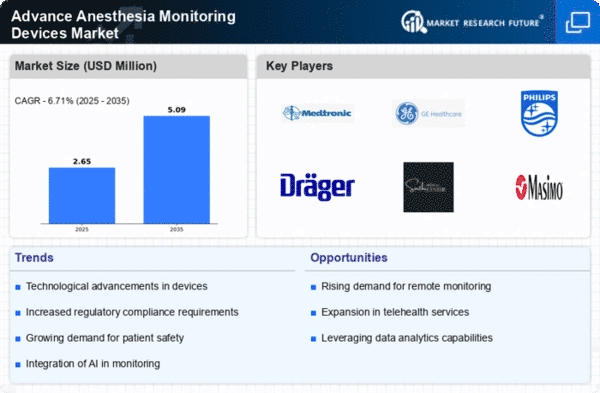
As per MRFR analysis, the Advance Anesthesia Monitoring Devices Market was estimated at 2.48 USD Million in 2024. The Advance Anesthesia Monitoring Devices industry is projected to grow from 2.67 in 2025 to 5.09 by 2035, exhibiting a compound annual growth rate (CAGR) of 6.71% during the forecast period 2025 - 2035.

Key Market Trends & Highlights

The Advance Anesthesia Monitoring Devices Market is poised for substantial growth driven by technological advancements and an increasing focus on patient safety.

  • Technological integration in anesthesia monitoring devices enhances real-time data analysis and decision-making capabilities.
  • The North American region remains the largest market, while the Asia-Pacific region is recognized as the fastest-growing area for these devices.
  • Surgical monitoring continues to dominate the market, whereas pain management is emerging as the fastest-growing segment.
  • Key market drivers include technological advancements and a growing awareness of patient safety, which are shaping the future of anesthesia monitoring.

Market Size & Forecast

2024 Market Size 2.48 (USD Million)
2035 Market Size 5.09 (USD Million)
CAGR (2025 - 2035) 6.71%
Largest Regional Market Share in 2024 North America

Major Players

Medtronic (US), GE Healthcare (US), Philips (NL), Dräger (DE), Smiths Medical (US), Masimo (US), B. Braun (DE), Fujifilm (JP), Nihon Kohden (JP)

Market Trends

The Advance Anesthesia Monitoring Devices Market is currently experiencing a notable evolution, driven by advancements in technology and an increasing emphasis on patient safety. The integration of sophisticated monitoring systems into surgical environments appears to enhance the precision of anesthesia delivery, thereby reducing the risk of complications. Furthermore, the growing awareness among healthcare professionals regarding the importance of real-time data monitoring suggests a shift towards more proactive approaches in anesthesia management. This trend is likely to foster innovation and lead to the development of more intuitive devices that can seamlessly integrate with existing hospital infrastructure. In addition, the rising demand for minimally invasive surgical procedures seems to be influencing the design and functionality of anesthesia monitoring devices. As surgical techniques evolve, the need for devices that can provide comprehensive monitoring without compromising the efficiency of the procedure becomes increasingly apparent. This dynamic environment indicates that manufacturers are focusing on creating devices that not only meet regulatory standards but also cater to the specific needs of modern surgical practices. Overall, the Advance Anesthesia Monitoring Devices Market is poised for growth, driven by technological advancements and a commitment to enhancing patient outcomes.

Technological Integration

The incorporation of advanced technologies such as artificial intelligence and machine learning into anesthesia monitoring devices is becoming more prevalent. These innovations enable enhanced data analysis and predictive capabilities, allowing for more accurate assessments of patient conditions during procedures.

Focus on Patient Safety

There is a growing emphasis on patient safety within the healthcare sector, leading to increased investments in monitoring devices that provide real-time feedback. This trend reflects a broader commitment to minimizing risks associated with anesthesia administration.

Shift Towards Minimally Invasive Procedures

As the healthcare landscape evolves, there is a noticeable shift towards minimally invasive surgical techniques. This trend necessitates the development of compact and efficient anesthesia monitoring devices that can support these advanced surgical methods without hindering performance.

Advance Anesthesia Monitoring Devices Market Market Drivers

Technological Advancements

The Global Advanced Anesthesia Monitoring Devices Market Industry experiences rapid technological advancements, which enhance the precision and efficiency of anesthesia delivery. Innovations such as real-time monitoring systems and integrated data analytics tools allow for improved patient safety and outcomes. For instance, devices that utilize clinical intelligence to predict potential complications are gaining traction. As a result, the market is projected to grow from 0.26 USD Billion in 2024 to 1.77 USD Billion by 2035, reflecting a compound annual growth rate (CAGR) of 18.9% from 2025 to 2035. This trend indicates a strong demand for advanced monitoring solutions in surgical settings globally.

Growing Geriatric Population

The Global Advanced Anesthesia Monitoring Devices Market Industry is influenced by the growing geriatric population, which often requires more complex surgical interventions. As individuals age, the likelihood of undergoing surgeries increases, necessitating advanced anesthesia monitoring to manage potential risks effectively. This demographic shift is prompting healthcare providers to invest in sophisticated monitoring technologies that cater to the unique needs of elderly patients. The market is projected to expand from 0.26 USD Billion in 2024 to 1.77 USD Billion by 2035, indicating a robust demand for advanced monitoring solutions tailored to the aging population.

Increasing Surgical Procedures

The Global Advanced Anesthesia Monitoring Devices Market Industry is significantly driven by the rising number of surgical procedures worldwide. As healthcare systems evolve, the demand for surgical interventions continues to increase, necessitating advanced anesthesia monitoring to ensure patient safety. For example, the World Health Organization reports a steady rise in elective surgeries, which further propels the need for sophisticated monitoring devices. This growing volume of surgeries is expected to contribute to the market's expansion, with projections indicating a growth from 0.26 USD Billion in 2024 to 1.77 USD Billion by 2035, highlighting the critical role of advanced monitoring in modern surgical practices.

Government Initiatives and Funding

Government initiatives and funding play a pivotal role in the Global Advanced Anesthesia Monitoring Devices Market Industry. Various health authorities are investing in advanced medical technologies to improve healthcare outcomes. For instance, funding programs aimed at enhancing surgical facilities often include provisions for acquiring state-of-the-art anesthesia monitoring devices. This support not only facilitates the adoption of advanced technologies but also encourages research and development in this field. Consequently, the market is expected to grow significantly, with projections indicating an increase from 0.26 USD Billion in 2024 to 1.77 USD Billion by 2035, driven by supportive government policies.

Rising Awareness of Patient Safety

In the Global Advanced Anesthesia Monitoring Devices Market Industry, there is a heightened awareness regarding patient safety and the importance of effective anesthesia management. Healthcare providers are increasingly prioritizing technologies that enhance monitoring capabilities, thereby reducing the risk of anesthesia-related complications. This shift is evident in the adoption of advanced devices that provide continuous monitoring of vital signs and anesthesia depth. As patient safety becomes a focal point in healthcare policies, the market is poised for growth, with an anticipated increase from 0.26 USD Billion in 2024 to 1.77 USD Billion by 2035, reflecting a CAGR of 18.9% from 2025 to 2035.

Market Segment Insights

By Application: Surgical Monitoring (Largest) vs. Postoperative Monitoring (Fastest-Growing)

<p>In the Advance Anesthesia Monitoring Devices Market, the application segments are characterized by a diverse range of monitoring needs. Surgical Monitoring holds the largest market share, driven by the growing number of elective surgeries and advancements in anesthetic techniques. It is essential for ensuring patient safety during operations and involves real-time monitoring of vital signs. Following closely is Postoperative Monitoring, which is emerging rapidly as more emphasis is placed on recovery protocols and patient safety after surgery. This segment is gaining traction due to increased awareness and standards in postoperative care, making it the fastest-growing application within this market.</p>

<p>Surgical Monitoring (Dominant) vs. Pain Management (Emerging)</p>

<p>Surgical Monitoring is a critical segment within the Advance Anesthesia Monitoring Devices Market, providing extensive oversight of patients during surgical procedures. Characterized by advanced technologies that track vital signs, this segment is particularly vital in high-risk surgeries where constant monitoring is imperative. In contrast, Pain Management is emerging as a significant focus area, reflecting the ongoing evolution in anesthesia practices. This segment is characterized by the development of devices that enhance postoperative pain control, ensuring patient comfort and satisfaction. As healthcare systems increasingly recognize the importance of managing pain effectively, this segment is likely to gain more traction and investment, positioning itself as a key future player in the market.</p>

By End Use: Hospitals (Largest) vs. Ambulatory Surgical Centers (Fastest-Growing)

In the Advance Anesthesia Monitoring Devices Market, hospitals hold the largest market share, driven by the increasing number of surgical procedures and the growing emphasis on patient safety and monitoring during anesthesia. Hospitals are equipped with advanced technology, ensuring comprehensive patient care and facilitating real-time monitoring. On the other hand, ambulatory surgical centers are gaining traction due to their cost-effectiveness and efficiency, catering to the rising trend of outpatient surgeries.

Hospitals (Dominant) vs. Ambulatory Surgical Centers (Emerging)

Hospitals remain the dominant end-use segment in the Advance Anesthesia Monitoring Devices Market due to their extensive infrastructure, skilled personnel, and the ability to handle complex surgical procedures requiring advanced anesthesia monitoring. They adopt innovative technologies, enhancing patient outcomes and operational efficiency. Conversely, ambulatory surgical centers represent an emerging segment, capitalizing on the shift towards outpatient care. These centers prioritize quick turnaround times, lower costs, and streamlined processes, making them appealing to patients and healthcare providers. Their growth is fueled by advancements in minimally invasive surgical techniques and an increasing preference for outpatient services.

By Device Type: Standalone Monitors (Largest) vs. Integrated Monitors (Fastest-Growing)

In the Advance Anesthesia Monitoring Devices Market, Standalone Monitors currently hold the largest market share, significantly favored for their ease of use and flexibility in various clinical settings. These devices are widely adopted due to their independent functionality, allowing healthcare providers to monitor patients with minimal setup. Integrated Monitors, however, are rapidly gaining traction, combining multiple monitoring capabilities in one device, appealing to modern healthcare environments that prioritize efficiency and space-saving solutions.

Standalone Monitors (Dominant) vs. Integrated Monitors (Emerging)

Standalone Monitors are characterized by their independence, offering robust functionalities that cater to a broad range of anesthesia monitoring needs. Their ease of deployment and flexibility in various clinical settings make them a persistent favorite among healthcare providers. Conversely, Integrated Monitors are emerging as powerful alternatives, featuring enhanced versatility through a combination of monitoring features within a single framework. This growing trend reflects the industry's demand for streamlined workflows and reduced equipment footprint, thereby driving the adoption of Integrated Monitors in contemporary surgical environments.

By Technology: Electroencephalography (Largest) vs. Capnography (Fastest-Growing)

<p>In the Advance Anesthesia Monitoring Devices Market, the technology segment is primarily driven by Electroencephalography (EEG), which holds the largest market share due to its critical role in monitoring brain function and anesthesia depth during surgical procedures. Following closely, Capnography has emerged as a significant player due to its ability to measure carbon dioxide levels in exhaled air, ensuring better patient safety and management during anesthesia. Additionally, Pulse Oximetry and Blood Pressure Monitoring are important but comparatively smaller segments contributing to the overall market distribution.</p>

<p>Technology: Electroencephalography (Dominant) vs. Capnography (Emerging)</p>

<p>Electroencephalography (EEG) is recognized as the dominant technology in anesthesia monitoring, primarily due to its ability to provide real-time data on brain activity, thereby guiding anesthesiologists in administering precise anesthesia. It is widely utilized in various surgical procedures where maintaining the depth of anesthesia is crucial. Capnography, on the other hand, is rapidly gaining significance as a vital monitoring tool that tracks respiratory function by measuring the concentration of carbon dioxide in exhaled breath. As healthcare authorities emphasize patient safety and efficacy in anesthesia practices, Capnography is expected to grow substantially, establishing itself as an essential device in contemporary anesthesia monitoring.</p>

By Patient Type: Adult Patients (Largest) vs. Pediatric Patients (Fastest-Growing)

The Advance Anesthesia Monitoring Devices Market reveals a significant market share distribution among patient types. Adult patients represent the largest segment, driven by the high prevalence of surgeries and the deployment of advanced monitoring devices in larger healthcare facilities. Following closely, pediatric patients are gaining traction as innovations continue to enhance device safety and efficacy. Neonatal patients, while smaller in share, still play a crucial role due to the unique requirements of this vulnerable group, showcasing a tailored approach to anesthesia care. In recent years, there has been a marked increase in the demand for anesthesia monitoring devices geared towards pediatric patients, mainly attributed to heightened awareness and advancements in technology that cater to this demographic. Additionally, factors like the rising number of pediatric surgeries and the emphasis on improved outcomes for neonates are propelling growth. As healthcare providers focus on customized solutions, the market landscape is evolving to better address the needs of all patient types, ensuring safer and more effective anesthetic management across all age groups.

Adult Patients (Dominant) vs. Neonatal Patients (Emerging)

In the Advance Anesthesia Monitoring Devices Market, adult patients constitute the dominant segment due to their higher surgical rates and the extensive use of advanced monitoring technologies. Devices designed for adult patients are generally more sophisticated, featuring state-of-the-art technology that integrates with various surgical systems. In contrast, neonatal patients are an emerging segment that requires specialized monitoring solutions tailored to their unique physiological conditions. The complexity of administering anesthesia in neonates demands devices that ensure precise monitoring of vital signs, making this a focused area of development for manufacturers. As advancements in technology continue, both segments will likely see innovations that enhance the safety and efficacy of anesthesia administration.

Get more detailed insights about Advance Anesthesia Monitoring Devices Market Research Report - Forecast to 2035

Regional Insights

North America : Market Leader in Innovation

North America is poised to maintain its leadership in the Advance Anesthesia Monitoring Devices Market, holding a market size of $1.24B in 2025. Key growth drivers include increasing surgical procedures, advancements in technology, and a strong regulatory framework that supports innovation. The demand for enhanced patient safety and monitoring capabilities is also propelling market growth, with hospitals investing in state-of-the-art equipment to improve outcomes. The United States is the primary contributor to this market, with major players like Medtronic, GE Healthcare, and Masimo leading the competitive landscape. The presence of advanced healthcare infrastructure and a focus on research and development further solidify North America's position. The market is characterized by strategic partnerships and collaborations among key players, enhancing product offerings and market reach.

Europe : Emerging Market with Growth Potential

Europe's Advance Anesthesia Monitoring Devices Market is projected to grow, with a market size of $0.74B in 2025. Factors driving this growth include an aging population, increasing prevalence of chronic diseases, and a rise in surgical procedures. Regulatory support from the European Medicines Agency (EMA) is also fostering innovation and ensuring safety standards, which is crucial for market expansion. Germany, France, and the UK are leading countries in this region, with a competitive landscape featuring key players like Philips and Dräger. The market is witnessing a trend towards integrated monitoring solutions that enhance patient care. Collaborations between healthcare providers and technology firms are becoming common, aiming to improve the efficiency and effectiveness of anesthesia monitoring systems.

Asia-Pacific : Rapid Growth in Healthcare Sector

The Asia-Pacific region is rapidly emerging in the Advance Anesthesia Monitoring Devices Market, with a market size of $0.4B in 2025. Key growth drivers include increasing healthcare expenditure, a growing population, and rising awareness about patient safety. Governments are investing in healthcare infrastructure, which is expected to boost the demand for advanced monitoring devices in hospitals and surgical centers. Countries like Japan, China, and India are at the forefront of this growth, with a competitive landscape that includes local and international players. Companies such as Fujifilm and Nihon Kohden are expanding their presence in the region. The market is characterized by a shift towards innovative technologies, including wireless monitoring systems, which are gaining traction among healthcare providers.

Middle East and Africa : Untapped Market with Opportunities

The Middle East and Africa (MEA) region is an untapped market for Advance Anesthesia Monitoring Devices, with a market size of $0.1B in 2025. The growth in this region is driven by increasing healthcare investments, a rising number of surgical procedures, and a focus on improving healthcare quality. Regulatory bodies are beginning to establish frameworks that support the introduction of advanced medical technologies, which is crucial for market development. Countries like South Africa and the UAE are leading the way in adopting advanced healthcare solutions. The competitive landscape is evolving, with both local and international players seeking to establish a foothold. The presence of key players is gradually increasing, and partnerships with healthcare institutions are becoming essential for market penetration and growth.

Key Players and Competitive Insights

The Advance Anesthesia Monitoring Devices Market is characterized by a dynamic competitive landscape, driven by technological advancements and an increasing emphasis on patient safety. Key players such as Medtronic (US), GE Healthcare (US), and Philips (NL) are at the forefront, each adopting distinct strategies to enhance their market presence. Medtronic (US) focuses on innovation through the development of advanced monitoring technologies, while GE Healthcare (US) emphasizes partnerships with healthcare providers to integrate their devices into existing systems. Philips (NL) is leveraging digital transformation to enhance user experience and operational efficiency, collectively shaping a competitive environment that prioritizes technological integration and patient-centric solutions.In terms of business tactics, companies are increasingly localizing manufacturing to reduce costs and improve supply chain efficiency. The market appears moderately fragmented, with several players vying for market share, yet the influence of major companies remains substantial. This competitive structure allows for a diverse range of products and innovations, fostering an environment where smaller firms can also thrive by focusing on niche markets or specialized technologies.

In November Medtronic (US) announced the launch of a new anesthesia monitoring platform that integrates artificial intelligence to enhance predictive analytics in patient care. This strategic move is significant as it positions Medtronic (US) as a leader in the integration of AI within anesthesia monitoring, potentially improving patient outcomes and operational efficiencies in surgical settings. The emphasis on AI reflects a broader trend towards data-driven decision-making in healthcare.Similarly, in October 2025, GE Healthcare (US) expanded its collaboration with a leading hospital network to implement its latest anesthesia monitoring systems across multiple facilities. This partnership not only enhances GE Healthcare's (US) market penetration but also underscores the importance of strategic alliances in facilitating the adoption of advanced technologies in clinical environments. Such collaborations are likely to drive innovation and improve service delivery in the sector.

In September Philips (NL) unveiled a new line of portable anesthesia monitors designed for use in outpatient settings. This product launch is indicative of Philips' (NL) strategy to cater to the growing demand for flexible and efficient monitoring solutions, particularly in non-traditional surgical environments. The ability to adapt to various clinical settings may provide Philips (NL) with a competitive edge in a rapidly evolving market.

As of December current trends in the Advance Anesthesia Monitoring Devices Market are heavily influenced by digitalization, sustainability, and the integration of AI technologies. Strategic alliances are increasingly shaping the competitive landscape, allowing companies to pool resources and expertise to drive innovation. Looking ahead, competitive differentiation is likely to evolve from traditional price-based competition towards a focus on technological innovation, enhanced patient safety, and reliable supply chains. This shift suggests that companies that prioritize R&D and strategic partnerships will be better positioned to thrive in the future.

Key Companies in the Advance Anesthesia Monitoring Devices Market include

Industry Developments

BioIntelliSense, a clinical intelligence firm, increased its remote care technologies portfolio in March 2022 with the debut of BioButton, a new rechargeable wearable monitoring gadget.

MDoloris Medical Systems received regulatory approval in Japan for its HFVI MOC-9 high-frequency variability index monitor in November 2021. In Japan, the HFVI MOC-9 technology is reported to be the first monitoring solution for analgosedation and anesthetic patients.

Intended Audience

  • Research and Development (R&D) Companies
  • Government and Independent Research Laboratories
  • Anesthesia monitoring devices manufacturers and suppliers
  • Government and Independent Regulatory Authorities
  • Academic Medical Institutes and Universities

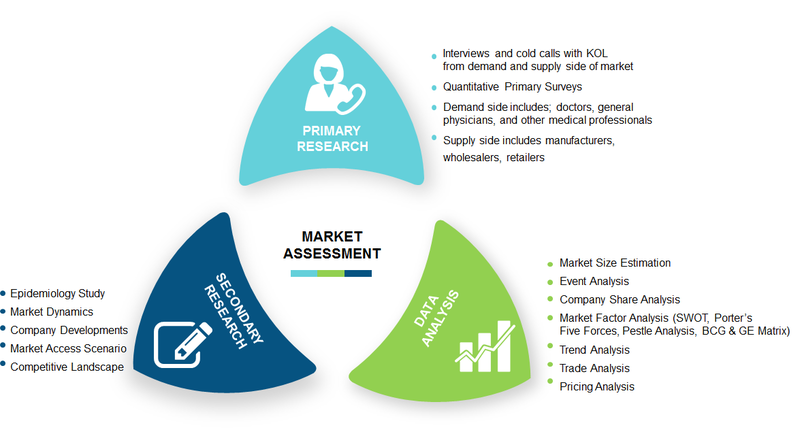
Market Assessment Market Assessment

  • Annual reports, World Health Organization (WHO), white paper, company presentation

Key Players in the Global Advanced Anesthesia Monitoring Devices Market

NIHON KOHDEN CORPORATION (China), General Electric Company (U.S.), Masimo (U.S.), INFINIUMMEDICAL (U.S.), Medtronic (U.S.), Shenzhen Mindray Bio-Medical Electronics Co., Ltd (China), Sedana Medical AB (Sweden), Drägerwerk AG & Co. KGaA. (Germany), Smiths Medical (U.K.), OSI Systems (U.S.), Maquet Holding B.V. & Co. KG. (Germany), Teleflex Incorporated (U.S.), ResMed (U.S.), Getinge AB (Sweden), Fisher & Paykel Healthcare Limited (New Zealand), Phillips Plastics Corporation. (The Netherland), Intersurgical Ltd (U.K.).

The report for advance anaesthesia monitoring devices market of Market Research Future comprises of extensive primary research along with the detailed analysis of qualitative as well as quantitative aspects by various industry experts, key opinion leaders to gain the deeper insight of the market and industry performance. The report gives the clear picture of current market scenario which includes historical and projected market size in terms of value and volume, technological advancement, macro economical and governing factors in the advance anesthesia monitoring devices market. The report provides details information and strategies of the top key players in the industry.

The report also gives a broad study of the different markets segments and regions.

Future Outlook

Advance Anesthesia Monitoring Devices Market Future Outlook

The Advance Anesthesia Monitoring Devices Market is projected to grow at a 6.71% CAGR from 2025 to 2035, driven by technological advancements, increasing surgical procedures, and rising patient safety concerns.

New opportunities lie in:

  • Integration of AI-driven analytics for real-time monitoring insights.
  • Development of portable anesthesia monitoring solutions for outpatient settings.
  • Expansion into emerging markets with tailored product offerings.

By 2035, the market is expected to achieve substantial growth, reflecting evolving healthcare demands.

Market Segmentation

Advance Anesthesia Monitoring Devices Market End Use Outlook

  • Hospitals
  • Ambulatory Surgical Centers
  • Specialty Clinics
  • Research Institutions

Advance Anesthesia Monitoring Devices Market Technology Outlook

  • Electroencephalography
  • Capnography
  • Pulse Oximetry
  • Blood Pressure Monitoring

Advance Anesthesia Monitoring Devices Market Application Outlook

  • Surgical Monitoring
  • Postoperative Monitoring
  • Critical Care Monitoring
  • Pain Management
  • Emergency Care

Advance Anesthesia Monitoring Devices Market Device Type Outlook

  • Standalone Monitors
  • Integrated Monitors
  • Portable Monitors
  • Wearable Monitors

Advance Anesthesia Monitoring Devices Market Patient Type Outlook

  • Adult Patients
  • Pediatric Patients
  • Neonatal Patients

Report Scope

MARKET SIZE 2024 2.48(USD Million)
MARKET SIZE 2025 2.67(USD Million)
MARKET SIZE 2035 5.09(USD Million)
COMPOUND ANNUAL GROWTH RATE (CAGR) 6.71% (2025 - 2035)
REPORT COVERAGE Revenue Forecast, Competitive Landscape, Growth Factors, and Trends
BASE YEAR 2024
Market Forecast Period 2025 - 2035
Historical Data 2019 - 2024
Market Forecast Units USD Million
Key Companies Profiled Medtronic (US), GE Healthcare (US), Philips (NL), Dräger (DE), Smiths Medical (US), Masimo (US), B. Braun (DE), Fujifilm (JP), Nihon Kohden (JP)
Segments Covered Application, End Use, Device Type, Technology, Patient Type
Key Market Opportunities Integration of artificial intelligence in Advance Anesthesia Monitoring Devices enhances patient safety and operational efficiency.
Key Market Dynamics Technological advancements and regulatory changes drive innovation in anesthesia monitoring devices, enhancing patient safety and operational efficiency.
Countries Covered North America, Europe, APAC, South America, MEA

FAQs

What is the projected market valuation for the Advance Anesthesia Monitoring Devices Market in 2035?

<p>The projected market valuation for the Advance Anesthesia Monitoring Devices Market in 2035 is 5.09 USD Million.</p>

What was the market valuation for the Advance Anesthesia Monitoring Devices Market in 2024?

<p>The market valuation for the Advance Anesthesia Monitoring Devices Market in 2024 was 2.48 USD Million.</p>

What is the expected CAGR for the Advance Anesthesia Monitoring Devices Market from 2025 to 2035?

<p>The expected CAGR for the Advance Anesthesia Monitoring Devices Market during the forecast period 2025 - 2035 is 6.71%.</p>

Which companies are considered key players in the Advance Anesthesia Monitoring Devices Market?

<p>Key players in the market include Medtronic, GE Healthcare, Philips, Dräger, Masimo, Smiths Medical, B. Braun, Fujifilm, and Nihon Kohden.</p>

What segment had the highest valuation in the Advance Anesthesia Monitoring Devices Market in 2024?

<p>In 2024, the Surgical Monitoring segment had the highest valuation at 0.74 USD Million.</p>

How does the valuation of Integrated Monitors compare to Standalone Monitors in 2024?

In 2024, Integrated Monitors were valued at 0.99 USD Million, surpassing Standalone Monitors, which were valued at 0.74 USD Million.

What is the projected valuation for Postoperative Monitoring by 2035?

The projected valuation for Postoperative Monitoring by 2035 is 1.29 USD Million.

Which patient type segment is expected to show growth in the Advance Anesthesia Monitoring Devices Market?

The Adult Patients segment is expected to show growth, with a valuation projected at 2.55 USD Million by 2035.

What is the valuation for Portable Monitors in 2024?

The valuation for Portable Monitors in 2024 was 0.62 USD Million.

What is the expected growth for Capnography technology in the Advance Anesthesia Monitoring Devices Market by 2035?

Capnography technology is expected to grow, with a projected valuation of 1.50 USD Million by 2035.

  1. SECTION I: EXECUTIVE SUMMARY AND KEY HIGHLIGHTS
    1. | 1.1 EXECUTIVE SUMMARY
    2. | | 1.1.1 Market Overview
    3. | | 1.1.2 Key Findings
    4. | | 1.1.3 Market Segmentation
    5. | | 1.1.4 Competitive Landscape
    6. | | 1.1.5 Challenges and Opportunities
    7. | | 1.1.6 Future Outlook
  2. SECTION II: SCOPING, METHODOLOGY AND MARKET STRUCTURE
    1. | 2.1 MARKET INTRODUCTION
    2. | | 2.1.1 Definition
    3. | | 2.1.2 Scope of the study
    4. | | | 2.1.2.1 Research Objective
    5. | | | 2.1.2.2 Assumption
    6. | | | 2.1.2.3 Limitations
    7. | 2.2 RESEARCH METHODOLOGY
    8. | | 2.2.1 Overview
    9. | | 2.2.2 Data Mining
    10. | | 2.2.3 Secondary Research
    11. | | 2.2.4 Primary Research
    12. | | | 2.2.4.1 Primary Interviews and Information Gathering Process
    13. | | | 2.2.4.2 Breakdown of Primary Respondents
    14. | | 2.2.5 Forecasting Model
    15. | | 2.2.6 Market Size Estimation
    16. | | | 2.2.6.1 Bottom-Up Approach
    17. | | | 2.2.6.2 Top-Down Approach
    18. | | 2.2.7 Data Triangulation
    19. | | 2.2.8 Validation
  3. SECTION III: QUALITATIVE ANALYSIS
    1. | 3.1 MARKET DYNAMICS
    2. | | 3.1.1 Overview
    3. | | 3.1.2 Drivers
    4. | | 3.1.3 Restraints
    5. | | 3.1.4 Opportunities
    6. | 3.2 MARKET FACTOR ANALYSIS
    7. | | 3.2.1 Value chain Analysis
    8. | | 3.2.2 Porter's Five Forces Analysis
    9. | | | 3.2.2.1 Bargaining Power of Suppliers
    10. | | | 3.2.2.2 Bargaining Power of Buyers
    11. | | | 3.2.2.3 Threat of New Entrants
    12. | | | 3.2.2.4 Threat of Substitutes
    13. | | | 3.2.2.5 Intensity of Rivalry
    14. | | 3.2.3 COVID-19 Impact Analysis
    15. | | | 3.2.3.1 Market Impact Analysis
    16. | | | 3.2.3.2 Regional Impact
    17. | | | 3.2.3.3 Opportunity and Threat Analysis
  4. SECTION IV: QUANTITATIVE ANALYSIS
    1. | 4.1 Healthcare, BY Application (USD Million)
    2. | | 4.1.1 Surgical Monitoring
    3. | | 4.1.2 Postoperative Monitoring
    4. | | 4.1.3 Critical Care Monitoring
    5. | | 4.1.4 Pain Management
    6. | | 4.1.5 Emergency Care
    7. | 4.2 Healthcare, BY End Use (USD Million)
    8. | | 4.2.1 Hospitals
    9. | | 4.2.2 Ambulatory Surgical Centers
    10. | | 4.2.3 Specialty Clinics
    11. | | 4.2.4 Research Institutions
    12. | 4.3 Healthcare, BY Device Type (USD Million)
    13. | | 4.3.1 Standalone Monitors
    14. | | 4.3.2 Integrated Monitors
    15. | | 4.3.3 Portable Monitors
    16. | | 4.3.4 Wearable Monitors
    17. | 4.4 Healthcare, BY Technology (USD Million)
    18. | | 4.4.1 Electroencephalography
    19. | | 4.4.2 Capnography
    20. | | 4.4.3 Pulse Oximetry
    21. | | 4.4.4 Blood Pressure Monitoring
    22. | 4.5 Healthcare, BY Patient Type (USD Million)
    23. | | 4.5.1 Adult Patients
    24. | | 4.5.2 Pediatric Patients
    25. | | 4.5.3 Geriatric Patients
    26. | | 4.5.4 Obese Patients
    27. | 4.6 Healthcare, BY Region (USD Million)
    28. | | 4.6.1 North America
    29. | | | 4.6.1.1 US
    30. | | | 4.6.1.2 Canada
    31. | | 4.6.2 Europe
    32. | | | 4.6.2.1 Germany
    33. | | | 4.6.2.2 UK
    34. | | | 4.6.2.3 France
    35. | | | 4.6.2.4 Russia
    36. | | | 4.6.2.5 Italy
    37. | | | 4.6.2.6 Spain
    38. | | | 4.6.2.7 Rest of Europe
    39. | | 4.6.3 APAC
    40. | | | 4.6.3.1 China
    41. | | | 4.6.3.2 India
    42. | | | 4.6.3.3 Japan
    43. | | | 4.6.3.4 South Korea
    44. | | | 4.6.3.5 Malaysia
    45. | | | 4.6.3.6 Thailand
    46. | | | 4.6.3.7 Indonesia
    47. | | | 4.6.3.8 Rest of APAC
    48. | | 4.6.4 South America
    49. | | | 4.6.4.1 Brazil
    50. | | | 4.6.4.2 Mexico
    51. | | | 4.6.4.3 Argentina
    52. | | | 4.6.4.4 Rest of South America
    53. | | 4.6.5 MEA
    54. | | | 4.6.5.1 GCC Countries
    55. | | | 4.6.5.2 South Africa
    56. | | | 4.6.5.3 Rest of MEA
  5. SECTION V: COMPETITIVE ANALYSIS
    1. | 5.1 Competitive Landscape
    2. | | 5.1.1 Overview
    3. | | 5.1.2 Competitive Analysis
    4. | | 5.1.3 Market share Analysis
    5. | | 5.1.4 Major Growth Strategy in the Healthcare
    6. | | 5.1.5 Competitive Benchmarking
    7. | | 5.1.6 Leading Players in Terms of Number of Developments in the Healthcare
    8. | | 5.1.7 Key developments and growth strategies
    9. | | | 5.1.7.1 New Product Launch/Service Deployment
    10. | | | 5.1.7.2 Merger & Acquisitions
    11. | | | 5.1.7.3 Joint Ventures
    12. | | 5.1.8 Major Players Financial Matrix
    13. | | | 5.1.8.1 Sales and Operating Income
    14. | | | 5.1.8.2 Major Players R&D Expenditure. 2023
    15. | 5.2 Company Profiles
    16. | | 5.2.1 Medtronic (US)
    17. | | | 5.2.1.1 Financial Overview
    18. | | | 5.2.1.2 Products Offered
    19. | | | 5.2.1.3 Key Developments
    20. | | | 5.2.1.4 SWOT Analysis
    21. | | | 5.2.1.5 Key Strategies
    22. | | 5.2.2 GE Healthcare (US)
    23. | | | 5.2.2.1 Financial Overview
    24. | | | 5.2.2.2 Products Offered
    25. | | | 5.2.2.3 Key Developments
    26. | | | 5.2.2.4 SWOT Analysis
    27. | | | 5.2.2.5 Key Strategies
    28. | | 5.2.3 Philips (NL)
    29. | | | 5.2.3.1 Financial Overview
    30. | | | 5.2.3.2 Products Offered
    31. | | | 5.2.3.3 Key Developments
    32. | | | 5.2.3.4 SWOT Analysis
    33. | | | 5.2.3.5 Key Strategies
    34. | | 5.2.4 Dräger (DE)
    35. | | | 5.2.4.1 Financial Overview
    36. | | | 5.2.4.2 Products Offered
    37. | | | 5.2.4.3 Key Developments
    38. | | | 5.2.4.4 SWOT Analysis
    39. | | | 5.2.4.5 Key Strategies
    40. | | 5.2.5 Masimo (US)
    41. | | | 5.2.5.1 Financial Overview
    42. | | | 5.2.5.2 Products Offered
    43. | | | 5.2.5.3 Key Developments
    44. | | | 5.2.5.4 SWOT Analysis
    45. | | | 5.2.5.5 Key Strategies
    46. | | 5.2.6 Smiths Medical (US)
    47. | | | 5.2.6.1 Financial Overview
    48. | | | 5.2.6.2 Products Offered
    49. | | | 5.2.6.3 Key Developments
    50. | | | 5.2.6.4 SWOT Analysis
    51. | | | 5.2.6.5 Key Strategies
    52. | | 5.2.7 B. Braun (DE)
    53. | | | 5.2.7.1 Financial Overview
    54. | | | 5.2.7.2 Products Offered
    55. | | | 5.2.7.3 Key Developments
    56. | | | 5.2.7.4 SWOT Analysis
    57. | | | 5.2.7.5 Key Strategies
    58. | | 5.2.8 Fujifilm (JP)
    59. | | | 5.2.8.1 Financial Overview
    60. | | | 5.2.8.2 Products Offered
    61. | | | 5.2.8.3 Key Developments
    62. | | | 5.2.8.4 SWOT Analysis
    63. | | | 5.2.8.5 Key Strategies
    64. | | 5.2.9 Nihon Kohden (JP)
    65. | | | 5.2.9.1 Financial Overview
    66. | | | 5.2.9.2 Products Offered
    67. | | | 5.2.9.3 Key Developments
    68. | | | 5.2.9.4 SWOT Analysis
    69. | | | 5.2.9.5 Key Strategies
    70. | 5.3 Appendix
    71. | | 5.3.1 References
    72. | | 5.3.2 Related Reports
  6. LIST OF FIGURES
    1. | 6.1 MARKET SYNOPSIS
    2. | 6.2 NORTH AMERICA MARKET ANALYSIS
    3. | 6.3 US MARKET ANALYSIS BY APPLICATION
    4. | 6.4 US MARKET ANALYSIS BY END USE
    5. | 6.5 US MARKET ANALYSIS BY DEVICE TYPE
    6. | 6.6 US MARKET ANALYSIS BY TECHNOLOGY
    7. | 6.7 US MARKET ANALYSIS BY PATIENT TYPE
    8. | 6.8 CANADA MARKET ANALYSIS BY APPLICATION
    9. | 6.9 CANADA MARKET ANALYSIS BY END USE
    10. | 6.10 CANADA MARKET ANALYSIS BY DEVICE TYPE
    11. | 6.11 CANADA MARKET ANALYSIS BY TECHNOLOGY
    12. | 6.12 CANADA MARKET ANALYSIS BY PATIENT TYPE
    13. | 6.13 EUROPE MARKET ANALYSIS
    14. | 6.14 GERMANY MARKET ANALYSIS BY APPLICATION
    15. | 6.15 GERMANY MARKET ANALYSIS BY END USE
    16. | 6.16 GERMANY MARKET ANALYSIS BY DEVICE TYPE
    17. | 6.17 GERMANY MARKET ANALYSIS BY TECHNOLOGY
    18. | 6.18 GERMANY MARKET ANALYSIS BY PATIENT TYPE
    19. | 6.19 UK MARKET ANALYSIS BY APPLICATION
    20. | 6.20 UK MARKET ANALYSIS BY END USE
    21. | 6.21 UK MARKET ANALYSIS BY DEVICE TYPE
    22. | 6.22 UK MARKET ANALYSIS BY TECHNOLOGY
    23. | 6.23 UK MARKET ANALYSIS BY PATIENT TYPE
    24. | 6.24 FRANCE MARKET ANALYSIS BY APPLICATION
    25. | 6.25 FRANCE MARKET ANALYSIS BY END USE
    26. | 6.26 FRANCE MARKET ANALYSIS BY DEVICE TYPE
    27. | 6.27 FRANCE MARKET ANALYSIS BY TECHNOLOGY
    28. | 6.28 FRANCE MARKET ANALYSIS BY PATIENT TYPE
    29. | 6.29 RUSSIA MARKET ANALYSIS BY APPLICATION
    30. | 6.30 RUSSIA MARKET ANALYSIS BY END USE
    31. | 6.31 RUSSIA MARKET ANALYSIS BY DEVICE TYPE
    32. | 6.32 RUSSIA MARKET ANALYSIS BY TECHNOLOGY
    33. | 6.33 RUSSIA MARKET ANALYSIS BY PATIENT TYPE
    34. | 6.34 ITALY MARKET ANALYSIS BY APPLICATION
    35. | 6.35 ITALY MARKET ANALYSIS BY END USE
    36. | 6.36 ITALY MARKET ANALYSIS BY DEVICE TYPE
    37. | 6.37 ITALY MARKET ANALYSIS BY TECHNOLOGY
    38. | 6.38 ITALY MARKET ANALYSIS BY PATIENT TYPE
    39. | 6.39 SPAIN MARKET ANALYSIS BY APPLICATION
    40. | 6.40 SPAIN MARKET ANALYSIS BY END USE
    41. | 6.41 SPAIN MARKET ANALYSIS BY DEVICE TYPE
    42. | 6.42 SPAIN MARKET ANALYSIS BY TECHNOLOGY
    43. | 6.43 SPAIN MARKET ANALYSIS BY PATIENT TYPE
    44. | 6.44 REST OF EUROPE MARKET ANALYSIS BY APPLICATION
    45. | 6.45 REST OF EUROPE MARKET ANALYSIS BY END USE
    46. | 6.46 REST OF EUROPE MARKET ANALYSIS BY DEVICE TYPE
    47. | 6.47 REST OF EUROPE MARKET ANALYSIS BY TECHNOLOGY
    48. | 6.48 REST OF EUROPE MARKET ANALYSIS BY PATIENT TYPE
    49. | 6.49 APAC MARKET ANALYSIS
    50. | 6.50 CHINA MARKET ANALYSIS BY APPLICATION
    51. | 6.51 CHINA MARKET ANALYSIS BY END USE
    52. | 6.52 CHINA MARKET ANALYSIS BY DEVICE TYPE
    53. | 6.53 CHINA MARKET ANALYSIS BY TECHNOLOGY
    54. | 6.54 CHINA MARKET ANALYSIS BY PATIENT TYPE
    55. | 6.55 INDIA MARKET ANALYSIS BY APPLICATION
    56. | 6.56 INDIA MARKET ANALYSIS BY END USE
    57. | 6.57 INDIA MARKET ANALYSIS BY DEVICE TYPE
    58. | 6.58 INDIA MARKET ANALYSIS BY TECHNOLOGY
    59. | 6.59 INDIA MARKET ANALYSIS BY PATIENT TYPE
    60. | 6.60 JAPAN MARKET ANALYSIS BY APPLICATION
    61. | 6.61 JAPAN MARKET ANALYSIS BY END USE
    62. | 6.62 JAPAN MARKET ANALYSIS BY DEVICE TYPE
    63. | 6.63 JAPAN MARKET ANALYSIS BY TECHNOLOGY
    64. | 6.64 JAPAN MARKET ANALYSIS BY PATIENT TYPE
    65. | 6.65 SOUTH KOREA MARKET ANALYSIS BY APPLICATION
    66. | 6.66 SOUTH KOREA MARKET ANALYSIS BY END USE
    67. | 6.67 SOUTH KOREA MARKET ANALYSIS BY DEVICE TYPE
    68. | 6.68 SOUTH KOREA MARKET ANALYSIS BY TECHNOLOGY
    69. | 6.69 SOUTH KOREA MARKET ANALYSIS BY PATIENT TYPE
    70. | 6.70 MALAYSIA MARKET ANALYSIS BY APPLICATION
    71. | 6.71 MALAYSIA MARKET ANALYSIS BY END USE
    72. | 6.72 MALAYSIA MARKET ANALYSIS BY DEVICE TYPE
    73. | 6.73 MALAYSIA MARKET ANALYSIS BY TECHNOLOGY
    74. | 6.74 MALAYSIA MARKET ANALYSIS BY PATIENT TYPE
    75. | 6.75 THAILAND MARKET ANALYSIS BY APPLICATION
    76. | 6.76 THAILAND MARKET ANALYSIS BY END USE
    77. | 6.77 THAILAND MARKET ANALYSIS BY DEVICE TYPE
    78. | 6.78 THAILAND MARKET ANALYSIS BY TECHNOLOGY
    79. | 6.79 THAILAND MARKET ANALYSIS BY PATIENT TYPE
    80. | 6.80 INDONESIA MARKET ANALYSIS BY APPLICATION
    81. | 6.81 INDONESIA MARKET ANALYSIS BY END USE
    82. | 6.82 INDONESIA MARKET ANALYSIS BY DEVICE TYPE
    83. | 6.83 INDONESIA MARKET ANALYSIS BY TECHNOLOGY
    84. | 6.84 INDONESIA MARKET ANALYSIS BY PATIENT TYPE
    85. | 6.85 REST OF APAC MARKET ANALYSIS BY APPLICATION
    86. | 6.86 REST OF APAC MARKET ANALYSIS BY END USE
    87. | 6.87 REST OF APAC MARKET ANALYSIS BY DEVICE TYPE
    88. | 6.88 REST OF APAC MARKET ANALYSIS BY TECHNOLOGY
    89. | 6.89 REST OF APAC MARKET ANALYSIS BY PATIENT TYPE
    90. | 6.90 SOUTH AMERICA MARKET ANALYSIS
    91. | 6.91 BRAZIL MARKET ANALYSIS BY APPLICATION
    92. | 6.92 BRAZIL MARKET ANALYSIS BY END USE
    93. | 6.93 BRAZIL MARKET ANALYSIS BY DEVICE TYPE
    94. | 6.94 BRAZIL MARKET ANALYSIS BY TECHNOLOGY
    95. | 6.95 BRAZIL MARKET ANALYSIS BY PATIENT TYPE
    96. | 6.96 MEXICO MARKET ANALYSIS BY APPLICATION
    97. | 6.97 MEXICO MARKET ANALYSIS BY END USE
    98. | 6.98 MEXICO MARKET ANALYSIS BY DEVICE TYPE
    99. | 6.99 MEXICO MARKET ANALYSIS BY TECHNOLOGY
    100. | 6.100 MEXICO MARKET ANALYSIS BY PATIENT TYPE
    101. | 6.101 ARGENTINA MARKET ANALYSIS BY APPLICATION
    102. | 6.102 ARGENTINA MARKET ANALYSIS BY END USE
    103. | 6.103 ARGENTINA MARKET ANALYSIS BY DEVICE TYPE
    104. | 6.104 ARGENTINA MARKET ANALYSIS BY TECHNOLOGY
    105. | 6.105 ARGENTINA MARKET ANALYSIS BY PATIENT TYPE
    106. | 6.106 REST OF SOUTH AMERICA MARKET ANALYSIS BY APPLICATION
    107. | 6.107 REST OF SOUTH AMERICA MARKET ANALYSIS BY END USE
    108. | 6.108 REST OF SOUTH AMERICA MARKET ANALYSIS BY DEVICE TYPE
    109. | 6.109 REST OF SOUTH AMERICA MARKET ANALYSIS BY TECHNOLOGY
    110. | 6.110 REST OF SOUTH AMERICA MARKET ANALYSIS BY PATIENT TYPE
    111. | 6.111 MEA MARKET ANALYSIS
    112. | 6.112 GCC COUNTRIES MARKET ANALYSIS BY APPLICATION
    113. | 6.113 GCC COUNTRIES MARKET ANALYSIS BY END USE
    114. | 6.114 GCC COUNTRIES MARKET ANALYSIS BY DEVICE TYPE
    115. | 6.115 GCC COUNTRIES MARKET ANALYSIS BY TECHNOLOGY
    116. | 6.116 GCC COUNTRIES MARKET ANALYSIS BY PATIENT TYPE
    117. | 6.117 SOUTH AFRICA MARKET ANALYSIS BY APPLICATION
    118. | 6.118 SOUTH AFRICA MARKET ANALYSIS BY END USE
    119. | 6.119 SOUTH AFRICA MARKET ANALYSIS BY DEVICE TYPE
    120. | 6.120 SOUTH AFRICA MARKET ANALYSIS BY TECHNOLOGY
    121. | 6.121 SOUTH AFRICA MARKET ANALYSIS BY PATIENT TYPE
    122. | 6.122 REST OF MEA MARKET ANALYSIS BY APPLICATION
    123. | 6.123 REST OF MEA MARKET ANALYSIS BY END USE
    124. | 6.124 REST OF MEA MARKET ANALYSIS BY DEVICE TYPE
    125. | 6.125 REST OF MEA MARKET ANALYSIS BY TECHNOLOGY
    126. | 6.126 REST OF MEA MARKET ANALYSIS BY PATIENT TYPE
    127. | 6.127 KEY BUYING CRITERIA OF HEALTHCARE
    128. | 6.128 RESEARCH PROCESS OF MRFR
    129. | 6.129 DRO ANALYSIS OF HEALTHCARE
    130. | 6.130 DRIVERS IMPACT ANALYSIS: HEALTHCARE
    131. | 6.131 RESTRAINTS IMPACT ANALYSIS: HEALTHCARE
    132. | 6.132 SUPPLY / VALUE CHAIN: HEALTHCARE
    133. | 6.133 HEALTHCARE, BY APPLICATION, 2024 (% SHARE)
    134. | 6.134 HEALTHCARE, BY APPLICATION, 2024 TO 2035 (USD Million)
    135. | 6.135 HEALTHCARE, BY END USE, 2024 (% SHARE)
    136. | 6.136 HEALTHCARE, BY END USE, 2024 TO 2035 (USD Million)
    137. | 6.137 HEALTHCARE, BY DEVICE TYPE, 2024 (% SHARE)
    138. | 6.138 HEALTHCARE, BY DEVICE TYPE, 2024 TO 2035 (USD Million)
    139. | 6.139 HEALTHCARE, BY TECHNOLOGY, 2024 (% SHARE)
    140. | 6.140 HEALTHCARE, BY TECHNOLOGY, 2024 TO 2035 (USD Million)
    141. | 6.141 HEALTHCARE, BY PATIENT TYPE, 2024 (% SHARE)
    142. | 6.142 HEALTHCARE, BY PATIENT TYPE, 2024 TO 2035 (USD Million)
    143. | 6.143 BENCHMARKING OF MAJOR COMPETITORS
  7. LIST OF TABLES
    1. | 7.1 LIST OF ASSUMPTIONS
    2. | | 7.1.1
    3. | 7.2 North America MARKET SIZE ESTIMATES; FORECAST
    4. | | 7.2.1 BY APPLICATION, 2025-2035 (USD Million)
    5. | | 7.2.2 BY END USE, 2025-2035 (USD Million)
    6. | | 7.2.3 BY DEVICE TYPE, 2025-2035 (USD Million)
    7. | | 7.2.4 BY TECHNOLOGY, 2025-2035 (USD Million)
    8. | | 7.2.5 BY PATIENT TYPE, 2025-2035 (USD Million)
    9. | 7.3 US MARKET SIZE ESTIMATES; FORECAST
    10. | | 7.3.1 BY APPLICATION, 2025-2035 (USD Million)
    11. | | 7.3.2 BY END USE, 2025-2035 (USD Million)
    12. | | 7.3.3 BY DEVICE TYPE, 2025-2035 (USD Million)
    13. | | 7.3.4 BY TECHNOLOGY, 2025-2035 (USD Million)
    14. | | 7.3.5 BY PATIENT TYPE, 2025-2035 (USD Million)
    15. | 7.4 Canada MARKET SIZE ESTIMATES; FORECAST
    16. | | 7.4.1 BY APPLICATION, 2025-2035 (USD Million)
    17. | | 7.4.2 BY END USE, 2025-2035 (USD Million)
    18. | | 7.4.3 BY DEVICE TYPE, 2025-2035 (USD Million)
    19. | | 7.4.4 BY TECHNOLOGY, 2025-2035 (USD Million)
    20. | | 7.4.5 BY PATIENT TYPE, 2025-2035 (USD Million)
    21. | 7.5 Europe MARKET SIZE ESTIMATES; FORECAST
    22. | | 7.5.1 BY APPLICATION, 2025-2035 (USD Million)
    23. | | 7.5.2 BY END USE, 2025-2035 (USD Million)
    24. | | 7.5.3 BY DEVICE TYPE, 2025-2035 (USD Million)
    25. | | 7.5.4 BY TECHNOLOGY, 2025-2035 (USD Million)
    26. | | 7.5.5 BY PATIENT TYPE, 2025-2035 (USD Million)
    27. | 7.6 Germany MARKET SIZE ESTIMATES; FORECAST
    28. | | 7.6.1 BY APPLICATION, 2025-2035 (USD Million)
    29. | | 7.6.2 BY END USE, 2025-2035 (USD Million)
    30. | | 7.6.3 BY DEVICE TYPE, 2025-2035 (USD Million)
    31. | | 7.6.4 BY TECHNOLOGY, 2025-2035 (USD Million)
    32. | | 7.6.5 BY PATIENT TYPE, 2025-2035 (USD Million)
    33. | 7.7 UK MARKET SIZE ESTIMATES; FORECAST
    34. | | 7.7.1 BY APPLICATION, 2025-2035 (USD Million)
    35. | | 7.7.2 BY END USE, 2025-2035 (USD Million)
    36. | | 7.7.3 BY DEVICE TYPE, 2025-2035 (USD Million)
    37. | | 7.7.4 BY TECHNOLOGY, 2025-2035 (USD Million)
    38. | | 7.7.5 BY PATIENT TYPE, 2025-2035 (USD Million)
    39. | 7.8 France MARKET SIZE ESTIMATES; FORECAST
    40. | | 7.8.1 BY APPLICATION, 2025-2035 (USD Million)
    41. | | 7.8.2 BY END USE, 2025-2035 (USD Million)
    42. | | 7.8.3 BY DEVICE TYPE, 2025-2035 (USD Million)
    43. | | 7.8.4 BY TECHNOLOGY, 2025-2035 (USD Million)
    44. | | 7.8.5 BY PATIENT TYPE, 2025-2035 (USD Million)
    45. | 7.9 Russia MARKET SIZE ESTIMATES; FORECAST
    46. | | 7.9.1 BY APPLICATION, 2025-2035 (USD Million)
    47. | | 7.9.2 BY END USE, 2025-2035 (USD Million)
    48. | | 7.9.3 BY DEVICE TYPE, 2025-2035 (USD Million)
    49. | | 7.9.4 BY TECHNOLOGY, 2025-2035 (USD Million)
    50. | | 7.9.5 BY PATIENT TYPE, 2025-2035 (USD Million)
    51. | 7.10 Italy MARKET SIZE ESTIMATES; FORECAST
    52. | | 7.10.1 BY APPLICATION, 2025-2035 (USD Million)
    53. | | 7.10.2 BY END USE, 2025-2035 (USD Million)
    54. | | 7.10.3 BY DEVICE TYPE, 2025-2035 (USD Million)
    55. | | 7.10.4 BY TECHNOLOGY, 2025-2035 (USD Million)
    56. | | 7.10.5 BY PATIENT TYPE, 2025-2035 (USD Million)
    57. | 7.11 Spain MARKET SIZE ESTIMATES; FORECAST
    58. | | 7.11.1 BY APPLICATION, 2025-2035 (USD Million)
    59. | | 7.11.2 BY END USE, 2025-2035 (USD Million)
    60. | | 7.11.3 BY DEVICE TYPE, 2025-2035 (USD Million)
    61. | | 7.11.4 BY TECHNOLOGY, 2025-2035 (USD Million)
    62. | | 7.11.5 BY PATIENT TYPE, 2025-2035 (USD Million)
    63. | 7.12 Rest of Europe MARKET SIZE ESTIMATES; FORECAST
    64. | | 7.12.1 BY APPLICATION, 2025-2035 (USD Million)
    65. | | 7.12.2 BY END USE, 2025-2035 (USD Million)
    66. | | 7.12.3 BY DEVICE TYPE, 2025-2035 (USD Million)
    67. | | 7.12.4 BY TECHNOLOGY, 2025-2035 (USD Million)
    68. | | 7.12.5 BY PATIENT TYPE, 2025-2035 (USD Million)
    69. | 7.13 APAC MARKET SIZE ESTIMATES; FORECAST
    70. | | 7.13.1 BY APPLICATION, 2025-2035 (USD Million)
    71. | | 7.13.2 BY END USE, 2025-2035 (USD Million)
    72. | | 7.13.3 BY DEVICE TYPE, 2025-2035 (USD Million)
    73. | | 7.13.4 BY TECHNOLOGY, 2025-2035 (USD Million)
    74. | | 7.13.5 BY PATIENT TYPE, 2025-2035 (USD Million)
    75. | 7.14 China MARKET SIZE ESTIMATES; FORECAST
    76. | | 7.14.1 BY APPLICATION, 2025-2035 (USD Million)
    77. | | 7.14.2 BY END USE, 2025-2035 (USD Million)
    78. | | 7.14.3 BY DEVICE TYPE, 2025-2035 (USD Million)
    79. | | 7.14.4 BY TECHNOLOGY, 2025-2035 (USD Million)
    80. | | 7.14.5 BY PATIENT TYPE, 2025-2035 (USD Million)
    81. | 7.15 India MARKET SIZE ESTIMATES; FORECAST
    82. | | 7.15.1 BY APPLICATION, 2025-2035 (USD Million)
    83. | | 7.15.2 BY END USE, 2025-2035 (USD Million)
    84. | | 7.15.3 BY DEVICE TYPE, 2025-2035 (USD Million)
    85. | | 7.15.4 BY TECHNOLOGY, 2025-2035 (USD Million)
    86. | | 7.15.5 BY PATIENT TYPE, 2025-2035 (USD Million)
    87. | 7.16 Japan MARKET SIZE ESTIMATES; FORECAST
    88. | | 7.16.1 BY APPLICATION, 2025-2035 (USD Million)
    89. | | 7.16.2 BY END USE, 2025-2035 (USD Million)
    90. | | 7.16.3 BY DEVICE TYPE, 2025-2035 (USD Million)
    91. | | 7.16.4 BY TECHNOLOGY, 2025-2035 (USD Million)
    92. | | 7.16.5 BY PATIENT TYPE, 2025-2035 (USD Million)
    93. | 7.17 South Korea MARKET SIZE ESTIMATES; FORECAST
    94. | | 7.17.1 BY APPLICATION, 2025-2035 (USD Million)
    95. | | 7.17.2 BY END USE, 2025-2035 (USD Million)
    96. | | 7.17.3 BY DEVICE TYPE, 2025-2035 (USD Million)
    97. | | 7.17.4 BY TECHNOLOGY, 2025-2035 (USD Million)
    98. | | 7.17.5 BY PATIENT TYPE, 2025-2035 (USD Million)
    99. | 7.18 Malaysia MARKET SIZE ESTIMATES; FORECAST
    100. | | 7.18.1 BY APPLICATION, 2025-2035 (USD Million)
    101. | | 7.18.2 BY END USE, 2025-2035 (USD Million)
    102. | | 7.18.3 BY DEVICE TYPE, 2025-2035 (USD Million)
    103. | | 7.18.4 BY TECHNOLOGY, 2025-2035 (USD Million)
    104. | | 7.18.5 BY PATIENT TYPE, 2025-2035 (USD Million)
    105. | 7.19 Thailand MARKET SIZE ESTIMATES; FORECAST
    106. | | 7.19.1 BY APPLICATION, 2025-2035 (USD Million)
    107. | | 7.19.2 BY END USE, 2025-2035 (USD Million)
    108. | | 7.19.3 BY DEVICE TYPE, 2025-2035 (USD Million)
    109. | | 7.19.4 BY TECHNOLOGY, 2025-2035 (USD Million)
    110. | | 7.19.5 BY PATIENT TYPE, 2025-2035 (USD Million)
    111. | 7.20 Indonesia MARKET SIZE ESTIMATES; FORECAST
    112. | | 7.20.1 BY APPLICATION, 2025-2035 (USD Million)
    113. | | 7.20.2 BY END USE, 2025-2035 (USD Million)
    114. | | 7.20.3 BY DEVICE TYPE, 2025-2035 (USD Million)
    115. | | 7.20.4 BY TECHNOLOGY, 2025-2035 (USD Million)
    116. | | 7.20.5 BY PATIENT TYPE, 2025-2035 (USD Million)
    117. | 7.21 Rest of APAC MARKET SIZE ESTIMATES; FORECAST
    118. | | 7.21.1 BY APPLICATION, 2025-2035 (USD Million)
    119. | | 7.21.2 BY END USE, 2025-2035 (USD Million)
    120. | | 7.21.3 BY DEVICE TYPE, 2025-2035 (USD Million)
    121. | | 7.21.4 BY TECHNOLOGY, 2025-2035 (USD Million)
    122. | | 7.21.5 BY PATIENT TYPE, 2025-2035 (USD Million)
    123. | 7.22 South America MARKET SIZE ESTIMATES; FORECAST
    124. | | 7.22.1 BY APPLICATION, 2025-2035 (USD Million)
    125. | | 7.22.2 BY END USE, 2025-2035 (USD Million)
    126. | | 7.22.3 BY DEVICE TYPE, 2025-2035 (USD Million)
    127. | | 7.22.4 BY TECHNOLOGY, 2025-2035 (USD Million)
    128. | | 7.22.5 BY PATIENT TYPE, 2025-2035 (USD Million)
    129. | 7.23 Brazil MARKET SIZE ESTIMATES; FORECAST
    130. | | 7.23.1 BY APPLICATION, 2025-2035 (USD Million)
    131. | | 7.23.2 BY END USE, 2025-2035 (USD Million)
    132. | | 7.23.3 BY DEVICE TYPE, 2025-2035 (USD Million)
    133. | | 7.23.4 BY TECHNOLOGY, 2025-2035 (USD Million)
    134. | | 7.23.5 BY PATIENT TYPE, 2025-2035 (USD Million)
    135. | 7.24 Mexico MARKET SIZE ESTIMATES; FORECAST
    136. | | 7.24.1 BY APPLICATION, 2025-2035 (USD Million)
    137. | | 7.24.2 BY END USE, 2025-2035 (USD Million)
    138. | | 7.24.3 BY DEVICE TYPE, 2025-2035 (USD Million)
    139. | | 7.24.4 BY TECHNOLOGY, 2025-2035 (USD Million)
    140. | | 7.24.5 BY PATIENT TYPE, 2025-2035 (USD Million)
    141. | 7.25 Argentina MARKET SIZE ESTIMATES; FORECAST
    142. | | 7.25.1 BY APPLICATION, 2025-2035 (USD Million)
    143. | | 7.25.2 BY END USE, 2025-2035 (USD Million)
    144. | | 7.25.3 BY DEVICE TYPE, 2025-2035 (USD Million)
    145. | | 7.25.4 BY TECHNOLOGY, 2025-2035 (USD Million)
    146. | | 7.25.5 BY PATIENT TYPE, 2025-2035 (USD Million)
    147. | 7.26 Rest of South America MARKET SIZE ESTIMATES; FORECAST
    148. | | 7.26.1 BY APPLICATION, 2025-2035 (USD Million)
    149. | | 7.26.2 BY END USE, 2025-2035 (USD Million)
    150. | | 7.26.3 BY DEVICE TYPE, 2025-2035 (USD Million)
    151. | | 7.26.4 BY TECHNOLOGY, 2025-2035 (USD Million)
    152. | | 7.26.5 BY PATIENT TYPE, 2025-2035 (USD Million)
    153. | 7.27 MEA MARKET SIZE ESTIMATES; FORECAST
    154. | | 7.27.1 BY APPLICATION, 2025-2035 (USD Million)
    155. | | 7.27.2 BY END USE, 2025-2035 (USD Million)
    156. | | 7.27.3 BY DEVICE TYPE, 2025-2035 (USD Million)
    157. | | 7.27.4 BY TECHNOLOGY, 2025-2035 (USD Million)
    158. | | 7.27.5 BY PATIENT TYPE, 2025-2035 (USD Million)
    159. | 7.28 GCC Countries MARKET SIZE ESTIMATES; FORECAST
    160. | | 7.28.1 BY APPLICATION, 2025-2035 (USD Million)
    161. | | 7.28.2 BY END USE, 2025-2035 (USD Million)
    162. | | 7.28.3 BY DEVICE TYPE, 2025-2035 (USD Million)
    163. | | 7.28.4 BY TECHNOLOGY, 2025-2035 (USD Million)
    164. | | 7.28.5 BY PATIENT TYPE, 2025-2035 (USD Million)
    165. | 7.29 South Africa MARKET SIZE ESTIMATES; FORECAST
    166. | | 7.29.1 BY APPLICATION, 2025-2035 (USD Million)
    167. | | 7.29.2 BY END USE, 2025-2035 (USD Million)
    168. | | 7.29.3 BY DEVICE TYPE, 2025-2035 (USD Million)
    169. | | 7.29.4 BY TECHNOLOGY, 2025-2035 (USD Million)
    170. | | 7.29.5 BY PATIENT TYPE, 2025-2035 (USD Million)
    171. | 7.30 Rest of MEA MARKET SIZE ESTIMATES; FORECAST
    172. | | 7.30.1 BY APPLICATION, 2025-2035 (USD Million)
    173. | | 7.30.2 BY END USE, 2025-2035 (USD Million)
    174. | | 7.30.3 BY DEVICE TYPE, 2025-2035 (USD Million)
    175. | | 7.30.4 BY TECHNOLOGY, 2025-2035 (USD Million)
    176. | | 7.30.5 BY PATIENT TYPE, 2025-2035 (USD Million)
    177. | 7.31 PRODUCT LAUNCH/PRODUCT DEVELOPMENT/APPROVAL
    178. | | 7.31.1
    179. | 7.32 ACQUISITION/PARTNERSHIP
    180. | | 7.32.1

Healthcare Market Segmentation

Healthcare By Application (USD Million, 2025-2035)

  • Surgical Monitoring
  • Postoperative Monitoring
  • Critical Care Monitoring
  • Pain Management
  • Emergency Care

Healthcare By End Use (USD Million, 2025-2035)

  • Hospitals
  • Ambulatory Surgical Centers
  • Specialty Clinics
  • Research Institutions

Healthcare By Device Type (USD Million, 2025-2035)

  • Standalone Monitors
  • Integrated Monitors
  • Portable Monitors
  • Wearable Monitors

Healthcare By Technology (USD Million, 2025-2035)

  • Electroencephalography
  • Capnography
  • Pulse Oximetry
  • Blood Pressure Monitoring

Healthcare By Patient Type (USD Million, 2025-2035)

  • Adult Patients
  • Pediatric Patients
  • Geriatric Patients
  • Obese Patients
Infographic

Free Sample Request

Kindly complete the form below to receive a free sample of this Report

Get Free Sample

Customer Strories

Compare Licence

×
Features License Type
Single User Multiuser License Enterprise User
Price $4,950 $5,950 $7,250
Maximum User Access Limit 1 User Upto 10 Users Unrestricted Access Throughout the Organization
Free Customization
Direct Access to Analyst
Deliverable Format
Platform Access
Discount on Next Purchase 10% 15% 15%
Printable Versions