Report Details:
15 Companies Covered
100 Pages
Automotive Adaptive Cruise Control Market Statistics:
The current trend in automotive industry is the shift toward automation. Many manual transmission parts are replaced by automated transmitted components for better efficiency. The adaptive cruise control is the automated technology, which controls the speed of the vehicle by detecting the distance between two vehicles. The control of the speed will reduce the chance of accidents and improve the safety of the passenger. Adaptive cruise control is a trending technology in intelligent cars. The system uses different technology such as lidar, radar, laser and ultrasonic. The most common type of technology used is radar, which detects automatically the distance between the two vehicles. The adaptive cruise control warns the passenger by giving an alarm signal about over-speeding. In some cases, adaptive cruise control automatically applies brake to minimize the chances of accidents.
On the basis of region, the market is segmented as North America, Asia Pacific, Europe, and Rest of the World. North America region is expected to dominate the adaptive cruise control market during the forecast period due to the increase in production of vehicles, and stringent government regulations. The increased use of adaptive cruise control in vehicles, has also led to the growth of the region. Different government administration such as The National Highway Traffic Safety Administration have adopted some safety regulations in cars. These stringent regulations have led to the increased use of adaptive cruise control in the vehicle.
Europe is expected to be the second largest market during the forecast period due to the increase in the sale of passenger and commercial vehicles. The increase in the sale of passenger and commercial vehicles have led to the growth of this market. Asia Pacific is expected to grow at the highest CAGR during the forecast period due to rise in the number of electric vehicles in China. The growing electric vehicle is expected to lead to increase in use of adaptive cruise control, which will ultimately result in the growth of the market during the forecast period.
Browse Full Report @ https://www.marketresearchfuture.com/reports/automotive-adaptive-cruise-control-market-4858
Drivers: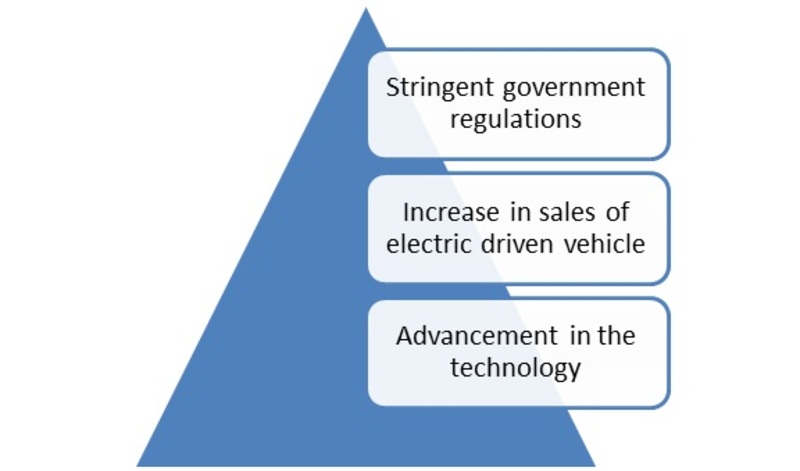
Global Automotive Adaptive Cruise Control Market Size, 2017-2023(CAGR)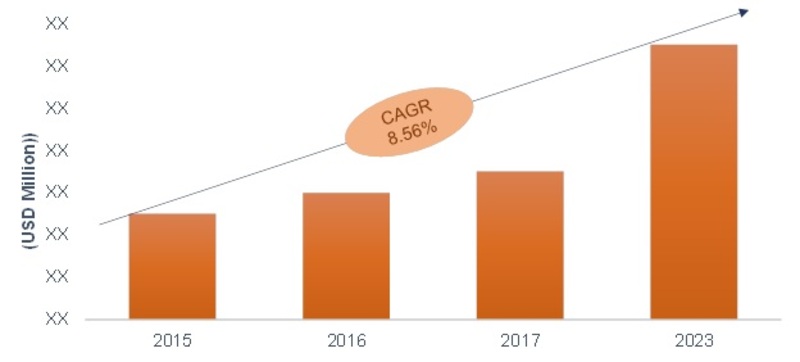
Scope of the Report:
This study provides an overview of the global automotive adaptive cruise control market, tracking three market segments across four geographic regions. The report studies key players, providing a five-year annual trend analysis that highlights market size, volume and share for North America, Europe, Asia Pacific (APAC) and Rest of the World (ROW). The report also provides a forecast, focusing on the market opportunities for the next five years for each region. The scope of the study segments the global automotive Adaptive Cruise Controls market by its technology, vehicle type, end-use, and region
By Technology
- Lidar
- Radar
- Laser
- Ultrasonic
By Vehicle Type
- Passenger Cars
- Commercial Vehicles
By End-use
- OEM
- Aftermarket
By Region
- North America
- Europe
- Asia Pacific
- Rest of the World
Key Players:
The key players in automotive adaptive cruise control market are Autoliv Inc. (Sweden), Continental AG (Germany), Denso Corporation (Japan), Delphi Automotive PLC (U.K.), Robert Bosch GmbH (Germany), Valeo SA (France), Hyundai Mobis (South Korea), ZF Friedrichshafen AG (Germany), Magna International Inc (Canada), Mando Corporation (South Korea), and others.