
Request Free Sample ×

Kindly complete the form below to receive a free sample of this Report

* Please use a valid business email

Leading companies partner with us for data-driven Insights

clients tt-cursor
Hero Background

Bio-Based Succinic Acid Market

ID: MRFR/CnM/6309-HCR
111 Pages
Chitranshi Jaiswal
Last Updated: May 15, 2026

バイオベースコハク酸市場調査レポートの情報は、加工タイプ別(硫酸アンモニウムプロセス、直接結晶化プロセス)、用途別(1,4ブタンジオール、ポリブチレンサクシネート、可塑剤)、最終用途産業別(化学、食品)および2030年までの地域予測です。

共有
Download PDF ×

We do not share your information with anyone. However, we may send you emails based on your report interest from time to time. You may contact us at any time to opt-out.

Bio-Based Succinic Acid Market Infographic
Purchase Options

バイオベースコハク酸市場の概要

pMRFRの調査レポートによると、バイオベースコハク酸の世界市場は、調査期間中に19.6%の健全なCAGRで繁栄すると推定されています。レポートはさらに、予測期間中の終わりまでに市場が9億ドルに達すると予測しています。一般的に、コハク酸は主にナフサのC4留分と無水マレイン酸を介した4炭素炭化水素を使用して製造されます。コハク酸は、水和後の水素化と無水マレイン酸によって得られます。環境に優しいコハク酸は、コーティング、樹脂、インクの製造に広く使用されています。

世界的な汚染の拡大と二酸化炭素排出量の増加は、バイオベースコハク酸市場の成長を促進すると予測されています。この世界市場には、北米、中東、アフリカ、ヨーロッパ、アジア太平洋地域など、多くの地理的場所が含まれています。これらのうち、北米地域市場は、予測期間内に最大の市場シェアを生み出すと予測されています。

バイオコハク酸の世界市場は、用途、最終用途産業、および加工タイプに基づいて分割されています。さらに、最終用途産業は、食品および飲料、パーソナルケア、医薬品、農業、化学に分類されています。加工タイプのセグメントは、直接結晶化プロセス、電気透析プロセス、硫酸アンモニウムプロセスなどのさまざまな部分に分かれています。アプリケーションセグメントは、1、4ブタンジオール、溶剤およびコーティング、可塑剤、ポリマーなどのさまざまな部分に分類されます。エステル、ポリブチレンサクシネートなど。

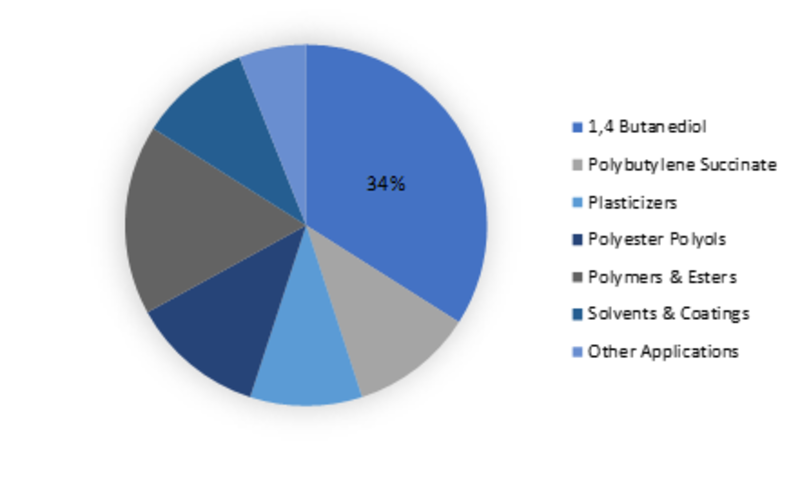
世界のバイオベースコハク酸市場、用途別2017年(%)

世界のバイオベースコハク酸市場、用途別、2017年(%)

出典:MRFR Analysis

セグメント分析

p世界のバイオベースコハク酸市場は、加工タイプ、用途、最終用途産業、地域に基づいてセグメント化されています。

加工タイプに基づいて、世界のバイオベースコハク酸市場は、硫酸アンモニウムプロセス、直接結晶化プロセス、および電気透析プロセスに分割されています。

用途別に見ると、世界のバイオコハク酸は、1,4-ブタンジオール、ポリブチレンサクシネート、可塑剤、ポリエステルポリオール、ポリマーとエステル、溶剤とコーティング、その他の用途に分類されています。

最終用途産業別に見ると、世界のバイオコハク酸は、化学、食品と飲料、医薬品、パーソナルケア、農業に分類されています。

地域分析

p世界のバイオコハク酸市場は、アジア太平洋、北米、ヨーロッパ、ラテンアメリカ、中東およびアフリカの 5 つの地域に広がっています。

北米市場は、2018 年に世界のバイオベース コハク酸市場で最大のシェアを占めました。化学および製薬業界でのバイオベース コハク酸の使用の増加は、この地域のバイオベース コハク酸市場の成長を牽引しています。この地域の市場は、予測期間中、引き続き優位を維持すると予想されています。

バイオベース コハク酸のアジア太平洋市場は、2018 年に最も急速に成長し、第 2 位のシェアを占めました。インド、中国、タイ、韓国の製薬、自動車、農業業界での需要増加は、この地域のバイオベース コハク酸市場の成長を促進すると予想されます。アジア太平洋地域は、予測期間の終わりまでに、この地域の主要な市場になると予想されます。

2018 年の市場シェアでは、欧州市場がアジア太平洋地域に僅差で続きました。食品および飲料業界でのバイオベース コハク酸の使用の増加は、この地域のバイオベース コハク酸市場の競争力を低下させています。

この地域のバイオコハク酸市場の成長には、飲料およびパーソナルケア産業の成長が主な要因になると予想されています。ヨーロッパ市場は、予測期間中にかなりの成長が見込まれています。

ラテンアメリカ市場は、予測期間中に緩やかな成長を記録すると予測されています。この成長は、環境問題の高まりと、この地域の化学産業によるバイオコハク酸の使用への移行に起因しています。

中東およびアフリカのバイオコハク酸市場は、石油産業の存在が大きく、メーカーがコハク酸の生産において石油に大きく依存しているため、予測期間中の成長は鈍化すると予想されています。

バイオコハク酸市場の市場プレーヤー

pBioAmber Inc(米国)、DSM(オランダ)、三井物産世界のバイオベースコハク酸市場で活動している主要企業としては、株式会社(日本)、三菱ケミカル株式会社(日本)、BASF SE(ドイツ)、ロケット・フレール(フランス)、コルビオン(オランダ)、およびレヴェルディア(オランダ)などがあります。 最近の開発

2022年2月

Bio MADE(バイオインダストリアル製造および設計エコシステム)は現在、米国のバイオインダストリアル製造能力、知識、および労働力を強化することを目的とした16の革新的なプロジェクトに580万米ドルの連邦資金を提供しています。さらに、これらのプロジェクトは、連邦政府以外が負担する630万米ドルの追加費用を活用することで、エコシステムの強化にも貢献します。

対象者:

    • バイオベースコハク酸の製造業者および生産者
    • バイオベースコハク酸の取引業者および販売業者
    • 原材料サプライヤー
    • 国営研究所
    • 研究開発機関

FAQs

What is the projected market valuation for the Bio-Based Succinic Acid Market in 2035?

The projected market valuation for the Bio-Based Succinic Acid Market in 2035 is 75.2 USD Million.

What was the market valuation for Bio-Based Succinic Acid in 2024?

The overall market valuation for Bio-Based Succinic Acid was 17.45 USD Million in 2024.

What is the expected CAGR for the Bio-Based Succinic Acid Market from 2025 to 2035?

The expected CAGR for the Bio-Based Succinic Acid Market during the forecast period 2025 - 2035 is 14.2%.

Which companies are considered key players in the Bio-Based Succinic Acid Market?

Key players in the Bio-Based Succinic Acid Market include BioAmber, Myriant, Reverdia, Succinity, Green Biologics, Genomatica, Cargill, and BASF.

What are the main applications of Bio-Based Succinic Acid and their market values?

Main applications include Food and Beverage (15.0 USD Million), Pharmaceuticals (18.0 USD Million), and Bioplastics (20.0 USD Million) among others.

How does the market for Bio-Based Succinic Acid compare across different production methods?

Production methods include Fermentation (32.5 USD Million), Chemical Synthesis (20.0 USD Million), and Enzymatic Process (15.0 USD Million), indicating diverse approaches.

What are the projected market values for Bio-Based Succinic Acid by source in 2035?

Projected market values by source include Corn (22.0 USD Million), Sugarcane (18.0 USD Million), and Cellulosic Biomass (13.2 USD Million) in 2035.

What purity levels are available in the Bio-Based Succinic Acid Market?

Purity levels include Low Purity (15.0 USD Million), Medium Purity (30.0 USD Million), and High Purity (30.2 USD Million), reflecting varying quality standards.

What end-use segments are driving the Bio-Based Succinic Acid Market?

End-use segments include Industrial Chemicals (15.5 USD Million), Solvents (18.0 USD Million), and Coatings (15.7 USD Million), showcasing broad applicability.

How does the Bio-Based Succinic Acid Market's growth potential appear in the context of sustainability?

The growth potential of the Bio-Based Succinic Acid Market appears robust, driven by increasing demand for sustainable alternatives in various industries.
著者
Author
Author Profile
Chitranshi Jaiswal LinkedIn
Team Lead - Research
Chitranshi is a Team Leader in the Chemicals & Materials (CnM) and Energy & Power (EnP) domains, with 6+ years of experience in market research. She leads and mentors teams to deliver cross-domain projects that equip clients with actionable insights and growth strategies. She is skilled in market estimation, forecasting, competitive benchmarking, and both primary & secondary research, enabling her to turn complex data into decision-ready insights. An engineer and MBA professional, she combines technical expertise with strategic acumen to solve dynamic market challenges. Chitranshi has successfully managed projects that support market entry, investment planning, and competitive positioning, while building strong client relationships. Certified in Advanced Excel & Power BI she leverages data-driven approaches to ensure accuracy, clarity, and impactful outcomes.
コメントを残す

Research Approach

Secondary Research

The secondary research process involved comprehensive analysis of regulatory databases, peer-reviewed scientific journals, chemical industry publications, and authoritative environmental and industrial organizations. Key sources included the US Environmental Protection Agency (EPA), US Department of Energy (DOE) / National Renewable Energy Laboratory (NREL), European Chemicals Agency (ECHA), European Commission Joint Research Centre (JRC), International Energy Agency (IEA), Organisation for Economic Co-operation and Development (OECD), Food and Drug Administration (FDA) for food-grade chemical approvals, US Department of Agriculture (USDA) BioPreferred Program, European Committee for Standardization (CEN), International Organization for Standardization (ISO) for bio-based product standards, National Center for Biotechnology Information (NCBI/PubMed) for fermentation and enzymatic process studies, ScienceDirect / Elsevier, Wiley Online Library, American Chemical Society (ACS) Publications, Chemical & Engineering News, ICIS Chemical Business, S&P Global Commodity Insights, Grand View Research, Verified Market Research, and national statistical databases from key markets including Eurostat, US Census Bureau, China National Bureau of Statistics, and India Ministry of Chemicals and Fertilizers. These sources were used to collect production capacity data, regulatory approval statuses for bio-based chemical pathways, fermentation technology advancements, feedstock availability studies, sustainability lifecycle assessments (LCA), and market landscape analysis for bio-based succinic acid across fermentation-derived, enzymatic, and emerging bioreactor technology platforms.

Primary Research

In order to gather both qualitative and quantitative insights, supply-side and demand-side stakeholders were interviewed during the primary research process. CEOs, vice presidents of technology and process development, heads of regulatory affairs, sustainability officers, and commercial directors from producers of bio-based succinic acid, industrial biotechnology companies, suppliers of fermentation technology, and suppliers of agricultural feedstock were examples of supply-side sources. Procurement heads and R&D directors from specialty chemical companies, manufacturers of bioplastics (polybutylene succinate, or PBS), food and beverage formulators, buyers of pharmaceutical excipients, developers of cosmetics and personal care products, and producers of industrial coatings and adhesives were examples of demand-side sources. Primary research verified product pipeline timelines for commercial-scale fermentation facilities, obtained information on feedstock pricing volatility, offtake agreement structures, and sustainability certification dynamics, and validated market segmentation across process type (ammonium sulphate process, direct crystallization process), application (1,4-butanediol, polybutylene succinate, plasticizers), and end-use industry (chemical, food).

Primary Respondent Breakdown:

By Designation: C-level Primaries (32%), Director Level (30%), Others (38%)

By Region: North America (32%), Europe (30%), Asia-Pacific (28%), Rest of World (10%)

Market Size Estimation

Global market valuation was derived through revenue mapping and production capacity analysis. The methodology included:

Identification of 35+ key manufacturers and technology developers across North America, Europe, Asia-Pacific, and Latin America

Product mapping across fermentation-based, chemical synthesis, enzymatic process, and bioreactor technology platforms

Analysis of reported and modeled annual revenues specific to bio-based succinic acid portfolios

Coverage of manufacturers and technology licensors representing 65–70% of global market share in 2024

Extrapolation using bottom-up (production volume × average selling price by region, adjusted for purity grade: low, medium, high, ultra-high) and top-down (manufacturer revenue validation and capacity utilization rates) approaches to derive segment-specific valuations for application segments including 1,4-butanediol, polybutylene succinate, plasticizers, solvents, adhesives, and coatings.

無料サンプルをダウンロード

このレポートの無料サンプルを受け取るには、以下のフォームにご記入ください

Compare Licence

×
Features License Type
Single User Multiuser License Enterprise User
Price $4,950 $5,950 $7,250
Maximum User Access Limit 1 User Upto 10 Users Unrestricted Access Throughout the Organization
Free Customization
Direct Access to Analyst
Deliverable Format
Platform Access
Discount on Next Purchase 10% 15% 15%
Printable Versions














