• Cat-intel
  • MedIntelliX
  • Resources
  • About Us
  • Hero Background
    English
    Chinese
    French
    Japanese
    Korean
    German
    Spanish

    Neurocutaneous Disorder Market Analysis

    ID: MRFR/Pharma/4481-HCR
    100 Pages
    Rahul Gotadki
    October 2025

    Neurocutaneous Disorder Market Research Report Information By Type (Tuberous Sclerosis (TS), Neurofibromatosis (NF), Sturge-Weber Syndrome, A-T, VHL), by Diagnosis (MRI, CT, EEG), End-User (Hospitals & Clinics, Diagnostic Centers) – Forecast Till 2035

    Share:
    Download PDF ×

    We do not share your information with anyone. However, we may send you emails based on your report interest from time to time. You may contact us at any time to opt-out.

    Neurocutaneous Disorder Market Infographic
    Purchase Options

    Market Analysis

    In-depth Analysis of Neurocutaneous Disorder Market Industry Landscape

    Sturge-Weber syndrome (SWS), also referred to as encephalotrigeminal angiomatosis, is an infrequent neurocutaneous syndrome distinguished by cutaneous Port Wine Stains (PWS), ocular irregularities, and neurological complications. The National Organization of Rare Disorders reports that approximately 3 in 1,000 infants are born with a port-wine birthmark, but merely 6% of this population develops the neurological abnormalities associated with Sturge-Weber syndrome.

    This complex condition manifests as phakomatosis, featuring distinctive traits like Port Wine Stains, abnormalities in the eyes, and neurological challenges. While cutaneous Port Wine Stains are a common occurrence, the intricate connection between these birthmarks and the subsequent development of neurological complications is a defining characteristic of Sturge-Weber syndrome.

    Globally, healthcare systems are evolving in response to an array of factors, including advancements in medical technology, the emergence of new health services, shifts in health policies, the implementation of novel organizational structures, innovations in drug development, and the broader accessibility of health services. The dynamic nature of these influences contributes to the ongoing development and transformation of health systems on a global scale.

    As medical technology continues to advance, health services are adapting to integrate these innovations, leading to a paradigm shift in the landscape of healthcare delivery. The incorporation of cutting-edge medical technologies facilitates enhanced diagnostic capabilities, innovative treatment modalities, and improved patient outcomes. Moreover, the introduction of new health services addresses evolving healthcare needs, providing a more comprehensive and patient-centric approach to medical care.

    Changes in health policies further shape the trajectory of healthcare systems, influencing areas such as funding, accessibility, and the overall organization of healthcare delivery. Policy adjustments are pivotal in aligning healthcare systems with contemporary healthcare challenges and societal needs. These modifications contribute to the optimization of healthcare resources, fostering more efficient and equitable healthcare delivery.

    In parallel, the restructuring of organizational frameworks within healthcare systems seeks to enhance efficiency, collaboration, and overall effectiveness. The evolution of organizational structures reflects a strategic response to the demands of a rapidly evolving healthcare landscape. The aim is to create systems that are resilient, adaptable, and capable of meeting the diverse healthcare needs of populations.

    The pharmaceutical landscape is witnessing significant innovation, with ongoing developments in drug discovery and development. Novel therapeutic approaches, precision medicine, and breakthrough treatments are reshaping the pharmaceutical industry. These innovations not only expand the scope of available treatment options but also contribute to advancements in personalized and targeted therapies.

    Greater accessibility to health services is a key focus of global healthcare initiatives. Initiatives aimed at improving healthcare access play a crucial role in addressing health disparities, ensuring that individuals, regardless of geographical location or socio-economic status, can avail themselves of essential healthcare services. This inclusivity is fundamental to achieving global health objectives and promoting health equity.

    In conclusion, Sturge-Weber syndrome presents a complex medical condition that underscores the importance of continuous advancements in healthcare systems. The interplay of factors such as technological innovation, evolving health services, policy dynamics, organizational restructuring, pharmaceutical breakthroughs, and enhanced accessibility collectively contributes to the dynamic evolution of global healthcare. As healthcare systems adapt to these multifaceted influences, they are better positioned to address the complexities of conditions like Sturge-Weber syndrome and meet the diverse healthcare needs of populations worldwide.


    Author
    Rahul Gotadki
    Assistant Manager

    He holds an experience of about 7+ years in Market Research and Business Consulting, working under the spectrum of Life Sciences and Healthcare domains. Rahul conceptualizes and implements a scalable business strategy and provides strategic leadership to the clients. His expertise lies in market estimation, competitive intelligence, pipeline analysis, customer assessment, etc. In addition to the above, his other responsibility includes strategic tracking of high growth markets & advising clients on the potential areas of focus they could direct their business initiatives

    Leave a Comment

    FAQs

    What would be Neurocutaneous Disorder Market CAGR during the forecast period of 2023 to 2030?

    Neurocutaneous Disorder Market would grow with 21.43% CAGR during the forecast period of 2024 to 2032.

    What are the types discussed in the Neurocutaneous Disorder Market report?

    The types are Neurofibromatosis (NF), Von Hippel-Lindau disease (VHL), Tuberous Sclerosis (TS), Ataxia-Telangiectasia (A-T), Sturge-weber syndrome, and others.

    What is the diagnosis included in the Neurocutaneous Disorder Market report?

    The diagnosis includes Magnetic Resonance Imaging (MRI), skull radiography, Electroencephalogram (EEG), Computed Tomography (CT) scan, biopsy, genetic tests (blood testing), and others.

    What are the treatments included in Neurocutaneous Disorder Market report?

    The treatments are surgical procedures, laser therapy, medication, and others.

    What are the end users included in Neurocutaneous Disorder Market report?

    The end user segments are diagnostic centers, hospitals & clinics, and others.

    Market Summary

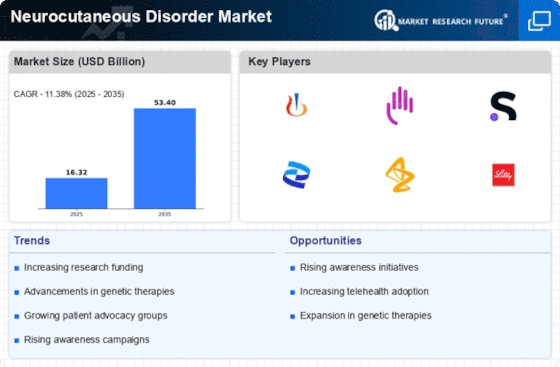
    As per MRFR analysis, the Neurocutaneous Disorder Market Size was estimated at 16.32 USD Billion in 2024. The Neurocutaneous Disorder industry is projected to grow from 18.17 USD Billion in 2025 to 53.4 USD Billion by 2035, exhibiting a compound annual growth rate (CAGR) of 11.38 during the forecast period 2025 - 2035.

    Key Market Trends & Highlights

    The Neurocutaneous Disorder Market is experiencing dynamic growth driven by advancements in research and technology.

    • North America remains the largest market for neurocutaneous disorders, driven by robust healthcare infrastructure and research initiatives.
    • The Asia-Pacific region is emerging as the fastest-growing market, fueled by increasing awareness and healthcare investments.
    • Neurofibromatosis continues to dominate the market as the largest segment, while Tuberous Sclerosis is recognized as the fastest-growing segment.
    • Key market drivers include the rising prevalence of neurocutaneous disorders and advancements in diagnostic technologies.

    Market Size & Forecast

    2024 Market Size 16.32 (USD Billion)
    2035 Market Size 53.4 (USD Billion)
    CAGR (2025 - 2035) 11.38%
    Largest Regional Market Share in 2024 Americas

    Major Players

    <p>Novartis (CH), Bristol-Myers Squibb (US), Sanofi (FR), Pfizer (US), AstraZeneca (GB), Eli Lilly and Company (US), Merck & Co. (US), Amgen (US)</p>

    Market Trends

    The Neurocutaneous Disorder Market is currently experiencing a notable evolution, driven by advancements in medical research and increased awareness of these complex conditions. Neurocutaneous disorders, which encompass a range of genetic syndromes affecting the skin and nervous system, have garnered heightened attention from both healthcare professionals and patients alike. This growing recognition is likely to foster a more robust demand for innovative treatment options and diagnostic tools. Furthermore, the integration of genetic testing into clinical practice appears to be reshaping the landscape, enabling earlier detection and personalized management strategies for affected individuals. In addition to advancements in diagnostics, the Neurocutaneous Disorder Market is also influenced by the expanding role of patient advocacy groups and collaborative research initiatives. These organizations are instrumental in raising awareness, funding research, and supporting affected families, which may lead to improved treatment pathways and resources. As the market continues to evolve, it seems poised for growth, with potential opportunities for pharmaceutical companies and biotechnology firms to develop targeted therapies. Overall, the Neurocutaneous Disorder Market reflects a dynamic interplay of scientific progress, patient engagement, and evolving healthcare paradigms.

    Advancements in Genetic Research

    Recent developments in genetic research are significantly impacting the Neurocutaneous Disorder Market. Enhanced understanding of the genetic underpinnings of these disorders is paving the way for targeted therapies and personalized medicine. This trend suggests a shift towards more effective treatment options that address the specific needs of patients.

    Increased Patient Advocacy

    The role of patient advocacy groups is becoming increasingly prominent within the Neurocutaneous Disorder Market. These organizations are not only raising awareness but also facilitating research funding and support for affected individuals. Their efforts may lead to improved access to treatments and resources for patients.

    Integration of Telemedicine

    The integration of telemedicine into healthcare practices is transforming the Neurocutaneous Disorder Market. This trend allows for greater accessibility to specialists and consultations, particularly for patients in remote areas. Telemedicine could enhance patient engagement and streamline management of these complex conditions.

    <p>The prevalence of neurocutaneous disorders is increasingly recognized, suggesting a growing need for comprehensive healthcare strategies and innovative treatment options to address the complexities of these conditions.</p>

    National Institutes of Health (NIH)

    Neurocutaneous Disorder Market Market Drivers

    Increased Research Funding

    The surge in research funding dedicated to neurocutaneous disorders is a notable driver for the Neurocutaneous Disorder Market. Government and private organizations are increasingly investing in studies aimed at understanding the genetic and environmental factors contributing to these conditions. This influx of funding supports clinical trials and the development of novel therapies, which are essential for addressing unmet medical needs. For instance, funding for research on neurofibromatosis has seen a significant rise, with millions allocated annually to explore potential treatments. As research progresses, the Neurocutaneous Disorder Market is likely to benefit from the introduction of innovative therapies and improved patient care strategies.

    Expansion of Treatment Options

    The expansion of treatment options available for neurocutaneous disorders is a significant factor influencing the Neurocutaneous Disorder Market. Recent developments in pharmacotherapy, including targeted therapies and immunotherapies, are providing new avenues for managing these complex conditions. The market is witnessing a shift towards personalized medicine, where treatments are tailored to the genetic profiles of patients. This trend is expected to enhance treatment efficacy and patient satisfaction. As more therapies receive regulatory approval, the Neurocutaneous Disorder Market is poised for growth, with an increasing number of patients seeking innovative treatment solutions.

    Advancements in Diagnostic Technologies

    Technological advancements in diagnostic tools are significantly influencing the Neurocutaneous Disorder Market. Enhanced imaging techniques, such as MRI and genetic testing, allow for earlier and more accurate diagnosis of neurocutaneous disorders. These innovations facilitate timely intervention, which is crucial for improving patient outcomes. The market for diagnostic tools is projected to grow, with estimates indicating a compound annual growth rate of over 10% in the coming years. As diagnostic capabilities improve, healthcare providers are better equipped to identify and manage these complex conditions, thereby driving demand for associated therapeutic options within the Neurocutaneous Disorder Market.

    Growing Awareness and Education Initiatives

    The rise in awareness and educational initiatives surrounding neurocutaneous disorders is driving growth in the Neurocutaneous Disorder Market. Non-profit organizations and advocacy groups are actively working to educate both the public and healthcare professionals about these conditions. Increased awareness leads to earlier diagnosis and treatment, which is crucial for managing symptoms effectively. Campaigns aimed at educating communities about the signs and symptoms of neurocutaneous disorders are becoming more prevalent, potentially increasing the number of diagnosed cases. This heightened awareness is likely to stimulate demand for specialized treatments and support services within the Neurocutaneous Disorder Market.

    Rising Prevalence of Neurocutaneous Disorders

    The increasing incidence of neurocutaneous disorders is a primary driver for the Neurocutaneous Disorder Market. Conditions such as neurofibromatosis and tuberous sclerosis complex are becoming more recognized, leading to heightened awareness among healthcare professionals and patients alike. Recent estimates suggest that neurofibromatosis affects approximately 1 in 3,000 individuals, while tuberous sclerosis complex has a prevalence of about 1 in 6,000. This growing prevalence necessitates the development of targeted therapies and comprehensive care strategies, thereby propelling market growth. As more individuals are diagnosed, the demand for specialized treatments and support services within the Neurocutaneous Disorder Market is likely to increase, fostering innovation and investment in research and development.

    Market Segment Insights

    By Type: Neurofibromatosis (Largest) vs. Tuberous Sclerosis (Fastest-Growing)

    <p>In the Neurocutaneous Disorder Market, Neurofibromatosis (NF) holds the largest share among other types, primarily due to its higher prevalence and awareness among clinicians and patients. Tuberous Sclerosis (TS) has seen a significant increase in attention, making it the fastest-growing segment in this arena as novel therapies and interventions gain traction. Other forms like Sturge-Weber Syndrome, Ataxia-Telangiectasia, and Von Hippel-Lindau disease also contribute, albeit to a lesser extent, creating a diverse market landscape. Growth trends indicate a rising demand for advanced treatments specifically tailored to manage the symptoms and debilitating effects of these disorders. The increasing investment in research and development, coupled with initiatives to enhance awareness and early diagnosis, particularly for Tuberous Sclerosis, is driving this market forward. Furthermore, collaborations between organizations and healthcare providers are expected to lead to innovative solutions, positioning these segments for continued growth over the coming years.</p>

    <p>Neurofibromatosis (Dominant) vs. Tuberous Sclerosis (Emerging)</p>

    <p>Neurofibromatosis, known for its various forms and associated complications, remains the dominant presence in the Neurocutaneous Disorder Market, benefiting from established treatment protocols and extensive research funding. Clinicians are increasingly knowledgeable about NF, which aids in accurate diagnosis and management strategies. In contrast, Tuberous Sclerosis is marked as an emerging segment, with significant momentum driven by innovations in targeted therapies and gene treatments that address the underlying causes of the disorder. This emerging status is further enhanced by active advocacy groups raising awareness and facilitating better healthcare access for patients. Both segments are unique, with Neurofibromatosis focusing more on management of symptoms and Tuberous Sclerosis advancing towards curative approaches.</p>

    By Diagnosis: Magnetic Resonance Imaging (MRI) (Largest) vs. Electroencephalogram (EEG) (Fastest-Growing)

    <p>In the Neurocutaneous Disorder Market, Magnetic Resonance Imaging (MRI) maintains the largest share due to its precision and ability to provide detailed images of the brain and soft tissues. Following MRI, Skull Radiography, Computed Tomography (CT) scans, and Genetic tests offer important insights. While CT scans are popular for their speed and efficiency, Electroencephalogram (EEG) has been gaining traction as a vital diagnostic tool. This increased interest reflects the growing need for effective neurodiagnostics in identifying neurocutaneous disorders swiftly. The growth trends in this segment are driven by advancements in imaging technologies and a rising demand for accurate diagnostics. With EEG emerging as the fastest-growing diagnostic method, healthcare professionals are increasingly utilizing it for monitoring brain activity. This reflects a cultural shift towards non-invasive and real-time diagnostic techniques. Additionally, the integration of technology in medical practices and ongoing research into neurocutaneous disorders propel the market for these diagnostic tools forward.</p>

    <p>MRI (Dominant) vs. EEG (Emerging)</p>

    <p>Magnetic Resonance Imaging (MRI) remains the dominant diagnosis tool in the Neurocutaneous Disorder Market due to its comprehensive imaging capability and non-invasiveness. It excels in depicting soft tissue contrasts, making it invaluable for assessing complex conditions associated with neurocutaneous syndromes. In contrast, the Electroencephalogram (EEG) is emerging rapidly as an essential tool for neurology, particularly due to its role in monitoring electrical patterns in the brain. EEG’s ability to provide real-time feedback is making it increasingly popular among clinicians, especially for conditions like seizure disorders linked to neurocutaneous anomalies. As healthcare systems prioritize precision medicine, MRI and EEG are poised to play pivotal roles in optimizing patient outcomes.</p>

    By Treatment: Medication (Largest) vs. Laser Therapy (Fastest-Growing)

    <p>In the Neurocutaneous Disorder Market, the treatment segment is primarily dominated by medication, which accounts for the largest share. This encompasses various pharmacological therapies meant to manage symptoms and improve the quality of life for patients. Laser therapy, while smaller in market share, is emerging as the fastest-growing option due to increased demand for non-invasive treatments that reduce the appearance of lesions commonly associated with neurocutaneous disorders.</p>

    <p>Medication (Dominant) vs. Laser Therapy (Emerging)</p>

    <p>Medication stands out as the dominant treatment choice in the Neurocutaneous Disorder Market, characterized by traditional therapies that target the diverse symptoms of these conditions. This segment includes antiepileptic drugs, pain management medications, and other symptom-relief treatments that are essential for patient care. On the other hand, laser therapy is rapidly gaining traction as an emerging treatment method. Its non-invasive nature and proven efficacy in managing skin manifestations of neurocutaneous disorders have propelled its popularity. As healthcare providers seek innovative and patient-friendly options, laser therapy's advanced technology is positioned well to capture a more significant market share as awareness and adoption continue to grow.</p>

    By End-User: Hospitals and Clinics (Largest) vs. Diagnostic Centers (Fastest-Growing)

    <p>The Neurocutaneous Disorder market is significantly influenced by its end-user segments, with hospitals and clinics taking the lead in market share. This dominant segment benefits from the increasing patient population seeking treatment for various neurocutaneous disorders. Hospitals are equipped with advanced diagnostic and treatment facilities, which contribute to a substantial portion of the market's overall revenue. Meanwhile, diagnostic centers are increasingly gaining traction due to the rising demand for early diagnosis and management of neurocutaneous disorders, thereby positioning themselves as crucial players in the market landscape.</p>

    <p>Hospitals and Clinics (Dominant) vs. Diagnostic Centers (Emerging)</p>

    <p>Hospitals and clinics are the primary end-users in the Neurocutaneous Disorder market, providing comprehensive care that integrates diagnosis, treatment, and follow-up for patients. Their well-established infrastructure and specialized staff enable them to manage complex cases effectively, catering to a wide range of neurocutaneous disorders. Conversely, diagnostic centers are emerging as significant contributors, particularly in urban areas where accessibility and prompt diagnosis are vital. These centers offer advanced imaging and screening technologies that facilitate earlier detection and treatment, thus driving their rapid growth. The interplay between these segments illustrates the diverse approaches to care within the market.</p>

    Get more detailed insights about Neurocutaneous Disorder Market Research Report – Forecast to 2035

    Regional Insights

    Key Companies in the Neurocutaneous Disorder Market market include

    Industry Developments

    Future Outlook

    Neurocutaneous Disorder Market Future Outlook

    <p>The Neurocutaneous Disorder Market is projected to grow at 11.38% CAGR from 2024 to 2035, driven by advancements in diagnostics, increased awareness, and innovative treatment options.</p>

    New opportunities lie in:

    • <p>Development of targeted gene therapies for specific neurocutaneous disorders.</p>
    • <p>Expansion of telehealth services for remote patient monitoring and consultations.</p>
    • <p>Investment in AI-driven diagnostic tools to enhance early detection and treatment planning.</p>

    <p>By 2035, the Neurocutaneous Disorder Market is expected to achieve substantial growth, driven by innovation and strategic investments.</p>

    Market Segmentation

    Neurocutaneous Disorder Market Type Outlook

    • Tuberous Sclerosis (TS)
    • Neurofibromatosis (NF)
    • Sturge-weber syndrome
    • Ataxia-Telangiectasia (A-T)
    • Von Hippel-Lindau disease (VHL)
    • Others

    Neurocutaneous Disorder Market End-User Outlook

    • Hospitals and clinics
    • Diagnostic centers
    • Others

    Neurocutaneous Disorder Market Diagnosis Outlook

    • Skull radiography
    • Magnetic Resonance Imaging (MRI)
    • Computed Tomography (CT) scan
    • Electroencephalogram (EEG)
    • Genetic tests (blood testing)
    • Biopsy
    • Others

    Neurocutaneous Disorder Market Treatment Outlook

    • Medication
    • Laser therapy
    • Surgical procedures
    • Others

    Report Scope

    MARKET SIZE 202416.32(USD Billion)
    MARKET SIZE 202518.17(USD Billion)
    MARKET SIZE 203553.4(USD Billion)
    COMPOUND ANNUAL GROWTH RATE (CAGR)11.38% (2024 - 2035)
    REPORT COVERAGERevenue Forecast, Competitive Landscape, Growth Factors, and Trends
    BASE YEAR2024
    Market Forecast Period2025 - 2035
    Historical Data2019 - 2024
    Market Forecast UnitsUSD Billion
    Key Companies ProfiledMarket analysis in progress
    Segments CoveredMarket segmentation analysis in progress
    Key Market OpportunitiesAdvancements in gene therapy and personalized medicine enhance treatment options in the Neurocutaneous Disorder Market.
    Key Market DynamicsRising demand for innovative therapies drives competitive dynamics in the Neurocutaneous Disorder market.
    Countries CoveredNorth America, Europe, APAC, South America, MEA

    FAQs

    What would be Neurocutaneous Disorder Market CAGR during the forecast period of 2023 to 2030?

    Neurocutaneous Disorder Market would grow with 21.43% CAGR during the forecast period of 2024 to 2032.

    What are the types discussed in the Neurocutaneous Disorder Market report?

    The types are Neurofibromatosis (NF), Von Hippel-Lindau disease (VHL), Tuberous Sclerosis (TS), Ataxia-Telangiectasia (A-T), Sturge-weber syndrome, and others.

    What is the diagnosis included in the Neurocutaneous Disorder Market report?

    The diagnosis includes Magnetic Resonance Imaging (MRI), skull radiography, Electroencephalogram (EEG), Computed Tomography (CT) scan, biopsy, genetic tests (blood testing), and others.

    What are the treatments included in Neurocutaneous Disorder Market report?

    The treatments are surgical procedures, laser therapy, medication, and others.

    What are the end users included in Neurocutaneous Disorder Market report?

    The end user segments are diagnostic centers, hospitals &amp; clinics, and others.

    1. Definition
      1. Scope of the Study
        1. Research Objective
        2. Assumptions
        3. Limitations
      2. Introduction
      3. Primary Research
      4. Secondary Research
      5. Market Size Estimation
      6. Drivers
      7. Restraints
      8. Opportunities
      9. Challenges
      10. Macroeconomic Indicators
      11. Technology Trends & Assessment
      12. Porter’s Five Forces Analysis
        1. Bargaining Power of Suppliers
        2. Bargaining Power of Buyers
        3. Threat of New Entrants
        4. Threat of Substitutes
        5. Intensity of Rivalry
      13. Value Chain Analysis
      14. Investment Feasibility Analysis
      15. Pricing Analysis
    2. Chapter 6. Global Neurocutaneous Disorder Market, by Type
      1. Introduction
      2. Tuberous Sclerosis (TS)
        1. Market Estimates & Forecast, 2020–2027
      3. Neurofibromatosis (NF)
        1. Neurofibromatosis Type 1 (NF1),
        2. Neurofibromatosis Type 2 (NF2),
        3. Schwannomatosis
      4. Sturge-Weber Syndrome Disease
        1. Type 1
        2. Type 2
        3. Type 3
      5. Von Hippel-Lindau Disease (VHL)
        1. Market Estimates & Forecast, 2020–2027
      6. Ataxia-Telangiectasia (A-T)
        1. Market Estimates & Forecast, 2020–2027
      7. Others
        1. Market Estimates & Forecast, 2020–2027
    3. Chapter 7. Global Neurocutaneous Disorder Market, by Diagnosis
      1. Introduction
      2. Skull Radiography
        1. Market Estimates & Forecast, 2020–2027
      3. Magnetic Resonance Imaging (MRI)
        1. Market Estimates & Forecast, 2020–2027
      4. Computed Tomography (CT) Scan
        1. Market Estimates & Forecast, 2020–2027
      5. Electroencephalogram (EEG)
        1. Market Estimates & Forecast, 2020–2027
      6. Genetic Tests (blood testing)
        1. Market Estimates & Forecast, 2020–2027
      7. Biopsy
        1. Market Estimates & Forecast, 2020–2027
      8. Others
        1. Market Estimates & Forecast, 2020–2027
    4. Chapter 8. Global Neurocutaneous Disorder Market, by treatment
      1. Introduction
      2. Medication
        1. Antiepileptic
        2. Beta-Antagonist Eye Drops
        3. Carbonic Anhydrase Inhibitors
        4. Adrenergic Eye Drops
        5. Miotic Eye Drops
        6. Others
      3. Laser Therapy
        1. Market Estimates & Forecast, 2020–2027
      4. Surgical Procedures
        1. Focal Cortical Resection
        2. Hemispherectomy
        3. Corpus Callosotomy
        4. Trabeculectomy
        5. Filtration Surgery
        6. Cyclocryotherapy
        7. Vagal Nerve Stimulation (VNS)
        8. Others
      5. Others
        1. Market Estimates & Forecast, 2020–2027
    5. Chapter 9. Global Neurocutaneous Disorder Market, by End-User
      1. Introduction
      2. Hospital & Clinics
        1. Market Estimates & Forecast, 2020–2027
      3. Diagnostic Centers
        1. Market Estimates & Forecast, 2020–2027
      4. Others
        1. Market Estimates & Forecast, 2020–2027
    6. Chapter 10. Global Neurocutaneous Disorder Market, by Region
      1. Introduction
      2. Americas
        1. North America
        2. South America
      3. Europe
        1. Western Europe
        2. Eastern Europe
      4. Asia Pacific
        1. Japan
        2. China
        3. India
        4. Australia
        5. Republic of Korea
        6. Rest of Asia Pacific
      5. The Middle East & Africa
        1. The Middle East
        2. Africa
      6. Chapter 10 Company Landscape
      7. Introduction
      8. Market Share Analysis
      9. Key Development & Strategies
        1. Key Developments
      10. Chapter 11 Company Profiles
      11. Valeant Pharmaceuticals International, Inc.
        1. Company Overview
        2. Types Overview
        3. Financials
        4. SWOT Analysis
      12. Allergan
        1. Company Overview
        2. Types Overview
        3. Financial Overview
        4. Key Developments
        5. SWOT Analysis
      13. Syneron Medical Ltd.
        1. Company Overview
        2. Types Overview
        3. Financial Overview
        4. Key Development
        5. SWOT Analysis
      14. Medtronic Plc
        1. Company Overview
        2. Types/Business Segment Overview
        3. Financial Overview
        4. Key Development
        5. SWOT Analysis
      15. Cutera, Inc.
        1. Company Overview
        2. Types Overview
        3. Financial overview
        4. Key Developments
      16. St Jude Medical, Inc.
        1. Company Overview
        2. Types Overview
        3. Financial Overview
        4. Key Developments
      17. Pfizer
        1. Overview
        2. Types Overview
        3. Financials
        4. Key Developments
        5. SWOT Analysis
      18. Others
      19. Chapter 12 MRFR Conclusion
      20. Key Findings
        1. From CEO’s View Point
        2. Unmet Needs of the Market
      21. Key Companies to Watch
      22. Prediction of the Neurocutaneous Disorder Industry
      23. Chapter 13 Appendix
    7. LIST OF TABLES
    8. Neurocutaneous Disorder Industry Synopsis, 2020–2027
    9. Neurocutaneous Disorder Market Estimates and Forecast, 2020–2027, (USD Million)
    10. Neurocutaneous Disorder Market, by Region, 2020–2027, (USD Million)
    11. Neurocutaneous Disorder Market, by Type, 2020–2027, (USD Million)
    12. Neurocutaneous Disorder Market, by Diagnosis, 2020–2027, (USD Million)
    13. Neurocutaneous Disorder Market, by Treatment, 2020–2027, (USD Million)
    14. Neurocutaneous Disorder Market, by End-User, 2020–2027, (USD Million)
    15. North America Neurocutaneous Disorder Market, by Type, 2020–2027, (USD Million)
    16. North America Neurocutaneous Disorder Market, by Diagnosis, 2020–2027, (USD Million)
    17. North America Neurocutaneous Disorder Market, by Treatment, 2020–2027, (USD Million)
    18. North America Neurocutaneous Disorder Market, by End-User, 2020–2027, (USD Million)
    19. U.S. Neurocutaneous Disorder Market, by Type, 2020–2027, (USD Million)
    20. U.S. Neurocutaneous Disorder Market, by Diagnosis, 2020–2027, (USD Million)
    21. U.S. Neurocutaneous Disorder Market, by Treatment, 2020–2027, (USD Million)
    22. US Neurocutaneous Disorder Market, by End-User, 2020–2027, (USD Million)
    23. Canada Neurocutaneous Disorder Market, by Type, 2020–2027, (USD Million)
    24. Canada Neurocutaneous Disorder Market, by Diagnosis, 2020–2027, (USD Million)
    25. Canada Neurocutaneous Disorder Market, by Treatment, 2020–2027, (USD Million)
    26. Canada Neurocutaneous Disorder Market, by End-User, 2020–2027, (USD Million)
    27. South America Neurocutaneous Disorder Market, by Type, 2020–2027, (USD Million)
    28. South America Neurocutaneous Disorder Market, by Diagnosis, 2020–2027, (USD Million)
    29. South America Neurocutaneous Disorder Market, by Treatment, 2020–2027, (USD Million)
    30. South America Neurocutaneous Disorder Market, by End-User, 2020–2027, (USD Million)
    31. Europe Neurocutaneous Disorder Market, by Type, 2020–2027, (USD Million)
    32. Europe Neurocutaneous Disorder Market, by Diagnosis, 2020–2027, (USD Million)
    33. Europe Neurocutaneous Disorder Market, by Treatment, 2020–2027, (USD Million)
    34. Europe Neurocutaneous Disorder Market, by End-User, 2020–2027, (USD Million)
    35. Western Europe Neurocutaneous Disorder Market, by Type, 2020–2027, (USD Million)
    36. Western Europe Neurocutaneous Disorder Market, by Diagnosis, 2020–2027, (USD Million)
    37. Western Europe Neurocutaneous Disorder Market, by Treatment, 2020–2027, (USD Million)
    38. Western Europe Neurocutaneous Disorder Market, by End-User, 2020–2027, (USD Million)
    39. Eastern Europe Neurocutaneous Disorder Market, by Type, 2020–2027, (USD Million)
    40. Eastern Europe Neurocutaneous Disorder Market, by Diagnosis, 2020–2027, (USD Million)
    41. Eastern Europe Neurocutaneous Disorder Market, by Treatment, 2020–2027, (USD Million)
    42. Eastern Europe Neurocutaneous Disorder Market, by End-User, 2020–2027, (USD Million)
    43. Asia Pacific Neurocutaneous Disorder Market, by Type, 2020–2027, (USD Million)
    44. Asia Pacific Neurocutaneous Disorder Market, by Diagnosis, 2020–2027, (USD Million)
    45. Asia Pacific Neurocutaneous Disorder Market, by Treatment, 2020–2027, (USD Million)
    46. Asia Pacific Neurocutaneous Disorder Market, by End-User, 2020–2027, (USD Million)
    47. Middle East & Africa Neurocutaneous Disorder Market, by Type, 2020–2027, (USD Million)
    48. Middle East & Africa Neurocutaneous Disorder Market, by Diagnosis, 2020–2027, (USD Million)
    49. Middle East & Africa Neurocutaneous Disorder Market, by Treatment, 2020–2027, (USD Million)
    50. Middle East & Africa Neurocutaneous Disorder Market, by End-User, 2020–2027, (USD Million)
    51. LIST OF FIGURES
    52. Research Process
    53. Segmentation for Neurocutaneous Disorder Market
    54. Segmentation Market Dynamics for Neurocutaneous Disorder Market
    55. Global Neurocutaneous Disorder market Share, by Type 2020
    56. Global Neurocutaneous Disorder market Share, by Diagnosis 2020
    57. Global Neurocutaneous Disorder market Share, by Treatment 2020
    58. Global Neurocutaneous Disorder market Share, by End-User, 2020
    59. Global Neurocutaneous Disorder market Share, by Region, 2020
    60. North America Neurocutaneous Disorder market Share, by Country, 2020
    61. Europe Neurocutaneous Disorder market Share, by Country, 2020
    62. Asia Pacific Neurocutaneous Disorder market Share, by Country, 2020
    63. Middle East & Africa Neurocutaneous Disorder market Share, by Country, 2020
    64. Global Neurocutaneous Disorder market: Company Share Analysis, 2020 (%)
    65. Valeant Pharmaceuticals International, Inc.: Key Financials
    66. Valeant Pharmaceuticals International, Inc. Segmental Revenue
    67. Valeant Pharmaceuticals International, Inc.: Geographical Revenue
    68. Allergan: Key Financials
    69. Allergan: Segmental Revenue
    70. Allergan: Geographical Revenue
    71. Syneron Medical Ltd.: Key Financials
    72. Syneron Medical Ltd.: Segmental Revenue
    73. Syneron Medical Ltd.: Geographical Revenue
    74. Medtronic Plc: Key Financials
    75. Medtronic Plc: Segmental Revenue
    76. Medtronic Plc: Geographical Revenue
    77. Cutera: Key Financials
    78. Cutera: Segmental Revenue
    79. Cutera Geographical Revenue
    80. St Jude Medical, Inc.: Key Financials
    81. St Jude Medical, Inc.: Segmental Revenue
    82. St Jude Medical, Inc.: Geographical Revenue
    83. Pfizer Inc.: Key Financials
    84. Pfizer Inc.: Segmental Revenue
    85. Pfizer Inc.: Geographical Revenue

    Neurocutaneous Disorder Market Segmentation

    Market Segmentation Overview

    • Detailed segmentation data will be available in the full report
    • Comprehensive analysis by multiple parameters
    • Regional and country-level breakdowns
    • Market size forecasts by segment
    Infographic

    Free Sample Request

    Kindly complete the form below to receive a free sample of this Report

    Get Free Sample

    Customer Strories

    “I am very pleased with how market segments have been defined in a relevant way for my purposes (such as "Portable Freezers & refrigerators" and "last-mile"). In general the report is well structured. Thanks very much for your efforts.”

    Victoria Milne

    Founder
    Case Study
    Chemicals and Materials

    Compare Licence

    ×
    Features License Type
    Single User Multiuser License Enterprise User
    Price $4,950 $5,950 $7,250
    Maximum User Access Limit 1 User Upto 10 Users Unrestricted Access Throughout the Organization
    Free Customization
    Direct Access to Analyst
    Deliverable Format
    Platform Access
    Discount on Next Purchase 10% 15% 15%
    Printable Versions