×
  • Cat-intel
  • MedIntelliX
  • Resources
  • About Us
  • Hero Background
    English
    Chinese
    French
    Japanese
    Korean
    German
    Spanish

    Mitochondrial Myopathy Diagnosis & Treatment Market Analysis

    ID: MRFR/Pharma/2648-CR
    61 Pages
    Rahul Gotadki
    July 2019

    Mitochondrial Myopathy Diagnosis & Treatment Market Research Report Information by Type (Mitochondrial Encephalomyopathy, Lactic Acidosis and Stroke-Like Episodes, Progressive External Ophthalmoplegia, Myoclonic Epilepsy with Ragged Red Fibers, Mitochondrial Neurogastrointestinal Encephalopathy Syndrome, Kearns–Sayre Syndrome (KSS), Mitochondrial DNA Depletion Syndrome, Pearson Syndrome, Le...

    Share:
    Download PDF ×

    We do not share your information with anyone. However, we may send you emails based on your report interest from time to time. You may contact us at any time to opt-out.

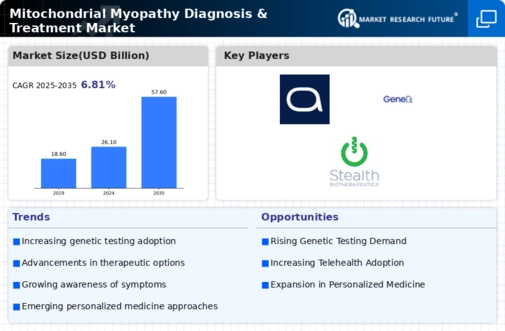
    Mitochondrial Myopathy Diagnosis & Treatment Market Infographic
    Purchase Options

    Market Analysis

    In-depth Analysis of Mitochondrial Myopathy Diagnosis & Treatment Market Industry Landscape

    Mitochondrial myopathies, a group of rare genetic disorders stemming from genetic mutations, represent a complex spectrum of diseases that can either be inherited or arise sporadically due to de novo mutations. The Genetic and Rare Diseases Information Center (GARD) in the United States has recognized the rarity and unique nature of mitochondrial myopathies by designating them as orphan diseases.

    Furthermore, Orphanet, a collaborative consortium spanning 40 countries primarily led by European nations, has similarly classified mitochondrial myopathies as orphan diseases. These conditions have been specifically identified within the Orphanet database under the orphan code - ORPHA: 206966.

    The assignment of an orphan disease status to mitochondrial myopathies holds significant implications, particularly in the realm of pharmaceutical development. This designation confers several benefits to pharmaceutical companies, incentivizing them to focus on the development of treatments for these rare diseases.

    One of the primary advantages of orphan disease designation is the array of incentives provided to pharmaceutical companies engaged in research and development for treatments targeting these conditions. These incentives include reduced fees for protocol assistance, streamlining the process of seeking regulatory approval for clinical trials. This reduction in fees can substantially alleviate the financial burden associated with the initial stages of drug development, encouraging more companies to invest in research efforts targeting mitochondrial myopathies.

    Moreover, an orphan disease status offers protection from competition once a medicine designed for the treatment of these rare diseases is successfully marketed. Pharmaceutical companies are granted market exclusivity for a certain duration, allowing them to recover investments and potentially pave the way for further innovations in treating mitochondrial myopathies.

    The orphan disease designation serves as a crucial catalyst for fostering research and development activities in the field of rare diseases. Given the limited prevalence and often complex nature of mitochondrial myopathies, these incentives play a pivotal role in incentivizing pharmaceutical companies to invest resources, time, and expertise into discovering and developing effective treatments.

    The rarity and unique characteristics of mitochondrial myopathies have historically posed significant challenges in garnering attention and resources for research and drug development. The orphan disease status bestowed upon these conditions by esteemed organizations like GARD and Orphanet has brought forth a renewed focus on addressing the unmet medical needs of individuals affected by these diseases.

    In conclusion, the orphan disease designation of mitochondrial myopathies by authoritative bodies such as GARD and Orphanet signifies the recognition of these conditions as rare and often overlooked diseases. This designation not only raises awareness but also provides critical incentives for pharmaceutical companies, thereby catalyzing research and development efforts aimed at finding effective treatments for mitochondrial myopathies. The benefits associated with orphan disease status play a pivotal role in facilitating advancements in understanding and managing these complex genetic disorders.


    Author
    Rahul Gotadki
    Assistant Manager

    He holds an experience of about 7+ years in Market Research and Business Consulting, working under the spectrum of Life Sciences and Healthcare domains. Rahul conceptualizes and implements a scalable business strategy and provides strategic leadership to the clients. His expertise lies in market estimation, competitive intelligence, pipeline analysis, customer assessment, etc. In addition to the above, his other responsibility includes strategic tracking of high growth markets & advising clients on the potential areas of focus they could direct their business initiatives

    Leave a Comment

    FAQs

    What is the projected market valuation for the Mitochondrial Myopathy Diagnosis & Treatment Market in 2035?

    The projected market valuation for the Mitochondrial Myopathy Diagnosis & Treatment Market in 2035 is 57.66 USD Billion.

    What was the overall market valuation for the Mitochondrial Myopathy Diagnosis & Treatment Market in 2024?

    The overall market valuation for the Mitochondrial Myopathy Diagnosis & Treatment Market in 2024 was 26.13 USD Billion.

    What is the expected CAGR for the Mitochondrial Myopathy Diagnosis & Treatment Market during the forecast period 2025 - 2035?

    The expected CAGR for the Mitochondrial Myopathy Diagnosis & Treatment Market during the forecast period 2025 - 2035 is 7.46%.

    Which companies are considered key players in the Mitochondrial Myopathy Diagnosis & Treatment Market?

    Key players in the market include Genzyme, Sarepta Therapeutics, Astellas Pharma, Pfizer, Novartis, Bristol-Myers Squibb, Roche, Eli Lilly and Company, and Sanofi.

    What segment generated the highest revenue in the diagnostic tests for Mitochondrial Myopathy?

    The Muscle Biopsy segment generated the highest revenue in diagnostic tests, with a valuation range of 10.0 to 22.0 USD Billion.

    Market Summary

    As per MRFR analysis, the Mitochondrial Myopathy Diagnosis & Treatment Market was estimated at 26.13 USD Billion in 2024. The market is projected to grow from 28.08 USD Billion in 2025 to 57.66 USD Billion by 2035, exhibiting a compound annual growth rate (CAGR) of 7.46 during the forecast period 2025 - 2035.

    Key Market Trends & Highlights

    The Mitochondrial Myopathy Diagnosis and Treatment Market is experiencing significant growth driven by technological advancements and increased patient awareness.

    • Advancements in genetic testing are revolutionizing the diagnosis of mitochondrial myopathies, particularly in North America. The rise of personalized medicine is enhancing treatment options for patients with mitochondrial encephalomyopathy, the largest segment in the market. Increased patient awareness is contributing to the rapid growth of Leigh syndrome as a key focus area in the Asia-Pacific region. Technological advancements in diagnostic tools and growing investment in research and development are major drivers of market expansion.

    Market Size & Forecast

    2024 Market Size 26.13 (USD Billion)
    2035 Market Size 57.66 (USD Billion)
    CAGR (2025 - 2035) 7.46%
    Largest Regional Market Share in 2024 Americas

    Major Players

    <p>Genzyme (US), Sarepta Therapeutics (US)<a href="https://ja.clinicaltrials.astellas.com/study/0367-CL-1201/">, Astellas Pharma</a> (JP), Pfizer (US), Novartis (CH), Bristol-Myers Squibb (US), Roche (CH), Eli Lilly and Company (US), Sanofi (FR)</p>

    Market Trends

    The Mitochondrial Myopathy Diagnosis & Treatment Market is currently experiencing a notable evolution, driven by advancements in genetic research and diagnostic technologies. As understanding of mitochondrial disorders deepens, healthcare providers are increasingly able to identify these conditions with greater accuracy. This shift is likely to enhance patient outcomes, as timely diagnosis can lead to more effective treatment strategies. Furthermore, the integration of personalized medicine into therapeutic approaches appears to be gaining traction, suggesting a move towards tailored interventions that consider individual patient profiles. In addition, the growing awareness of mitochondrial myopathies among both healthcare professionals and the general public is fostering a more informed patient population. This heightened awareness may lead to increased demand for diagnostic services and innovative treatment options. As research continues to unveil the complexities of mitochondrial function and its implications for muscle health, the Mitochondrial Myopathy Diagnosis & Treatment Market is poised for further growth. The interplay between scientific discovery and clinical application seems to be shaping a future where patients receive more comprehensive care tailored to their unique needs.

    Advancements in Genetic Testing

    Recent developments in genetic testing technologies are transforming the landscape of the Mitochondrial Myopathy Diagnosis & Treatment Market. Enhanced capabilities in identifying specific genetic mutations associated with mitochondrial disorders are enabling more precise diagnoses. This trend not only aids in understanding the underlying causes of myopathies but also facilitates the development of targeted therapies.

    Rise of Personalized Medicine

    The shift towards personalized medicine is becoming increasingly evident within the Mitochondrial Myopathy Diagnosis & Treatment Market. Tailored treatment plans that consider individual genetic profiles and disease manifestations are likely to improve patient outcomes. This approach may lead to more effective management strategies, as therapies can be customized to meet the specific needs of each patient.

    Increased Patient Awareness

    Growing awareness of mitochondrial myopathies among patients and healthcare providers is influencing the Mitochondrial Myopathy Diagnosis & Treatment Market. As individuals become more informed about these conditions, there is a corresponding rise in demand for diagnostic services and innovative treatment options. This trend may drive further research and development in the field, ultimately benefiting patient care.

    Mitochondrial Myopathy Diagnosis & Treatment Market Market Drivers

    Regulatory Support for Innovative Therapies

    Regulatory bodies are increasingly providing support for the development of innovative therapies within the Mitochondrial Myopathy Diagnosis & Treatment Market. Initiatives aimed at expediting the approval process for new treatments, such as orphan drug designations and fast-track designations, are encouraging pharmaceutical companies to invest in the development of therapies for rare mitochondrial disorders. This regulatory support is crucial for bringing new and potentially life-changing treatments to market more quickly. As a result, the landscape of available therapies is expected to evolve, offering patients more options and improving overall treatment outcomes. The proactive stance of regulatory agencies is likely to stimulate further investment in the market.

    Enhanced Patient Advocacy and Support Networks

    The Mitochondrial Myopathy Diagnosis & Treatment Market is benefiting from enhanced patient advocacy and support networks. Organizations dedicated to raising awareness about mitochondrial disorders are playing a crucial role in educating patients and healthcare providers about the importance of early diagnosis and treatment. These advocacy groups are instrumental in promoting research funding and influencing policy changes that support better healthcare access for affected individuals. As patient advocacy efforts continue to expand, they are likely to drive demand for diagnostic and treatment options, thereby contributing to the overall growth of the market. The establishment of support networks also fosters a sense of community among patients, which can lead to improved treatment adherence and outcomes.

    Growing Investment in Research and Development

    Investment in research and development within the Mitochondrial Myopathy Diagnosis & Treatment Market is on the rise. Pharmaceutical companies and research institutions are allocating substantial resources to explore novel therapeutic approaches and improve existing treatment modalities. This influx of funding is likely to accelerate the development of innovative therapies, including gene therapies and mitochondrial-targeted drugs. As a result, the market is expected to witness a significant increase in the availability of effective treatment options, which could enhance the quality of life for patients suffering from mitochondrial myopathy. The focus on R&D is indicative of a broader trend towards personalized medicine, which aims to tailor treatments to individual patient needs.

    Technological Advancements in Diagnostic Tools

    The Mitochondrial Myopathy Diagnosis & Treatment Market is experiencing a surge in technological advancements, particularly in diagnostic tools. Innovations such as next-generation sequencing and advanced imaging techniques are enhancing the accuracy of mitochondrial myopathy diagnoses. These tools allow for earlier detection and more precise identification of mitochondrial disorders, which is crucial for effective treatment planning. The market for diagnostic tools is projected to grow significantly, with estimates suggesting a compound annual growth rate of over 10% in the coming years. This growth is driven by the increasing demand for accurate and rapid diagnostic solutions, which are essential for improving patient outcomes in mitochondrial myopathy.

    Increasing Prevalence of Mitochondrial Disorders

    The prevalence of mitochondrial disorders, including mitochondrial myopathy, is increasing, which is a key driver for the Mitochondrial Myopathy Diagnosis & Treatment Market. Epidemiological studies indicate that these disorders affect a substantial number of individuals worldwide, with estimates suggesting that mitochondrial diseases may impact approximately 1 in 4,000 live births. This rising prevalence is prompting healthcare systems to prioritize the diagnosis and treatment of mitochondrial myopathy, leading to a greater demand for specialized healthcare services and products. As awareness of these disorders grows, so does the need for effective diagnostic and therapeutic solutions, further propelling market growth.

    Market Segment Insights

    By Type: Mitochondrial Encephalomyopathy (Largest) vs. Leigh Syndrome (Fastest-Growing)

    <p>Within the Mitochondrial Myopathy Diagnosis and Treatment Market, Mitochondrial Encephalomyopathy holds the largest share, owing to its prevalence and established diagnostic protocols. Other segment values, such as Progressive External Ophthalmoplegia and Lactic Acidosis and Stroke-like Episodes, also contribute significantly to the overall market, albeit with smaller shares. As the awareness and understanding of these conditions grow, market potential is expected to expand further across all segment values.</p>

    <p>Mitochondrial Encephalomyopathy (Dominant) vs. Leigh Syndrome (Emerging)</p>

    <p>Mitochondrial Encephalomyopathy stands as the dominant player in the Mitochondrial Myopathy landscape, characterized by its debilitating symptoms that primarily affect the muscular and nervous systems. This condition is recognized for its complex diagnosis pathways, leading to an established and steady demand for treatment options. Conversely, Leigh Syndrome is emerging as a critical segment due to increased diagnosis rates and advancements in treatment options, attracting attention from both researchers and healthcare providers. While Leigh Syndrome remains less prevalent compared to Mitochondrial Encephalomyopathy, its rapid growth signals shifting dynamics, with ongoing research promising innovative therapeutic strategies that may reshape treatment paradigms.</p>

    By Diagnostic Test: Genetic Tests (Largest) vs. Muscle Biopsy (Fastest-Growing)

    <p>In the Mitochondrial Myopathy Diagnosis &amp; Treatment Market, Genetic Tests hold the largest market share, facilitating precise identification of mitochondrial genetic mutations. This segment's significance stems from advancing genetic sequencing technologies, enabling physicians to target specific mutations responsible for mitochondrial disorders. Muscle Biopsy follows, as a traditional method, though it plays a critical role in confirming diagnoses and assessing mitochondrial activity at the cellular level.</p>

    <p>Genetic Tests (Dominant) vs. Muscle Biopsy (Emerging)</p>

    <p>Genetic Tests are recognized as the dominant diagnostic approach in mitochondrial myopathy as they offer comprehensive insights into genetic variations linked to the disease. This method has seen increased adoption due to its non-invasive nature and accuracy. Conversely, Muscle Biopsy is emerging as a vital diagnostic tool, particularly in cases where genetic tests yield inconclusive results. This approach, while invasive, provides direct evidence of muscle pathology, making it invaluable for a definite diagnosis. Together, these methodologies complement each other, enhancing the diagnostic landscape for mitochondrial myopathy.</p>

    By Therapy: Supportive Therapy (Largest) vs. Targeted Therapy (Fastest-Growing)

    <p>In the Mitochondrial Myopathy Diagnosis &amp; Treatment Market, the 'Supportive Therapy' segment holds the largest market share, serving as the backbone for patient care. This segment focuses on alleviating symptoms and enhancing the quality of life for patients, establishing its preeminence in the therapeutic landscape. On the other hand, 'Targeted Therapy' is rapidly gaining traction, catering to the specific genetic and metabolic needs of mitochondrial myopathy patients, marking a significant shift in treatment paradigms.</p>

    <p>Therapy: Supportive (Dominant) vs. Targeted (Emerging)</p>

    <p>Supportive therapy is recognized as the dominant approach in the Mitochondrial Myopathy Diagnosis &amp; Treatment Market, emphasizing patient comfort and symptom management. This segment encompasses various interventions, including pain management, nutritional support, and physical rehabilitation, contributing significantly to patient well-being. In contrast, targeted therapy, emerging as a dynamic force, focuses on addressing the underlying causes of mitochondrial dysfunction through innovative pharmacological treatments. With advancements in precision medicine and genetic understanding, targeted therapies are positioned to revolutionize treatment options for patients, presenting a promising avenue for future growth and improved outcomes.</p>

    Get more detailed insights about Mitochondrial Myopathy Diagnosis & Treatment Market research Report - Global Forecast till 2035

    Regional Insights

    Key Companies in the Mitochondrial Myopathy Diagnosis & Treatment Market market include

    Industry Developments

    Future Outlook

    Mitochondrial Myopathy Diagnosis & Treatment Market Future Outlook

    <p>The Mitochondrial Myopathy Diagnosis &amp; Treatment Market is projected to grow at a 7.46% CAGR from 2024 to 2035, driven by advancements in genetic testing and personalized therapies.</p>

    New opportunities lie in:

    • <p>Development of targeted gene therapies for mitochondrial disorders.</p><p>Expansion of <a href="https://www.marketresearchfuture.com/reports/telehealth-market-900">telehealth</a> services for remote patient monitoring.</p><p>Investment in AI-driven diagnostic tools for early detection.</p>

    <p>By 2035, the market is expected to achieve substantial growth, reflecting increased innovation and demand.</p>

    Market Segmentation

    Mitochondrial Myopathy Diagnosis & Treatment Market Type Outlook

    • Mitochondrial Encephalomyopathy
    • Lactic Acidosis and Stroke-like Episodes
    • Progressive External Ophthalmoplegia
    • Myoclonic Epilepsy with Ragged Red Fibers
    • Mitochondrial Neurogastrointestinal Encephalopathy Syndrome
    • Kearns–Sayre Syndrome
    • Mitochondrial DNA Depletion Syndrome
    • Pearson Syndrome
    • Leigh Syndrome
    • Neuropathy
    • Ataxia
    • and Retinitis Pigmentosa

    Mitochondrial Myopathy Diagnosis & Treatment Market Therapy Outlook

    • Supportive Therapy
    • Targeted Therapy

    Mitochondrial Myopathy Diagnosis & Treatment Market Diagnostic Test Outlook

    • Genetic Tests
    • Muscle Biopsy
    • Biochemical Test

    Report Scope

    MARKET SIZE 202426.13(USD Billion)
    MARKET SIZE 202528.08(USD Billion)
    MARKET SIZE 203557.66(USD Billion)
    COMPOUND ANNUAL GROWTH RATE (CAGR)7.46% (2024 - 2035)
    REPORT COVERAGERevenue Forecast, Competitive Landscape, Growth Factors, and Trends
    BASE YEAR2024
    Market Forecast Period2025 - 2035
    Historical Data2019 - 2024
    Market Forecast UnitsUSD Billion
    Key Companies ProfiledMarket analysis in progress
    Segments CoveredMarket segmentation analysis in progress
    Key Market OpportunitiesAdvancements in genetic testing and personalized therapies enhance the Mitochondrial Myopathy Diagnosis & Treatment Market.
    Key Market DynamicsRising demand for innovative therapies drives competition and regulatory scrutiny in the Mitochondrial Myopathy Diagnosis and Treatment Market.
    Countries CoveredNorth America, Europe, APAC, South America, MEA

    FAQs

    What is the projected market valuation for the Mitochondrial Myopathy Diagnosis & Treatment Market in 2035?

    The projected market valuation for the Mitochondrial Myopathy Diagnosis & Treatment Market in 2035 is 57.66 USD Billion.

    What was the overall market valuation for the Mitochondrial Myopathy Diagnosis & Treatment Market in 2024?

    The overall market valuation for the Mitochondrial Myopathy Diagnosis & Treatment Market in 2024 was 26.13 USD Billion.

    What is the expected CAGR for the Mitochondrial Myopathy Diagnosis & Treatment Market during the forecast period 2025 - 2035?

    The expected CAGR for the Mitochondrial Myopathy Diagnosis & Treatment Market during the forecast period 2025 - 2035 is 7.46%.

    Which companies are considered key players in the Mitochondrial Myopathy Diagnosis & Treatment Market?

    Key players in the market include Genzyme, Sarepta Therapeutics, Astellas Pharma, Pfizer, Novartis, Bristol-Myers Squibb, Roche, Eli Lilly and Company, and Sanofi.

    What segment generated the highest revenue in the diagnostic tests for Mitochondrial Myopathy?

    The Muscle Biopsy segment generated the highest revenue in diagnostic tests, with a valuation range of 10.0 to 22.0 USD Billion.

    1. SECTION I: EXECUTIVE SUMMARY AND KEY HIGHLIGHTS
      1. EXECUTIVE SUMMARY
        1. Market Overview
        2. Key Findings
        3. Market Segmentation
        4. Competitive Landscape
        5. Challenges and Opportunities
        6. Future Outlook 2 SECTION II: SCOPING, METHODOLOGY AND MARKET STRUCTURE
      2. MARKET INTRODUCTION
        1. Definition
        2. Scope of the study
      3. RESEARCH METHODOLOGY
        1. Overview
        2. Data Mining
        3. Secondary Research
        4. Primary Research
        5. Forecasting Model
        6. Market Size Estimation
        7. Data Triangulation
        8. Validation 3 SECTION III: QUALITATIVE ANALYSIS
      4. MARKET DYNAMICS
        1. Overview
        2. Drivers
        3. Restraints
        4. Opportunities
      5. MARKET FACTOR ANALYSIS
        1. Value chain Analysis
        2. Porter's Five Forces Analysis
        3. COVID-19 Impact Analysis
      6. Healthcare, BY Type (USD Billion)
        1. Mitochondrial Encephalomyopathy
        2. Lactic Acidosis and Stroke-like Episodes
        3. Progressive External Ophthalmoplegia
        4. Myoclonic Epilepsy with Ragged Red Fibers
        5. Mitochondrial Neurogastrointestinal Encephalopathy Syndrome
        6. Kearns–Sayre Syndrome
        7. Mitochondrial DNA Depletion Syndrome
        8. Pearson Syndrome
        9. Leigh Syndrome
        10. Neuropathy, Ataxia, and Retinitis Pigmentosa
      7. Healthcare, BY Diagnostic Test (USD Billion)
        1. Genetic Tests
        2. Muscle Biopsy
        3. Biochemical Test
      8. Healthcare, BY Therapy (USD Billion)
        1. Supportive Therapy
        2. Targeted Therapy
      9. Healthcare, BY Region (USD Billion)
        1. North America
        2. Europe
        3. APAC
        4. South America
        5. MEA
      10. Competitive Landscape
        1. Overview
        2. Competitive Analysis
        3. Market share Analysis
        4. Major Growth Strategy in the Healthcare
        5. Competitive Benchmarking
        6. Leading Players in Terms of Number of Developments in the Healthcare
        7. Key developments and growth strategies
        8. Major Players Financial Matrix
      11. Company Profiles
        1. Genzyme (US)
        2. Sarepta Therapeutics (US)
        3. Astellas Pharma (JP)
        4. Pfizer (US)
        5. Novartis (CH)
        6. Bristol-Myers Squibb (US)
        7. Roche (CH)
        8. Eli Lilly and Company (US)
        9. Sanofi (FR)
      12. Appendix
        1. References
        2. Related Reports 6 LIST OF FIGURES
      13. MARKET SYNOPSIS
      14. NORTH AMERICA MARKET ANALYSIS
      15. US MARKET ANALYSIS BY TYPE
      16. US MARKET ANALYSIS BY DIAGNOSTIC TEST
      17. US MARKET ANALYSIS BY THERAPY
      18. CANADA MARKET ANALYSIS BY TYPE
      19. CANADA MARKET ANALYSIS BY DIAGNOSTIC TEST
      20. CANADA MARKET ANALYSIS BY THERAPY
      21. EUROPE MARKET ANALYSIS
      22. GERMANY MARKET ANALYSIS BY TYPE
      23. GERMANY MARKET ANALYSIS BY DIAGNOSTIC TEST
      24. GERMANY MARKET ANALYSIS BY THERAPY
      25. UK MARKET ANALYSIS BY TYPE
      26. UK MARKET ANALYSIS BY DIAGNOSTIC TEST
      27. UK MARKET ANALYSIS BY THERAPY
      28. FRANCE MARKET ANALYSIS BY TYPE
      29. FRANCE MARKET ANALYSIS BY DIAGNOSTIC TEST
      30. FRANCE MARKET ANALYSIS BY THERAPY
      31. RUSSIA MARKET ANALYSIS BY TYPE
      32. RUSSIA MARKET ANALYSIS BY DIAGNOSTIC TEST
      33. RUSSIA MARKET ANALYSIS BY THERAPY
      34. ITALY MARKET ANALYSIS BY TYPE
      35. ITALY MARKET ANALYSIS BY DIAGNOSTIC TEST
      36. ITALY MARKET ANALYSIS BY THERAPY
      37. SPAIN MARKET ANALYSIS BY TYPE
      38. SPAIN MARKET ANALYSIS BY DIAGNOSTIC TEST
      39. SPAIN MARKET ANALYSIS BY THERAPY
      40. REST OF EUROPE MARKET ANALYSIS BY TYPE
      41. REST OF EUROPE MARKET ANALYSIS BY DIAGNOSTIC TEST
      42. REST OF EUROPE MARKET ANALYSIS BY THERAPY
      43. APAC MARKET ANALYSIS
      44. CHINA MARKET ANALYSIS BY TYPE
      45. CHINA MARKET ANALYSIS BY DIAGNOSTIC TEST
      46. CHINA MARKET ANALYSIS BY THERAPY
      47. INDIA MARKET ANALYSIS BY TYPE
      48. INDIA MARKET ANALYSIS BY DIAGNOSTIC TEST
      49. INDIA MARKET ANALYSIS BY THERAPY
      50. JAPAN MARKET ANALYSIS BY TYPE
      51. JAPAN MARKET ANALYSIS BY DIAGNOSTIC TEST
      52. JAPAN MARKET ANALYSIS BY THERAPY
      53. SOUTH KOREA MARKET ANALYSIS BY TYPE
      54. SOUTH KOREA MARKET ANALYSIS BY DIAGNOSTIC TEST
      55. SOUTH KOREA MARKET ANALYSIS BY THERAPY
      56. MALAYSIA MARKET ANALYSIS BY TYPE
      57. MALAYSIA MARKET ANALYSIS BY DIAGNOSTIC TEST
      58. MALAYSIA MARKET ANALYSIS BY THERAPY
      59. THAILAND MARKET ANALYSIS BY TYPE
      60. THAILAND MARKET ANALYSIS BY DIAGNOSTIC TEST
      61. THAILAND MARKET ANALYSIS BY THERAPY
      62. INDONESIA MARKET ANALYSIS BY TYPE
      63. INDONESIA MARKET ANALYSIS BY DIAGNOSTIC TEST
      64. INDONESIA MARKET ANALYSIS BY THERAPY
      65. REST OF APAC MARKET ANALYSIS BY TYPE
      66. REST OF APAC MARKET ANALYSIS BY DIAGNOSTIC TEST
      67. REST OF APAC MARKET ANALYSIS BY THERAPY
      68. SOUTH AMERICA MARKET ANALYSIS
      69. BRAZIL MARKET ANALYSIS BY TYPE
      70. BRAZIL MARKET ANALYSIS BY DIAGNOSTIC TEST
      71. BRAZIL MARKET ANALYSIS BY THERAPY
      72. MEXICO MARKET ANALYSIS BY TYPE
      73. MEXICO MARKET ANALYSIS BY DIAGNOSTIC TEST
      74. MEXICO MARKET ANALYSIS BY THERAPY
      75. ARGENTINA MARKET ANALYSIS BY TYPE
      76. ARGENTINA MARKET ANALYSIS BY DIAGNOSTIC TEST
      77. ARGENTINA MARKET ANALYSIS BY THERAPY
      78. REST OF SOUTH AMERICA MARKET ANALYSIS BY TYPE
      79. REST OF SOUTH AMERICA MARKET ANALYSIS BY DIAGNOSTIC TEST
      80. REST OF SOUTH AMERICA MARKET ANALYSIS BY THERAPY
      81. MEA MARKET ANALYSIS
      82. GCC COUNTRIES MARKET ANALYSIS BY TYPE
      83. GCC COUNTRIES MARKET ANALYSIS BY DIAGNOSTIC TEST
      84. GCC COUNTRIES MARKET ANALYSIS BY THERAPY
      85. SOUTH AFRICA MARKET ANALYSIS BY TYPE
      86. SOUTH AFRICA MARKET ANALYSIS BY DIAGNOSTIC TEST
      87. SOUTH AFRICA MARKET ANALYSIS BY THERAPY
      88. REST OF MEA MARKET ANALYSIS BY TYPE
      89. REST OF MEA MARKET ANALYSIS BY DIAGNOSTIC TEST
      90. REST OF MEA MARKET ANALYSIS BY THERAPY
      91. KEY BUYING CRITERIA OF HEALTHCARE
      92. RESEARCH PROCESS OF MRFR
      93. DRO ANALYSIS OF HEALTHCARE
      94. DRIVERS IMPACT ANALYSIS: HEALTHCARE
      95. RESTRAINTS IMPACT ANALYSIS: HEALTHCARE
      96. SUPPLY / VALUE CHAIN: HEALTHCARE
      97. HEALTHCARE, BY TYPE, 2024 (% SHARE)
      98. HEALTHCARE, BY TYPE, 2024 TO 2035 (USD Billion)
      99. HEALTHCARE, BY DIAGNOSTIC TEST, 2024 (% SHARE)
      100. HEALTHCARE, BY DIAGNOSTIC TEST, 2024 TO 2035 (USD Billion)
      101. HEALTHCARE, BY THERAPY, 2024 (% SHARE)
      102. HEALTHCARE, BY THERAPY, 2024 TO 2035 (USD Billion)
      103. BENCHMARKING OF MAJOR COMPETITORS 7 LIST OF TABLES
      104. LIST OF ASSUMPTIONS
      105. 7.1.1
      106. North America MARKET SIZE ESTIMATES; FORECAST
        1. BY TYPE, 2025-2035 (USD Billion)
        2. BY DIAGNOSTIC TEST, 2025-2035 (USD Billion)
        3. BY THERAPY, 2025-2035 (USD Billion)
      107. US MARKET SIZE ESTIMATES; FORECAST
        1. BY TYPE, 2025-2035 (USD Billion)
        2. BY DIAGNOSTIC TEST, 2025-2035 (USD Billion)
        3. BY THERAPY, 2025-2035 (USD Billion)
      108. Canada MARKET SIZE ESTIMATES; FORECAST
        1. BY TYPE, 2025-2035 (USD Billion)
        2. BY DIAGNOSTIC TEST, 2025-2035 (USD Billion)
        3. BY THERAPY, 2025-2035 (USD Billion)
      109. Europe MARKET SIZE ESTIMATES; FORECAST
        1. BY TYPE, 2025-2035 (USD Billion)
        2. BY DIAGNOSTIC TEST, 2025-2035 (USD Billion)
        3. BY THERAPY, 2025-2035 (USD Billion)
      110. Germany MARKET SIZE ESTIMATES; FORECAST
        1. BY TYPE, 2025-2035 (USD Billion)
        2. BY DIAGNOSTIC TEST, 2025-2035 (USD Billion)
        3. BY THERAPY, 2025-2035 (USD Billion)
      111. UK MARKET SIZE ESTIMATES; FORECAST
        1. BY TYPE, 2025-2035 (USD Billion)
        2. BY DIAGNOSTIC TEST, 2025-2035 (USD Billion)
        3. BY THERAPY, 2025-2035 (USD Billion)
      112. France MARKET SIZE ESTIMATES; FORECAST
        1. BY TYPE, 2025-2035 (USD Billion)
        2. BY DIAGNOSTIC TEST, 2025-2035 (USD Billion)
        3. BY THERAPY, 2025-2035 (USD Billion)
      113. Russia MARKET SIZE ESTIMATES; FORECAST
        1. BY TYPE, 2025-2035 (USD Billion)
        2. BY DIAGNOSTIC TEST, 2025-2035 (USD Billion)
        3. BY THERAPY, 2025-2035 (USD Billion)
      114. Italy MARKET SIZE ESTIMATES; FORECAST
        1. BY TYPE, 2025-2035 (USD Billion)
        2. BY DIAGNOSTIC TEST, 2025-2035 (USD Billion)
        3. BY THERAPY, 2025-2035 (USD Billion)
      115. Spain MARKET SIZE ESTIMATES; FORECAST
        1. BY TYPE, 2025-2035 (USD Billion)
        2. BY DIAGNOSTIC TEST, 2025-2035 (USD Billion)
        3. BY THERAPY, 2025-2035 (USD Billion)
      116. Rest of Europe MARKET SIZE ESTIMATES; FORECAST
        1. BY TYPE, 2025-2035 (USD Billion)
        2. BY DIAGNOSTIC TEST, 2025-2035 (USD Billion)
        3. BY THERAPY, 2025-2035 (USD Billion)
      117. APAC MARKET SIZE ESTIMATES; FORECAST
        1. BY TYPE, 2025-2035 (USD Billion)
        2. BY DIAGNOSTIC TEST, 2025-2035 (USD Billion)
        3. BY THERAPY, 2025-2035 (USD Billion)
      118. China MARKET SIZE ESTIMATES; FORECAST
        1. BY TYPE, 2025-2035 (USD Billion)
        2. BY DIAGNOSTIC TEST, 2025-2035 (USD Billion)
        3. BY THERAPY, 2025-2035 (USD Billion)
      119. India MARKET SIZE ESTIMATES; FORECAST
        1. BY TYPE, 2025-2035 (USD Billion)
        2. BY DIAGNOSTIC TEST, 2025-2035 (USD Billion)
        3. BY THERAPY, 2025-2035 (USD Billion)
      120. Japan MARKET SIZE ESTIMATES; FORECAST
        1. BY TYPE, 2025-2035 (USD Billion)
        2. BY DIAGNOSTIC TEST, 2025-2035 (USD Billion)
        3. BY THERAPY, 2025-2035 (USD Billion)
      121. South Korea MARKET SIZE ESTIMATES; FORECAST
        1. BY TYPE, 2025-2035 (USD Billion)
        2. BY DIAGNOSTIC TEST, 2025-2035 (USD Billion)
        3. BY THERAPY, 2025-2035 (USD Billion)
      122. Malaysia MARKET SIZE ESTIMATES; FORECAST
        1. BY TYPE, 2025-2035 (USD Billion)
        2. BY DIAGNOSTIC TEST, 2025-2035 (USD Billion)
        3. BY THERAPY, 2025-2035 (USD Billion)
      123. Thailand MARKET SIZE ESTIMATES; FORECAST
        1. BY TYPE, 2025-2035 (USD Billion)
        2. BY DIAGNOSTIC TEST, 2025-2035 (USD Billion)
        3. BY THERAPY, 2025-2035 (USD Billion)
      124. Indonesia MARKET SIZE ESTIMATES; FORECAST
        1. BY TYPE, 2025-2035 (USD Billion)
        2. BY DIAGNOSTIC TEST, 2025-2035 (USD Billion)
        3. BY THERAPY, 2025-2035 (USD Billion)
      125. Rest of APAC MARKET SIZE ESTIMATES; FORECAST
        1. BY TYPE, 2025-2035 (USD Billion)
        2. BY DIAGNOSTIC TEST, 2025-2035 (USD Billion)
        3. BY THERAPY, 2025-2035 (USD Billion)
      126. South America MARKET SIZE ESTIMATES; FORECAST
        1. BY TYPE, 2025-2035 (USD Billion)
        2. BY DIAGNOSTIC TEST, 2025-2035 (USD Billion)
        3. BY THERAPY, 2025-2035 (USD Billion)
      127. Brazil MARKET SIZE ESTIMATES; FORECAST
        1. BY TYPE, 2025-2035 (USD Billion)
        2. BY DIAGNOSTIC TEST, 2025-2035 (USD Billion)
        3. BY THERAPY, 2025-2035 (USD Billion)
      128. Mexico MARKET SIZE ESTIMATES; FORECAST
        1. BY TYPE, 2025-2035 (USD Billion)
        2. BY DIAGNOSTIC TEST, 2025-2035 (USD Billion)
        3. BY THERAPY, 2025-2035 (USD Billion)
      129. Argentina MARKET SIZE ESTIMATES; FORECAST
        1. BY TYPE, 2025-2035 (USD Billion)
        2. BY DIAGNOSTIC TEST, 2025-2035 (USD Billion)
        3. BY THERAPY, 2025-2035 (USD Billion)
      130. Rest of South America MARKET SIZE ESTIMATES; FORECAST
        1. BY TYPE, 2025-2035 (USD Billion)
        2. BY DIAGNOSTIC TEST, 2025-2035 (USD Billion)
        3. BY THERAPY, 2025-2035 (USD Billion)
      131. MEA MARKET SIZE ESTIMATES; FORECAST
        1. BY TYPE, 2025-2035 (USD Billion)
        2. BY DIAGNOSTIC TEST, 2025-2035 (USD Billion)
        3. BY THERAPY, 2025-2035 (USD Billion)
      132. GCC Countries MARKET SIZE ESTIMATES; FORECAST
        1. BY TYPE, 2025-2035 (USD Billion)
        2. BY DIAGNOSTIC TEST, 2025-2035 (USD Billion)
        3. BY THERAPY, 2025-2035 (USD Billion)
      133. South Africa MARKET SIZE ESTIMATES; FORECAST
        1. BY TYPE, 2025-2035 (USD Billion)
        2. BY DIAGNOSTIC TEST, 2025-2035 (USD Billion)
        3. BY THERAPY, 2025-2035 (USD Billion)
      134. Rest of MEA MARKET SIZE ESTIMATES; FORECAST
        1. BY TYPE, 2025-2035 (USD Billion)
        2. BY DIAGNOSTIC TEST, 2025-2035 (USD Billion)
        3. BY THERAPY, 2025-2035 (USD Billion)
      135. PRODUCT LAUNCH/PRODUCT DEVELOPMENT/APPROVAL
      136. 7.31.1
      137. ACQUISITION/PARTNERSHIP
      138. 7.32.1

    Mitochondrial Myopathy Diagnosis & Treatment Market Segmentation

    Market Segmentation Overview

    • Detailed segmentation data will be available in the full report
    • Comprehensive analysis by multiple parameters
    • Regional and country-level breakdowns
    • Market size forecasts by segment
    Infographic

    Free Sample Request

    Kindly complete the form below to receive a free sample of this Report

    Get Free Sample

    Customer Strories

    “I am very pleased with how market segments have been defined in a relevant way for my purposes (such as "Portable Freezers & refrigerators" and "last-mile"). In general the report is well structured. Thanks very much for your efforts.”

    Victoria Milne

    Founder
    Case Study
    Chemicals and Materials

    Compare Licence

    ×
    Features License Type
    Single User Multiuser License Enterprise User
    Price $4,950 $5,950 $7,250
    Maximum User Access Limit 1 User Upto 10 Users Unrestricted Access Throughout the Organization
    Free Customization
    Direct Access to Analyst
    Deliverable Format
    Platform Access
    Discount on Next Purchase 10% 15% 15%
    Printable Versions