Tortillas and Flatbreads are on the Rise
Overview
Once considered traditional staples of regional cuisines, tortillas and flatbreads are now experiencing a remarkable global resurgence. From the streets of Mexico to modern bakeries in the U.S. and Europe, these versatile foods have evolved from cultural essentials to global culinary favourites.
Driven by trends in ethnic food exploration, healthy eating, and convenience-oriented lifestyles, the demand for tortillas and flatbreads is rapidly increasing. As consumers become more adventurous with their food choices, these products—often associated with authenticity and freshness—are finding new relevance across retail shelves and restaurant menus.
What Are Tortillas and Flatbreads?
A tortilla, derived from the Spanish word “torta” meaning “little cake,” is a thin, round flatbread made traditionally from corn or wheat flour. In Mexican cuisine, tortillas are a staple used in a variety of dishes—from tacos and quesadillas to enchiladas and wraps.
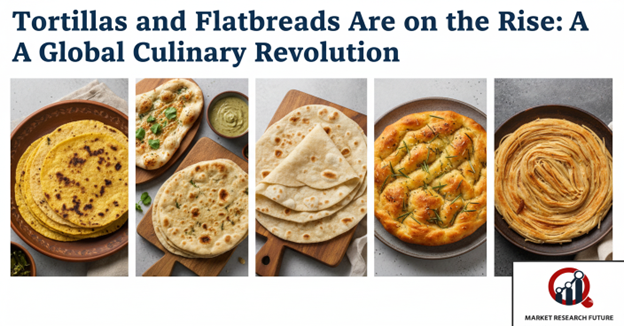
Flatbreads, on the other hand, represent a broader category of unleavened or lightly leavened breads found across different cultures—such as naan (India), pita (Middle East), lavash (Armenia), and roti (South Asia). Both tortillas and flatbreads serve as versatile carriers for proteins, vegetables, and spreads, aligning perfectly with global trends toward portable, customizable meals.
Changing Consumer Preferences
Today’s consumers are not just eating for taste—they’re eating for experience, health, and sustainability. Tortillas and flatbreads fit seamlessly into this new food philosophy.
- Health-Conscious Choices: Whole grain, gluten-free, and protein-enriched flatbreads are becoming popular among health-driven consumers.
- Convenience Factor: Their adaptability for wraps, pizzas, and snacks supports fast-paced urban lifestyles.
- Culinary Experimentation: The rise of global fusion cuisines has made tortillas and flatbreads a blank canvas for innovation, from Mediterranean wraps to Korean tacos.
Post-pandemic, the demand for fresh, preservative-free, and versatile food bases has also surged, with consumers prioritizing quality over quantity.
Market Growth Drivers
- Ethnic Food Popularity
The rising global fascination with Mexican, Mediterranean, and Middle Eastern cuisines has brought tortillas and flatbreads into mainstream food culture. Restaurants, QSRs, and home cooks alike are embracing them as adaptable, flavorful bases for diverse dishes.
- Health and Nutrition Trends
With growing awareness of whole grains, plant-based proteins, and fiber-rich diets, consumers are opting for nutrient-dense alternatives to traditional bread. Multigrain, spinach, and lentil-based flatbreads are gaining traction as better-for-you options.
- Innovation and Product Diversification
Food manufacturers are investing in product innovation, introducing organic, gluten-free, and fortified varieties to appeal to niche audiences. Many brands are also experimenting with flavors and functional ingredients such as herbs, seeds, and superfoods.
- Rising Retail and E-commerce Penetration
The availability of ready-to-cook and ready-to-eat tortillas in retail outlets and online platforms like Walmart, Costco, and Amazon has made them easily accessible, accelerating global sales growth.
- Expansion by Global Food Giants
Leading players such as Grupo Bimbo, Mission Foods, General Mills, and Tyson Foods are expanding their portfolios to include premium tortilla and flatbread products, fueling competition and innovation across markets.
Challenges
Despite strong momentum, the market faces notable challenges:
- Perishability and Shelf Life: Maintaining freshness without preservatives remains a production concern.
- Price Sensitivity: Premium and artisanal flatbreads are often priced higher than conventional breads.
- Cultural Preferences: In some regions, traditional breads still dominate daily consumption patterns.
- Supply Chain Management: Ensuring consistent ingredient quality and efficient distribution is crucial for large-scale manufacturers.
Overcoming these challenges will require advancements in packaging technologies, supply chain optimization, and localized marketing strategies.
Regional Insights
- North America: The U.S. remains the largest market for tortillas, fuelled by the popularity of Mexican cuisine and increased demand for convenient, healthy meal bases. Retailers like Costco and Walmart report double-digit growth in tortilla and flatbread sales.
- Europe: The region’s growing appetite for international foods, along with innovations in bakery products, is driving steady market growth—particularly in the U.K., Germany, and France.
- Asia-Pacific: Urbanization, rising disposable incomes, and a growing taste for global cuisines are supporting market expansion in countries like India, China, and Japan, where fusion-style wraps and rolls are gaining popularity.
- Latin America & Middle East/Africa: While Latin America maintains strong cultural consumption of tortillas, regions like the Middle East and Africa are emerging as high-potential markets, driven by increasing awareness of convenient and nutritious food options.
Future Outlook
The global tortilla and flatbread market is set for continued growth, underpinned by health trends, culinary innovation, and increased product accessibility. The future will see:
- Greater use of plant-based and alternative flours (such as chickpea, lentil, or quinoa).
- Smart packaging for extended shelf life and freshness.
- AI-driven product development tailored to regional taste profiles.
- Rising influence of fusion cuisine and premium handmade flatbreads in the gourmet segment.
As the boundaries between tradition and innovation blur, tortillas and flatbreads are poised to become global staples—balancing authenticity, nutrition, and convenience in one wholesome package.
Conclusion
The rise of tortillas and flatbreads reflects a global shift toward versatile, health-oriented, and culturally diverse foods. Once regional specialties, they are now culinary essentials transcending borders. As consumer lifestyles evolve and innovation continues, the market is expected to experience sustained growth, shaping the future of modern dining.
About Market Research Future (MRFR)
Market Research Future (MRFR) is a trusted global market research firm dedicated to providing accurate, data-driven insights and strategic intelligence across industries. Through comprehensive analysis and reliable forecasting, MRFR empowers businesses, investors, and decision-makers to navigate evolving markets confidently. With a commitment to accuracy, transparency, and client-centric solutions, MRFR continues to be a global partner for businesses seeking growth and market clarity.
Related Report


Leave a Comment