Top Benefits of CBD Oil in the Medical Industry
CBD Oil Market Overview
Cannabidiol (CBD) oil, a natural compound derived from the cannabis plant, has emerged as one of the most promising therapeutic innovations in modern medicine. Unlike tetrahydrocannabinol (THC)—the psychoactive component of cannabis—CBD does not induce intoxication, making it a safe and non-addictive option for various health applications. Over the past decade, scientific research and growing consumer interest have positioned CBD oil at the forefront of natural and alternative healthcare.
From pain management and neurological support to stress relief and inflammation reduction, CBD oil is being increasingly adopted across global healthcare systems. Despite ongoing debates and regulatory scrutiny due to its association with marijuana, the proven medical benefits and expanding clinical validation continue to drive its demand in the pharmaceutical, wellness, and nutraceutical sectors.
What is CBD Oil?
CBD oil is extracted from the flowers, leaves, and stalks of the hemp plant—a variety of Cannabis sativa containing minimal THC content. The oil contains cannabinoids, which interact with the body’s endocannabinoid system (ECS)—a network of receptors that regulate pain, mood, sleep, and immune response.
CBD is available in several formulations, including tinctures, capsules, creams, edibles, and vape liquids, catering to diverse consumer preferences and medical needs. With global interest in plant-derived therapeutics growing rapidly, CBD oil has become a cornerstone of the emerging natural medicine landscape.
Key Medical Benefits of CBD Oil
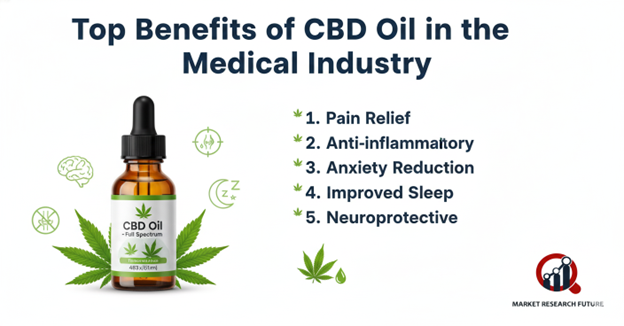
1. Anti-Seizure and Epilepsy Management
CBD has shown significant potential in reducing the frequency and severity of seizures, especially in patients with treatment-resistant epilepsy. A notable study conducted in 2016 on 214 epilepsy patients revealed that daily oral doses of 2–5 mg of CBD oil reduced seizure frequency by approximately 36.5% over 12 weeks.
Such clinical evidence has led to the approval of Epidiolex, an FDA-approved CBD-based medication for specific epilepsy syndromes, marking a milestone in cannabinoid-based therapies.
2. Stress and Anxiety Relief
CBD interacts with brain receptors linked to serotonin—a neurotransmitter associated with mood regulation. Early research indicates that CBD oil helps alleviate stress, anxiety, and social phobia by promoting a calming effect without sedative side effects.
In clinical trials, a 600 mg dose of CBD significantly reduced anxiety during public speaking tests, reinforcing its role as a natural anxiolytic alternative. The increasing prevalence of mental health conditions worldwide is fueling the adoption of CBD-based products for psychological well-being.
3. Pain and Inflammation Management
CBD’s analgesic properties stem from its ability to modulate pain perception pathways and reduce inflammation. Patients undergoing chemotherapy, arthritis treatment, or post-surgical recovery have reported significant relief when using CBD oil.
According to the National Institutes of Health (NIH), ongoing research aims to understand the potential of CBD in managing chronic conditions such as multiple sclerosis (MS), arthritis, spinal cord injuries, and neuropathic pain, positioning it as a key component in modern pain management protocols.
4. Neuroprotective Properties
Emerging studies suggest that CBD oil may support neurological health by protecting nerve cells from degeneration. This neuroprotective potential is being explored for diseases such as Alzheimer’s, Parkinson’s, multiple sclerosis (MS), and stroke recovery.
CBD interacts with CB1 receptors in the brain, reducing inflammation and oxidative stress—two major contributors to neurodegenerative disorders. Though research is ongoing, the results are promising for future medical applications.
Market Growth Drivers
- Rising Prevalence of Chronic Diseases: Increasing cases of epilepsy, anxiety, and neurodegenerative disorders are boosting medical demand for CBD-based therapies.
- Regulatory Approvals and Clinical Research: Growing legalization of hemp-derived CBD and FDA-approved treatments are legitimizing its medical value.
- Consumer Shift Toward Natural Healing: Post-pandemic wellness trends are driving preference for non-pharmaceutical, plant-based remedies.
- Technological Advancements: Enhanced extraction technologies and product innovations are improving CBD oil purity and efficacy.
- Global Brand Participation: Companies such as Charlotte’s Web, GW Pharmaceuticals, Aurora Cannabis, and Medical Marijuana Inc. are leading product innovation and clinical research efforts.
Challenges
Despite strong market momentum, several barriers persist:
- Regulatory Uncertainty: Inconsistent legalization across countries limits CBD trade and medical use.
- Quality Control Issues: Variation in CBD concentration and purity across products affects consumer trust.
- Limited Clinical Data: Broader clinical validation is needed for widespread medical adoption.
- Price Sensitivity: High production and extraction costs keep CBD products relatively expensive.
Addressing these challenges through standardization, policy alignment, and continued research will be critical for sustainable market expansion.
Regional Insights
- North America: The U.S. leads the global CBD market, driven by strong consumer awareness, regulatory support, and the presence of major pharmaceutical players.
- Europe: Countries like Germany, the U.K., and Switzerland are witnessing increased adoption due to favorable laws and growing demand for natural therapeutics.
- Asia-Pacific: Emerging markets such as India, Japan, and Australia are exploring CBD legalization and clinical applications, offering untapped potential.
- Latin America & Middle East/Africa: Gradual policy liberalization and growing public health awareness are paving the way for future market entry.
Future Outlook
The future of CBD oil in the medical industry looks highly promising. Continuous advancements in clinical research, product innovation, and global legalization are expected to drive exponential market growth. With expanding applications in neurology, pain management, and mental health, CBD oil is set to become a mainstream element of integrative medicine.
Integration with AI-driven research, personalized dosing technologies, and digital health monitoring will further enhance its therapeutic precision and accessibility. As global perceptions shift toward natural and evidence-based care, CBD oil will play a pivotal role in shaping the next generation of medical treatments.
Conclusion
CBD oil is redefining modern healthcare by bridging the gap between natural remedies and scientific medicine. Its wide-ranging therapeutic benefits, supported by growing research and consumer acceptance, make it one of the most transformative compounds in medical innovation today. As global regulations mature and awareness deepens, CBD oil is set to evolve from a niche alternative to a mainstream medical solution for millions worldwide.
Related Report


Leave a Comment