Top 5 Foods to Avoid in Sciatica
Sciatica Market Overview
Sciatica—though often perceived as a rare or alarming condition—is a common health issue affecting nearly 40% of the global population at some point in their lives. It refers to pain that radiates along the sciatic nerve, which runs from the lower back down through the hips, buttocks, and legs. The condition occurs due to inflammation, irritation, or compression of the sciatic nerve, often leading to pain, numbness, or weakness in one side of the body.
While medical treatment and physiotherapy are essential, dietary choices also play a vital role in managing inflammation and nerve pain. Certain foods can worsen inflammation, disrupt blood flow, and intensify sciatic discomfort. Understanding and avoiding these dietary triggers can significantly improve recovery and pain management.
Understanding Sciatica and the Role of Diet
The sciatic nerve is the longest nerve in the human body. When it becomes inflamed—whether due to a herniated disc, bone spur, or muscle tension—it can cause sharp, radiating pain from the lower spine to the leg. Studies suggest that pro-inflammatory foods can worsen nerve irritation, while anti-inflammatory diets can help reduce pain intensity. Therefore, making conscious food choices is an important aspect of holistic sciatica management.
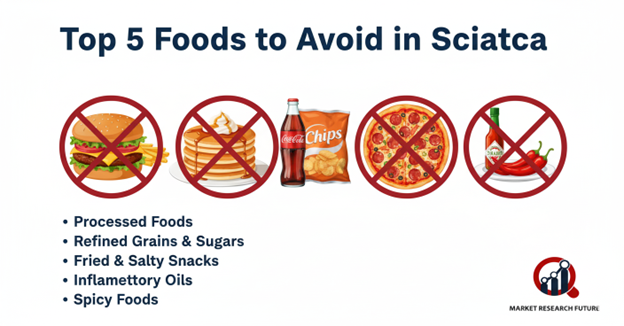
Top 5 Foods to Avoid in Sciatica
1. Sugar and Sugary Beverages
Soft drinks, packaged juices, pastries, and candies are loaded with refined sugars that spike blood glucose levels and promote inflammation. Excessive sugar intake leads to the release of pro-inflammatory cytokines, which can aggravate nerve pain and slow healing. Reducing sugar consumption helps stabilize energy levels and supports long-term nerve health.
2. Refined Grains
Highly processed grains such as white rice, white bread, and pasta lose essential nutrients and fiber during refinement. This not only reduces their nutritional value but also triggers inflammation and weight gain—both of which can worsen sciatica. Opting for whole grains like quinoa, oats, or brown rice supports better digestion and reduces inflammatory responses.
3. Saturated and Trans Fats
Foods such as processed meats, high-fat dairy, and fried snacks are rich in saturated and trans fats, which increase systemic inflammation and impair blood circulation. Replacing these with omega-3-rich foods—like flaxseeds, walnuts, or fatty fish—can help reduce inflammation, promote nerve repair, and ease sciatica symptoms.
4. Fried and Fast Foods
Fried foods, especially those prepared in vegetable or sunflower oils, contain high levels of unhealthy fats and oxidized compounds that trigger inflammation. Over time, these can intensify sciatic nerve irritation. Individuals suffering from sciatica should limit fast foods and deep-fried snacks, choosing instead grilled or baked alternatives prepared in olive or avocado oil.
5. Gluten-Containing Foods
Products such as pizza, cakes, pasta, and bread made from refined flour contain gluten, which can increase inflammatory reactions in sensitive individuals. Gluten may also disrupt digestion, indirectly worsening nerve-related discomfort. Choosing gluten-free options like millet, buckwheat, or almond flour can help ease digestive strain and support overall recovery.
Managing Sciatica Through Nutrition
A balanced, anti-inflammatory diet is essential for alleviating sciatica symptoms and promoting nerve health. Foods rich in vitamins B12, D, magnesium, and antioxidants—such as leafy greens, berries, nuts, and seeds—help reduce oxidative stress and improve circulation. Hydration, portion control, and regular physical activity further enhance the body’s ability to heal naturally.
By avoiding inflammation-inducing foods and adopting a nutrient-dense diet, individuals can effectively manage pain, improve flexibility, and enhance overall well-being.
Conclusion
Sciatica management extends beyond medications and physiotherapy—it begins with mindful eating. Avoiding refined sugars, processed fats, gluten, and fried foods can significantly reduce inflammation and nerve irritation. Adopting a wholesome, anti-inflammatory diet not only helps control pain but also promotes long-term spinal and nerve health.
Related Report


Leave a Comment