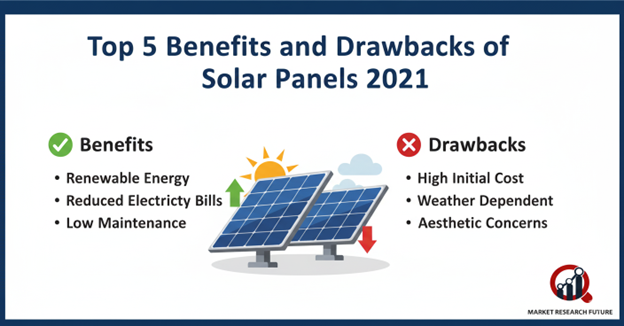
Top 5 Benefits and Drawbacks of Solar Panels 2021
Solar energy Overview
Solar energy — derived directly from sunlight and converted into electricity — has emerged as one of the fastest-growing renewable energy sources worldwide. This surge is driven by rising environmental awareness, government incentives, and the growing need to reduce dependence on fossil fuels.
While solar energy has become synonymous with clean, sustainable living, it is not without limitations. Understanding both the benefits and drawbacks of solar panels is crucial for consumers and businesses considering solar adoption. This article explores the top five advantages and disadvantages of solar power to provide a balanced perspective on its role in the renewable energy transition.
Key Benefits of Solar Panels
1. Reduced Electricity Costs
One of the most significant advantages of solar energy is its potential to dramatically lower electricity bills. By generating power directly from sunlight, households and businesses can reduce their reliance on traditional utility providers. Over time, this leads to substantial savings, especially in regions with high electricity tariffs. Additionally, many governments offer net metering programs, enabling consumers to earn credits for excess energy fed back into the grid.
2. Environment-Friendly Energy Source
Solar energy is one of the cleanest and most sustainable energy sources available. Unlike fossil fuels, solar panels produce zero greenhouse gas emissions and require minimal water to operate. By switching to solar, consumers significantly reduce their carbon footprint and contribute to combating global climate change.
3. Low Maintenance Requirements
Once installed, solar panels demand minimal maintenance. Routine cleaning and periodic inspection are generally sufficient to ensure optimal performance. The inverter, a key component of the system, may need replacement after 10–15 years — representing the primary long-term maintenance cost. With warranties often extending up to 25 years, solar systems remain cost-effective and durable investments.
4. Reduced Dependency on Fossil Fuels
Solar power provides a sustainable alternative to conventional energy sources such as coal, oil, and natural gas. By relying on abundant sunlight, users can achieve energy independence and mitigate the impact of fluctuating fuel prices and supply disruptions. This transition not only benefits individual consumers but also supports national energy security.
5. Long-Term Financial Returns
Despite the high initial investment, solar panels can deliver strong long-term returns. Homeowners can recoup installation costs through energy savings, government rebates, and tax credits. In some regions, surplus electricity generation even allows users to earn income through energy buyback programs — turning solar systems into profitable assets.
Key Drawbacks of Solar Panels
1. High Initial Investment
The most notable barrier to solar adoption remains the high upfront cost of purchasing and installing solar panels. Although costs have declined over the past decade, a typical residential solar setup can still require a significant initial investment, particularly for high-capacity systems or premium solar technologies.
2. Roof Compatibility Issues
Solar panels are commonly installed on rooftops, which may pose structural or aesthetic challenges. Homes with limited roof space, shading, or unconventional designs may face higher installation costs or reduced system efficiency.
3. Weather Dependency
Since solar systems rely on sunlight, energy generation fluctuates with weather conditions. Overcast or rainy days reduce output, and energy storage solutions are needed to maintain power supply during non-sunny periods. This limitation highlights the importance of efficient energy storage technologies.
4. Space Requirements
For optimal energy production, solar panels require ample surface area. Large installations — particularly for commercial or industrial use — can occupy significant land or rooftop space, which may not be feasible for all properties.
5. Expensive Energy Storage Solutions
To maintain energy supply during low sunlight periods, many users invest in battery storage systems. However, these systems add substantial costs. For instance, a 3–10 kW solar setup with a 5 kWh battery may cost between INR 1.5–5 lakh, depending on the system and storage size.
Market Insights and Future Outlook
The global solar energy market continues to expand rapidly, driven by declining panel costs, improved efficiency, and supportive government policies. In countries like India, China, and the United States, large-scale solar adoption is transforming energy infrastructure. Additionally, innovations in battery storage, solar tracking, and smart grid integration are expected to further enhance system reliability and accessibility.
As nations push toward carbon neutrality and sustainable development goals (SDGs), solar power will remain a cornerstone of global energy transition. However, addressing challenges such as cost reduction, recycling of used panels, and improving energy storage remains vital for long-term scalability.
Conclusion
Solar energy offers a powerful solution to the world’s growing energy and environmental challenges. While installation costs, storage limitations, and weather dependency pose challenges, the long-term benefits — lower bills, sustainability, and energy independence — far outweigh the drawbacks. As innovation continues to improve solar technology and affordability, solar panels are poised to become a mainstream, indispensable component of the global renewable energy landscape.
Related Report


Leave a Comment