Everything You Need to Know About Racing Game Development, Challenges, and Marketing
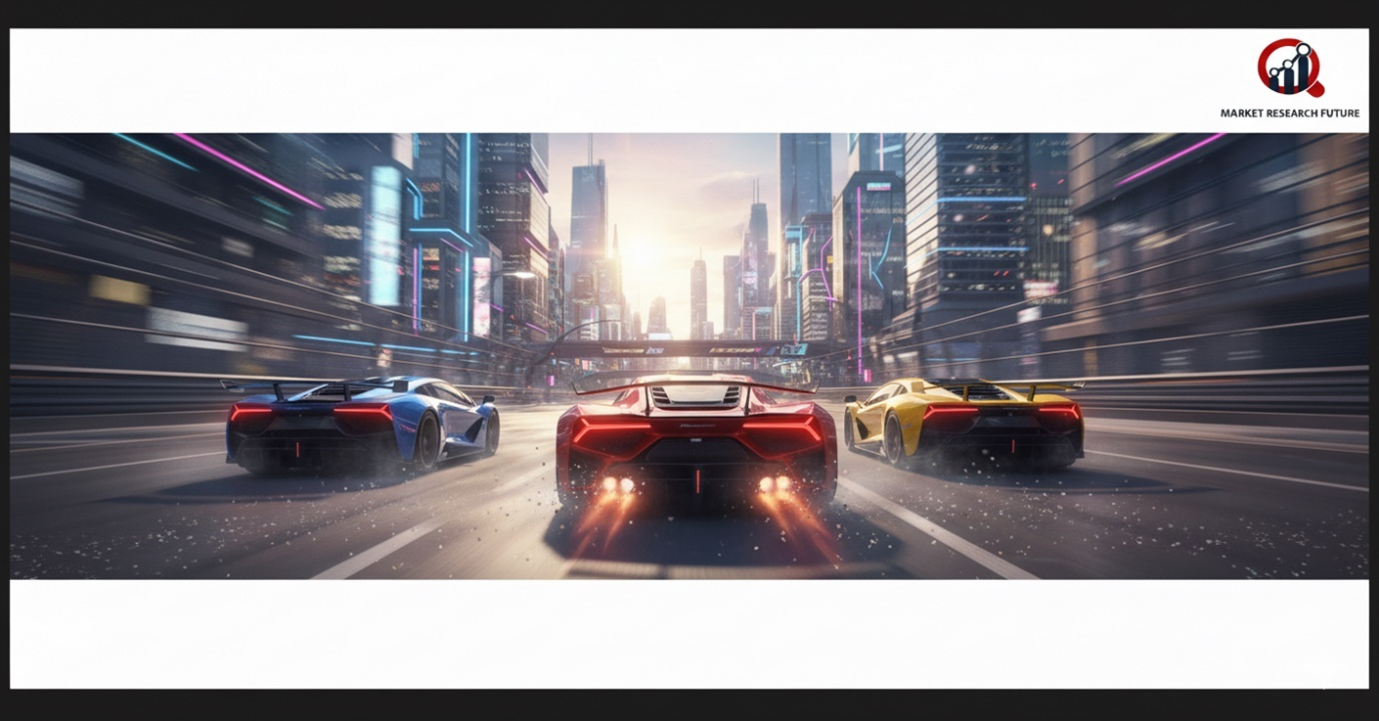
Over time, there has been a huge increase in popularity for racing video games. The games have changed from focusing primarily on racing challenges to incorporating incredible, elevated, edge-of-your-seat features. Each new release makes the game even more lifelike; it is no longer just about speed but about mastering the art of tight turns, braking, drifting, and manoeuvring around obstacles. Winning on the digital tracks of today requires a new level of attention to detail in the form of focus and time, and more importantly, the ability to strategically place both in perfectly balanced amounts.
The Evolution of Racing Games
From a small genre containing simple, pixelated vehicles on rudimentary tabular circuits, the genre has advanced to the point of providing full-fledged experiences that are a blend of high cinematic games, advanced simulation games, and real-life driving. The users are able to experience every driving sensation, including the vibrations, alignments of the curves, and collisions with other vehicles. New generation driving games are not focused purely on obtaining the first position but also on obtaining finesse.
Designing a Racing Game: What It Takes
Creating a racing game involves building a whole world that operates at 200 mph - a fusion of artistry, engineering, and psychology.
1. Visuals and Their Impact
Players first and foremost notice the graphics and are more likely to remember them than any other feature. Immersion is a product of graphics, and motion-blurred backgrounds and variable reflections off the cars of a scene can draw a player in. 3D modelling, ray tracing, and other methods of modern imaging can produce tracks and vehicles that are close to indistinguishable to a player from the real deal.
2. Engaging Users
Developers integrate numerous capture techniques such as advanced road surface, terrain, and weather interactivity to bridge the simulation with the arcade game, whose fun is likely and predictable. Numerous advanced techniques with automated game performance bridging are used to maximize player concentration in the game.
3. Clever Track Arrangement
Gone are the days of flat and predictable tracks. Today's racing games are constructed with advanced and précised multi-layered design techniques. Game builders can maximize player engagement and flow with these complex designs that interconnect in different ways, allowing a player to lose and allowing the game to gain unpredictability.
An example is Wipeout Pure for the PSP. In that game, each segment of the track had its own difficulty and visual theme. This made each track a dynamic racing experience, rather than a monotonous repeating track. These added layers in a track design and construction for a racetrack enhance the player’s immersion and ability to creatively test-switch.
Challenges in Developing a Racing Game
Creating a seamless racing experience isn’t all smooth driving; there are a few bumps along the way.
- Realism vs. Fun: There’s a fine line between realism and fun in racing games. Too much realism can frustrate a casual player, and too little realism can frustrate a hardcore player.
- Dynamic Environments: Weather, lighting, and damage physics simulations need a lot of processor power and clever optimization.
- Vehicle Behaviour: Different makes and models of cars need to feel different, including the terrain they are driven on. A lot of mechanical modeling is needed to get this just right.
- AI Competitors: Programming the opposition to challenge players but not make it feel impossible to win is one of the most difficult tasks in game design.
Growing Technology in Auto Racing
New tech keeps improving the car racing world:
- Virtual Reality (VR) and Augmented Reality (AR) create realistic cockpits and racing environments.
- Haptic technology makes players experience the movements and impacts in a race.
- AI driving coaches evaluate driving in real time to offer instant improvement suggestions.
- Drivers never get bored racing, as Kotlin’s procedural track generation ensures every race is different.
Conclusion
Creating racing games now involves more than just designing vehicles and racetracks. The goal is more than just the speed and skill; the aim is realism! The genre has racing games with advanced and technically complex features like lifelike physics engines, adaptive AI, immersive graphics, and even dynamic and responsive weather systems, which increase the realism within games. Now more than ever, with the advent of VR, AR, and tactile responsive tech, the future of racing games is destined to be enhanced in speed, intelligence, and excitement!
Related Report


Leave a Comment