Property Management Business: Opportunities and Challenges
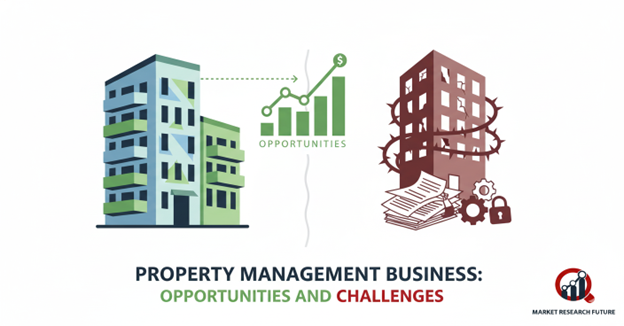
Property Management Market Overview
The global property management business is evolving rapidly, driven by urbanization, changing housing preferences, and rising investment in residential and commercial real estate. Property management companies serve as critical intermediaries, balancing the operational needs of properties with risk mitigation, investor protection, and tenant satisfaction.
Beyond managing rent collection and maintenance, modern property management extends to financial planning, legal guidance, and market trend analysis, enabling investors to optimize returns while minimizing liabilities. The integration of technology, data-driven decision-making, and tenant engagement strategies is reshaping the industry, making property management a strategic function rather than a purely operational one.
With rental demand growing and more investors entering real estate markets, property management businesses are poised for substantial growth. At the same time, the sector faces challenges such as rising operating costs, talent shortages, and increasing tenant expectations.
What Is Property Management?
Property management encompasses a broad range of services aimed at maximizing the value of real estate investments while maintaining high operational standards. Key functions include:
- Tenant Management: Screening, placement, lease administration, and relationship building
- Property Maintenance: Scheduling repairs, preventative maintenance, and ensuring regulatory compliance
- Financial Oversight: Budgeting, rent collection, expense tracking, and investment reporting
- Risk Mitigation: Minimizing vacancies, addressing legal issues, and protecting against property damage or liability
Property management companies may specialize in residential, commercial, or mixed-use properties, tailoring services to meet specific investor and tenant needs.
Shifting Consumer Preferences
The property management landscape is being reshaped by several societal and economic trends:
- Rise of Rental Demand: More single-family homes and apartments are being rented rather than purchased as investment properties.
- Changing Workforce Dynamics: Remote work and flexible schedules have altered housing preferences, creating demand for adaptive property management solutions.
- Aging Population: Baby boomers focusing on retirement require property management services for downsized homes or investment properties.
These trends require companies to be agile, responsive, and technologically adept, delivering personalized services that cater to evolving tenant expectations and investor requirements.
Key Market Growth Drivers
- Increasing Real Estate Investment
Rising demand for residential and commercial properties is fuelling the need for professional property management services, particularly in urban and high-growth regions.
- Financial and Legal Advisory Services
Investors are recognizing the value of property management companies for guidance on investment strategy, compliance, and market trends, beyond traditional rental revenue management.
- Technology Integration
Software solutions for tenant tracking, maintenance management, and financial reporting are improving efficiency, reducing costs, and enhancing customer satisfaction.
- Operational Excellence
Effective maintenance, streamlined processes, and strong tenant relationships help reduce vacancy rates and preserve property value, creating a competitive advantage.
- Market Diversification
Property managers are increasingly targeting diverse property types, including luxury, commercial, and multi-family units, to expand revenue streams and meet varied client needs.
Challenges
Despite strong growth potential, the property management industry faces several hurdles:
- Talent Shortage: A shortage of skilled professionals limits the ability to scale operations effectively. Surveys indicate that up to 40% of real estate management positions remain unfilled due to lack of qualified personnel.
- Outdated Processes: Legacy systems and manual procedures slow operations and reduce efficiency.
- High Operational Costs: Rising maintenance expenses, vacancies, and property taxes can erode profitability.
- Tenant Expectations: Increasing demand for convenience, transparency, and rapid problem resolution pressures companies to adopt advanced service models.
Addressing these challenges requires strategic hiring, technology adoption, and process optimization.
Regional Insights
- North America: Mature market with high tenant expectations and technology-driven property management solutions.
- Europe: Growth driven by regulatory compliance, sustainability initiatives, and urban rental demand.
- Asia-Pacific: Fastest-growing region, fueled by urbanization, rising disposable incomes, and increasing investor activity in residential and commercial sectors.
- Latin America & Middle East & Africa: Emerging markets with potential for expansion, supported by increasing international investment and adoption of professional property management services.
Future Outlook
The property management market is expected to continue its upward trajectory as investors increasingly rely on professional services to manage assets efficiently and minimize risk. Key trends likely to shape the market include:
- Digital Transformation: Advanced property management software and AI-driven analytics for tenant screening and maintenance forecasting.
- Sustainability Focus: Energy-efficient buildings and eco-friendly maintenance practices.
- Personalized Services: Tailored solutions for diverse tenant demographics and investor objectives.
- Talent Development: Training and recruitment strategies to address the skills gap and enhance service quality.
With these trends, property management companies are set to play a strategic role in optimizing real estate investments while delivering superior tenant experiences.
Conclusion
The property management business represents a dynamic intersection of real estate, finance, and operations. Rising investment in rental properties, evolving tenant expectations, and growing reliance on technology present significant opportunities for companies that can balance efficiency, risk management, and customer satisfaction.
While talent shortages, operational costs, and market fragmentation pose challenges, the industry’s long-term outlook remains positive. With innovation, strategic hiring, and tech adoption, property management firms are poised to become key drivers of value creation in the global real estate sector.
Related Report


Leave a Comment