Internet of Things (IoT): Terminology, Technology and Utility, Devices, Future of IoT
Terminology
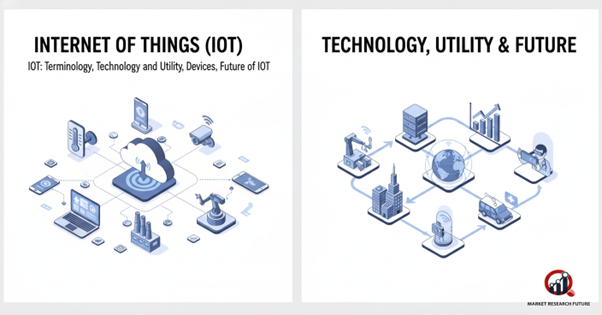
Kevin Ashton came up with the term "Internet of Things" (IoT) to describe a world where physical things can talk to each other over the internet. That dream has come true today, linking everything from home appliances to whole cities. In short, IoT is the network of smart devices and sensors that gather, share, and act on data to make things easier and more efficient in all kinds of businesses. It connects the real world and the digital world, which leads to new ideas in homes, workplaces, and even whole economies.
Certain Areas Where IoT Applications Are Used
Wearable technology is one of the first and most well-known uses of the Internet of Things (IoT). Smartwatches and fitness trackers are examples of devices that keep track of vital signs, fitness levels, and lifestyle habits in real time. These devices fit right into everyday life, making it possible to manage your health with data.
Smart Home Technology: Home automation powered by the Internet of Things (IoT) makes homes more comfortable and energy-efficient. Smart lighting, thermostats, and security systems automatically respond to changes in the environment or user preferences. This makes living spaces safer, smarter, and more eco-friendly.
IoT is changing healthcare by linking doctors and patients outside of hospitals. Remote monitoring devices keep track of patient data, which helps doctors make diagnoses and start treatment sooner. This technology-based method improves the quality of care and cuts down on delays in getting medical care.
Smart Cities: The Internet of Things (IoT) makes cities work better and smarter. Sensors that are connected control traffic, lighting, and waste systems, which makes city life better and uses resources more efficiently. The infrastructure of smart cities is changing the way we live in a sustainable way.
Agriculture: "Smart farming" powered by the Internet of Things (IoT) lets farmers check the temperature, humidity, and soil conditions in real time. Automated systems help farmers get the most out of their crops and resources, which makes farming more efficient and long-lasting.
IoT combines robotics, sensors, and analytics in industries to monitor things in real time and predict when they will need maintenance. It makes work more productive, safer, and more accurate.
The future of the Internet of Things
The future of the Internet of Things (IoT) depends on better automation, AI integration, and safe connections through blockchain. IoT is changing the way we live, work, and interact as industries, cities, and homes become smarter. This is making the world more connected and smarter.
Related Report


Leave a Comment