Don't Let Humidity Take a Toll on Your Close Ones' Health, Secure Them with a Humidity Sensor
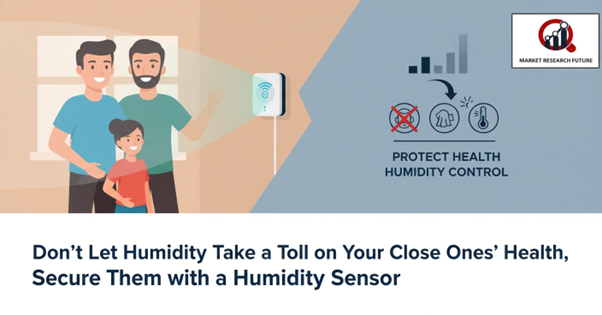
Overview of the Humidity Sensor Market
The increasing trend of integrating cutting-edge technology with home devices and the rising consumer inclination toward smart home devices is pushing the global humidity sensor market to reach USD 5 billion by 2035, adhering to a CAGR of 4.56% through the forecast period. The valuation of the ecosystem measured in 2024 was USD 3.35 billion.
We've all experienced the discomfort of saying, "It's so humid today; I can barely breathe." This sensation is not just about heat; it’s caused by high humidity. One of the body’s natural cooling methods is sweating.
On humid days, sweat evaporates more slowly due to increased water vapor in the air, making it harder for the body to cool itself. High humidity can lead to heat stress, fatigue, and increased susceptibility to illness.
Installing a reliable humidity sensor is an effective solution to monitor and control indoor moisture levels, preventing overheating and maintaining comfort.
Humidity Sensors
A humidity sensor is an electronic device that detects, measures, and reports the moisture content in the environment. Sensors convert these readings into electronic signals for monitoring and control.
Technological advancements have expanded the applications of humidity sensors, from handheld devices like smartphones to sophisticated air quality monitoring systems.
Uses of Humidity Sensors
Humidity sensors are widely employed in industrial, residential, and commercial settings:
- Industrial and Manufacturing: Machines and processes are sensitive to temperature and humidity. Sensors help maintain optimal conditions for personnel safety and product quality.
- Residential and Commercial: Sensors detect high-humidity areas in homes or offices, allowing ventilation adjustments to maintain comfort.
- Agriculture: Precise moisture monitoring is crucial for plant growth, particularly in drip irrigation systems.
- Medical Applications: Sterilizers, ventilators, and incubators require exact humidity control for hygiene and safety.
Varieties of Humidity Sensors
Different sensors are chosen based on location and application:
- Capacitive Humidity Sensors: Measure relative humidity using metal oxides between electrodes, widely used for environmental monitoring.
- Resistive Humidity Sensors: Also known as electrical conductivity sensors, they calculate humidity through two electrodes and are often used in industrial applications.
- Thermal Humidity Sensors: Measure the difference between dry and humid air, suitable for high-temperature and corrosive environments.
Accuracy and Calibration
Accurate readings are essential for humidity sensors to function effectively. Calibration ensures that devices provide precise measurements, which is critical in industries where even minor deviations can affect safety or product quality.
Regular calibration by certified experts maintains reliability. Continuous R&D investments in the sector are enhancing sensor precision and durability.
Regional Analysis
Humidity sensor adoption varies across regions. North America and Europe are mature markets due to stringent industrial regulations and advanced infrastructure. Asia-Pacific is witnessing rapid growth, driven by urbanization, rising industrialization, and increased consumer awareness of indoor air quality.
Latin America and the Middle East are emerging markets, with governments and private players investing in smart building technologies and climate monitoring solutions.
Related Report


Leave a Comment