Hidradenitis Suppurativa – Development of Skin Lesions
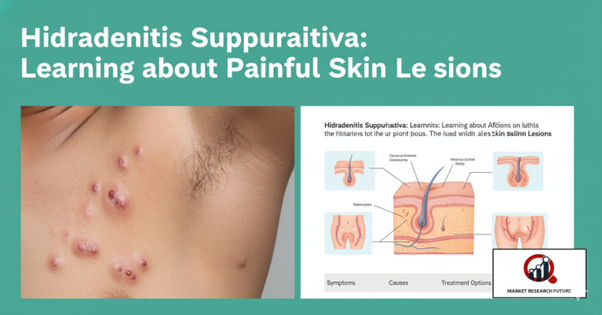
Hidradenitis Suppurativa: Learning about Painful Skin Lesions
Skin Lesions Brief
Hidradenitis Suppurativa (HS) is a long-term skin condition that causes painful, small lumps to form under the skin. These lumps can break open, leak pus, or form tunnels under the skin as time goes on. HS mostly affects places where skin rubs against skin, like the armpits, groin, under the breasts, buttocks, and folds of the stomach. HS is often thought to be rare, but it is often missed because it can show up in different ways.
Affected Areas: HS usually happens in places where there is hair or friction, like
- The groin and underarms
- Between the thighs and the buttocks
- Underneath the breasts
- Around the back of the neck
Stages of Hidradenitis Suppurativa: HS usually starts with a small, single lesion that either goes away on its own or bursts, letting pus out. If not treated, more lumps may form nearby, and sinus tracts, which are narrow channels under the skin, may form and release pus when they break. The disease progresses through three stages:
- Hurley Stage I: One bump with no sinus tracts or scars.
- Hurley Stage II: Several bumps with sinus tracts in different places.
- Hurley Stage III: A whole area has a lot of bumps, sinus tracts, and scars.
Changes to Your Lifestyle to Control HS
Making some changes to your lifestyle can help with flare-ups and symptoms:
- Keep your weight in a healthy range: This lowers pressure and friction on the skin.
- Stop smoking: It makes things less bad and makes your health better overall.
- Don't shave the affected areas: this will reduce irritation. Talk to a dermatologist about other options.
- Wear clothes that are loose: This will help keep flare-ups from happening and reduce friction.
In conclusion, HS affects women more than men and usually starts in the teenage years and lasts into adulthood. Even though it is long-lasting, people who have this painful skin condition can have a much better quality of life with the right care, changes to their lifestyle, and early medical help.


Leave a Comment