Pros and Cons of Wearing a Face Shield
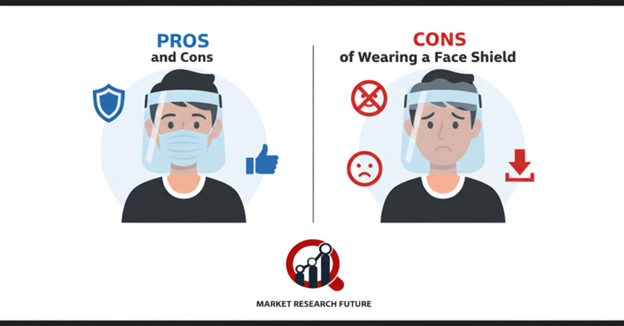
Face Shield Market Overview
The global face shield market has gained significant traction as personal protective equipment (PPE) during the COVID-19 pandemic and continues to play a crucial role in safeguarding individuals from infectious diseases, dust, and airborne particles. Face shields are designed to cover the entire face, providing protection for the eyes, nose, and mouth—the primary entry points for pathogens.
While masks remain essential for preventing respiratory transmission, face shields complement other PPE, offering an additional barrier against droplets, splashes, and environmental contaminants. The adoption of face shields extends beyond healthcare workers to the general public, particularly in high-risk situations and densely populated areas.
Increasing awareness about hygiene, government safety guidelines, and the ongoing focus on preventive healthcare are key factors driving the use of face shields globally. However, market adoption comes with certain limitations related to comfort, user behavior, and prolonged usage.
What Are Face Shields?
Face shields are transparent plastic barriers worn over the face to protect against physical and biological hazards. Unlike masks that cover only the nose and mouth, face shields offer full-face protection, including the eyes, which are vulnerable to airborne pathogens.
Face shields are commonly used in:
- Healthcare settings: Clinics, hospitals, and testing facilities
- Industrial environments: Construction sites, laboratories, and manufacturing units
- Public spaces: Especially by high-risk populations or during infectious disease outbreaks
They are typically made of lightweight plastic materials, are reusable, and can be sanitized or washed, making them a durable option for prolonged protection.
Shifting Consumer Psychology
The COVID-19 pandemic has reshaped consumer behavior toward protective gear:
- Increased focus on preventive health measures
- Greater awareness of infection transmission via eyes, nose, and mouth
- Rising preference for reusable and convenient PPE
Modern users—including frontline workers, elderly populations, and individuals with chronic health conditions—prioritize safety, durability, and ease of use when selecting protective equipment. Face shields are now considered an essential complement to masks in maintaining personal hygiene and reducing infection risk.
Key Market Growth Drivers
1. Enhanced Protection
Face shields cover the entire face, providing protection against droplets, splashes, and other infectious materials, which is particularly beneficial in healthcare settings and crowded public areas.
2. Reusability and Durability
Unlike disposable masks, face shields can be easily cleaned and reused, offering a cost-effective and environmentally friendly solution.
3. Regulatory Guidelines and Public Awareness
Government recommendations and global health advisories encourage the use of face shields alongside masks, especially for high-risk populations and healthcare professionals.
4. Complementary to Masks
Face shields reduce the risk of touching the face while providing a physical barrier, complementing traditional mask usage and enhancing overall protective measures.
Challenges and Limitations
Despite their advantages, face shields present several drawbacks:
- User Compliance: Incorrect usage can compromise protection and increase infection risk.
- Comfort Issues: Prolonged wear can cause discomfort, especially during walking or physical activity.
- Communication Barriers: Face shields may muffle speech, requiring users to speak louder.
- Visual Interference: Extended use can lead to fogging or reduced visibility, affecting usability.
- Bulkiness: Some designs may feel heavy or restrictive, limiting mobility during extended wear.
Overcoming these challenges requires design innovation, public education on proper usage, and development of lightweight, anti-fog materials.
Regional Insights
- North America: Leads adoption due to high awareness, strong PPE regulations, and widespread availability in healthcare and public settings.
- Europe: Growing acceptance driven by strict workplace safety guidelines and preventive health initiatives.
- Asia-Pacific: Rapid growth fueled by urbanization, high population density, and increasing awareness of infection prevention.
- Latin America & Middle East/Africa: Emerging markets showing gradual uptake as international PPE brands expand distribution.
Future Outlook
The face shield market is expected to grow steadily as preventive healthcare becomes a long-term priority. Innovations in lightweight materials, ergonomic designs, and anti-fog technologies will enhance comfort and adoption.
Strategic collaborations between PPE manufacturers, healthcare providers, and government agencies are likely to improve product accessibility and awareness. As societies continue to prioritize infection control and workplace safety, face shields are expected to remain a key component of personal protective equipment alongside masks.
Conclusion
Face shields provide comprehensive facial protection, complementing masks and reducing the risk of infection. While challenges such as discomfort, communication barriers, and proper usage remain, their reusability, durability, and effectiveness make them an indispensable tool in both healthcare and public settings.
The market’s long-term growth will depend on product innovation, user education, and integration into standard safety protocols, positioning face shields as a critical element of preventive health strategies worldwide.
Related Report


Leave a Comment