Different uses of (Ag) Metal with Atomic Number 47
Overview of the Silver Market
Consumers have started inclining toward silver as an investment choice, upholding the demand for Ag. The worldwide silver market was valued at USD 21.11 billion in 2024. The ecosystem is expected to reach USD 30 billion by 2035, owing to a CAGR of 3.24%.
Silver (Ag) is a lustrous and soft metal with an atomic number 47. It is a chemical element that is valued for its electrical conductivity and beautiful decorative pieces. It is an alloy of gold and other metals, obtained from the crust of the earth.
It is also known as a byproduct of copper, gold, zinc, and lead. It is considered a precious metal and is highly used in the making of jewelry, photographic films, silverware, and other applications.
Silver can easily get oxidized, and by oxidation, it forms an oxidized layer on jewelry. The major factor driving the global market is the high demand for silver in silverware and ornaments. The demand for silver in industrial and electronic appliances sectors also contributes significantly to market growth.
Uses of Silver
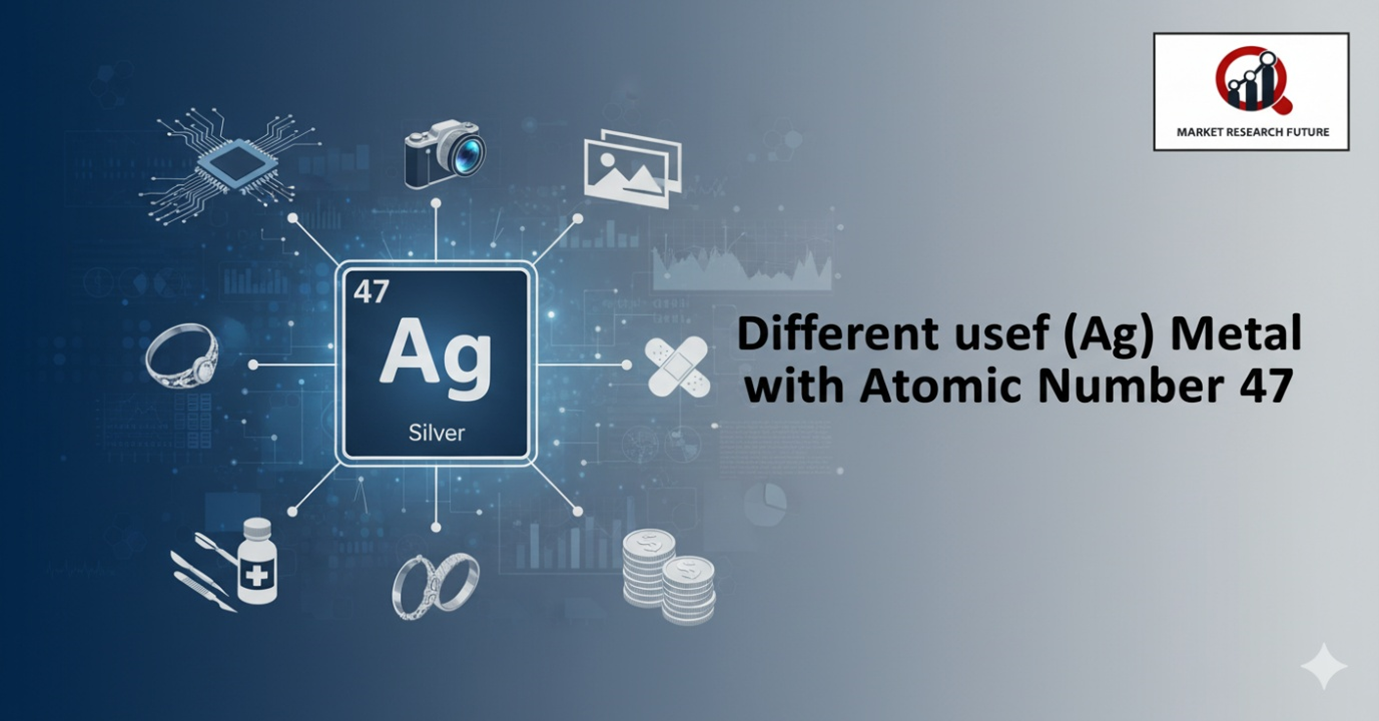
- Silver is highly used for the manufacturing of wares, coins, and ornaments.
- It is used as a vapor-deposited coating on electric conductors.
- Silver is a good conductor of electricity and is used in fabricating electrical circuits.
- It is used to convert ethylene into ethylene oxide.
- Silver is used in photography due to its light sensitivity.
- Silver is antibacterial and is used to store water, vinegar, and other items to maintain freshness.
- It can work as a purifying agent as it has the potential to kill bacteria.
- Silver is highly used in the medical field; it is a nontoxic agent and can be used in water purification, dental hygiene, eye drops, and even bandages.
- Silver is used in making mirrors.
Compounds of Silver
Silver chloride (AgCl), silver bromide (AgBr), and silver iodide (AgI) are key silver compounds. These salts are used in photography: silver chloride is a light-sensitive material used in printing papers, while silver bromide is used in plates and films.
Silver iodide is employed in cloud seeding for artificial rainmaking, manufacturing films and photographic papers, and in antiseptics. These halides are derived from silver nitrate (AgNO3), an important inorganic silver salt used in the production of silver cyanide.
History of Silver
Silver has been historically important across civilizations. Its value and applications were vast since ancient times. For example:
- A silver tea caddy is kept in the Victoria and Albert Museum, with a hallmark from 1767–68.
- A copy of a portrait of Alexander the Great on a silver tetradrachm of Lysimachus (297–281 BCE) is preserved in the British Museum.
Regional Analysis
Silver production is dominated by countries like Mexico, Peru, China, and Australia, contributing significantly to the global supply. North America and Latin America are major consumers of silver in jewelry and industrial applications, while Asia-Pacific is growing rapidly due to increasing demand in electronics and manufacturing.
Europe focuses on silver for decorative arts, medical applications, and silverware. Emerging markets in Africa and the Middle East are witnessing rising industrial and investment demand for silver, boosting regional market growth.
Conclusion
Silver is widely available in nature, present at 0.05 parts per million of the earth’s crust. Though less abundant than some other metals, it remains highly valuable due to its unique properties and diverse applications.
Related Report


Leave a Comment