Current Trends in the Bicycle Market
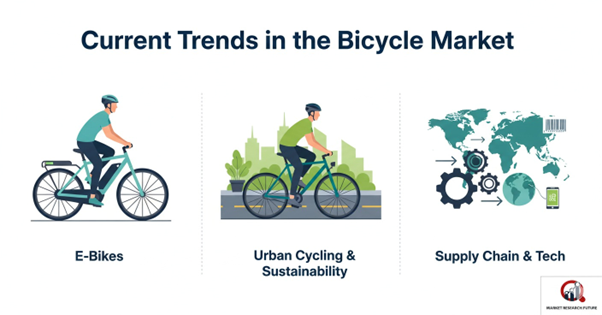
Global Bicycle Market Overview
With the increasing consumer inclination toward maintaining physical health and, at the same time, to curb carbon footprints, the demand for bicycles has risen drastically. The global bicycle market is likely to reach USD 156.9 billion by 2035 from USD 80.8 billion in 2024. The landscape will navigate through 2035 at a moderate CAGR of 6.14%.
Being physically active is essential for maintaining fitness and overall health. Cycling is an excellent way to reduce the risks associated with a sedentary lifestyle and can be enjoyed by people of all age groups.
Bicycling is low-impact, fun, budget-friendly, and environmentally friendly. These factors are driving growth in the global bicycle market.
Increasingly, people are choosing bicycles over other vehicles for leisure rides and daily commuting, which supports market expansion. Cycling helps manage weight and obesity, contributing to health-conscious lifestyle choices that further fuel demand.
Advanced Trends
Dockless bicycle-sharing systems are gaining popularity, allowing users to locate and unlock bicycles electronically.
Europe is the origin of these systems, and the integration of mobile apps and GPS technology is driving adoption. Chinese bicycle-sharing companies are expanding their operations into Europe, boosting global market opportunities.
Growth Drivers for the Bicycle Market
People increasingly recognize the health benefits of daily cycling, which helps prevent obesity and other lifestyle-related conditions. Regular cycling as a mode of exercise is expected to drive significant growth in the bicycle market.
Traffic congestion and parking shortages encourage commuters to choose bicycles for short distances, saving time while supporting fitness.
However, insufficient cycling infrastructure in developing nations and the high cost of lightweight bicycles made from advanced materials may restrict growth. Bicycles are also popular for sports and recreation.
Regional Analysis
In North America, urban cycling infrastructure and e-bike adoption are supporting market growth. Europe is leading in dockless bicycle-sharing systems, with strong investments in mobile-enabled bike rentals.
Asia-Pacific, particularly China, Japan, and India, is driving global expansion through both traditional and electric bicycle markets. South America is seeing increasing adoption in urban areas to reduce traffic congestion and promote health.
The Middle East and Africa are gradually investing in cycling infrastructure and e-bike technology, creating new opportunities in both transportation and recreational markets.
Related Report


Leave a Comment