Cell counting - Ways of quantifying the cells
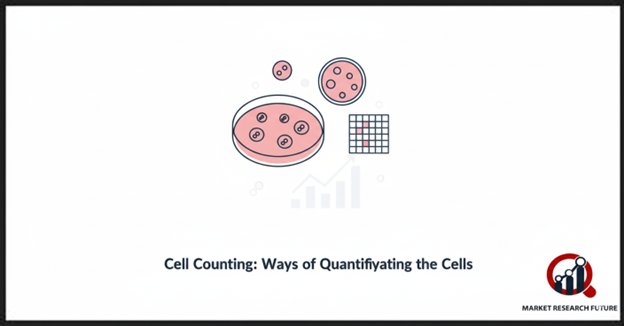
Cell Counting: Ways of Quantifying the Cells
Introduction
Cells are the basic building blocks of all living organisms. They contain cytoplasm and a nucleus, enclosed by a thin membrane. Understanding cells—their number, type, and viability—is crucial in medical diagnostics, biological research, and therapeutic applications.
Cell counting, therefore, is a critical process that enables researchers, clinicians, and healthcare professionals to quantify cells for diagnostic, therapeutic, and experimental purposes. It is a core component of cytometry and has applications ranging from disease detection to cell therapy.
Why Cell Counting Matters?
Cell counting plays a vital role across healthcare and life sciences:
- Medical Diagnosis: Concentrations of red and white blood cells provide essential insights into a patient’s health status, helping physicians detect diseases and abnormalities.
- Cell Therapy: Accurate counting ensures that patients receive the correct dose of therapeutic cells.
- Research & Experiments: Molecular biology and biochemistry experiments require precise cell counts to optimize reagents and conditions.
- Cell Viability Testing: Determines the proportion of live versus dead cells, which is crucial in toxicology studies and pharmaceutical research.
Methods of Cell Counting
Broadly, cell counting methods fall into two categories: manual and automated.
1. Manual Cell Counting
Manual techniques are traditional yet effective, especially for smaller-scale studies. The two main approaches are:
- Counting Chambers (Hemocytometer)
- A specialized microscope slide with a grid that allows researchers to visually count cells under a microscope. It is widely used for its simplicity and accuracy in smaller samples.
- Plating and CFU (Colony-Forming Unit) Counting
- Used to determine the number of viable cells in a culture. Each colony that grows on a plate represents a single viable cell, making this method valuable in microbiology.
2. Automated Cell Counting
Automation has transformed cell counting, offering higher speed, consistency, and scalability. The main techniques include:
- Electrical Resistance (Coulter Principle)
- Measures both the number and volume of cells as they pass through an electrical field.
- Flow Cytometry
- A sophisticated and advanced technique that uses lasers and detectors to analyze and count cells with high precision. It also provides additional data such as size, complexity, and biomarker expression.
- Image Analysis
- Utilizes high-resolution microscopy images combined with advanced algorithms to identify and count cells automatically. This method is increasingly popular due to advances in digital imaging and AI.
Regional Analysis
North America dominates the global cell counting market, driven by a strong healthcare infrastructure, high R&D investments, and widespread adoption of advanced technologies like flow cytometry. The U.S. in particular has seen rapid growth in clinical diagnostics and cell therapy research.
Europe represents the second-largest market, supported by government initiatives promoting biotechnology research and rising demand for precision diagnostics. Countries like Germany, the UK, and France lead in laboratory automation and cancer research applications.
Asia-Pacific is emerging as the fastest-growing region due to increasing investments in biotechnology, expanding pharmaceutical manufacturing, and rising prevalence of chronic diseases. India, China, and Japan are key markets benefiting from expanding research funding and collaborations with global healthcare providers.
Latin America shows steady growth, supported by improvements in healthcare systems and rising interest in diagnostic testing. Brazil and Mexico are notable markets for cell-based research and clinical diagnostics.
The Middle East & Africa region is gradually adopting advanced cell counting technologies. Growth is fuelled by healthcare modernization initiatives, particularly in GCC countries, while Africa shows potential in diagnostic advancements supported by international collaborations.
Conclusion
Cell counting is more than just a laboratory task—it is a cornerstone of modern healthcare, diagnostics, and research. From manual chambers to advanced flow cytometry and AI-driven image analysis, methods have evolved to meet the growing demands of precision and efficiency.
As life sciences and healthcare technologies continue to advance, the future of cell counting will likely see further integration with automation, artificial intelligence, and digital health solutions—ensuring greater accuracy, speed, and accessibility in both research and clinical practice.
Related Report:
Related Report


Leave a Comment