A practical approach for Benzoic acid Market
An Introduction to Benzoic Acid
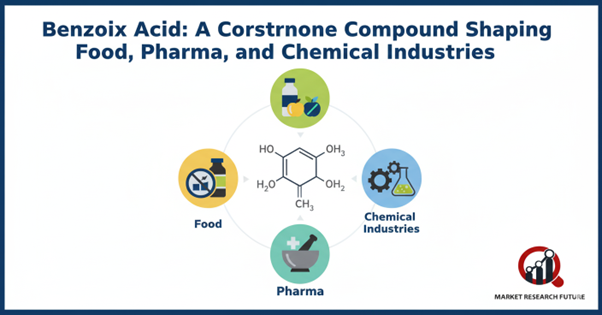
One of the most popular benzoic acid products is the most common carboxylic acid. Benzoic acid has prominent antimicrobial, preservative, and flavor-enhancing qualities. Moreover, benzoic acid is naturally present in some plants (like cranberries, plums, and cloves) and can also be manufactured synthetically. Given the low toxicity and the highly versatile applications, benzoic acid becomes a common product in Foods & beverages, pharmaceuticals, cosmetics, and the chemical industries.
Key Uses of Benzoic Acid
1.Food & Beverages
Benzoic acid is used to preserve products as an E210 preservative and thus increases the shelf life of products. This antimicrobial property is great to avoid the growing of certain bacteria, yeast, and confectionary. Some of the products benzoic acid is commonly used include carbonated drinks, fruit juices, jams, pickles, and confectionery. It also enhances the flavor and aroma of processed food.
2.Pharmaceuticals
Benzoic acid is used in the synthesis of certain analgesics (like aspirin and acetaminophen) as well as some antiseptics and anesthetics. It also has soothing properties, which are helpful when used as an excipient in ointments and creams.
3.Cosmetics & Personal Care
Benzoic acid is widely used in skin care products, deodorants, moisturizers, shampoos, and oral care products. It has antimicrobial and antioxidant properties, which make products more stable.
4.Chemicals & Industrial Applications
Benzoic acid is an important raw material used in the production of derivatives like benzyl benzoate, benzoyl chloride, and alkyd resins. It is also used in the production of biocides, insecticides, and fungicides, as well as in the manufacture of plasticizers and dyes.
Market Growth Drivers
- There is an increasing interest in the preservation of food due to the high rate of consumption of packaged and processed food.
- The growth of the pharmaceutical industry, especially in the developing world since benzoic acid is an important ingredient in several pharmaceuticals.
- The growth of the cosmetics and personal care industry is also driven by urbanization and the changing lifestyles of consumers.
- Increase in the use of benzoic acid in animal and poultry feed for the control of microbes.
Market Challenges
- The competition with other synthetic and natural alternatives (for example, sorbic acid, parabens, or propionic acid).
- The unstable prices of toluene and other raw materials cause unpredictable production costs.
- The over-regulation of certain areas in the world is caused by health and safety issues around over-consumption.
Production and Sustainability Trends
Traditionally, benzoic acid is produced via the oxidation of toluene using catalysts. Recently, there has been a growing interest in:
- Production using biological methods: the use of plant-derived materials for sustainable production.
- Use of green chemistry: reduction of emissions and the energy used for chemical reactions.
- Use of Circular Economy: recycling the benzoic acid derivatives to be used in other industrial processes.
Conclusion
Benzoic acid is essential to modern industry. It remains functional, safe, and cost-effective. The challenges posed by synthetic substitutes are minimal, and with a large portion of demand coming from food preservation, medicine, and the cosmetic and chemical industries, demand will continue to grow. With greater demand for sustainably produced goods, benzoic acid will continue to be a key element in the global manufacturing economy for a long time.
Related Report


Leave a Comment