Top 6 Modern Uses Of Aluminum
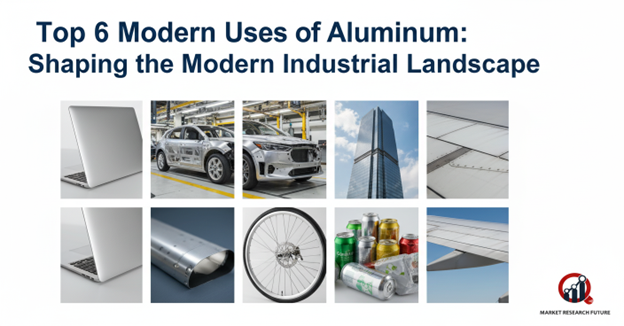
Aluminum Market Overview
Aluminum, a lightweight, silvery-white metal derived primarily from bauxite ore, has become one of the most essential materials shaping modern civilization. With its unique combination of strength, durability, corrosion resistance, and thermal conductivity, aluminum is used across industries ranging from construction and aerospace to consumer electronics and transportation. Its abundant availability in the Earth’s crust and recyclability make it a sustainable and versatile material for the 21st century.
In today’s rapidly evolving industrial environment, aluminum’s role has expanded beyond household utensils and packaging. Modern innovations and alloy advancements have enabled its integration into automotive, space, infrastructure, and energy sectors, making it a cornerstone of sustainable industrial progress.
What Makes Aluminum Unique?
Aluminum stands apart due to its low density, non-magnetic nature, and high resistance to corrosion. When combined with other metals, it forms alloys with superior mechanical properties—making it ideal for high-performance applications. Moreover, aluminum’s ability to reflect light and heat, conduct electricity efficiently, and be recycled endlessly without degrading quality enhances its global value.
These characteristics have positioned aluminum as a critical material for industries seeking energy efficiency, cost reduction, and environmental sustainability.
Top 6 Modern Uses of Aluminum
1. Refrigeration and Air Conditioning Systems
One of the most essential applications of aluminum lies in heat transfer systems such as refrigerators, freezers, and air conditioners. Aluminum’s thermal conductivity makes it ideal for heat exchangers and coils, helping transfer gases and liquids efficiently. When alloyed with other metals, it enhances energy efficiency and longevity—making it indispensable in the HVAC (heating, ventilation, and air conditioning) industry.
2. Thin Foils for Packaging and Cooking
Aluminum foils are widely used in food preservation, packaging, and cooking. Known for their ability to retain freshness, prevent contamination, and maintain heat, aluminum foils have become household essentials. Beyond domestic use, industries rely on aluminum foil for pharmaceutical packaging, beverage seals, and ready-to-eat meals, ensuring product integrity and extended shelf life.
3. Construction of Bridges and Buildings
The construction industry relies heavily on aluminum for its lightweight strength, resistance to corrosion, and aesthetic flexibility. It is used in building facades, railings, doors, skylights, and window frames, as well as in large infrastructure projects such as bridges and towers. Modern architecture increasingly adopts aluminum for its low maintenance and energy-efficient properties, supporting green building initiatives.
4. Power Transmission Lines
Aluminum’s light weight and high conductivity make it the preferred material for electrical transmission lines. Often combined with steel or boron to form alloys, aluminum helps transport electricity across long distances efficiently. Its use in high-voltage power lines minimizes transmission losses and supports renewable energy networks, contributing to sustainable energy distribution.
5. Spacecraft and Aerospace Applications
The evolution of spacecraft and aviation technology is deeply connected to the development of aluminum alloys. Aluminum’s strength-to-weight ratio, resistance to corrosion, and ability to withstand extreme temperatures make it ideal for rockets, satellites, and aircraft. Space agencies and aerospace manufacturers rely on aluminum for components that ensure safety, performance, and reduced fuel consumption, marking it as a material of choice for space exploration.
6. Modern Trains and Transportation Systems
The global shift toward lightweight, energy-efficient transportation has accelerated aluminum’s use in railway systems. Modern trains now use aluminum instead of steel for their frames and bodies due to its reduced weight and enhanced durability, leading to faster speeds, lower fuel consumption, and greater passenger safety. Similarly, aluminum is increasingly adopted in automobiles, ships, and electric vehicles (EVs) to improve efficiency and reduce emissions.
Market Drivers and Industrial Significance
The growing application of aluminum is supported by:
- Rising demand for lightweight materials in aerospace and automotive industries.
- Sustainability goals promoting the use of recyclable and energy-efficient metals.
- Technological innovations in alloy formation and extrusion techniques.
- Expansion of infrastructure projects across developing economies.
As industries pivot toward green materials and carbon neutrality, aluminum’s recyclability and versatility make it a key enabler of the circular economy.
Challenges and Opportunities
Despite its advantages, the aluminum industry faces challenges such as energy-intensive production, price volatility of bauxite, and competition from alternative materials like carbon composites. However, advancements in low-emission smelting technologies, recycling efficiency, and lightweight alloy innovations are expected to strengthen the industry’s global position.
Future Outlook
The future of aluminum lies in sustainable innovation and technological integration. As industries adopt electric mobility, renewable energy grids, and eco-friendly architecture, aluminum will continue to play a pivotal role. With the rise of AI-assisted material design, additive manufacturing, and smart recycling systems, the next decade will redefine aluminum’s industrial and environmental significance.
Conclusion
From household essentials to space exploration, aluminum has evolved into a strategic material of modern civilization. Its unique combination of strength, lightness, and sustainability continues to drive advancements in multiple sectors. As industries embrace cleaner technologies and energy-efficient materials, aluminum stands at the forefront of innovation—shaping a resilient and sustainable future.
Related Report


Leave a Comment