Aircraft Carrier: New Ways Of Working
Beyond the Flight Deck: Aircraft Carriers in 2025
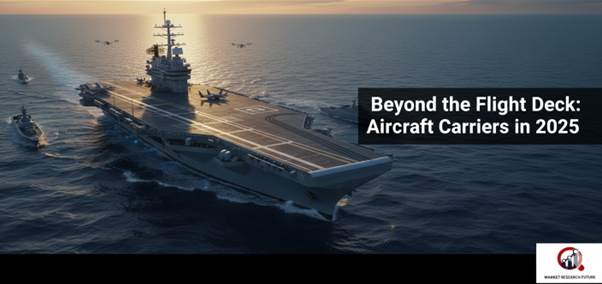
News about aircraft carriers
An aircraft carrier is more than just a warship; it's a floating city, a moving fortress, and most importantly, a strong symbol of a country's military might. These ships have a full-length flight deck and serve as mobile airbases that can carry, arm, deploy, and recover aircraft at sea. They can project power far beyond coastal borders, which gives navies the power to change things anywhere in the world.
When we think of aircraft carriers, we usually picture huge nuclear-powered ships that launch groups of fixed-wing planes. But the definition of what an aircraft carrier is has changed over the years. Carriers can now fly not only jets but also helicopters, drones, and other high-tech systems. This change has made it harder to tell the difference between traditional carriers, escort carriers, and amphibious assault ships. Each of these ships has its own important role in modern naval operations.
Aircraft Carriers in Today's Wars
Aircraft carriers are still the most important part of fleet operations and are often the flagship of a naval task force. They are very important for both military and humanitarian missions because they can project air power onto land. Carriers are very useful because they can stop aggression, help with ground operations, or help with disaster relief.
In 2025, carriers will be able to do more than just their usual jobs. They are now centers of multi-domain warfare, coordinating not only air and sea operations, but also cyber and electronic warfare. These ships are changing the way air power is used, as unmanned aerial vehicles (UAVs) become standard in carrier air wings.
Some navies have decided to build smaller carriers that can still carry drones and vertical takeoff planes. This makes them more flexible in coastal operations. Some people keep buying big, full-deck carriers that can hold a lot of different types of planes and have the best endurance and global reach.
What does the Air Wing do?
The air wing is the most important part of every carrier. The term doesn't mean a single, rigid structure; instead, it means a flexible mix of aircraft that are made for the job at hand. The air wing is what makes the carrier what it is. It has fighters, bombers, helicopters, and surveillance planes.
Carrier air wings have to learn how to live at sea, which is different from land-based squadrons. They have to deal with limited space, moving decks, and the difficulty of operating far from fixed bases. Because of this unique environment, naval aviation has become a specialized field where aircraft and crew must work perfectly with the ship's systems.
By 2025, air wings will have grown to include more than just manned planes. Advanced drones now work with traditional fighters and bombers to do reconnaissance, strike, and even refuel. This integration has turned carriers into flexible platforms that can deal with many threats at once.
The Aircraft Carrier's Evolution
More than a hundred years ago, the idea of an aircraft carrier came about when early warships were changed to carry planes. At first, these ships were used for reconnaissance, spotting enemy fleets and directing naval gunfire. But as technology for planes got better, so did the job of the carrier.
By the middle of the 20th century, carriers had taken the place of battleships as the most important ships in fleets. Over the years, they changed from modified cruisers to purpose-built giants that could control the seas with unmatched flexibility.
The evolution goes on in 2025. Carriers now use both old-fashioned weapons and new technology. They have stealth planes, advanced radar systems, and drones that can fly on their own, all of which work together to keep the skies and seas safe. Modern carriers are more than just warships; they are also command centers, places to give humanitarian aid, and symbols of diplomacy. They show both hard and soft power.
Conclusion
The aircraft carrier has always been more than just a ship. It is a way for a country to show that it can project power and protect its interests anywhere in the world. Their purpose has not changed over the past hundred years, even though their design and capabilities have changed a lot. They still want to rule the seas and have an impact far beyond the shorelines.
As of 2025, carriers are adopting new technologies, taking on new responsibilities, and facing new problems. They are no longer just about getting planes off the ground; they are now about coordinating complicated, multi-domain operations that use both manned and unmanned systems.
The aircraft carrier is still a powerful symbol of the future of warfare, adaptable, and strong in a time when naval power is still important for global security.
Related Report


Leave a Comment