New Generation Skipping a Beat: Rising Cases of Angina Pectoris
Pollution and Unhealthy Lifestyle to Upsurge Patients of Angina Pectoris
With the increasing number of cases of cardiovascular disorders, the scope of the global angina pectoris treatment market is likely to increase. The size of the ecosystem is set to reach USD 17.16 billion by 2034 from USD 11.94 billion, measured in 2025. The growth of the sector is projected to occur at a sluggish CAGR of 4.11% through 2034.
Angina Pectoris is generally known as Ischemic Chest Pain. It is a coronary-artery disease that causes heaviness and pressure in the heart. This mainly happens due to a reduced blood flow to the heart muscles. Most Angina cases are observed to occur after the age of 45, and it can affect an inidvidual at any time, especially while sleeping.
According to a study, heart diseases have increased from 1% to 13.2% in urban areas. It happens mostly due to an unhealthy lifestyle, pollution, stress, diabetes, obesity, and many more. Women are more likely to experience chest pain and stroke than men. There are several studies that share the complications and prevention from Angina.
Types of Angina Pectoris
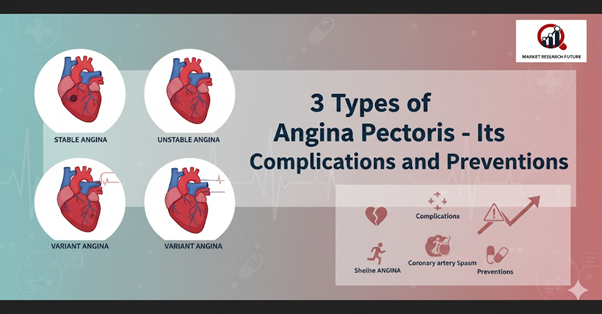
Commonly, Angina is observed in 3 types, and each can be alarming in its own way. If you stay aware of these types, you can easily recognize them with the kind of pain. Let’s check them out:
- Stable Angina: It happens when the heart works harder and creates pain. It is usually triggered by any physical activity.
- Unstable Angina: Most dangerous of all, it can happen anytime without having any physical exertion. This does not cure without any medical treatment.
- Variant Angina: It is a rare kind of angina that usually happens at rest or while sleeping. Often, it might happen due to excessive smoking, injecting drugs into the body, or cocaine.
A few common signs might help you understand if you’re getting a heart attack:-
- Excessive pressure or heavy pain in the middle of the chest, which lasts more than a few minutes.
- Shortness of breath.
- Sweating.
- Extended pain toward the upper abdomen.
Complications and Risk Factors for Angina: Angina or CAD mostly occurs due to an unusual lifestyle, smoking tobacco, high blood pressure, diabetes, and stress. The most dangerous complication of angina can be a heart attack or stroke.
Some family history regarding Angina might also increase these chances. Here are some factors that can cause Angina-
- Consuming Tobacco and Unhealthy Food: Chewing or smoking tobacco causes 70% of heart diseases. It is dangerous even if you get a passive smoke experience, leading to damage to some arteries walls.
- Diabetes or High Blood Pressure: Diabetes and high blood pressure increase the level of angina or heart disease by increasing cholesterol levels.
- Stress: Excessive stress and sleeplessness can cause angina and many heart diseases. Too much stress or anger can raise the blood pressure, which leads to a heart attack and angina.
Preventions: Prevention always arises from within. One can easily restrict the diseases by merely focusing on-
- Quitting smoking.
- Reducing stress level.
- Eating a healthy diet and maintaining an advisable weight.
- Monitoring health conditions like high blood pressure, cholesterol, and diabetes.
Apart from these, the most common way of treating Angina is Aspirin, as it possesses blood-thinning qualities. It also helps dissolve blood clots, which are the main reason behind Angina.
Regional Analysis
The growing healthcare industry in Europe upholds the stakes of the Angina pectoris treatment market in the region. With countries like Italy, the UK, Spain, and so on making favorable policies for the healthcare sector, the scope of the concerned ecosystem is set to expand in the region.
The rising cases of cardiovascular disorders in Canada and the USA are the main reason behind the growth of the angina pectoris treatment market in these countries. North America, therefore, is likely to take a considerable leap in the disease and its treatment.
Owing to the growing geriatric population in countries like China and Japan, the risk of people falling prey to angina pectoris increases drastically. This fuels the demand for angina pectoris treatment in the Asia-Pacific region, pushing the regional market to hold a substantial market share.
Related Report


Leave a Comment