Modular Construction Market Overview
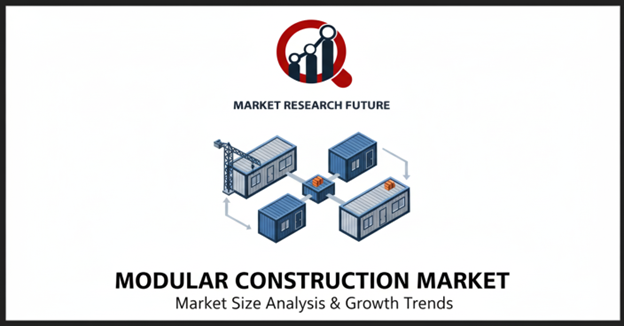
The global modular construction market is experiencing robust growth, driven by the rising demand for faster, cost-efficient, and sustainable construction solutions. Modular construction involves the off-site prefabrication of building modules—fully or partially completed rooms or sections—that are transported and assembled on-site. This method significantly reduces construction time, minimizes material wastage, and enhances quality control.
Compared to traditional methods, modular construction offers numerous advantages, including reduced on-site labour requirements, improved safety, optimized material usage, and minimal disruption to surrounding environments. With increasing emphasis on energy efficiency, green building standards, and urban infrastructure development, the modular approach is fast emerging as a preferred solution for residential, commercial, and industrial projects.
Leading global players such as Komatsu Ltd., ACS Actividades De Construcción Y Servicios S.A., Balfour Beatty PLC, Skanska AB, Larsen & Toubro Limited, and Bouygues Construction are expanding their portfolios to meet rising demand. The Asia-Pacific (APAC) region, in particular, is witnessing rapid adoption due to urbanization, government support, and increased real estate investments.
Market Growth Influencers
1. Growing Need for Quick Construction with Minimal Wastage
Modern urbanization trends and infrastructure demands have fuelled the shift toward modular construction. Prefabricated modules streamline the building process, significantly reducing construction timelines while ensuring precision and efficiency. With labour shortages and high material costs, modular techniques provide an effective solution for developers seeking timely and cost-effective project completion.
2. Supportive Government Regulations & Initiatives
Governments across emerging nations are implementing favourable policies and reforms to promote modular and prefabricated construction.
- In India, initiatives such as the Real Estate (Regulation and Development) Act 2016, affordable housing incentives, and policy amendments have boosted infrastructure growth.
- In China, relaxed housing policies and lower down payment ratios have stimulated the real estate sector, indirectly driving demand for modular construction solutions.
These supportive frameworks not only encourage adoption but also promote sustainable development aligned with national infrastructure goals.
3. Rising Emphasis on Energy Efficiency and Green Building
Modular construction aligns with sustainability objectives, offering energy-efficient features like LED lighting, triple-glazed windows, and geothermal systems. As governments introduce tax benefits and subsidies for green construction, demand for modular solutions continues to rise. The approach also addresses growing concerns over construction and demolition (C&D) waste, which contributes millions of tons to global landfills annually.
4. Expansion of E-commerce and Industrial Infrastructure
The surge in e-commerce across the APAC region has accelerated the need for logistics hubs, warehouses, and pickup stations. Modular construction allows rapid development of such facilities, supporting faster delivery networks and improved operational efficiency for retailers.
5. Adoption by Global Corporations
Prominent organizations like Google, McDonald’s, Yale University, and Major League Soccer’s NY Red Bulls have embraced modular construction for their facilities. This growing corporate adoption underscores the market’s credibility and positions modular solutions as a mainstream construction alternative.
Market Segmentation
By Type:
- Permanent Modular Construction
- Relocatable Modular Construction
By Material:
- Steel
- Wood
- Concrete
- Others
By Application:
- Residential
- Commercial
- Industrial
- Institutional
By Region:
- North America
- Europe
- Asia-Pacific (APAC)
- Middle East & Africa (MEA)
- Latin America
Regional Analysis
The Asia-Pacific region leads the modular construction market, driven by rapid urbanization, government-led infrastructure programs, and cost advantages. Countries such as China, India, and Japan are key contributors due to strong construction demand and supportive policies.
Europe remains a mature market with widespread adoption in countries like Germany, Sweden, and the U.K., supported by green building standards and labour efficiency initiatives.
In North America, modular construction is gaining traction across the U.S. and Canada, propelled by labour shortages, cost constraints, and sustainability goals.
Emerging regions such as the Middle East and Latin America are witnessing steady adoption, backed by infrastructure development and the need for fast-track housing and commercial projects.
Prominent Market Players
Leading companies driving the modular construction industry include:
- Komatsu Ltd.
- ACS Actividades De Construcción Y Servicios S.A.
- Balfour Beatty PLC
- Skanska AB
- Larsen & Toubro Limited
- Kiewit Corporation
- Taisei Corporation
- Bouygues Construction
- Red Sea Housing Services
- System House R & C Co., Ltd.
These players are leveraging R&D investments, technological integration, and geographical expansion to strengthen their market presence and address growing global demand.
Future Trends
The future of modular construction is defined by innovation and sustainability. Trends include:
- Integration of smart technologies for design precision and project management
- Sustainable materials and energy-efficient designs
- Automation and robotics in manufacturing units
- Public-private partnerships in infrastructure projects
- Increased investment in modular housing and healthcare facilities
As urban centres expand, prefabrication and modularization will play a central role in addressing housing shortages, cost pressures, and environmental concerns.
Expansion Strategy
Market leaders are focusing on geographic expansion, mergers & acquisitions, and strategic collaborations to capture new opportunities.
- Balfour Beatty Plc has expanded across Europe, the U.S., and APAC.
- Larsen & Toubro Limited is strengthening its presence in India, the Middle East, and Africa while exploring new markets in emerging economies.
These strategies aim to increase market share, enhance operational efficiency, and build brand leadership.
Conclusion
The global modular construction market is transitioning from an alternative approach to a mainstream construction solution, driven by speed, sustainability, and efficiency. As governments and industries emphasize green building, cost optimization, and rapid infrastructure development, modular construction stands out as a future-ready technology that redefines how buildings are designed and delivered.
With growing investments, supportive policies, and innovative practices, the market is poised for sustained growth—paving the way for a smarter, cleaner, and more efficient construction ecosystem..