Trocars Market (2026 - 2035)

Trocars Market Research Report By Application (Laparoscopic Surgeries, Robotic Surgeries, General Surgery, Gynecological Surgery), By Product Type (Optical Trocars, Bladed Trocars, Trocar Cannulas, Spinal Trocars), By Surgery Type (Diagnostic Surgeries, Therapeutic Surgeries, Preventive Surgeries), By End-user (Hospitals, Ambulatory Surgical Centers, Specialty Clinics), and By Regional (North America, Europe, South America, Asia Pacific, Middle East and Africa) - Growth & Industry Forecast 2025 To 2035
ID: MRFR/MED/5177-HCR 200 Pages Rahul Gotadki, Kinjoll Dey Last Updated: September 15, 2026
Trocars Market
Market Size
Forecast Period2026-2035
CAGR (2026-2035)5.48%
2025 Market SizeUSD 0.89 Billion
2035 Market SizeUSD 1.52 Billion
Key Players
Medtronic plc
Johnson & Johnson
B. Braun Melsungen AG
Teleflex Incorporated
Applied Medical Resources
ConMed Corporation
Opportunities
  • Robotic Trocar-Port Integration
  • Reposable Hybrid Platforms and Sustainability
  • Emerging-Market Laparoscopic Capacity Building

Trocars Market Summary

The Global Trocars Market size was valued at USD 0.89 Billion in 2025, and the market is projected to grow from USD 0.94 Billion in 2026 to USD 1.52 Billion by 2035, registering a CAGR of 5.48% during the forecast period 2026–2035. Growth is anchored in the accelerating global shift from open surgical procedures to minimally invasive techniques — a transition reinforced by payer reimbursement incentives in the United States and the European Commission's 2024 directive encouraging ambulatory surgical adoption across member states [1]. Procedure volumes for laparoscopic cholecystectomy, appendectomy, and bariatric interventions continue to climb, pulling trocar demand upward alongside them.

The technology landscape within the Trocars Market is evolving rapidly. Bladed and pyramidal tips that dominated the previous decade are giving way to bladeless and optical-entry designs that reduce visceral injury risk and deliver faster peritoneal access. Medtronic's 2024 investment of approximately USD 120 million into its optical trocar manufacturing line reflects the capital flowing toward next-generation entry systems [2]. Government mandates in the EU and Japan requiring single-use sharps traceability are simultaneously accelerating demand for disposable and reposable hybrid platforms.

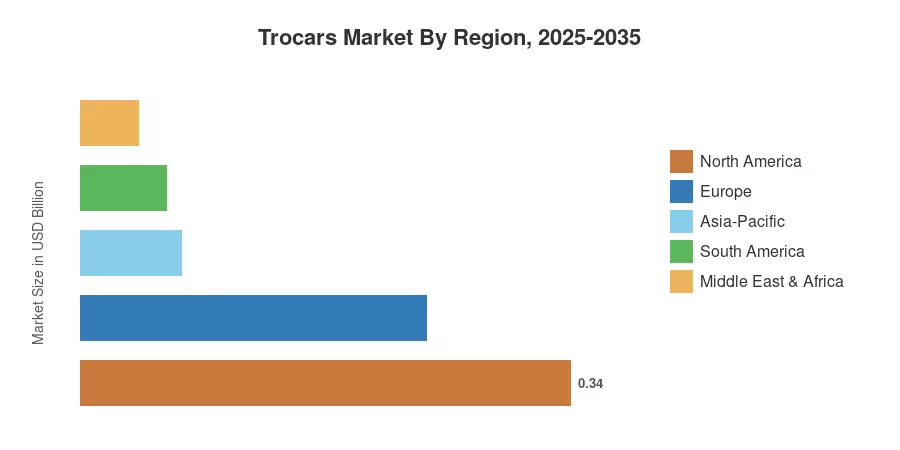
North America commands the largest share of the Trocars Market at roughly 38% of 2025 revenue, driven by high procedural volumes and entrenched ambulatory surgery center (ASC) networks. Asia-Pacific is the fastest-growing region, forecast to expand at a 7.35% CAGR through 2035, as national laparoscopic training programs in India, China, and Southeast Asia dramatically widen the addressable surgeon pool [3]. Europe holds the second-largest share at approximately 27%, supported by centralized procurement frameworks and rising robotic-assisted surgery adoption. The next decade will see the competitive center of gravity tilt eastward as emerging-market procedure volumes scale.


Key Report Takeaways

• By Product Type

  • Disposable trocars accounted for approximately 65.2% of the Trocars Market share in 2025, driven by single-use infection control mandates and bulk ASC purchasing agreements.
  • Reposable/hybrid designs are set to register the fastest growth at a 6.38% CAGR through 2035, as sustainability-focused hospitals adopt reprocessable outer cannulas paired with disposable blades.

• By Tip Design

  • Bladeless trocars led the Trocars Market with an estimated 49.3% revenue share in 2025, reflecting surgeon preference for reduced tissue trauma.
  • Optical/direct-vision tip models are advancing at a 7.84% CAGR through 2035, gaining traction in obese-patient cohorts where blind entry carries elevated perforation risk.

• By Application

  • General and gastrointestinal surgery represented roughly 40.5% of the Trocars Market size in 2025, anchored by high cholecystectomy and hernia repair volumes.
  • Bariatric procedures are expanding at a 7.26% CAGR through 2035, fueled by global obesity prevalence exceeding 890 million adults as of 2024.

• By End User

  • Hospitals commanded approximately 66.2% of the Trocars Market share in 2025, reflecting their dominance in complex multi-port laparoscopic cases.
  • ASCs are growing at a 6.87% CAGR through 2035, propelled by outpatient migration and bundled-payment models.

• By Region

  • North America remained the dominant region in 2025 with roughly 38% of global revenue.
  • Asia-Pacific is forecast to register a 7.35% CAGR, outpacing all other geographies as laparoscopic infrastructure investment accelerates across India and China.


Market Size and Forecast (2021–2035)

Market Research Future's proprietary estimation framework integrates bottom-up procedural volume modeling, device ASP tracking across 42 countries, and top-down cross-validation against publicly reported medical-device revenue. Historical figures draw on company filings and customs-trade databases; forecast values apply a calibrated CAGR with scenario adjustments for regulatory shifts and reimbursement policy changes.
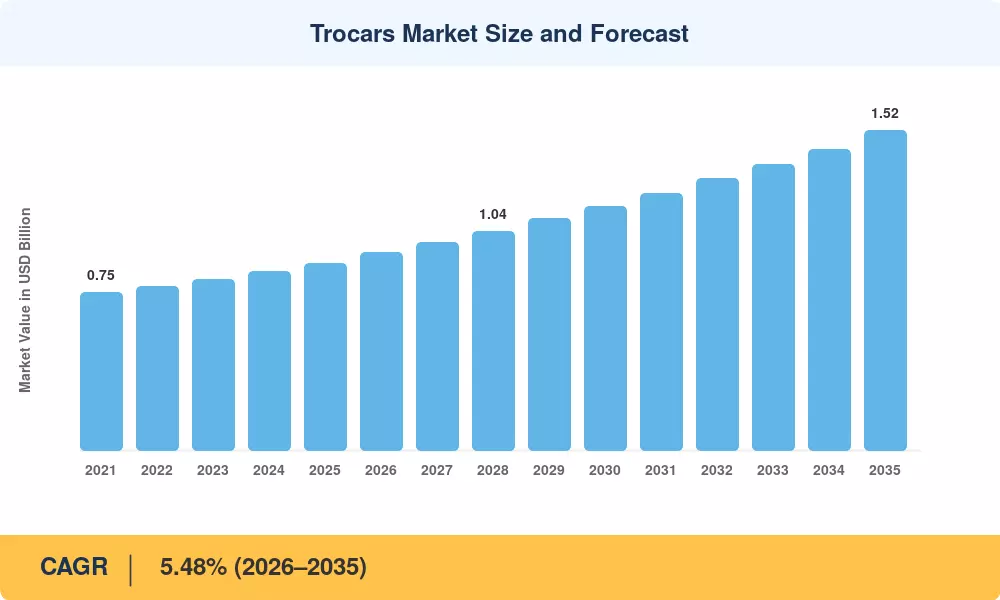
Trocars Market Size and Forecast
Our Impact

Enabled $4.3B Revenue Impact for Fortune 500 and Leading Multinationals

Partnering with 2000+ Global Organizations Each Year

30K+ Citations by Top-Tier Firms in the Industry

Driver Impact Analysis

Driver ~% Impact on CAGR Geographic Relevance Impact Timeline
Rising minimally invasive surgery adoption 22% Global Short-term (≤2 yr)
Ambulatory surgery center expansion 18% North America, Europe Medium-term (2–4 yr)
Optical/bladeless trocar innovation 15% Global Medium-term (2–4 yr)
National laparoscopic training programs 14% Asia-Pacific, South America Long-term (≥4 yr)
Bariatric and metabolic surgery volume growth 12% Global Medium-term (2–4 yr)
Robotic surgery port-access convergence 10% North America, Europe Long-term (≥4 yr)
Single-use device regulation tightening 9% Europe, Japan Short-term (≤2 yr)


Rising Minimally Invasive Surgery Adoption

Open surgery's share of abdominal procedures has dropped below 30% in OECD nations, according to 2024 data from the WHO Global Surgery Initiative [1]. Payer systems in the U.S. and Germany now offer differential reimbursement — CMS's 2025 OPPS rule, for example, raised the ASC payment rate for laparoscopic cholecystectomy by 3.1%, directly incentivizing facilities to stock additional trocar kits. Each percentage-point shift from open to laparoscopic technique generates an estimated USD 8–12 million in incremental trocar demand globally, making this the single most powerful driver for the Trocars Market over the short term.

Ambulatory Surgery Center Expansion

The U.S. ASC count surpassed 6,100 facilities in 2024, growing at roughly 3.5% annually according to the Ambulatory Surgery Center Association [8]. Bulk-purchase agreements between ASC networks and device manufacturers are compressing per-unit trocar prices by 12–18%, but the resulting volume uplift more than compensates. In Europe, France's 2024 ambulatory surgery mandate — requiring 70% of eligible procedures to move outpatient by 2027 — is replicating this dynamic. The Trocars Market benefits directly because every new outpatient laparoscopic bay requires a starter inventory of 20–40 trocar units.

Optical and Bladeless Trocar Innovation

According to published meta-analyses, optical-entry trocars reduce intestinal and vascular damage rates by up to 60% by doing away with blind initial punctures [2]. Next-generation direct-vision tips with integrated LED illumination entered FDA clearance channels in late 2024, and Medtronic's Optiview and Applied Medical's Kii Fios platforms have gained substantial clinical mindshare. The premium pricing of optical versions, which are usually 25–35% more expensive than ordinary bladeless units, increases vendor margins while also reducing hospital expenditures associated with complications. This combined incentive maintains above-average growth in this Trocars Market subsegment.


National Laparoscopic Training Programs in Emerging Markets

India's National Medical Commission mandated laparoscopic competency modules for all surgical residents starting in 2024, a policy expected to train over 15,000 new minimally invasive surgeons annually by 2028 [3]. China's 14th Five-Year Plan allocated CNY 2.8 billion toward county-level hospital surgical upgrades, including laparoscopic tower procurement. These government-backed skill-building initiatives directly expand the addressable surgeon base for the Trocars Market in Asia-Pacific, converting latent demand into active purchasing cycles within three to five years.


Restraints Impact Analysis

Impact percentages below are directional and represent estimated drag on the growth trajectory; they are not directly subtracted from the CAGR [7].

Restraint ~% Drag on CAGR Geographic Relevance Impact Timeline
Reprocessed device competition –8% North America Short-term (≤2 yr)
Price erosion from GPO contracts –7% North America, Europe Medium-term (2–4 yr)
Limited laparoscopic infrastructure in LMICs –6% Africa, South Asia Long-term (≥4 yr)
Regulatory complexity for reposable designs –5% Europe, Japan Medium-term (2–4 yr)
Single-port/reduced-port surgery reducing unit counts –4% Global Long-term (≥4 yr)


Reprocessed Device Competition

Trocars make up an increasing portion of the 4.5 million single-use devices that are reprocessed annually in the United States by third-party reprocessors like Stryker Sustainability Solutions [11]. Reprocessors can siphon off unit volume from the disposable market by undercutting OEM pricing by 40–50% using the FDA's 510(k) pathway for reprocessed Class II devices. OEMs contend that reprocessing jeopardizes seal integrity and optical clarity, but community hospitals on a tight budget find the cost argument compelling, posing quantifiable challenges to the disposable part of the Trocars Market.


Price Erosion from GPO Contracts

Group purchasing organizations (GPOs) in the United States negotiate trocar prices 20–30% below list for their member hospitals, and European centralized procurement tenders exert similar downward pressure [12]. As GPO consolidation intensifies — the top five U.S. GPOs now cover over 80% of acute-care beds — OEMs face margin compression that limits R&D reinvestment. This pricing dynamic particularly affects mid-tier players in the Trocars Market who lack the portfolio breadth to offset trocar-specific discounts with cross-selling leverage.

Limited Laparoscopic Infrastructure in Low- and Middle-Income Countries

Despite accounting for over 70% of the global surgical burden, low- and middle-income countries perform fewer than 10% of laparoscopic procedures worldwide [13]. The absence of reliable CO₂ insufflation systems, laparoscopic towers, and trained perioperative staff in rural sub-Saharan Africa and South Asia constrains trocar adoption regardless of device pricing. Until infrastructure investment catches up — a process measured in decades rather than years — large portions of the global population remain outside the addressable market.


Trocars Market Opportunities

Robotic Trocar-Port Integration

The global installed base of surgical robots surpassed 10,000 units in 2024, and each robotic platform requires proprietary or compatible trocar ports [10]. As robotic surgery expands beyond urology into general, gynecological, and thoracic indications, the demand for robot-compatible trocar systems will rise in lockstep. Vendors that co-develop ports with robotic OEMs — or secure platform certification — stand to capture a premium-priced, fast-growing niche within the Trocars Market.

Reposable Hybrid Platforms and Sustainability

According to new medical waste rules, hospitals in the EU and Australasia must cut surgical waste by 25% by 2030 [6]. With their reusable outer cannula and disposable inner blade, disposable trocars present an appealing compromise between environmental responsibility and infection prevention. Although there is still a lot of white space in the Asia-Pacific and South American regions, where sustainability regulations are still in their infancy, the reposable segment's above-average CAGR indicates that this opportunity is already turning into revenue.


Emerging-Market Laparoscopic Capacity Building

India, Brazil, and Indonesia collectively represent over 2.5 billion people with rising surgical access but laparoscopic penetration rates below 15% [3]. Government-funded surgical training academies and hospital modernization programs present a long-runway opportunity for the Trocars Market, especially for vendors willing to offer tiered pricing, local manufacturing, and training partnerships.

Data-Enabled Trocar Systems and Procedure Analytics

Smart trocars embedded with pressure sensors and insufflation monitors are entering clinical trials, enabling real-time intra-abdominal pressure tracking that improves patient safety [15]. The data streams generated by these devices open a new business model: procedure analytics subscriptions sold to hospital quality-improvement departments. While still pre-commercial at scale, this convergence of device hardware and SaaS revenue could redefine margin structures for the Trocars Market over the 2030–2035 window.

Single-Incision and Reduced-Port Platforms

Single-incision laparoscopic surgery (SILS) platforms require specialized multi-channel trocar ports that command ASPs two to three times higher than conventional trocars . Cosmetic demand among younger patient cohorts and clinical evidence supporting reduced post-operative pain are expanding SILS adoption in cholecystectomy and appendectomy. This niche offers vendors an avenue to grow revenue per procedure even as conventional multi-port unit counts face downward pressure.


Trocars Market Future Outlook

AI-Guided Surgical Planning and Trocar Placement Optimization

Artificial intelligence platforms capable of analyzing pre-operative CT imaging to recommend optimal trocar placement coordinates are advancing from research prototypes toward clinical deployment [15]. By 2030, AI-assisted port-placement planning could become standard in complex multi-port procedures, reducing operative time by an estimated 8–12 minutes per case. For the Trocars Market, this development reinforces the value proposition of premium optical-entry systems that interface with AI planning software, creating a technology lock-in opportunity for vendors that invest in digital ecosystem integration.

Sustainability and Circular-Economy Mandates

The European Commission's proposed Medical Device Sustainability Regulation, expected to take effect by 2028, will require manufacturers to disclose lifecycle carbon footprints for single-use surgical instruments [6]. This regulatory trajectory accelerates the shift toward reposable trocar designs and closed-loop reprocessing programs. Vendors that proactively develop take-back and re-sterilization logistics will gain preferential positioning in EU tenders and potentially influence procurement norms in Asia-Pacific markets that tend to follow European regulatory leads.

Single-Port and Natural-Orifice Platforms

Single-incision and natural-orifice transluminal endoscopic surgery (NOTES) platforms are projected to reach clinical maturity for a broader range of abdominal indications by the early 2030s . While these platforms reduce the total number of trocars per procedure, they demand highly engineered multi-channel access ports with ASPs significantly above conventional models. The net revenue effect on the Trocars Market may therefore be neutral to positive, as value per procedure rises even if unit counts per case decline.

Emerging-Market Infrastructure Supercycle

Through 2032, the World Bank's 2024 Surgical Capacity Initiative dedicated USD 1.2 billion to the development of surgical infrastructure in 35 low- and middle-income nations [13]. These investments will unleash a tsunami of demand for first-time trocars in markets that presently contribute very little to global sales once they become operational laparoscopic suites. This is a structural tailwind that will support above-trend growth rates in South America, Africa, and Asia-Pacific for the Trocars Market well into the mid-2030s.


Regional Market Share Analysis

Region Key Metric Primary Investment Themes
North America ~38% revenue share (2025) ASC network expansion; robotic port integration
Europe ~27% revenue share (2025) Centralized procurement; sustainability mandates
Asia-Pacific 7.35% CAGR (2026–2035) Government training programs; hospital modernization
South America USD 0.06 Billion (2025) Public-hospital laparoscopic upgrades
Middle East & Africa 4.82% CAGR (2026–2035) PPP-funded surgical centers; medical tourism
Total USD 0.89 Billion (2025) —

The Trocars Market exhibits distinct regional dynamics shaped by healthcare infrastructure maturity, reimbursement generosity, and surgical training pipeline depth.


North America

Country Key Metric Key Driver
United States ~78% of regional share ASC proliferation; GPO procurement scale
Canada 5.12% CAGR Provincial MIS adoption targets
Mexico USD 0.02 Billion (2025) Private-hospital chain expansion


North America's dominance in the Trocars Market stems from the highest per-capita laparoscopic procedure rate globally — over 15 million minimally invasive abdominal cases annually in the U.S. alone [8]. CMS reimbursement reforms and commercial payer incentives continue to migrate complex cases from inpatient to ASC settings, amplifying trocar consumption per facility. Canada's provincial health authorities have set explicit targets to raise laparoscopic penetration in rural hospitals to 60% by 2030, while Mexico's private hospital chains are importing premium optical trocar platforms as part of medical-tourism service upgrades.

Europe

Country Key Metric Key Driver
Germany ~24% of regional share DRG incentives for ambulatory surgery
United Kingdom 5.38% CAGR NHS efficiency programs
France USD 0.05 Billion (2025) Ambulatory surgery mandate
Italy ~12% of regional share Robotic surgery center expansion
Spain 4.95% CAGR Regional health-system modernization
Nordic Countries USD 0.03 Billion (2025) Sustainability-driven reposable adoption
Russia ~5% of regional share Import substitution policies
Rest of Europe 4.60% CAGR Variable infrastructure investment


Europe's Trocars Market benefits from highly organized procurement systems and clinical protocol standardization. Germany's DRG-based reimbursement explicitly rewards ambulatory laparoscopic procedures, sustaining robust trocar demand across its 1,900+ acute-care hospitals [16]. The UK's NHS Getting It Right First Time (GIRFT) program has identified laparoscopic conversion rates as a quality metric, pressuring surgical teams to default to minimally invasive approaches. France's legislative mandate requiring 70% ambulatory eligibility by 2027 is creating a procurement surge for disposable trocar kits in newly certified outpatient centers.

Asia-Pacific

Country Key Metric Key Driver
China ~34% of regional share 14th Five-Year Plan hospital upgrades
India 8.15% CAGR National laparoscopic training mandate
Japan USD 0.04 Billion (2025) Aging population; robotic surgery growth
South Korea ~11% of regional share High-tech surgical adoption culture
ASEAN 7.62% CAGR Medical-tourism infrastructure investment
Rest of Asia-Pacific USD 0.01 Billion (2025) Early-stage infrastructure development


Asia-Pacific represents the fastest-growing frontier for the Trocars Market. China's county-hospital surgical upgrade campaign is equipping over 2,000 facilities with laparoscopic towers annually, directly generating first-time trocar orders at scale [3]. India's combination of a massive underserved surgical population and newly mandated laparoscopic residency training creates a multi-decade growth runway. Japan's aging demographics and insurer preference for shorter hospital stays incentivize laparoscopic conversion in geriatric colorectal and hernia procedures, while South Korea's reputation as a medical-technology early adopter ensures rapid uptake of premium optical and robotic-compatible platforms.

South America

Country Key Metric Key Driver
Brazil ~58% of regional share SUS public-health system laparoscopic investment
Argentina 5.05% CAGR Private-sector MIS facility growth
Rest of South America USD 0.01 Billion (2025) Nascent infrastructure development


Brazil's Unified Health System (SUS) has expanded coverage for laparoscopic cholecystectomy and bariatric surgery, directly driving trocar procurement across its network of 6,700+ public hospitals [17]. Argentina's private healthcare sector is investing in minimally invasive surgical suites to attract medical tourists from neighboring countries. While the region's overall contribution to the Trocars Market remains modest, growth rates exceed those of mature markets as foundational infrastructure gaps close.

Middle East & Africa

Country Key Metric Key Driver
Saudi Arabia ~30% of regional share Vision 2030 healthcare infrastructure build-out
UAE 5.55% CAGR Medical-tourism-driven premium device adoption
South Africa USD 0.01 Billion (2025) Private hospital chain expansion
Egypt ~10% of regional share Government hospital modernization
Rest of MEA 4.10% CAGR NGO-supported surgical capacity programs


Saudi Arabia's Vision 2030 healthcare investment — allocating over USD 65 billion to new hospital construction and medical-city development — is creating greenfield demand for the Trocars Market in the Gulf region [18]. The UAE's positioning as a medical-tourism hub drives premium device procurement, as internationally accredited hospitals stock the latest optical and bladeless trocar platforms to compete for patient inflows. Sub-Saharan Africa remains constrained by infrastructure deficits, though NGO-led surgical outreach programs are beginning to introduce laparoscopic techniques in select referral centers.


Trocars Market By Region, 2025-2035

Trocars Market Segmentation

By Product Type

Segment Key Metric Primary Demand Driver
Disposable Trocars ~65.2% share (2025) Infection control mandates; bulk ASC purchasing
Reusable Trocars USD 0.15 Billion (2025) Cost efficiency in high-volume academic centers
Reposable/Hybrid Trocars 6.38% CAGR (2026–2035) Sustainability regulations; waste reduction targets


Disposable trocars dominate the Trocars Market because single-use protocols eliminate cross-contamination risk and simplify sterile processing workflows. Large ASC networks in North America negotiate disposable trocar contracts at volumes exceeding 50,000 units annually, achieving per-unit costs that narrow the gap with reusable alternatives. Reposable hybrid platforms represent the most dynamic growth vector: hospitals in Northern Europe and Australasia are piloting programs where the outer cannula is autoclaved for up to 50 cycles while the inner obturator is replaced after each use, cutting per-procedure device costs by roughly 35% while reducing sharps waste by over 60%.

By Tip Design

Segment Key Metric Primary Demand Driver
Bladeless Trocars ~49.3% share (2025) Lower tissue trauma; reduced port-site hernia
Bladed Trocars USD 0.18 Billion (2025) Legacy preference; lowest price point
Optical/Direct-Vision Trocars 7.84% CAGR (2026–2035) Safety in high-BMI patients; complication reduction


Bladeless trocars separate tissue layers by radial dilation rather than cutting, significantly reducing the risk of port-site bleeding and post-operative hernia formation. Their dominance in the Trocars Market reflects a clinical consensus that has shifted purchasing away from traditional sharp-tip models over the past decade. Optical/direct-vision trocars represent the fastest-growing tip category: these devices incorporate a built-in lens that allows surgeons to visualize each tissue plane during entry, effectively eliminating blind puncture. Clinical adoption is strongest in bariatric surgery, where thick abdominal walls make blind entry particularly hazardous, and in teaching hospitals that value the pedagogical clarity of visualized entry.

By Application

Segment Key Metric Primary Demand Driver
General & GI Surgery ~40.5% share (2025) High-volume cholecystectomy; hernia repair
Gynecological Surgery USD 0.19 Billion (2025) Hysterectomy and endometriosis laparoscopy
Urological Surgery 5.82% CAGR (2026–2035) Robotic prostatectomy and nephrectomy growth
Bariatric Surgery 7.26% CAGR (2026–2035) Global obesity epidemic; payer coverage expansion
Other Applications USD 0.07 Billion (2025) Thoracoscopic and pediatric procedures


General and gastrointestinal surgery's leading position in the Trocars Market is a function of sheer volume: laparoscopic cholecystectomy alone accounts for over 1.2 million procedures annually in the U.S. [8]. Bariatric surgery represents the most compelling growth story, propelled by rising obesity prevalence and expanding insurance coverage — over 40 U.S. states now mandate bariatric surgery coverage under commercial plans, and Medicare expanded its eligibility criteria in 2024 [9]. Each bariatric case typically requires four to six trocar ports, often in larger diameters, generating above-average revenue per procedure.

By End User

Segment Key Metric Primary Demand Driver
Hospitals ~66.2% share (2025) Complex multi-port cases; teaching mandates
Ambulatory Surgical Centers 6.87% CAGR (2026–2035) Outpatient migration; bundled-payment incentives
Specialty Clinics USD 0.04 Billion (2025) Focused gynecological and urological practices


Hospitals remain the volume anchor of the Trocars Market because they handle the most complex laparoscopic cases — multi-quadrant colorectal resections, robotic prostatectomies, and pediatric procedures that require specialized trocar sizes. ASCs are the fastest-growing end-user segment: the migration of straightforward cholecystectomy, appendectomy, and inguinal hernia repair to outpatient settings increases per-facility trocar consumption as each new ASC builds its surgical inventory from scratch. Specialty clinics focused on gynecology and urology contribute a smaller but stable share, typically procuring premium-priced optical trocars for niche elective procedures.


Competitive Benchmarking

The Trocars Market exhibits moderate concentration, with an estimated top-five share of 55–65% and a Herfindahl-Hirschman Index (HHI) in the 1,200–1,500 range. Two diversified med-tech conglomerates — Medtronic and Johnson & Johnson (Ethicon) — anchor the market through extensive global distribution and GPO relationships, while a tier of specialized surgical-access companies competes aggressively on innovation, pricing, and niche clinical applications [19].

Company Est. Revenue Share Range Key Offerings for Trocars Market Strategic Positioning
Medtronic plc ~18–22% Versaport, Optiview optical trocars Full-portfolio MIS leader; robotic integration
Johnson & Johnson (Ethicon) ~15–19% Endopath Xcel bladeless trocars Broad surgical ecosystem; GPO dominance
B. Braun Melsungen AG ~7–10% Aesculap trocar systems European procurement strength; reusable focus
Teleflex Incorporated ~5–8% Weck trocars and access ports Specialty access devices; ASC channel
Applied Medical Resources ~5–7% Kii Fios optical trocars Innovation-led; direct-to-hospital model
ConMed Corporation ~4–6% AirSeal system-compatible ports Insufflation-integrated access platform
Karl Storz SE & Co. KG ~3–5% Endoscopic trocar systems Visualization ecosystem synergy
Genicon Inc. ~2–4% Single-use and reusable trocars Value-priced U.S. challenger
Olympus Corporation ~2–3% Endoscopic surgery access ports Scope-trocar integration strategy
LaproSurge ~1–2% Cost-effective disposable trocars Emerging-market price leadership


Recent News & Developments


  • Johnson & Johnson / Ethicon (June 2024): Expanded its Endopath Xcel production capacity in Cincinnati with a USD 85 million facility upgrade to address growing ASC demand in North America [19].


  • European Commission (January 2024): Published draft sustainability guidelines for single-use surgical instruments, signaling future lifecycle-assessment requirements that will affect disposable trocar manufacturers operating in EU markets [6].
  • B. Braun (November 2023): Announced a strategic partnership with a leading Asian distributor to expand reusable trocar system availability across India, Indonesia, and Vietnam [21].
  • ConMed (August 2023): Acquired a minority stake in a smart-sensor start-up developing pressure-monitoring trocar sleeves, advancing its insufflation-integrated access platform strategy [15].
  • Teleflex (May 2023): Signed a three-year exclusive supply agreement with a top-five U.S. ASC network for its Weck trocar portfolio, securing an estimated 12,000-unit annual volume commitment [12].


Trocars Market Report Scope

Parameter Detail
Market Scope Global Trocars Market — devices used for peritoneal and thoracic access in minimally invasive surgery
Study Period 2021–2035
CAGR (Forecast Period) 5.48% (2026–2035)
Market Size — Base Year (2025) USD 0.89 Billion
Market Size — Forecast Endpoint (2035) USD 1.52 Billion
Fastest Growing Segment Optical/Direct-Vision Trocars (by tip design); ASCs (by end user); Asia-Pacific (by geography)
Companies Profiled 10 (Medtronic, J&J/Ethicon, B. Braun, Teleflex, Applied Medical, ConMed, Karl Storz, Genicon, Olympus, LaproSurge)
Valuation Currency USD Billion

FAQs

How do hospital procurement committees typically evaluate trocar vendors during a competitive bid?
Committees score bids on clinical safety data, per-unit pricing, GPO-tier eligibility, and vendor training support. Bundled portfolio offers that include insufflation tubing and instrument access often outweigh standalone trocar pricing [12].
What sterilization considerations should ASCs weigh when choosing between disposable and reusable trocars?
Reusable trocars require validated autoclave cycles and documented inspection protocols that add processing cost. ASCs with limited sterile-processing capacity often find disposable platforms more operationally efficient despite higher per-unit prices [11].
How does trocar diameter selection affect clinical outcomes in pediatric laparoscopy?
Pediatric cases demand 3 mm and 5 mm trocars to minimize fascial defects in thin abdominal walls. Smaller-diameter ports reduce post-operative hernia incidence and improve cosmetic outcomes compared with standard 12 mm models .
What intellectual property trends are shaping trocar innovation pipelines?
Patent filings have shifted toward seal-valve mechanisms and integrated sensor technologies. Over 320 trocar-related patents were filed globally in 2023, with optical-entry and pressure-sensing designs comprising 40% of new applications [23].
How do reimbursement codes differ for trocar-intensive robotic procedures versus conventional laparoscopy?
Robotic procedure codes in the U.S. (e.g., CPT 15xxx series) bundle trocar access into facility fees at higher rates. This reimbursement premium incentivizes hospitals to invest in robot-compatible trocar ports [10].
What role do clinical key opinion leaders play in trocar product adoption cycles?
KOLs influence formulary decisions through published safety data and hands-on training workshops. A single KOL endorsement at a major surgical society meeting can shift institutional purchasing within two quarters [2].
How are counterfeit and gray-market trocars affecting quality assurance in emerging markets?
Unregulated trocar imports in parts of Southeast Asia and Africa carry elevated failure risks, including seal leakage and tip fracture. WHO estimates that 8–12% of surgical devices in LMICs are substandard or falsified [1].    
What is the current size of the trocars market?
The trocars market reached USD 0.89 billion in 2025 and is projected to reach USD 1.52 billion by 2035.
What is the CAGR of the trocars market?
The trocars market is projected to grow at a CAGR of 5.48% during the forecast period 2026–2035.
Which region leads the trocars market?
North America holds the largest share at 38.0%, while Asia-Pacific is the fastest-growing region at 7.35% CAGR.
Author
Author Author Profile Rahul Gotadki LinkedIn Research Manager
He holds an experience of about 9+ years in Market Research and Business Consulting, working under the spectrum of Life Sciences and Healthcare domains. Rahul conceptualizes and implements a scalable business strategy and provides strategic leadership to the clients. His expertise lies in market estimation, competitive intelligence, pipeline analysis, customer assessment, etc.
Co-Author Co-Author Profile Kinjoll Dey LinkedIn Senior Research Analyst
He is an extremely curious individual currently working in Healthcare and Medical Devices Domain. Kinjoll is comfortably versed in data centric research backed by healthcare educational background. He leverages extensive data mining and analytics tools such as Primary and Secondary Research, Statistical Analysis, Machine Learning, Data Modelling. His key role also involves Technical Sales Support, Client Interaction and Project management within the Healthcare team. Lastly, he showcases extensive affinity towards learning new skills and remain fascinated in implementing them.

Research Approach


Secondary Research

The secondary research process involved comprehensive analysis of regulatory databases, peer-reviewed surgical journals, medical device publications, and authoritative health technology organizations. Key sources included the US Food and Drug Administration (FDA) Center for Devices and Radiological Health, European Medicines Agency (EMA), Medicines and Healthcare products Regulatory Agency (MHRA), International Organization for Standardization (ISO) for medical device standards (ISO 13485), Society of American Gastrointestinal and Endoscopic Surgeons (SAGES), American College of Surgeons (ACS), International Society for Gynecologic Endoscopy (ISGE), Society of Laparoendoscopic Surgeons (SLS), National Institutes of Health (NIH), National Center for Biotechnology Information (NCBI/PubMed), Agency for Healthcare Research and Quality (AHRQ), World Health Organization (WHO) Global Health Observatory, OECD Health Statistics, and national health ministry databases from key markets (US CDC, EU Eurostat, Japan Ministry of Health Labour and Welfare, China NMPA).

These sources were employed to gather data on surgical procedure volumes (laparoscopic, robotic, open conversions), regulatory approval data (510(k) clearances, PMA approvals), clinical safety studies (complication rates, port-site metastasis data), hospital procurement trends, and competitive landscape analysis for optical trocars, bladed trocars, cannula systems, and robotic surgery access ports.


Primary Research

Qualitative and quantitative insights were obtained by interviewing supply-side and demand-side stakeholders during the primary research process. CEOs, VPs of Surgical Innovation, regulatory affairs chiefs, R&D directors, and commercial directors from trocar manufacturers, laparoscopic instrument OEMs, and robotic surgery platform developers comprised supply-side sources. Board-certified general surgeons, gynecologic surgeons, bariatric surgeons, minimally invasive surgery (MIS) specialists, OR directors, procurement managers from hospitals and health systems, and supply chain leads from ambulatory surgical centers (ASCs) and specialty clinics comprised of demand-side sources. Market segmentation was validated across laparoscopic and robotic applications, product pipeline timelines for next-generation bladeless and optical visualization trocars were confirmed, and insights on surgical adoption patterns, pricing strategies (disposable vs. reusable preferences), GPO contracting dynamics, and reimbursement frameworks for minimally invasive procedures were gathered, all through primary research.

Primary Respondent Breakdown:

By Designation: C-level Primaries (32%), Director Level (31%), Others (37%)

By Region: North America (38%), Europe (25%), Asia-Pacific (28%), Rest of World (9%)


Market Size Estimation

Revenue mapping, unit economics modeling, and surgical procedure volume analysis were implemented to determine global market valuation. The methodology comprised the following:

Identification of over 50 significant manufacturers in North America, Europe, Asia-Pacific, and Latin America who specialize in access technologies

Product mapping across robotic surgery access systems, bladed trocars, trocar cannulas, spinal trocars, and optical trocars

Examination of the annual revenues that have been reported and modeled for the trocar and surgical access portfolios

Manufacturers that account for 75-80% of the global market share in 2024 are included in the coverage.

Derive segment-specific valuations for disposable vs. reusable trocars and application-specific market sizing by extrapolating using bottom-up (procedure volume × ASP by country/region across laparoscopic, robotic, and open surgery categories) and top-down (manufacturer revenue validation, GPO contract value analysis) approaches.

Download Free Sample

Kindly complete the form below to receive a free sample of this Report

Download PDF ×

We do not share your information with anyone. However, we may send you emails based on your report interest from time to time. You may contact us at any time to opt-out.

















