Request Free Sample ×

Kindly complete the form below to receive a free sample of this Report

* Please use a valid business email

Leading companies partner with us for data-driven Insights

clients tt-cursor
Hero Background

Tofu Market

ID: MRFR/FnB/9064-HCR
128 Pages
Snehal Singh
April 2026

Tofu Market Size, Share, Industry Trend & Analysis Research Report Information By Type (Organic and Conventional), By Distribution Channel (Food Retail and Food Service), And By Region (North America, Europe, Asia-Pacific, And Rest Of The World) – Forecast Till 2035

Share:
Download PDF ×

We do not share your information with anyone. However, we may send you emails based on your report interest from time to time. You may contact us at any time to opt-out.

Tofu Market Infographic
Purchase Options

Tofu Market Summary

The global Tofu Market was valued at USD 3.12 billion in 2024 and is forecast to grow from USD 3.3 billion in 2025 to USD 4.9 billion by 2035, registering a CAGR of 4.2% over the forecast period (2025–2035). Growth is powered by accelerating adoption of plant-based diets, rising health consciousness, and growing demand for sustainable protein alternatives. North America remains the largest regional market, while Asia-Pacific is the fastest-growing region. By product type, the organic tofu segment leads in revenue, while conventional tofu is expanding rapidly due to wider mainstream appeal.

Key Market Trends & Highlights

The Tofu Market is experiencing robust growth driven by health trends and sustainability awareness.

  • Health consciousness continues to drive demand for tofu, particularly in North America, where it remains the largest market.
  • Sustainability awareness is propelling the growth of the tofu market in the Asia-Pacific region, which is currently the fastest-growing area.
  • The organic segment leads in market size, while the conventional segment is witnessing rapid growth due to increasing consumer interest.
  • Rising plant-based diet adoption and culinary versatility are key drivers fueling the expansion of tofu in both food retail and food service segments.

Market Size & Forecast

2024 Market Size 3.12 (USD Billion)
2035 Market Size 4.9 (USD Billion)
CAGR (2025 - 2035) 4.2%

Major Players

Mori-Nu (JP), Hodo Foods (US), Nasoya (US), TofuYa (US), House Foods (JP), Vegan Gourmet (CA), Pulmuone (KR), Sunrise Soya Foods (CA)

Our Impact
Enabled $4.3B Revenue Impact for Fortune 500 and Leading Multinationals
Partnering with 2000+ Global Organizations Each Year
30K+ Citations by Top-Tier Firms in the Industry

Tofu Market Trends

The Tofu Market is currently experiencing a notable transformation, driven by evolving consumer preferences and an increasing awareness of health and sustainability across the tofu market. As individuals become more conscious of their dietary choices, the demand for plant-based proteins, particularly tofu, appears to be on the rise. This shift reflects broader consumer behavior trends across the asian market tofu segment as well as global markets. The versatility of tofu in various culinary applications further enhances its appeal, making it a staple in both vegetarian and omnivorous diets. Additionally, the growing interest in Asian cuisines, including dishes like fried tofu asian market offerings and mala market mapo tofu, contributes to its expanding popularity across diverse demographics.

Moreover, the Tofu Market is likely to witness innovations in product offerings, including flavored and ready-to-eat varieties, which may cater to busy lifestyles. Retail expansion through channels such as supermarkets and specialty stores including fresh market tofu and market basket tofu availability also enhances accessibility. As the market continues to evolve, it is essential to monitor these trends closely, as they may shape the future landscape of the tofu market and influence purchasing behaviors significantly.

Plant-Based & Flexitarian Diet Adoption

The shift toward plant-forward eating is the biggest growth engine for tofu market. Consumers aged 18–34 are adopting plant-based diets at twice the rate of older generations, expanding tofu's audience far beyond traditional vegan and vegetarian segments. This trend is projected to sustain a 9.01% CAGR through 2035, as tofu transitions from a niche health food into a mainstream protein staple across households globally.

Product Innovation: Ready-to-Eat & Flavored Variants

Convenience is reshaping the category. Brands are launching pre-marinated, pre-cubed, and flavor-infused tofu (teriyaki, barbecue, chili) in resealable, extended shelf-life packaging. Processed tofu products — including tofu sausages, smoked tofu, and tofu burgers — already account for 72.9% of the global tofu market share in 2024, reflecting a clear consumer preference for meal-ready formats over plain blocks.

Fortified & Functional Tofu Fastest-Growing Segment

Manufacturers are enriching tofu with calcium, vitamin D, iron, and omega-3 fatty acids to tap into the functional food and sports nutrition market. Fortified tofu is forecast to grow at a CAGR of 13.75% through 2031 — the fastest of any tofu sub-segment. This positions tofu directly alongside pea protein and whey in the high-value performance nutrition category, appealing to athletes and health-focused consumers alike.

Foodservice Expansion & Restaurant Normalization

Tofu is moving from the health food aisle to mainstream restaurant menus. Datassential reported an 8% year-over-year rise in plant-based menu items in 2024, with tofu leading due to its low cost and culinary versatility. The on-trade foodservice channel is recovering at a CAGR of 13.84% through 2031, with QSRs, fast-casual, and fine-dining formats integrating tofu into breakfast items, vegan burgers, salads, and international cuisine.

Sustainability & Clean-Label Certification Driving Loyalty

Environmental awareness and ingredient transparency are becoming decisive purchase triggers. Tofu's significantly lower carbon, water, and land footprint versus animal protein aligns with growing eco-conscious consumer behavior. Simultaneously, demand for organic, non-GMO, and clean-label tofu is rising sharply — the Organic Trade Association reported USD 71.6 billion in total organic food sales in 2024. Brands that communicate sustainability credentials and certified sourcing are building measurable competitive advantage and stronger consumer loyalty.

Tofu Market Drivers

Rising Plant-Based Diet Adoption

The increasing adoption of plant-based diets is a pivotal driver for the Tofu Market. As consumers become more health-conscious, they are gravitating towards alternatives to animal products. This shift is evidenced by a reported 27% increase in plant-based food sales over the past year. Tofu Market, being a versatile and protein-rich option, is gaining traction among vegetarians and flexitarians alike. The Tofu Market is likely to benefit from this trend, as more individuals seek to incorporate tofu into their meals, whether in stir-fries, salads, or smoothies. The growing awareness of the health benefits associated with tofu, such as lower cholesterol levels and improved heart health, further propels its demand. Consequently, the Tofu Market is positioned to expand as it aligns with the dietary preferences of a significant portion of the population.

Culinary Versatility and Innovation

Culinary versatility is a significant driver for the Tofu Market, as chefs and home cooks alike explore innovative ways to incorporate tofu into diverse cuisines. Tofu Market's ability to absorb flavors and its adaptability in various cooking methods, such as grilling, frying, and baking, make it a favored ingredient. The rise of fusion cuisine has led to creative tofu dishes that appeal to a broader audience. Furthermore, the introduction of new tofu products, such as flavored or pre-marinated options, is enhancing its appeal. Market data suggests that the introduction of innovative tofu products has contributed to a 15% increase in sales within the Tofu Market. As culinary trends continue to evolve, the demand for tofu is likely to grow, driven by its ability to meet the needs of adventurous eaters and health-conscious consumers.

Nutritional Awareness and Education

Nutritional awareness is a crucial driver for the Tofu Market, as consumers become more informed about the health benefits of incorporating tofu into their diets. Tofu Market is recognized for its high protein content, low calorie count, and rich source of essential amino acids. Educational campaigns and health initiatives are increasingly highlighting the advantages of plant-based proteins, which may lead to a greater acceptance of tofu among health-conscious individuals. Recent surveys indicate that nearly 70% of consumers are actively seeking healthier food options, which positions tofu as an attractive choice. As nutritional education continues to evolve, the Tofu Market is likely to see a rise in demand, driven by consumers' desire to make informed dietary choices that promote overall well-being.

Environmental Sustainability Initiatives

The Tofu Market is experiencing a surge in demand due to heightened awareness of environmental sustainability. As consumers become increasingly concerned about the ecological impact of their food choices, plant-based proteins like tofu are perceived as more sustainable alternatives to meat. The production of tofu generally requires fewer resources, such as water and land, compared to animal farming. Recent studies indicate that plant-based diets can reduce greenhouse gas emissions by up to 50%. This growing emphasis on sustainability is prompting food manufacturers to innovate and promote tofu-based products, thereby expanding the Tofu Market. Additionally, initiatives aimed at reducing carbon footprints are likely to encourage consumers to choose tofu over traditional protein sources, further solidifying its role in sustainable eating practices.

Increased Availability in Retail Channels

The Tofu Market is benefiting from increased availability in various retail channels, including supermarkets, health food stores, and online platforms. As consumer demand for plant-based products rises, retailers are expanding their offerings to include a wider range of tofu products. This trend is supported by data indicating that over 60% of consumers now prefer shopping for plant-based foods in mainstream grocery stores. The enhanced accessibility of tofu not only caters to existing consumers but also attracts new customers who may be exploring plant-based diets. Additionally, the rise of e-commerce has made it easier for consumers to purchase tofu products from the comfort of their homes. This increased availability is likely to drive sales and growth within the Tofu Market, as more consumers are exposed to the benefits and versatility of tofu.

Market Segment Insights

By Type: Organic (Largest) vs. Conventional (Fastest-Growing)

In the Tofu Market, the segment values of Organic and Conventional represent distinct consumer preferences. Organic tofu holds the largest market share, appealing to health-conscious consumers who prioritize natural ingredients and sustainable farming practices. In contrast, Conventional tofu caters to a broader audience due to its accessibility and lower price point, contributing to its growing share in the market. Growth trends indicate a rising demand for Organic tofu as consumers become increasingly aware of the health benefits associated with organic products. Conversely, the Conventional segment is experiencing a robust growth rate, driven by competitive pricing and an increase in diverse recipes utilizing tofu, making it a versatile ingredient in various cuisines. The market dynamics suggest a division where both segments can thrive, although the focus on health and sustainability is aiding Organic tofu in retaining its leading position.

Tofu Type: Organic (Dominant) vs. Conventional (Emerging)

Organic tofu is characterized by its production from non-GMO soybeans and adherence to organic farming standards, which enhance its appeal among environmentally conscious consumers. Its dominance in the Tofu Market is attributed to increasing awareness of the benefits of organic diets, coupled with premium pricing strategies that position it as a high-quality option. In contrast, Conventional tofu, produced with a focus on cost-effectiveness, has emerged as a popular choice among families and budget-conscious consumers. Its versatility permits incorporation into an array of dishes, which has encouraged its adoption in fast-casual restaurants and meal kits. As trends evolve, Conventional tofu is poised to capture greater market share, although Organic tofu remains the preferred choice for a significant segment of health-oriented consumers.

By Distribution Channel: Food Retail (Largest) vs. Food Service (Fastest-Growing)

In the Tofu Market, the distribution of sales through various channels reveals a clear dominance of the food retail segment. Food retail outlets, including supermarkets and grocery stores, hold the largest share in distribution, reflecting a stable consumer preference for purchasing tofu products in a retail setting. Conversely, the food service segment, which includes restaurants and cafes, while smaller in share, is rapidly gaining traction as more dining establishments incorporate tofu into their menus, catering to the growing demand for plant-based options. The growth trends in the tofu market clearly indicate that the food service channel is the fastest-growing segment. This surge can be attributed to the increasing consumer inclination towards healthier eating habits and the rising popularity of vegetarian and vegan diets. As chefs and foodservice operators experiment with innovative tofu recipes and culinary techniques, the trend towards incorporating tofu on menus is expected to escalate, fostering an environment for continuous growth in the food service channel.

Food Retail (Dominant) vs. Food Service (Emerging)

The food retail segment stands as the dominant force in the Tofu Market, characterized by established relationships with consumers and a robust supply chain, making tofu easily accessible to a wide audience. Supermarkets and specialty food stores play a significant role in promoting tofu as a staple in plant-based diets. On the other hand, the food service segment is emerging, showing potential for rapid expansion as restaurants and food outlets increasingly embrace tofu in their offerings. This shift is driven by the need for versatility in menu planning and the desire to meet customer demand for plant-based alternatives. As consumer awareness of health benefits and sustainability grows, food service establishments are poised to drive innovation with tofu-based dishes, thereby enhancing their market presence.

Get more detailed insights about Tofu Market

Regional Insights

North America : Market Leader in Tofu Market Production

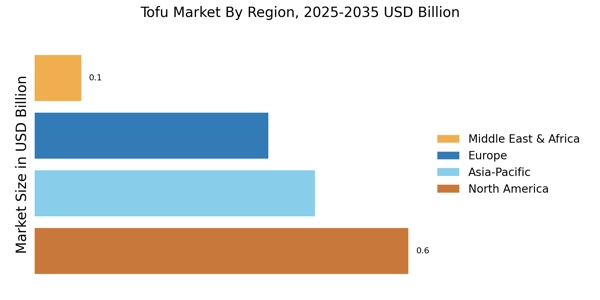
North America is the largest market for tofu, accounting for approximately 40% of the global share. The region's growth is driven by increasing health consciousness, a rise in plant-based diets, and supportive regulations promoting vegetarian and vegan products. The U.S. leads this market, followed closely by Canada, which holds around 15% of the market share. Regulatory initiatives encouraging sustainable food sources further bolster demand for tofu products. The competitive landscape in North America features key players such as Hodo Foods, Nasoya, and TofuYa, which are innovating to meet consumer preferences. The presence of established brands and a growing number of startups contribute to a dynamic market environment. The increasing availability of tofu in retail and food service sectors enhances market penetration, making it a staple in many households across the region.

Europe : Emerging Market for Plant-Based Foods

Europe is witnessing significant growth in the tofu market, driven by rising veganism and health trends. The region holds approximately 25% of the global market share, with Germany and the UK being the largest contributors. Regulatory frameworks supporting plant-based diets and sustainability initiatives are key growth drivers. The European market is characterized by increasing consumer demand for organic and non-GMO tofu products, which is reshaping the supply chain. Leading countries in Europe include Germany, the UK, and France, where local brands are gaining traction alongside international players. The competitive landscape is marked by innovation, with companies focusing on product diversification and sustainability. Key players like Alpro and Taifun-Tofu Market are expanding their offerings to cater to the growing health-conscious consumer base, enhancing market dynamics.

Asia-Pacific : Traditional Market with Growth Potential

Asia-Pacific is a traditional hub for tofu production, holding around 30% of the global market share. The region's growth is fueled by increasing health awareness, urbanization, and a shift towards plant-based diets. Countries like Japan and China are the largest markets, with Japan accounting for approximately 15% of the global share. Regulatory support for health and nutrition is also a significant catalyst for market expansion in this region. The competitive landscape is dominated by established brands such as Mori-Nu and House Foods, which have a strong presence in both domestic and international markets. The region is characterized by a diverse range of tofu products, catering to various culinary preferences. The increasing popularity of tofu in Western markets is also influencing production strategies, leading to innovation and new product development.

Middle East and Africa : Emerging Market with Unique Challenges

The Middle East and Africa region is emerging as a new market for tofu, currently holding about 5% of the global share. The growth is driven by increasing awareness of health benefits associated with plant-based diets and a gradual shift in consumer preferences. Countries like South Africa and the UAE are leading this market, with regulatory frameworks slowly adapting to support plant-based food products, although challenges remain in terms of supply chain and distribution. The competitive landscape is still developing, with local brands beginning to enter the market alongside international players. The presence of key players is limited, but companies are exploring opportunities to introduce tofu products tailored to regional tastes. As consumer demand grows, the market is expected to expand, driven by both local production and imports from established tofu-producing countries.

Tofu Market Regional Image

Key Players and Competitive Insights

The global tofu market is moderately fragmented, with Asian incumbents leveraging manufacturing scale and brand heritage while Western players differentiate through organic certification, premium formats, and e-commerce. Competition has shifted from price to innovation, sustainability, and supply chain reliability.
Pulmuone Co., Ltd. / Nasoya (South Korea / USA — Market Leader) Controls 75%+ of US tofu retail through brands Nasoya, Wildwood, and Azumaya. Recently doubled its Massachusetts plant capacity to 9,000 blocks/hour and is opening a European subsidiary in Amsterdam (early 2026) to enter France, Germany, and Spain. Also partnered with a major meal kit service via Nasoya (Sept 2025) to target convenience-driven younger consumers.
Hodo Foods (USA — Fast-Growing Disruptor) Artisanal, premium tofu brand with foodservice clients including Google, Chipotle, and UC Berkeley. Acquired by Japan's Calbee (Sept 2025) in a major cross-border investment. Expanded retail presence into Meijer, Harris Teeter, and Giant Martin's (Jan 2025) with 20+ SKUs including flavored blocks, crumbles, and nuggets.
House Foods Group Inc. (Japan) Deep-rooted in Japanese food culture with strong North American presence. Recently launched DHA omega-3 enriched tofu, targeting health-conscious and aging consumer segments with functional food positioning.
Hain Celestial Group (USA) Natural and organic portfolio brand (WestSoy, Nasoya heritage). Focused on strategic acquisitions and new variants catering to specific dietary needs across US health and wellness retail.
Vitasoy International Holdings (Hong Kong) Leading Asia-Pacific brand integrating tofu within a broader plant-based portfolio. Emphasizes eco-friendly production practices and cross-category positioning across Hong Kong, China, and Southeast Asia.
Other Notable Players: Morinaga & Co., Kikkoman Corporation, CJ CheilJedang, Sunrise Soya Foods, Taifun-Tofu GmbH, Eden Foods, Mori-Nu

Key Companies in the Tofu Market include

Industry Developments

December 2025 — Broader Industry Shift (Europe) The market for traditional plant-based foods like tofu and tempeh remained solid through 2025, with some brands growing significantly even as the wider plant-based category declined overall. Industry observers note a visible pivot away from meat-mimicry products toward clean-label, minimally processed options, with tofu and tempeh benefiting directly from this consumer reorientation. (Source: Technavio)

November 2025 — Pulmuone (Global) Pulmuone expanded its tofu business into Europe through a new subsidiary and plant upgrades, while also developing new tofu products, including a ready-to-eat variety with a seasoning sauce, set to be introduced to the US market in 2025. The company's overseas sales grew from 11.9% of total sales in 2019 to 19.8% in 2024. This move marks a significant strategic push by the world's largest tofu manufacturer to capture growth across both Western markets simultaneously. (Source: Just Food)

May 2025 — Pulmuone / Nasoya (US — Retail Expansion) Pulmuone launched its reimagined lineup of premium Asian-inspired meal kits and tofu products into new Kroger divisions, including Louisville, Nashville, Cincinnati, Columbus, Roundy's, Dillons, and King Soopers, marking a significant milestone in its retail expansion across the United States. The move reflects the industry's growing strategy of pairing tofu with ready-meal formats to reach mainstream grocery shoppers beyond the health food aisle. (Source: Just Food)

March 2025 — Nasoya / Pulmuone (US) Nasoya announced the expansion of its manufacturing facility in Ayer, Massachusetts — a $55 million project adding nearly 65,000 square feet of new space and bringing the site to nearly 200,000 square feet in total, the largest tofu production facility in the world, with capacity to produce 400,000 pounds of tofu per day, equivalent to more than 2.1 million servings daily. The expansion also adds 20% more jobs, reflecting strong and sustained consumer demand for plant-based protein in North America. (Source: Food Navigator)

Future Outlook

Tofu Market Future Outlook

The Tofu Market is projected to grow at a 4.2% CAGR from 2025 to 2035, driven by rising health consciousness, plant-based diets, and innovative product offerings.

New opportunities lie in:

  • Expansion into ready-to-eat tofu meal kits Development of organic and non-GMO tofu products Partnerships with food delivery services for tofu-based meals

By 2035, the Tofu Market is expected to achieve substantial growth, reflecting evolving consumer preferences.

Market Segmentation

Tofu Market Type Outlook

  • Organic
  • Conventional

Tofu Market Distribution Channel Outlook

  • Food Retail
  • Food Service

Report Scope

MARKET SIZE 2024 3.12(USD Billion)
MARKET SIZE 2025 3.3(USD Billion)
MARKET SIZE 2035 4.9(USD Billion)
COMPOUND ANNUAL GROWTH RATE (CAGR) 4.2% (2025 - 2035)
REPORT COVERAGE Revenue Forecast, Competitive Landscape, Growth Factors, and Trends
BASE YEAR 2024
Market Forecast Period 2025 - 2035
Historical Data 2019 - 2024
Market Forecast Units USD Billion
Key Companies Profiled Mori-Nu (JP), Hodo Foods (US), Nasoya (US), TofuYa (US), House Foods (JP), Vegan Gourmet (CA), Pulmuone (KR), Sunrise Soya Foods (CA)
Segments Covered Type, Distribution Channel, Region
Key Market Opportunities Growing consumer demand for plant-based proteins enhances opportunities in the Tofu Market.
Key Market Dynamics Rising consumer demand for plant-based proteins drives innovation and competition in the Tofu Market.
Countries Covered North America, Europe, APAC, South America, MEA

Market Highlights

Author
Author
Author Profile
Snehal Singh LinkedIn
Manager - Research
High acumen in analyzing complex macro & micro markets with more than 6 years of work experience in the field of market research. By implementing her analytical skills in forecasting and estimation into market research reports, she has expertise in Packaging, Construction, and Equipment domains. She handles a team size of 20-25 resources and ensures smooth running of the projects, associated marketing activities, and client servicing.
Leave a Comment

FAQs

What is the current valuation of the Tofu Market as of 2024?

Based on independent trade and industry sources, the global tofu market was valued at approximately USD 3.12 billion in 2024, supported by strong demand across North America, Europe, and Asia-Pacific. Growth is primarily driven by rising health consciousness, plant-based diet adoption, and expanding retail availability. The market is on a steady upward trajectory heading into the latter half of the decade.

What is the projected market valuation for the Tofu Market in 2035?

Based on current industry trends and independent analysis, the global tofu market is projected to reach approximately USD 4.9 billion by 2035, growing at a compound annual growth rate (CAGR) of around 4.2% over the forecast period. This growth is underpinned by sustained demand for plant-based proteins, increasing culinary adoption across Western markets, and ongoing product innovation by major players such as Pulmuone, Nasoya, and Hodo Foods. Expanding distribution through both retail and food service channels is expected to further accelerate market penetration through 2035.

What is the expected CAGR for the Tofu Market during the forecast period 2025 - 2035?

The global tofu market is expected to grow at a CAGR of approximately 4.2% between 2025 and 2035, reflecting steady and consistent expansion across all major regions. This growth rate is driven by increasing consumer shift toward plant-based diets, rising nutritional awareness, and growing culinary versatility of tofu across both traditional and non-traditional markets. North America leads in market size while Asia-Pacific continues to emerge as the fastest-growing region, collectively sustaining this stable long-term growth trajectory.

Which distribution channel segment shows higher growth potential in the Tofu Market?

Among the two primary distribution channels, the Food Service segment demonstrates significantly higher growth potential in the tofu market, driven by the rapid integration of plant-based menu options across restaurants, cafes, and casual dining chains worldwide. Brands like The Tofoo Co. have already reported major foodservice wins with chains such as Wagamama and Giggling Squid, reflecting a broader industry trend of chefs and food operators actively embracing tofu as a versatile, mainstream ingredient. While Food Retail remains the dominant channel by overall revenue share, Food Service is outpacing it in growth rate as consumer dining-out habits increasingly align with health-conscious and sustainable food preferences.

How does the valuation of organic tofu compare to conventional tofu in 2024?

In 2024, Organic tofu holds the larger market share in terms of premium value, driven by growing consumer preference for non-GMO, sustainably farmed soy products, particularly across North America and Europe where health-conscious purchasing is most pronounced. However, Conventional tofu commands a broader volume-based presence due to its lower price point and wider accessibility across mainstream retail and food service channels, making it the preferred choice for budget-conscious consumers and high-volume foodservice operators. While organic tofu leads in value per unit and commands premium shelf positioning, conventional tofu continues to dominate in overall consumption volume, and its segment is witnessing rapid growth as more first-time tofu consumers enter the market through affordable, widely available conventional options.

Who are the key players in the Tofu Market?

The tofu market is led by Pulmuone/Nasoya (US/Korea), Mori-Nu/Morinaga (Japan/US), House Foods (Japan/US), Hodo Foods (US), The Tofoo Co. (UK), The New Originals Company (Europe), Sunrise Soya Foods (Canada), and TofuYa (US). These players compete across retail and foodservice channels through strategies centered on organic innovation, sustainable production, and geographic expansion. Pulmuone stands out as the world's largest tofu producer, while The Tofoo Co. and The New Originals Company are rapidly consolidating leadership positions across European markets.

What is the projected growth for the Food Service distribution channel by 2035?

Food Service distribution channel is projected to grow substantially by 2035, expanding from an estimated USD 0.64 billion in 2024 to approximately USD 1.73 billion by 2035, reflecting a robust growth rate outpacing the overall market CAGR of 4.2%. This near tripling in value is driven by accelerating adoption of tofu-based dishes across casual dining chains, meal kit services, and institutional catering, as foodservice operators increasingly respond to consumer demand for plant-based, health-forward menu options.

What are the current market trends influencing the Tofu Market?

The tofu market is currently being shaped by three dominant trends: a strong consumer shift toward plant-based and flexitarian diets, driving demand for tofu as a clean-label, high-protein meat alternative across both Western and Asian markets; culinary innovation and product diversification, with brands launching flavored, marinated, ready-to-eat, and meal-kit formats to appeal to convenience-seeking mainstream shoppers beyond the traditional health food aisle.

How does the Tofu Market's growth compare to other plant-based food markets?

The tofu market's projected CAGR of 4.2% through 2035 reflects a stable and resilient growth trajectory, notably more consistent than the broader plant-based food category, which has experienced volatility in recent years as highly processed meat-alternative products faced consumer backlash and declining sales.

What factors could impact the Tofu Market's growth in the coming years?

Key growth enablers include rising plant-based diet adoption, expanding foodservice integration, and aggressive retail distribution by major players like Pulmuone and The Tofoo Co. On the downside, soybean commodity price volatility, cold-chain logistics complexity, and intensifying competition from alternative plant proteins such as tempeh and pea-based products could moderate growth. Additionally, limited consumer awareness in emerging markets across the Middle East and Africa remains a structural challenge requiring sustained investment to unlock meaningful demand.

Research Approach


Secondary Research

The secondary research process involved comprehensive analysis of food regulatory databases, peer-reviewed nutrition and food science journals, agricultural commodity reports, and authoritative food industry organizations. Key sources included the US Food & Drug Administration (FDA), US Department of Agriculture (USDA) National Agricultural Statistics Service, European Food Safety Authority (EFSA), Health Canada, Food Standards Australia New Zealand (FSANZ), Japan Ministry of Agriculture, Forestry and Fisheries (MAFF), Food and Agriculture Organization (FAO) of the United Nations, World Health Organization (WHO) Nutrition Database, Soyfoods Association of North America (SANA), European Natural Soyfood Manufacturers Association (ENSA), Japan Tofu Association, International Food Information Council (IFIC), National Soybean Research Laboratory, USDA Foreign Agricultural Service (FAS) Global Agricultural Trade System, Euromonitor International, Passport GMID, and national statistics bureaus from key soy-producing and tofu-consuming markets. These sources were used to collect production and consumption statistics, soy commodity pricing data, organic certification standards, food safety regulations, dietary guideline trends, import/export trade flows, and competitive landscape analysis for organic tofu, conventional tofu, silken tofu, firm tofu, and processed tofu products.


Primary Research

Qualitative and quantitative insights were obtained by interviewing supply-side and demand-side stakeholders during the primary research process. CEOs, VPs of Product Development, R&D chiefs, and plant operations managers from tofu manufacturers, soy processing companies, and co-packagers comprised supply-side sources. Culinary innovation chefs, procurement directors from food service operators and restaurant chains, senior category managers from supermarket chains and natural food retailers, and distribution logistics managers from cold chain and refrigerated products distributors comprised demand-side sources. The primary research validated market segmentation between organic and conventional product lines, confirmed distribution channel dynamics across the retail and food service sectors, and gathered insights on pricing strategies, shelf placement optimization, plant-based protein substitution trends, and regional consumer preference variations.

Primary Respondent Breakdown:

By Designation: C-level Primaries (32%), Director Level (35%), Others (33%)

By Region: North America (33%), Europe (30%), Asia-Pacific (28%), Rest of World (9%)


Market Size Estimation

Global market valuation was derived through revenue mapping and production volume analysis. The methodology included:

Identification of over 60 significant tofu manufacturers and soyfood processors in North America, Europe, Asia-Pacific, and Latin America

Product mapping across organic tofu, conventional tofu, fortified tofu, and flavored tofu innovation categories

Analysis of reported and modeled annual revenues specific to tofu and soyfood product portfolios

Coverage of manufacturers representing 75-80% of global market share in 2024

Channel-specific analysis distinguishing between food retail (supermarkets, natural/specialty stores, e-commerce) and food service (restaurants, institutional catering, hospitality) revenue streams

Extrapolation using bottom-up (production volume × average selling price by country/region) and top-down (manufacturer revenue validation and trade data reconciliation) approaches to derive segment-specific valuations for organic versus conventional tofu categories

Download Free Sample

Kindly complete the form below to receive a free sample of this Report

Compare Licence

×
Features License Type
Single User Multiuser License Enterprise User
Price $4,950 $5,950 $7,250
Maximum User Access Limit 1 User Upto 10 Users Unrestricted Access Throughout the Organization
Free Customization
Direct Access to Analyst
Deliverable Format
Platform Access
Discount on Next Purchase 10% 15% 15%
Printable Versions