Request Free Sample ×

Kindly complete the form below to receive a free sample of this Report

* Please use a valid business email

Leading companies partner with us for data-driven Insights

clients tt-cursor
Hero Background
English
Chinese
French
Japanese
Korean
German
Spanish

Smart Light Control Market Size

ID: MRFR/SEM/0319-HCR
155 Pages
Aarti Dhapte
April 2026

Smart Light and Control Market Size, Share and Research Report By Offering (Software, Hardware), By Lighting Technology (LED, Halogen, Incandescent, Fluorescent, CFL), By Connectivity Technology (Bluetooth, Zigbee, Wifi, DALI) And By Region (North America, Europe, Asia-Pacific, And Rest Of The World) –Industry Forecast Till 2035

Share:
Download PDF ×

We do not share your information with anyone. However, we may send you emails based on your report interest from time to time. You may contact us at any time to opt-out.

Smart Light Control Market Infographic
Purchase Options

Smart Light Control Size

Smart Light Control Market Growth Projections and Opportunities

The Smart Lighting and Control Market is a dynamic industry that maintains to adapt rapidly, pushed via diverse marketplace factors. One key factor contributing to the boom of this marketplace is the increasing adoption of smart domestic technology. As purchasers are looking for extra comfort and strength efficiency in their houses, Smart Lighting solutions have received recognition. The potential to manipulate light systems remotely through smartphones or voice instructions enhances the general person's revel, making smart lights an appealing alternative for homeowners. Another giant marketplace element is the growing emphasis on power efficiency and sustainability. Governments and corporations globally are encouraging the usage of strength-efficient technologies to lessen carbon footprints and fight weather change. Smart Lighting systems, with their capability to alter brightness based totally on occupancy and natural light situations, contribute to power conservation.

The rise of the Internet of Things (IoT) has additionally played a pivotal role in shaping smart lighting and controlling the market. Integration with different clever gadgets and platforms lets users create interconnected ecosystems within their homes or businesses. For instance, clever lighting can be synchronized with smart thermostats, security systems, and digital assistants to create an unbroken and interconnected environment. The aggressive panorama is another vital market aspect influencing the boom of Smart Lighting solutions. As extra groups enter the marketplace, the kind of smart mild products and managed structures continue to enlarge. This opposition has led to innovation in terms of features, design, and affordability. Consumers now have an extensive range of options to choose from, catering to specific options and budgets. This competitive environment fosters non-stop improvements in the era, in addition to propelling the market ahead. Additionally, the increasing cognizance of the benefits associated with Smart Lighting solutions has contributed to the increase in the marketplace. Consumers are getting extra knowledgeable about the capacity cost, financial savings, comfort, and protection improvements supplied by using these systems.

Educational efforts from producers, shops, and enterprise influencers have played an important role in demystifying the Smart Lighting era and dispelling any apprehensions customers may have had. Regulatory projects and standards also influence the Smart Lighting and Control Market. Governments and regulatory bodies are imposing pointers to ensure the protection, interoperability, and strength efficiency of Smart Lighting merchandise. Compliance with those standards is now not only the most effective assures purchasers of the excellent reliability of the goods but also fosters a more dependent and regulated marketplace.
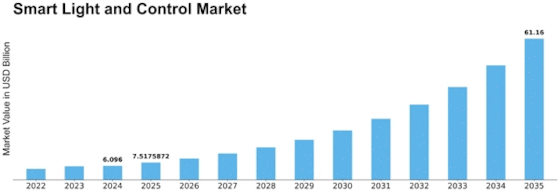
Smart Light Control Market Size Graph
Author
Author Profile
Aarti Dhapte
AVP - Research

A consulting professional focused on helping businesses navigate complex markets through structured research and strategic insights. I partner with clients to solve high-impact business problems across market entry strategy, competitive intelligence, and opportunity assessment. Over the course of my experience, I have led and contributed to 100+ market research and consulting engagements, delivering insights across multiple industries and geographies, and supporting strategic decisions linked to $500M+ market opportunities. My core expertise lies in building robust market sizing, forecasting, and commercial models (top-down and bottom-up), alongside deep-dive competitive and industry analysis. I have played a key role in shaping go-to-market strategies, investment cases, and growth roadmaps, enabling clients to make confident, data-backed decisions in dynamic markets.

Leave a Comment

FAQs

What is the projected market valuation for the Smart Light and Control Market in 2035?

<p>The projected market valuation for the Smart Light and Control Market in 2035 is 61.16 USD Billion.</p>

What was the market valuation for the Smart Light and Control Market in 2024?

<p>The overall market valuation for the Smart Light and Control Market was 6.096 USD Billion in 2024.</p>

What is the expected CAGR for the Smart Light and Control Market from 2025 to 2035?

<p>The expected CAGR for the Smart Light and Control Market during the forecast period 2025 - 2035 is 23.32%.</p>

Which companies are considered key players in the Smart Light and Control Market?

<p>Key players in the Smart Light and Control Market include Signify, Osram, Acuity Brands, Cree, GE Lighting, Philips Hue, Lutron Electronics, Legrand, Honeywell, and Schneider Electric.</p>

What are the main segments of the Smart Light and Control Market by offering?

<p>The main segments by offering include Software, valued at 1.5 to 15.0 USD Billion, and Hardware, valued at 4.596 to 46.16 USD Billion.</p>

How does the Smart Light and Control Market segment by lighting technology?

<p>The market segments by lighting technology include LED, valued at 2.5 to 25.0 USD Billion, Halogen, Incandescent, Fluorescent, and CFL.</p>

What are the connectivity technologies used in the Smart Light and Control Market?

Connectivity technologies in the Smart Light and Control Market include Bluetooth, Zigbee, Wifi, and DALI, with respective valuations ranging from 0.915 to 24.48 USD Billion.

What is the valuation range for LED lighting technology in the Smart Light and Control Market?

The valuation range for LED lighting technology in the Smart Light and Control Market is from 2.5 to 25.0 USD Billion.

What is the significance of the Smart Light and Control Market's growth from 2024 to 2035?

The Smart Light and Control Market is expected to grow significantly from 6.096 USD Billion in 2024 to 61.16 USD Billion by 2035.

Which connectivity technology is projected to have the highest valuation in the Smart Light and Control Market?

Wifi connectivity technology is projected to have the highest valuation, ranging from 2.448 to 24.48 USD Billion.

Market Summary

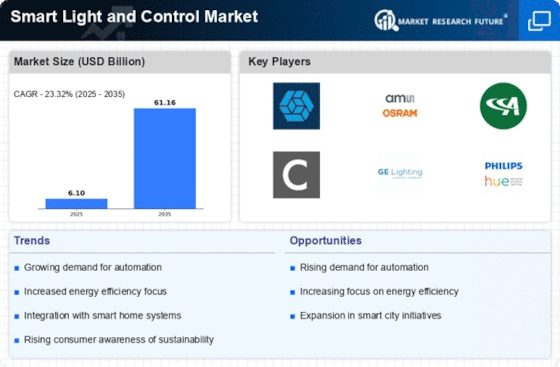
As per Market Research Future analysis, the Smart Light and Control Market was estimated at 6.096 USD Billion in 2024. The Smart Light and Control industry is projected to grow from 7.518 USD Billion in 2025 to 61.16 USD Billion by 2035, exhibiting a compound annual growth rate (CAGR) of 23.32% during the forecast period 2025 - 2035

Key Market Trends & Highlights

The Smart Light and Control Market is experiencing robust growth driven by technological advancements and increasing consumer demand for energy-efficient solutions.

  • The market is witnessing increased adoption of IoT technologies, enhancing connectivity and control in lighting systems. North America remains the largest market, while Asia-Pacific is emerging as the fastest-growing region in smart lighting solutions. The software segment leads in market share, whereas the hardware segment is rapidly expanding due to innovative product offerings. Rising demand for smart home solutions and growing awareness of energy conservation are key drivers propelling market growth.

Market Size & Forecast

2024 Market Size 6.096 (USD Billion)
2035 Market Size 61.16 (USD Billion)
CAGR (2025 - 2035) 23.32%
Largest Regional Market Share in 2024 North America

Major Players

Signify (NL), Osram (DE), Acuity Brands (US), Cree (US), GE Lighting (US), Philips Hue (NL), Lutron Electronics (US), Legrand (FR), Honeywell (US), Schneider Electric (FR)

Market Trends

The Smart Light and Control Market is currently experiencing a transformative phase, driven by advancements in technology and increasing consumer awareness regarding energy efficiency. The integration of smart lighting solutions into residential and commercial spaces is becoming more prevalent, as these systems offer enhanced control, convenience, and sustainability. As urbanization continues to rise, the demand for intelligent lighting solutions that can be remotely managed and customized is likely to grow. Furthermore, the emphasis on reducing carbon footprints and optimizing energy consumption is pushing stakeholders to innovate and adopt smart lighting technologies. In addition, the Smart Light and Control Market is witnessing a shift towards the incorporation of Internet of Things (IoT) capabilities. This trend allows for seamless connectivity between devices, enabling users to control their lighting systems through smartphones and other smart devices. The potential for automation and integration with other smart home technologies appears to be a significant driver of market growth. As consumers increasingly seek personalized experiences and energy-efficient solutions, the Smart Light and Control Market is poised for continued expansion, reflecting broader trends in sustainability and technological advancement.

Increased Adoption of IoT Technologies

The integration of Internet of Things (IoT) technologies into smart lighting systems is becoming more common. This trend facilitates enhanced connectivity and control, allowing users to manage their lighting through various devices. As consumers become more accustomed to smart home technologies, the demand for IoT-enabled lighting solutions is likely to rise.

Focus on Energy Efficiency

There is a growing emphasis on energy efficiency within the Smart Light and Control Market. Consumers and businesses alike are increasingly aware of the environmental impact of their energy consumption. Consequently, smart lighting solutions that offer energy-saving features are becoming more attractive, potentially leading to widespread adoption.

Customization and Personalization

The trend towards customization in lighting solutions is gaining traction. Consumers are seeking products that can be tailored to their specific needs and preferences. This desire for personalized experiences is driving innovation in the Smart Light and Control Market, as manufacturers strive to offer adaptable and versatile lighting options.

Smart Light Control Market Market Drivers

Rising Demand for Smart Home Solutions

The Smart Light and Control Market is experiencing a notable surge in demand for smart home solutions. As consumers increasingly seek convenience and enhanced control over their living environments, smart lighting systems are becoming integral components of home automation. According to recent data, the smart home market is projected to reach substantial figures, with smart lighting representing a significant share. This trend is driven by the desire for energy efficiency, security, and user-friendly interfaces. Homeowners are now more inclined to invest in smart lighting systems that can be controlled remotely, integrated with other smart devices, and customized to fit their lifestyles. This growing inclination towards smart home technologies is likely to propel the Smart Light and Control Market forward, as manufacturers innovate to meet consumer expectations.

Integration with Smart City Initiatives

The Smart Light and Control Market is poised for growth through its integration with smart city initiatives. Urban areas are increasingly adopting smart technologies to enhance infrastructure, improve public safety, and optimize resource management. Smart lighting systems are being deployed in public spaces to provide better illumination, reduce energy costs, and enhance safety. For example, streetlights equipped with sensors can adjust brightness based on pedestrian activity, contributing to energy savings and improved urban environments. As cities continue to invest in smart infrastructure, the demand for advanced lighting solutions is expected to rise. This trend not only supports the Smart Light and Control Market but also aligns with broader goals of urban sustainability and efficiency.

Growing Awareness of Energy Conservation

The Smart Light and Control Market is benefiting from a growing awareness of energy conservation among consumers and businesses. As energy costs continue to rise, there is an increasing emphasis on adopting energy-efficient solutions. Smart lighting systems, which can be programmed to adjust brightness based on occupancy and natural light levels, are seen as effective tools for reducing energy consumption. Data indicates that smart lighting can lead to energy savings of up to 30% compared to traditional lighting solutions. This heightened awareness is prompting both residential and commercial sectors to invest in smart lighting technologies, thereby driving demand within the Smart Light and Control Market. As sustainability becomes a priority, the adoption of energy-efficient lighting solutions is likely to accelerate.

Technological Advancements in Lighting Solutions

Technological advancements are playing a pivotal role in shaping the Smart Light and Control Market. Innovations such as LED technology, wireless communication protocols, and artificial intelligence are enhancing the functionality and appeal of smart lighting systems. For instance, the integration of IoT capabilities allows for seamless connectivity and control through smartphones and voice-activated devices. Furthermore, advancements in energy-efficient lighting solutions are contributing to reduced energy consumption, aligning with global sustainability goals. The market is witnessing a shift towards smart lighting products that not only provide illumination but also offer features like adaptive lighting and automated scheduling. As these technologies continue to evolve, they are expected to drive growth in the Smart Light and Control Market, attracting both consumers and businesses alike.

Increased Focus on Aesthetic and Functional Design

The Smart Light and Control Market is witnessing an increased focus on aesthetic and functional design in lighting products. Consumers are not only looking for energy-efficient solutions but also for products that enhance the ambiance of their spaces. Manufacturers are responding by developing smart lighting systems that offer customizable colors, styles, and designs to suit various interior decors. This trend is particularly evident in residential applications, where homeowners seek to create personalized environments. Additionally, the integration of smart lighting with design elements such as fixtures and smart controls is becoming more prevalent. As the demand for aesthetically pleasing and functional lighting solutions grows, the Smart Light and Control Market is likely to expand, driven by innovation and consumer preferences.

Market Segment Insights

By Offering: Software (Largest) vs. Hardware (Fastest-Growing)

In the Smart Light and Control Market, the offering segment is distinguished primarily by software and hardware. Software solutions currently command the largest share, driven by the increasing demand for integrated and user-friendly applications that enhance functionality and user experience. This dominance is attributed to the need for sophisticated control systems that integrate smart lighting with other smart home devices, providing seamless interoperability and automation.

Software (Dominant) vs. Hardware (Emerging)

Software in the Smart Light and Control Market has established itself as the dominant offering, characterized by advanced control systems that support a variety of smart features such as remote access, scalability, and compatibility with other devices. The emphasis on user-friendly interfaces and mobile applications enhances market penetration. Conversely, hardware, although currently the fastest-growing segment, is rapidly evolving with the integration of smart technology in lighting fixtures and sensors. These advancements are reshaping consumer expectations, driving hardware innovation and adoption as more consumers seek energy-efficient and versatile lighting solutions.

By Lighting Technology: LED (Largest) vs. CFL (Fastest-Growing)

In the Smart Light and Control Market, LED technology holds the largest market share due to its energy efficiency, longevity, and decreasing costs. This segment is widely adopted in various applications, from residential to commercial setups. In contrast, CFLs, while historically popular, have seen their share decline as advancements in LED technology have outpaced their performance. However, they still occupy a significant niche in areas where upfront costs are a concern.

LED (Dominant) vs. CFL (Emerging)

LEDs are renowned for their superior efficiency and longer lifespan compared to traditional lighting technologies. Dominating the smart lighting landscape, LEDs offer smart features such as dimming, color changes, and remote management capabilities that enhance user experience and energy savings. On the other hand, CFLs, although emerging, play an important role in the market due to their lower costs and satisfactory performance. They cater primarily to budget-conscious consumers and regions with less access to advanced LED systems, providing a more affordable transition towards smart technology in lighting.

By Connectivity Technology: Bluetooth (Largest) vs. Zigbee (Fastest-Growing)

The Smart Light and Control Market currently sees a significant share held by Bluetooth technology, which dominates the connectivity landscape due to its widespread adoption and integration into various consumer devices. Zigbee, while trailing behind in market share, has emerged as a significant player, especially in smart home applications, where reliability and energy efficiency are critical attributes. Additionally, Wi-Fi and DALI technology hold important roles, with Wi-Fi providing the necessary bandwidth for more complex applications and DALI gaining traction in commercial lighting solutions due to its versatility.

Bluetooth (Dominant) vs. Zigbee (Emerging)

Bluetooth technology stands out as the dominant connectivity technology in the Smart Light and Control Market, favored for its ease of use, compatibility with a wide array of devices, and low power consumption. On the other hand, Zigbee is rapidly emerging as a strong alternative, especially for smart home systems that require robust mesh networking capabilities. Zigbee's ability to support numerous devices on a single network makes it highly suitable for comprehensive lighting solutions where multiple light sources interact seamlessly. Both technologies are contributing to the smart lighting ecosystem, catering to different consumer needs and preferences.

Get more detailed insights about Smart Light and Control Market Research Report - Global Forecast to 2035

Regional Insights

By region, the study provides the market insights into North America, Europe, Asia-Pacific and Rest of the World. The North American Smart Light and Control Market area will dominate this market; The presence of developing countries in the region is one of the primary driving factors for the market. Furthermore, the region's growing infrastructure-related activities are driving demand for smart lighting systems, propelling market expansion.

Further, the major countries studied in the market report are The US, Canada, German, France, the UK, Italy, Spain, China, Japan, India, Australia, South Korea, and Brazil.

Figure2: Smart Light and Control Market SHARE BY REGION 2022 (USD Billion)

Europe Smart Light and Control Market accounts for the second-largest market share due to increased demand for intelligent lighting systems. Further, the German Smart Light and Control Market held the largest market share, and the UK Smart Light and Control Market was the fastest growing market in the European region

The Asia-Pacific Smart Light and Control Market is expected to grow at the fastest CAGR from 2023 to 2032. This is attributable to the growing demand from the commercial and residential application categories. Moreover, China’s Smart Light and Control Market held the largest market share, and the Indian Smart Light and Control Market was the fastest growing market in the Asia-Pacific region.

Key Players and Competitive Insights

Leading market players are investing heavily in research and development in order to expand their product lines, which will help the Smart Light and Control Market, grow even more. Market participants are also undertaking a variety of strategic activities to expand their global footprint, with important market developments including new product launches, contractual agreements, mergers and acquisitions, higher investments, and collaboration with other organizations. To expand and survive in a more competitive and rising market climate, Smart Light and Controlindustry must offer cost-effective items.Manufacturing locally to minimize operational costs is one of the key business tactics used by manufacturers in the global Smart Light and Control industry to benefit clients and increase the market sector. In recent years, the Smart Light and Control industry has offered some of the most significant advantages to medicine. Major players in the Smart Light and Control Market, including Ecolab Mitsui Chemicals, Inc, NUOER GROUP, Zibo Xinye Chemical Co, Ltd, Zhejiang Xinyong Biochemical Co., Ltd and others, are attempting to increase market demand by investing in research and development operations.Hubbell Incorporated is a corporation based in the United States that creates, manufactures, and sells electrical and electronic equipment for non-residential and residential construction, industrial, and utility applications. Harvey Hubbell began Hubbell as a sole proprietorship in 1888, and the company was incorporated in Connecticut in 1905. Fortune ranks it 602nd. The electrical segment (which includes electrical systems products and lighting products) and the Power section are the company's reporting segments.In March 2021, Hubbell Control Solutions has introduced a new and enhanced NX Distributed Intelligence Lighting Control Panel (NXP2 Series), which centralizes connection points in an enclosure and provides an installer-friendly option for deploying code compliant lighting control.OSRAM Licht AG, headquartered in Munich and Premstätten (Austria), is a German manufacturer of electric lighting. OSRAM sees itself as a high-tech photonics company with a growing emphasis on sensor technology, visualization, and light treatment. Customers are served by the corporation in the consumer, automotive, healthcare, and industrial technology sectors. OSRAM GmbH is the operating corporation of OSRAM.

In April  OSRAM, a global manufacturer of lighting systems and smart lighting systems, has teamed with the Polish-American business Silvair, which offers global Bluetooth-based smart lighting solutions.OSRAM supplies a Bluetooth-based smart lighting solution that is interoperable with OSRAM lighting systems through this agreement.

Key Companies in the Smart Light Control Market include

Industry Developments

In May 2023, a new luminaire called Elencia was released by Cyclone Lighting, an outdoor lighting fixtures manufacturer. It is a stylish and functional outdoor lighting that has a modern lantern design and high-performance optics.

In March 2023, Itron, Inc. signed a contract with Duquesne Light Company (DLC) to improve operational efficiency, update infrastructure and enable smart city applications. Itron intends to supply DLC with its smart street lighting solution containing LED lights, sensors and software that would dim the lights as well as collect data and control traffic. This is supposed to help DLC save energy, enhance safety and understand its users better.

In January 2023, YEELIGHT announced some products like the Cube Smart Lamp, Automatic Curtain Opener, and Smart Scene Panel, among many others, under their brand. They are compatible with the forthcoming Matter – a new standard for smart homes.

In October 2022, TSI INSTRUMENTS LTD., TSI INCORPORATED’s subsidiary, acquired Casella from IDEAL INDUSTRIES, INC., which is its occupational and environmental monitoring equipment business. The sale facilitates Ideal Industries’ focus on their core business as well as growth ambitions within the professional electrician products category of the high power density connections market superior charging solutions market.

In September 2022, Itron’s intelligent streetlighting solution was used in a pilot project for making Alcorcón in Spain into a smart city. This involves switching old streetlights to LEDs while adding Networked Lighting Controllers (NLCs) from Itron in the process. These NLCs can not only dim or switch lights off but also have the ability to report the performance status of any light using advanced settings.

In August 2022, Hafele America Co. put up for launch of the Loox Illuminated Wireless Adjustable Shelf System - one of the newest LED lighting technologies. It can also be installed in closets for frames, kitchen cabinets, pantries and even centers of entertainment. The system comes with various lighting options, adjustable shelves and wireless controllers.

In July 2022, Signify Holdings launched a line of smart WiZ luminaires, which are designed to make our daily lives more comfortable. Additional table and floor lamps were introduced; also, there is a portable light switch and new ceiling lights and lamps in the product line.

Future Outlook

Smart Light Control Market Future Outlook

The Smart Light and Control Market is projected to grow at a 23.32% CAGR from 2025 to 2035, driven by technological advancements, energy efficiency demands, and increasing urbanization.

New opportunities lie in:

  • Integration of AI-driven analytics for energy management solutions.</p><p>Development of smart lighting systems for urban infrastructure projects.</p><p>Expansion into emerging markets with tailored smart lighting solutions.

By 2035, the market is expected to achieve substantial growth, positioning itself as a leader in energy-efficient technologies.

Market Segmentation

Smart Light Control Market Offering Outlook

  • Software
  • Hardware

Smart Light Control Market Lighting Technology Outlook

  • LED
  • Halogen
  • Incandescent
  • Fluorescent
  • CFL

Smart Light Control Market Connectivity Technology Outlook

  • Bluetooth
  • Zigbee
  • Wifi
  • DALI

Report Scope

MARKET SIZE 2024 6.096(USD Billion)
MARKET SIZE 2025 7.518(USD Billion)
MARKET SIZE 2035 61.16(USD Billion)
COMPOUND ANNUAL GROWTH RATE (CAGR) 23.32% (2025 - 2035)
REPORT COVERAGE Revenue Forecast, Competitive Landscape, Growth Factors, and Trends
BASE YEAR 2024
Market Forecast Period 2025 - 2035
Historical Data 2019 - 2024
Market Forecast Units USD Billion
Key Companies Profiled Signify (NL), Osram (DE), Acuity Brands (US), Cree (US), GE Lighting (US), Philips Hue (NL), Lutron Electronics (US), Legrand (FR), Honeywell (US), Schneider Electric (FR)
Segments Covered Offering, Lighting Technology, Connectivity Technology, Region
Key Market Opportunities Integration of artificial intelligence in Smart Light and Control Market enhances energy efficiency and user experience.
Key Market Dynamics Rising consumer demand for energy-efficient solutions drives innovation in smart lighting technologies and control systems.
Countries Covered North America, Europe, APAC, South America, MEA

FAQs

What is the projected market valuation for the Smart Light and Control Market in 2035?

<p>The projected market valuation for the Smart Light and Control Market in 2035 is 61.16 USD Billion.</p>

What was the market valuation for the Smart Light and Control Market in 2024?

<p>The overall market valuation for the Smart Light and Control Market was 6.096 USD Billion in 2024.</p>

What is the expected CAGR for the Smart Light and Control Market from 2025 to 2035?

<p>The expected CAGR for the Smart Light and Control Market during the forecast period 2025 - 2035 is 23.32%.</p>

Which companies are considered key players in the Smart Light and Control Market?

<p>Key players in the Smart Light and Control Market include Signify, Osram, Acuity Brands, Cree, GE Lighting, Philips Hue, Lutron Electronics, Legrand, Honeywell, and Schneider Electric.</p>

What are the main segments of the Smart Light and Control Market by offering?

<p>The main segments by offering include Software, valued at 1.5 to 15.0 USD Billion, and Hardware, valued at 4.596 to 46.16 USD Billion.</p>

How does the Smart Light and Control Market segment by lighting technology?

<p>The market segments by lighting technology include LED, valued at 2.5 to 25.0 USD Billion, Halogen, Incandescent, Fluorescent, and CFL.</p>

What are the connectivity technologies used in the Smart Light and Control Market?

Connectivity technologies in the Smart Light and Control Market include Bluetooth, Zigbee, Wifi, and DALI, with respective valuations ranging from 0.915 to 24.48 USD Billion.

What is the valuation range for LED lighting technology in the Smart Light and Control Market?

The valuation range for LED lighting technology in the Smart Light and Control Market is from 2.5 to 25.0 USD Billion.

What is the significance of the Smart Light and Control Market's growth from 2024 to 2035?

The Smart Light and Control Market is expected to grow significantly from 6.096 USD Billion in 2024 to 61.16 USD Billion by 2035.

Which connectivity technology is projected to have the highest valuation in the Smart Light and Control Market?

Wifi connectivity technology is projected to have the highest valuation, ranging from 2.448 to 24.48 USD Billion.

  1. SECTION I: EXECUTIVE SUMMARY AND KEY HIGHLIGHTS
    1. | 1.1 EXECUTIVE SUMMARY
    2. | | 1.1.1 Market Overview
    3. | | 1.1.2 Key Findings
    4. | | 1.1.3 Market Segmentation
    5. | | 1.1.4 Competitive Landscape
    6. | | 1.1.5 Challenges and Opportunities
    7. | | 1.1.6 Future Outlook
  2. SECTION II: SCOPING, METHODOLOGY AND MARKET STRUCTURE
    1. | 2.1 MARKET INTRODUCTION
    2. | | 2.1.1 Definition
    3. | | 2.1.2 Scope of the study
    4. | | | 2.1.2.1 Research Objective
    5. | | | 2.1.2.2 Assumption
    6. | | | 2.1.2.3 Limitations
    7. | 2.2 RESEARCH METHODOLOGY
    8. | | 2.2.1 Overview
    9. | | 2.2.2 Data Mining
    10. | | 2.2.3 Secondary Research
    11. | | 2.2.4 Primary Research
    12. | | | 2.2.4.1 Primary Interviews and Information Gathering Process
    13. | | | 2.2.4.2 Breakdown of Primary Respondents
    14. | | 2.2.5 Forecasting Model
    15. | | 2.2.6 Market Size Estimation
    16. | | | 2.2.6.1 Bottom-Up Approach
    17. | | | 2.2.6.2 Top-Down Approach
    18. | | 2.2.7 Data Triangulation
    19. | | 2.2.8 Validation
  3. SECTION III: QUALITATIVE ANALYSIS
    1. | 3.1 MARKET DYNAMICS
    2. | | 3.1.1 Overview
    3. | | 3.1.2 Drivers
    4. | | 3.1.3 Restraints
    5. | | 3.1.4 Opportunities
    6. | 3.2 MARKET FACTOR ANALYSIS
    7. | | 3.2.1 Value chain Analysis
    8. | | 3.2.2 Porter's Five Forces Analysis
    9. | | | 3.2.2.1 Bargaining Power of Suppliers
    10. | | | 3.2.2.2 Bargaining Power of Buyers
    11. | | | 3.2.2.3 Threat of New Entrants
    12. | | | 3.2.2.4 Threat of Substitutes
    13. | | | 3.2.2.5 Intensity of Rivalry
    14. | | 3.2.3 COVID-19 Impact Analysis
    15. | | | 3.2.3.1 Market Impact Analysis
    16. | | | 3.2.3.2 Regional Impact
    17. | | | 3.2.3.3 Opportunity and Threat Analysis
  4. SECTION IV: QUANTITATIVE ANALYSIS
    1. | 4.1 Semiconductor & Electronics, BY Offering (USD Billion)
    2. | | 4.1.1 Software
    3. | | 4.1.2 Hardware
    4. | 4.2 Semiconductor & Electronics, BY Lighting Technology (USD Billion)
    5. | | 4.2.1 LED
    6. | | 4.2.2 Halogen
    7. | | 4.2.3 Incandescent
    8. | | 4.2.4 Fluorescent
    9. | | 4.2.5 CFL
    10. | 4.3 Semiconductor & Electronics, BY Connectivity Technology (USD Billion)
    11. | | 4.3.1 Bluetooth
    12. | | 4.3.2 Zigbee
    13. | | 4.3.3 Wifi
    14. | | 4.3.4 DALI
    15. | 4.4 Semiconductor & Electronics, BY Region (USD Billion)
    16. | | 4.4.1 North America
    17. | | | 4.4.1.1 US
    18. | | | 4.4.1.2 Canada
    19. | | 4.4.2 Europe
    20. | | | 4.4.2.1 Germany
    21. | | | 4.4.2.2 UK
    22. | | | 4.4.2.3 France
    23. | | | 4.4.2.4 Russia
    24. | | | 4.4.2.5 Italy
    25. | | | 4.4.2.6 Spain
    26. | | | 4.4.2.7 Rest of Europe
    27. | | 4.4.3 APAC
    28. | | | 4.4.3.1 China
    29. | | | 4.4.3.2 India
    30. | | | 4.4.3.3 Japan
    31. | | | 4.4.3.4 South Korea
    32. | | | 4.4.3.5 Malaysia
    33. | | | 4.4.3.6 Thailand
    34. | | | 4.4.3.7 Indonesia
    35. | | | 4.4.3.8 Rest of APAC
    36. | | 4.4.4 South America
    37. | | | 4.4.4.1 Brazil
    38. | | | 4.4.4.2 Mexico
    39. | | | 4.4.4.3 Argentina
    40. | | | 4.4.4.4 Rest of South America
    41. | | 4.4.5 MEA
    42. | | | 4.4.5.1 GCC Countries
    43. | | | 4.4.5.2 South Africa
    44. | | | 4.4.5.3 Rest of MEA
  5. SECTION V: COMPETITIVE ANALYSIS
    1. | 5.1 Competitive Landscape
    2. | | 5.1.1 Overview
    3. | | 5.1.2 Competitive Analysis
    4. | | 5.1.3 Market share Analysis
    5. | | 5.1.4 Major Growth Strategy in the Semiconductor & Electronics
    6. | | 5.1.5 Competitive Benchmarking
    7. | | 5.1.6 Leading Players in Terms of Number of Developments in the Semiconductor & Electronics
    8. | | 5.1.7 Key developments and growth strategies
    9. | | | 5.1.7.1 New Product Launch/Service Deployment
    10. | | | 5.1.7.2 Merger & Acquisitions
    11. | | | 5.1.7.3 Joint Ventures
    12. | | 5.1.8 Major Players Financial Matrix
    13. | | | 5.1.8.1 Sales and Operating Income
    14. | | | 5.1.8.2 Major Players R&D Expenditure. 2023
    15. | 5.2 Company Profiles
    16. | | 5.2.1 Signify (NL)
    17. | | | 5.2.1.1 Financial Overview
    18. | | | 5.2.1.2 Products Offered
    19. | | | 5.2.1.3 Key Developments
    20. | | | 5.2.1.4 SWOT Analysis
    21. | | | 5.2.1.5 Key Strategies
    22. | | 5.2.2 Osram (DE)
    23. | | | 5.2.2.1 Financial Overview
    24. | | | 5.2.2.2 Products Offered
    25. | | | 5.2.2.3 Key Developments
    26. | | | 5.2.2.4 SWOT Analysis
    27. | | | 5.2.2.5 Key Strategies
    28. | | 5.2.3 Acuity Brands (US)
    29. | | | 5.2.3.1 Financial Overview
    30. | | | 5.2.3.2 Products Offered
    31. | | | 5.2.3.3 Key Developments
    32. | | | 5.2.3.4 SWOT Analysis
    33. | | | 5.2.3.5 Key Strategies
    34. | | 5.2.4 Cree (US)
    35. | | | 5.2.4.1 Financial Overview
    36. | | | 5.2.4.2 Products Offered
    37. | | | 5.2.4.3 Key Developments
    38. | | | 5.2.4.4 SWOT Analysis
    39. | | | 5.2.4.5 Key Strategies
    40. | | 5.2.5 GE Lighting (US)
    41. | | | 5.2.5.1 Financial Overview
    42. | | | 5.2.5.2 Products Offered
    43. | | | 5.2.5.3 Key Developments
    44. | | | 5.2.5.4 SWOT Analysis
    45. | | | 5.2.5.5 Key Strategies
    46. | | 5.2.6 Philips Hue (NL)
    47. | | | 5.2.6.1 Financial Overview
    48. | | | 5.2.6.2 Products Offered
    49. | | | 5.2.6.3 Key Developments
    50. | | | 5.2.6.4 SWOT Analysis
    51. | | | 5.2.6.5 Key Strategies
    52. | | 5.2.7 Lutron Electronics (US)
    53. | | | 5.2.7.1 Financial Overview
    54. | | | 5.2.7.2 Products Offered
    55. | | | 5.2.7.3 Key Developments
    56. | | | 5.2.7.4 SWOT Analysis
    57. | | | 5.2.7.5 Key Strategies
    58. | | 5.2.8 Legrand (FR)
    59. | | | 5.2.8.1 Financial Overview
    60. | | | 5.2.8.2 Products Offered
    61. | | | 5.2.8.3 Key Developments
    62. | | | 5.2.8.4 SWOT Analysis
    63. | | | 5.2.8.5 Key Strategies
    64. | | 5.2.9 Honeywell (US)
    65. | | | 5.2.9.1 Financial Overview
    66. | | | 5.2.9.2 Products Offered
    67. | | | 5.2.9.3 Key Developments
    68. | | | 5.2.9.4 SWOT Analysis
    69. | | | 5.2.9.5 Key Strategies
    70. | | 5.2.10 Schneider Electric (FR)
    71. | | | 5.2.10.1 Financial Overview
    72. | | | 5.2.10.2 Products Offered
    73. | | | 5.2.10.3 Key Developments
    74. | | | 5.2.10.4 SWOT Analysis
    75. | | | 5.2.10.5 Key Strategies
    76. | 5.3 Appendix
    77. | | 5.3.1 References
    78. | | 5.3.2 Related Reports
  6. LIST OF FIGURES
    1. | 6.1 MARKET SYNOPSIS
    2. | 6.2 NORTH AMERICA MARKET ANALYSIS
    3. | 6.3 US MARKET ANALYSIS BY OFFERING
    4. | 6.4 US MARKET ANALYSIS BY LIGHTING TECHNOLOGY
    5. | 6.5 US MARKET ANALYSIS BY CONNECTIVITY TECHNOLOGY
    6. | 6.6 CANADA MARKET ANALYSIS BY OFFERING
    7. | 6.7 CANADA MARKET ANALYSIS BY LIGHTING TECHNOLOGY
    8. | 6.8 CANADA MARKET ANALYSIS BY CONNECTIVITY TECHNOLOGY
    9. | 6.9 EUROPE MARKET ANALYSIS
    10. | 6.10 GERMANY MARKET ANALYSIS BY OFFERING
    11. | 6.11 GERMANY MARKET ANALYSIS BY LIGHTING TECHNOLOGY
    12. | 6.12 GERMANY MARKET ANALYSIS BY CONNECTIVITY TECHNOLOGY
    13. | 6.13 UK MARKET ANALYSIS BY OFFERING
    14. | 6.14 UK MARKET ANALYSIS BY LIGHTING TECHNOLOGY
    15. | 6.15 UK MARKET ANALYSIS BY CONNECTIVITY TECHNOLOGY
    16. | 6.16 FRANCE MARKET ANALYSIS BY OFFERING
    17. | 6.17 FRANCE MARKET ANALYSIS BY LIGHTING TECHNOLOGY
    18. | 6.18 FRANCE MARKET ANALYSIS BY CONNECTIVITY TECHNOLOGY
    19. | 6.19 RUSSIA MARKET ANALYSIS BY OFFERING
    20. | 6.20 RUSSIA MARKET ANALYSIS BY LIGHTING TECHNOLOGY
    21. | 6.21 RUSSIA MARKET ANALYSIS BY CONNECTIVITY TECHNOLOGY
    22. | 6.22 ITALY MARKET ANALYSIS BY OFFERING
    23. | 6.23 ITALY MARKET ANALYSIS BY LIGHTING TECHNOLOGY
    24. | 6.24 ITALY MARKET ANALYSIS BY CONNECTIVITY TECHNOLOGY
    25. | 6.25 SPAIN MARKET ANALYSIS BY OFFERING
    26. | 6.26 SPAIN MARKET ANALYSIS BY LIGHTING TECHNOLOGY
    27. | 6.27 SPAIN MARKET ANALYSIS BY CONNECTIVITY TECHNOLOGY
    28. | 6.28 REST OF EUROPE MARKET ANALYSIS BY OFFERING
    29. | 6.29 REST OF EUROPE MARKET ANALYSIS BY LIGHTING TECHNOLOGY
    30. | 6.30 REST OF EUROPE MARKET ANALYSIS BY CONNECTIVITY TECHNOLOGY
    31. | 6.31 APAC MARKET ANALYSIS
    32. | 6.32 CHINA MARKET ANALYSIS BY OFFERING
    33. | 6.33 CHINA MARKET ANALYSIS BY LIGHTING TECHNOLOGY
    34. | 6.34 CHINA MARKET ANALYSIS BY CONNECTIVITY TECHNOLOGY
    35. | 6.35 INDIA MARKET ANALYSIS BY OFFERING
    36. | 6.36 INDIA MARKET ANALYSIS BY LIGHTING TECHNOLOGY
    37. | 6.37 INDIA MARKET ANALYSIS BY CONNECTIVITY TECHNOLOGY
    38. | 6.38 JAPAN MARKET ANALYSIS BY OFFERING
    39. | 6.39 JAPAN MARKET ANALYSIS BY LIGHTING TECHNOLOGY
    40. | 6.40 JAPAN MARKET ANALYSIS BY CONNECTIVITY TECHNOLOGY
    41. | 6.41 SOUTH KOREA MARKET ANALYSIS BY OFFERING
    42. | 6.42 SOUTH KOREA MARKET ANALYSIS BY LIGHTING TECHNOLOGY
    43. | 6.43 SOUTH KOREA MARKET ANALYSIS BY CONNECTIVITY TECHNOLOGY
    44. | 6.44 MALAYSIA MARKET ANALYSIS BY OFFERING
    45. | 6.45 MALAYSIA MARKET ANALYSIS BY LIGHTING TECHNOLOGY
    46. | 6.46 MALAYSIA MARKET ANALYSIS BY CONNECTIVITY TECHNOLOGY
    47. | 6.47 THAILAND MARKET ANALYSIS BY OFFERING
    48. | 6.48 THAILAND MARKET ANALYSIS BY LIGHTING TECHNOLOGY
    49. | 6.49 THAILAND MARKET ANALYSIS BY CONNECTIVITY TECHNOLOGY
    50. | 6.50 INDONESIA MARKET ANALYSIS BY OFFERING
    51. | 6.51 INDONESIA MARKET ANALYSIS BY LIGHTING TECHNOLOGY
    52. | 6.52 INDONESIA MARKET ANALYSIS BY CONNECTIVITY TECHNOLOGY
    53. | 6.53 REST OF APAC MARKET ANALYSIS BY OFFERING
    54. | 6.54 REST OF APAC MARKET ANALYSIS BY LIGHTING TECHNOLOGY
    55. | 6.55 REST OF APAC MARKET ANALYSIS BY CONNECTIVITY TECHNOLOGY
    56. | 6.56 SOUTH AMERICA MARKET ANALYSIS
    57. | 6.57 BRAZIL MARKET ANALYSIS BY OFFERING
    58. | 6.58 BRAZIL MARKET ANALYSIS BY LIGHTING TECHNOLOGY
    59. | 6.59 BRAZIL MARKET ANALYSIS BY CONNECTIVITY TECHNOLOGY
    60. | 6.60 MEXICO MARKET ANALYSIS BY OFFERING
    61. | 6.61 MEXICO MARKET ANALYSIS BY LIGHTING TECHNOLOGY
    62. | 6.62 MEXICO MARKET ANALYSIS BY CONNECTIVITY TECHNOLOGY
    63. | 6.63 ARGENTINA MARKET ANALYSIS BY OFFERING
    64. | 6.64 ARGENTINA MARKET ANALYSIS BY LIGHTING TECHNOLOGY
    65. | 6.65 ARGENTINA MARKET ANALYSIS BY CONNECTIVITY TECHNOLOGY
    66. | 6.66 REST OF SOUTH AMERICA MARKET ANALYSIS BY OFFERING
    67. | 6.67 REST OF SOUTH AMERICA MARKET ANALYSIS BY LIGHTING TECHNOLOGY
    68. | 6.68 REST OF SOUTH AMERICA MARKET ANALYSIS BY CONNECTIVITY TECHNOLOGY
    69. | 6.69 MEA MARKET ANALYSIS
    70. | 6.70 GCC COUNTRIES MARKET ANALYSIS BY OFFERING
    71. | 6.71 GCC COUNTRIES MARKET ANALYSIS BY LIGHTING TECHNOLOGY
    72. | 6.72 GCC COUNTRIES MARKET ANALYSIS BY CONNECTIVITY TECHNOLOGY
    73. | 6.73 SOUTH AFRICA MARKET ANALYSIS BY OFFERING
    74. | 6.74 SOUTH AFRICA MARKET ANALYSIS BY LIGHTING TECHNOLOGY
    75. | 6.75 SOUTH AFRICA MARKET ANALYSIS BY CONNECTIVITY TECHNOLOGY
    76. | 6.76 REST OF MEA MARKET ANALYSIS BY OFFERING
    77. | 6.77 REST OF MEA MARKET ANALYSIS BY LIGHTING TECHNOLOGY
    78. | 6.78 REST OF MEA MARKET ANALYSIS BY CONNECTIVITY TECHNOLOGY
    79. | 6.79 KEY BUYING CRITERIA OF SEMICONDUCTOR & ELECTRONICS
    80. | 6.80 RESEARCH PROCESS OF MRFR
    81. | 6.81 DRO ANALYSIS OF SEMICONDUCTOR & ELECTRONICS
    82. | 6.82 DRIVERS IMPACT ANALYSIS: SEMICONDUCTOR & ELECTRONICS
    83. | 6.83 RESTRAINTS IMPACT ANALYSIS: SEMICONDUCTOR & ELECTRONICS
    84. | 6.84 SUPPLY / VALUE CHAIN: SEMICONDUCTOR & ELECTRONICS
    85. | 6.85 SEMICONDUCTOR & ELECTRONICS, BY OFFERING, 2024 (% SHARE)
    86. | 6.86 SEMICONDUCTOR & ELECTRONICS, BY OFFERING, 2024 TO 2035 (USD Billion)
    87. | 6.87 SEMICONDUCTOR & ELECTRONICS, BY LIGHTING TECHNOLOGY, 2024 (% SHARE)
    88. | 6.88 SEMICONDUCTOR & ELECTRONICS, BY LIGHTING TECHNOLOGY, 2024 TO 2035 (USD Billion)
    89. | 6.89 SEMICONDUCTOR & ELECTRONICS, BY CONNECTIVITY TECHNOLOGY, 2024 (% SHARE)
    90. | 6.90 SEMICONDUCTOR & ELECTRONICS, BY CONNECTIVITY TECHNOLOGY, 2024 TO 2035 (USD Billion)
    91. | 6.91 BENCHMARKING OF MAJOR COMPETITORS
  7. LIST OF TABLES
    1. | 7.1 LIST OF ASSUMPTIONS
    2. | | 7.1.1
    3. | 7.2 North America MARKET SIZE ESTIMATES; FORECAST
    4. | | 7.2.1 BY OFFERING, 2025-2035 (USD Billion)
    5. | | 7.2.2 BY LIGHTING TECHNOLOGY, 2025-2035 (USD Billion)
    6. | | 7.2.3 BY CONNECTIVITY TECHNOLOGY, 2025-2035 (USD Billion)
    7. | 7.3 US MARKET SIZE ESTIMATES; FORECAST
    8. | | 7.3.1 BY OFFERING, 2025-2035 (USD Billion)
    9. | | 7.3.2 BY LIGHTING TECHNOLOGY, 2025-2035 (USD Billion)
    10. | | 7.3.3 BY CONNECTIVITY TECHNOLOGY, 2025-2035 (USD Billion)
    11. | 7.4 Canada MARKET SIZE ESTIMATES; FORECAST
    12. | | 7.4.1 BY OFFERING, 2025-2035 (USD Billion)
    13. | | 7.4.2 BY LIGHTING TECHNOLOGY, 2025-2035 (USD Billion)
    14. | | 7.4.3 BY CONNECTIVITY TECHNOLOGY, 2025-2035 (USD Billion)
    15. | 7.5 Europe MARKET SIZE ESTIMATES; FORECAST
    16. | | 7.5.1 BY OFFERING, 2025-2035 (USD Billion)
    17. | | 7.5.2 BY LIGHTING TECHNOLOGY, 2025-2035 (USD Billion)
    18. | | 7.5.3 BY CONNECTIVITY TECHNOLOGY, 2025-2035 (USD Billion)
    19. | 7.6 Germany MARKET SIZE ESTIMATES; FORECAST
    20. | | 7.6.1 BY OFFERING, 2025-2035 (USD Billion)
    21. | | 7.6.2 BY LIGHTING TECHNOLOGY, 2025-2035 (USD Billion)
    22. | | 7.6.3 BY CONNECTIVITY TECHNOLOGY, 2025-2035 (USD Billion)
    23. | 7.7 UK MARKET SIZE ESTIMATES; FORECAST
    24. | | 7.7.1 BY OFFERING, 2025-2035 (USD Billion)
    25. | | 7.7.2 BY LIGHTING TECHNOLOGY, 2025-2035 (USD Billion)
    26. | | 7.7.3 BY CONNECTIVITY TECHNOLOGY, 2025-2035 (USD Billion)
    27. | 7.8 France MARKET SIZE ESTIMATES; FORECAST
    28. | | 7.8.1 BY OFFERING, 2025-2035 (USD Billion)
    29. | | 7.8.2 BY LIGHTING TECHNOLOGY, 2025-2035 (USD Billion)
    30. | | 7.8.3 BY CONNECTIVITY TECHNOLOGY, 2025-2035 (USD Billion)
    31. | 7.9 Russia MARKET SIZE ESTIMATES; FORECAST
    32. | | 7.9.1 BY OFFERING, 2025-2035 (USD Billion)
    33. | | 7.9.2 BY LIGHTING TECHNOLOGY, 2025-2035 (USD Billion)
    34. | | 7.9.3 BY CONNECTIVITY TECHNOLOGY, 2025-2035 (USD Billion)
    35. | 7.10 Italy MARKET SIZE ESTIMATES; FORECAST
    36. | | 7.10.1 BY OFFERING, 2025-2035 (USD Billion)
    37. | | 7.10.2 BY LIGHTING TECHNOLOGY, 2025-2035 (USD Billion)
    38. | | 7.10.3 BY CONNECTIVITY TECHNOLOGY, 2025-2035 (USD Billion)
    39. | 7.11 Spain MARKET SIZE ESTIMATES; FORECAST
    40. | | 7.11.1 BY OFFERING, 2025-2035 (USD Billion)
    41. | | 7.11.2 BY LIGHTING TECHNOLOGY, 2025-2035 (USD Billion)
    42. | | 7.11.3 BY CONNECTIVITY TECHNOLOGY, 2025-2035 (USD Billion)
    43. | 7.12 Rest of Europe MARKET SIZE ESTIMATES; FORECAST
    44. | | 7.12.1 BY OFFERING, 2025-2035 (USD Billion)
    45. | | 7.12.2 BY LIGHTING TECHNOLOGY, 2025-2035 (USD Billion)
    46. | | 7.12.3 BY CONNECTIVITY TECHNOLOGY, 2025-2035 (USD Billion)
    47. | 7.13 APAC MARKET SIZE ESTIMATES; FORECAST
    48. | | 7.13.1 BY OFFERING, 2025-2035 (USD Billion)
    49. | | 7.13.2 BY LIGHTING TECHNOLOGY, 2025-2035 (USD Billion)
    50. | | 7.13.3 BY CONNECTIVITY TECHNOLOGY, 2025-2035 (USD Billion)
    51. | 7.14 China MARKET SIZE ESTIMATES; FORECAST
    52. | | 7.14.1 BY OFFERING, 2025-2035 (USD Billion)
    53. | | 7.14.2 BY LIGHTING TECHNOLOGY, 2025-2035 (USD Billion)
    54. | | 7.14.3 BY CONNECTIVITY TECHNOLOGY, 2025-2035 (USD Billion)
    55. | 7.15 India MARKET SIZE ESTIMATES; FORECAST
    56. | | 7.15.1 BY OFFERING, 2025-2035 (USD Billion)
    57. | | 7.15.2 BY LIGHTING TECHNOLOGY, 2025-2035 (USD Billion)
    58. | | 7.15.3 BY CONNECTIVITY TECHNOLOGY, 2025-2035 (USD Billion)
    59. | 7.16 Japan MARKET SIZE ESTIMATES; FORECAST
    60. | | 7.16.1 BY OFFERING, 2025-2035 (USD Billion)
    61. | | 7.16.2 BY LIGHTING TECHNOLOGY, 2025-2035 (USD Billion)
    62. | | 7.16.3 BY CONNECTIVITY TECHNOLOGY, 2025-2035 (USD Billion)
    63. | 7.17 South Korea MARKET SIZE ESTIMATES; FORECAST
    64. | | 7.17.1 BY OFFERING, 2025-2035 (USD Billion)
    65. | | 7.17.2 BY LIGHTING TECHNOLOGY, 2025-2035 (USD Billion)
    66. | | 7.17.3 BY CONNECTIVITY TECHNOLOGY, 2025-2035 (USD Billion)
    67. | 7.18 Malaysia MARKET SIZE ESTIMATES; FORECAST
    68. | | 7.18.1 BY OFFERING, 2025-2035 (USD Billion)
    69. | | 7.18.2 BY LIGHTING TECHNOLOGY, 2025-2035 (USD Billion)
    70. | | 7.18.3 BY CONNECTIVITY TECHNOLOGY, 2025-2035 (USD Billion)
    71. | 7.19 Thailand MARKET SIZE ESTIMATES; FORECAST
    72. | | 7.19.1 BY OFFERING, 2025-2035 (USD Billion)
    73. | | 7.19.2 BY LIGHTING TECHNOLOGY, 2025-2035 (USD Billion)
    74. | | 7.19.3 BY CONNECTIVITY TECHNOLOGY, 2025-2035 (USD Billion)
    75. | 7.20 Indonesia MARKET SIZE ESTIMATES; FORECAST
    76. | | 7.20.1 BY OFFERING, 2025-2035 (USD Billion)
    77. | | 7.20.2 BY LIGHTING TECHNOLOGY, 2025-2035 (USD Billion)
    78. | | 7.20.3 BY CONNECTIVITY TECHNOLOGY, 2025-2035 (USD Billion)
    79. | 7.21 Rest of APAC MARKET SIZE ESTIMATES; FORECAST
    80. | | 7.21.1 BY OFFERING, 2025-2035 (USD Billion)
    81. | | 7.21.2 BY LIGHTING TECHNOLOGY, 2025-2035 (USD Billion)
    82. | | 7.21.3 BY CONNECTIVITY TECHNOLOGY, 2025-2035 (USD Billion)
    83. | 7.22 South America MARKET SIZE ESTIMATES; FORECAST
    84. | | 7.22.1 BY OFFERING, 2025-2035 (USD Billion)
    85. | | 7.22.2 BY LIGHTING TECHNOLOGY, 2025-2035 (USD Billion)
    86. | | 7.22.3 BY CONNECTIVITY TECHNOLOGY, 2025-2035 (USD Billion)
    87. | 7.23 Brazil MARKET SIZE ESTIMATES; FORECAST
    88. | | 7.23.1 BY OFFERING, 2025-2035 (USD Billion)
    89. | | 7.23.2 BY LIGHTING TECHNOLOGY, 2025-2035 (USD Billion)
    90. | | 7.23.3 BY CONNECTIVITY TECHNOLOGY, 2025-2035 (USD Billion)
    91. | 7.24 Mexico MARKET SIZE ESTIMATES; FORECAST
    92. | | 7.24.1 BY OFFERING, 2025-2035 (USD Billion)
    93. | | 7.24.2 BY LIGHTING TECHNOLOGY, 2025-2035 (USD Billion)
    94. | | 7.24.3 BY CONNECTIVITY TECHNOLOGY, 2025-2035 (USD Billion)
    95. | 7.25 Argentina MARKET SIZE ESTIMATES; FORECAST
    96. | | 7.25.1 BY OFFERING, 2025-2035 (USD Billion)
    97. | | 7.25.2 BY LIGHTING TECHNOLOGY, 2025-2035 (USD Billion)
    98. | | 7.25.3 BY CONNECTIVITY TECHNOLOGY, 2025-2035 (USD Billion)
    99. | 7.26 Rest of South America MARKET SIZE ESTIMATES; FORECAST
    100. | | 7.26.1 BY OFFERING, 2025-2035 (USD Billion)
    101. | | 7.26.2 BY LIGHTING TECHNOLOGY, 2025-2035 (USD Billion)
    102. | | 7.26.3 BY CONNECTIVITY TECHNOLOGY, 2025-2035 (USD Billion)
    103. | 7.27 MEA MARKET SIZE ESTIMATES; FORECAST
    104. | | 7.27.1 BY OFFERING, 2025-2035 (USD Billion)
    105. | | 7.27.2 BY LIGHTING TECHNOLOGY, 2025-2035 (USD Billion)
    106. | | 7.27.3 BY CONNECTIVITY TECHNOLOGY, 2025-2035 (USD Billion)
    107. | 7.28 GCC Countries MARKET SIZE ESTIMATES; FORECAST
    108. | | 7.28.1 BY OFFERING, 2025-2035 (USD Billion)
    109. | | 7.28.2 BY LIGHTING TECHNOLOGY, 2025-2035 (USD Billion)
    110. | | 7.28.3 BY CONNECTIVITY TECHNOLOGY, 2025-2035 (USD Billion)
    111. | 7.29 South Africa MARKET SIZE ESTIMATES; FORECAST
    112. | | 7.29.1 BY OFFERING, 2025-2035 (USD Billion)
    113. | | 7.29.2 BY LIGHTING TECHNOLOGY, 2025-2035 (USD Billion)
    114. | | 7.29.3 BY CONNECTIVITY TECHNOLOGY, 2025-2035 (USD Billion)
    115. | 7.30 Rest of MEA MARKET SIZE ESTIMATES; FORECAST
    116. | | 7.30.1 BY OFFERING, 2025-2035 (USD Billion)
    117. | | 7.30.2 BY LIGHTING TECHNOLOGY, 2025-2035 (USD Billion)
    118. | | 7.30.3 BY CONNECTIVITY TECHNOLOGY, 2025-2035 (USD Billion)
    119. | 7.31 PRODUCT LAUNCH/PRODUCT DEVELOPMENT/APPROVAL
    120. | | 7.31.1
    121. | 7.32 ACQUISITION/PARTNERSHIP
    122. | | 7.32.1

Semiconductor & Electronics Market Segmentation

Semiconductor & Electronics By Offering (USD Billion, 2025-2035)

  • Software
  • Hardware

Semiconductor & Electronics By Lighting Technology (USD Billion, 2025-2035)

  • LED
  • Halogen
  • Incandescent
  • Fluorescent
  • CFL

Semiconductor & Electronics By Connectivity Technology (USD Billion, 2025-2035)

  • Bluetooth
  • Zigbee
  • Wifi
  • DALI
Infographic

Free Sample Request

Kindly complete the form below to receive a free sample of this Report

Get Free Sample

Customer Strories

Compare Licence

×
Features License Type
Single User Multiuser License Enterprise User
Price $4,950 $5,950 $7,250
Maximum User Access Limit 1 User Upto 10 Users Unrestricted Access Throughout the Organization
Free Customization
Direct Access to Analyst
Deliverable Format
Platform Access
Discount on Next Purchase 10% 15% 15%
Printable Versions
%>