Request Free Sample ×

Kindly complete the form below to receive a free sample of this Report

* Please use a valid business email

Leading companies partner with us for data-driven Insights

clients tt-cursor
Hero Background

Piezoelectric Devices Market

ID: MRFR/SEM/0714-HCR
200 Pages
Ankit Gupta
April 2026

Piezoelectric Devices Market Size, Share and Research Report By Application (Sensors, Transducers, Energy harvesting, Motors, High voltage actuators), Vertical (Oil and Gas, Automotive, Aerospace and Defence, Medical and Healthcare, Communication), And By Region (North America, Europe, Asia-Pacific, And Rest Of The World) – Industry Forecast Till 2035

Share:
Download PDF ×

We do not share your information with anyone. However, we may send you emails based on your report interest from time to time. You may contact us at any time to opt-out.

Piezoelectric Devices Market Infographic
Purchase Options

Piezoelectric Devices Market Summary

As per MRFR analysis, the Piezoelectric Devices Market Size was estimated at 37.98 USD Billion in 2024. The Piezoelectric Devices industry is projected to grow from 40.64 USD Billion in 2025 to 79.96 USD Billion by 2035, exhibiting a compound annual growth rate (CAGR) of 7.0% during the forecast period 2025 - 2035.

Key Market Trends & Highlights

The Piezoelectric Devices Market is poised for substantial growth driven by technological advancements and diverse applications.

  • Technological advancements are propelling the development of innovative piezoelectric devices across various sectors.
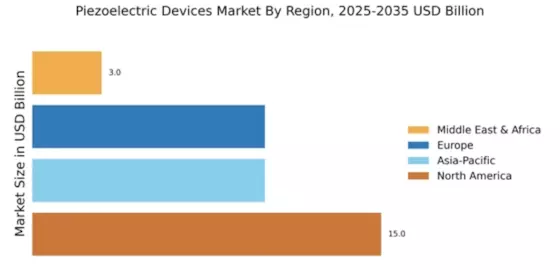
  • North America remains the largest market, while Asia-Pacific is emerging as the fastest-growing region for piezoelectric applications.
  • The sensors segment dominates the market, whereas the healthcare segment is witnessing the fastest growth due to increasing demand for medical devices.
  • Key market drivers include the rising demand for energy harvesting solutions and the expansion in consumer electronics.

Market Size & Forecast

2024 Market Size 37.98 (USD Billion)
2035 Market Size 79.96 (USD Billion)
CAGR (2025 - 2035) 7.0%

Major Players

PI Piezoelectric Products (US), Meggitt PLC (GB), Texas Instruments (US), Kistler Group (CH), Thorlabs Inc. (US), CeramTec GmbH (DE), APC International, Ltd. (US), Piezosystem Jena GmbH (DE), Noliac A/S (DK). These companies represent leading piezoelectric manufacturers, acting as global piezoelectric suppliers and established piezo manufacturer entities delivering advanced piezoelectric products and piezo electronics solutions.

Our Impact
Enabled $4.3B Revenue Impact for Fortune 500 and Leading Multinationals
Partnering with 2000+ Global Organizations Each Year
30K+ Citations by Top-Tier Firms in the Industry

Piezoelectric Devices Market Trends

The Piezoelectric Devices Market is currently experiencing a notable transformation, driven by advancements in piezoelectric technology and increasing applications across various sectors. The integration of piezoelectric elements, piezoelectric units, and precision piezo technology in consumer electronics, automotive, and healthcare is becoming more prevalent. This trend appears to be fueled by the growing demand for energy harvesting solutions and the need for precise sensing capabilities. Growing deployment of automotive piezoelectric actuators market solutions, coupled with advancements in piezo kinetics, is enhancing sensing accuracy and motion control. Additionally, innovations in piezo tech are enabling high-efficiency energy harvesting and compact device architectures. The market is also influenced by sustainability initiatives, encouraging the use of eco-friendly materials in piezoelectric devices and next-generation piezo systems. This evolution reflects broader industry acceptance of advanced piezo technologies. This evolving landscape indicates a potential for significant growth, as stakeholders recognize the benefits of incorporating piezoelectric devices into their product lines. Overall, the market is poised for a dynamic future, characterized by innovation and a commitment to sustainability.

Technological Advancements

Recent innovations in piezoelectric technology and fabrication techniques are improving device efficiency, sensitivity, and durability. Advanced piezoelectric elements and integrated piezoelectric units enable miniaturized designs for consumer electronics, industrial automation, and aerospace applications.

Sustainability Focus

Manufacturers are focusing on sustainable piezoelectric products, exploring environmentally friendly materials without compromising performance. These efforts are shaping next-generation piezo technologies aligned with global sustainability goals.

Diverse Applications

The expanding range of applications for piezoelectric devices includes healthcare diagnostics, renewable energy systems, and automotive motion control. Emerging use cases such as piezo therapeutics and smart medical implants further highlight the versatility of piezoelectric technology.

Piezoelectric Devices Market Drivers

Market Growth Projections

The Global Piezoelectric Devices Market Industry is projected to experience substantial growth in the coming years. The market is expected to reach 38.0 USD Billion in 2024 and is anticipated to double to 80.0 USD Billion by 2035. This growth trajectory indicates a compound annual growth rate of 7.0% from 2025 to 2035. Such projections reflect the increasing adoption of piezoelectric devices across various sectors, including consumer electronics, healthcare, and industrial automation. The anticipated growth underscores the potential for innovation and expansion within the piezoelectric market, driven by technological advancements and evolving consumer demands.

Technological Advancements

The Global Piezoelectric Devices Market Industry is experiencing rapid technological advancements, particularly in materials and manufacturing processes. Innovations in piezoelectric materials, such as the development of lead-free ceramics, are enhancing device performance and expanding application areas. For instance, advancements in micro-electromechanical systems (MEMS) are enabling the integration of piezoelectric devices into compact electronic systems. This trend is likely to drive market growth, as the industry is projected to reach 38.0 USD Billion in 2024, with a compound annual growth rate of 7.0% anticipated from 2025 to 2035. Such developments suggest a robust future for piezoelectric applications across various sectors.

Expansion in Industrial Automation

The Global Piezoelectric Devices Market Industry is experiencing growth due to the expansion of industrial automation. Piezoelectric devices are integral to various automation processes, including robotics and precision control systems. Their ability to provide accurate motion control and feedback is enhancing productivity and efficiency in manufacturing environments. As industries increasingly adopt automation technologies, the demand for piezoelectric devices is expected to rise. This trend aligns with the overall market growth trajectory, which is projected to reach 38.0 USD Billion in 2024. The integration of piezoelectric solutions in industrial applications suggests a promising future for the market.

Increasing Applications in Healthcare

The Global Piezoelectric Devices Market Industry is increasingly finding applications in the healthcare sector, particularly in medical imaging and diagnostics. Piezoelectric materials are utilized in ultrasound devices, enabling high-resolution imaging and non-invasive diagnostics. The demand for advanced medical technologies is driving the adoption of piezoelectric devices, as they offer precision and reliability. Moreover, the ongoing development of portable and wearable medical devices is likely to further enhance market growth. As healthcare technology evolves, the piezoelectric segment is poised for expansion, contributing to the overall market growth forecasted to reach 80.0 USD Billion by 2035.

Growing Demand in Consumer Electronics

The Global Piezoelectric Devices Market Industry is witnessing a surge in demand from the consumer electronics sector. Devices such as smartphones, tablets, and wearables increasingly incorporate piezoelectric sensors and actuators for enhanced functionality. The integration of these devices improves user experience through features like touch sensitivity and haptic feedback. As the consumer electronics market continues to expand, the piezoelectric segment is expected to benefit significantly. This growth is reflected in the projected market value of 80.0 USD Billion by 2035, indicating a strong correlation between consumer electronics trends and piezoelectric device adoption.

Rising Demand for Energy Harvesting Solutions

The Global Piezoelectric Devices Market Industry is benefiting from the rising demand for energy harvesting solutions. Piezoelectric materials can convert mechanical energy from vibrations and movements into electrical energy, making them ideal for powering small devices in remote locations. This capability is particularly appealing in sectors such as automotive and industrial applications, where energy efficiency is paramount. The increasing focus on sustainable energy solutions is likely to propel the adoption of piezoelectric devices. As the market evolves, the potential for energy harvesting applications may significantly contribute to the projected market growth, with a CAGR of 7.0% anticipated from 2025 to 2035.

Market Segment Insights

By Application: Sensors (Largest) vs. Energy Harvesting (Fastest-Growing)

The Piezoelectric Devices Market exhibits a diverse application landscape, with sensors commanding the largest share. Sensors dominate the Piezoelectric Devices Market due to widespread use of piezoelectric elements in automotive safety systems, industrial automation, and consumer electronics. Energy harvesting is the fastest-growing segment, leveraging advanced piezoelectric devices to convert ambient mechanical energy into usable power. Actuators and ultrasonic devices follow closely, contributing significantly to the market with their versatile applications. Medical devices are also gaining traction due to advancements in healthcare technology, although they represent a smaller segment overall compared to sensors and actuators. Growth trends within this market segment are primarily driven by the increasing demand for advanced sensing solutions across industries, innovation in actuator technologies, and the rising application of energy harvesting systems in powering portable and remote devices. With a focus on sustainable energy solutions, energy harvesting is emerging as the fastest-growing application segment, reflecting the industry's shift towards minimizing energy consumption and enhancing device efficiency.

Sensors (Dominant) vs. Energy Harvesting (Emerging)

In the Piezoelectric Devices Market, sensors stand out as the dominant application, owing to their critical role in real-time monitoring and control systems. They are widely used in automotive systems for pressure and motion sensing, enabling enhanced safety and performance. Their compatibility with advanced technologies, including Internet of Things (IoT) mechanisms, further solidifies their market position. Conversely, energy harvesting represents an emerging application segment that focuses on capturing ambient energy to power smaller devices, reducing dependency on batteries and enhancing sustainability. This technology appeals to markets seeking eco-friendly solutions and is set to grow rapidly as innovations continue to improve energy conversion efficiencies and broaden the spectrum of application in consumer electronics and wearable technologies.

By End Use: Consumer Electronics (Largest) vs. Automotive (Fastest-Growing)

The Piezoelectric Devices Market reveals distinct variations in market share distribution across its end-use segments. Consumer Electronics holds the largest share, driven by the demand for advanced features in smart devices, audio equipment, and wearables. Automotive follows, with increasing integration of piezoelectric materials in electric and hybrid vehicles, though its share is smaller compared to consumer electronics. Industrial applications encompass various automation processes, contributing significantly, while Aerospace and Healthcare also capture notable, albeit smaller, portions of the market. Growth trends indicate a robust trajectory for the Piezoelectric Devices Market, primarily led by advancements in technology and the push for more sustainable solutions. The automotive sector is anticipated to witness rapid growth due to rising electric vehicle production and adoption. Additionally, the healthcare industry is leveraging piezoelectric devices for better diagnostic tools, while consumer electronics continue to innovate with new applications for sound and vibration technologies. Overall, the interplay of technology and consumer demand drives progress in this market segment.

Consumer Electronics: Dominant vs. Automotive: Emerging

Consumer Electronics stands as the dominant segment in the Piezoelectric Devices Market, characterized by its widespread application in a range of products such as smartphones, tablets, and smart wearables. The segment benefits from constant demand for innovative features that enhance user experience, such as high-definition sound and haptic feedback. As technology advances, Consumer Electronics is likely to continue leveraging piezoelectric materials for smarter device functionalities. Conversely, the Automotive segment, marked as emerging, is gaining traction with the rise of electric vehicles that utilize piezoelectric components for energy harvesting and efficient performance. As automotive manufacturers increasingly seek to incorporate advanced technologies into their vehicles, the market for piezoelectric devices in this sector is projected to expand significantly, driven by a shift toward sustainability and enhanced vehicle performance.

By Material Type: Ceramic (Largest) vs. Polymer (Fastest-Growing)

The Piezoelectric Devices Market is largely dominated by Ceramic materials, which hold the largest market share due to their robust performance, cost-effectiveness, and versatility in various applications. In contrast, Polymer-based piezoelectric devices are witnessing significant traction, primarily driven by their lightweight properties and flexibility, making them suitable for advanced applications in the consumer electronics and automotive sectors.

Ceramics (Dominant) vs. Polymers (Emerging)

Ceramic materials, known for their superior durability and stability, dominate the Piezoelectric Devices Market. They are preferred for their high piezoelectric coefficients and reliability in harsh environments, especially in industrial applications. On the other hand, Polymer materials are emerging as a competitive alternative due to their flexibility, lightweight nature, and ease of processing. This makes them increasingly sought-after for next-generation electronic devices and wearable technology. As industries look for adaptable and efficient solutions, both ceramics and polymers are expected to coexist, fulfilling distinct needs in this evolving market.

By Technology: Direct Piezoelectric Effect (Largest) vs. Piezoelectric Nanomaterials (Fastest-Growing)

The Piezoelectric Devices Market is characterized by diverse technologies that include the Direct Piezoelectric Effect, Reverse Piezoelectric Effect, Piezoelectric Nanomaterials, and Piezoelectric Composites. Currently, the Direct Piezoelectric Effect holds the largest market share, attributed to its widespread applications in sensors, actuators, and transducers. Conversely, the Piezoelectric Nanomaterials segment is witnessing rapid growth, driven by their unique properties and applications in advanced electronics and energy harvesting. Growth trends indicate that the market for Piezoelectric Nanomaterials is expanding swiftly due to increasing demand for miniaturized devices with enhanced performance. Key drivers include advancements in material science and technological innovations leading to new applications in consumer electronics, automotive, and medical sectors. As manufacturers invest in R&D, the overall landscape continues to evolve, creating opportunities for both established players and new entrants in the market.

Technology: Direct Piezoelectric Effect (Dominant) vs. Piezoelectric Composites (Emerging)

The Direct Piezoelectric Effect is a dominant technology in the Piezoelectric Devices Market, recognized for its efficiency and reliability in converting mechanical energy into electrical energy and vice versa. Its robust application in various industries ranging from industrial automation to medical devices underscores its significance. In contrast, Piezoelectric Composites are emerging as a progressive technology, characterized by the combination of different materials to enhance piezoelectric properties. These composites offer flexibility and tunability, making them attractive for innovative applications in soft robotics and wearable technology. As demand for more versatile and adaptable piezoelectric solutions grows, the market position of Piezoelectric Composites is expected to strengthen, complementing the established dominance of Direct Piezoelectric Effect technologies.

Get more detailed insights about Piezoelectric Devices Market

Regional Insights

North America : Market Leader in Innovation

North America leads innovation in piezoelectric technology, supported by strong R&D ecosystems and major piezoelectric manufacturers. The region's growth is driven by increasing demand in sectors such as automotive, aerospace, and healthcare, alongside supportive regulatory frameworks that encourage technological advancements. The presence of key players and robust R&D investments further catalyze market expansion, making it a hub for innovation in piezoelectric technology. The United States stands out as the leading country in this region, with major companies like PI Piezoelectric Products, Texas Instruments, and Thorlabs Inc. driving competition. The competitive landscape is characterized by continuous innovation and strategic partnerships among these key players. As the market evolves, the focus on sustainable and efficient piezoelectric solutions is expected to shape future developments, ensuring North America's dominance in the global market.

Europe : Emerging Market with Potential

Europe is witnessing a growing interest in piezoelectric devices, with a market size of 10.0 in 2024. Europe’s growth is driven by industrial automation and sustainability-driven piezoelectric products development. Regulatory support for sustainable technologies and innovation is a significant catalyst, encouraging investments in research and development. The European market is expected to expand as companies adapt to evolving consumer demands and environmental regulations. Germany and the UK are leading countries in this market, hosting key players like Kistler Group and Meggitt PLC. The competitive landscape is marked by a mix of established firms and emerging startups, fostering innovation and collaboration. As the market matures, the focus on high-performance and energy-efficient piezoelectric devices will drive further growth, positioning Europe as a vital player in the global landscape.

Asia-Pacific : Rapid Growth and Adoption

Asia-Pacific is emerging as a significant player in the piezoelectric devices market, with a market size of 10.0 in 2024. Asia-Pacific is a high-growth region for piezo systems, consumer electronics, and automotive piezo technologies. Government initiatives promoting smart manufacturing and technological innovation are key regulatory catalysts that support market expansion. The region is expected to see substantial growth as it adapts to global trends in sustainability and efficiency. China and Japan are at the forefront of this market, with a strong presence of companies like Noliac A/S and Piezosystem Jena GmbH. The competitive landscape is characterized by a mix of local and international players, fostering a dynamic environment for innovation. As the market evolves, the focus on integrating piezoelectric devices into various applications will enhance the region's position in the global market.

Middle East and Africa : Emerging Market with Challenges

The Middle East and Africa region is gradually developing its piezoelectric devices market, with a market size of 2.98 in 2024. MEA shows gradual adoption of piezoelectric devices, with opportunities in infrastructure and automation. The growth is primarily driven by increasing investments in infrastructure and technology, alongside a rising demand for automation in various sectors. However, challenges such as limited awareness and technological adoption may hinder rapid growth. Regulatory frameworks are evolving, aiming to support innovation and attract foreign investments in the region. Countries like South Africa and the UAE are leading the way in adopting piezoelectric technologies, with a focus on enhancing industrial capabilities. The competitive landscape is still in its nascent stages, with opportunities for both local and international players to establish a foothold. As the market matures, the emphasis on sustainable and efficient solutions will be crucial for driving growth in this region.

Piezoelectric Devices Market Regional Image

Key Players and Competitive Insights

The competitive landscape is driven by innovation among global piezoelectric suppliers and piezo manufacturers. Strategic expansions, new product launches, and advancements in piezo kinetics and piezo tech are reshaping market competition. Key players are actively engaging in strategies that emphasize innovation and regional expansion, which collectively shape the market's competitive environment. For instance, in November 2025, PI Piezoelectric Products (US) announced the launch of a new line of high-performance piezoelectric actuators aimed at the aerospace sector, indicating a strong focus on specialized applications. Similarly, Meggitt PLC (GB) has been enhancing its product portfolio through strategic partnerships, which appear to bolster its market presence and technological capabilities.
The business tactics employed by these companies often include localizing manufacturing and optimizing supply chains to enhance efficiency and reduce costs. The market structure is moderately fragmented, with several players vying for market share, yet the influence of key players like Texas Instruments (US) and Kistler Group (CH) remains substantial. These companies are leveraging their extensive resources to innovate and capture emerging opportunities, thereby intensifying competition.
In October 2025, Texas Instruments (US) unveiled a new piezoelectric sensor technology designed for industrial automation applications. This strategic move not only showcases the company's commitment to innovation but also positions it to capitalize on the growing demand for smart manufacturing solutions. The introduction of this technology is likely to enhance operational efficiencies for clients, thereby reinforcing Texas Instruments' competitive edge.
In September 2025, Kistler Group (CH) expanded its global footprint by establishing a new manufacturing facility in Asia. This strategic expansion is indicative of the company's intent to tap into the rapidly growing Asian markets, which are witnessing increased demand for piezoelectric devices. By localizing production, Kistler Group aims to reduce lead times and improve service delivery, which could significantly enhance its competitive positioning in the region.
As of December 2025, the Piezoelectric Devices Market is witnessing trends that emphasize digitalization, sustainability, and the integration of AI technologies. Companies are increasingly forming strategic alliances to enhance their technological capabilities and market reach. This shift suggests a transition from traditional price-based competition to a focus on innovation, technology, and supply chain reliability. As the market evolves, differentiation will likely hinge on the ability to deliver advanced solutions that meet the specific needs of diverse industries.

Key Companies in the Piezoelectric Devices Market include

Industry Developments

  • Q2 2024: Material Breakthroughs Unlock High-Efficiency Piezoelectric Applications In 2024, Stanford researchers unveiled a bismuth ferrite-based material with 40% higher strain sensitivity than traditional PZT ceramics, enabling ultra-precise sensors for aerospace microactuators. Companies like CTS Corporation and TDK Corporation are commercializing lead-free alternatives such as potassium sodium niobate (KNN), complying with tightening EU regulations on hazardous substances.

Future Outlook

Piezoelectric Devices Market Future Outlook

The Piezoelectric Devices Market is projected to grow at a 7.0% CAGR from 2025 to 2035, driven by advancements in technology, increasing demand in automotive applications, and the rise of renewable energy solutions.

New opportunities lie in:

  • Development of smart sensors for industrial automation Integration of piezoelectric materials in wearable health devices Expansion into emerging markets with tailored product offerings

By 2035, the Piezoelectric Devices Market is expected to achieve substantial growth and innovation.

Market Segmentation

Piezoelectric Devices Market End Use Outlook

  • Consumer Electronics
  • Automotive
  • Aerospace
  • Industrial
  • Healthcare

Piezoelectric Devices Market Technology Outlook

  • Direct Piezoelectric Effect
  • Reverse Piezoelectric Effect
  • Piezoelectric Nanomaterials
  • Piezoelectric Composites

Piezoelectric Devices Market Application Outlook

  • Sensors
  • Actuators
  • Energy Harvesting
  • Ultrasonic Devices
  • Medical Devices

Piezoelectric Devices Market Material Type Outlook

  • Ceramic
  • Polymer
  • Composite
  • Single Crystals
  • Metals

Report Scope

MARKET SIZE 2024 37.98(USD Billion)
MARKET SIZE 2025 40.64(USD Billion)
MARKET SIZE 2035 79.96(USD Billion)
COMPOUND ANNUAL GROWTH RATE (CAGR) 7.0% (2025 - 2035)
REPORT COVERAGE Revenue Forecast, Competitive Landscape, Growth Factors, and Trends
BASE YEAR 2024
Market Forecast Period 2025 - 2035
Historical Data 2019 - 2024
Market Forecast Units USD Billion
Key Companies Profiled PI Piezoelectric Products (US), Meggitt PLC (GB), Texas Instruments (US), Kistler Group (CH), Thorlabs Inc. (US), CeramTec GmbH (DE), APC International, Ltd. (US), Piezosystem Jena GmbH (DE), Noliac A/S (DK)
Segments Covered Application, End Use, Material Type, Technology
Key Market Opportunities Integration of advanced materials enhances performance and expands applications in the Piezoelectric Devices Market.
Key Market Dynamics Technological advancements and increasing demand for miniaturized devices drive growth in the piezoelectric devices market.
Countries Covered North America, Europe, APAC, South America, MEA

Market Highlights

Author
Author
Author Profile
Ankit Gupta LinkedIn
Team Lead - Research
Ankit Gupta is a seasoned market intelligence and strategic research professional with over six plus years of experience in the ICT and Semiconductor industries. With academic roots in Telecom, Marketing, and Electronics, he blends technical insight with business strategy. Ankit has led 200+ projects, including work for Fortune 500 clients like Microsoft and Rio Tinto, covering market sizing, tech forecasting, and go-to-market strategies. Known for bridging engineering and enterprise decision-making, his insights support growth, innovation, and investment planning across diverse technology markets.
Leave a Comment

FAQs

What is the projected market valuation of the Piezoelectric Devices Market by 2035?

<p>The projected market valuation of the Piezoelectric Devices Market is expected to reach 79.96 USD Billion by 2035.</p>

What was the overall market valuation of the Piezoelectric Devices Market in 2024?

<p>The overall market valuation of the Piezoelectric Devices Market was 37.98 USD Billion in 2024.</p>

What is the expected CAGR for the Piezoelectric Devices Market during the forecast period 2025 - 2035?

<p>The expected CAGR for the Piezoelectric Devices Market during the forecast period 2025 - 2035 is 7.0%.</p>

Which application segment is projected to have the highest valuation by 2035?

<p>The Medical Devices application segment is projected to reach 21.49 USD Billion by 2035.</p>

How does the valuation of the Sensors segment change from 2024 to 2035?

<p>The Sensors segment valuation is expected to increase from 7.59 USD Billion in 2024 to 15.99 USD Billion by 2035.</p>

What are the key players in the Piezoelectric Devices Market?

<p>Key players in the Piezoelectric Devices Market include PI Piezoelectric Products, Meggitt PLC, and Texas Instruments, among others.</p>

Which end-use segment is anticipated to grow the most by 2035?

The Consumer Electronics end-use segment is anticipated to grow from 10.0 USD Billion in 2024 to 20.0 USD Billion by 2035.

What is the expected growth in the Energy Harvesting segment from 2024 to 2035?

The Energy Harvesting segment is expected to grow from 6.29 USD Billion in 2024 to 13.59 USD Billion by 2035.

Which material type is projected to dominate the market by 2035?

The Ceramic material type is projected to dominate the market, reaching 30.0 USD Billion by 2035.

What is the anticipated valuation of the Automotive end-use segment by 2035?

The Automotive end-use segment is anticipated to reach 16.0 USD Billion by 2035.

Research Approach

Secondary Research

The secondary research process involved comprehensive analysis of regulatory databases, peer-reviewed engineering journals, technical publications, and authoritative industry organizations. Key sources included the US National Institute of Standards and Technology (NIST), European Space Agency (ESA) Materials Database, Institute of Electrical and Electronics Engineers (IEEE), International Electrotechnical Commission (IEC), US Department of Energy (DOE) – Office of Energy Efficiency & Renewable Energy, National Science Foundation (NSF) Engineering Research Centers, European Commission (EC) – Horizon Europe Programme, Japan Agency for Marine-Earth Science and Technology (JAMSTEC), German Aerospace Center (DLR), UK National Physical Laboratory (NPL), US Bureau of Industry and Security (BIS), International Trade Administration (ITA), Organisation for Economic Co-operation and Development (OECD) – Science, Technology and Innovation Outlook, World Intellectual Property Organization (WIPO) Patent Database, European Patent Office (EPO), and national standards bodies including American National Standards Institute (ANSI), British Standards Institution (BSI), Japanese Industrial Standards (JIS), and DIN Deutsches Institut für Normung. These sources were used to collect shipment statistics, regulatory compliance data, material safety studies, patent landscapes, and market landscape analysis for ceramic piezoelectric materials, polymer-based piezoelectric films, single-crystal piezoelectrics, and composite piezoelectric technologies.

Primary Research

In order to gather both qualitative and quantitative insights, supply-side and demand-side stakeholders were interviewed during the primary research process. CEOs, VPs of R&D, chief technology officers, and heads of strategic business units from makers of piezoelectric devices, suppliers of ceramic materials, and OEMs for precise motion control were examples of supply-side sources. Chief engineers from automotive Tier 1 suppliers, directors of medical device engineering, procurement leaders from defense and aerospace contractors, R&D managers from consumer electronics manufacturers, and technical leads from industrial automation businesses were examples of demand-side sources. Market segmentation, product development roadmaps, and information on supply chain dynamics, pricing tactics, and technology adoption trends were all corroborated by primary research.

Primary Respondent Breakdown:

By Designation: C-level Primaries (28%), Director Level (35%), Others (37%)

By Region: North America (32%), Europe (30%), Asia-Pacific (33%), Rest of World (5%)

Market Size Estimation

Global market valuation was derived through revenue mapping and unit shipment volume analysis. The methodology included:

Identification of 50+ key manufacturers across North America, Europe, Asia-Pacific, and Latin America specializing in piezoelectric ceramics, polymers, and precision positioning systems

Product mapping across piezoelectric sensors, actuators, transducers, energy harvesters, motors, and high-voltage generators

Analysis of reported and modeled annual revenues specific to piezoelectric device portfolios

Coverage of manufacturers representing 75-80% of global market share in 2024

Extrapolation using bottom-up (unit volume × ASP by application and vertical) and top-down (manufacturer revenue validation) approaches to derive segment-specific valuations across automotive, medical, aerospace & defense, consumer electronics, and industrial automation sectors

Download Free Sample

Kindly complete the form below to receive a free sample of this Report

Compare Licence

×
Features License Type
Single User Multiuser License Enterprise User
Price $4,950 $5,950 $7,250
Maximum User Access Limit 1 User Upto 10 Users Unrestricted Access Throughout the Organization
Free Customization
Direct Access to Analyst
Deliverable Format
Platform Access
Discount on Next Purchase 10% 15% 15%
Printable Versions
%>